


Making workplace
well-being a culture win
Meghan M. Biro, Founder & CEO of TalentCulture
It’s totally possible.
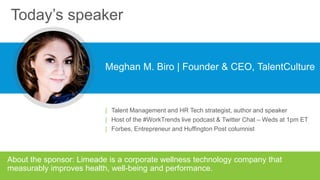
Today’s speaker
Meghan M. Biro | Founder & CEO, TalentCulture
About the sponsor: Limeade is a corporate wellness technology company that
measurably improves health, well-being and performance.
| Talent Management and HR Tech strategist, author and speaker
| Host of the #WorkTrends live podcast & Twitter Chat – Weds at 1pm ET
| Forbes, Entrepreneur and Huffington Post columnist
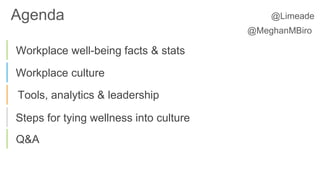
Agenda
Workplace well-being facts & stats
Workplace culture
Q&A
@Limeade
@MeghanMBiro
Steps for tying wellness into culture
Tools, analytics & leadership
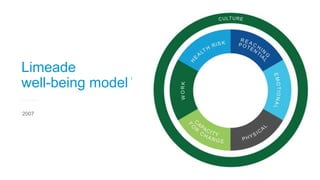
Limeade
well-being model
2007
1
Workplace well-being
facts & stats
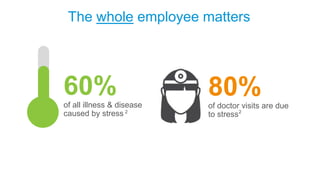
The whole employee matters
60%of all illness & disease
caused by stress
80%of doctor visits are due
to stress2 2
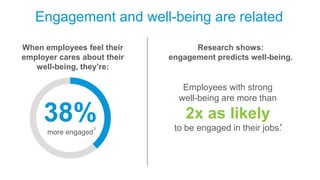
Engagement and well-being are related
Research shows:
engagement predicts well-being.
When employees feel their
employer cares about their
well-being, they’re:
Employees with strong
well-being are more than
2x as likely
to be engaged in their jobs.
38%more engaged
3
4
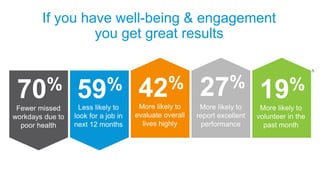
If you have well-being & engagement
you get great results
42%
More likely to
evaluate overall
lives highly
27%
More likely to
report excellent
performance
19%
More likely to
volunteer in the
past month
59%
Less likely to
look for a job in
next 12 months
70%
Fewer missed
workdays due to
poor health
5
Workplace culture
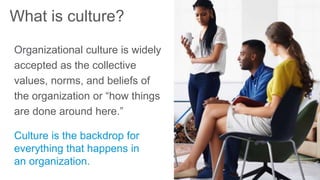
Organizational culture is widely
accepted as the collective
values, norms, and beliefs of
the organization or “how things
are done around here.”
What is culture?
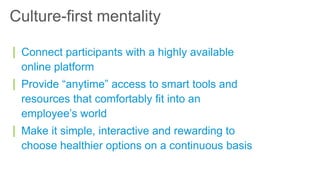
| Connect participants with a highly available
online platform
| Provide “anytime” access to smart tools and
resources that comfortably fit into an
employee’s world
| Make it simple, interactive and rewarding to
choose healthier options on a continuous basis
Culture-first mentality
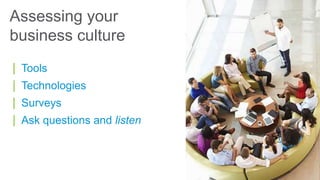
| Tools
| Technologies
| Surveys
| Ask questions and listen
Assessing your
business culture
| What they are
| Observations
| What they can tell you
Culture walks
| Build buy-in
| Create awareness
programs that will work
with your true culture
| Longevity
| Industry & demographics
matter
Why?
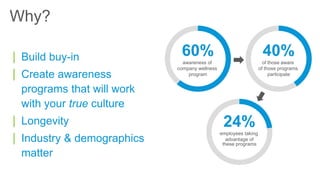
60%
awareness of
company wellness
program
40%
of those aware
of those programs
participate
24%
employees taking
advantage of
these programs
Tools
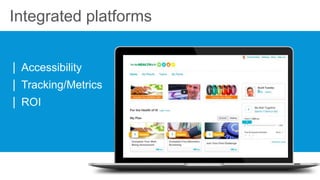
| Accessibility
| Tracking/Metrics
| ROI
Integrated platforms
Wearables & devices
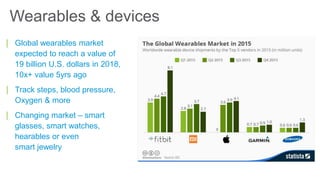
| Global wearables market
expected to reach a value of
19 billion U.S. dollars in 2018,
10x+ value 5yrs ago
| Track steps, blood pressure,
Oxygen & more
| Changing market – smart
glasses, smart watches,
hearables or even
smart jewelry
Social media
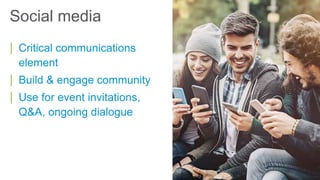
| Critical communications
element
| Build & engage community
| Use for event invitations,
Q&A, ongoing dialogue
Social media ideas
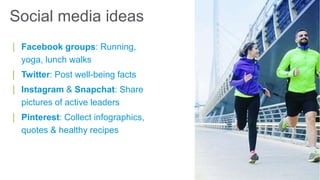
| Facebook groups: Running,
yoga, lunch walks
| Twitter: Post well-being facts
| Instagram & Snapchat: Share
pictures of active leaders
| Pinterest: Collect infographics,
quotes & healthy recipes
Analytics
| Think strategically
| Slice and dice
| Longitudinal data
| ROI
Analytics
Leadership
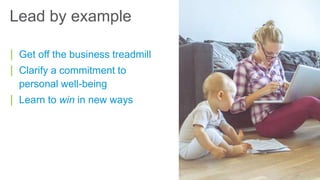
| Get off the business treadmill
| Clarify a commitment to
personal well-being
| Learn to win in new ways
Lead by example
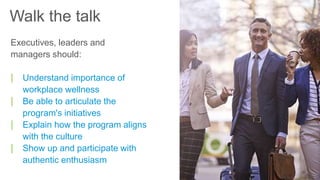
Executives, leaders and
managers should:
| Understand importance of
workplace wellness
| Be able to articulate the
program's initiatives
| Explain how the program aligns
with the culture
| Show up and participate with
authentic enthusiasm
Walk the talk
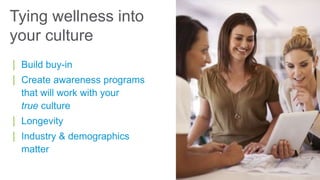
| Build buy-in
| Create awareness programs
that will work with your
true culture
| Longevity
| Industry & demographics
matter
Tying wellness into
your culture
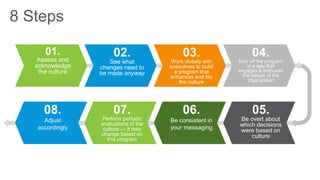
8 Steps
02.
See what
changes need to
be made anyway
03.
Work closely with
executives to build
a program that
enhances and fits
the culture
04.
Kick off the program
in a way that
engages & enthuses
the people of the
organization
01.
Assess and
acknowledge
the culture
05.
Be overt about
which decisions
were based on
culture
06.
Be consistent in
your messaging
07.
Perform periodic
evaluations of the
culture — it may
change based on
this program
08.
Adjust
accordingly
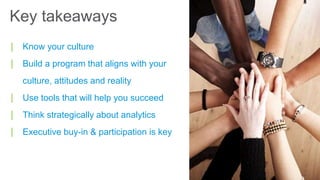
| Know your culture
| Build a program that aligns with your
culture, attitudes and reality
| Use tools that will help you succeed
| Think strategically about analytics
| Executive buy-in & participation is key
Key takeaways
Q&A
@MeghanMBiro
@TalentCulture
mbiro@talentculture.com
TalentCulture.com
Limeade is a corporate wellness
technology company that
measurably improves health,
well-being and performance.
Meghan M. Biro
@Limeade
marketingteam@limeade.com
limeade.com
Q&A

Making workplace well-being a culture win

  • 1.
    Making workplace well-being aculture win Meghan M. Biro, Founder & CEO of TalentCulture It’s totally possible.
  • 2.
    Today’s speaker Meghan M.Biro | Founder & CEO, TalentCulture About the sponsor: Limeade is a corporate wellness technology company that measurably improves health, well-being and performance. | Talent Management and HR Tech strategist, author and speaker | Host of the #WorkTrends live podcast & Twitter Chat – Weds at 1pm ET | Forbes, Entrepreneur and Huffington Post columnist
  • 3.
    Agenda Workplace well-being facts& stats Workplace culture Q&A @Limeade @MeghanMBiro Steps for tying wellness into culture Tools, analytics & leadership
  • 4.
  • 5.
  • 6.
    The whole employeematters 60%of all illness & disease caused by stress 80%of doctor visits are due to stress2 2
  • 7.
    Engagement and well-beingare related Research shows: engagement predicts well-being. When employees feel their employer cares about their well-being, they’re: Employees with strong well-being are more than 2x as likely to be engaged in their jobs. 38%more engaged 3 4
  • 8.
    If you havewell-being & engagement you get great results 42% More likely to evaluate overall lives highly 27% More likely to report excellent performance 19% More likely to volunteer in the past month 59% Less likely to look for a job in next 12 months 70% Fewer missed workdays due to poor health 5
  • 9.
  • 10.
    Organizational culture iswidely accepted as the collective values, norms, and beliefs of the organization or “how things are done around here.” What is culture?
  • 11.
    | Connect participantswith a highly available online platform | Provide “anytime” access to smart tools and resources that comfortably fit into an employee’s world | Make it simple, interactive and rewarding to choose healthier options on a continuous basis Culture-first mentality
  • 12.
    | Tools | Technologies |Surveys | Ask questions and listen Assessing your business culture
  • 13.
    | What theyare | Observations | What they can tell you Culture walks
  • 14.
    | Build buy-in |Create awareness programs that will work with your true culture | Longevity | Industry & demographics matter Why? 60% awareness of company wellness program 40% of those aware of those programs participate 24% employees taking advantage of these programs
  • 15.
  • 16.
    | Accessibility | Tracking/Metrics |ROI Integrated platforms
  • 17.
    Wearables & devices |Global wearables market expected to reach a value of 19 billion U.S. dollars in 2018, 10x+ value 5yrs ago | Track steps, blood pressure, Oxygen & more | Changing market – smart glasses, smart watches, hearables or even smart jewelry
  • 18.
    Social media | Criticalcommunications element | Build & engage community | Use for event invitations, Q&A, ongoing dialogue
  • 19.
    Social media ideas |Facebook groups: Running, yoga, lunch walks | Twitter: Post well-being facts | Instagram & Snapchat: Share pictures of active leaders | Pinterest: Collect infographics, quotes & healthy recipes
  • 20.
  • 21.
    | Think strategically |Slice and dice | Longitudinal data | ROI Analytics
  • 22.
  • 23.
    | Get offthe business treadmill | Clarify a commitment to personal well-being | Learn to win in new ways Lead by example
  • 24.
    Executives, leaders and managersshould: | Understand importance of workplace wellness | Be able to articulate the program's initiatives | Explain how the program aligns with the culture | Show up and participate with authentic enthusiasm Walk the talk
  • 25.
    | Build buy-in |Create awareness programs that will work with your true culture | Longevity | Industry & demographics matter Tying wellness into your culture
  • 26.
    8 Steps 02. See what changesneed to be made anyway 03. Work closely with executives to build a program that enhances and fits the culture 04. Kick off the program in a way that engages & enthuses the people of the organization 01. Assess and acknowledge the culture 05. Be overt about which decisions were based on culture 06. Be consistent in your messaging 07. Perform periodic evaluations of the culture — it may change based on this program 08. Adjust accordingly
  • 27.
    | Know yourculture | Build a program that aligns with your culture, attitudes and reality | Use tools that will help you succeed | Think strategically about analytics | Executive buy-in & participation is key Key takeaways
  • 28.
  • 29.
    @MeghanMBiro @TalentCulture mbiro@talentculture.com TalentCulture.com Limeade is acorporate wellness technology company that measurably improves health, well-being and performance. Meghan M. Biro @Limeade marketingteam@limeade.com limeade.com Q&A