


Proprietary and Confidential. Not for reproduction
or distribution without prior written consent.
Making the Shift to a
Hybrid Working Model:
Are you ready?
June 22, 2021
2
welcome!
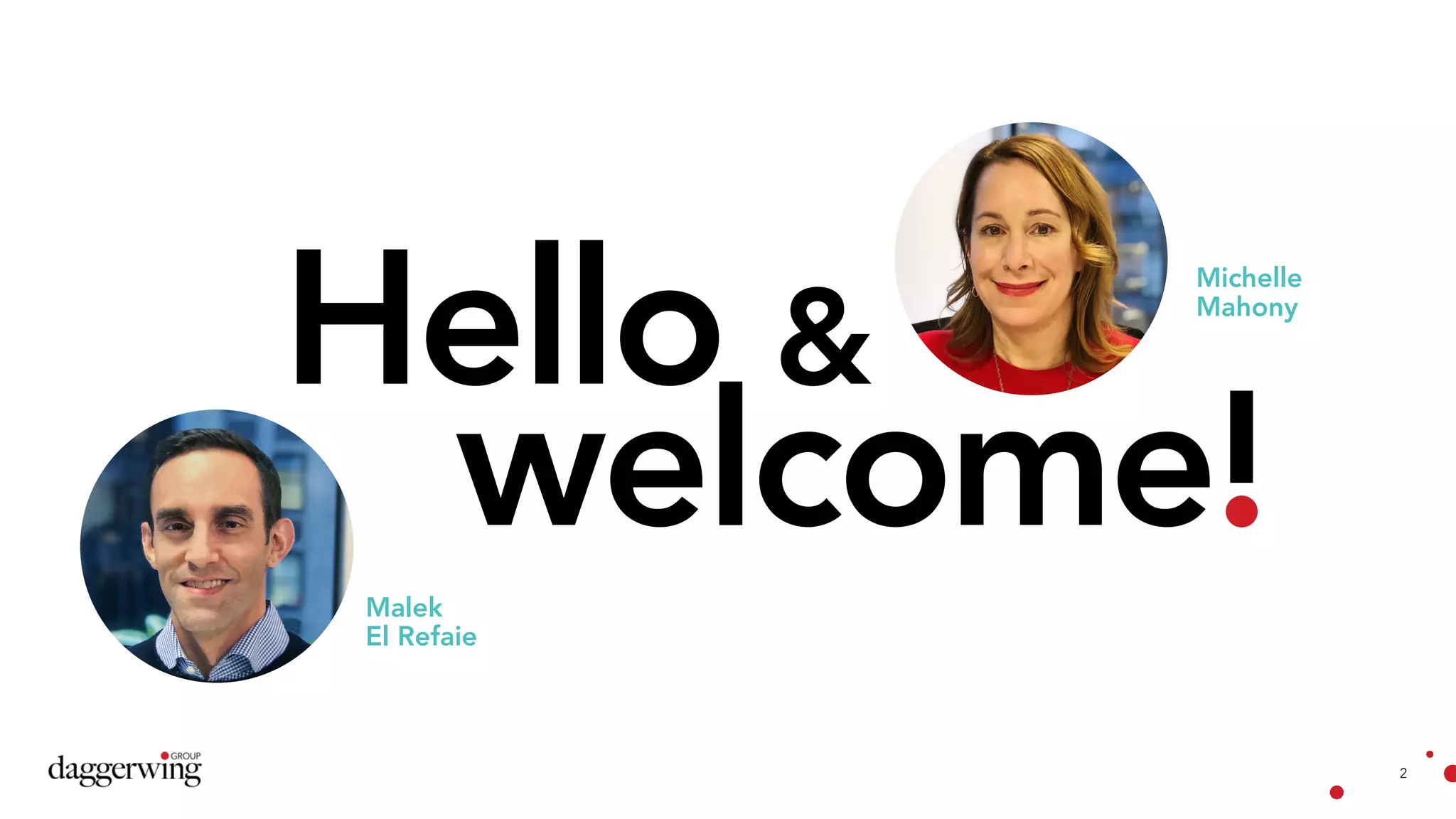
Hello &
Malek
El Refaie
Michelle
Mahony
3
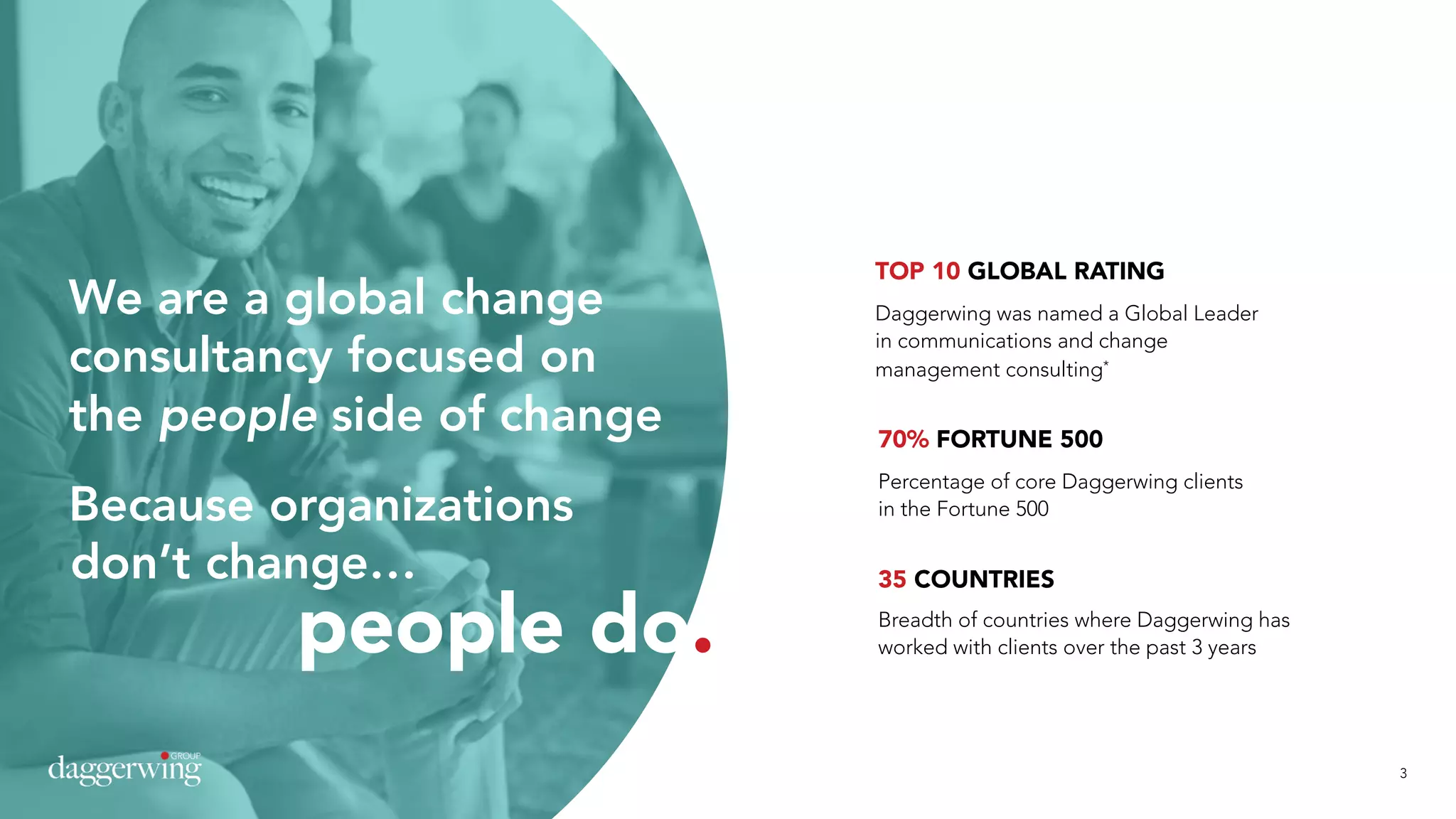
We are a global change
consultancy focused on
the people side of change
Because organizations
don’t change…
Percentage of core Daggerwing clients
in the Fortune 500
70% FORTUNE 500
Daggerwing was named a Global Leader
in communications and change
management consulting*
TOP 10 GLOBAL RATING
Breadth of countries where Daggerwing has
worked with clients over the past 3 years
35 COUNTRIES
people do.
4
What
today's
about…
We won’t give you a playbook for getting back in the
office – that’s not what today is about.
We will provide a different perspective on the challenges
of transitioning to a hybrid model.
We will give you insights and actions on how to create a
working environment that can enable all workers to thrive.
In the next 30 minutes,
here’s what you can expect:
1
2
3
5
Flexibility is the
core principle
6
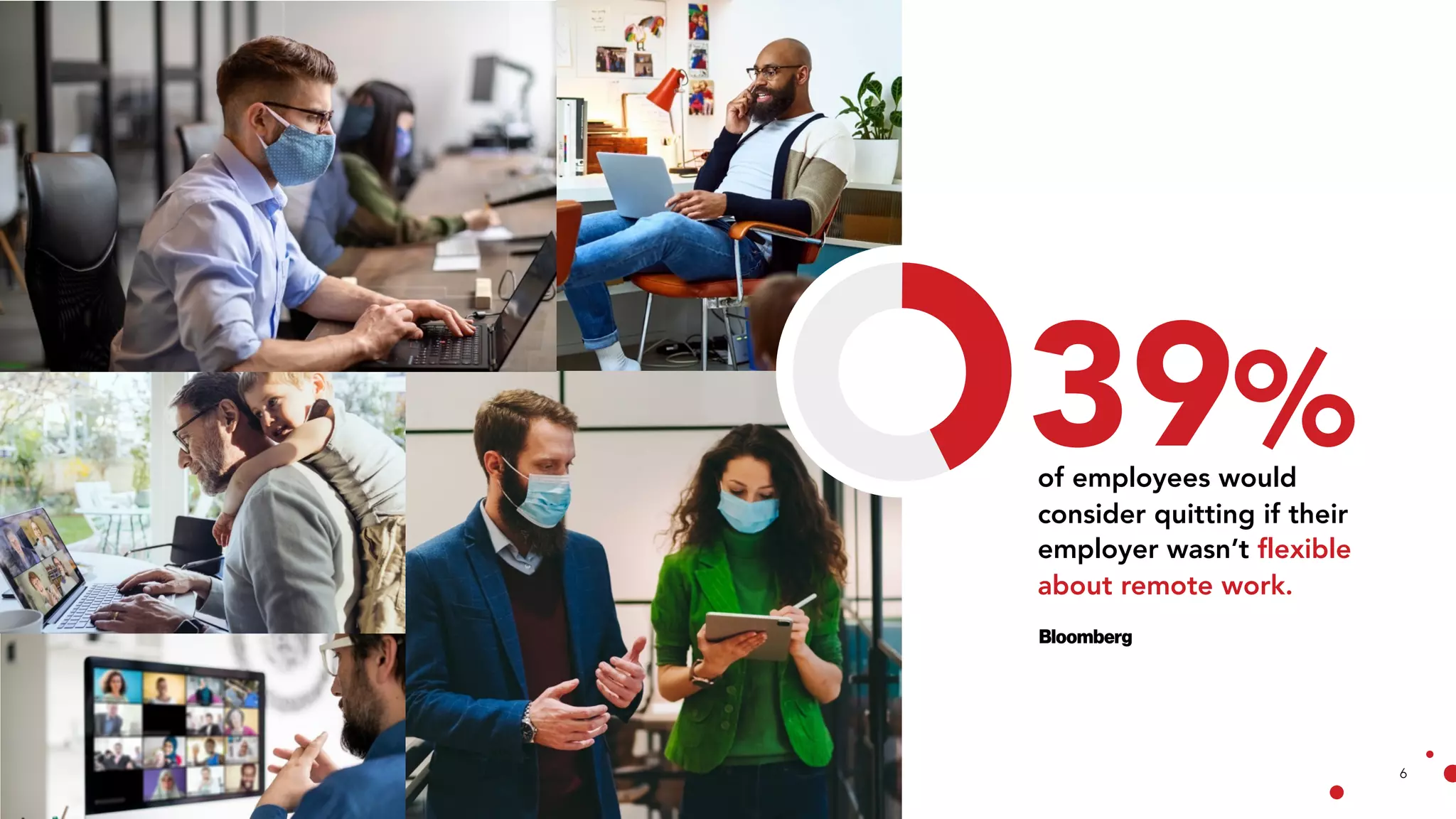
39%
of employees would
consider quitting if their
employer wasn’t flexible
about remote work.
7
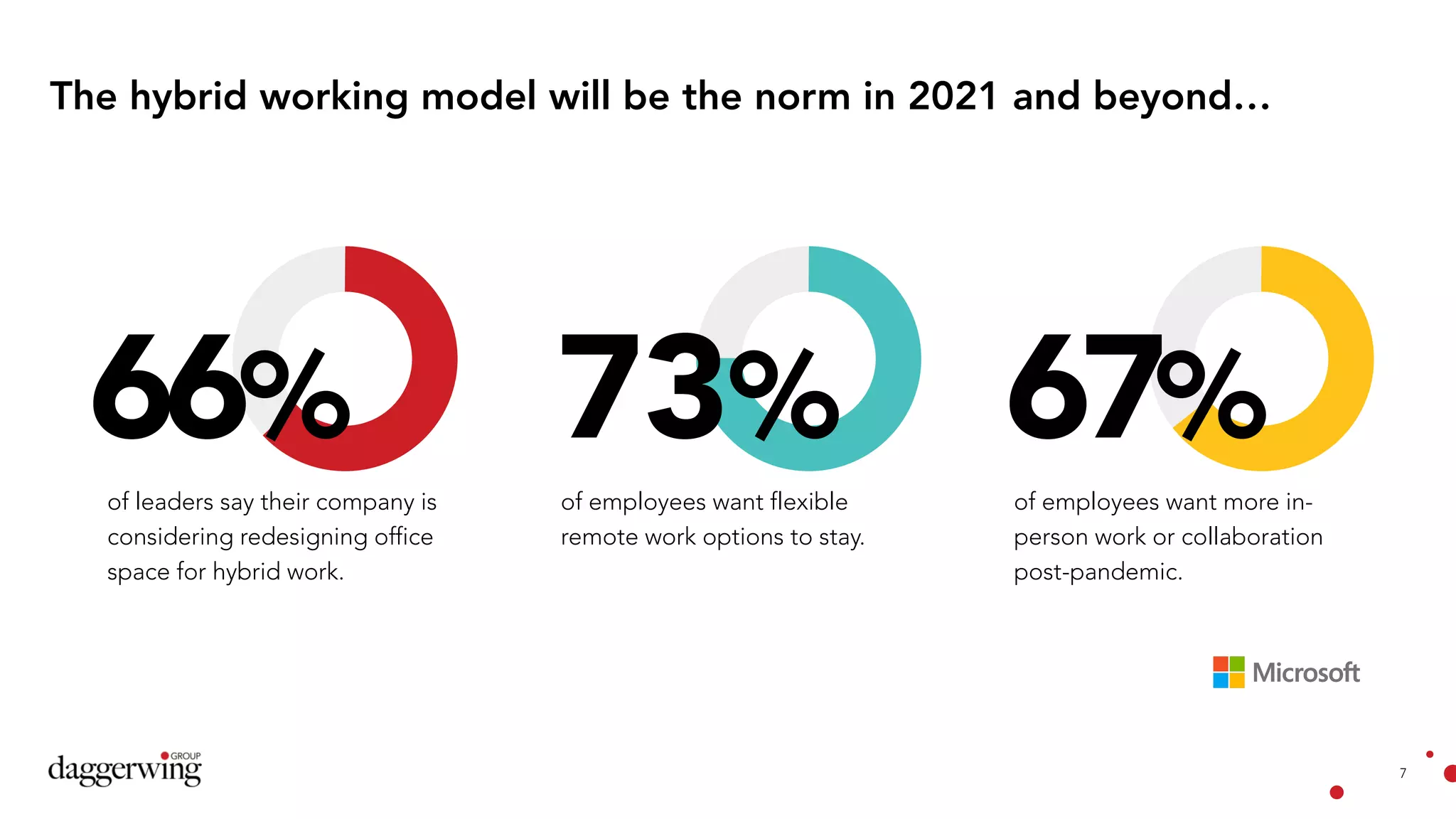
The hybrid working model will be the norm in 2021 and beyond…
of leaders say their company is
considering redesigning office
space for hybrid work.
of employees want flexible
remote work options to stay.
of employees want more in-
person work or collaboration
post-pandemic.
66% 73% 67%
8
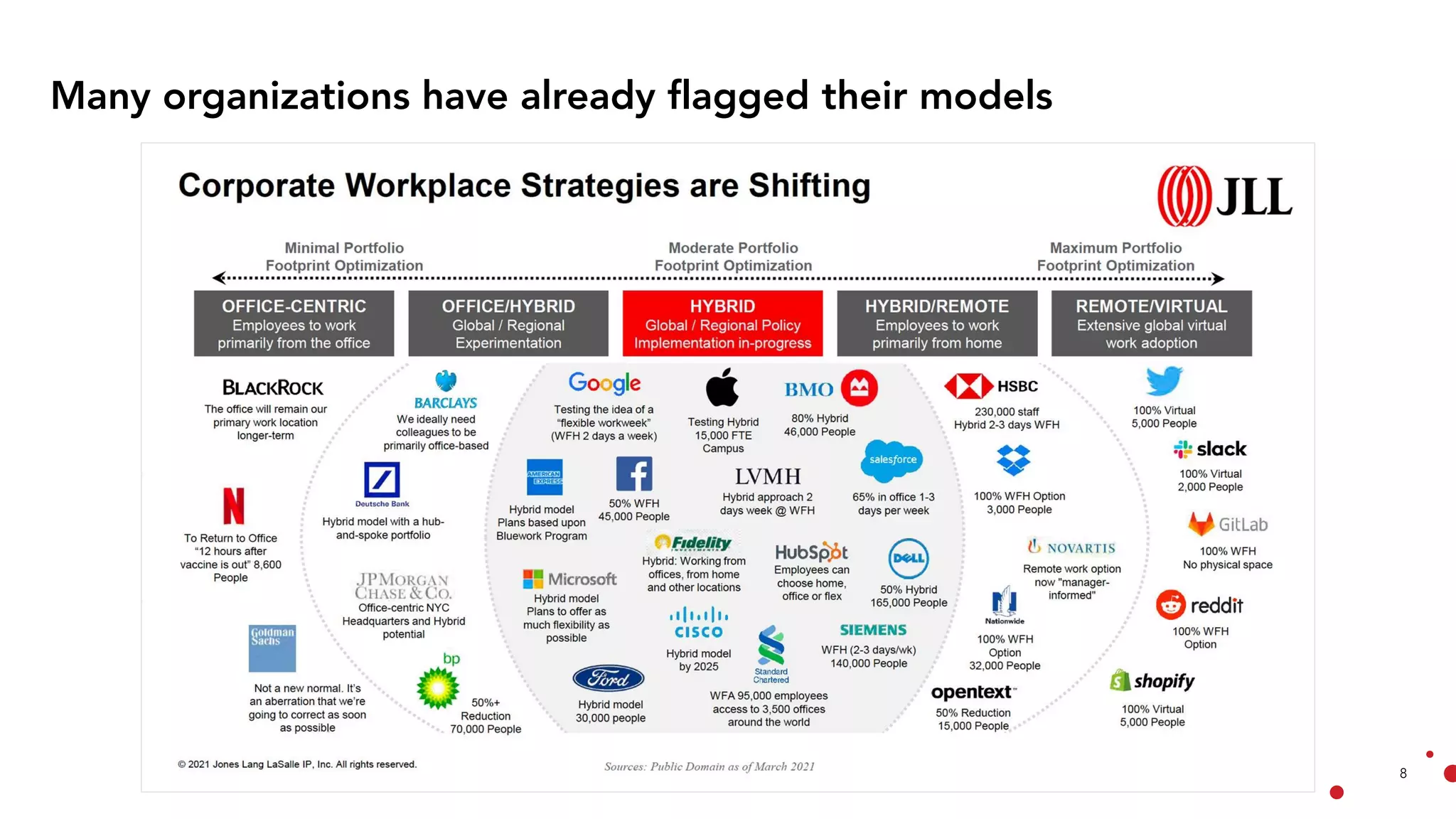
Many organizations have already flagged their models
9
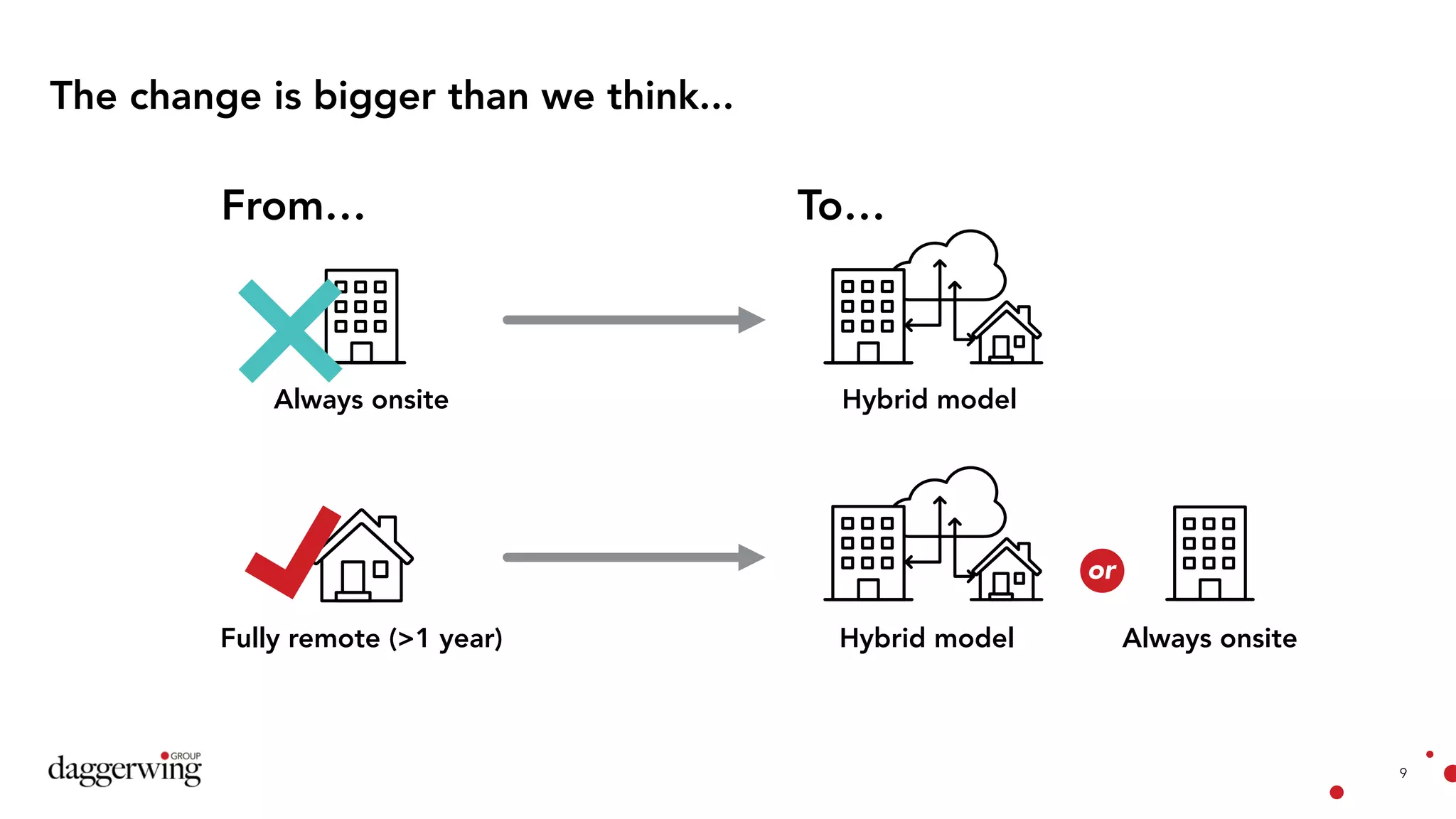
The change is bigger than we think...
Always onsite Hybrid model
From… To…
Fully remote (>1 year) Hybrid model Always onsite
or
10
Thriving @ work
11
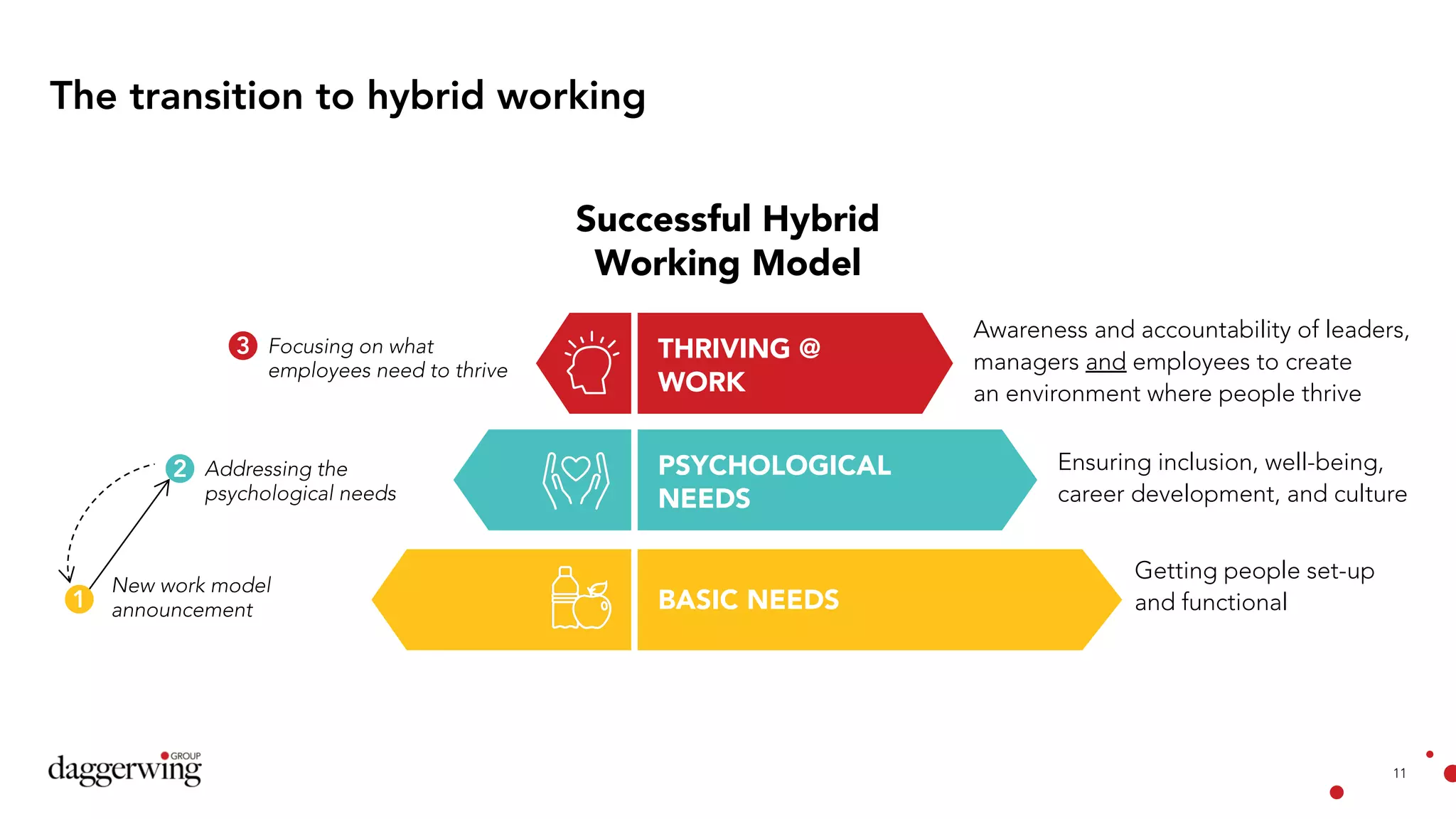
The transition to hybrid working
BASIC NEEDS
PSYCHOLOGICAL
NEEDS
THRIVING @
WORK
Getting people set-up
and functional
Ensuring inclusion, well-being,
career development, and culture
Awareness and accountability of leaders,
managers and employees to create
an environment where people thrive
Successful Hybrid
Working Model
New work model
announcement
Addressing the
psychological needs
Focusing on what
employees need to thrive
1
2
3
12
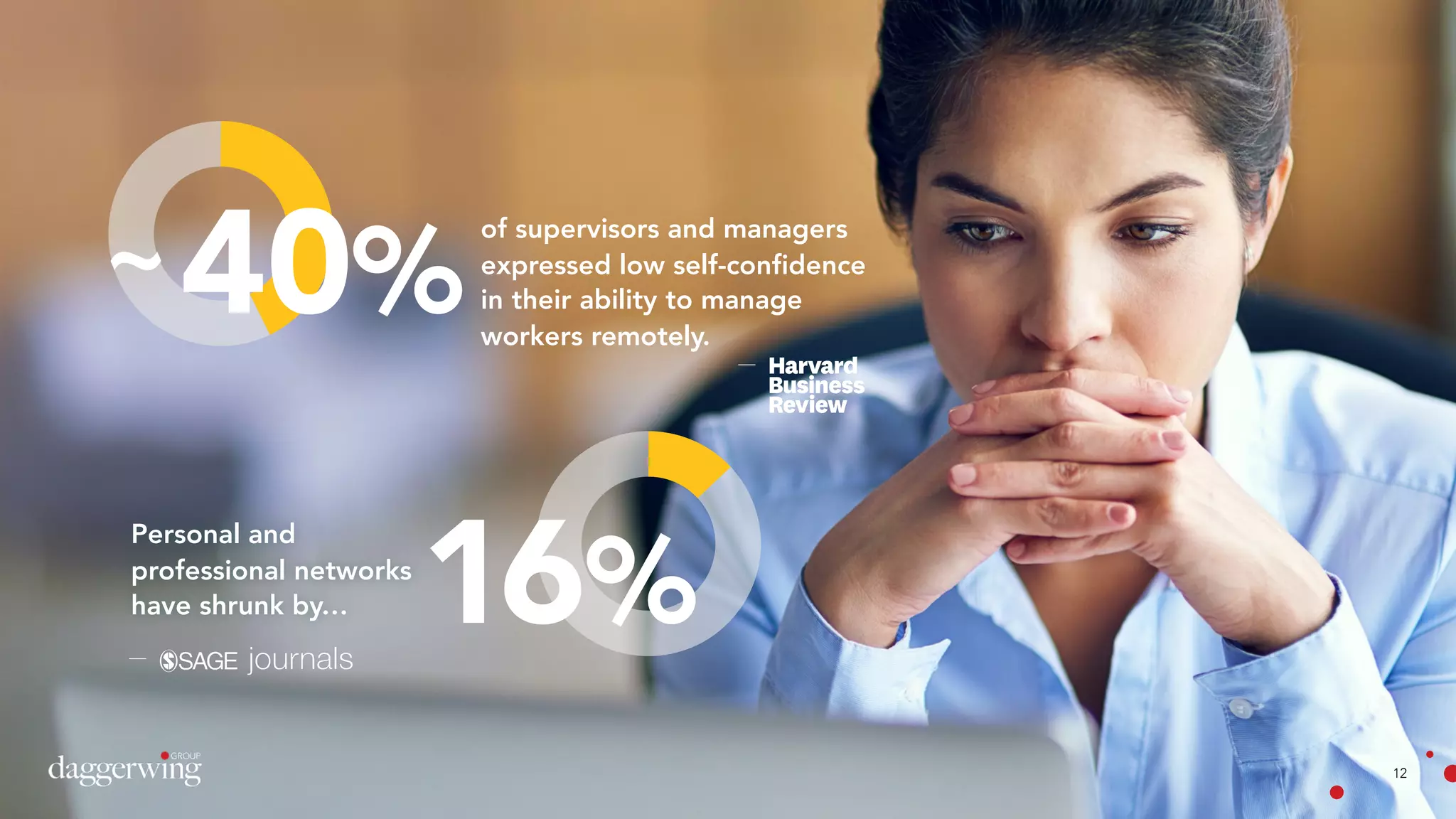
of supervisors and managers
expressed low self-confidence
in their ability to manage
workers remotely.
40%
~
Personal and
professional networks
have shrunk by… 16%
12
13
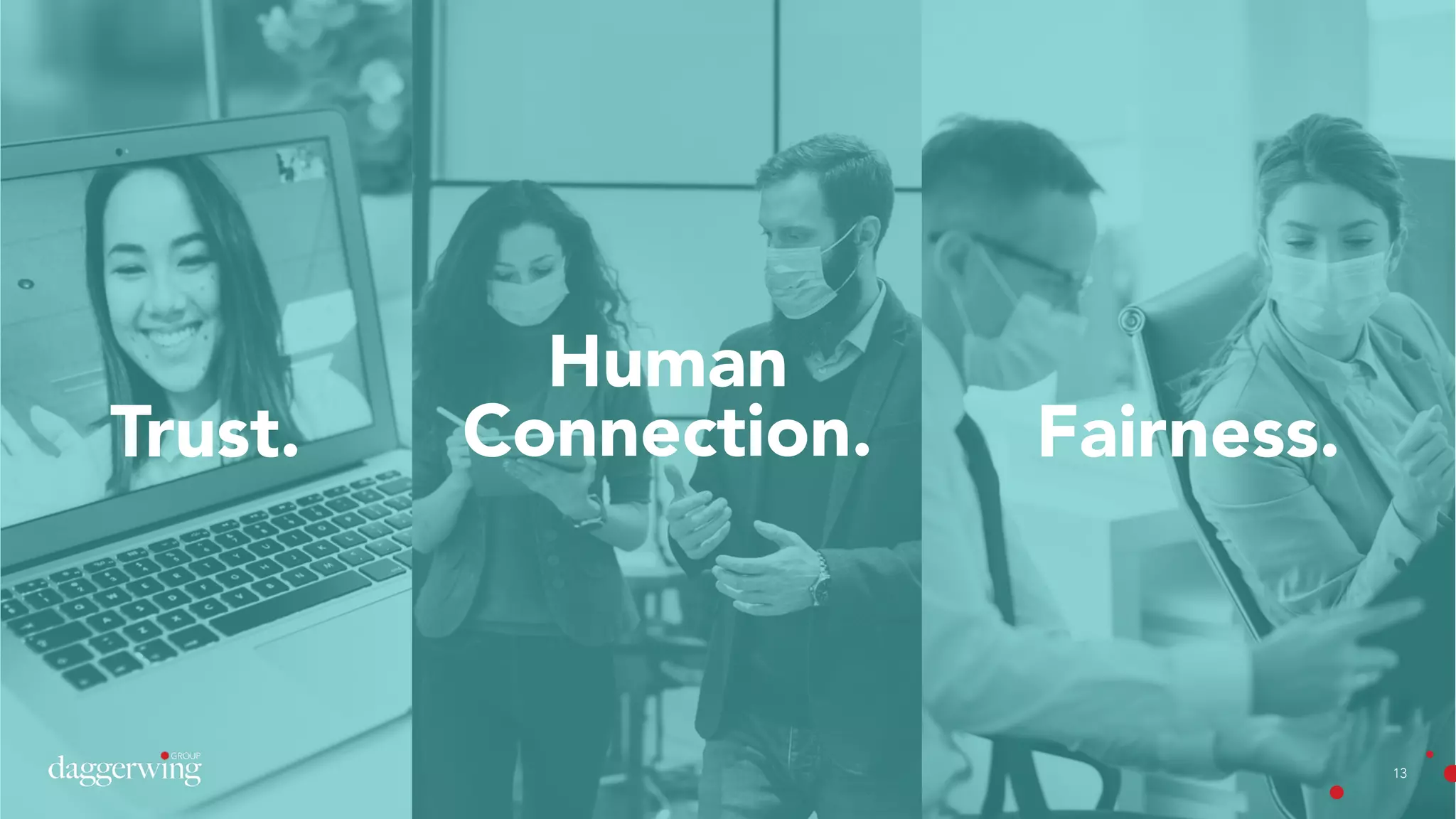
Challenges Fairness.
13
Trust.
Human
Connection.
14
The game plan
15
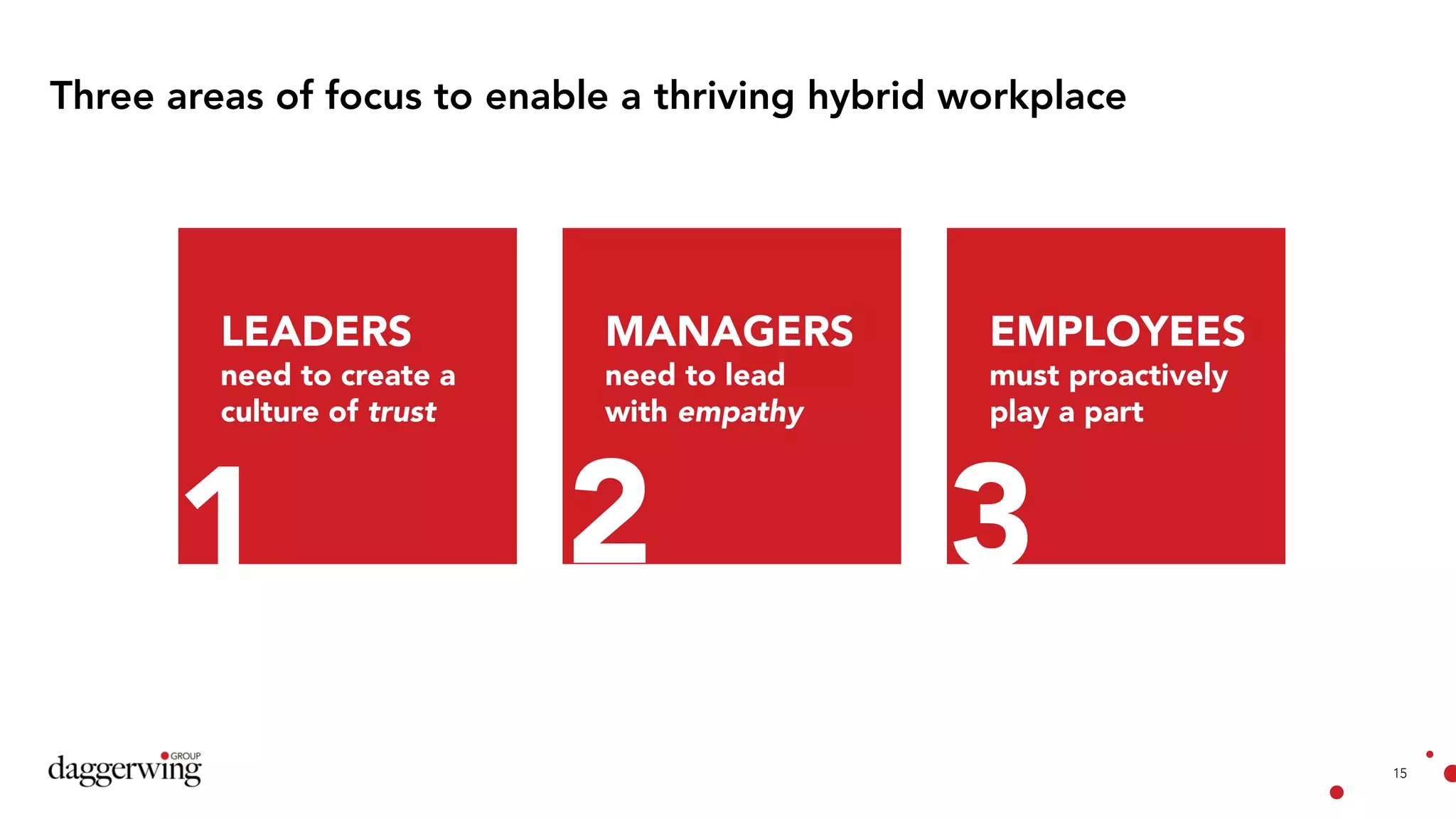
LEADERS
need to create a
culture of trust
Three areas of focus to enable a thriving hybrid workplace
MANAGERS
need to lead
with empathy
EMPLOYEES
must proactively
play a part
1 2 3
16
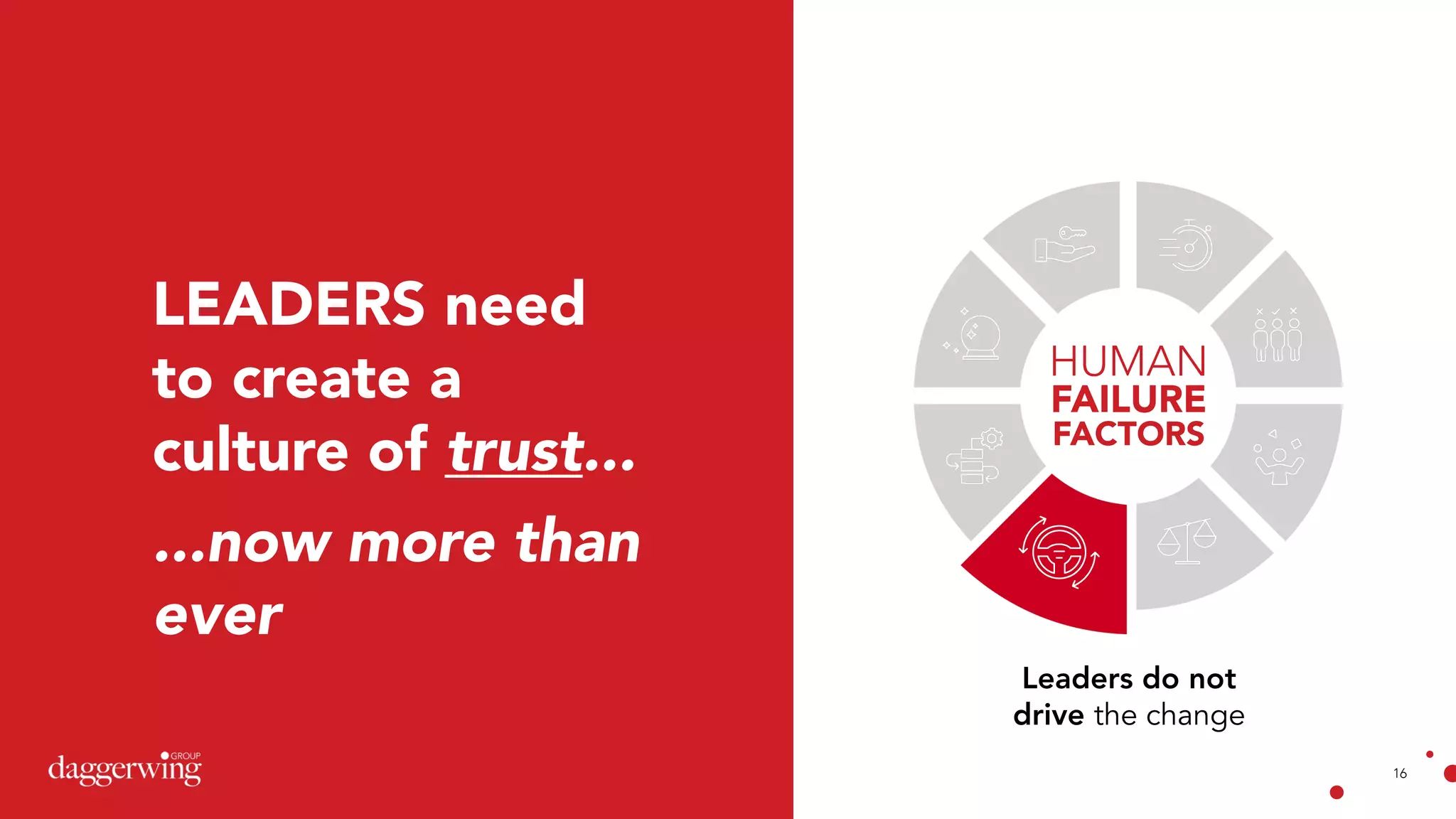
Leaders do not
drive the change
LEADERS need
to create a
culture of trust...
...now more than
ever
HUMAN
FAILURE
FACTORS
17
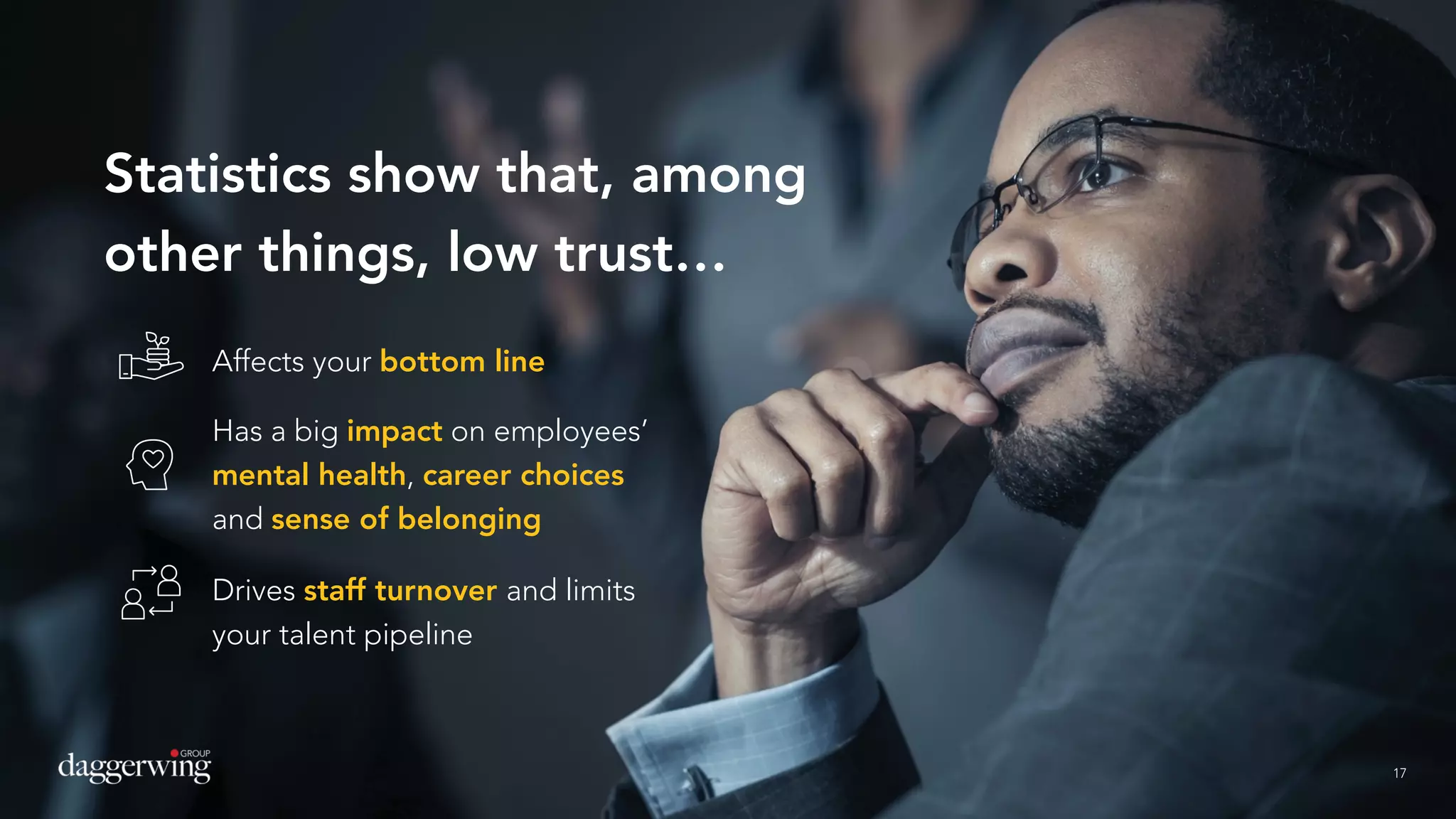
Statistics show that, among
other things, low trust…
17
Affects your bottom line
Has a big impact on employees’
mental health, career choices
and sense of belonging
Drives staff turnover and limits
your talent pipeline
18
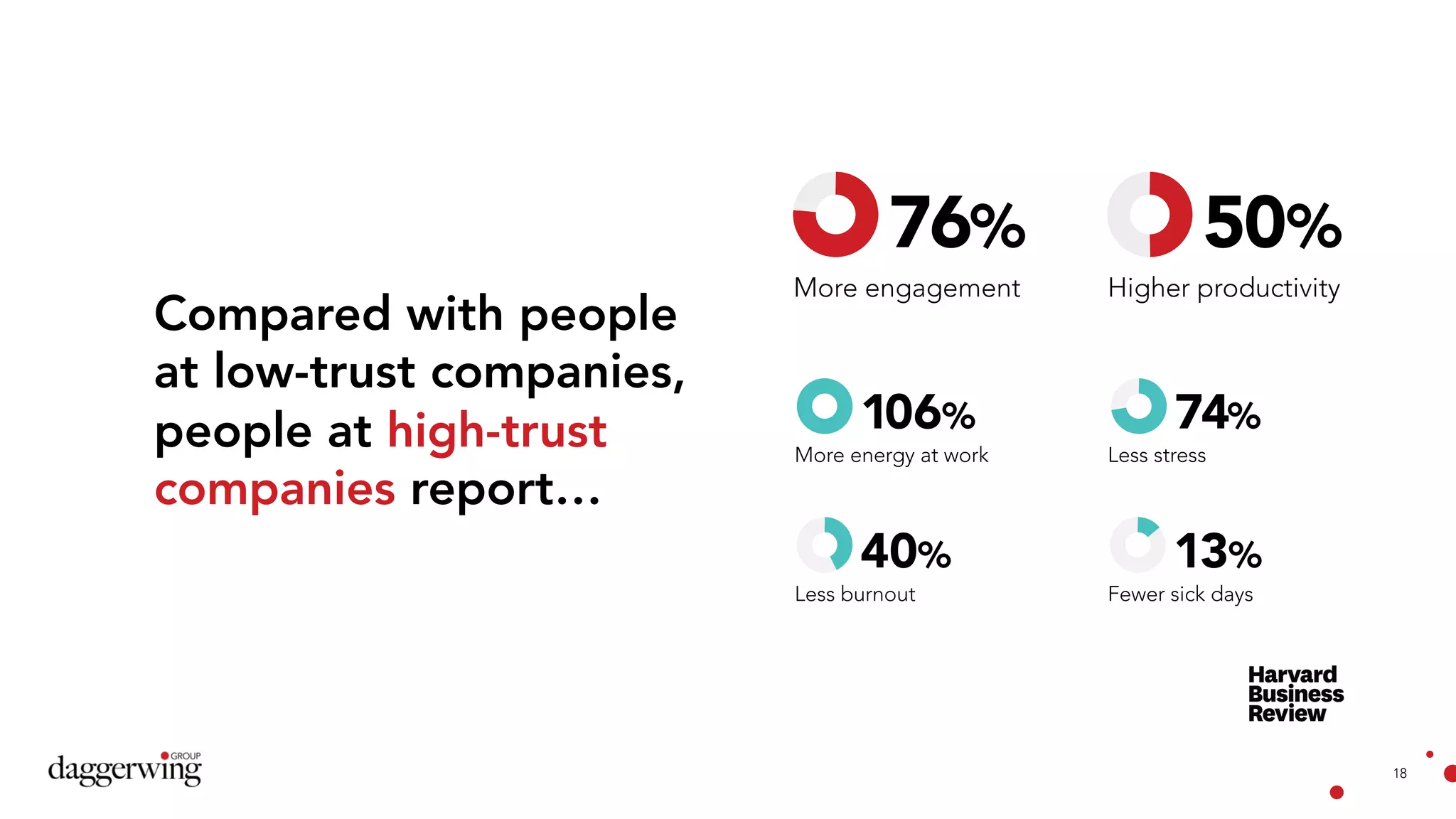
Compared with people
at low-trust companies,
people at high-trust
companies report…
76%
More engagement
50%
Higher productivity
106%
More energy at work
74%
Less stress
40%
Less burnout
13%
Fewer sick days
19
Building a culture of trust in a hybrid environment
20
Building a culture of trust in a hybrid environment
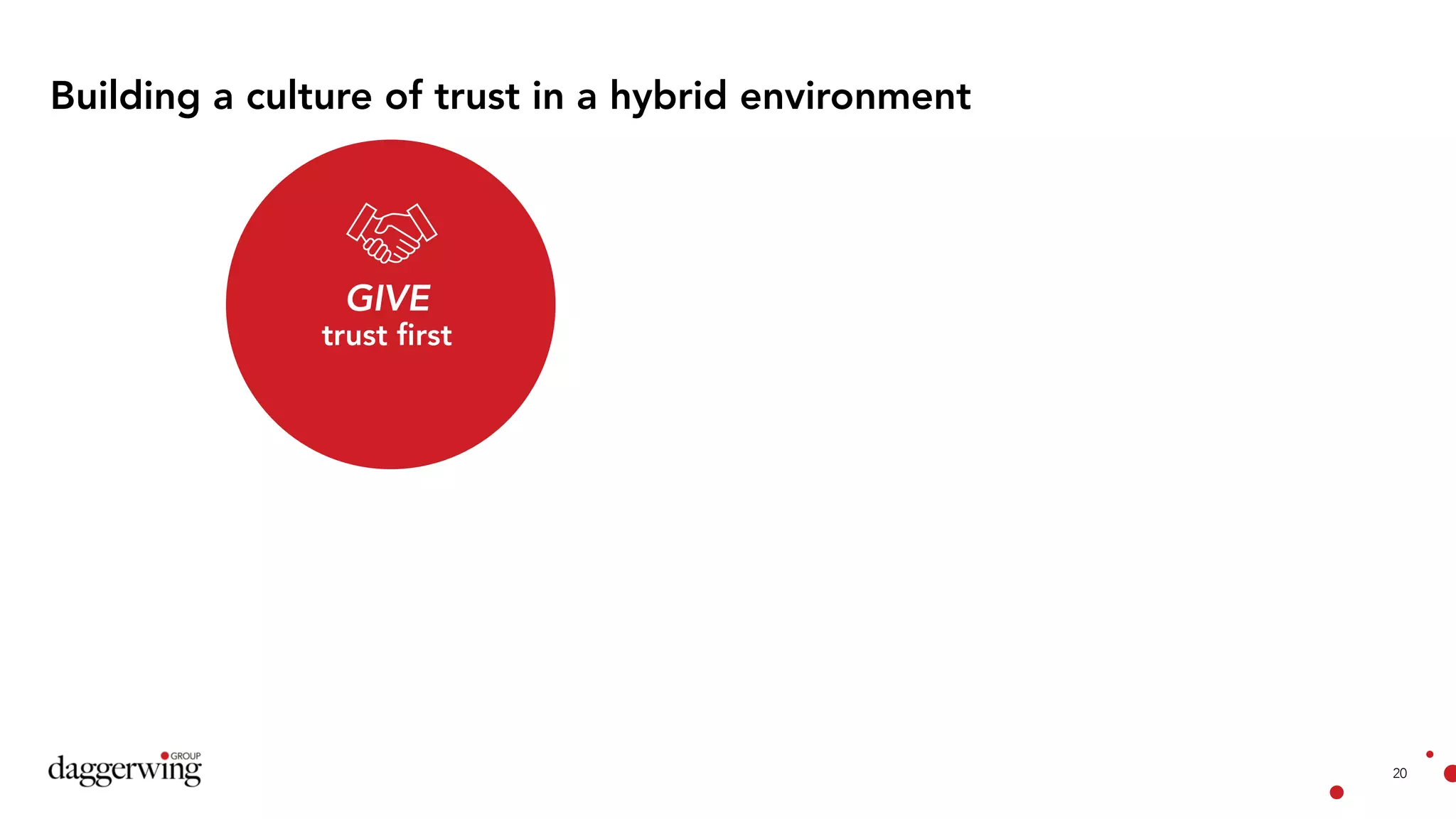
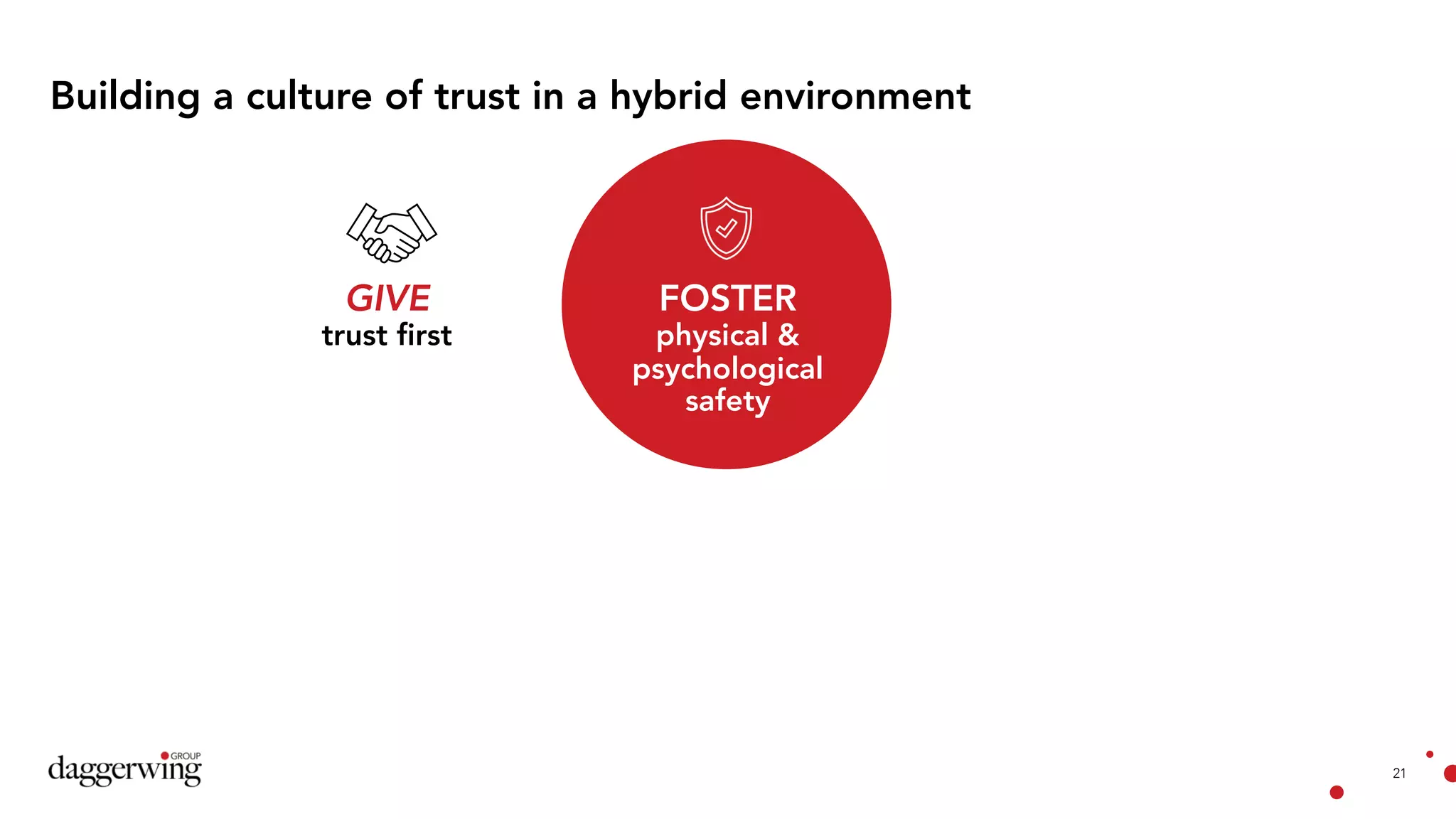
GIVE
trust first
21
Building a culture of trust in a hybrid environment
GIVE
trust first
FOSTER
physical &
psychological
safety
22
Building a culture of trust in a hybrid environment
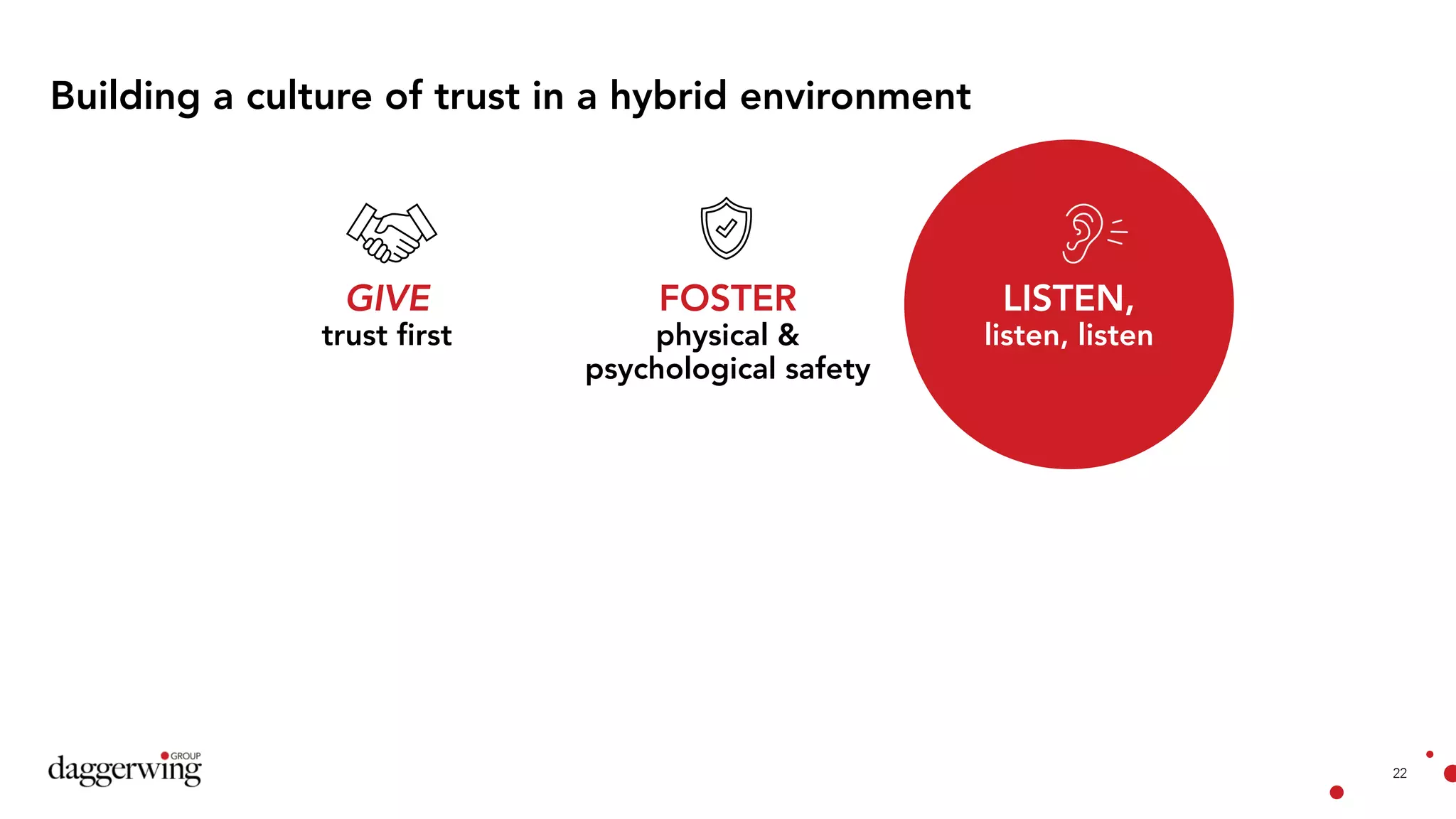
GIVE
trust first
LISTEN,
listen, listen
FOSTER
physical &
psychological safety
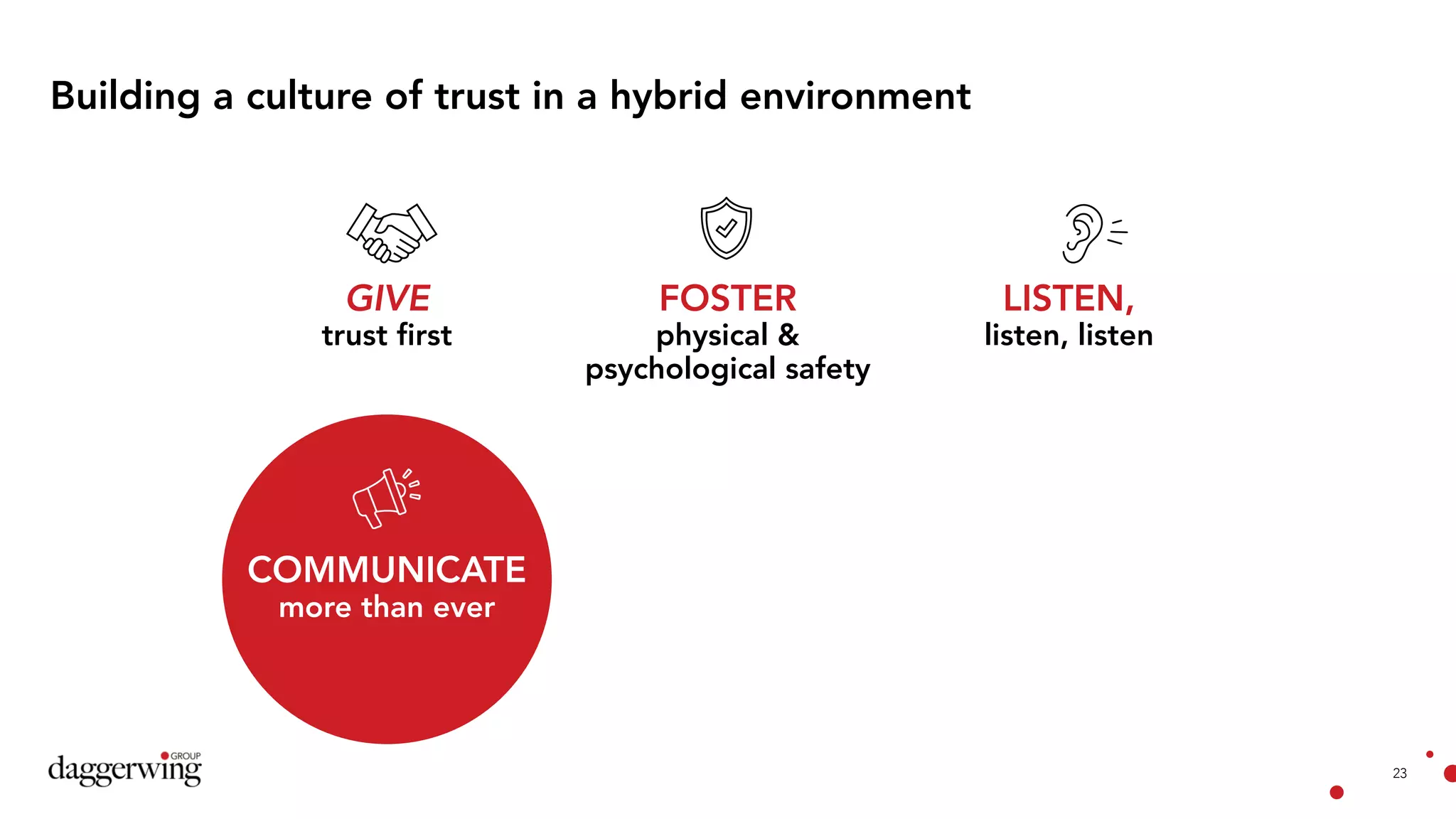
23
Building a culture of trust in a hybrid environment
GIVE
trust first
FOSTER
physical &
psychological safety
LISTEN,
listen, listen
COMMUNICATE
more than ever
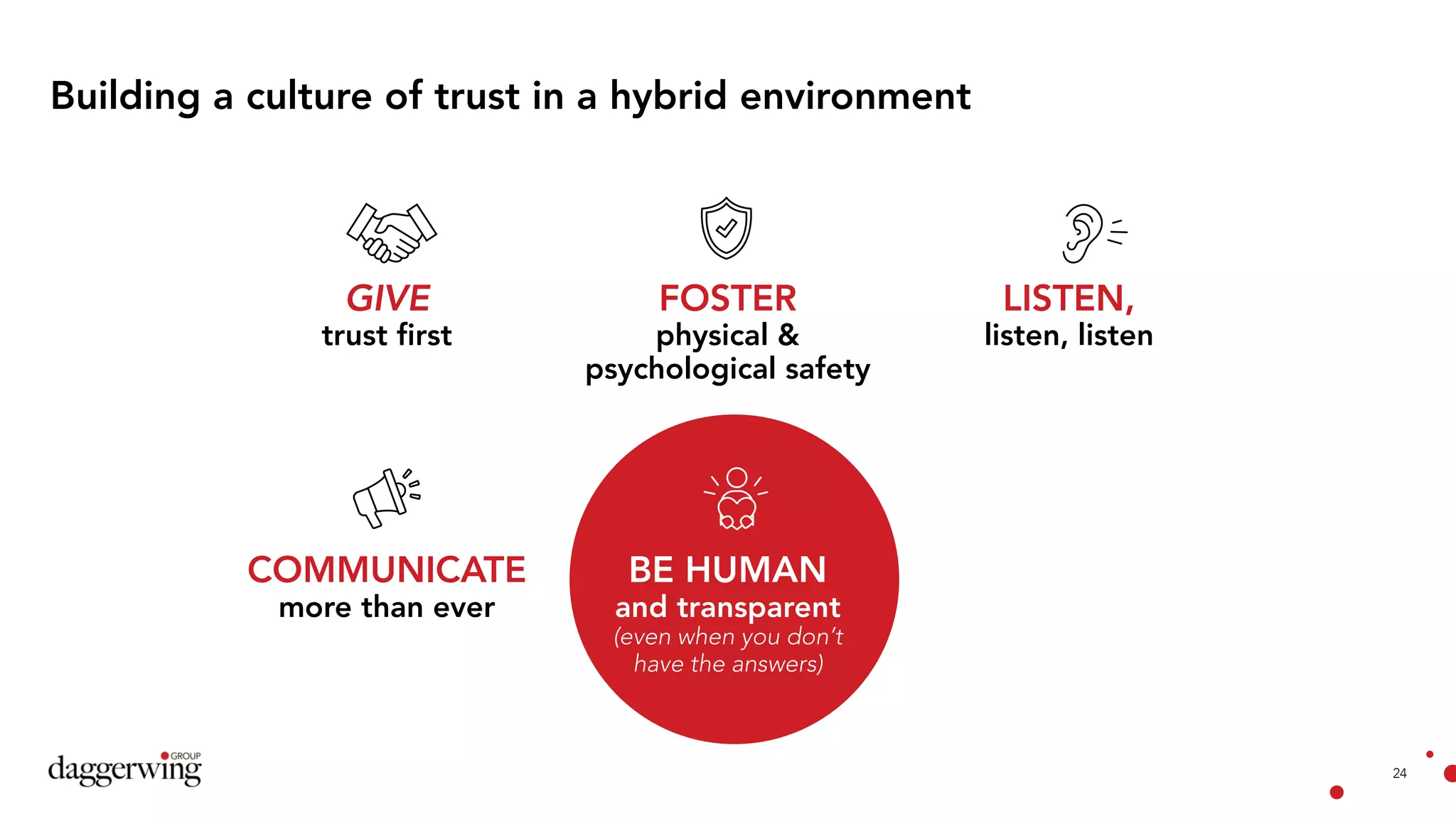
24
Building a culture of trust in a hybrid environment
GIVE
trust first
FOSTER
physical &
psychological safety
LISTEN,
listen, listen
COMMUNICATE
more than ever
BE HUMAN
and transparent
(even when you don’t
have the answers)
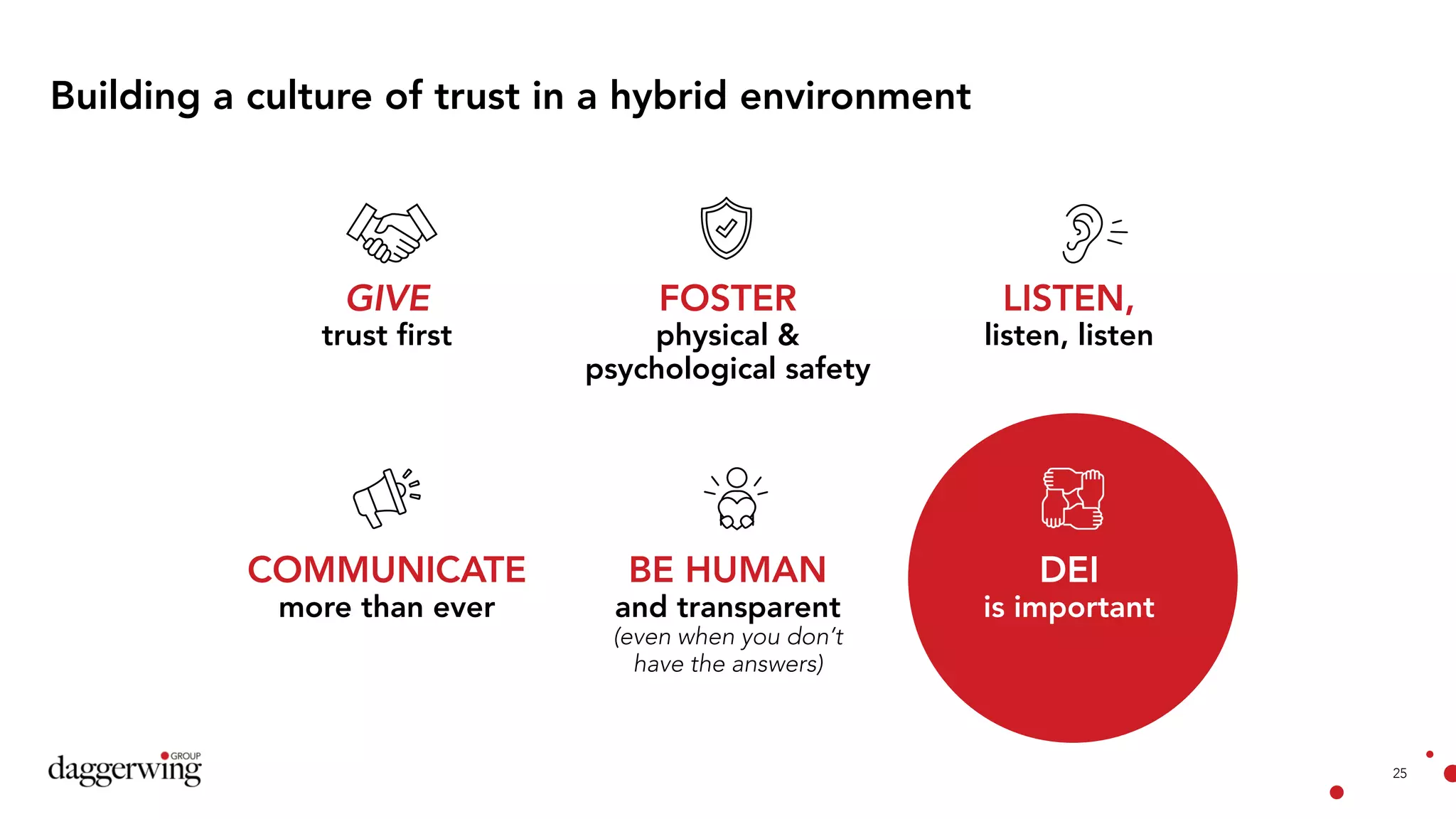
25
Building a culture of trust in a hybrid environment
GIVE
trust first
FOSTER
physical &
psychological safety
LISTEN,
listen, listen
COMMUNICATE
more than ever
DEI
is important
BE HUMAN
and transparent
(even when you don’t
have the answers)
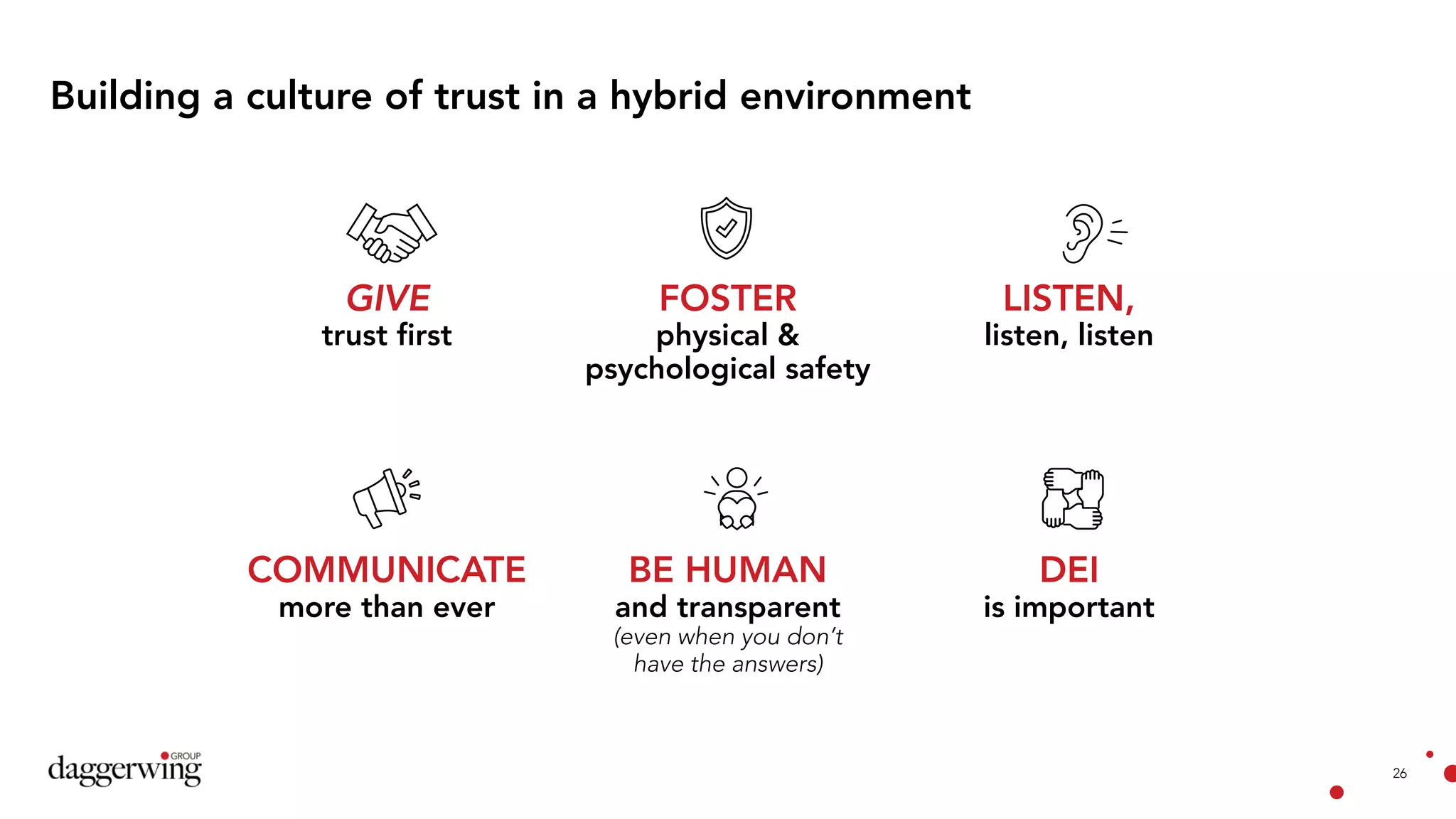
26
Building a culture of trust in a hybrid environment
GIVE
trust first
FOSTER
physical &
psychological safety
LISTEN,
listen, listen
COMMUNICATE
more than ever
BE HUMAN
and transparent
(even when you don’t
have the answers)
DEI
is important
27
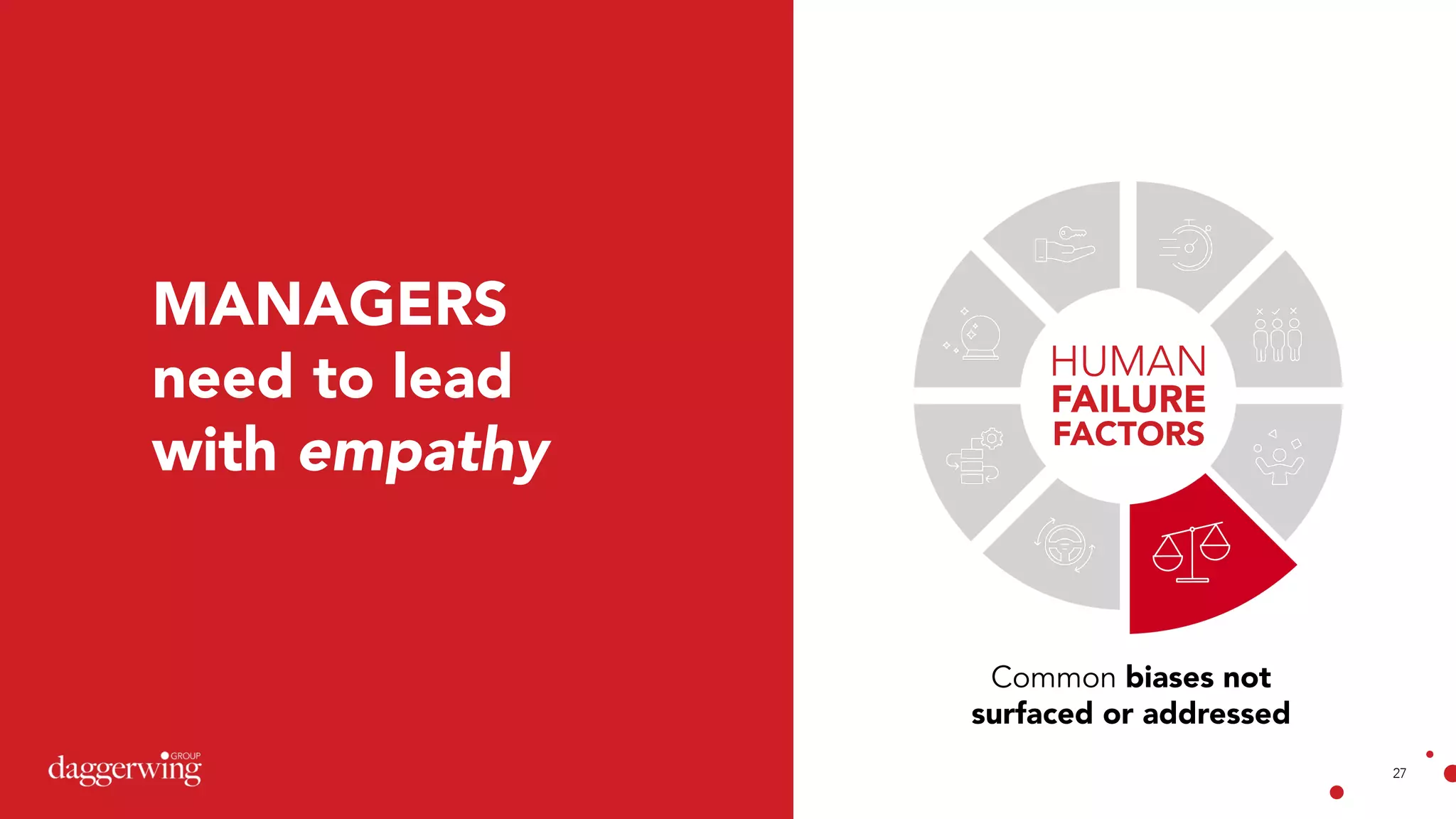
Common biases not
surfaced or addressed
HUMAN
FAILURE
FACTORS
MANAGERS
need to lead
with empathy
28
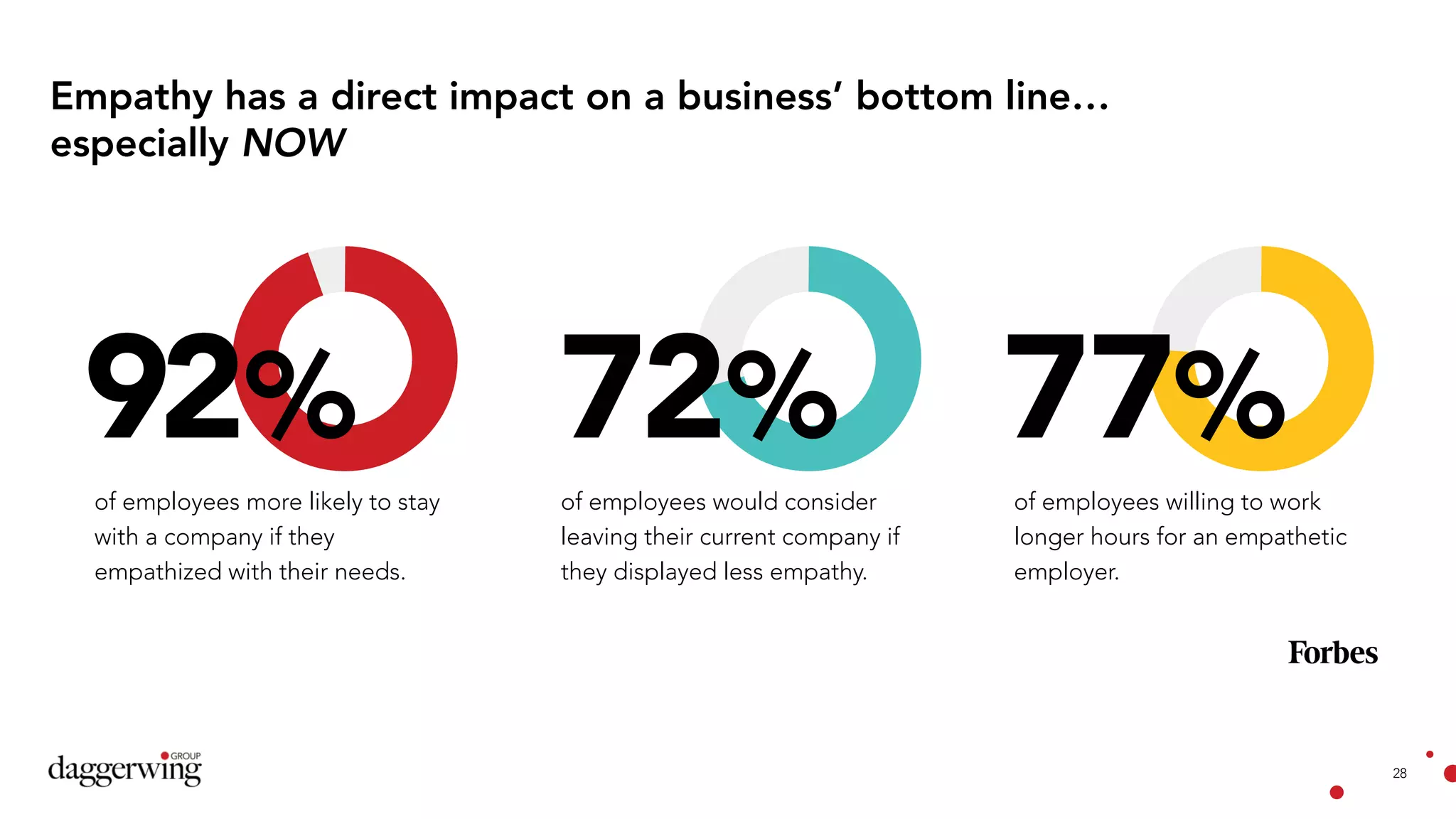
Empathy has a direct impact on a business’ bottom line…
especially NOW
of employees more likely to stay
with a company if they
empathized with their needs.
of employees would consider
leaving their current company if
they displayed less empathy.
of employees willing to work
longer hours for an empathetic
employer.
92% 72% 77%
29
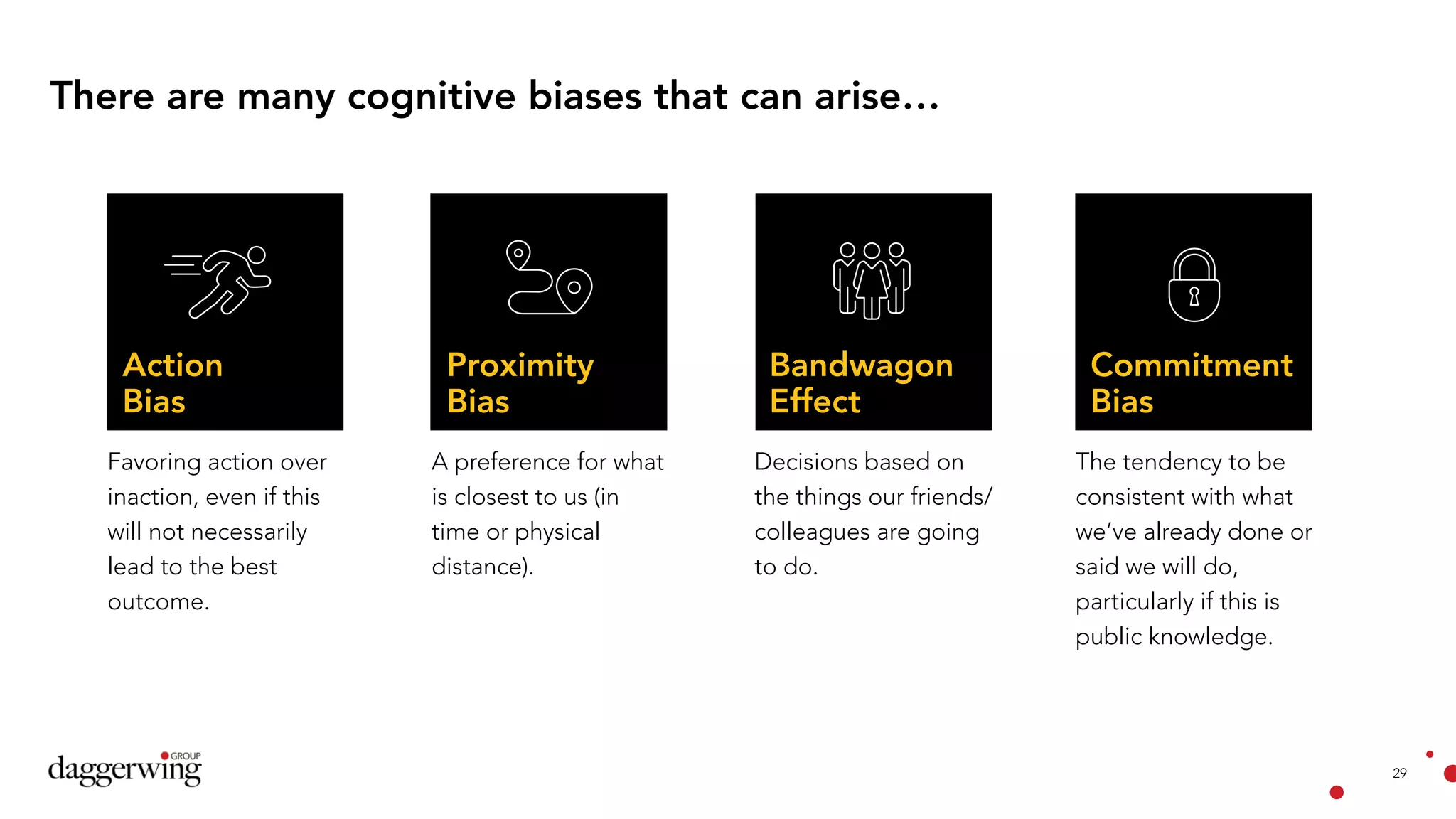
There are many cognitive biases that can arise…
Favoring action over
inaction, even if this
will not necessarily
lead to the best
outcome.
A preference for what
is closest to us (in
time or physical
distance).
The tendency to be
consistent with what
we’ve already done or
said we will do,
particularly if this is
public knowledge.
Action
Bias
Proximity
Bias
Bandwagon
Effect
Commitment
Bias
Decisions based on
the things our friends/
colleagues are going
to do.
30
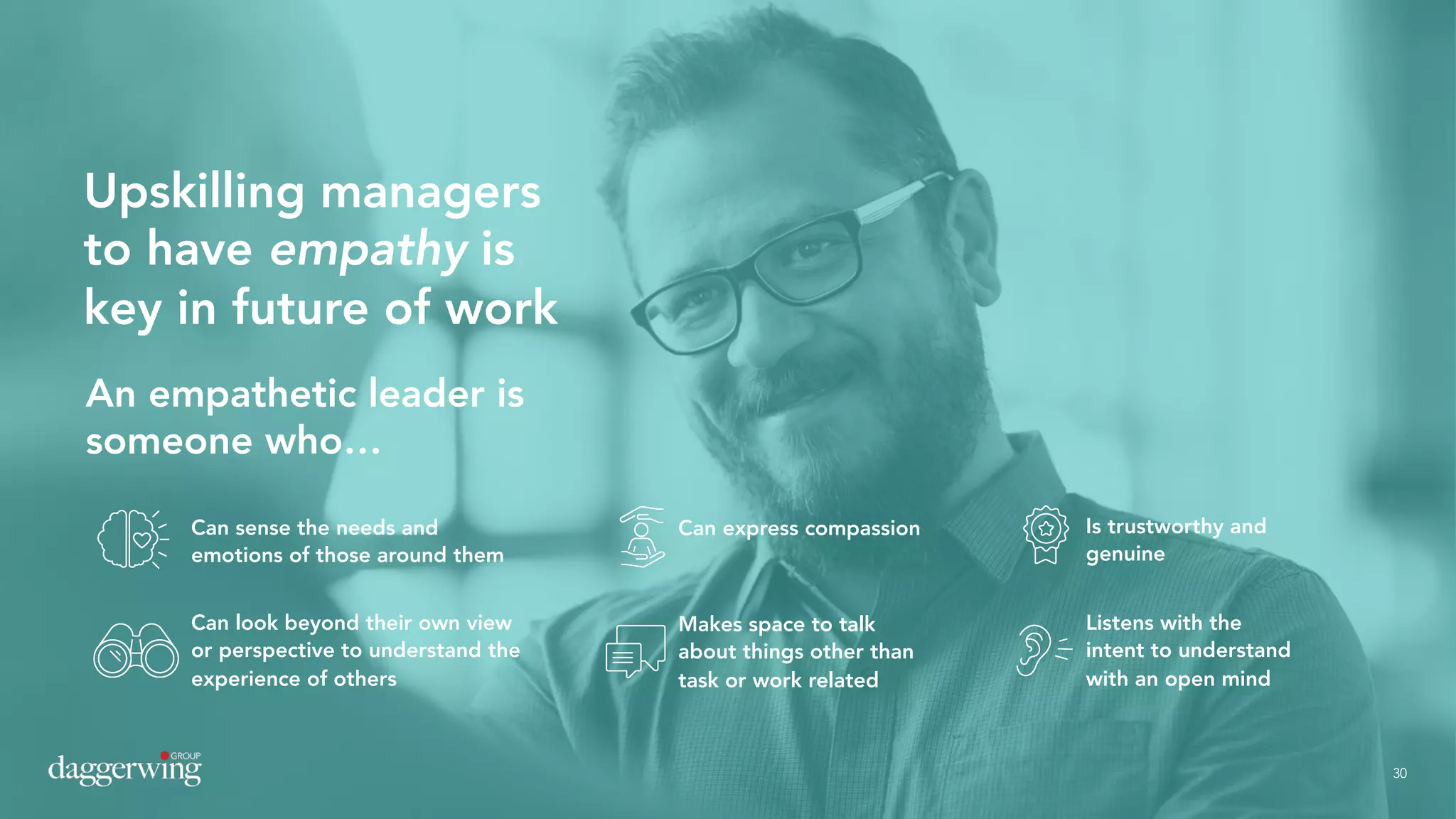
Upskilling managers
to have empathy is
key in future of work
An empathetic leader is
someone who…
Can sense the needs and
emotions of those around them
Can express compassion Is trustworthy and
genuine
Makes space to talk
about things other than
task or work related
Can look beyond their own view
or perspective to understand the
experience of others
Listens with the
intent to understand
with an open mind
30
31
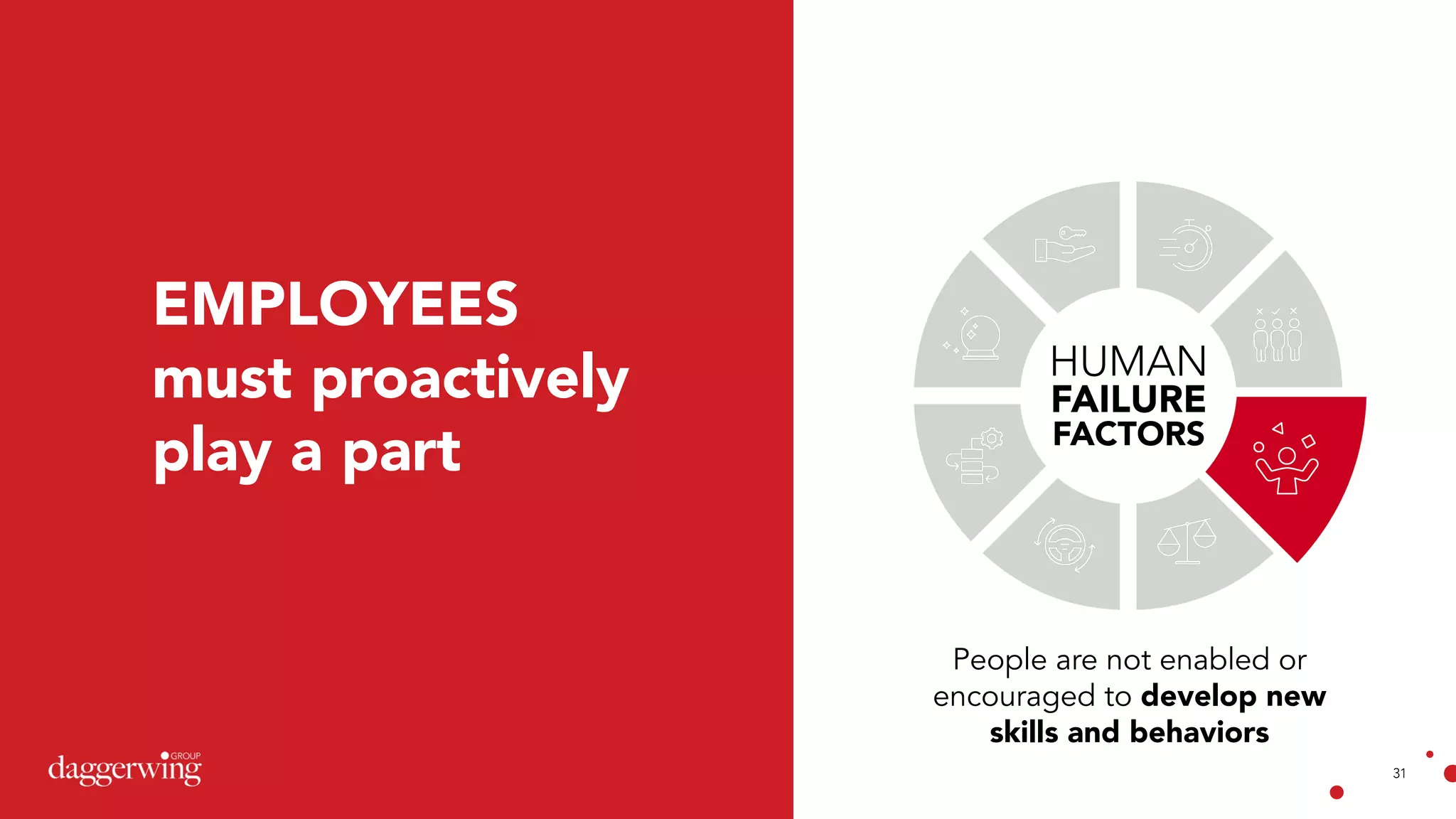
People are not enabled or
encouraged to develop new
skills and behaviors
EMPLOYEES
must proactively
play a part
HUMAN
FAILURE
FACTORS
32
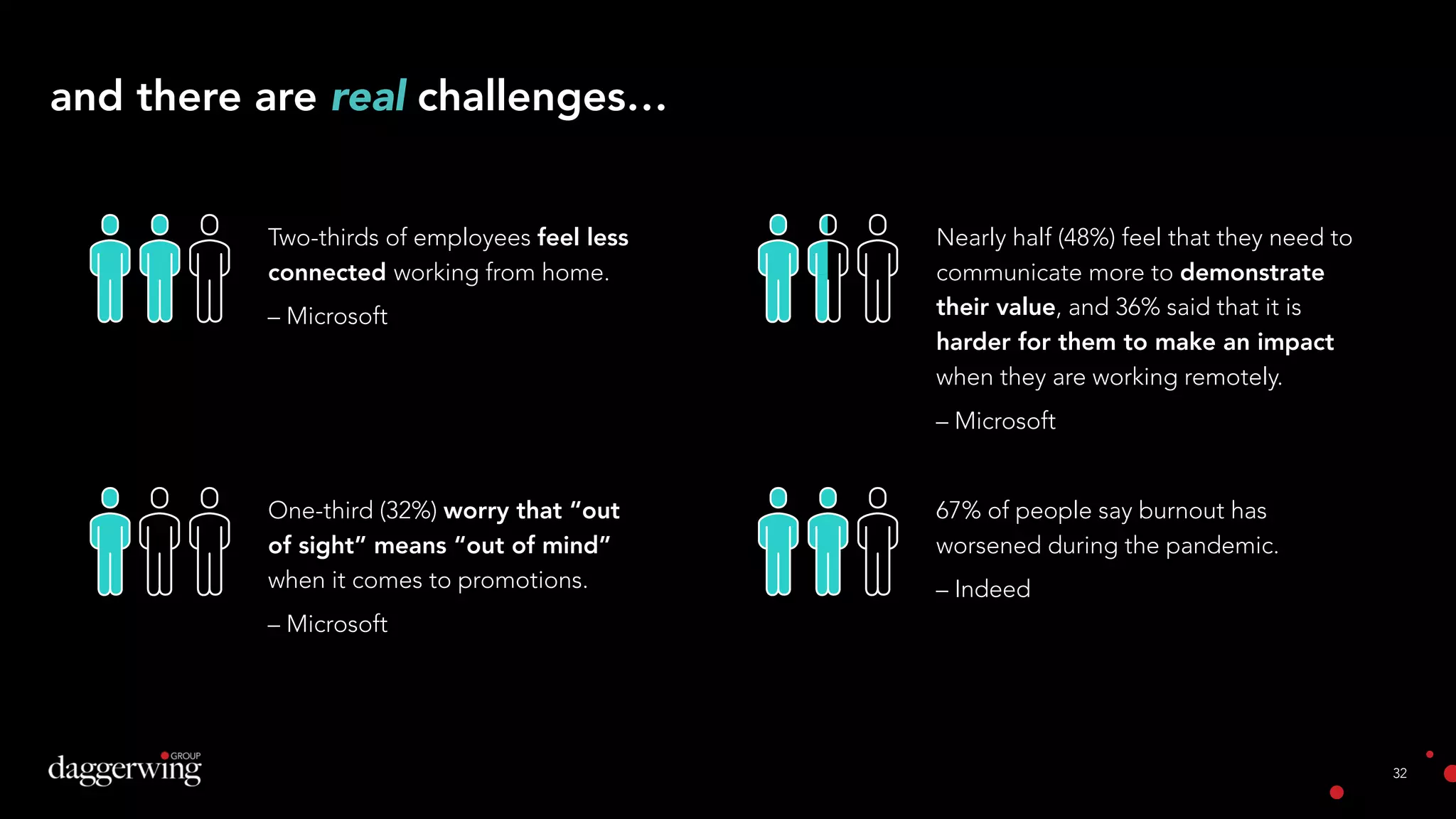
Two-thirds of employees feel less
connected working from home.
– Microsoft
One-third (32%) worry that “out
of sight” means “out of mind”
when it comes to promotions.
– Microsoft
Nearly half (48%) feel that they need to
communicate more to demonstrate
their value, and 36% said that it is
harder for them to make an impact
when they are working remotely.
– Microsoft
67% of people say burnout has
worsened during the pandemic.
– Indeed
and there are real challenges…
33
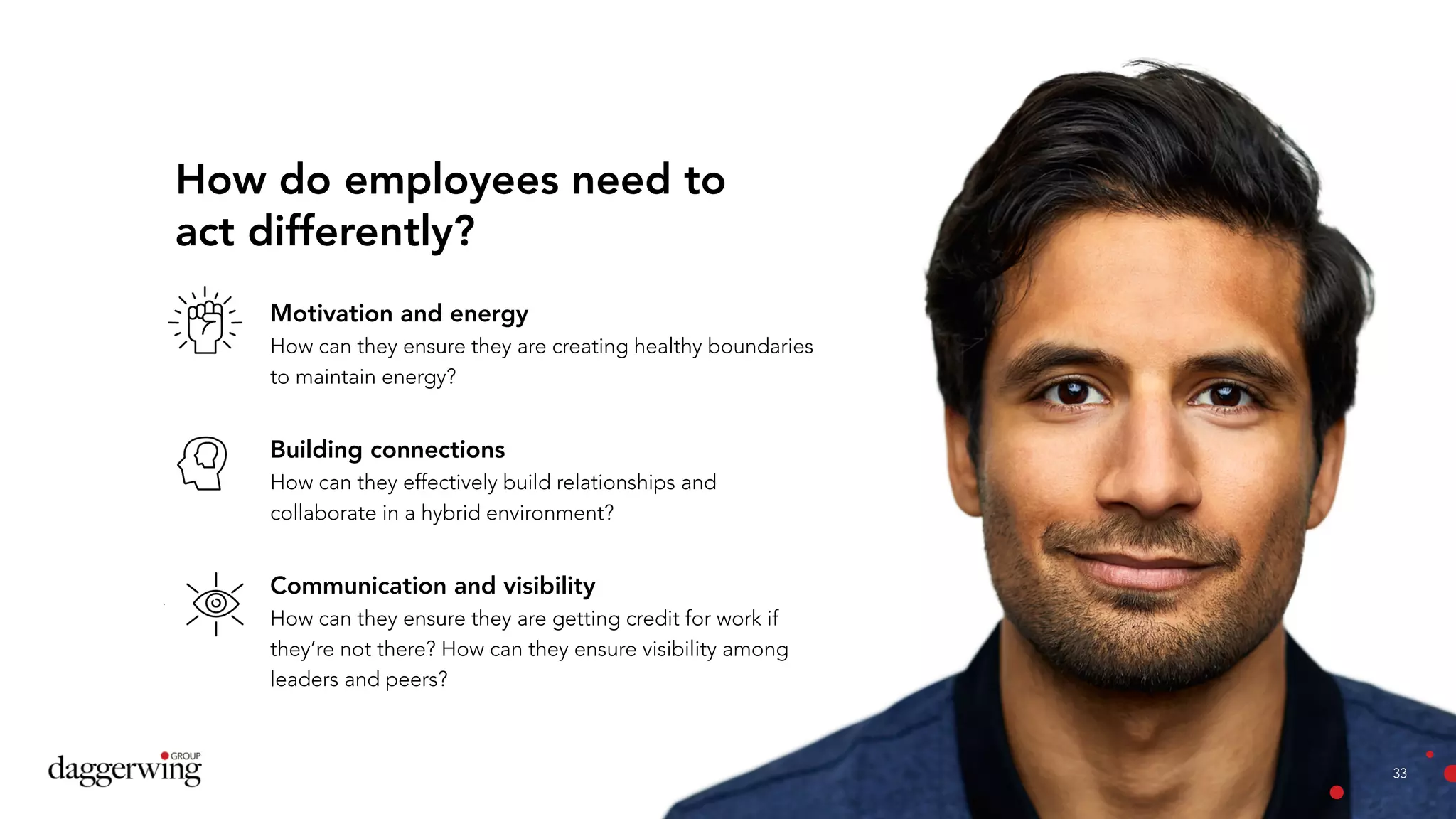
How do employees need to
act differently?
Building connections
How can they effectively build relationships and
collaborate in a hybrid environment?
Motivation and energy
How can they ensure they are creating healthy boundaries
to maintain energy?
Communication and visibility
How can they ensure they are getting credit for work if
they’re not there? How can they ensure visibility among
leaders and peers?
33
34
In summary…
35
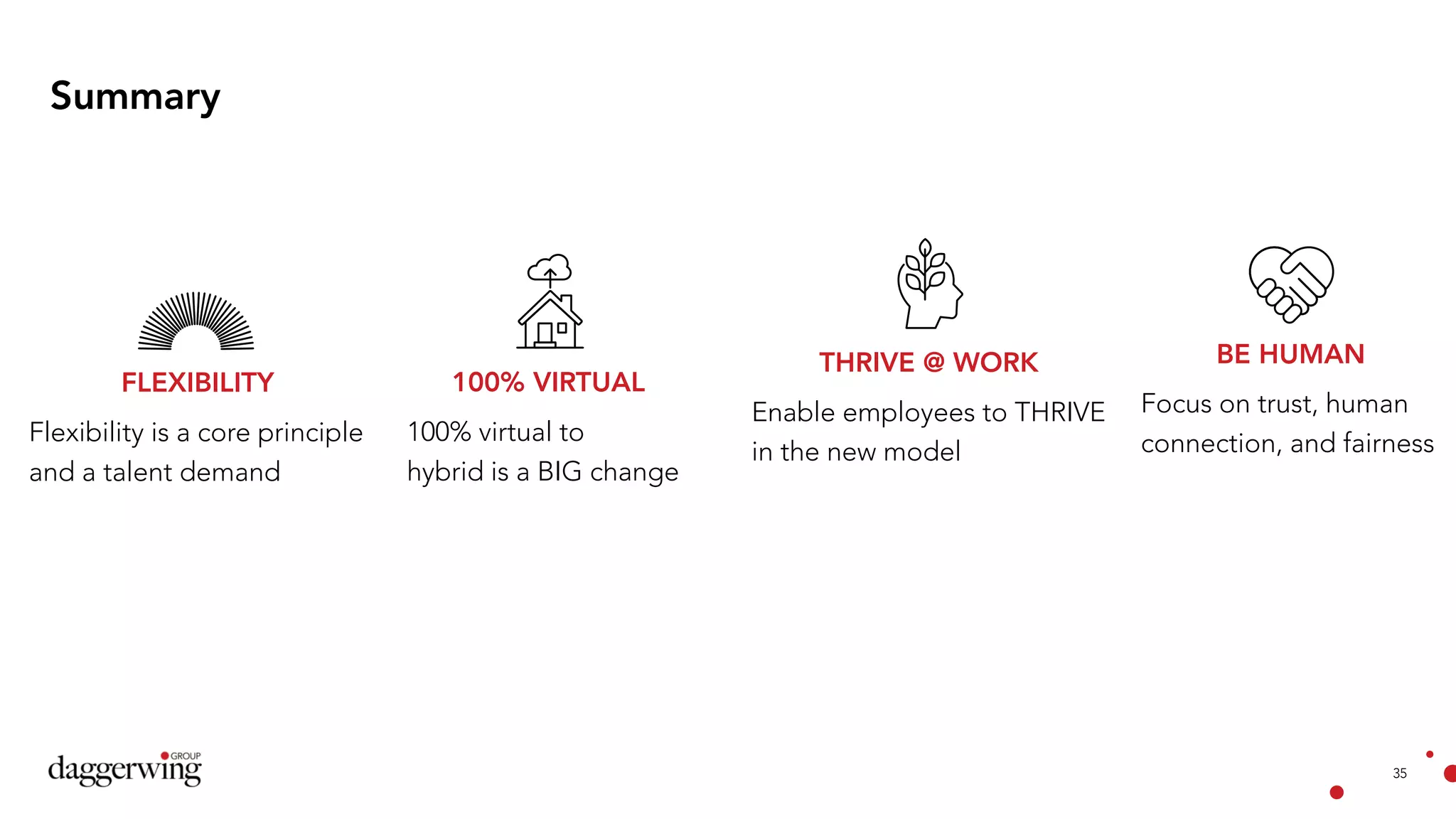
Summary
FLEXIBILITY
Flexibility is a core principle
and a talent demand
100% VIRTUAL
100% virtual to
hybrid is a BIG change
THRIVE @ WORK
Enable employees to THRIVE
in the new model
BE HUMAN
Focus on trust, human
connection, and fairness
36
Questions?
Thank you.
Malek El Refaie, Principal
melrefaie@daggerwinggroup.com
Michelle Mahony, Senior Principal
mmahony@daggerwinggroup.com

Making the Shift to a Hybrid Working Model: Are You Ready?

  • 1.
    Proprietary and Confidential.Not for reproduction or distribution without prior written consent. Making the Shift to a Hybrid Working Model: Are you ready? June 22, 2021
  • 2.
  • 3.
    3 We are aglobal change consultancy focused on the people side of change Because organizations don’t change… Percentage of core Daggerwing clients in the Fortune 500 70% FORTUNE 500 Daggerwing was named a Global Leader in communications and change management consulting* TOP 10 GLOBAL RATING Breadth of countries where Daggerwing has worked with clients over the past 3 years 35 COUNTRIES people do.
  • 4.
    4 What today's about… We won’t giveyou a playbook for getting back in the office – that’s not what today is about. We will provide a different perspective on the challenges of transitioning to a hybrid model. We will give you insights and actions on how to create a working environment that can enable all workers to thrive. In the next 30 minutes, here’s what you can expect: 1 2 3
  • 5.
  • 6.
    6 39% of employees would considerquitting if their employer wasn’t flexible about remote work.
  • 7.
    7 The hybrid workingmodel will be the norm in 2021 and beyond… of leaders say their company is considering redesigning office space for hybrid work. of employees want flexible remote work options to stay. of employees want more in- person work or collaboration post-pandemic. 66% 73% 67%
  • 8.
    8 Many organizations havealready flagged their models
  • 9.
    9 The change isbigger than we think... Always onsite Hybrid model From… To… Fully remote (>1 year) Hybrid model Always onsite or
  • 10.
  • 11.
    11 The transition tohybrid working BASIC NEEDS PSYCHOLOGICAL NEEDS THRIVING @ WORK Getting people set-up and functional Ensuring inclusion, well-being, career development, and culture Awareness and accountability of leaders, managers and employees to create an environment where people thrive Successful Hybrid Working Model New work model announcement Addressing the psychological needs Focusing on what employees need to thrive 1 2 3
  • 12.
    12 of supervisors andmanagers expressed low self-confidence in their ability to manage workers remotely. 40% ~ Personal and professional networks have shrunk by… 16% 12
  • 13.
  • 14.
  • 15.
    15 LEADERS need to createa culture of trust Three areas of focus to enable a thriving hybrid workplace MANAGERS need to lead with empathy EMPLOYEES must proactively play a part 1 2 3
  • 16.
    16 Leaders do not drivethe change LEADERS need to create a culture of trust... ...now more than ever HUMAN FAILURE FACTORS
  • 17.
    17 Statistics show that,among other things, low trust… 17 Affects your bottom line Has a big impact on employees’ mental health, career choices and sense of belonging Drives staff turnover and limits your talent pipeline
  • 18.
    18 Compared with people atlow-trust companies, people at high-trust companies report… 76% More engagement 50% Higher productivity 106% More energy at work 74% Less stress 40% Less burnout 13% Fewer sick days
  • 19.
    19 Building a cultureof trust in a hybrid environment
  • 20.
    20 Building a cultureof trust in a hybrid environment GIVE trust first
  • 21.
    21 Building a cultureof trust in a hybrid environment GIVE trust first FOSTER physical & psychological safety
  • 22.
    22 Building a cultureof trust in a hybrid environment GIVE trust first LISTEN, listen, listen FOSTER physical & psychological safety
  • 23.
    23 Building a cultureof trust in a hybrid environment GIVE trust first FOSTER physical & psychological safety LISTEN, listen, listen COMMUNICATE more than ever
  • 24.
    24 Building a cultureof trust in a hybrid environment GIVE trust first FOSTER physical & psychological safety LISTEN, listen, listen COMMUNICATE more than ever BE HUMAN and transparent (even when you don’t have the answers)
  • 25.
    25 Building a cultureof trust in a hybrid environment GIVE trust first FOSTER physical & psychological safety LISTEN, listen, listen COMMUNICATE more than ever DEI is important BE HUMAN and transparent (even when you don’t have the answers)
  • 26.
    26 Building a cultureof trust in a hybrid environment GIVE trust first FOSTER physical & psychological safety LISTEN, listen, listen COMMUNICATE more than ever BE HUMAN and transparent (even when you don’t have the answers) DEI is important
  • 27.
    27 Common biases not surfacedor addressed HUMAN FAILURE FACTORS MANAGERS need to lead with empathy
  • 28.
    28 Empathy has adirect impact on a business’ bottom line… especially NOW of employees more likely to stay with a company if they empathized with their needs. of employees would consider leaving their current company if they displayed less empathy. of employees willing to work longer hours for an empathetic employer. 92% 72% 77%
  • 29.
    29 There are manycognitive biases that can arise… Favoring action over inaction, even if this will not necessarily lead to the best outcome. A preference for what is closest to us (in time or physical distance). The tendency to be consistent with what we’ve already done or said we will do, particularly if this is public knowledge. Action Bias Proximity Bias Bandwagon Effect Commitment Bias Decisions based on the things our friends/ colleagues are going to do.
  • 30.
    30 Upskilling managers to haveempathy is key in future of work An empathetic leader is someone who… Can sense the needs and emotions of those around them Can express compassion Is trustworthy and genuine Makes space to talk about things other than task or work related Can look beyond their own view or perspective to understand the experience of others Listens with the intent to understand with an open mind 30
  • 31.
    31 People are notenabled or encouraged to develop new skills and behaviors EMPLOYEES must proactively play a part HUMAN FAILURE FACTORS
  • 32.
    32 Two-thirds of employeesfeel less connected working from home. – Microsoft One-third (32%) worry that “out of sight” means “out of mind” when it comes to promotions. – Microsoft Nearly half (48%) feel that they need to communicate more to demonstrate their value, and 36% said that it is harder for them to make an impact when they are working remotely. – Microsoft 67% of people say burnout has worsened during the pandemic. – Indeed and there are real challenges…
  • 33.
    33 How do employeesneed to act differently? Building connections How can they effectively build relationships and collaborate in a hybrid environment? Motivation and energy How can they ensure they are creating healthy boundaries to maintain energy? Communication and visibility How can they ensure they are getting credit for work if they’re not there? How can they ensure visibility among leaders and peers? 33
  • 34.
  • 35.
    35 Summary FLEXIBILITY Flexibility is acore principle and a talent demand 100% VIRTUAL 100% virtual to hybrid is a BIG change THRIVE @ WORK Enable employees to THRIVE in the new model BE HUMAN Focus on trust, human connection, and fairness
  • 36.
  • 37.
    Thank you. Malek ElRefaie, Principal melrefaie@daggerwinggroup.com Michelle Mahony, Senior Principal mmahony@daggerwinggroup.com