Making Loyalty Pay
Sept. 30, 2013
Any use of this material without specific permission of McKinsey & Company is strictly prohibited
McKinsey on Marketing & Sales – Slideshare Brief
McKinsey & Company |
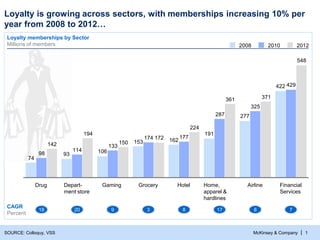
Loyalty is growing across sectors, with memberships increasing 10% per
year from 2008 to 2012…
1SOURCE: Colloquy, VSS
CAGR
Percent
18 20 3 89 17 8 7
201220102008
Loyalty memberships by Sector
Millions of members
422
277
191
162153
106
93
74
429
325
287
177174
133
114
98
548
371361
224
172
150
194
142
Financial
Services
AirlineHome, ap
parel &
hardlines
HotelGroceryGamingDepart-
ment store
Drug
McKinsey & Company |
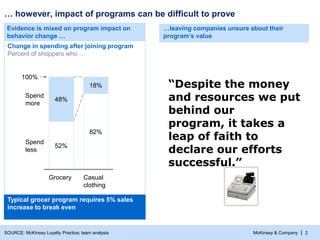
… however, impact of programs can be difficult to prove
2SOURCE: McKinsey Loyalty Practice; team analysis
Change in spending after joining program
Percent of shoppers who …
18%
100%
Spend
less
Spend
more
Casual
clothing
82%
Grocery
52%
48%
Evidence is mixed on program impact on
behavior change …
…leaving companies unsure about their
program’s value
“Despite the money
and resources we put
behind our pro-
gram, it takes a leap
of faith to declare our
efforts successful.”
Typical grocer program requires 5% sales
increase to break even
McKinsey & Company |
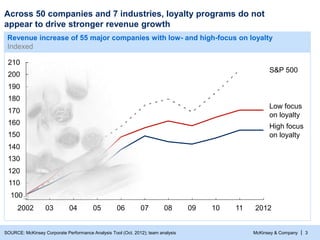
Across 50 companies and 7 industries, loyalty programs do not
appear to drive stronger revenue growth
SOURCE: McKinsey Corporate Performance Analysis Tool (Oct. 2012); team analysis 3
Revenue increase of 55 major companies with low- and high-focus on loyalty
Indexed
High focus
on loyalty
2012100908
170
210
200
190
180
11
160
150
140
130
120
110
S&P 500
Low focus
on loyalty
07060504032002
100
McKinsey & Company |
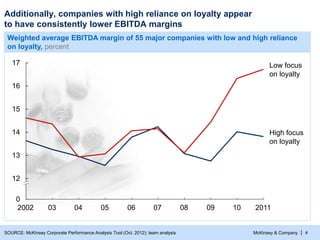
Additionally, companies with high reliance on loyalty appear
to have consistently lower EBITDA margins
4SOURCE: McKinsey Corporate Performance Analysis Tool (Oct. 2012); team analysis
Weighted average EBITDA margin of 55 major companies with low and high reliance
on loyalty, percent
17
16
15
14
13
12
0
Low focus
on loyalty
High focus
on loyalty
201110090807060504032002
McKinsey & Company |
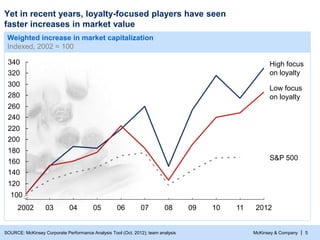
Yet in recent years, loyalty-focused players have seen
faster increases in market value
5SOURCE: McKinsey Corporate Performance Analysis Tool (Oct. 2012); team analysis
Weighted increase in market capitalization
Indexed, 2002 = 100
240
220
200
180
160
140
120
S&P 500
Low focus
on loyalty
High focus
on loyalty
20121110090807
340
320
300
280
260
060504032002
100
McKinsey & Company |
Food retail
Drug retail Hospitality
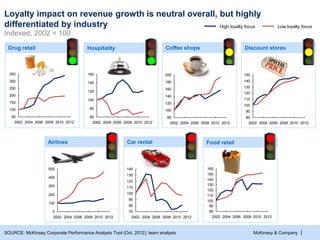
Loyalty impact on revenue growth is neutral overall, but highly
differentiated by industry
0
100
200
300
400
500
2002 2004 2006 2008 2010 2012
SOURCE: McKinsey Corporate Performance Analysis Tool (Oct. 2012); team analysis
70
80
90
100
110
120
130
140
2002 2004 2006 2008 2010 2012
80
100
120
140
160
180
200
2002 2004 2006 2008 2010 2012
80
90
100
110
120
130
140
150
2002 2004 2006 2008 2010 2012
50
100
150
200
250
300
350
2002 2004 2006 2008 2010 2012
80
90
100
110
120
130
140
150
160
2002 2004 2006 2008 2010 2012
60
80
100
120
140
160
2002 2004 2006 2008 2010 2012
Low loyalty focusHigh loyalty focus
Airlines
Coffee shops
Car rental
Discount stores
Indexed, 2002 = 100
McKinsey & Company |
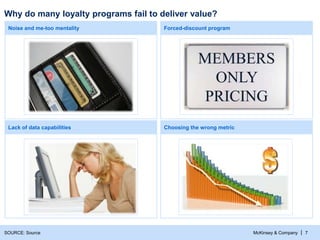
Why do many loyalty programs fail to deliver value?
7SOURCE: Source
Noise and me-too mentality Forced-discount program
Lack of data capabilities Choosing the wrong metric
McKinsey & Company |
Use the data
Integrate loyalty program into the
full experience
Hallmarks of success for loyalty programs that buck the trend (1/3)
8
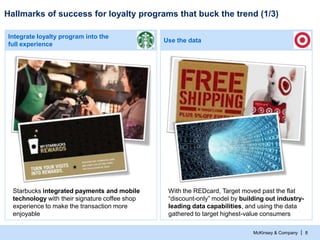
Starbucks integrated payments and mobile
technology with their signature coffee shop
experience to make the transaction more
enjoyable
With the REDcard, Target moved past the flat
“discount-only” model by building out industry-
leading data capabilities, and using the data
gathered to target highest-value consumers
McKinsey & Company |
Solve customer and industry
pain points
Build partnerships
Hallmarks of success for loyalty programs that buck the trend (2/3)
9
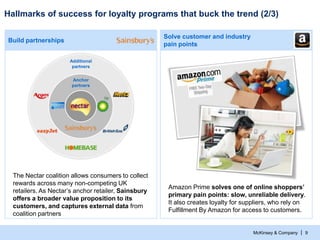
Additional
partners
Anchor
partners
The Nectar coalition allows consumers to collect
rewards across many non-competing UK
retailers. As Nectar’s anchor retailer, Sainsbury
offers a broader value proposition to its
customers, and captures external data from
coalition partners
Amazon Prime solves one of online shoppers’
primary pain points: slow, unreliable delivery.
It also creates loyalty for suppliers, who rely on
Fulfillment By Amazon for access to customers.
McKinsey & Company |
Allocate loyalty reinvestment
to the most profitable customers
Maximize difference between
perceived value and real cost
Hallmarks of success for loyalty programs that buck the trend (3/3)
10
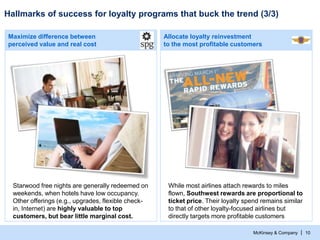
Starwood free nights are generally redeemed on
weekends, when hotels have low occupancy.
Other offerings (e.g., upgrades, flexible check-
in, Internet) are highly valuable to top
customers, but bear little marginal cost.
While most airlines attach rewards to miles
flown, Southwest rewards are proportional to
ticket price. Their loyalty spend remains similar
to that of other loyalty-focused airlines but
directly targets more profitable customers

Making loyalty pay: How to build - not destroy - value

  • 1.
    Making Loyalty Pay Sept.30, 2013 Any use of this material without specific permission of McKinsey & Company is strictly prohibited McKinsey on Marketing & Sales – Slideshare Brief
  • 2.
    McKinsey & Company| Loyalty is growing across sectors, with memberships increasing 10% per year from 2008 to 2012… 1SOURCE: Colloquy, VSS CAGR Percent 18 20 3 89 17 8 7 201220102008 Loyalty memberships by Sector Millions of members 422 277 191 162153 106 93 74 429 325 287 177174 133 114 98 548 371361 224 172 150 194 142 Financial Services AirlineHome, ap parel & hardlines HotelGroceryGamingDepart- ment store Drug
  • 3.
    McKinsey & Company| … however, impact of programs can be difficult to prove 2SOURCE: McKinsey Loyalty Practice; team analysis Change in spending after joining program Percent of shoppers who … 18% 100% Spend less Spend more Casual clothing 82% Grocery 52% 48% Evidence is mixed on program impact on behavior change … …leaving companies unsure about their program’s value “Despite the money and resources we put behind our pro- gram, it takes a leap of faith to declare our efforts successful.” Typical grocer program requires 5% sales increase to break even
  • 4.
    McKinsey & Company| Across 50 companies and 7 industries, loyalty programs do not appear to drive stronger revenue growth SOURCE: McKinsey Corporate Performance Analysis Tool (Oct. 2012); team analysis 3 Revenue increase of 55 major companies with low- and high-focus on loyalty Indexed High focus on loyalty 2012100908 170 210 200 190 180 11 160 150 140 130 120 110 S&P 500 Low focus on loyalty 07060504032002 100
  • 5.
    McKinsey & Company| Additionally, companies with high reliance on loyalty appear to have consistently lower EBITDA margins 4SOURCE: McKinsey Corporate Performance Analysis Tool (Oct. 2012); team analysis Weighted average EBITDA margin of 55 major companies with low and high reliance on loyalty, percent 17 16 15 14 13 12 0 Low focus on loyalty High focus on loyalty 201110090807060504032002
  • 6.
    McKinsey & Company| Yet in recent years, loyalty-focused players have seen faster increases in market value 5SOURCE: McKinsey Corporate Performance Analysis Tool (Oct. 2012); team analysis Weighted increase in market capitalization Indexed, 2002 = 100 240 220 200 180 160 140 120 S&P 500 Low focus on loyalty High focus on loyalty 20121110090807 340 320 300 280 260 060504032002 100
  • 7.
    McKinsey & Company| Food retail Drug retail Hospitality Loyalty impact on revenue growth is neutral overall, but highly differentiated by industry 0 100 200 300 400 500 2002 2004 2006 2008 2010 2012 SOURCE: McKinsey Corporate Performance Analysis Tool (Oct. 2012); team analysis 70 80 90 100 110 120 130 140 2002 2004 2006 2008 2010 2012 80 100 120 140 160 180 200 2002 2004 2006 2008 2010 2012 80 90 100 110 120 130 140 150 2002 2004 2006 2008 2010 2012 50 100 150 200 250 300 350 2002 2004 2006 2008 2010 2012 80 90 100 110 120 130 140 150 160 2002 2004 2006 2008 2010 2012 60 80 100 120 140 160 2002 2004 2006 2008 2010 2012 Low loyalty focusHigh loyalty focus Airlines Coffee shops Car rental Discount stores Indexed, 2002 = 100
  • 8.
    McKinsey & Company| Why do many loyalty programs fail to deliver value? 7SOURCE: Source Noise and me-too mentality Forced-discount program Lack of data capabilities Choosing the wrong metric
  • 9.
    McKinsey & Company| Use the data Integrate loyalty program into the full experience Hallmarks of success for loyalty programs that buck the trend (1/3) 8 Starbucks integrated payments and mobile technology with their signature coffee shop experience to make the transaction more enjoyable With the REDcard, Target moved past the flat “discount-only” model by building out industry- leading data capabilities, and using the data gathered to target highest-value consumers
  • 10.
    McKinsey & Company| Solve customer and industry pain points Build partnerships Hallmarks of success for loyalty programs that buck the trend (2/3) 9 Additional partners Anchor partners The Nectar coalition allows consumers to collect rewards across many non-competing UK retailers. As Nectar’s anchor retailer, Sainsbury offers a broader value proposition to its customers, and captures external data from coalition partners Amazon Prime solves one of online shoppers’ primary pain points: slow, unreliable delivery. It also creates loyalty for suppliers, who rely on Fulfillment By Amazon for access to customers.
  • 11.
    McKinsey & Company| Allocate loyalty reinvestment to the most profitable customers Maximize difference between perceived value and real cost Hallmarks of success for loyalty programs that buck the trend (3/3) 10 Starwood free nights are generally redeemed on weekends, when hotels have low occupancy. Other offerings (e.g., upgrades, flexible check- in, Internet) are highly valuable to top customers, but bear little marginal cost. While most airlines attach rewards to miles flown, Southwest rewards are proportional to ticket price. Their loyalty spend remains similar to that of other loyalty-focused airlines but directly targets more profitable customers