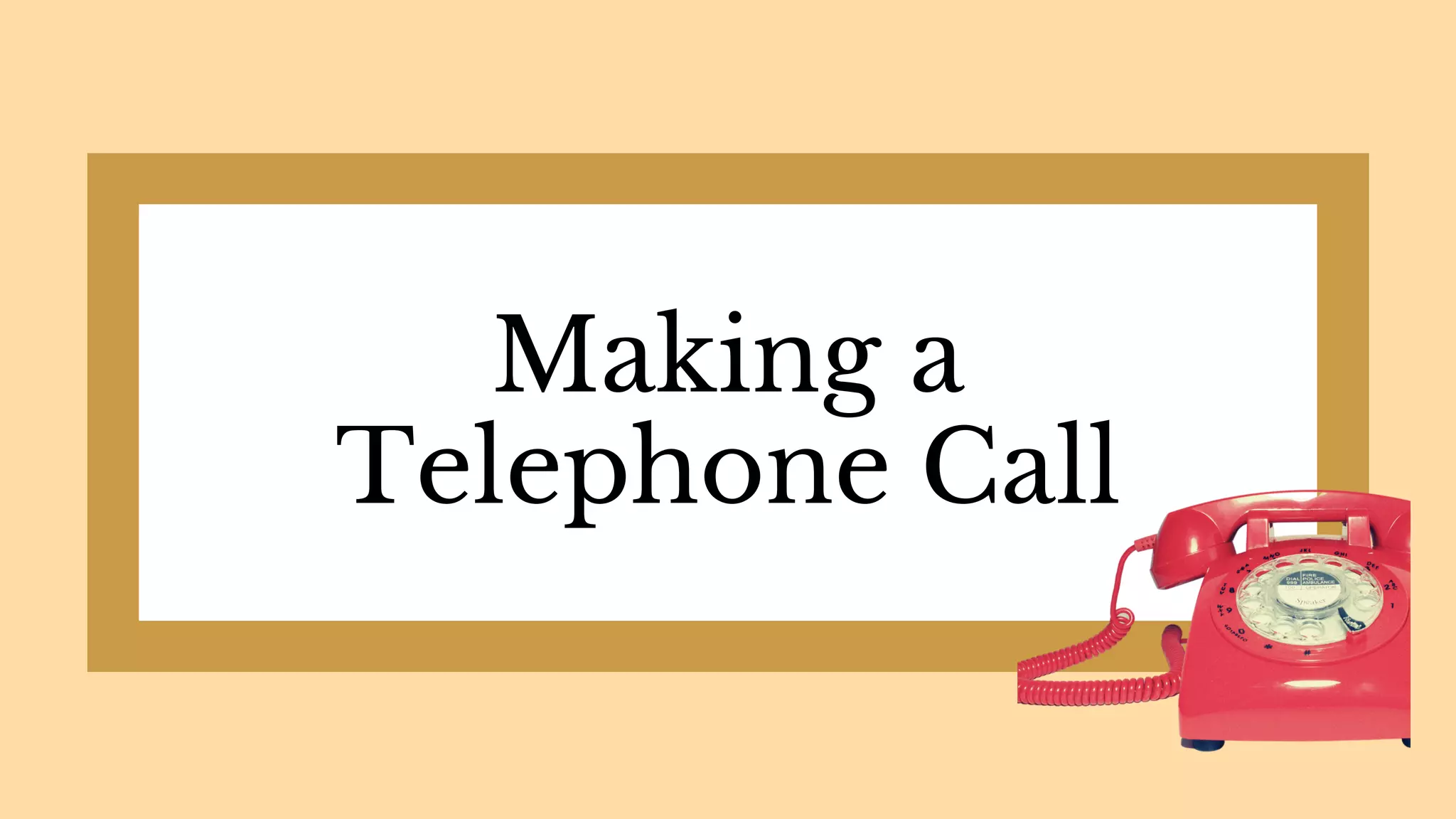
Making a
Telephone Call
The telephone is an amazing invention,
allowing people to cmmunicate over any
distance. And yet many people have trouble
with using it for effective communication,
something which is especially important in
the business world
Why Are Good Phone Skills
Important?
It results in more productive
relationships.
Demonstrates strong customer
service abilities.
It enhances communication skills
Establishes good rapport
Reasons to use to use the
phone rather than email or
messaging:
1. Telephone calls are more
personal.
While email and instant messages are often sent while the
sender is multi-tasking, telephoning someone requires taking
time out of your day to stop and make the call. This shows
more care, demonstrates more attention and better can
demonstrate better customer service.
2. Phone calls are often faster
Messages can be conveyed more quickly over the phone than
exchanging numerous messages by other means such as email
or instant message over the course of a day. When an
immediate answer is required, a phone call is the best way.
3. Meaning can get lost in
translation
The meaning or urgency of a subject can get lost when
conveyed by written words, because some things are
just more effectively communicated verbally by phone.
It is also possible to clarify something there and then.
4. Everybody knows how to use a
phone
It’s often difficult to keep up to date with all new
communication methods and who is familiar with the
different technologies available or who is using what.
Instead of having that complicated conversation -
especially when several people are involved, you can
make life simpler by picking up the phone.
5. Telephones are simple
Using technology can often involve technical
difficulties.Things can and do often go wrong -
especially if you spend significant amounts of time
working remotely. Providing you have a landline or
mobile phone signal, you can simply dial the person
you want to reach,
6. Phone calls are often more
authoritative
Similar to how letters carry more authority, because of
the traditional nature of a phone call, it generally holds
more weight than an email or an instant message. If you
want to communicate an official message, deliver it with
your voice.
7. Video calls can be awkward
Sometimes being able to see the person to whom you’re
speaking is useful, but more often it’s a hindrance and
one extra thing to worry about. Facial expressions can
give things away and it can make working from home a
little more difficult.
8. Phone calls are now cheaper
Not long ago, making landline calls was expensive -
especially to overseas numbers. However, that no longer
needs to be the case, you can make cheap calls to
hundreds of other countries for a reasonable price
How to Have a Professional
Phone Call:
Meeting and greeting
Owning the call
Staying focused
Choosing your tone
Choosing your tone
Knowing When to Listen
Demonstrating Engagement
Avoiding Interruptions
Meeting and greeting
Let the other person know who you are at the beginning
of the call. Say something like, "Good afternoon, this is
Pam Michaels in accounting." If you find their name
difficult to pronounce, it's OK to ask how to do so.
Owning the Call
After the greeting and welcome, state why you're calling
and set the agenda. In the absence of visual cues, this
lets the other person know that you're serious and
ready, and that you have a clear outcome in mind.
Staying Focused
It's tempting to do something else while you're on the
phone, such as sorting emails or checking your
schedule. But multitasking isn't always productive: if
you try to do two tasks at once, you run the risk of
doing both poorly. So, maximize your productivity by
focusing on the call.
Choosing Your Tone
When you can't see the person you're speaking to, your
voice needs to convey authority, empathy and
trustworthiness. You can achieve this by paying
attention to the delivery and content of what you say.
Choosing Your Words
You need to be certain that the person you're calling will
understand you, and can grasp the points you're
making. Use simple and straightforward language. Give
one idea or piece of information in each sentence, and
try not to "ramble."
Knowing When to Listen
Good listening ability is crucial for phone conversations.
It's central to the process of fully engaging with the
person you're speaking to, and establishing a genuine
connection.
Demonstrating Engagement
Show that you're still engaged with the call, even when
your caller is doing most of the talking. This can be as
simple as saying "uh-huh" during pauses, but it's better
to say something which demonstrates that you've been
listening.
Avoiding Interruptions
To understand what someone wants, you need to allow
them to have their say, even if their speaking style is
complicated, hesitant or disorganized. Interruptions
break the other person's flow of thought, and they can
make them think that you're impatient, or that you're
judging them.
References:
https://www.google.com/url?
sa=t&source=web&rct=j&opi=89978449&url=https://www.mindtools.com/a199z1o/making-a-phone-
call&ved=2ahUKEwi3qJna57KBAxX11jgGHTpZBVMQFnoECCMQAQ&usg=AOvVaw2ykUwmGMTu2vwt7
5QOPJi9
https://www.google.com/url?
sa=t&source=web&rct=j&opi=89978449&url=https://www.skillsyouneed.com/rhubarb/efficient-phone-
communication.html&ved=2ahUKEwjBsdmI-
bKBAxVryDgGHdIsBHAQFnoECCAQAQ&usg=AOvVaw1D4HZQYwGfSbx3lQXv48Ax
Making a Telephone Call

Making a Telephone Call

  • 1.
  • 2.
    The telephone isan amazing invention, allowing people to cmmunicate over any distance. And yet many people have trouble with using it for effective communication, something which is especially important in the business world
  • 3.
    Why Are GoodPhone Skills Important?
  • 4.
    It results inmore productive relationships. Demonstrates strong customer service abilities.
  • 5.
    It enhances communicationskills Establishes good rapport
  • 6.
    Reasons to useto use the phone rather than email or messaging:
  • 7.
    1. Telephone callsare more personal. While email and instant messages are often sent while the sender is multi-tasking, telephoning someone requires taking time out of your day to stop and make the call. This shows more care, demonstrates more attention and better can demonstrate better customer service.
  • 8.
    2. Phone callsare often faster Messages can be conveyed more quickly over the phone than exchanging numerous messages by other means such as email or instant message over the course of a day. When an immediate answer is required, a phone call is the best way.
  • 9.
    3. Meaning canget lost in translation The meaning or urgency of a subject can get lost when conveyed by written words, because some things are just more effectively communicated verbally by phone. It is also possible to clarify something there and then.
  • 10.
    4. Everybody knowshow to use a phone It’s often difficult to keep up to date with all new communication methods and who is familiar with the different technologies available or who is using what. Instead of having that complicated conversation - especially when several people are involved, you can make life simpler by picking up the phone.
  • 11.
    5. Telephones aresimple Using technology can often involve technical difficulties.Things can and do often go wrong - especially if you spend significant amounts of time working remotely. Providing you have a landline or mobile phone signal, you can simply dial the person you want to reach,
  • 12.
    6. Phone callsare often more authoritative Similar to how letters carry more authority, because of the traditional nature of a phone call, it generally holds more weight than an email or an instant message. If you want to communicate an official message, deliver it with your voice.
  • 13.
    7. Video callscan be awkward Sometimes being able to see the person to whom you’re speaking is useful, but more often it’s a hindrance and one extra thing to worry about. Facial expressions can give things away and it can make working from home a little more difficult.
  • 14.
    8. Phone callsare now cheaper Not long ago, making landline calls was expensive - especially to overseas numbers. However, that no longer needs to be the case, you can make cheap calls to hundreds of other countries for a reasonable price
  • 15.
    How to Havea Professional Phone Call:
  • 16.
    Meeting and greeting Owningthe call Staying focused Choosing your tone Choosing your tone
  • 17.
    Knowing When toListen Demonstrating Engagement Avoiding Interruptions
  • 18.
    Meeting and greeting Letthe other person know who you are at the beginning of the call. Say something like, "Good afternoon, this is Pam Michaels in accounting." If you find their name difficult to pronounce, it's OK to ask how to do so.
  • 19.
    Owning the Call Afterthe greeting and welcome, state why you're calling and set the agenda. In the absence of visual cues, this lets the other person know that you're serious and ready, and that you have a clear outcome in mind.
  • 20.
    Staying Focused It's temptingto do something else while you're on the phone, such as sorting emails or checking your schedule. But multitasking isn't always productive: if you try to do two tasks at once, you run the risk of doing both poorly. So, maximize your productivity by focusing on the call.
  • 21.
    Choosing Your Tone Whenyou can't see the person you're speaking to, your voice needs to convey authority, empathy and trustworthiness. You can achieve this by paying attention to the delivery and content of what you say.
  • 22.
    Choosing Your Words Youneed to be certain that the person you're calling will understand you, and can grasp the points you're making. Use simple and straightforward language. Give one idea or piece of information in each sentence, and try not to "ramble."
  • 23.
    Knowing When toListen Good listening ability is crucial for phone conversations. It's central to the process of fully engaging with the person you're speaking to, and establishing a genuine connection.
  • 24.
    Demonstrating Engagement Show thatyou're still engaged with the call, even when your caller is doing most of the talking. This can be as simple as saying "uh-huh" during pauses, but it's better to say something which demonstrates that you've been listening.
  • 25.
    Avoiding Interruptions To understandwhat someone wants, you need to allow them to have their say, even if their speaking style is complicated, hesitant or disorganized. Interruptions break the other person's flow of thought, and they can make them think that you're impatient, or that you're judging them.
  • 26.