MAINTAINING PATIENT CONFIDENTIALITY 
ARTHURINE CANNON 
MHA:690 
August 21, 2014
BREACH OF CONFIDENTIALITY AT UCLA BY ITS 
EMPLOYEES 
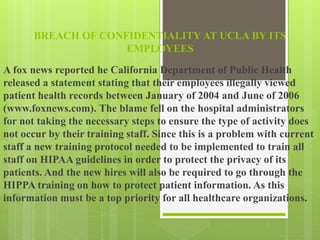
A fox news reported he California Department of Public Health 
released a statement stating that their employees illegally viewed 
patient health records between January of 2004 and June of 2006 
(www.foxnews.com). The blame fell on the hospital administrators 
for not taking the necessary steps to ensure the type of activity does 
not occur by their training staff. Since this is a problem with current 
staff a new training protocol needed to be implemented to train all 
staff on HIPAA guidelines in order to protect the privacy of its 
patients. And the new hires will also be required to go through the 
HIPPA training on how to protect patient information. As this 
information must be a top priority for all healthcare organizations.
HIPAA 
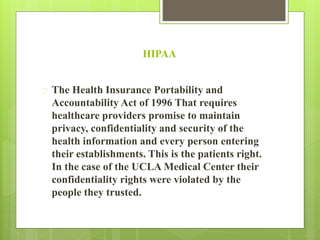
 The Health Insurance Portability and 
Accountability Act of 1996 That requires 
healthcare providers promise to maintain 
privacy, confidentiality and security of the 
health information and every person entering 
their establishments. This is the patients right. 
In the case of the UCLA Medical Center their 
confidentiality rights were violated by the 
people they trusted.
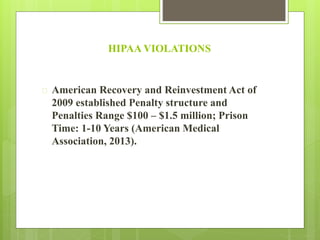
HIPAA VIOLATIONS 
 American Recovery and Reinvestment Act of 
2009 established Penalty structure and 
Penalties Range $100 – $1.5 million; Prison 
Time: 1-10 Years (American Medical 
Association, 2013).
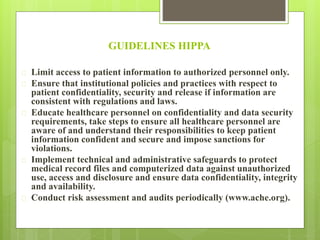
GUIDELINES HIPPA 
 Limit access to patient information to authorized personnel only. 
 Ensure that institutional policies and practices with respect to 
patient confidentiality, security and release if information are 
consistent with regulations and laws. 
 Educate healthcare personnel on confidentiality and data security 
requirements, take steps to ensure all healthcare personnel are 
aware of and understand their responsibilities to keep patient 
information confident and secure and impose sanctions for 
violations. 
 Implement technical and administrative safeguards to protect 
medical record files and computerized data against unauthorized 
use, access and disclosure and ensure data confidentiality, integrity 
and availability. 
 Conduct risk assessment and audits periodically (www.ache.org).
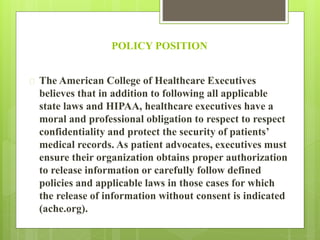
POLICY POSITION 
 The American College of Healthcare Executives 
believes that in addition to following all applicable 
state laws and HIPAA, healthcare executives have a 
moral and professional obligation to respect to respect 
confidentiality and protect the security of patients’ 
medical records. As patient advocates, executives must 
ensure their organization obtains proper authorization 
to release information or carefully follow defined 
policies and applicable laws in those cases for which 
the release of information without consent is indicated 
(ache.org).
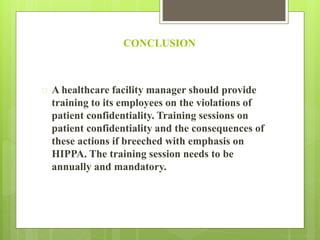
CONCLUSION 
 A healthcare facility manager should provide 
training to its employees on the violations of 
patient confidentiality. Training sessions on 
patient confidentiality and the consequences of 
these actions if breeched with emphasis on 
HIPPA. The training session needs to be 
annually and mandatory.
REFERENCES 
 www.ache.org/policy.hiconf/cfm 
 American Medical Association. 2013. HIPPA Violation 
and Enforcement. Retrieved from www.ama-assn. 
org//ama/pub/physician-resources/solutions-managing- 
your-practice/coding-billing-insurance-affortability- 
accountabality-act/hipaa-violation-enforcement. 
pag 
 Report: Over 120 UCLA Hospital Staff Saw Celebrity 
Health Records (2008, August). Associated Press. 
Retrieved from www.foxnews.com

Maintaining patient confidentiality

  • 1.
    MAINTAINING PATIENT CONFIDENTIALITY ARTHURINE CANNON MHA:690 August 21, 2014
  • 2.
    BREACH OF CONFIDENTIALITYAT UCLA BY ITS EMPLOYEES A fox news reported he California Department of Public Health released a statement stating that their employees illegally viewed patient health records between January of 2004 and June of 2006 (www.foxnews.com). The blame fell on the hospital administrators for not taking the necessary steps to ensure the type of activity does not occur by their training staff. Since this is a problem with current staff a new training protocol needed to be implemented to train all staff on HIPAA guidelines in order to protect the privacy of its patients. And the new hires will also be required to go through the HIPPA training on how to protect patient information. As this information must be a top priority for all healthcare organizations.
  • 3.
    HIPAA  TheHealth Insurance Portability and Accountability Act of 1996 That requires healthcare providers promise to maintain privacy, confidentiality and security of the health information and every person entering their establishments. This is the patients right. In the case of the UCLA Medical Center their confidentiality rights were violated by the people they trusted.
  • 4.
    HIPAA VIOLATIONS American Recovery and Reinvestment Act of 2009 established Penalty structure and Penalties Range $100 – $1.5 million; Prison Time: 1-10 Years (American Medical Association, 2013).
  • 5.
    GUIDELINES HIPPA Limit access to patient information to authorized personnel only.  Ensure that institutional policies and practices with respect to patient confidentiality, security and release if information are consistent with regulations and laws.  Educate healthcare personnel on confidentiality and data security requirements, take steps to ensure all healthcare personnel are aware of and understand their responsibilities to keep patient information confident and secure and impose sanctions for violations.  Implement technical and administrative safeguards to protect medical record files and computerized data against unauthorized use, access and disclosure and ensure data confidentiality, integrity and availability.  Conduct risk assessment and audits periodically (www.ache.org).
  • 6.
    POLICY POSITION The American College of Healthcare Executives believes that in addition to following all applicable state laws and HIPAA, healthcare executives have a moral and professional obligation to respect to respect confidentiality and protect the security of patients’ medical records. As patient advocates, executives must ensure their organization obtains proper authorization to release information or carefully follow defined policies and applicable laws in those cases for which the release of information without consent is indicated (ache.org).
  • 7.
    CONCLUSION  Ahealthcare facility manager should provide training to its employees on the violations of patient confidentiality. Training sessions on patient confidentiality and the consequences of these actions if breeched with emphasis on HIPPA. The training session needs to be annually and mandatory.
  • 8.
    REFERENCES  www.ache.org/policy.hiconf/cfm  American Medical Association. 2013. HIPPA Violation and Enforcement. Retrieved from www.ama-assn. org//ama/pub/physician-resources/solutions-managing- your-practice/coding-billing-insurance-affortability- accountabality-act/hipaa-violation-enforcement. pag  Report: Over 120 UCLA Hospital Staff Saw Celebrity Health Records (2008, August). Associated Press. Retrieved from www.foxnews.com