Basic Needs ofLiving Organisms
Understanding What Keeps Life Thriving
2.
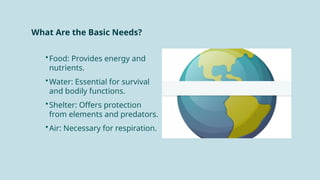
What Are theBasic Needs?
•Food: Provides energy and
nutrients.
•Water: Essential for survival
and bodily functions.
•Shelter: Offers protection
from elements and predators.
•Air: Necessary for respiration.
3.
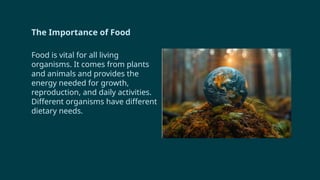
The Importance ofFood
Food is vital for all living
organisms. It comes from plants
and animals and provides the
energy needed for growth,
reproduction, and daily activities.
Different organisms have different
dietary needs.
4.
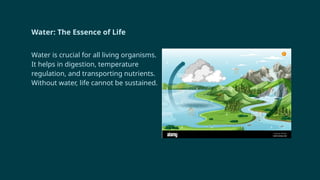
Water: The Essenceof Life
Water is crucial for all living organisms.
It helps in digestion, temperature
regulation, and transporting nutrients.
Without water, life cannot be sustained.
5.
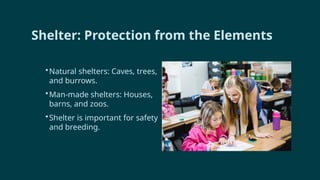
Shelter: Protection fromthe Elements
•Natural shelters: Caves, trees,
and burrows.
•Man-made shelters: Houses,
barns, and zoos.
•Shelter is important for safety
and breeding.
6.
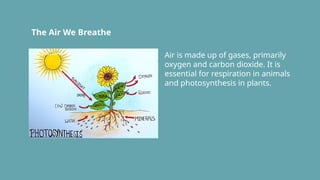
The Air WeBreathe
Air is made up of gases, primarily
oxygen and carbon dioxide. It is
essential for respiration in animals
and photosynthesis in plants.
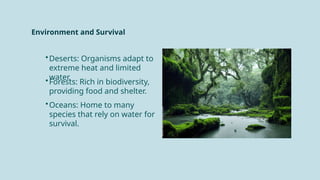
Environment and Survival
•Deserts:Organisms adapt to
extreme heat and limited
water.
•Forests: Rich in biodiversity,
providing food and shelter.
•Oceans: Home to many
species that rely on water for
survival.
9.
Did You Know?
Camelscan drink up to 40 gallons of water in one go and can survive for weeks without it!
10.
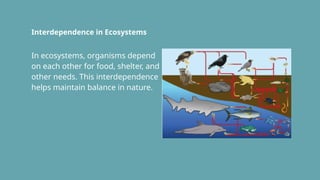
Interdependence in Ecosystems
Inecosystems, organisms depend
on each other for food, shelter, and
other needs. This interdependence
helps maintain balance in nature.
11.
Would you ratherlive in a rainforest
with plenty of food and water but
limited shelter, or in a desert with
ample shelter but scarce food and
water?
1.Rainforest 2.Desert
12.
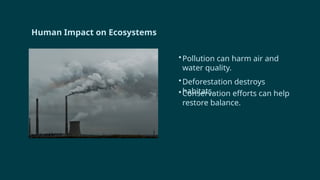
Human Impact onEcosystems
•Pollution can harm air and
water quality.
•Deforestation destroys
habitats.
•Conservation efforts can help
restore balance.
13.
Reflection
What is oneway you can help protect the basic needs of organisms in your local
environment?
14.
Conclusion
Understanding the basicneeds of
living organisms helps us appreciate
the complexity of life. Let's work
together to protect our environment!
15.
Questions & Discussion
Whatdid you learn today about the basic needs of living organisms? How can we
apply this knowledge?




![CTEV [ clubfoot] DR ARUN LAL ,DR MOHAMED ASHRAF travancore medical college k...](https://cdn.slidesharecdn.com/ss_thumbnails/ctevclubfootdrarunlaldrmohamedashraftravancoremedicalcollegekollamkeralaindia-260208063247-18fc466c-thumbnail.jpg?width=640&height=640&fit=bounds)


