ART ASSESSMENT
   AED 303 SECTION 002
MAIN IDEAS
 Jess Robinson
   Tyler Peirce
 Lizzy Hoenigke
Main Idea 1


Effective assessment meets the needs of students,
the specific art program, the classroom environment,
and the community.
Main Idea 2


Quality classroom assessment examines both products
and processes, which means the object of
assessment can be either a product or a
process or both.
Main Idea 3


Preconceptions significantly impact the learning
process. They determine what will be understood
during the course of an art lesson or program.
VOCABULARY, ISSUES
 AND CONNECTIONS
"Not everything that matters can be measured,
and not everything that is measured matters."
                    -Eisner

               Alyssa Myer
               Kimberly Cho
              Madeline Large
               Lisa Marusco
Vocabulary

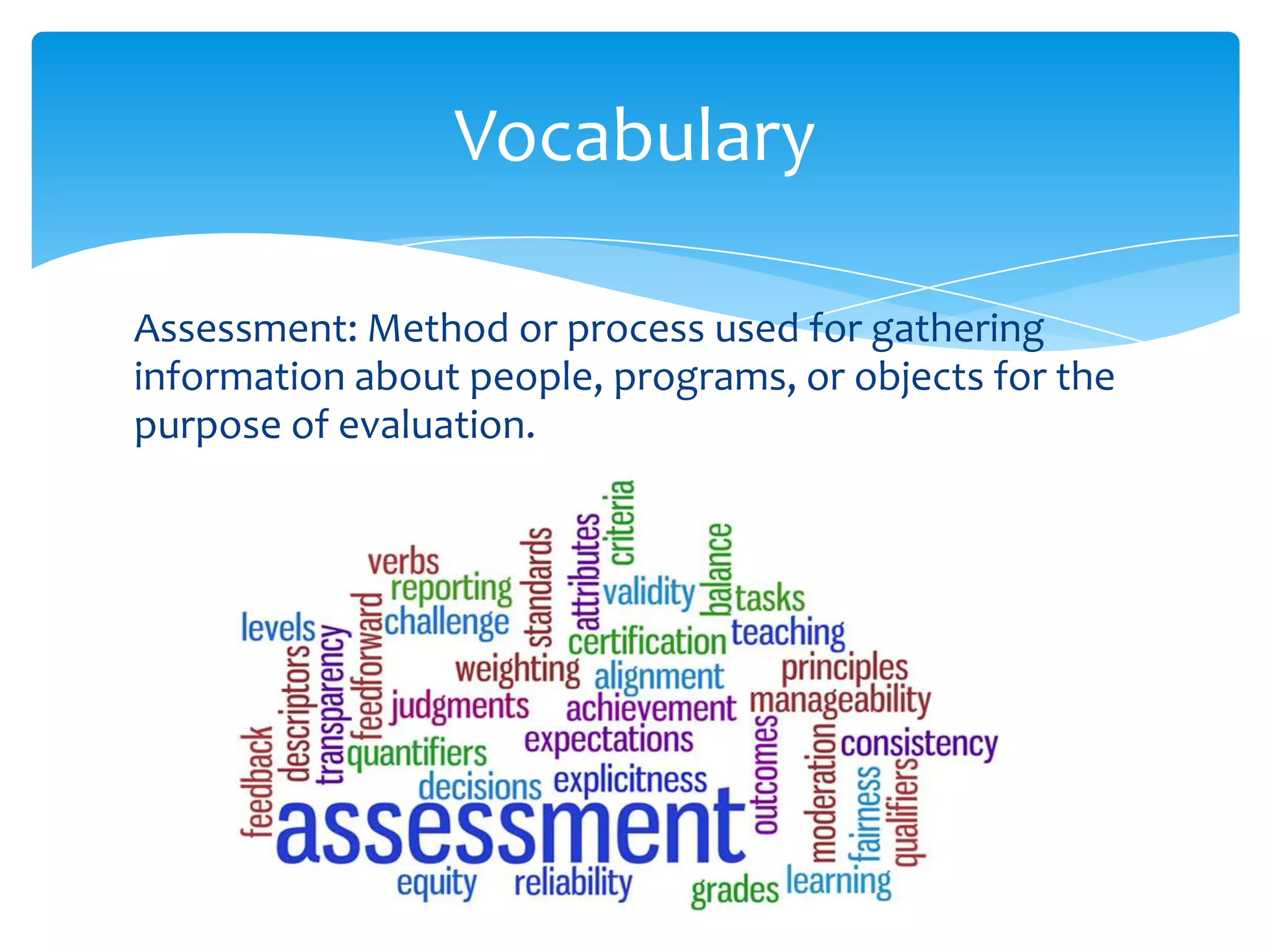
Assessment: Method or process used for gathering
information about people, programs, or objects for the
purpose of evaluation.
Vocabulary

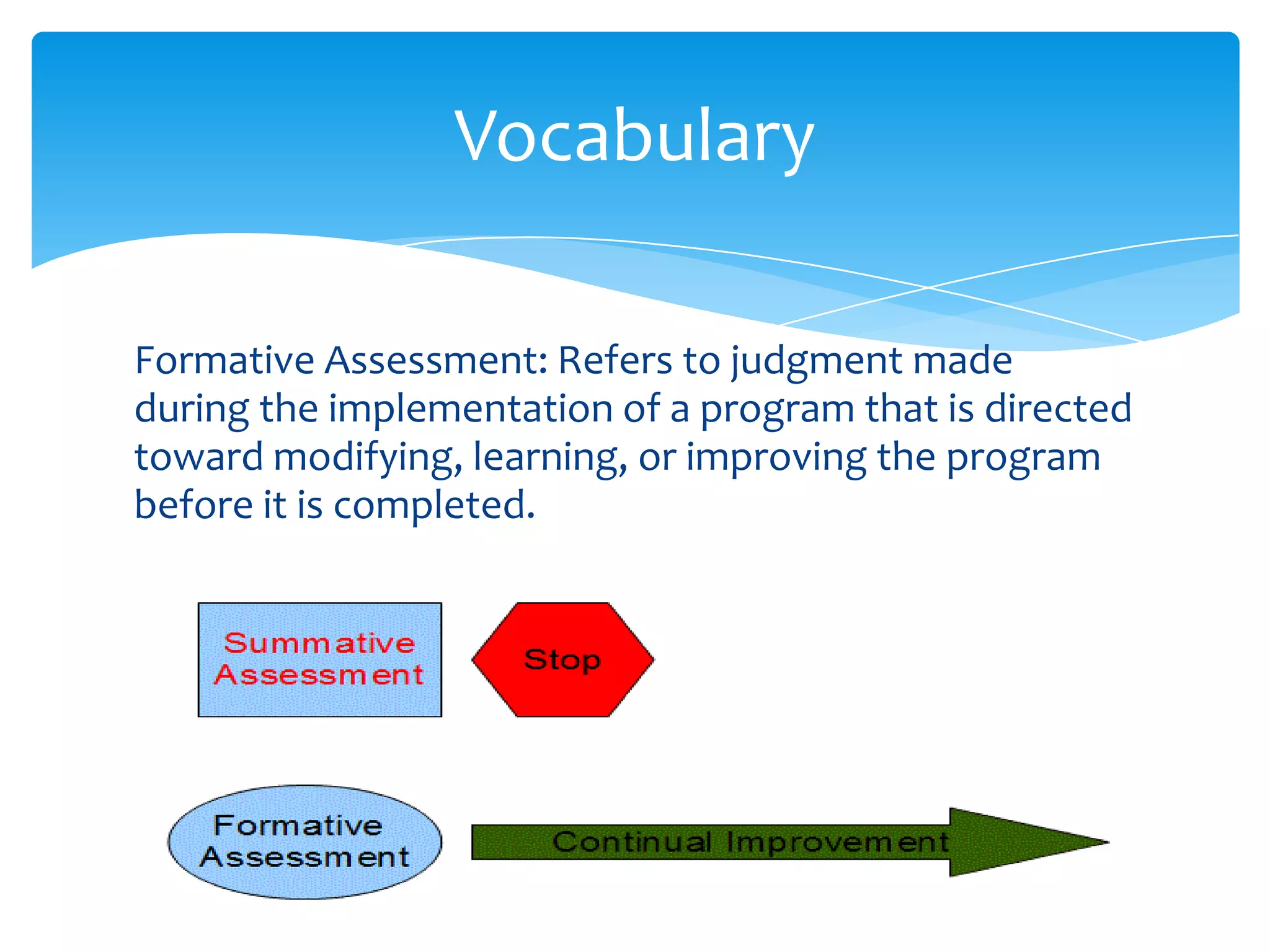
Formative Assessment: Refers to judgment made
during the implementation of a program that is directed
toward modifying, learning, or improving the program
before it is completed.
Vocabulary

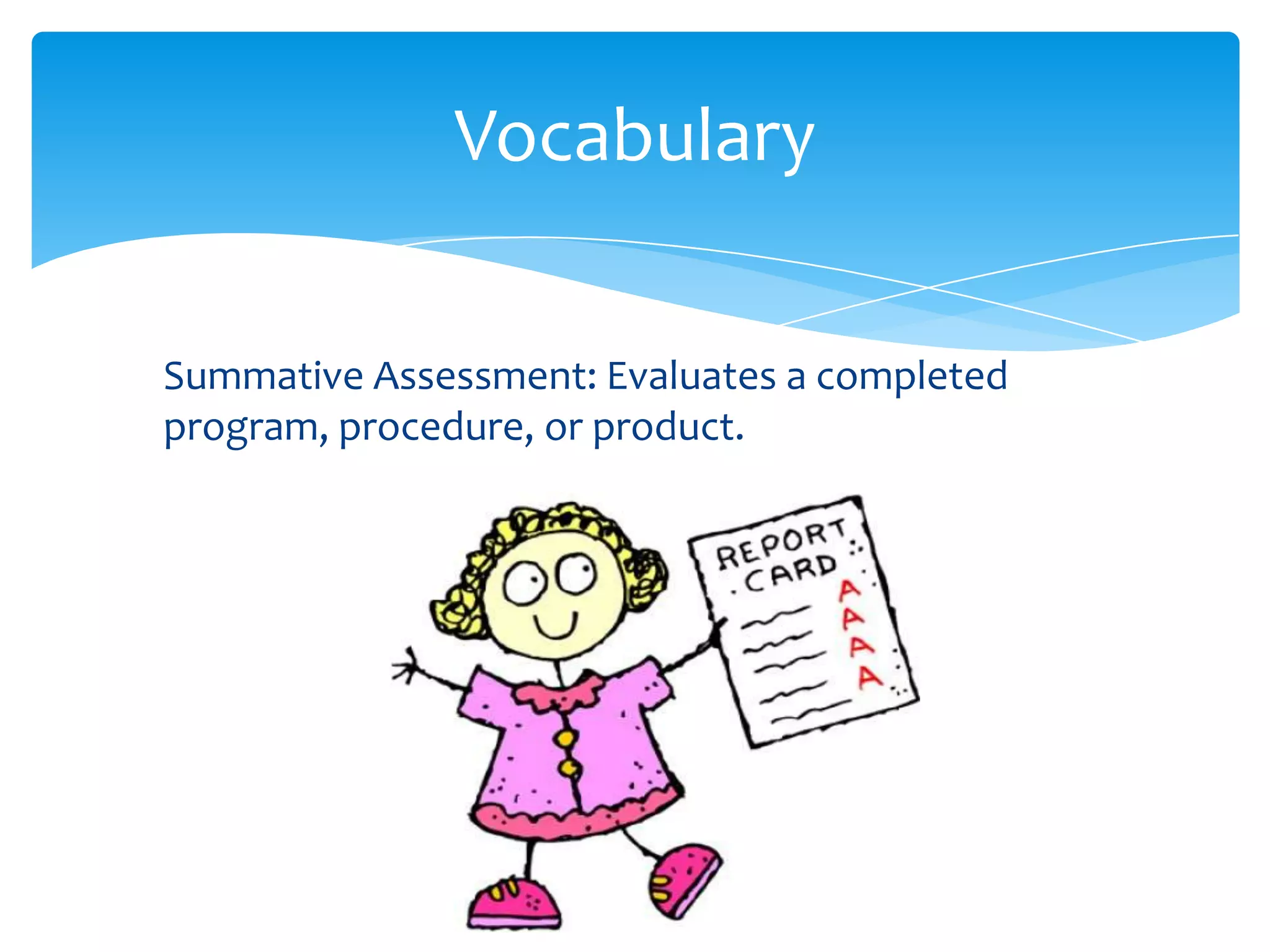
Summative Assessment: Evaluates a completed
program, procedure, or product.
Vocabulary
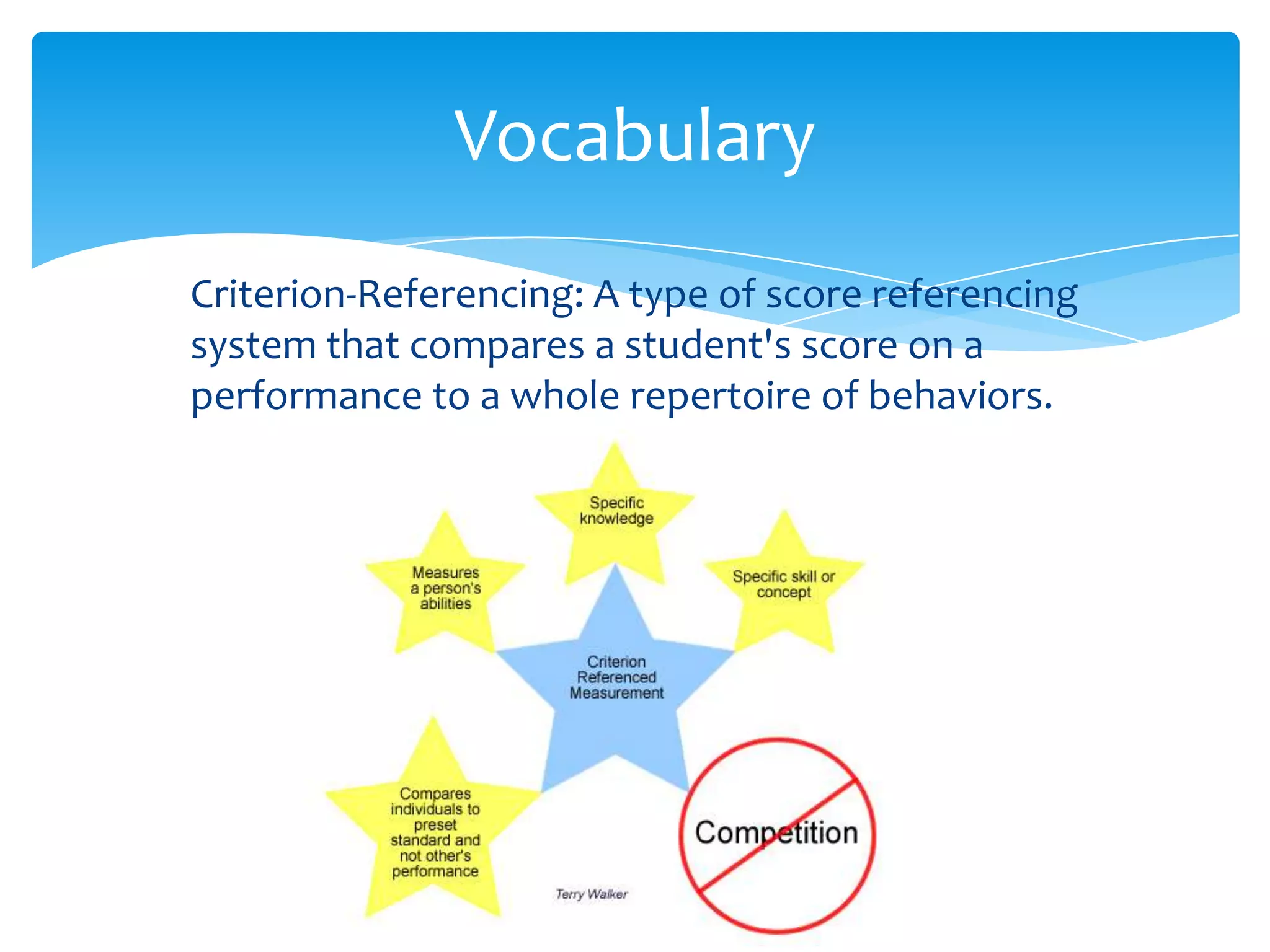
Criterion-Referencing: A type of score referencing
system that compares a student's score on a
performance to a whole repertoire of behaviors.
Issues


Seeing as how this reading is specifically for art
educators, could one argue that the assessment
guidelines described do not pertain to the regular
elementary education classrooms?

If not, why not? If they do relate, how could these
assessment strategies be used in the regular
education classrooms? In other words, are the
assessment guidelines the same for art classrooms
and regular classrooms?
Connections


How can we connect what we now know about
assessment to our own teaching in an elementary
classroom?
ACTIVITY 1
 Rachael Deiner
 Lauren Jeffrey
 Lizzie Crowley
 Maura Stewart
Directions

Create a Valentine! You must use at least two of the
watercolor techniques we have learned in class
previously. Some techniques are listed below:
  -Watercolor resist (using a white crayon/pastel)
  -Wet on wet
  -Glazing
  -Even wash
  -Dry brush
We will be walking around the classroom to see if you
have mastered these watercolor processes.
ACTIVITY 2
  Brigid Crane
   Tessa Croft
  Alyssa Tourso
 Justine Hoster
Directions

Now that you have all composed your drawings, turn to
your table and go around making critiques of one
another's work giving feedback and thoughts of the
paintings.

Make sure this is constructive criticism and not hurtful
insults.*

Then we will share with the class our thoughts and what
everyone came up with.

Reflection: Do you think this is a good thing to use in the
classroom and how do we need to be sensitive about our
critiques?
DISCUSSION
  Caitlin Nelson
  April Ramsey
 Matthew Nuñez
 Emily Salamon
Principles of Quality
             Art Assessment
1. Assessment is student-oriented and teacher-directed.
      -At times, though, it should definitely be a collaboration
      of students and teachers ideas; the teacher should not
      appear as an authoritarian figure
              - Student needs, interests, learning styles and
strategies,          and special considerations determine
appropriate                  assessment strategies.
2. Assessment supports, rather than interferes with
instruction and course objectives.
      - Classroom assessment neither interrupts nor drives
      teaching. It should be neither cumbersome nor
      overwhelming for the teacher to manage.
Continued…
3. Assessment is continuous and focused on providing ongoing
information.
      - Effective classroom assessment scrutinizes students'
      strengths and weaknesses. Specific problems and their
      underlying causes, and implies strategies for improvement,
      providing for the art educator feedback that reveals
      students' long-term progress toward a set of determined exit-
      level standards.
4. Assessment is equal for all.
      - Classroom assessments are crafted to ensure fairness for all
      students. Equity issues art educators need to address include
      assessment content versus students' learning experiences,
racial        or sexist content of assessment tools, special
adaptations of        assessments for non-English speaking and
intellectually and physically-challenged students, assessment
atmosphere and conditions that might influence outcomes, and
proper        interpretation of assessment scores
Discussion Questions

What are some forms of assessment other
than the standard test?

With all the different aspects of equity to
consider, what do you think are tools or ways
to ensure equal assessment?

Why is assessment important?

Main ideas presentation

  • 1.
    ART ASSESSMENT AED 303 SECTION 002
  • 2.
    MAIN IDEAS JessRobinson Tyler Peirce Lizzy Hoenigke
  • 3.
    Main Idea 1 Effectiveassessment meets the needs of students, the specific art program, the classroom environment, and the community.
  • 4.
    Main Idea 2 Qualityclassroom assessment examines both products and processes, which means the object of assessment can be either a product or a process or both.
  • 5.
    Main Idea 3 Preconceptionssignificantly impact the learning process. They determine what will be understood during the course of an art lesson or program.
  • 6.
    VOCABULARY, ISSUES ANDCONNECTIONS "Not everything that matters can be measured, and not everything that is measured matters." -Eisner Alyssa Myer Kimberly Cho Madeline Large Lisa Marusco
  • 7.
    Vocabulary Assessment: Method orprocess used for gathering information about people, programs, or objects for the purpose of evaluation.
  • 8.
    Vocabulary Formative Assessment: Refersto judgment made during the implementation of a program that is directed toward modifying, learning, or improving the program before it is completed.
  • 9.
    Vocabulary Summative Assessment: Evaluatesa completed program, procedure, or product.
  • 10.
    Vocabulary Criterion-Referencing: A typeof score referencing system that compares a student's score on a performance to a whole repertoire of behaviors.
  • 11.
    Issues Seeing as howthis reading is specifically for art educators, could one argue that the assessment guidelines described do not pertain to the regular elementary education classrooms? If not, why not? If they do relate, how could these assessment strategies be used in the regular education classrooms? In other words, are the assessment guidelines the same for art classrooms and regular classrooms?
  • 12.
    Connections How can weconnect what we now know about assessment to our own teaching in an elementary classroom?
  • 13.
    ACTIVITY 1 RachaelDeiner Lauren Jeffrey Lizzie Crowley Maura Stewart
  • 14.
    Directions Create a Valentine!You must use at least two of the watercolor techniques we have learned in class previously. Some techniques are listed below: -Watercolor resist (using a white crayon/pastel) -Wet on wet -Glazing -Even wash -Dry brush We will be walking around the classroom to see if you have mastered these watercolor processes.
  • 15.
    ACTIVITY 2 Brigid Crane Tessa Croft Alyssa Tourso Justine Hoster
  • 16.
    Directions Now that youhave all composed your drawings, turn to your table and go around making critiques of one another's work giving feedback and thoughts of the paintings. Make sure this is constructive criticism and not hurtful insults.* Then we will share with the class our thoughts and what everyone came up with. Reflection: Do you think this is a good thing to use in the classroom and how do we need to be sensitive about our critiques?
  • 17.
    DISCUSSION CaitlinNelson April Ramsey Matthew Nuñez Emily Salamon
  • 18.
    Principles of Quality Art Assessment 1. Assessment is student-oriented and teacher-directed. -At times, though, it should definitely be a collaboration of students and teachers ideas; the teacher should not appear as an authoritarian figure - Student needs, interests, learning styles and strategies, and special considerations determine appropriate assessment strategies. 2. Assessment supports, rather than interferes with instruction and course objectives. - Classroom assessment neither interrupts nor drives teaching. It should be neither cumbersome nor overwhelming for the teacher to manage.
  • 19.
    Continued… 3. Assessment iscontinuous and focused on providing ongoing information. - Effective classroom assessment scrutinizes students' strengths and weaknesses. Specific problems and their underlying causes, and implies strategies for improvement, providing for the art educator feedback that reveals students' long-term progress toward a set of determined exit- level standards. 4. Assessment is equal for all. - Classroom assessments are crafted to ensure fairness for all students. Equity issues art educators need to address include assessment content versus students' learning experiences, racial or sexist content of assessment tools, special adaptations of assessments for non-English speaking and intellectually and physically-challenged students, assessment atmosphere and conditions that might influence outcomes, and proper interpretation of assessment scores
  • 20.
    Discussion Questions What aresome forms of assessment other than the standard test? With all the different aspects of equity to consider, what do you think are tools or ways to ensure equal assessment? Why is assessment important?

Editor's Notes

  • #15 Assessment focuses on both products and processes. Quality classroom assessment examines both prod- ucts and processes, which means the object of assessment (the major focus around which an assess- ment is organized) can be either a product or a process or both. A product is the outcome of a process or procedure such as a painting, sculpture, critical review, or an art-historical timeline. A process is anyone of numerous studio- or classroom-based activities that leads to production of an artwork or a cognitive-based product. Creating, analyzing, inter- preting, evaluating, and presenting an argument are also examples of processes.