* Nevin’s Barberry – Mahonia (Berberis) nevinii

(muh-HOE-nee-uh neh-VIN-ee-uh)

Family: Berberaceae (Barberry Family)
Native to: Rare in foothills of San Gabriel mountains to Riverside and San Bernardino Counties; San
Fernando Valley Foothills; in sandy to gravelly soils in washes, and on rocky chaparral slopes.
woody shrub
mature height: 6-12 ft.
mature width: 6-12 ft.
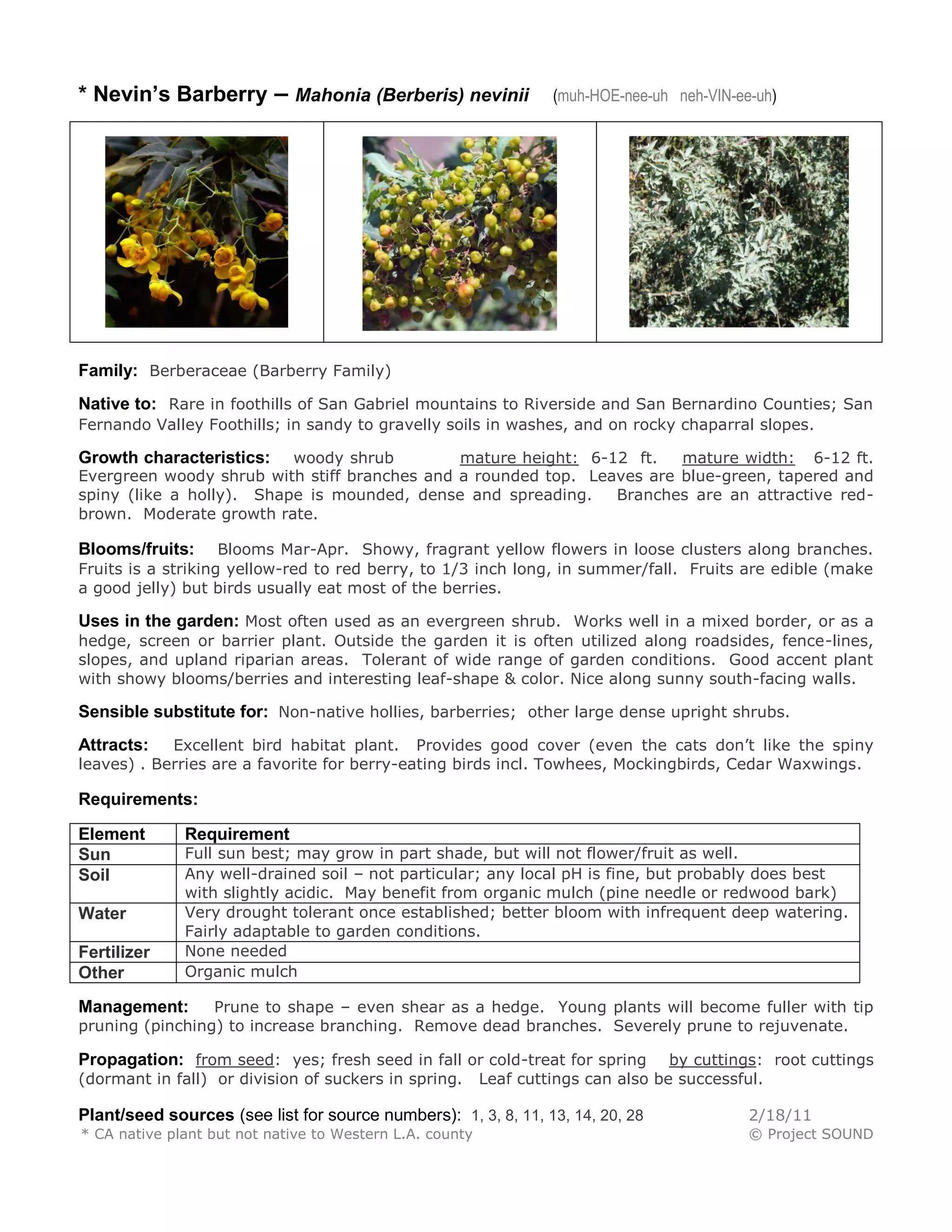
Evergreen woody shrub with stiff branches and a rounded top. Leaves are blue-green, tapered and
spiny (like a holly). Shape is mounded, dense and spreading.
Branches are an attractive redbrown. Moderate growth rate.

Growth characteristics:

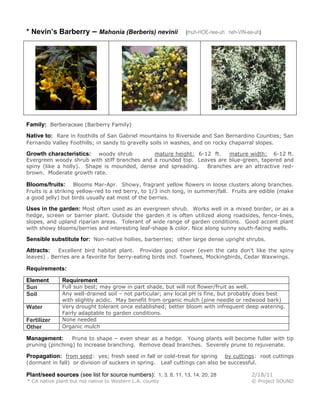
Blooms Mar-Apr. Showy, fragrant yellow flowers in loose clusters along branches.
Fruits is a striking yellow-red to red berry, to 1/3 inch long, in summer/fall. Fruits are edible (make
a good jelly) but birds usually eat most of the berries.

Blooms/fruits:

Uses in the garden: Most often used as an evergreen shrub. Works well in a mixed border, or as a
hedge, screen or barrier plant. Outside the garden it is often utilized along roadsides, fence-lines,
slopes, and upland riparian areas. Tolerant of wide range of garden conditions. Good accent plant
with showy blooms/berries and interesting leaf-shape & color. Nice along sunny south-facing walls.

Sensible substitute for: Non-native hollies, barberries; other large dense upright shrubs.
Excellent bird habitat plant. Provides good cover (even the cats don’t like the spiny
leaves) . Berries are a favorite for berry-eating birds incl. Towhees, Mockingbirds, Cedar Waxwings.

Attracts:

Requirements:
Element
Sun
Soil
Water
Fertilizer
Other

Requirement

Full sun best; may grow in part shade, but will not flower/fruit as well.
Any well-drained soil – not particular; any local pH is fine, but probably does best
with slightly acidic. May benefit from organic mulch (pine needle or redwood bark)
Very drought tolerant once established; better bloom with infrequent deep watering.
Fairly adaptable to garden conditions.
None needed
Organic mulch

Prune to shape – even shear as a hedge. Young plants will become fuller with tip
pruning (pinching) to increase branching. Remove dead branches. Severely prune to rejuvenate.

Management:

Propagation: from seed: yes; fresh seed in fall or cold-treat for spring
(dormant in fall) or division of suckers in spring.

by cuttings: root cuttings
Leaf cuttings can also be successful.

Plant/seed sources (see list for source numbers): 1, 3, 8, 11, 13, 14, 20, 28

2/18/11

* CA native plant but not native to Western L.A. county

© Project SOUND

Mahonia nevinii

  • 1.
    * Nevin’s Barberry– Mahonia (Berberis) nevinii (muh-HOE-nee-uh neh-VIN-ee-uh) Family: Berberaceae (Barberry Family) Native to: Rare in foothills of San Gabriel mountains to Riverside and San Bernardino Counties; San Fernando Valley Foothills; in sandy to gravelly soils in washes, and on rocky chaparral slopes. woody shrub mature height: 6-12 ft. mature width: 6-12 ft. Evergreen woody shrub with stiff branches and a rounded top. Leaves are blue-green, tapered and spiny (like a holly). Shape is mounded, dense and spreading. Branches are an attractive redbrown. Moderate growth rate. Growth characteristics: Blooms Mar-Apr. Showy, fragrant yellow flowers in loose clusters along branches. Fruits is a striking yellow-red to red berry, to 1/3 inch long, in summer/fall. Fruits are edible (make a good jelly) but birds usually eat most of the berries. Blooms/fruits: Uses in the garden: Most often used as an evergreen shrub. Works well in a mixed border, or as a hedge, screen or barrier plant. Outside the garden it is often utilized along roadsides, fence-lines, slopes, and upland riparian areas. Tolerant of wide range of garden conditions. Good accent plant with showy blooms/berries and interesting leaf-shape & color. Nice along sunny south-facing walls. Sensible substitute for: Non-native hollies, barberries; other large dense upright shrubs. Excellent bird habitat plant. Provides good cover (even the cats don’t like the spiny leaves) . Berries are a favorite for berry-eating birds incl. Towhees, Mockingbirds, Cedar Waxwings. Attracts: Requirements: Element Sun Soil Water Fertilizer Other Requirement Full sun best; may grow in part shade, but will not flower/fruit as well. Any well-drained soil – not particular; any local pH is fine, but probably does best with slightly acidic. May benefit from organic mulch (pine needle or redwood bark) Very drought tolerant once established; better bloom with infrequent deep watering. Fairly adaptable to garden conditions. None needed Organic mulch Prune to shape – even shear as a hedge. Young plants will become fuller with tip pruning (pinching) to increase branching. Remove dead branches. Severely prune to rejuvenate. Management: Propagation: from seed: yes; fresh seed in fall or cold-treat for spring (dormant in fall) or division of suckers in spring. by cuttings: root cuttings Leaf cuttings can also be successful. Plant/seed sources (see list for source numbers): 1, 3, 8, 11, 13, 14, 20, 28 2/18/11 * CA native plant but not native to Western L.A. county © Project SOUND