101e729e-a9d6-4076-907b-08acaebdd695-150710180423-lva1-app6892.doc Page 1 of
13
REMEMBER TO SAVE THE BLANK WORKSHEET TEMPLATE USING THE FILENAME FORMAT
WORKSHEET for PROPOSED Evidence-Based GUIDELINE RECOMMENDATIONS
NOTE: Save worksheet using the following filename format: Taskforce.Topic.Author.Date.Doc where Taskforce is a=ACLS,
b=BLS, p=Pediatric, n=neonatal and i=Interdisciplinary. Use 2 or 3 letter abbreviation for author’s name and 30Jul03 as
sample date format.
Worksheet Author:
Ross Berringer
Taskforce/Subcommittee: __BLS _x_ACLS __PEDS __ID __PROAD
__Other:
Author’s Home Resuscitation Council:
__AHA __ANZCOR __CLAR __ERC __HSFC
_x_HSFC __RCSA ___IAHF ___Other:
Date Submitted to Subcommittee:
October 25,2004, Revised 25 Nov 2004 Dec 5 2004
STEP 1: STATE THE PROPOSAL. State if this is a proposed new guideline; revision to current guideline; or deletion of current guideline.
Existing guideline, practice or training activity, or new guideline:
Current routine administration of magnesium in resuscitation does not affect outcome and may be associated with a higher incidence of hypotension
despite a potential for improved neurological function in survivors. Magnesium is not recommended in cardiac arrest except when arrythmias are
suspected to be caused by Magnesium deficiency or when Torsade de Pointes is diagnosed. (IIb)
Step 1A: Refine the question; state the question as a positive (or negative) hypothesis. State proposed guideline recommendation as a specific,
positive hypothesis. Use single sentence if possible. Include type of patients; setting (in- /out-of-hospital); specific interventions (dose, route); specific
outcomes (ROSC vs. hospital discharge).
Routine administration of magnesium in cardiac arrest improves outcome regardless of presenting rhythm.
Step 1B: Gather the Evidence; define your search strategy. Describe search results; describe best sources for evidence.
Medline, AHA Endnote, EMBASE, and Cochrane searched using MeSH terms <heart arrest> not <heart arrest induced> and <magnesium>,
<ventricular fibrillation> and <magnesium>, free text search cardiac arrest and magnesium, ventricular fibrillation and magnesium, in hospital
cardiac arrest and magnesium, out of hospital cardiac arrest and magnesium.
List electronic databases searched (at least AHA EndNote 7 Master library [http://ecc.heart.org/], Cochrane database for systematic reviews and Central Register
of Controlled Trials [http://www.cochrane.org/], MEDLINE [http://www.ncbi.nlm.nih.gov/PubMed/ ], and Embase), and hand searches of journals, review articles,
and books.
Medline (1966 – 06/04), Embase 06/04, AHA Endnote Database 07/04, Cochrane Database of Systematic Reviews, and Cochrane Controlled Trials
Registry. Medline 200 free text/ related articles and 62 MeSH, EMBASE 84 MeSH, Cochrane Central Register 35 MeSH, Cochrane Database of
Systematic Reviews 0, AHA End Note 59 free text.
• State major criteria you used to limit your search; state inclusion or exclusion criteria (e.g., only human studies with control group? no animal studies? N subjects
> minimal number? type of methodology? peer-reviewed manuscripts only? no abstract-only studies?)
No limits applied to any search.
Excluded: animal studies, cardioplegic/anaesthetic studies, letters, guidelines, editorials, conference proceedings, and opinions.
Additional references were excluded after review of the abstract or article as not relevant or meeting exclusionary criteria above
Hand searching of bibliographies of published reviews yielded only occasional case reports.
• Number of articles/sources meeting criteria for further review: Create a citation marker for each study (use the author initials and date or Arabic numeral, e.g.,
“Cummins-1”). . If possible, please supply file of best references; EndNote 6+ required as reference manager using the ECC reference library.
17 articles were selected for further detailed review
STEP 2: ASSESS THE QUALITY OF EACH STUDY
Step 2A: Determine the Level of Evidence. For each article/source from step 1, assign a level of evidence—based on study design
and methodology.
Level of
Evidence
Definitions
(See manuscript for full details)
Level 1 Randomized clinical trials or meta-analyses of multiple clinical trials with substantial treatment effects
Level 2 Randomized clinical trials with smaller or less significant treatment effects
Level 3 Prospective, controlled, non-randomized, cohort studies
Level 4 Historic, non-randomized, cohort or case-control studies
Level 5 Case series: patients compiled in serial fashion, lacking a control group
Level 6 Animal studies or mechanical model studies
Level 7 Extrapolations from existing data collected for other purposes, theoretical analyses
Level 8 Rational conjecture (common sense); common practices accepted before evidence-based guidelines
101e729e-a9d6-4076-907b-08acaebdd695-150710180423-lva1-app6892.doc Page 2 of
13
REMEMBER TO SAVE THE BLANK WORKSHEET TEMPLATE USING THE FILENAME FORMAT
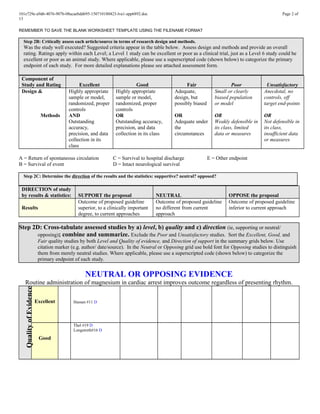
Step 2B: Critically assess each article/source in terms of research design and methods.
Was the study well executed? Suggested criteria appear in the table below. Assess design and methods and provide an overall
rating. Ratings apply within each Level; a Level 1 study can be excellent or poor as a clinical trial, just as a Level 6 study could be
excellent or poor as an animal study. Where applicable, please use a superscripted code (shown below) to categorize the primary
endpoint of each study. For more detailed explanations please see attached assessment form.
Component of
Study and Rating Excellent Good Fair Poor Unsatisfactory
Design &
Methods
Highly appropriate
sample or model,
randomized, proper
controls
AND
Outstanding
accuracy,
precision, and data
collection in its
class
Highly appropriate
sample or model,
randomized, proper
controls
OR
Outstanding accuracy,
precision, and data
collection in its class
Adequate,
design, but
possibly biased
OR
Adequate under
the
circumstances
Small or clearly
biased population
or model
OR
Weakly defensible in
its class, limited
data or measures
Anecdotal, no
controls, off
target end-points
OR
Not defensible in
its class,
insufficient data
or measures
A = Return of spontaneous circulation C = Survival to hospital discharge E = Other endpoint
B = Survival of event D = Intact neurological survival
Step 2C: Determine the direction of the results and the statistics: supportive? neutral? opposed?
DIRECTION of study
by results & statistics: SUPPORT the proposal NEUTRAL OPPOSE the proposal
Results
Outcome of proposed guideline
superior, to a clinically important
degree, to current approaches
Outcome of proposed guideline
no different from current
approach
Outcome of proposed guideline
inferior to current approach
Step 2D: Cross-tabulate assessed studies by a) level, b) quality and c) direction (ie, supporting or neutral/
opposing); combine and summarize. Exclude the Poor and Unsatisfactory studies. Sort the Excellent, Good, and
Fair quality studies by both Level and Quality of evidence, and Direction of support in the summary grids below. Use
citation marker (e.g. author/ date/source). In the Neutral or Opposing grid use bold font for Opposing studies to distinguish
them from merely neutral studies. Where applicable, please use a superscripted code (shown below) to categorize the
primary endpoint of each study.
NEUTRAL OR OPPOSING EVIDENCE
Routine administration of magnesium in cardiac arrest improves outcome regardless of presenting rhythm.
QualityofEvidence
Excellent Hassan #11 D
Good
Thel #19 D
Longstreth#16 D
101e729e-a9d6-4076-907b-08acaebdd695-150710180423-lva1-app6892.doc Page 3 of
13
REMEMBER TO SAVE THE BLANK WORKSHEET TEMPLATE USING THE FILENAME FORMAT
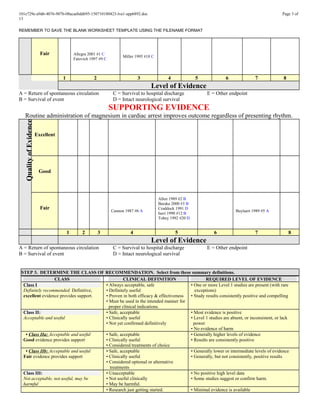
Fair Allegra 2001 #1 C
Fatovich 1997 #9 C
Miller 1995 #18 C
1 2 3 4 5 6 7 8
Level of Evidence
A = Return of spontaneous circulation C = Survival to hospital discharge E = Other endpoint
B = Survival of event D = Intact neurological survival
SUPPORTING EVIDENCE
Routine administration of magnesium in cardiac arrest improves outcome regardless of presenting rhythm.
QualityofEvidence
Excellent
Good
Fair
Cannon 1987 #6 A
Allen 1989 #2 B
Baraka 2000 #3 B
Craddock 1991 D
Iseri 1990 #12 B
Tobey 1992 #20 D
Buylaert 1989 #5 A
1 2 3 4 5 6 7 8
Level of Evidence
A = Return of spontaneous circulation C = Survival to hospital discharge E = Other endpoint
B = Survival of event D = Intact neurological survival
STEP 3. DETERMINE THE CLASS OF RECOMMENDATION. Select from these summary definitions.
CLASS CLINICAL DEFINITION REQUIRED LEVEL OF EVIDENCE
Class I
Definitely recommended. Definitive,
excellent evidence provides support.
• Always acceptable, safe
• Definitely useful
• Proven in both efficacy & effectiveness
• Must be used in the intended manner for
proper clinical indications.
• One or more Level 1 studies are present (with rare
exceptions)
• Study results consistently positive and compelling
Class II:
Acceptable and useful
• Safe, acceptable
• Clinically useful
• Not yet confirmed definitively
• Most evidence is positive
• Level 1 studies are absent, or inconsistent, or lack
power
• No evidence of harm
• Class IIa: Acceptable and useful
Good evidence provides support
• Safe, acceptable
• Clinically useful
• Considered treatments of choice
• Generally higher levels of evidence
• Results are consistently positive
• Class IIb: Acceptable and useful
Fair evidence provides support
• Safe, acceptable
• Clinically useful
• Considered optional or alternative
treatments
• Generally lower or intermediate levels of evidence
• Generally, but not consistently, positive results
Class III:
Not acceptable, not useful, may be
harmful
• Unacceptable
• Not useful clinically
• May be harmful.
• No positive high level data
• Some studies suggest or confirm harm.
• Research just getting started. • Minimal evidence is available
101e729e-a9d6-4076-907b-08acaebdd695-150710180423-lva1-app6892.doc Page 4 of
13
REMEMBER TO SAVE THE BLANK WORKSHEET TEMPLATE USING THE FILENAME FORMAT
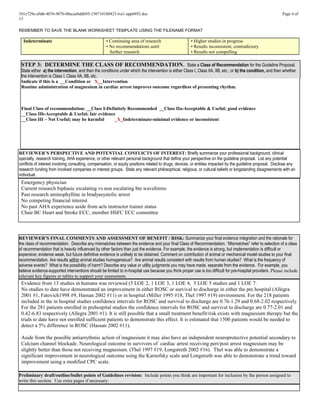
Indeterminate • Continuing area of research
• No recommendations until
further research
• Higher studies in progress
• Results inconsistent, contradictory
• Results not compelling
STEP 3: DETERMINE THE CLASS OF RECOMMENDATION. State a Class of Recommendation for the Guideline Proposal.
State either a) the intervention, and then the conditions under which the intervention is either Class I, Class IIA, IIB, etc.; or b) the condition, and then whether
the intervention is Class I, Class IIA, IIB, etc.
Indicate if this is a __Condition or X__Intervention
Routine administration of magnesium in cardiac arrest improves outcome regardless of presenting rhythm.
Final Class of recommendation: __Class I-Definitely Recommended __Class IIa-Acceptable & Useful; good evidence
__Class IIb-Acceptable & Useful; fair evidence
__Class III – Not Useful; may be harmful _X_Indeterminate-minimal evidence or inconsistent
REVIEWER’S PERSPECTIVE AND POTENTIAL CONFLICTS OF INTEREST: Briefly summarize your professional background, clinical
specialty, research training, AHA experience, or other relevant personal background that define your perspective on the guideline proposal. List any potential
conflicts of interest involving consulting, compensation, or equity positions related to drugs, devices, or entities impacted by the guideline proposal. Disclose any
research funding from involved companies or interest groups. State any relevant philosophical, religious, or cultural beliefs or longstanding disagreements with an
individual.
Emergency physician
Current research biphasic escalating vs non escalating bte waveforms
Past research aminophylline in bradyasystolic arrest
No competing financial interest
No past AHA experience aside from acls instructor trainer status
Chair BC Heart and Stroke ECC, member HSFC ECC committee
REVIEWER’S FINAL COMMENTS AND ASSESSMENT OF BENEFIT / RISK: Summarize your final evidence integration and the rationale for
the class of recommendation. Describe any mismatches between the evidence and your final Class of Recommendation. “Mismatches” refer to selection of a class
of recommendation that is heavily influenced by other factors than just the evidence. For example, the evidence is strong, but implementation is difficult or
expensive; evidence weak, but future definitive evidence is unlikely to be obtained. Comment on contribution of animal or mechanical model studies to your final
recommendation. Are results within animal studies homogeneous? Are animal results consistent with results from human studies? What is the frequency of
adverse events? What is the possibility of harm? Describe any value or utility judgments you may have made, separate from the evidence. For example, you
believe evidence-supported interventions should be limited to in-hospital use because you think proper use is too difficult for pre-hospital providers. Please include
relevant key figures or tables to support your assessment.
Evidence from 13 studies in humans was reviewed (5 LOE 2, 1 LOE 3, 1 LOE 4, 5 LOE 5 studies and 1 LOE 7.
No studies to date have demonstrated an improvement in either ROSC or survival to discharge in either the pre hospital (Allegra
2001 #1, Fatovich1998 #9, Hassan 2002 #11) or in hospital (Miller 1995 #18, Thel 1997 #19) environment. For the 218 patients
included in the in hospital studies confidence intervals for ROSC and survival to discharge are 0.76-1.29 and 0.68-2.02 respectively.
For the 281 patients enrolled in prehospital studies the confidence intervals for ROSC and survival to discharge are 0.77-2.01 and
0.42-6.83 respectively (Allegra 2001 #1). It is still possible that a small treatment benefit/risk exists with magnesium therapy but the
trials to date have not enrolled sufficient patients to demonstrate this effect. It is estimated that 1500 patients would be needed to
detect a 5% difference in ROSC (Hassan 2002 #11).
Aside from the possible antiarrythmic action of magnesium it may also have an independent neuroprotective potential secondary to
Calcium channel blockade. Neurological outcome in survivors of cardiac arrest receiving peri/post arrest magnesium may be
slightly better than those not receiving magnesium. (Thel 1997 #19, Longstreth 2002 #16). Thel was able to demonstrate a
significant improvement in neurological outcome using the Karnofsky scale and Longstreth was able to demonstrate a trend toward
improvement using a modified CPC scale.
Preliminary draft/outline/bullet points of Guidelines revision: Include points you think are important for inclusion by the person assigned to
write this section. Use extra pages if necessary.
101e729e-a9d6-4076-907b-08acaebdd695-150710180423-lva1-app6892.doc Page 5 of
13
REMEMBER TO SAVE THE BLANK WORKSHEET TEMPLATE USING THE FILENAME FORMAT
Publication: Chapter: Pages:
Topic and subheading: magnesium in arrest
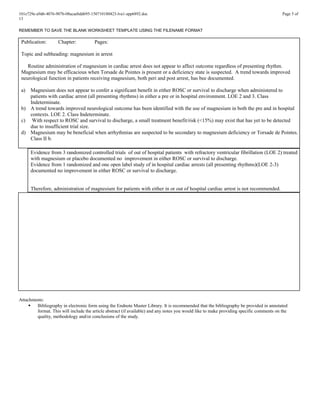
Routine administration of magnesium in cardiac arrest does not appear to affect outcome regardless of presenting rhythm.
Magnesium may be efficacious when Torsade de Pointes is present or a deficiency state is suspected. A trend towards improved
neurological function in patients receiving magnesium, both peri and post arrest, has bee documented.
a) Magnesium does not appear to confer a significant benefit in either ROSC or survival to discharge when administered to
patients with cardiac arrest (all presenting rhythms) in either a pre or in hospital environment. LOE 2 and 3. Class
Indeterminate.
b) A trend towards improved neurological outcome has been identified with the use of magnesium in both the pre and in hospital
contexts. LOE 2. Class Indeterminate.
c) With respect to ROSC and survival to discharge, a small treatment benefit/risk (<15%) may exist that has yet to be detected
due to insufficient trial size.
d) Magnesium may be beneficial when arrhythmias are suspected to be secondary to magnesium deficiency or Torsade de Pointes.
Class II b.
Evidence from 3 randomized controlled trials of out of hospital patients with refractory ventricular fibrillation (LOE 2) treated
with magnesium or placebo documented no improvement in either ROSC or survival to discharge.
Evidence from 1 randomized and one open label study of in hospital cardiac arrests (all presenting rhythms)(LOE 2-3)
documented no improvement in either ROSC or survival to discharge.
Therefore, administration of magnesium for patients with either in or out of hospital cardiac arrest is not recommended.
Attachments:
ď‚§ Bibliography in electronic form using the Endnote Master Library. It is recommended that the bibliography be provided in annotated
format. This will include the article abstract (if available) and any notes you would like to make providing specific comments on the
quality, methodology and/or conclusions of the study.
101e729e-a9d6-4076-907b-08acaebdd695-150710180423-lva1-app6892.doc Page 6 of
13
REMEMBER TO SAVE THE BLANK WORKSHEET TEMPLATE USING THE FILENAME FORMAT
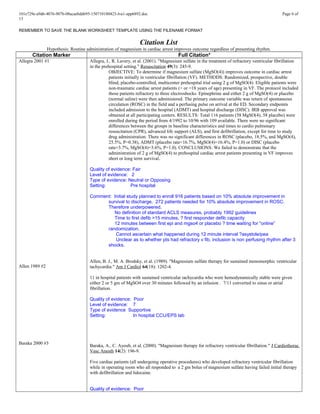
Citation List
Hypothesis: Routine administration of magnesium in cardiac arrest improves outcome regardless of presenting rhythm.
Citation Marker Full Citation*
Allegra 2001 #1
Allen 1989 #2
Baraka 2000 #3
Allegra, J., R. Lavery, et al. (2001). "Magnesium sulfate in the treatment of refractory ventricular fibrillation
in the prehospital setting." Resuscitation 49(3): 245-9.
OBJECTIVE: To determine if magnesium sulfate (MgSO(4)) improves outcome in cardiac arrest
patients initially in ventricular fibrillation (VF). METHODS: Randomized, prospective, double
blind, placebo-controlled, multicenter prehospital trial using 2 g of MgSO(4). Eligible patients were
non-traumatic cardiac arrest patients (> or =18 years of age) presenting in VF. The protocol included
those patients refractory to three electroshocks. Epinephrine and either 2 g of MgSO(4) or placebo
(normal saline) were then administered. The primary outcome variable was return of spontaneous
circulation (ROSC) in the field and a perfusing pulse on arrival at the ED. Secondary endpoints
included admission to the hospital (ADMT) and hospital discharge (DISC). IRB approval was
obtained at all participating centers. RESULTS: Total 116 patients (58 MgSO(4), 58 placebo) were
enrolled during the period from 4/1992 to 10/96 with 109 available. There were no significant
differences between the groups in baseline characteristics and times to cardio pulmonary
resuscitation (CPR), advanced life support (ALS), and first defibrillation, except for time to study
drug administration. There was no significant differences in ROSC (placebo, 18.5%, and MgSO(4),
25.5%, P=0.38), ADMT (placebo rate=16.7%, MgSO(4)=16.4%, P=1.0) or DISC (placebo
rate=3.7%, MgSO(4)=3.6%, P=1.0). CONCLUSIONS: We failed to demonstrate that the
administration of 2 g of MgSO(4) to prehospital cardiac arrest patients presenting in VF improves
short or long term survival.
Quality of evidence: Fair
Level of evidence: 2
Type of evidence: Neutral or Opposing
Setting: Pre hospital
Comment: Initial study planned to enroll 916 patients based on 10% absolute improvement in
survival to discharge. 272 patients needed for 10% absolute improvement in ROSC.
Therefore underpowered.
No definition of standard ACLS measures, probably 1992 guidelines
Time to first defib >15 minutes, ? first responder defib capacity
12 minutes between first epi and mgso4 or placebo ? time waiting for “online”
randomization.
Cannot ascertain what happened during 12 minute interval ?asystole/pea
Unclear as to whether pts had refractory v fib, inclusion is non perfusing rhythm after 3
shocks.
Allen, B. J., M. A. Brodsky, et al. (1989). "Magnesium sulfate therapy for sustained monomorphic ventricular
tachycardia." Am J Cardiol 64(18): 1202-4.
11 in hospital patients with sustained ventricular tachycardia who were hemodynamically stable were given
either 2 or 5 gm of MgSO4 over 30 minutes followed by an infusion . 7/11 converted to sinus or atrial
fibrillation.
Quality of evidence: Poor
Level of evidence: 7
Type of evidence Supportive
Setting: In hospital CCU/EPS lab
Baraka, A., C. Ayoub, et al. (2000). "Magnesium therapy for refractory ventricular fibrillation." J Cardiothorac
Vasc Anesth 14(2): 196-9.
Five cardiac patients (all undergoing operative procedures) who developed refractory ventricular fibrillation
while in operating room who all responded to a 2 gm bolus of magnesium sulfate having failed initial therapy
with defibrillation and lidocaine.
Quality of evidence: Poor
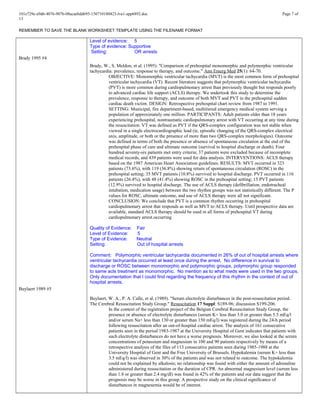
101e729e-a9d6-4076-907b-08acaebdd695-150710180423-lva1-app6892.doc Page 7 of
13
REMEMBER TO SAVE THE BLANK WORKSHEET TEMPLATE USING THE FILENAME FORMAT
Brady 1995 #4
Buylaert 1989 #5
Level of evidence: 5
Type of evidence: Supportive
Setting: OR arrests
Brady, W., S. Meldon, et al. (1995). "Comparison of prehospital monomorphic and polymorphic ventricular
tachycardia: prevalence, response to therapy, and outcome." Ann Emerg Med 25(1): 64-70.
OBJECTIVE: Monomorphic ventricular tachycardia (MVT) is the most common form of prehospital
ventricular tachycardia (VT). Recent literature suggests that polymorphic ventricular tachycardia
(PVT) is more common during cardiopulmonary arrest than previously thought but responds poorly
to advanced cardiac life support (ACLS) therapy. We undertook this study to determine the
prevalence, response to therapy, and outcome of both MVT and PVT in the prehospital sudden
cardiac death victim. DESIGN: Retrospective prehospital chart review from 1987 to 1991.
SETTING: Municipal, fire department-based, multitiered emergency medical system serving a
population of approximately one million. PARTICIPANTS: Adult patients older than 18 years
experiencing prehospital, nontraumatic cardiopulmonary arrest with VT occurring at any time during
the resuscitation. VT was defined as PVT if the QRS-complex configuration was not stable when
viewed in a single electrocardiographic lead (ie, episodic changing of the QRS-complex electrical
axis, amplitude, or both or the presence of more than two QRS-complex morphologies). Outcome
was defined in terms of both the presence or absence of spontaneous circulation at the end of the
prehospital phase of care and ultimate outcome (survival to hospital discharge or death). Four
hundred seventy-six patients met entry criteria; 37 patients were excluded because of incomplete
medical records, and 439 patients were used for data analysis. INTERVENTIONS: ACLS therapy
based on the 1987 American Heart Association guidelines. RESULTS: MVT occurred in 323
patients (73.6%), with 119 (36.8%) showing return of spontaneous circulation (ROSC) in the
prehospital setting; 35 MVT patients (10.8%) survived to hospital discharge. PVT occurred in 116
patients (26.4%), with 48 (41.4%) showing ROSC in the prehospital setting; 15 PVT patients
(12.9%) survived to hospital discharge. The use of ACLS therapy (defibrillation, endotracheal
intubation, medication usage) between the two rhythm groups was not statistically different. The P
values for ROSC, ultimate outcome, and use of ACLS therapy were all not significant.
CONCLUSION: We conclude that PVT is a common rhythm occurring in prehospital
cardiopulmonary arrest that responds as well as MVT to ACLS therapy. Until prospective data are
available, standard ACLS therapy should be used in all forms of prehospital VT during
cardiopulmonary arrest.occurring
Quality of Evidence: Fair
Level of Evidence: 5
Type of Evidence: Neutral
Setting: Out of hospital arrests
Comment: Polymorphic ventricular tachycardia documented in 26% of out of hospital arrests where
ventricular tachycardia occurred at least once during the arrest. No difference in survival to
discharge or ROSC between monomorphic and polymorphic groups, polymorphic group responded
to same acls treatment as monomorphic. No mention as to what meds were used in the two groups.
Only documentation that I could find regarding the frequency of this rhythm in the context of out of
hospital arrests.
Buylaert, W. A., P. A. Calle, et al. (1989). "Serum electrolyte disturbances in the post-resuscitation period.
The Cerebral Resuscitation Study Group." Resuscitation 17 Suppl: S189-96; discussion S199-206.
In the context of the registration project of the Belgian Cerebral Resuscitation Study Group, the
presence or absence of electrolyte disturbances (serum K+ less than 3.0 or greater than 5.5 mEq/l
and/or serum Na+ less than 130 or greater than 150 mEq/l) was registered during the 24-h period
following resuscitation after an out-of-hospital cardiac arrest. The analysis of 161 consecutive
patients seen in the period 1983-1987 at the University Hospital of Gent indicates that patients with
such electrolyte disturbances do not have a worse prognosis. Moreover, we also looked at the serum
concentrations of potassium and magnesium in 100 and 90 patients respectively by means of a
retrospective analysis of the files of 113 consecutive patients seen during 1985-1988 at the
University Hospital of Gent and the Free University of Brussels. Hypokalemia (serum K+ less than
3.5 mEq/l) was observed in 30% of the patients and was not related to outcome. The hypokalemia
could not be explained by alkalosis; no relationship was found with either the amount of adrenaline
administered during resuscitation or the duration of CPR. An abnormal magnesium level (serum less
than 1.8 or greater than 2.4 mg/dl) was found in 42% of the patients and our data suggest that the
prognosis may be worse in this group. A prospective study on the clinical significance of
disturbances in magnesemia would be of interest.
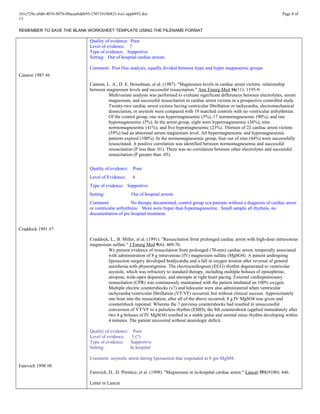
101e729e-a9d6-4076-907b-08acaebdd695-150710180423-lva1-app6892.doc Page 8 of
13
REMEMBER TO SAVE THE BLANK WORKSHEET TEMPLATE USING THE FILENAME FORMAT
Cannon 1987 #6
Craddock 1991 #7
Fatovich 1998 #8
Quality of evidence: Poor
Level of evidence: 7
Type of evidence: Supportive
Setting: Out of hospital cardiac arrests.
Comment: Post Hoc analysis, equally divided between hypo and hyper magnesemic groups
Cannon, L. A., D. E. Heiselman, et al. (1987). "Magnesium levels in cardiac arrest victims: relationship
between magnesium levels and successful resuscitation." Ann Emerg Med 16(11): 1195-9.
Multivariate analysis was performed to evaluate significant differences between electrolytes, serum
magnesium, and successful resuscitation in cardiac arrest victims in a prospective controlled study.
Twenty-two cardiac arrest victims having ventricular fibrillation or tachycardia, electromechanical
dissociation, or asystole were compared with 19 matched controls with no ventricular arrhythmias.
Of the control group, one was hypermagnesemic (5%), 17 normomagnesemic (90%), and one
hypomagnesemic (5%). In the arrest group, eight were hypermagnesemic (36%), nine
normomagnesemic (41%), and five hypomagnesemic (23%). Thirteen of 22 cardiac arrest victims
(59%) had an abnormal serum magnesium level. All hypermagnesemic and hypomagnesemic
patients expired (100%). In the normomagnesemic group, four out of nine (44%) were successfully
resuscitated. A positive correlation was identified between normomagnesemia and successful
resuscitation (P less than .01). There was no correlation between other electrolytes and successful
resuscitation (P greater than .05).
Quality of evidence: Poor
Level of Evidence: 4
Type of evidence: Supportive
Setting: Out of hospital arrests
Comment: No therapy documented, control group ccu patients without a diagnosis of cardiac arrest
or ventricular arrhythmia. More were hyper than hypomagnesemic. Small sample all rhythms, no
documentation of pre hospital treatment.
Craddock, L., B. Miller, et al. (1991). "Resuscitation from prolonged cardiac arrest with high-dose intravenous
magnesium sulfate." J Emerg Med 9(6): 469-76.
We present evidence of resuscitation from prolonged (70-min) cardiac arrest, temporally associated
with administration of 8 g intravenous (IV) magnesium sulfate (MgSO4). A patient undergoing
liposuction surgery developed bradycardia and a fall in oxygen tension after reversal of general
anesthesia with physostigmine. The electrocardiogram (ECG) rhythm degenerated to ventricular
asystole, which was refractory to standard therapy, including multiple boluses of epinephrine,
atropine, wide-open dopamine, and attempts at right heart pacing. External cardiopulmonary
resuscitation (CPR) was continuously maintained with the patient intubated on 100% oxygen.
Multiple electric countershocks (x7) and lidocaine were also administered when ventricular
tachycardia/ventricular fibrillation (VT/VF) occurred, but without clinical success. Approximately
one hour into the resuscitation, after all of the above occurred, 8 g IV MgSO4 was given and
countershock repeated. Whereas the 7 previous countershocks had resulted in unsuccessful
conversion of VT/VF to a pulseless rhythm (EMD), the 8th countershock (applied immediately after
two 4 g boluses of IV MgSO4) resulted in a stable pulse and normal sinus rhythm developing within
4 minutes. The patient recovered without neurologic deficit.
Quality of evidence: Poor
Level of evidence: 5 (?)
Type of evidence: Supportive
Setting: In hospital
Comment: asystolic arrest during liposuction that responded to 8 gm MgS04.
Fatovich, D., D. Prentice, et al. (1998). "Magnesium in in-hospital cardiac arrest." Lancet 351(9100): 446.
Letter in Lancet
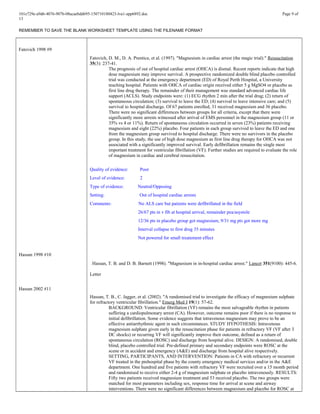
101e729e-a9d6-4076-907b-08acaebdd695-150710180423-lva1-app6892.doc Page 9 of
13
REMEMBER TO SAVE THE BLANK WORKSHEET TEMPLATE USING THE FILENAME FORMAT
Fatovich 1998 #9
Hassan 1998 #10
Hassan 2002 #11
Fatovich, D. M., D. A. Prentice, et al. (1997). "Magnesium in cardiac arrest (the magic trial)." Resuscitation
35(3): 237-41.
The prognosis of out of hospital cardiac arrest (OHCA) is dismal. Recent reports indicate that high
dose magnesium may improve survival. A prospective randomized double blind placebo controlled
trial was conducted at the emergency department (ED) of Royal Perth Hospital, a University
teaching hospital. Patients with OHCA of cardiac origin received either 5 g MgSO4 or placebo as
first line drug therapy. The remainder of their management was standard advanced cardiac life
support (ACLS). Study endpoints were: (1) ECG rhythm 2 min after the trial drug; (2) return of
spontaneous circulation; (3) survival to leave the ED; (4) survival to leave intensive care; and (5)
survival to hospital discharge. Of 67 patients enrolled, 31 received magnesium and 36 placebo.
There were no significant differences between groups for all criteria, except that there were
significantly more arrests witnessed after arrival of EMS personnel in the magnesium group (11 or
35% vs 4 or 11%). Return of spontaneous circulation occurred in seven (23%) patients receiving
magnesium and eight (22%) placebo. Four patients in each group survived to leave the ED and one
from the magnesium group survived to hospital discharge. There were no survivors in the placebo
group. In this study, the use of high dose magnesium as first line drug therapy for OHCA was not
associated with a significantly improved survival. Early defibrillation remains the single most
important treatment for ventricular fibrillation (VF). Further studies are required to evaluate the role
of magnesium in cardiac and cerebral resuscitation.
Quality of evidence: Poor
Level of evidence: 2
Type of evidence: Neutral/Opposing
Setting: Out of hospital cardiac arrests
Comments: No ALS care but patients were defibrillated in the field
26/67 pts in v fib at hospital arrival, remainder pea/asystole
12/36 pts in placebo group got magnesium, 9/31 mg pts got more mg
Interval collapse to first drug 35 minutes
Not powered for small treatement effect
Hassan, T. B. and D. B. Barnett (1998). "Magnesium in in-hospital cardiac arrest." Lancet 351(9100): 445-6.
Letter
Hassan, T. B., C. Jagger, et al. (2002). "A randomised trial to investigate the efficacy of magnesium sulphate
for refractory ventricular fibrillation." Emerg Med J 19(1): 57-62.
BACKGROUND: Ventricular fibrillation (VF) remains the most salvageable rhythm in patients
suffering a cardiopulmonary arrest (CA). However, outcome remains poor if there is no response to
initial defibrillation. Some evidence suggests that intravenous magnesium may prove to be an
effective antiarrhythmic agent in such circumstances. STUDY HYPOTHESIS: Intravenous
magnesium sulphate given early in the resuscitation phase for patients in refractory VF (VF after 3
DC shocks) or recurring VF will significantly improve their outcome, defined as a return of
spontaneous circulation (ROSC) and discharge from hospital alive. DESIGN: A randomised, double
blind, placebo controlled trial. Pre-defined primary and secondary endpoints were ROSC at the
scene or in accident and emergency (A&E) and discharge from hospital alive respectively.
SETTING, PARTICIPANTS, AND INTERVENTION: Patients in CA with refractory or recurrent
VF treated in the prehospital phase by the county emergency medical services and/or in the A&E
department. One hundred and five patients with refractory VF were recruited over a 15 month period
and randomised to receive either 2-4 g of magnesium sulphate or placebo intravenously. RESULTS:
Fifty two patients received magnesium treatment and 53 received placebo. The two groups were
matched for most parameters including sex, response time for arrival at scene and airway
interventions. There were no significant differences between magnesium and placebo for ROSC at
101e729e-a9d6-4076-907b-08acaebdd695-150710180423-lva1-app6892.doc Page 10
of 13
REMEMBER TO SAVE THE BLANK WORKSHEET TEMPLATE USING THE FILENAME FORMAT
Iseri 1990 #12
Kellerman 1989 #13
Kudenchuk 2002 #14
Landau 2003 #15
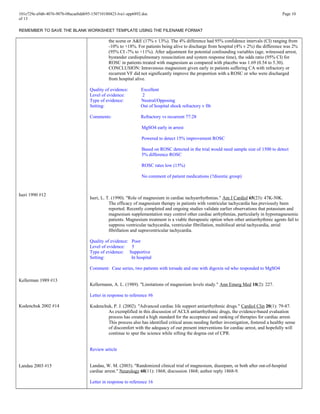
the scene or A&E (17% v 13%). The 4% difference had 95% confidence intervals (CI) ranging from
-10% to +18%. For patients being alive to discharge from hospital (4% v 2%) the difference was 2%
(95% CI -7% to +11%). After adjustment for potential confounding variables (age, witnessed arrest,
bystander cardiopulmonary resuscitation and system response time), the odds ratio (95% CI) for
ROSC in patients treated with magnesium as compared with placebo was 1.69 (0.54 to 5.30).
CONCLUSION: Intravenous magnesium given early in patients suffering CA with refractory or
recurrent VF did not significantly improve the proportion with a ROSC or who were discharged
from hospital alive.
Quality of evidence: Excellent
Level of evidence: 2
Type of evidence: Neutral/Opposing
Setting: Out of hospital shock refractory v fib
Comments: Refractory vs recurrent 77:28
MgSO4 early in arrest
Powered to detect 15% improvement ROSC
Based on ROSC detected in the trial would need sample size of 1500 to detect
5% difference ROSC
ROSC rates low (15%)
No comment of patient medications (?diuretic group)
Iseri, L. T. (1990). "Role of magnesium in cardiac tachyarrhythmias." Am J Cardiol 65(23): 47K-50K.
The efficacy of magnesium therapy in patients with ventricular tachycardia has previously been
reported. Recently completed and ongoing studies validate earlier observations that potassium and
magnesium supplementation may control other cardiac arrhythmias, particularly in hypomagnesemic
patients. Magnesium treatment is a viable therapeutic option when other antiarrhythmic agents fail to
suppress ventricular tachycardia, ventricular fibrillation, multifocal atrial tachycardia, atrial
fibrillation and supraventricular tachycardia.
Quality of evidence: Poor
Level of evidence: 5
Type of evidence: Supportive
Setting: In hospital
Comment: Case series, two patients with torsade and one with digoxin od who responded to MgSO4
Kellermann, A. L. (1989). "Limitations of magnesium levels study." Ann Emerg Med 18(2): 227.
Letter in response to reference #6
Kudenchuk, P. J. (2002). "Advanced cardiac life support antiarrhythmic drugs." Cardiol Clin 20(1): 79-87.
As exemplified in this discussion of ACLS antiarrhythmic drugs, the evidence-based evaluation
process has created a high standard for the acceptance and ranking of therapies for cardiac arrest.
This process also has identified critical areas needing further investigation, fostered a healthy sense
of discomfort with the adequacy of our present interventions for cardiac arrest, and hopefully will
continue to spur the science while sifting the dogma out of CPR.
Review article
Landau, W. M. (2003). "Randomized clinical trial of magnesium, diazepam, or both after out-of-hospital
cardiac arrest." Neurology 60(11): 1868; discussion 1868; author reply 1868-9.
Letter in response to reference 16
101e729e-a9d6-4076-907b-08acaebdd695-150710180423-lva1-app6892.doc Page 11
of 13
REMEMBER TO SAVE THE BLANK WORKSHEET TEMPLATE USING THE FILENAME FORMAT
Longstreth 2002 #16
Machado 2003 #17
Miller 1995 #18
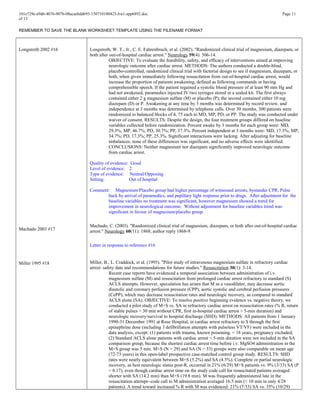
Longstreth, W. T., Jr., C. E. Fahrenbruch, et al. (2002). "Randomized clinical trial of magnesium, diazepam, or
both after out-of-hospital cardiac arrest." Neurology 59(4): 506-14.
OBJECTIVE: To evaluate the feasibility, safety, and efficacy of interventions aimed at improving
neurologic outcome after cardiac arrest. METHODS: The authors conducted a double-blind,
placebo-controlled, randomized clinical trial with factorial design to see if magnesium, diazepam, or
both, when given immediately following resuscitation from out-of-hospital cardiac arrest, would
increase the proportion of patients awakening, defined as following commands or having
comprehensible speech. If the patient regained a systolic blood pressure of at least 90 mm Hg and
had not awakened, paramedics injected IV two syringes stored in a sealed kit. The first always
contained either 2 g magnesium sulfate (M) or placebo (P); the second contained either 10 mg
diazepam (D) or P. Awakening at any time by 3 months was determined by record review, and
independence at 3 months was determined by telephone calls. Over 30 months, 300 patients were
randomized in balanced blocks of 4, 75 each to MD, MP, PD, or PP. The study was conducted under
waiver of consent. RESULTS: Despite the design, the four treatment groups differed on baseline
variables collected before randomization. Percent awake by 3 months for each group were: MD,
29.3%; MP, 46.7%; PD, 30.7%; PP, 37.3%. Percent independent at 3 months were: MD, 17.3%; MP,
34.7%; PD, 17.3%; PP, 25.3%. Significant interactions were lacking. After adjusting for baseline
imbalances, none of these differences was significant, and no adverse effects were identified.
CONCLUSIONS: Neither magnesium nor diazepam significantly improved neurologic outcome
from cardiac arrest.
Quality of evidence: Good
Level of evidence: 2
Type of evidence: Neutral/Opposing
Setting: Out of hospital
Comment: Magnesium/Placebo group had higher percentage of witnessed arrests, bystander CPR, Pulse
back by arrival of paramedics, and pupillary light response prior to drugs. After adjustment for the
baseline variables no treatment was significant, however magnesium showed a trend for
improvement in neurological outcome. Without adjustment for baseline variables trend was
significant in favour of magnesium/placebo group.
Machado, C. (2003). "Randomized clinical trial of magnesium, diazepam, or both after out-of-hospital cardiac
arrest." Neurology 60(11): 1868; author reply 1868-9.
Letter in response to reference #16
Miller, B., L. Craddock, et al. (1995). "Pilot study of intravenous magnesium sulfate in refractory cardiac
arrest: safety data and recommendations for future studies." Resuscitation 30(1): 3-14.
Recent case reports have evidenced a temporal association between administration of i.v.
magnesium sulfate (M) and resuscitation from prolonged cardiac arrest refractory to standard (S)
ACLS attempts. However, speculation has arisen that M as a vasodilator, may decrease aortic
diastolic and coronary perfusion pressure (CPP), aortic systolic and cerebral perfusion pressures
(CePP), which may decrease resuscitation rates and neurologic recovery, as compared to standard
ACLS alone (SA). OBJECTIVE: To resolve positive beginning evidence vs. negative theory, we
conducted a pilot study of M+S vs. SA in refractory cardiac arrest on resuscitation rates (% R, return
of stable pulses > 30 min without CPR, first in-hospital cardiac arrest > 5-min duration) and
neurologic recovery/survival to hospital discharge (SHD). METHODS: All patients from 1 January
1990-31 December 1991 at Rose Hospital, in cardiac arrest refractory to S through the first
epinephrine dose (including 3 defibrillation attempts with pulseless VT/VF) were included in the
data analysis, except: (1) patients with trauma, known poisoning, < 18 years, pregnancy excluded;
(2) Standard ACLS alone patients with cardiac arrest < 5-min duration were not included in the SA
comparison group, because the shortest cardiac arrest time before i.v. MgSO4 administration in the
M+S group was 5 min. M+S (N = 29) and SA (N = 33) groups were also comparable on mean age
(72-73 years) in this open-label prospective case-matched control group study. RESULTS: SHD
rates were nearly equivalent between M+S (5.2%) and SA (4.5%). Complete or partial neurologic
recovery, as best neurologic status post-R, occurred in 21% (6/29) M+S patients vs. 9% (3/33) SA (P
= 0.17), even though cardiac arrest time on the study code call for resuscitated patients averaged
shorter with SA (14.2 min) than M+S (19.8 min). M was frequently administered late in the
resuscitation attempt--code call to M administration averaged 16.5 min (< 10 min in only 4/28
patients). A trend toward increased % R with M was evidenced: 21% (7/33) SA vs. 35% (10/29)
101e729e-a9d6-4076-907b-08acaebdd695-150710180423-lva1-app6892.doc Page 12
of 13
REMEMBER TO SAVE THE BLANK WORKSHEET TEMPLATE USING THE FILENAME FORMAT
Sarkozy 2003 #18
Thel 1997 #19
M+S (P = 0.21). A temporal association between M administration and first return of spontaneous
circulation (ROSC) was also documented in 4 of 10 M+S patients (pulseless electrical activity
(3)/pulseless VT (1)), who had first ROSC/R occur within 0.5-2.25 min following first i.v. M bolus
delivery, after 11-30 min (mean = 20 min) of continuous pulseless rhythm refractory to standard
ACLS. All M+S resuscitations occurred within the dose range 2.5-5 g (i.v. push): 3/6 (50%) and
7/13 (54%) R occurred with 1-3 g and 4-5 g MgSO4, respectively (at least 11/13 patients had
peripheral i.v. delivery with 4-5 g M). Analyzing post-ROSC hypotension proved important, as 50%
of pts with first recorded systolic BP post-ROSC < 90 mmHg were resuscitated vs. 83% with > 90
mmHg (P = 0.10). A trend toward increased post-ROSC hypotension was evidenced with i.v.
MgSO4: Recorded first or second systolic BP < 90 mmHg post-ROSC occurred in 66% of M+S vs.
42% of SA patients. All 3 M+S patients having a wide open i.v. levophed infusion as vasopressor
support, started immediately post-ROSC/i.v. MgSO4 with systolic BP < 90 mmHg and continued at
least 15 min (titrating to a systolic BP approximately 110 mmHg), had a temporal association
between M delivery and R after 14-30 min of continuous pulselessness refractory to S.
CONCLUSION: Human research determining whether i.v. MgSO4 increases long-term survival
from refractory cardiac arrest should be vigorously pursued, as it is safe to proceed given the above
described considerations.
Quality of evidence: Poor
Level of evidence: 3
Type of evidence: Neutral/Opposing
Setting: In hospital cardiac arrests
Comments: Non randomized open label in hospital treatment at MD discretion
Non standardized endpoints
Neurological endpoints poorly defined
Almost unreadable due to convoluted prose
Sarkozy, A. and P. Dorian (2003). "Strategies for reversing shock-resistant ventricular fibrillation." Curr Opin
Crit Care 9(3): 189-93.
PURPOSE OF REVIEW: Shock-resistant ventricular fibrillation is defined as ventricular fibrillation
persisting after three defibrillation attempts. In approximately 10 to 25% of all cardiac arrests,
shock-resistant ventricular fibrillation develops, and 87 to 98% of these patients die. RECENT
FINDINGS: In the treatment of shock-resistant ventricular fibrillation, defibrillation using biphasic
waveforms is considered as an intervention of choice. Intravenous amiodarone is also acceptable,
safe, and useful, based on evidence from two randomized clinical trials. Intravenous vasopressin is
acceptable and probably safe and useful, but the evidence supporting this recommendation is coming
from a small, randomized clinical trial. Procainamide is acceptable but not recommended. In the
presence of acute myocardial infarction and recurrent ventricular fibrillation, if all other therapies
fail, beta-blockers can be considered. Magnesium, lidocaine, and bretylium are not recommended in
the treatment of shock-resistant ventricular fibrillation. SUMMARY: Biphasic defibrillation and
intravenous amiodarone are useful in shock-resistant ventricular fibrillation.
Comment: Review article
Thel, M. C., A. L. Armstrong, et al. (1997). "Randomised trial of magnesium in in-hospital cardiac arrest.
Duke Internal Medicine Housestaff." Lancet 350(9087): 1272-6.
BACKGROUND: The apparent benefit of magnesium in acute myocardial infarction, and the
persistently poor outcome after cardiac arrest, have led to use of magnesium in cardiopulmonary
resuscitation. Because few data on its use in cardiac arrest were available, we undertook a
randomised placebo-controlled trial (MAGIC trial). METHODS: Patients treated for cardiac arrest
by the Duke Hospital code team were randomly assigned intravenous magnesium (2 g [8 mmoles]
bolus, followed by 8 g [32 mmoles] over 24 h; 76 patients) or placebo (80 patients). Only patients in
intensive care or general wards were eligible; those whose cardiac arrest occurred in emergency,
operating, or recovery rooms were excluded. The primary endpoint was return of spontaneous
circulation, defined as attainment of any measurable blood pressure or palpable pulse for at least 1 h
after cardiac arrest. The secondary endpoints were survival to 24 h, survival to hospital discharge,
and neurological outcome. Analysis was by intention to treat. FINDINGS: There were no significant
differences between the magnesium and placebo groups in the proportion with return of spontaneous
101e729e-a9d6-4076-907b-08acaebdd695-150710180423-lva1-app6892.doc Page 13
of 13
REMEMBER TO SAVE THE BLANK WORKSHEET TEMPLATE USING THE FILENAME FORMAT
Tobey 1992 #20
Vincent 1997 #21
circulation (41 [54%] vs 48 [60%], p = 0.44), survival to 24 h (33 [43%] vs 40 [50%], p = 0.41),
survival to hospital discharge (16 [21%] vs 17 [21%], p = 0.98), or Glasgow coma score (median 15
in both). INTERPRETATION: Empirical magnesium supplementation did not improve the rate of
successful resuscitation, survival to 24 h, or survival to hospital discharge overall or in any
subpopulation of patients with in-hospital cardiac arrest.
Quality of evidence: Good
Level of evidence: 2
Type of evidence: Neutral/Opposing
Setting: In hospital university tertiary care institution
Comment: Neuro outcome by Karnofsky score (?) better in Mg group
Underpowered for small treatment effect, 5% improval would need 2000 pts
Different pt population than OHCA
Response times very short
40% patients admitted with pre established cvs diagnosis
Tobey, R. C., G. A. Birnbaum, et al. (1992). "Successful resuscitation and neurologic recovery from refractory
ventricular fibrillation after magnesium sulfate administration." Ann Emerg Med 21(1): 92-6.
A 46-year-old man suffered a witnessed cardiac arrest. Ventricular fibrillation persisted despite 62
minutes of basic and advanced cardiac life support measures in the field. On arrival in the
emergency department, he received 4 g magnesium sulfate IV and was defibrillated successfully to
normal sinus rhythm with the next countershock. The patient was discharged neurologically intact.
We discuss the possible mechanisms of action and clinical use of IV magnesium sulfate in cardiac
arrest.
Quality of evidence: Poor
Level of evidence: 5 (?)
Type of evidence: Supportive
Setting: Out of hospital arrest
Comment: Witnessed EHS on scene
Vincent, R. (1997). "Drugs in modern resuscitation." Br J Anaesth 79(2): 188-97.
Review article
*Type the citation marker in the first field and then paste the full citation into the second field. You can copy the full citation
from EndNote by selecting the citation, then copying the FORMATTED citation using the short cut, Ctrl-K. After you copy the
citation, go back to this document and position the cursor in the field, then paste the citation into the document (use Ctrl-V). For each
new citation press Tab to move down to start a new field.

magnesium cardiac arrest

  • 1.
    101e729e-a9d6-4076-907b-08acaebdd695-150710180423-lva1-app6892.doc Page 1of 13 REMEMBER TO SAVE THE BLANK WORKSHEET TEMPLATE USING THE FILENAME FORMAT WORKSHEET for PROPOSED Evidence-Based GUIDELINE RECOMMENDATIONS NOTE: Save worksheet using the following filename format: Taskforce.Topic.Author.Date.Doc where Taskforce is a=ACLS, b=BLS, p=Pediatric, n=neonatal and i=Interdisciplinary. Use 2 or 3 letter abbreviation for author’s name and 30Jul03 as sample date format. Worksheet Author: Ross Berringer Taskforce/Subcommittee: __BLS _x_ACLS __PEDS __ID __PROAD __Other: Author’s Home Resuscitation Council: __AHA __ANZCOR __CLAR __ERC __HSFC _x_HSFC __RCSA ___IAHF ___Other: Date Submitted to Subcommittee: October 25,2004, Revised 25 Nov 2004 Dec 5 2004 STEP 1: STATE THE PROPOSAL. State if this is a proposed new guideline; revision to current guideline; or deletion of current guideline. Existing guideline, practice or training activity, or new guideline: Current routine administration of magnesium in resuscitation does not affect outcome and may be associated with a higher incidence of hypotension despite a potential for improved neurological function in survivors. Magnesium is not recommended in cardiac arrest except when arrythmias are suspected to be caused by Magnesium deficiency or when Torsade de Pointes is diagnosed. (IIb) Step 1A: Refine the question; state the question as a positive (or negative) hypothesis. State proposed guideline recommendation as a specific, positive hypothesis. Use single sentence if possible. Include type of patients; setting (in- /out-of-hospital); specific interventions (dose, route); specific outcomes (ROSC vs. hospital discharge). Routine administration of magnesium in cardiac arrest improves outcome regardless of presenting rhythm. Step 1B: Gather the Evidence; define your search strategy. Describe search results; describe best sources for evidence. Medline, AHA Endnote, EMBASE, and Cochrane searched using MeSH terms <heart arrest> not <heart arrest induced> and <magnesium>, <ventricular fibrillation> and <magnesium>, free text search cardiac arrest and magnesium, ventricular fibrillation and magnesium, in hospital cardiac arrest and magnesium, out of hospital cardiac arrest and magnesium. List electronic databases searched (at least AHA EndNote 7 Master library [http://ecc.heart.org/], Cochrane database for systematic reviews and Central Register of Controlled Trials [http://www.cochrane.org/], MEDLINE [http://www.ncbi.nlm.nih.gov/PubMed/ ], and Embase), and hand searches of journals, review articles, and books. Medline (1966 – 06/04), Embase 06/04, AHA Endnote Database 07/04, Cochrane Database of Systematic Reviews, and Cochrane Controlled Trials Registry. Medline 200 free text/ related articles and 62 MeSH, EMBASE 84 MeSH, Cochrane Central Register 35 MeSH, Cochrane Database of Systematic Reviews 0, AHA End Note 59 free text. • State major criteria you used to limit your search; state inclusion or exclusion criteria (e.g., only human studies with control group? no animal studies? N subjects > minimal number? type of methodology? peer-reviewed manuscripts only? no abstract-only studies?) No limits applied to any search. Excluded: animal studies, cardioplegic/anaesthetic studies, letters, guidelines, editorials, conference proceedings, and opinions. Additional references were excluded after review of the abstract or article as not relevant or meeting exclusionary criteria above Hand searching of bibliographies of published reviews yielded only occasional case reports. • Number of articles/sources meeting criteria for further review: Create a citation marker for each study (use the author initials and date or Arabic numeral, e.g., “Cummins-1”). . If possible, please supply file of best references; EndNote 6+ required as reference manager using the ECC reference library. 17 articles were selected for further detailed review STEP 2: ASSESS THE QUALITY OF EACH STUDY Step 2A: Determine the Level of Evidence. For each article/source from step 1, assign a level of evidence—based on study design and methodology. Level of Evidence Definitions (See manuscript for full details) Level 1 Randomized clinical trials or meta-analyses of multiple clinical trials with substantial treatment effects Level 2 Randomized clinical trials with smaller or less significant treatment effects Level 3 Prospective, controlled, non-randomized, cohort studies Level 4 Historic, non-randomized, cohort or case-control studies Level 5 Case series: patients compiled in serial fashion, lacking a control group Level 6 Animal studies or mechanical model studies Level 7 Extrapolations from existing data collected for other purposes, theoretical analyses Level 8 Rational conjecture (common sense); common practices accepted before evidence-based guidelines
  • 2.
    101e729e-a9d6-4076-907b-08acaebdd695-150710180423-lva1-app6892.doc Page 2of 13 REMEMBER TO SAVE THE BLANK WORKSHEET TEMPLATE USING THE FILENAME FORMAT Step 2B: Critically assess each article/source in terms of research design and methods. Was the study well executed? Suggested criteria appear in the table below. Assess design and methods and provide an overall rating. Ratings apply within each Level; a Level 1 study can be excellent or poor as a clinical trial, just as a Level 6 study could be excellent or poor as an animal study. Where applicable, please use a superscripted code (shown below) to categorize the primary endpoint of each study. For more detailed explanations please see attached assessment form. Component of Study and Rating Excellent Good Fair Poor Unsatisfactory Design & Methods Highly appropriate sample or model, randomized, proper controls AND Outstanding accuracy, precision, and data collection in its class Highly appropriate sample or model, randomized, proper controls OR Outstanding accuracy, precision, and data collection in its class Adequate, design, but possibly biased OR Adequate under the circumstances Small or clearly biased population or model OR Weakly defensible in its class, limited data or measures Anecdotal, no controls, off target end-points OR Not defensible in its class, insufficient data or measures A = Return of spontaneous circulation C = Survival to hospital discharge E = Other endpoint B = Survival of event D = Intact neurological survival Step 2C: Determine the direction of the results and the statistics: supportive? neutral? opposed? DIRECTION of study by results & statistics: SUPPORT the proposal NEUTRAL OPPOSE the proposal Results Outcome of proposed guideline superior, to a clinically important degree, to current approaches Outcome of proposed guideline no different from current approach Outcome of proposed guideline inferior to current approach Step 2D: Cross-tabulate assessed studies by a) level, b) quality and c) direction (ie, supporting or neutral/ opposing); combine and summarize. Exclude the Poor and Unsatisfactory studies. Sort the Excellent, Good, and Fair quality studies by both Level and Quality of evidence, and Direction of support in the summary grids below. Use citation marker (e.g. author/ date/source). In the Neutral or Opposing grid use bold font for Opposing studies to distinguish them from merely neutral studies. Where applicable, please use a superscripted code (shown below) to categorize the primary endpoint of each study. NEUTRAL OR OPPOSING EVIDENCE Routine administration of magnesium in cardiac arrest improves outcome regardless of presenting rhythm. QualityofEvidence Excellent Hassan #11 D Good Thel #19 D Longstreth#16 D
  • 3.
    101e729e-a9d6-4076-907b-08acaebdd695-150710180423-lva1-app6892.doc Page 3of 13 REMEMBER TO SAVE THE BLANK WORKSHEET TEMPLATE USING THE FILENAME FORMAT Fair Allegra 2001 #1 C Fatovich 1997 #9 C Miller 1995 #18 C 1 2 3 4 5 6 7 8 Level of Evidence A = Return of spontaneous circulation C = Survival to hospital discharge E = Other endpoint B = Survival of event D = Intact neurological survival SUPPORTING EVIDENCE Routine administration of magnesium in cardiac arrest improves outcome regardless of presenting rhythm. QualityofEvidence Excellent Good Fair Cannon 1987 #6 A Allen 1989 #2 B Baraka 2000 #3 B Craddock 1991 D Iseri 1990 #12 B Tobey 1992 #20 D Buylaert 1989 #5 A 1 2 3 4 5 6 7 8 Level of Evidence A = Return of spontaneous circulation C = Survival to hospital discharge E = Other endpoint B = Survival of event D = Intact neurological survival STEP 3. DETERMINE THE CLASS OF RECOMMENDATION. Select from these summary definitions. CLASS CLINICAL DEFINITION REQUIRED LEVEL OF EVIDENCE Class I Definitely recommended. Definitive, excellent evidence provides support. • Always acceptable, safe • Definitely useful • Proven in both efficacy & effectiveness • Must be used in the intended manner for proper clinical indications. • One or more Level 1 studies are present (with rare exceptions) • Study results consistently positive and compelling Class II: Acceptable and useful • Safe, acceptable • Clinically useful • Not yet confirmed definitively • Most evidence is positive • Level 1 studies are absent, or inconsistent, or lack power • No evidence of harm • Class IIa: Acceptable and useful Good evidence provides support • Safe, acceptable • Clinically useful • Considered treatments of choice • Generally higher levels of evidence • Results are consistently positive • Class IIb: Acceptable and useful Fair evidence provides support • Safe, acceptable • Clinically useful • Considered optional or alternative treatments • Generally lower or intermediate levels of evidence • Generally, but not consistently, positive results Class III: Not acceptable, not useful, may be harmful • Unacceptable • Not useful clinically • May be harmful. • No positive high level data • Some studies suggest or confirm harm. • Research just getting started. • Minimal evidence is available
  • 4.
    101e729e-a9d6-4076-907b-08acaebdd695-150710180423-lva1-app6892.doc Page 4of 13 REMEMBER TO SAVE THE BLANK WORKSHEET TEMPLATE USING THE FILENAME FORMAT Indeterminate • Continuing area of research • No recommendations until further research • Higher studies in progress • Results inconsistent, contradictory • Results not compelling STEP 3: DETERMINE THE CLASS OF RECOMMENDATION. State a Class of Recommendation for the Guideline Proposal. State either a) the intervention, and then the conditions under which the intervention is either Class I, Class IIA, IIB, etc.; or b) the condition, and then whether the intervention is Class I, Class IIA, IIB, etc. Indicate if this is a __Condition or X__Intervention Routine administration of magnesium in cardiac arrest improves outcome regardless of presenting rhythm. Final Class of recommendation: __Class I-Definitely Recommended __Class IIa-Acceptable & Useful; good evidence __Class IIb-Acceptable & Useful; fair evidence __Class III – Not Useful; may be harmful _X_Indeterminate-minimal evidence or inconsistent REVIEWER’S PERSPECTIVE AND POTENTIAL CONFLICTS OF INTEREST: Briefly summarize your professional background, clinical specialty, research training, AHA experience, or other relevant personal background that define your perspective on the guideline proposal. List any potential conflicts of interest involving consulting, compensation, or equity positions related to drugs, devices, or entities impacted by the guideline proposal. Disclose any research funding from involved companies or interest groups. State any relevant philosophical, religious, or cultural beliefs or longstanding disagreements with an individual. Emergency physician Current research biphasic escalating vs non escalating bte waveforms Past research aminophylline in bradyasystolic arrest No competing financial interest No past AHA experience aside from acls instructor trainer status Chair BC Heart and Stroke ECC, member HSFC ECC committee REVIEWER’S FINAL COMMENTS AND ASSESSMENT OF BENEFIT / RISK: Summarize your final evidence integration and the rationale for the class of recommendation. Describe any mismatches between the evidence and your final Class of Recommendation. “Mismatches” refer to selection of a class of recommendation that is heavily influenced by other factors than just the evidence. For example, the evidence is strong, but implementation is difficult or expensive; evidence weak, but future definitive evidence is unlikely to be obtained. Comment on contribution of animal or mechanical model studies to your final recommendation. Are results within animal studies homogeneous? Are animal results consistent with results from human studies? What is the frequency of adverse events? What is the possibility of harm? Describe any value or utility judgments you may have made, separate from the evidence. For example, you believe evidence-supported interventions should be limited to in-hospital use because you think proper use is too difficult for pre-hospital providers. Please include relevant key figures or tables to support your assessment. Evidence from 13 studies in humans was reviewed (5 LOE 2, 1 LOE 3, 1 LOE 4, 5 LOE 5 studies and 1 LOE 7. No studies to date have demonstrated an improvement in either ROSC or survival to discharge in either the pre hospital (Allegra 2001 #1, Fatovich1998 #9, Hassan 2002 #11) or in hospital (Miller 1995 #18, Thel 1997 #19) environment. For the 218 patients included in the in hospital studies confidence intervals for ROSC and survival to discharge are 0.76-1.29 and 0.68-2.02 respectively. For the 281 patients enrolled in prehospital studies the confidence intervals for ROSC and survival to discharge are 0.77-2.01 and 0.42-6.83 respectively (Allegra 2001 #1). It is still possible that a small treatment benefit/risk exists with magnesium therapy but the trials to date have not enrolled sufficient patients to demonstrate this effect. It is estimated that 1500 patients would be needed to detect a 5% difference in ROSC (Hassan 2002 #11). Aside from the possible antiarrythmic action of magnesium it may also have an independent neuroprotective potential secondary to Calcium channel blockade. Neurological outcome in survivors of cardiac arrest receiving peri/post arrest magnesium may be slightly better than those not receiving magnesium. (Thel 1997 #19, Longstreth 2002 #16). Thel was able to demonstrate a significant improvement in neurological outcome using the Karnofsky scale and Longstreth was able to demonstrate a trend toward improvement using a modified CPC scale. Preliminary draft/outline/bullet points of Guidelines revision: Include points you think are important for inclusion by the person assigned to write this section. Use extra pages if necessary.
  • 5.
    101e729e-a9d6-4076-907b-08acaebdd695-150710180423-lva1-app6892.doc Page 5of 13 REMEMBER TO SAVE THE BLANK WORKSHEET TEMPLATE USING THE FILENAME FORMAT Publication: Chapter: Pages: Topic and subheading: magnesium in arrest Routine administration of magnesium in cardiac arrest does not appear to affect outcome regardless of presenting rhythm. Magnesium may be efficacious when Torsade de Pointes is present or a deficiency state is suspected. A trend towards improved neurological function in patients receiving magnesium, both peri and post arrest, has bee documented. a) Magnesium does not appear to confer a significant benefit in either ROSC or survival to discharge when administered to patients with cardiac arrest (all presenting rhythms) in either a pre or in hospital environment. LOE 2 and 3. Class Indeterminate. b) A trend towards improved neurological outcome has been identified with the use of magnesium in both the pre and in hospital contexts. LOE 2. Class Indeterminate. c) With respect to ROSC and survival to discharge, a small treatment benefit/risk (<15%) may exist that has yet to be detected due to insufficient trial size. d) Magnesium may be beneficial when arrhythmias are suspected to be secondary to magnesium deficiency or Torsade de Pointes. Class II b. Evidence from 3 randomized controlled trials of out of hospital patients with refractory ventricular fibrillation (LOE 2) treated with magnesium or placebo documented no improvement in either ROSC or survival to discharge. Evidence from 1 randomized and one open label study of in hospital cardiac arrests (all presenting rhythms)(LOE 2-3) documented no improvement in either ROSC or survival to discharge. Therefore, administration of magnesium for patients with either in or out of hospital cardiac arrest is not recommended. Attachments: ď‚§ Bibliography in electronic form using the Endnote Master Library. It is recommended that the bibliography be provided in annotated format. This will include the article abstract (if available) and any notes you would like to make providing specific comments on the quality, methodology and/or conclusions of the study.
  • 6.
    101e729e-a9d6-4076-907b-08acaebdd695-150710180423-lva1-app6892.doc Page 6of 13 REMEMBER TO SAVE THE BLANK WORKSHEET TEMPLATE USING THE FILENAME FORMAT Citation List Hypothesis: Routine administration of magnesium in cardiac arrest improves outcome regardless of presenting rhythm. Citation Marker Full Citation* Allegra 2001 #1 Allen 1989 #2 Baraka 2000 #3 Allegra, J., R. Lavery, et al. (2001). "Magnesium sulfate in the treatment of refractory ventricular fibrillation in the prehospital setting." Resuscitation 49(3): 245-9. OBJECTIVE: To determine if magnesium sulfate (MgSO(4)) improves outcome in cardiac arrest patients initially in ventricular fibrillation (VF). METHODS: Randomized, prospective, double blind, placebo-controlled, multicenter prehospital trial using 2 g of MgSO(4). Eligible patients were non-traumatic cardiac arrest patients (> or =18 years of age) presenting in VF. The protocol included those patients refractory to three electroshocks. Epinephrine and either 2 g of MgSO(4) or placebo (normal saline) were then administered. The primary outcome variable was return of spontaneous circulation (ROSC) in the field and a perfusing pulse on arrival at the ED. Secondary endpoints included admission to the hospital (ADMT) and hospital discharge (DISC). IRB approval was obtained at all participating centers. RESULTS: Total 116 patients (58 MgSO(4), 58 placebo) were enrolled during the period from 4/1992 to 10/96 with 109 available. There were no significant differences between the groups in baseline characteristics and times to cardio pulmonary resuscitation (CPR), advanced life support (ALS), and first defibrillation, except for time to study drug administration. There was no significant differences in ROSC (placebo, 18.5%, and MgSO(4), 25.5%, P=0.38), ADMT (placebo rate=16.7%, MgSO(4)=16.4%, P=1.0) or DISC (placebo rate=3.7%, MgSO(4)=3.6%, P=1.0). CONCLUSIONS: We failed to demonstrate that the administration of 2 g of MgSO(4) to prehospital cardiac arrest patients presenting in VF improves short or long term survival. Quality of evidence: Fair Level of evidence: 2 Type of evidence: Neutral or Opposing Setting: Pre hospital Comment: Initial study planned to enroll 916 patients based on 10% absolute improvement in survival to discharge. 272 patients needed for 10% absolute improvement in ROSC. Therefore underpowered. No definition of standard ACLS measures, probably 1992 guidelines Time to first defib >15 minutes, ? first responder defib capacity 12 minutes between first epi and mgso4 or placebo ? time waiting for “online” randomization. Cannot ascertain what happened during 12 minute interval ?asystole/pea Unclear as to whether pts had refractory v fib, inclusion is non perfusing rhythm after 3 shocks. Allen, B. J., M. A. Brodsky, et al. (1989). "Magnesium sulfate therapy for sustained monomorphic ventricular tachycardia." Am J Cardiol 64(18): 1202-4. 11 in hospital patients with sustained ventricular tachycardia who were hemodynamically stable were given either 2 or 5 gm of MgSO4 over 30 minutes followed by an infusion . 7/11 converted to sinus or atrial fibrillation. Quality of evidence: Poor Level of evidence: 7 Type of evidence Supportive Setting: In hospital CCU/EPS lab Baraka, A., C. Ayoub, et al. (2000). "Magnesium therapy for refractory ventricular fibrillation." J Cardiothorac Vasc Anesth 14(2): 196-9. Five cardiac patients (all undergoing operative procedures) who developed refractory ventricular fibrillation while in operating room who all responded to a 2 gm bolus of magnesium sulfate having failed initial therapy with defibrillation and lidocaine. Quality of evidence: Poor
  • 7.
    101e729e-a9d6-4076-907b-08acaebdd695-150710180423-lva1-app6892.doc Page 7of 13 REMEMBER TO SAVE THE BLANK WORKSHEET TEMPLATE USING THE FILENAME FORMAT Brady 1995 #4 Buylaert 1989 #5 Level of evidence: 5 Type of evidence: Supportive Setting: OR arrests Brady, W., S. Meldon, et al. (1995). "Comparison of prehospital monomorphic and polymorphic ventricular tachycardia: prevalence, response to therapy, and outcome." Ann Emerg Med 25(1): 64-70. OBJECTIVE: Monomorphic ventricular tachycardia (MVT) is the most common form of prehospital ventricular tachycardia (VT). Recent literature suggests that polymorphic ventricular tachycardia (PVT) is more common during cardiopulmonary arrest than previously thought but responds poorly to advanced cardiac life support (ACLS) therapy. We undertook this study to determine the prevalence, response to therapy, and outcome of both MVT and PVT in the prehospital sudden cardiac death victim. DESIGN: Retrospective prehospital chart review from 1987 to 1991. SETTING: Municipal, fire department-based, multitiered emergency medical system serving a population of approximately one million. PARTICIPANTS: Adult patients older than 18 years experiencing prehospital, nontraumatic cardiopulmonary arrest with VT occurring at any time during the resuscitation. VT was defined as PVT if the QRS-complex configuration was not stable when viewed in a single electrocardiographic lead (ie, episodic changing of the QRS-complex electrical axis, amplitude, or both or the presence of more than two QRS-complex morphologies). Outcome was defined in terms of both the presence or absence of spontaneous circulation at the end of the prehospital phase of care and ultimate outcome (survival to hospital discharge or death). Four hundred seventy-six patients met entry criteria; 37 patients were excluded because of incomplete medical records, and 439 patients were used for data analysis. INTERVENTIONS: ACLS therapy based on the 1987 American Heart Association guidelines. RESULTS: MVT occurred in 323 patients (73.6%), with 119 (36.8%) showing return of spontaneous circulation (ROSC) in the prehospital setting; 35 MVT patients (10.8%) survived to hospital discharge. PVT occurred in 116 patients (26.4%), with 48 (41.4%) showing ROSC in the prehospital setting; 15 PVT patients (12.9%) survived to hospital discharge. The use of ACLS therapy (defibrillation, endotracheal intubation, medication usage) between the two rhythm groups was not statistically different. The P values for ROSC, ultimate outcome, and use of ACLS therapy were all not significant. CONCLUSION: We conclude that PVT is a common rhythm occurring in prehospital cardiopulmonary arrest that responds as well as MVT to ACLS therapy. Until prospective data are available, standard ACLS therapy should be used in all forms of prehospital VT during cardiopulmonary arrest.occurring Quality of Evidence: Fair Level of Evidence: 5 Type of Evidence: Neutral Setting: Out of hospital arrests Comment: Polymorphic ventricular tachycardia documented in 26% of out of hospital arrests where ventricular tachycardia occurred at least once during the arrest. No difference in survival to discharge or ROSC between monomorphic and polymorphic groups, polymorphic group responded to same acls treatment as monomorphic. No mention as to what meds were used in the two groups. Only documentation that I could find regarding the frequency of this rhythm in the context of out of hospital arrests. Buylaert, W. A., P. A. Calle, et al. (1989). "Serum electrolyte disturbances in the post-resuscitation period. The Cerebral Resuscitation Study Group." Resuscitation 17 Suppl: S189-96; discussion S199-206. In the context of the registration project of the Belgian Cerebral Resuscitation Study Group, the presence or absence of electrolyte disturbances (serum K+ less than 3.0 or greater than 5.5 mEq/l and/or serum Na+ less than 130 or greater than 150 mEq/l) was registered during the 24-h period following resuscitation after an out-of-hospital cardiac arrest. The analysis of 161 consecutive patients seen in the period 1983-1987 at the University Hospital of Gent indicates that patients with such electrolyte disturbances do not have a worse prognosis. Moreover, we also looked at the serum concentrations of potassium and magnesium in 100 and 90 patients respectively by means of a retrospective analysis of the files of 113 consecutive patients seen during 1985-1988 at the University Hospital of Gent and the Free University of Brussels. Hypokalemia (serum K+ less than 3.5 mEq/l) was observed in 30% of the patients and was not related to outcome. The hypokalemia could not be explained by alkalosis; no relationship was found with either the amount of adrenaline administered during resuscitation or the duration of CPR. An abnormal magnesium level (serum less than 1.8 or greater than 2.4 mg/dl) was found in 42% of the patients and our data suggest that the prognosis may be worse in this group. A prospective study on the clinical significance of disturbances in magnesemia would be of interest.
  • 8.
    101e729e-a9d6-4076-907b-08acaebdd695-150710180423-lva1-app6892.doc Page 8of 13 REMEMBER TO SAVE THE BLANK WORKSHEET TEMPLATE USING THE FILENAME FORMAT Cannon 1987 #6 Craddock 1991 #7 Fatovich 1998 #8 Quality of evidence: Poor Level of evidence: 7 Type of evidence: Supportive Setting: Out of hospital cardiac arrests. Comment: Post Hoc analysis, equally divided between hypo and hyper magnesemic groups Cannon, L. A., D. E. Heiselman, et al. (1987). "Magnesium levels in cardiac arrest victims: relationship between magnesium levels and successful resuscitation." Ann Emerg Med 16(11): 1195-9. Multivariate analysis was performed to evaluate significant differences between electrolytes, serum magnesium, and successful resuscitation in cardiac arrest victims in a prospective controlled study. Twenty-two cardiac arrest victims having ventricular fibrillation or tachycardia, electromechanical dissociation, or asystole were compared with 19 matched controls with no ventricular arrhythmias. Of the control group, one was hypermagnesemic (5%), 17 normomagnesemic (90%), and one hypomagnesemic (5%). In the arrest group, eight were hypermagnesemic (36%), nine normomagnesemic (41%), and five hypomagnesemic (23%). Thirteen of 22 cardiac arrest victims (59%) had an abnormal serum magnesium level. All hypermagnesemic and hypomagnesemic patients expired (100%). In the normomagnesemic group, four out of nine (44%) were successfully resuscitated. A positive correlation was identified between normomagnesemia and successful resuscitation (P less than .01). There was no correlation between other electrolytes and successful resuscitation (P greater than .05). Quality of evidence: Poor Level of Evidence: 4 Type of evidence: Supportive Setting: Out of hospital arrests Comment: No therapy documented, control group ccu patients without a diagnosis of cardiac arrest or ventricular arrhythmia. More were hyper than hypomagnesemic. Small sample all rhythms, no documentation of pre hospital treatment. Craddock, L., B. Miller, et al. (1991). "Resuscitation from prolonged cardiac arrest with high-dose intravenous magnesium sulfate." J Emerg Med 9(6): 469-76. We present evidence of resuscitation from prolonged (70-min) cardiac arrest, temporally associated with administration of 8 g intravenous (IV) magnesium sulfate (MgSO4). A patient undergoing liposuction surgery developed bradycardia and a fall in oxygen tension after reversal of general anesthesia with physostigmine. The electrocardiogram (ECG) rhythm degenerated to ventricular asystole, which was refractory to standard therapy, including multiple boluses of epinephrine, atropine, wide-open dopamine, and attempts at right heart pacing. External cardiopulmonary resuscitation (CPR) was continuously maintained with the patient intubated on 100% oxygen. Multiple electric countershocks (x7) and lidocaine were also administered when ventricular tachycardia/ventricular fibrillation (VT/VF) occurred, but without clinical success. Approximately one hour into the resuscitation, after all of the above occurred, 8 g IV MgSO4 was given and countershock repeated. Whereas the 7 previous countershocks had resulted in unsuccessful conversion of VT/VF to a pulseless rhythm (EMD), the 8th countershock (applied immediately after two 4 g boluses of IV MgSO4) resulted in a stable pulse and normal sinus rhythm developing within 4 minutes. The patient recovered without neurologic deficit. Quality of evidence: Poor Level of evidence: 5 (?) Type of evidence: Supportive Setting: In hospital Comment: asystolic arrest during liposuction that responded to 8 gm MgS04. Fatovich, D., D. Prentice, et al. (1998). "Magnesium in in-hospital cardiac arrest." Lancet 351(9100): 446. Letter in Lancet
  • 9.
    101e729e-a9d6-4076-907b-08acaebdd695-150710180423-lva1-app6892.doc Page 9of 13 REMEMBER TO SAVE THE BLANK WORKSHEET TEMPLATE USING THE FILENAME FORMAT Fatovich 1998 #9 Hassan 1998 #10 Hassan 2002 #11 Fatovich, D. M., D. A. Prentice, et al. (1997). "Magnesium in cardiac arrest (the magic trial)." Resuscitation 35(3): 237-41. The prognosis of out of hospital cardiac arrest (OHCA) is dismal. Recent reports indicate that high dose magnesium may improve survival. A prospective randomized double blind placebo controlled trial was conducted at the emergency department (ED) of Royal Perth Hospital, a University teaching hospital. Patients with OHCA of cardiac origin received either 5 g MgSO4 or placebo as first line drug therapy. The remainder of their management was standard advanced cardiac life support (ACLS). Study endpoints were: (1) ECG rhythm 2 min after the trial drug; (2) return of spontaneous circulation; (3) survival to leave the ED; (4) survival to leave intensive care; and (5) survival to hospital discharge. Of 67 patients enrolled, 31 received magnesium and 36 placebo. There were no significant differences between groups for all criteria, except that there were significantly more arrests witnessed after arrival of EMS personnel in the magnesium group (11 or 35% vs 4 or 11%). Return of spontaneous circulation occurred in seven (23%) patients receiving magnesium and eight (22%) placebo. Four patients in each group survived to leave the ED and one from the magnesium group survived to hospital discharge. There were no survivors in the placebo group. In this study, the use of high dose magnesium as first line drug therapy for OHCA was not associated with a significantly improved survival. Early defibrillation remains the single most important treatment for ventricular fibrillation (VF). Further studies are required to evaluate the role of magnesium in cardiac and cerebral resuscitation. Quality of evidence: Poor Level of evidence: 2 Type of evidence: Neutral/Opposing Setting: Out of hospital cardiac arrests Comments: No ALS care but patients were defibrillated in the field 26/67 pts in v fib at hospital arrival, remainder pea/asystole 12/36 pts in placebo group got magnesium, 9/31 mg pts got more mg Interval collapse to first drug 35 minutes Not powered for small treatement effect Hassan, T. B. and D. B. Barnett (1998). "Magnesium in in-hospital cardiac arrest." Lancet 351(9100): 445-6. Letter Hassan, T. B., C. Jagger, et al. (2002). "A randomised trial to investigate the efficacy of magnesium sulphate for refractory ventricular fibrillation." Emerg Med J 19(1): 57-62. BACKGROUND: Ventricular fibrillation (VF) remains the most salvageable rhythm in patients suffering a cardiopulmonary arrest (CA). However, outcome remains poor if there is no response to initial defibrillation. Some evidence suggests that intravenous magnesium may prove to be an effective antiarrhythmic agent in such circumstances. STUDY HYPOTHESIS: Intravenous magnesium sulphate given early in the resuscitation phase for patients in refractory VF (VF after 3 DC shocks) or recurring VF will significantly improve their outcome, defined as a return of spontaneous circulation (ROSC) and discharge from hospital alive. DESIGN: A randomised, double blind, placebo controlled trial. Pre-defined primary and secondary endpoints were ROSC at the scene or in accident and emergency (A&E) and discharge from hospital alive respectively. SETTING, PARTICIPANTS, AND INTERVENTION: Patients in CA with refractory or recurrent VF treated in the prehospital phase by the county emergency medical services and/or in the A&E department. One hundred and five patients with refractory VF were recruited over a 15 month period and randomised to receive either 2-4 g of magnesium sulphate or placebo intravenously. RESULTS: Fifty two patients received magnesium treatment and 53 received placebo. The two groups were matched for most parameters including sex, response time for arrival at scene and airway interventions. There were no significant differences between magnesium and placebo for ROSC at
  • 10.
    101e729e-a9d6-4076-907b-08acaebdd695-150710180423-lva1-app6892.doc Page 10 of13 REMEMBER TO SAVE THE BLANK WORKSHEET TEMPLATE USING THE FILENAME FORMAT Iseri 1990 #12 Kellerman 1989 #13 Kudenchuk 2002 #14 Landau 2003 #15 the scene or A&E (17% v 13%). The 4% difference had 95% confidence intervals (CI) ranging from -10% to +18%. For patients being alive to discharge from hospital (4% v 2%) the difference was 2% (95% CI -7% to +11%). After adjustment for potential confounding variables (age, witnessed arrest, bystander cardiopulmonary resuscitation and system response time), the odds ratio (95% CI) for ROSC in patients treated with magnesium as compared with placebo was 1.69 (0.54 to 5.30). CONCLUSION: Intravenous magnesium given early in patients suffering CA with refractory or recurrent VF did not significantly improve the proportion with a ROSC or who were discharged from hospital alive. Quality of evidence: Excellent Level of evidence: 2 Type of evidence: Neutral/Opposing Setting: Out of hospital shock refractory v fib Comments: Refractory vs recurrent 77:28 MgSO4 early in arrest Powered to detect 15% improvement ROSC Based on ROSC detected in the trial would need sample size of 1500 to detect 5% difference ROSC ROSC rates low (15%) No comment of patient medications (?diuretic group) Iseri, L. T. (1990). "Role of magnesium in cardiac tachyarrhythmias." Am J Cardiol 65(23): 47K-50K. The efficacy of magnesium therapy in patients with ventricular tachycardia has previously been reported. Recently completed and ongoing studies validate earlier observations that potassium and magnesium supplementation may control other cardiac arrhythmias, particularly in hypomagnesemic patients. Magnesium treatment is a viable therapeutic option when other antiarrhythmic agents fail to suppress ventricular tachycardia, ventricular fibrillation, multifocal atrial tachycardia, atrial fibrillation and supraventricular tachycardia. Quality of evidence: Poor Level of evidence: 5 Type of evidence: Supportive Setting: In hospital Comment: Case series, two patients with torsade and one with digoxin od who responded to MgSO4 Kellermann, A. L. (1989). "Limitations of magnesium levels study." Ann Emerg Med 18(2): 227. Letter in response to reference #6 Kudenchuk, P. J. (2002). "Advanced cardiac life support antiarrhythmic drugs." Cardiol Clin 20(1): 79-87. As exemplified in this discussion of ACLS antiarrhythmic drugs, the evidence-based evaluation process has created a high standard for the acceptance and ranking of therapies for cardiac arrest. This process also has identified critical areas needing further investigation, fostered a healthy sense of discomfort with the adequacy of our present interventions for cardiac arrest, and hopefully will continue to spur the science while sifting the dogma out of CPR. Review article Landau, W. M. (2003). "Randomized clinical trial of magnesium, diazepam, or both after out-of-hospital cardiac arrest." Neurology 60(11): 1868; discussion 1868; author reply 1868-9. Letter in response to reference 16
  • 11.
    101e729e-a9d6-4076-907b-08acaebdd695-150710180423-lva1-app6892.doc Page 11 of13 REMEMBER TO SAVE THE BLANK WORKSHEET TEMPLATE USING THE FILENAME FORMAT Longstreth 2002 #16 Machado 2003 #17 Miller 1995 #18 Longstreth, W. T., Jr., C. E. Fahrenbruch, et al. (2002). "Randomized clinical trial of magnesium, diazepam, or both after out-of-hospital cardiac arrest." Neurology 59(4): 506-14. OBJECTIVE: To evaluate the feasibility, safety, and efficacy of interventions aimed at improving neurologic outcome after cardiac arrest. METHODS: The authors conducted a double-blind, placebo-controlled, randomized clinical trial with factorial design to see if magnesium, diazepam, or both, when given immediately following resuscitation from out-of-hospital cardiac arrest, would increase the proportion of patients awakening, defined as following commands or having comprehensible speech. If the patient regained a systolic blood pressure of at least 90 mm Hg and had not awakened, paramedics injected IV two syringes stored in a sealed kit. The first always contained either 2 g magnesium sulfate (M) or placebo (P); the second contained either 10 mg diazepam (D) or P. Awakening at any time by 3 months was determined by record review, and independence at 3 months was determined by telephone calls. Over 30 months, 300 patients were randomized in balanced blocks of 4, 75 each to MD, MP, PD, or PP. The study was conducted under waiver of consent. RESULTS: Despite the design, the four treatment groups differed on baseline variables collected before randomization. Percent awake by 3 months for each group were: MD, 29.3%; MP, 46.7%; PD, 30.7%; PP, 37.3%. Percent independent at 3 months were: MD, 17.3%; MP, 34.7%; PD, 17.3%; PP, 25.3%. Significant interactions were lacking. After adjusting for baseline imbalances, none of these differences was significant, and no adverse effects were identified. CONCLUSIONS: Neither magnesium nor diazepam significantly improved neurologic outcome from cardiac arrest. Quality of evidence: Good Level of evidence: 2 Type of evidence: Neutral/Opposing Setting: Out of hospital Comment: Magnesium/Placebo group had higher percentage of witnessed arrests, bystander CPR, Pulse back by arrival of paramedics, and pupillary light response prior to drugs. After adjustment for the baseline variables no treatment was significant, however magnesium showed a trend for improvement in neurological outcome. Without adjustment for baseline variables trend was significant in favour of magnesium/placebo group. Machado, C. (2003). "Randomized clinical trial of magnesium, diazepam, or both after out-of-hospital cardiac arrest." Neurology 60(11): 1868; author reply 1868-9. Letter in response to reference #16 Miller, B., L. Craddock, et al. (1995). "Pilot study of intravenous magnesium sulfate in refractory cardiac arrest: safety data and recommendations for future studies." Resuscitation 30(1): 3-14. Recent case reports have evidenced a temporal association between administration of i.v. magnesium sulfate (M) and resuscitation from prolonged cardiac arrest refractory to standard (S) ACLS attempts. However, speculation has arisen that M as a vasodilator, may decrease aortic diastolic and coronary perfusion pressure (CPP), aortic systolic and cerebral perfusion pressures (CePP), which may decrease resuscitation rates and neurologic recovery, as compared to standard ACLS alone (SA). OBJECTIVE: To resolve positive beginning evidence vs. negative theory, we conducted a pilot study of M+S vs. SA in refractory cardiac arrest on resuscitation rates (% R, return of stable pulses > 30 min without CPR, first in-hospital cardiac arrest > 5-min duration) and neurologic recovery/survival to hospital discharge (SHD). METHODS: All patients from 1 January 1990-31 December 1991 at Rose Hospital, in cardiac arrest refractory to S through the first epinephrine dose (including 3 defibrillation attempts with pulseless VT/VF) were included in the data analysis, except: (1) patients with trauma, known poisoning, < 18 years, pregnancy excluded; (2) Standard ACLS alone patients with cardiac arrest < 5-min duration were not included in the SA comparison group, because the shortest cardiac arrest time before i.v. MgSO4 administration in the M+S group was 5 min. M+S (N = 29) and SA (N = 33) groups were also comparable on mean age (72-73 years) in this open-label prospective case-matched control group study. RESULTS: SHD rates were nearly equivalent between M+S (5.2%) and SA (4.5%). Complete or partial neurologic recovery, as best neurologic status post-R, occurred in 21% (6/29) M+S patients vs. 9% (3/33) SA (P = 0.17), even though cardiac arrest time on the study code call for resuscitated patients averaged shorter with SA (14.2 min) than M+S (19.8 min). M was frequently administered late in the resuscitation attempt--code call to M administration averaged 16.5 min (< 10 min in only 4/28 patients). A trend toward increased % R with M was evidenced: 21% (7/33) SA vs. 35% (10/29)
  • 12.
    101e729e-a9d6-4076-907b-08acaebdd695-150710180423-lva1-app6892.doc Page 12 of13 REMEMBER TO SAVE THE BLANK WORKSHEET TEMPLATE USING THE FILENAME FORMAT Sarkozy 2003 #18 Thel 1997 #19 M+S (P = 0.21). A temporal association between M administration and first return of spontaneous circulation (ROSC) was also documented in 4 of 10 M+S patients (pulseless electrical activity (3)/pulseless VT (1)), who had first ROSC/R occur within 0.5-2.25 min following first i.v. M bolus delivery, after 11-30 min (mean = 20 min) of continuous pulseless rhythm refractory to standard ACLS. All M+S resuscitations occurred within the dose range 2.5-5 g (i.v. push): 3/6 (50%) and 7/13 (54%) R occurred with 1-3 g and 4-5 g MgSO4, respectively (at least 11/13 patients had peripheral i.v. delivery with 4-5 g M). Analyzing post-ROSC hypotension proved important, as 50% of pts with first recorded systolic BP post-ROSC < 90 mmHg were resuscitated vs. 83% with > 90 mmHg (P = 0.10). A trend toward increased post-ROSC hypotension was evidenced with i.v. MgSO4: Recorded first or second systolic BP < 90 mmHg post-ROSC occurred in 66% of M+S vs. 42% of SA patients. All 3 M+S patients having a wide open i.v. levophed infusion as vasopressor support, started immediately post-ROSC/i.v. MgSO4 with systolic BP < 90 mmHg and continued at least 15 min (titrating to a systolic BP approximately 110 mmHg), had a temporal association between M delivery and R after 14-30 min of continuous pulselessness refractory to S. CONCLUSION: Human research determining whether i.v. MgSO4 increases long-term survival from refractory cardiac arrest should be vigorously pursued, as it is safe to proceed given the above described considerations. Quality of evidence: Poor Level of evidence: 3 Type of evidence: Neutral/Opposing Setting: In hospital cardiac arrests Comments: Non randomized open label in hospital treatment at MD discretion Non standardized endpoints Neurological endpoints poorly defined Almost unreadable due to convoluted prose Sarkozy, A. and P. Dorian (2003). "Strategies for reversing shock-resistant ventricular fibrillation." Curr Opin Crit Care 9(3): 189-93. PURPOSE OF REVIEW: Shock-resistant ventricular fibrillation is defined as ventricular fibrillation persisting after three defibrillation attempts. In approximately 10 to 25% of all cardiac arrests, shock-resistant ventricular fibrillation develops, and 87 to 98% of these patients die. RECENT FINDINGS: In the treatment of shock-resistant ventricular fibrillation, defibrillation using biphasic waveforms is considered as an intervention of choice. Intravenous amiodarone is also acceptable, safe, and useful, based on evidence from two randomized clinical trials. Intravenous vasopressin is acceptable and probably safe and useful, but the evidence supporting this recommendation is coming from a small, randomized clinical trial. Procainamide is acceptable but not recommended. In the presence of acute myocardial infarction and recurrent ventricular fibrillation, if all other therapies fail, beta-blockers can be considered. Magnesium, lidocaine, and bretylium are not recommended in the treatment of shock-resistant ventricular fibrillation. SUMMARY: Biphasic defibrillation and intravenous amiodarone are useful in shock-resistant ventricular fibrillation. Comment: Review article Thel, M. C., A. L. Armstrong, et al. (1997). "Randomised trial of magnesium in in-hospital cardiac arrest. Duke Internal Medicine Housestaff." Lancet 350(9087): 1272-6. BACKGROUND: The apparent benefit of magnesium in acute myocardial infarction, and the persistently poor outcome after cardiac arrest, have led to use of magnesium in cardiopulmonary resuscitation. Because few data on its use in cardiac arrest were available, we undertook a randomised placebo-controlled trial (MAGIC trial). METHODS: Patients treated for cardiac arrest by the Duke Hospital code team were randomly assigned intravenous magnesium (2 g [8 mmoles] bolus, followed by 8 g [32 mmoles] over 24 h; 76 patients) or placebo (80 patients). Only patients in intensive care or general wards were eligible; those whose cardiac arrest occurred in emergency, operating, or recovery rooms were excluded. The primary endpoint was return of spontaneous circulation, defined as attainment of any measurable blood pressure or palpable pulse for at least 1 h after cardiac arrest. The secondary endpoints were survival to 24 h, survival to hospital discharge, and neurological outcome. Analysis was by intention to treat. FINDINGS: There were no significant differences between the magnesium and placebo groups in the proportion with return of spontaneous
  • 13.
    101e729e-a9d6-4076-907b-08acaebdd695-150710180423-lva1-app6892.doc Page 13 of13 REMEMBER TO SAVE THE BLANK WORKSHEET TEMPLATE USING THE FILENAME FORMAT Tobey 1992 #20 Vincent 1997 #21 circulation (41 [54%] vs 48 [60%], p = 0.44), survival to 24 h (33 [43%] vs 40 [50%], p = 0.41), survival to hospital discharge (16 [21%] vs 17 [21%], p = 0.98), or Glasgow coma score (median 15 in both). INTERPRETATION: Empirical magnesium supplementation did not improve the rate of successful resuscitation, survival to 24 h, or survival to hospital discharge overall or in any subpopulation of patients with in-hospital cardiac arrest. Quality of evidence: Good Level of evidence: 2 Type of evidence: Neutral/Opposing Setting: In hospital university tertiary care institution Comment: Neuro outcome by Karnofsky score (?) better in Mg group Underpowered for small treatment effect, 5% improval would need 2000 pts Different pt population than OHCA Response times very short 40% patients admitted with pre established cvs diagnosis Tobey, R. C., G. A. Birnbaum, et al. (1992). "Successful resuscitation and neurologic recovery from refractory ventricular fibrillation after magnesium sulfate administration." Ann Emerg Med 21(1): 92-6. A 46-year-old man suffered a witnessed cardiac arrest. Ventricular fibrillation persisted despite 62 minutes of basic and advanced cardiac life support measures in the field. On arrival in the emergency department, he received 4 g magnesium sulfate IV and was defibrillated successfully to normal sinus rhythm with the next countershock. The patient was discharged neurologically intact. We discuss the possible mechanisms of action and clinical use of IV magnesium sulfate in cardiac arrest. Quality of evidence: Poor Level of evidence: 5 (?) Type of evidence: Supportive Setting: Out of hospital arrest Comment: Witnessed EHS on scene Vincent, R. (1997). "Drugs in modern resuscitation." Br J Anaesth 79(2): 188-97. Review article *Type the citation marker in the first field and then paste the full citation into the second field. You can copy the full citation from EndNote by selecting the citation, then copying the FORMATTED citation using the short cut, Ctrl-K. After you copy the citation, go back to this document and position the cursor in the field, then paste the citation into the document (use Ctrl-V). For each new citation press Tab to move down to start a new field.