
By Gr oup 7:
      Deepesh Chat t er j ee
                  (P122009)
Neehar Bhar t iya (P122028)
    Pooj a Gupt a (P122033)
      Vidit J ain (P122051)
Introduction
•   Rick Chase, started the company in 1996

•   Had a company named Golden Gate Textiles

•   Used internet as a medium to sell its products - high-end
    sheets, towels and curtains

•   Their business model changed from representing ad-space
    sellers to representing buyers

•   Revenues sprouted from less than $600,000 in all of 1998 to
    nearly $20 million in 1999’s third quarter

•   Headcount increased from 58 in 1998 to 225 in 1999
Business Model
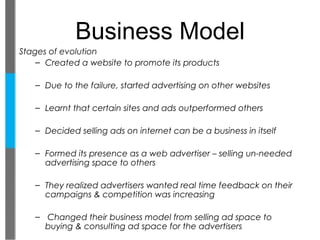
Stages of evolution
    – Created a website to promote its products

   – Due to the failure, started advertising on other websites

   – Learnt that certain sites and ads outperformed others

   – Decided selling ads on internet can be a business in itself

   – Formed its presence as a web advertiser – selling un-needed
     advertising space to others

   – They realized advertisers wanted real time feedback on their
     campaigns & competition was increasing

   – Changed their business model from selling ad space to
     buying & consulting ad space for the advertisers
Basic V/s Premium
                 Services
• Madison provides 3 basic services
   • Media Planning and Buying
   • Technical support for ad campaigns
   • Data collection, Analyzing ads, & effectiveness of
   the campaign

• Premium services
    • Offer creating creative ad contents
    • Detailed report on effectiveness of the campaign
    • Suggest best sites, keywords and content to promote
    • Consumer data retrieved from the campaign
    • Detailed Cost structure or clicks data report
    • Competitor analysis
Establishing Standards for a
      Quality Product
• Can define CTR or TCR in terms of % of money invested
in the campaign that the company is expected to deliver

• Can mention % uptime of the ad

• can mention accuracy of Web-analysis provided to the
client
Establishing Best-
• Trainings
             Practices
• Blog where employees can share any innovation that
they encountered during a project

• Weekly/Monthly meetings to discuss tasks performed
and what employees learnt from it

• Establish process

• peer-to-peer feedback and knowledge sharing sessions

• Need to implement concurrent activities
Campaign Administrators
• involved in execution plan and day-to-day operational plan
i.e., Monitoring & Optimization

• knows in & out about the campaign

• generally overloaded when clients make frequent changes
to campaign or depending upon complexity of report

• Most of the communication takes place through Campaign
Administrator

• having specialized CA (internal & external) might lead to a
communication gap & can lead to problems

• Multiple CAs gave repeated requests to implementation
engineer. Having a single point will eliminate this problem
Implementation Engineer
• lacks business knowledge; no idea about processes or client
requests

• generally overloaded with routine work and repeated
requests

• fixing up of loopholes took 7-10 days, which could have been
fixed in a couple of minutes

• cross-training and weekly project meetings is definitely
required

• also business requirement document should also be shared
with IE so that he/she understand client’s requirements better

• CA and Media Buyer can also be given basic technical
training so that problems can be identified at the first level 
results into less defects and more efficiency
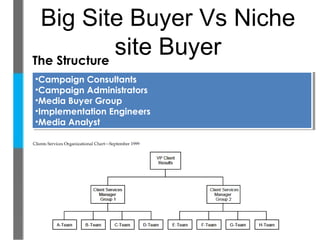
Big Site Buyer Vs Niche
The Structure
              site Buyer
••CampaignConsultants
 Campaign Consultants
••CampaignAdministrators
 Campaign Administrators
••MediaBuyer Group
 Media Buyer Group
••ImplementationEngineers
 Implementation Engineers
••MediaAnalyst
 Media Analyst
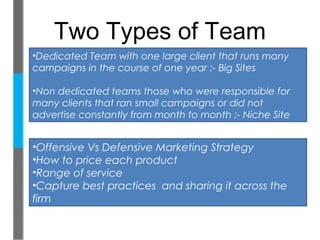
Two Types of Team
•Dedicated Team with one large client that runs many
campaigns in the course of one year :- Big Sites

•Non dedicated teams those who were responsible for
many clients that ran small campaigns or did not
advertise constantly from month to month :- Niche Site


•Offensive Vs Defensive Marketing Strategy
•How to price each product
•Range of service
•Capture best practices and sharing it across the
firm
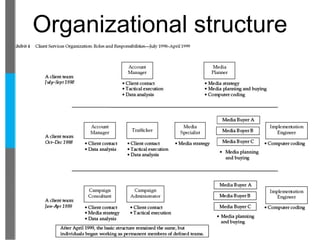
Organizational structure
IE’s Workload
• Generally overloaded

• Work is less challenging and mainly routine work

• Processes are not well-defined ; often faces requirement gaps

• Not being able prioritize change requests

• Junior IE can be kept to handle small or low priority requests

• Senior IE will handle complex problems and come up with
more efficient technologies. Can delegate work during work
pressures
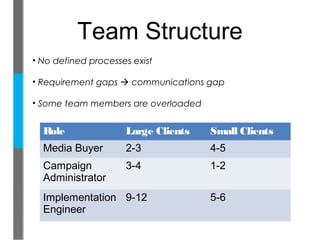
Team Structure
• No defined processes exist

• Requirement gaps  communications gap

• Some team members are overloaded


  Role               Large Clients   Small Clients
  Media Buyer        2-3             4-5
  Campaign           3-4             1-2
  Administrator
  Implementation 9-12                5-6
  Engineer
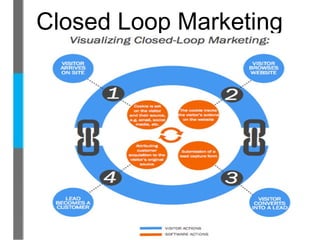
Closed Loop Marketing
Offensive and Defensive Strategies
 •Offensive and defensive marketing strategies have distinct benefits,
 depending on the status of your small business and how successful you
 are in your local market.

 •An offensive strategy (Used by new entrants) provides a means for
 your new business to hit the market strong and establish a presence

 •A defensive strategy (Used by established players) can help keep you
 at the top of your local industry.

 •Defensive Strategies Generally deal with re-enforcement of its
 product with customers

 •Offensive strategies try to explain why there product is better than the
 existing competition

 • Each type of marketing requires careful planning and resource
 allocation to reach the largest number of consumers.
Thank You…!!!

Madison Avenue Media

  • 1.
    By Gr oup7: Deepesh Chat t er j ee (P122009) Neehar Bhar t iya (P122028) Pooj a Gupt a (P122033) Vidit J ain (P122051)
  • 2.
    Introduction • Rick Chase, started the company in 1996 • Had a company named Golden Gate Textiles • Used internet as a medium to sell its products - high-end sheets, towels and curtains • Their business model changed from representing ad-space sellers to representing buyers • Revenues sprouted from less than $600,000 in all of 1998 to nearly $20 million in 1999’s third quarter • Headcount increased from 58 in 1998 to 225 in 1999
  • 3.
    Business Model Stages ofevolution – Created a website to promote its products – Due to the failure, started advertising on other websites – Learnt that certain sites and ads outperformed others – Decided selling ads on internet can be a business in itself – Formed its presence as a web advertiser – selling un-needed advertising space to others – They realized advertisers wanted real time feedback on their campaigns & competition was increasing – Changed their business model from selling ad space to buying & consulting ad space for the advertisers
  • 4.
    Basic V/s Premium Services • Madison provides 3 basic services • Media Planning and Buying • Technical support for ad campaigns • Data collection, Analyzing ads, & effectiveness of the campaign • Premium services • Offer creating creative ad contents • Detailed report on effectiveness of the campaign • Suggest best sites, keywords and content to promote • Consumer data retrieved from the campaign • Detailed Cost structure or clicks data report • Competitor analysis
  • 5.
    Establishing Standards fora Quality Product • Can define CTR or TCR in terms of % of money invested in the campaign that the company is expected to deliver • Can mention % uptime of the ad • can mention accuracy of Web-analysis provided to the client
  • 6.
    Establishing Best- • Trainings Practices • Blog where employees can share any innovation that they encountered during a project • Weekly/Monthly meetings to discuss tasks performed and what employees learnt from it • Establish process • peer-to-peer feedback and knowledge sharing sessions • Need to implement concurrent activities
  • 7.
    Campaign Administrators • involvedin execution plan and day-to-day operational plan i.e., Monitoring & Optimization • knows in & out about the campaign • generally overloaded when clients make frequent changes to campaign or depending upon complexity of report • Most of the communication takes place through Campaign Administrator • having specialized CA (internal & external) might lead to a communication gap & can lead to problems • Multiple CAs gave repeated requests to implementation engineer. Having a single point will eliminate this problem
  • 8.
    Implementation Engineer • lacksbusiness knowledge; no idea about processes or client requests • generally overloaded with routine work and repeated requests • fixing up of loopholes took 7-10 days, which could have been fixed in a couple of minutes • cross-training and weekly project meetings is definitely required • also business requirement document should also be shared with IE so that he/she understand client’s requirements better • CA and Media Buyer can also be given basic technical training so that problems can be identified at the first level  results into less defects and more efficiency
  • 9.
    Big Site BuyerVs Niche The Structure site Buyer ••CampaignConsultants Campaign Consultants ••CampaignAdministrators Campaign Administrators ••MediaBuyer Group Media Buyer Group ••ImplementationEngineers Implementation Engineers ••MediaAnalyst Media Analyst
  • 10.
    Two Types ofTeam •Dedicated Team with one large client that runs many campaigns in the course of one year :- Big Sites •Non dedicated teams those who were responsible for many clients that ran small campaigns or did not advertise constantly from month to month :- Niche Site •Offensive Vs Defensive Marketing Strategy •How to price each product •Range of service •Capture best practices and sharing it across the firm
  • 11.
  • 12.
    IE’s Workload • Generallyoverloaded • Work is less challenging and mainly routine work • Processes are not well-defined ; often faces requirement gaps • Not being able prioritize change requests • Junior IE can be kept to handle small or low priority requests • Senior IE will handle complex problems and come up with more efficient technologies. Can delegate work during work pressures
  • 13.
    Team Structure • Nodefined processes exist • Requirement gaps  communications gap • Some team members are overloaded Role Large Clients Small Clients Media Buyer 2-3 4-5 Campaign 3-4 1-2 Administrator Implementation 9-12 5-6 Engineer
  • 14.
  • 15.
    Offensive and DefensiveStrategies •Offensive and defensive marketing strategies have distinct benefits, depending on the status of your small business and how successful you are in your local market. •An offensive strategy (Used by new entrants) provides a means for your new business to hit the market strong and establish a presence •A defensive strategy (Used by established players) can help keep you at the top of your local industry. •Defensive Strategies Generally deal with re-enforcement of its product with customers •Offensive strategies try to explain why there product is better than the existing competition • Each type of marketing requires careful planning and resource allocation to reach the largest number of consumers.
  • 16.