











#MACF2013
Steve Connor
Chair, MACF Steering Group
Phil Murphy
Sustainability Manager, Carillion
A word from our sponsors
Say hello...
Sir Richard Leese
Leader, Manchester City Council
Cities as Leaders
2013: State of the City
Original Modern
Low Carbon City.
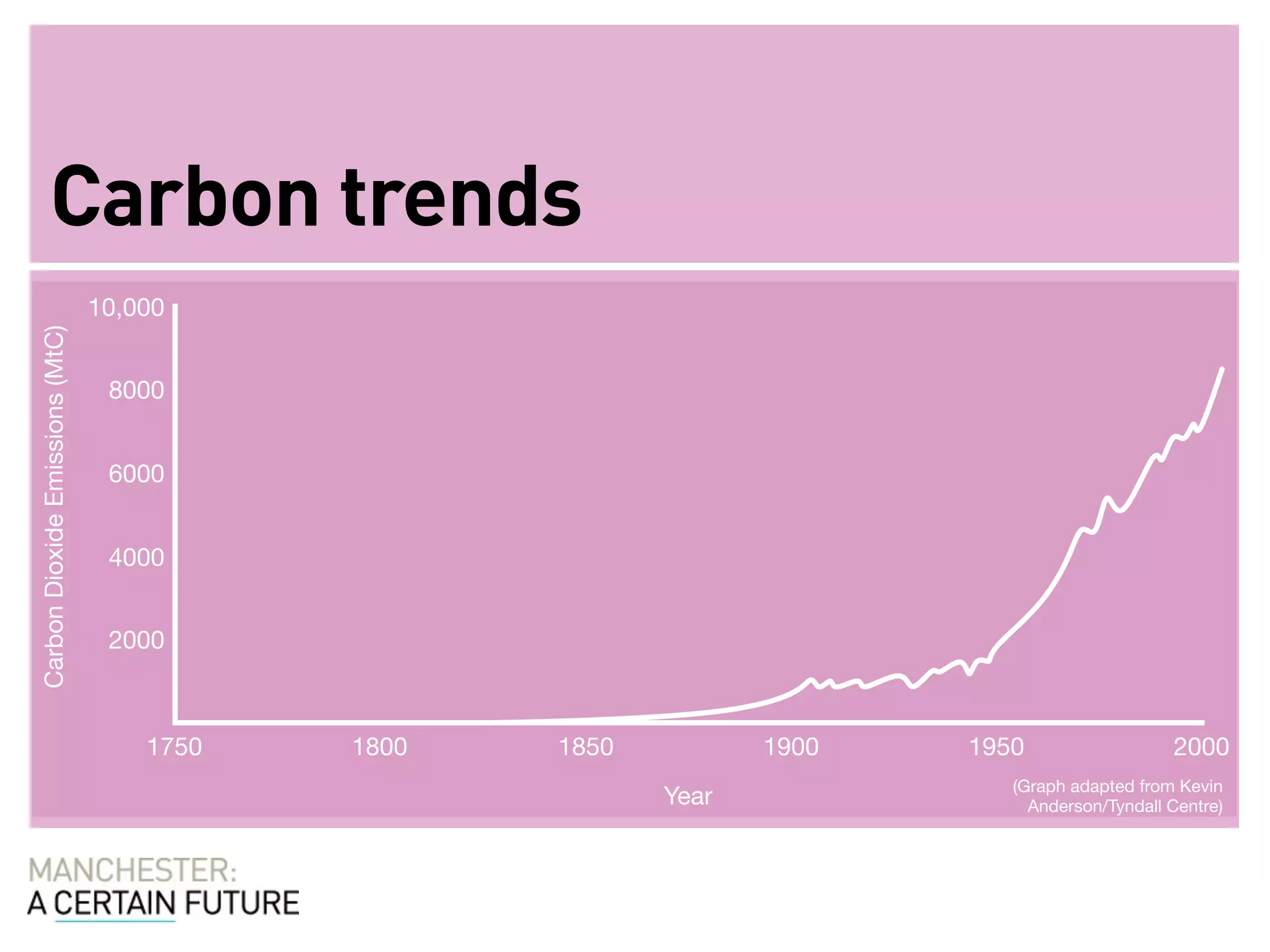
Carbon trends
                                 10,000
Carbon Dioxide Emissions (MtC)


                                  8000


                                  6000


                                  4000


                                  2000


                                     1750   1800   1850          1900   1950                  2000
                                                                           (Graph adapted from Kevin
                                                          Year               Anderson/Tyndall Centre)
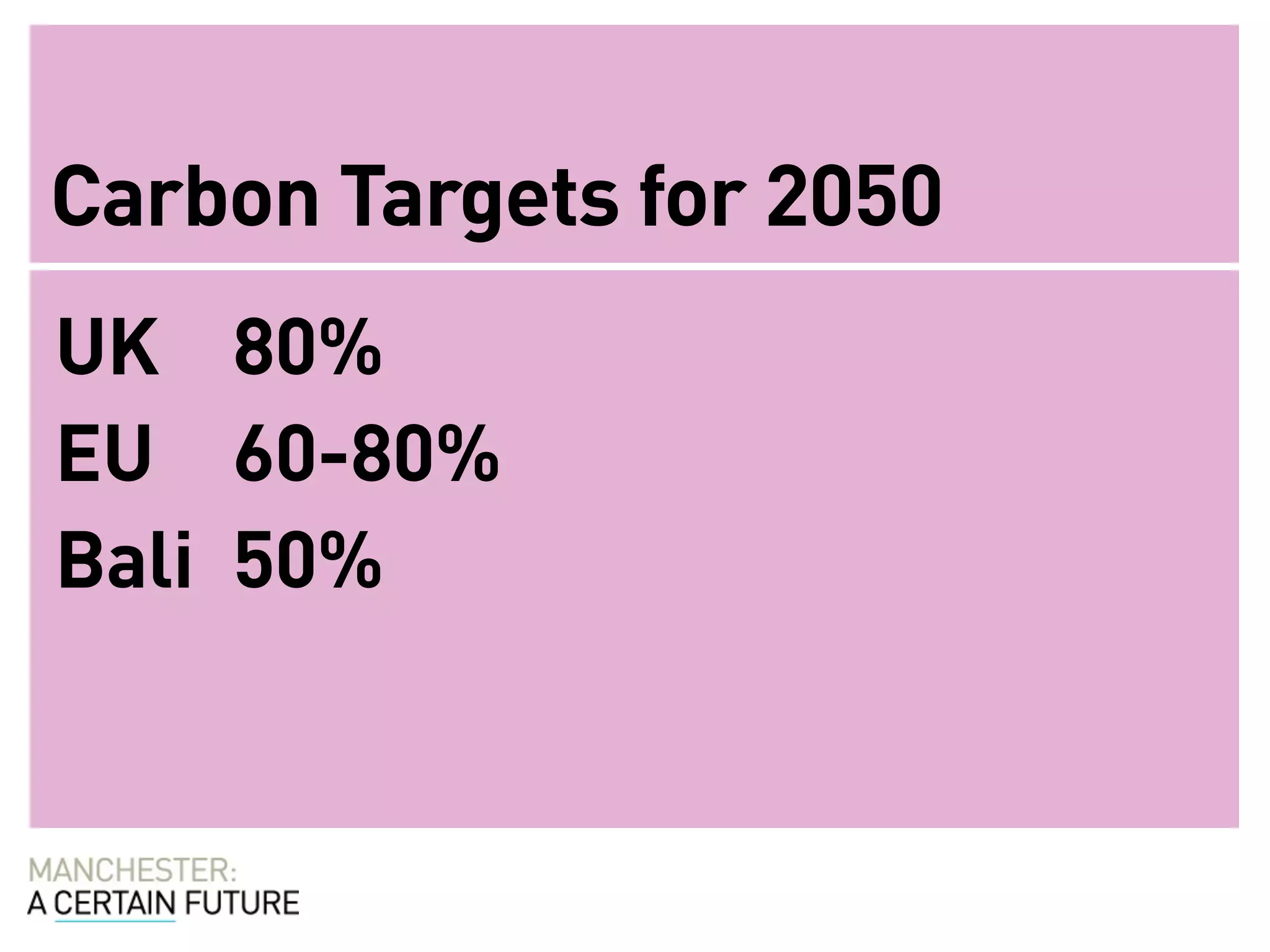
Carbon Targets for 2050
UK 80%
EU 60-80%
Bali 50%
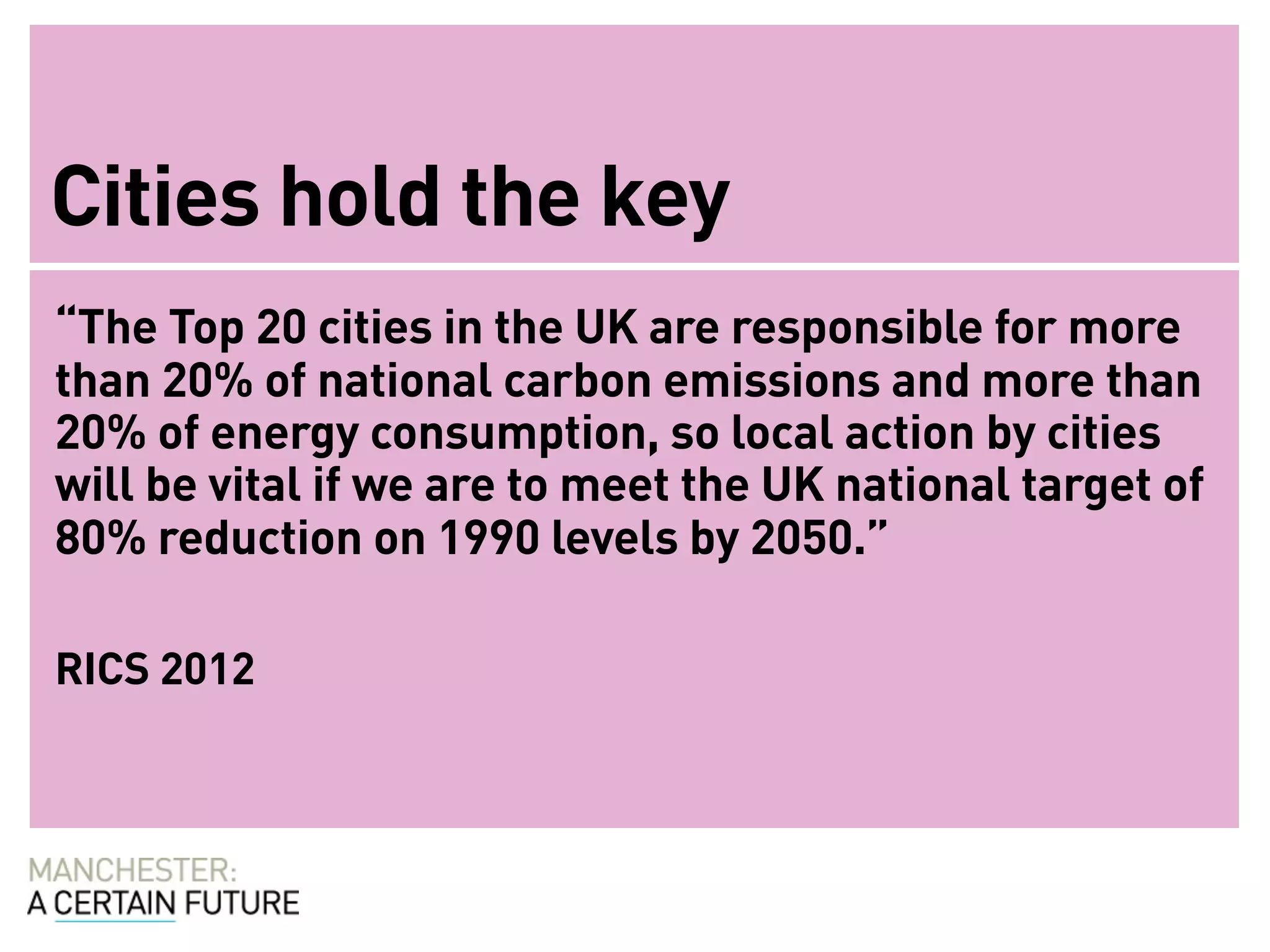
Cities hold the key
“The Top 20 cities in the UK are responsible for more
than 20% of national carbon emissions and more than
20% of energy consumption, so local action by cities
will be vital if we are to meet the UK national target of
80% reduction on 1990 levels by 2050.”

RICS 2012
A Certain Future
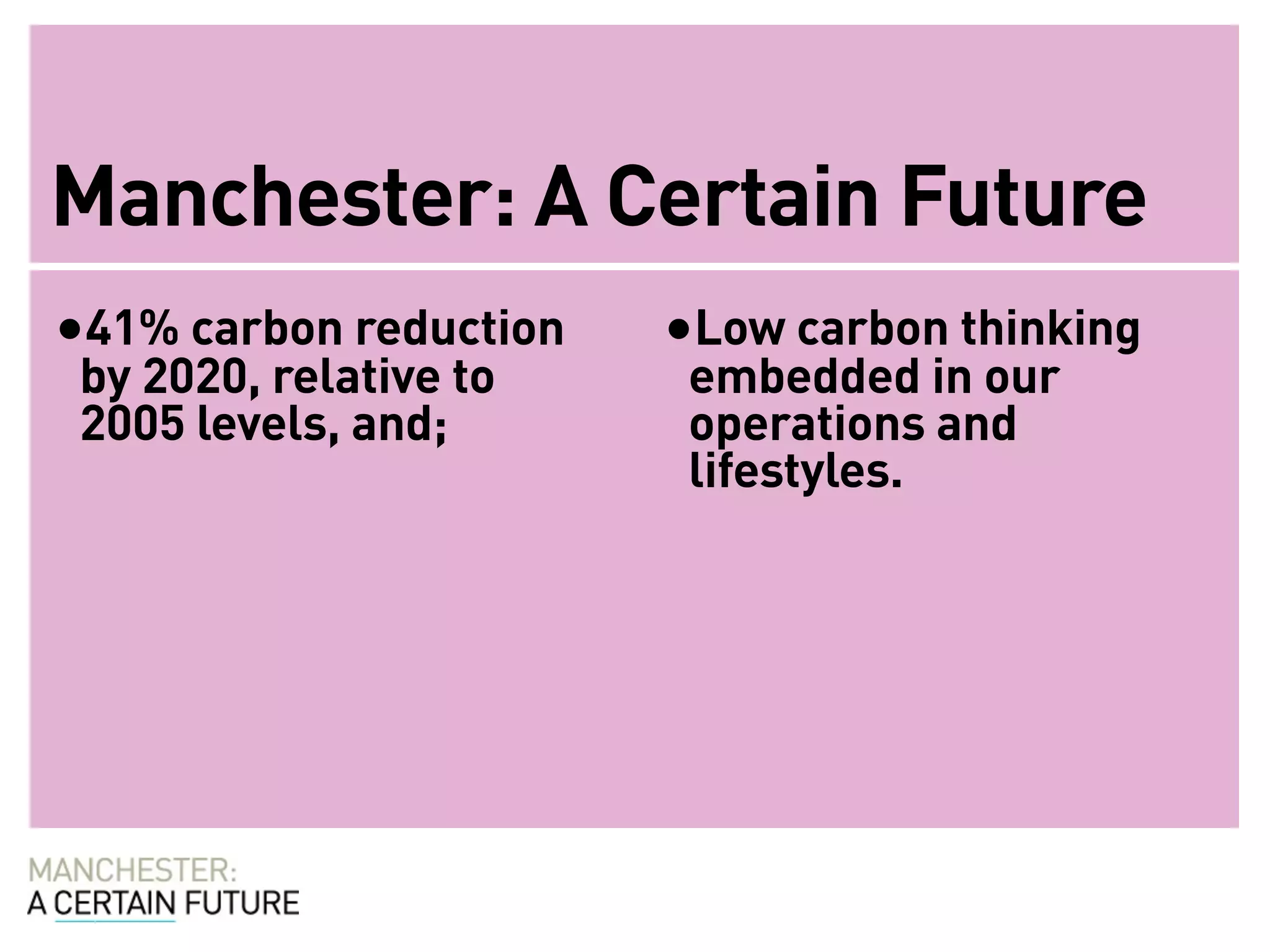
Manchester: A Certain Future
•41% carbon reduction   •Low carbon thinking
 by 2020, relative to    embedded in our
 2005 levels, and;       operations and
                         lifestyles.
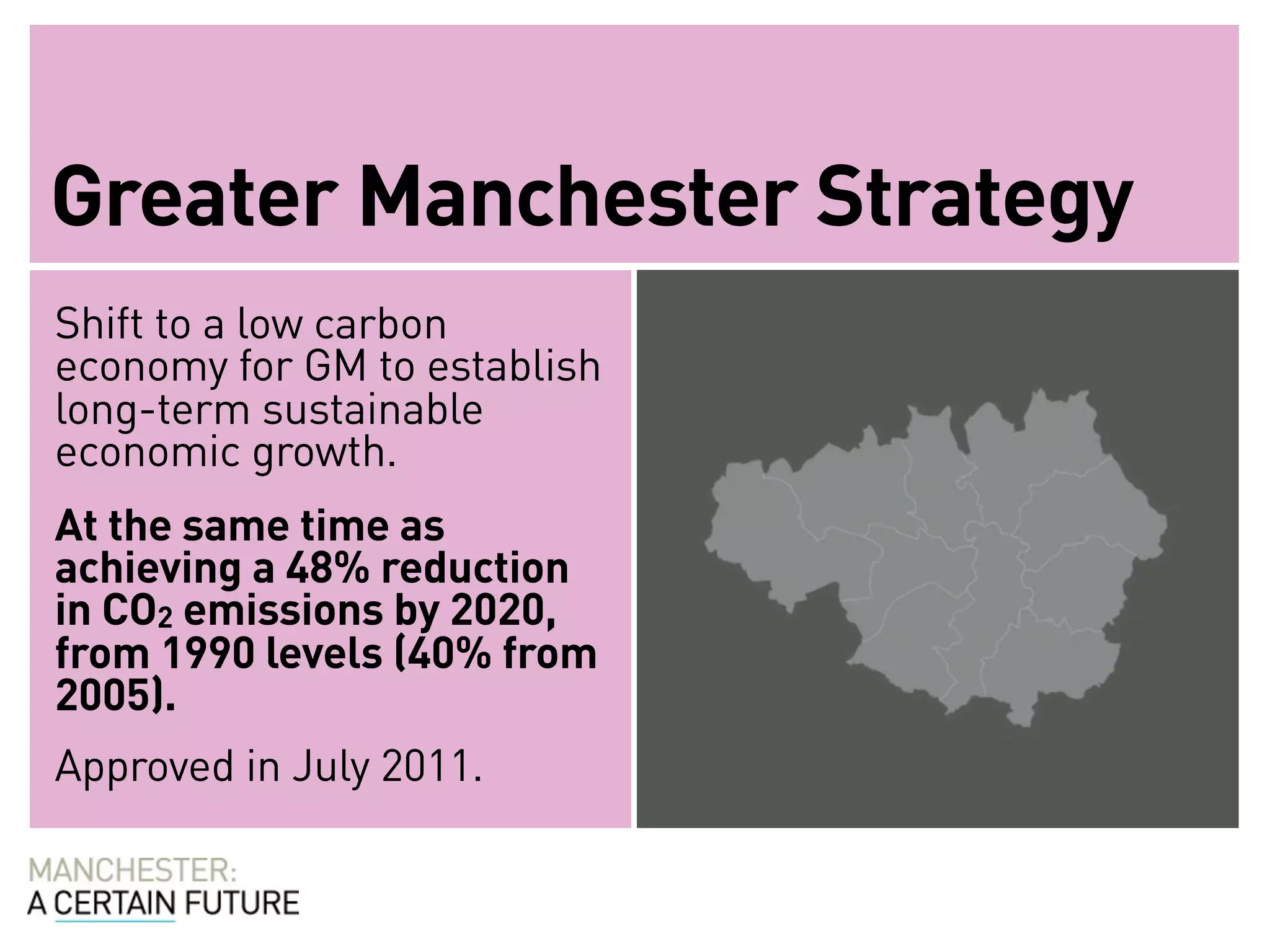
Greater Manchester Strategy
Shift to a low carbon
economy for GM to establish
long-term sustainable
economic growth.
At the same time as
achieving a 48% reduction
in CO2 emissions by 2020,
from 1990 levels (40% from
2005).
Approved in July 2011.
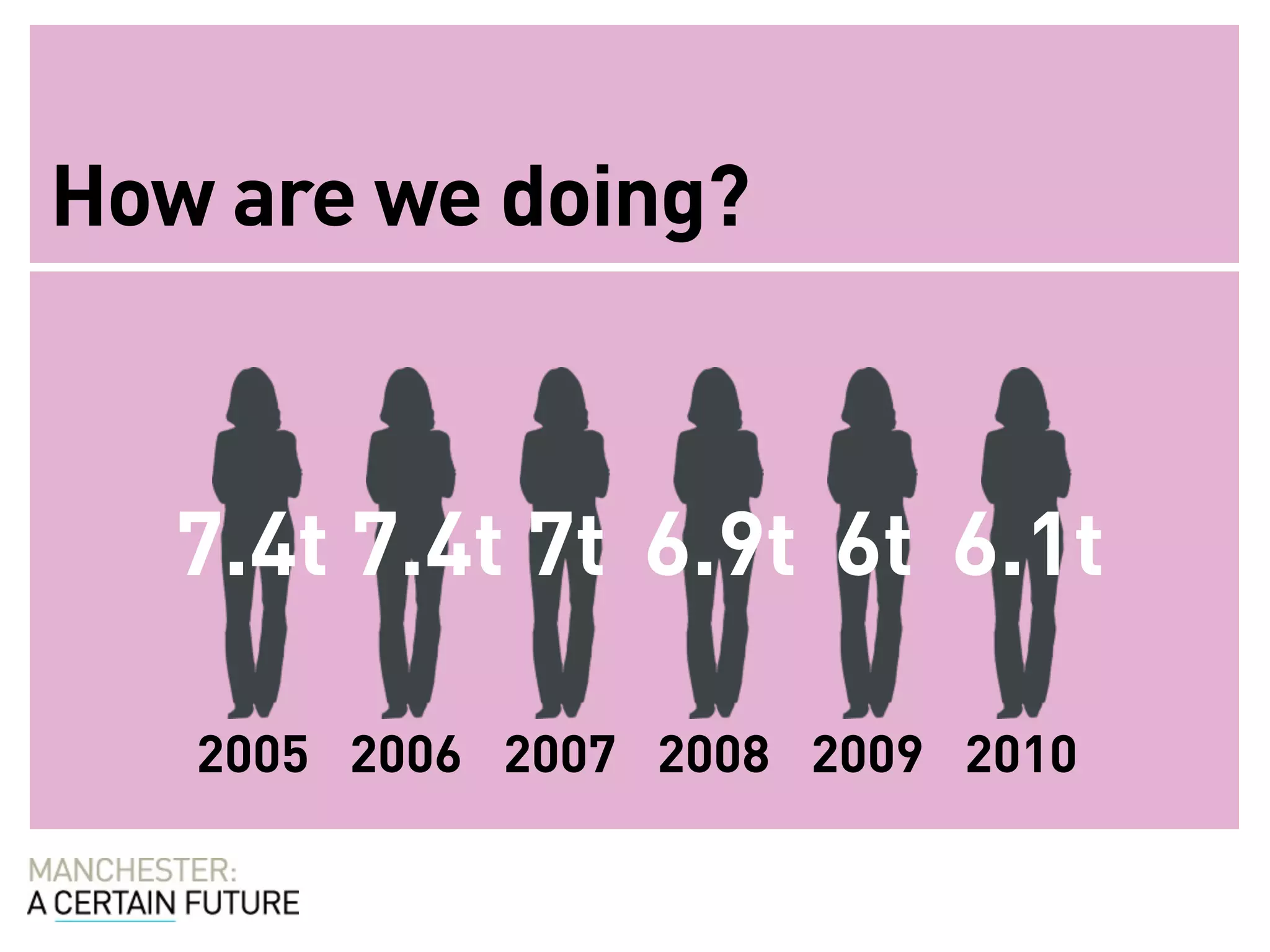
How are we doing?


   7.4t 7.4t 7t 6.9t 6t 6.1t

   2005 2006 2007 2008 2009 2010
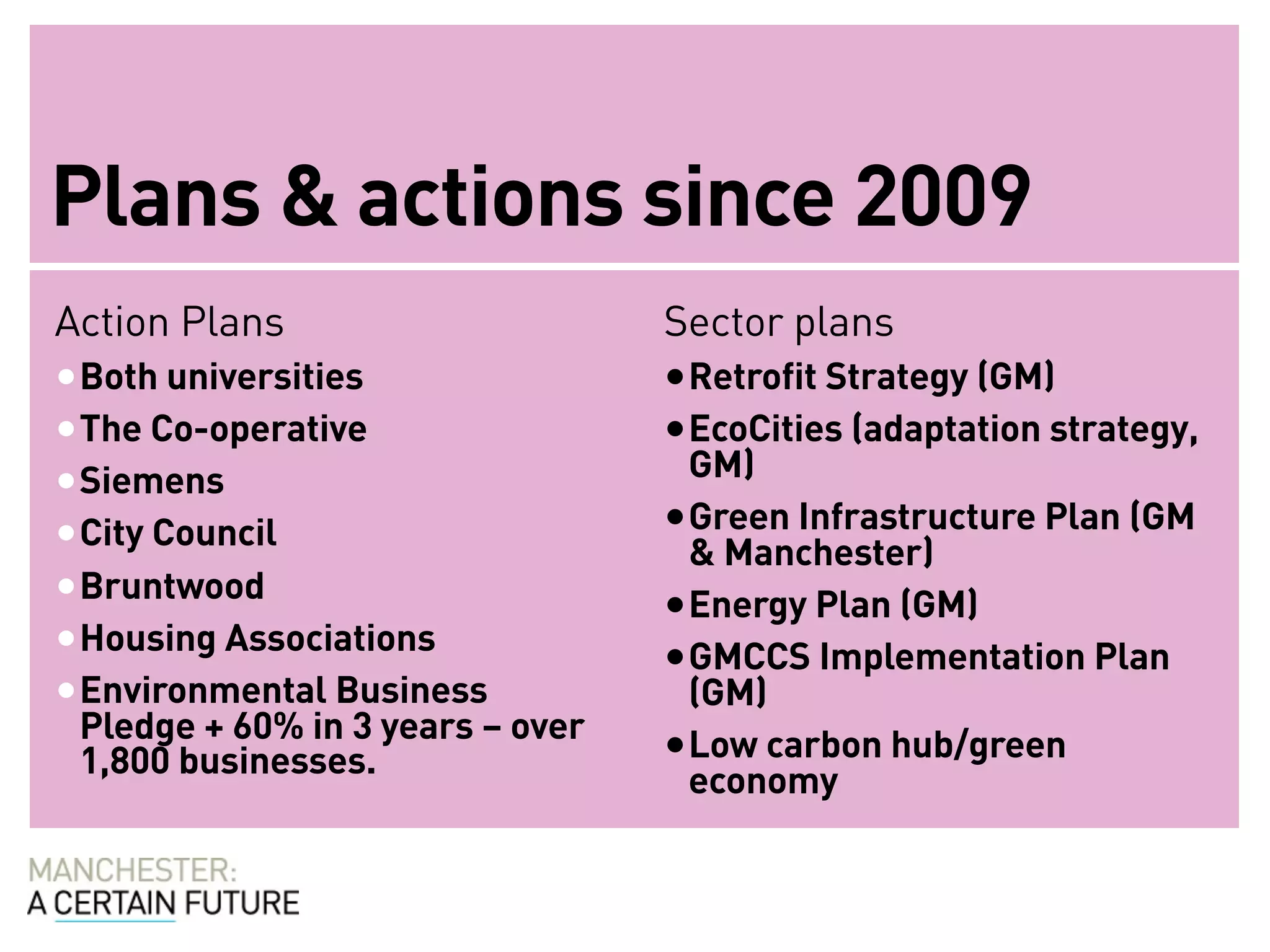
Plans & actions since 2009
Action Plans                      Sector plans
• Both universities               • Retrofit Strategy (GM)
• The Co-operative                • EcoCities (adaptation strategy,
                                    GM)
• Siemens
• City Council                    • Green Infrastructure Plan (GM
                                    & Manchester)
• Bruntwood                       • Energy Plan (GM)
• Housing Associations            • GMCCS Implementation Plan
• Environmental Business            (GM)
 Pledge + 60% in 3 years – over
 1,800 businesses.                • Low carbon hub/green
                                    economy
Reasons to be cheerful
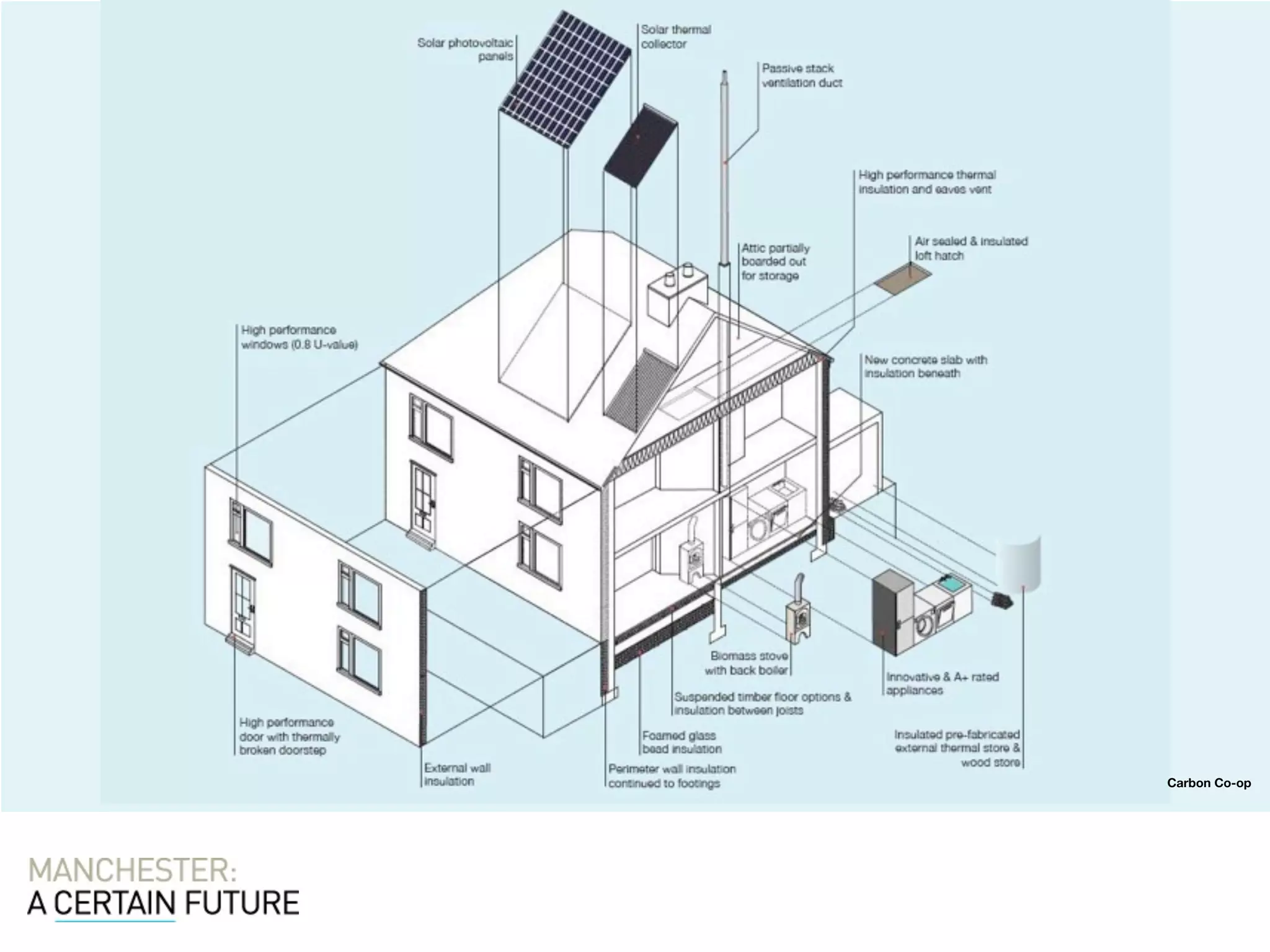
Buildings
Carbon Co-op
75,000 ‘Toasty’ interventions
Since 2009, 32 high schools and
academies have completed
capital projects under BSF and
four new primary schools have
been built.
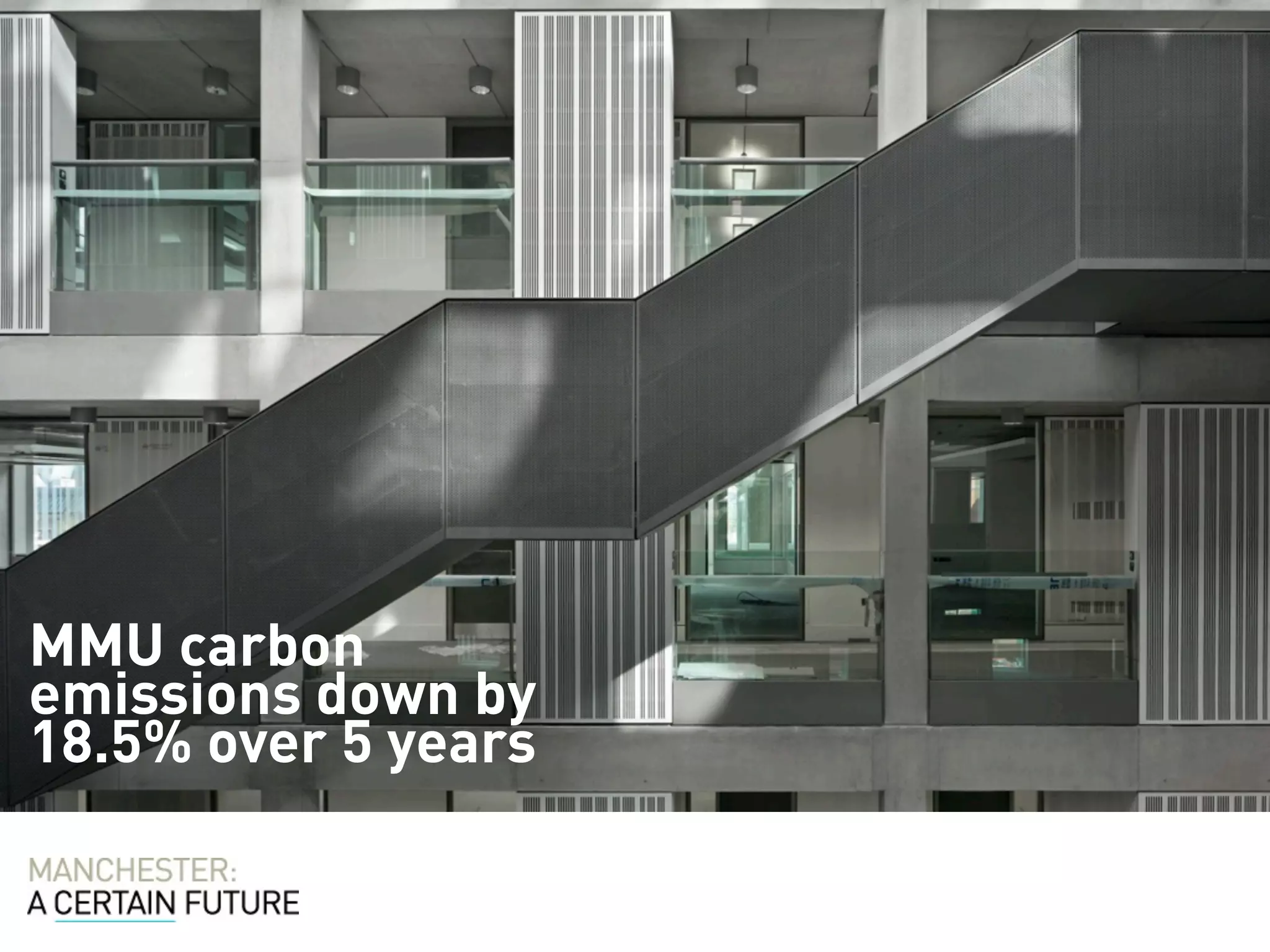
MMU carbon
emissions down by
18.5% over 5 years
Buildings
NHS                            Commercial property
•Carbon management plans       •More work needed but
 and coordinated activities     successful MACF offshoot
 through MACF NHS Group.        event in 2012.
•University Hospital South
 Manchester awarded
 Britain’s Greenest Hospital
 for reducing carbon
 emissions by 28% over 5
 years.
Buildings
Exemplar buildings             Green Deal
•Two iconic buildings – one    •Housing Associations and
 new build, one retrofit –      Councils across GM have
 completing in 2013: the Co-    developed a Housing Retrofit
 op’s NOMA and the Council’s    Strategy and agreed the basis
 refurbished Town Hall          of a GM Green Deal
 Extension and Central          programme to launch in 2013.
 Library.
                               •Also been given a ‘go early’
                                approval from government.
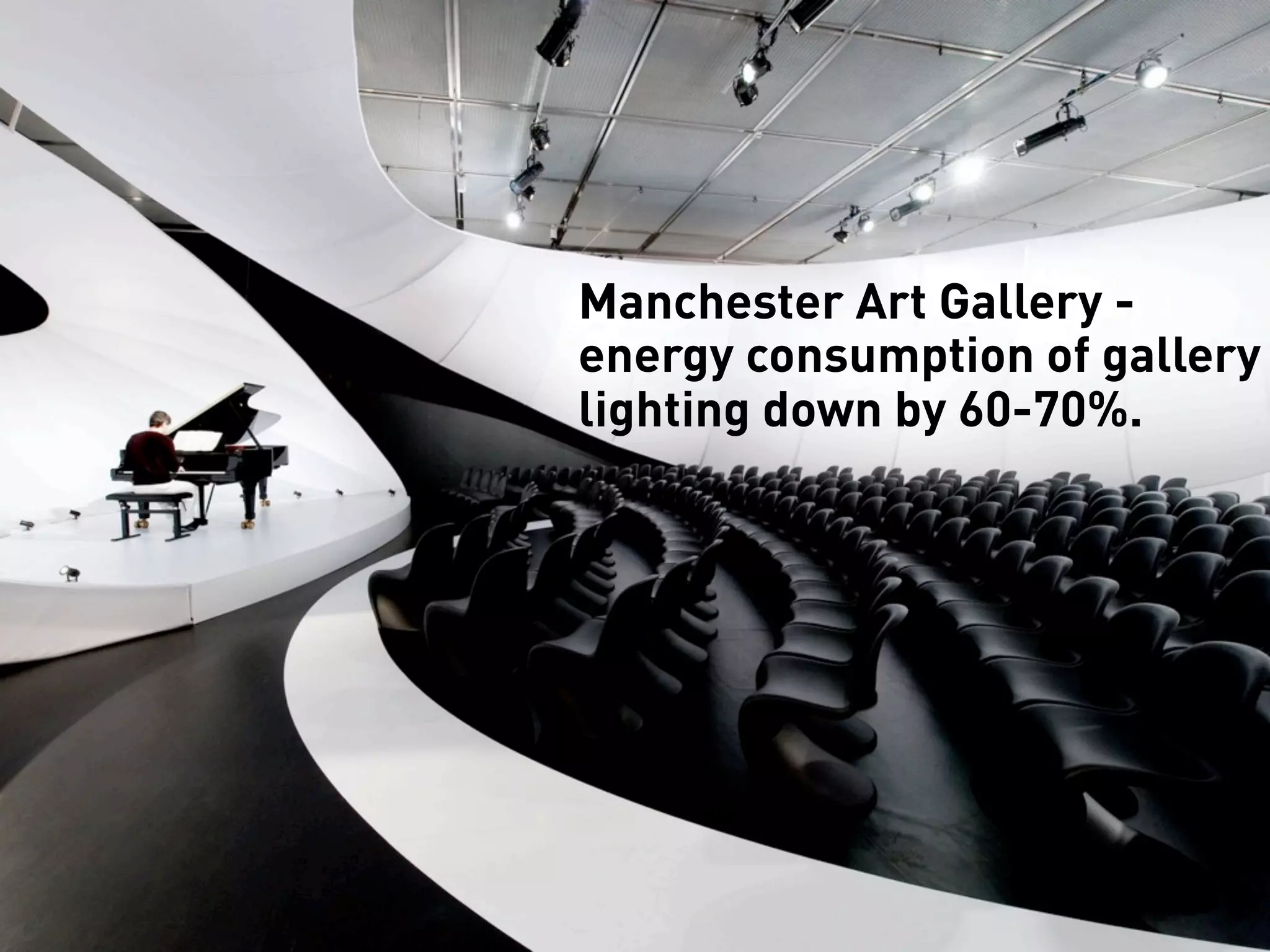
Manchester Art Gallery -
energy consumption of gallery
lighting down by 60-70%.
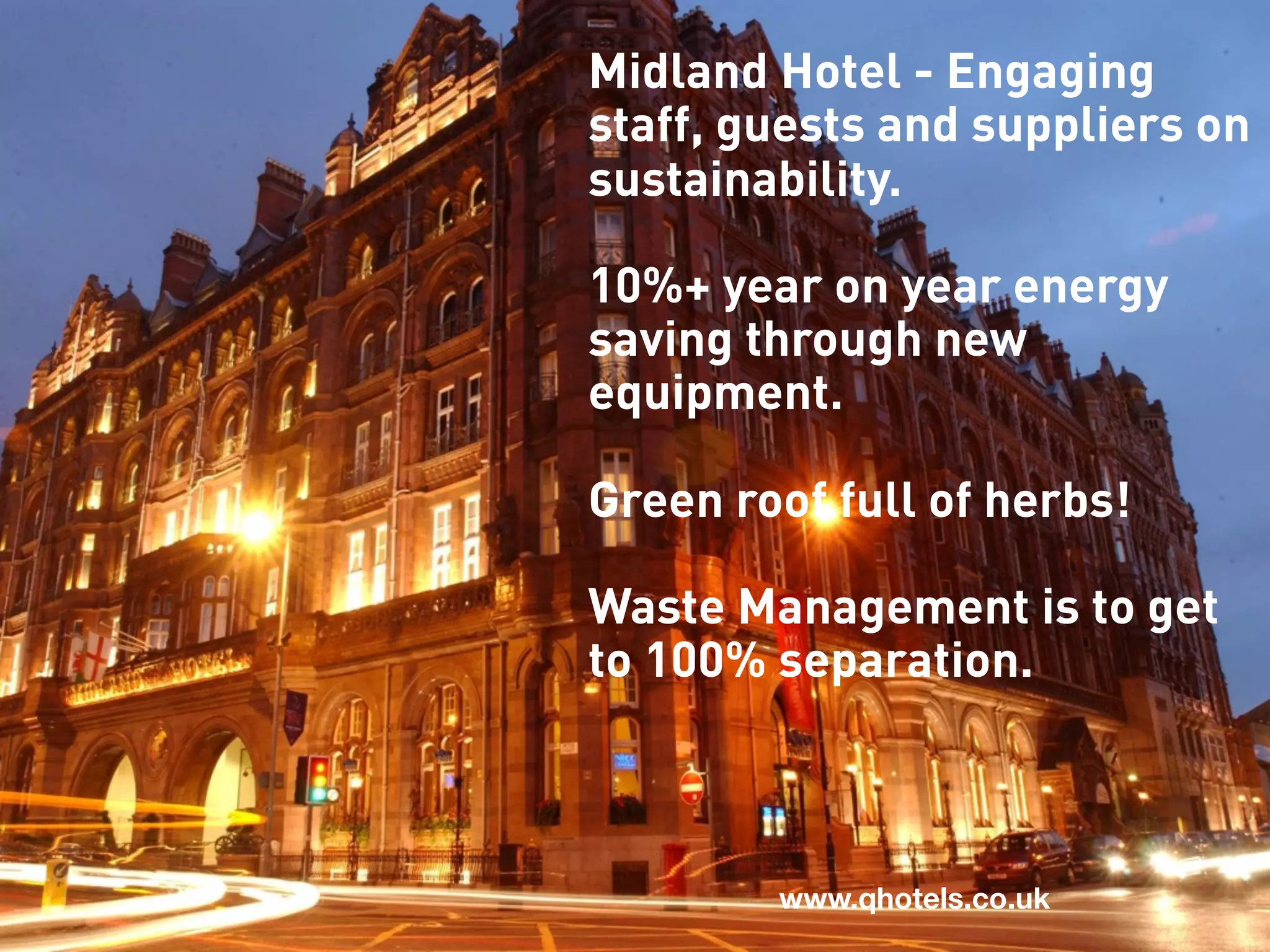
Midland Hotel - Engaging
staff, guests and suppliers on
sustainability.

10%+ year on year energy
saving through new
equipment.

Green roof full of herbs!

Waste Management is to get
to 100% separation.


        www.qhotels.co.uk
Energy
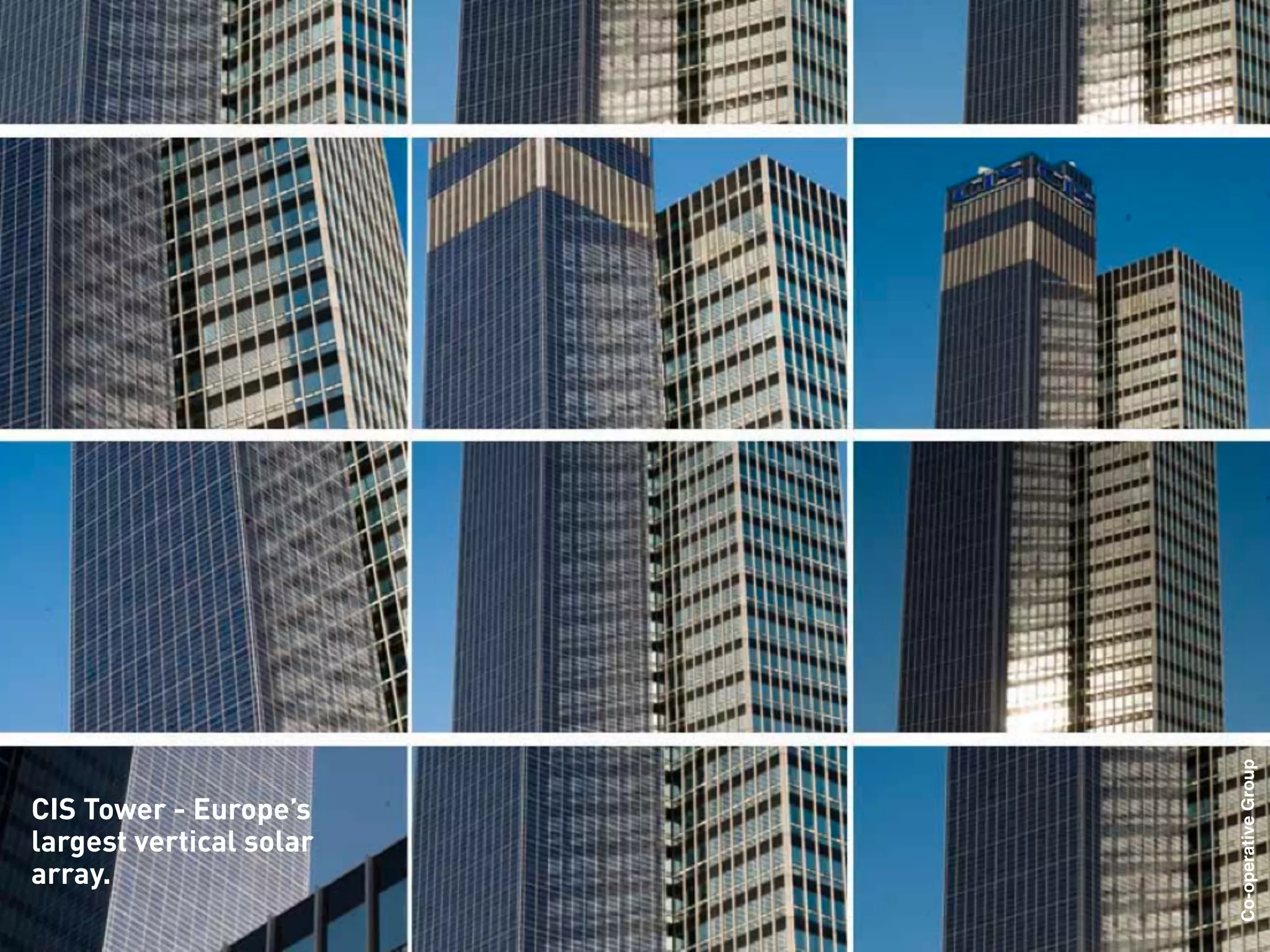
Co-operative Group
CIS Tower - Europe’s
largest vertical solar
array.
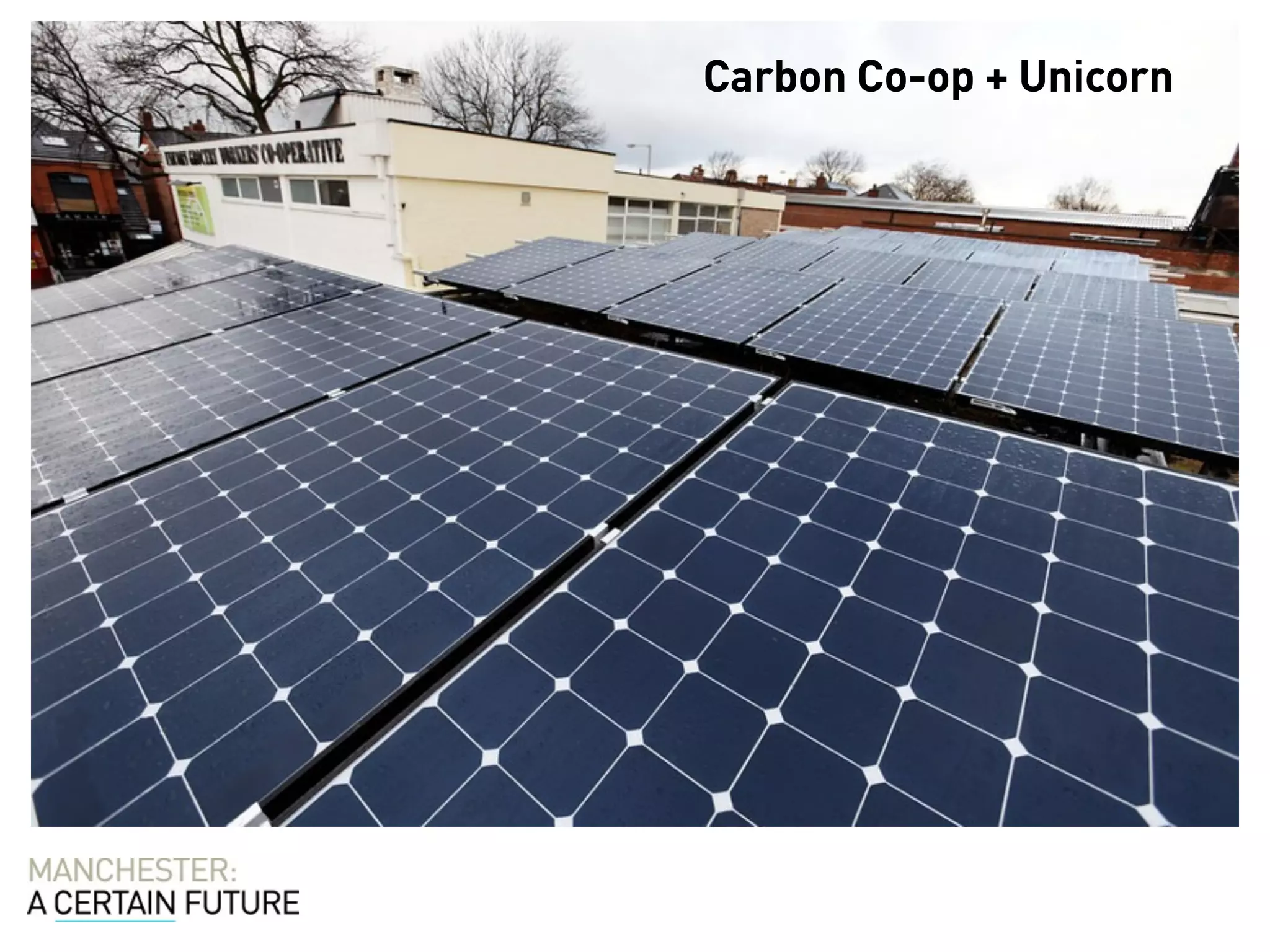
Carbon Co-op + Unicorn
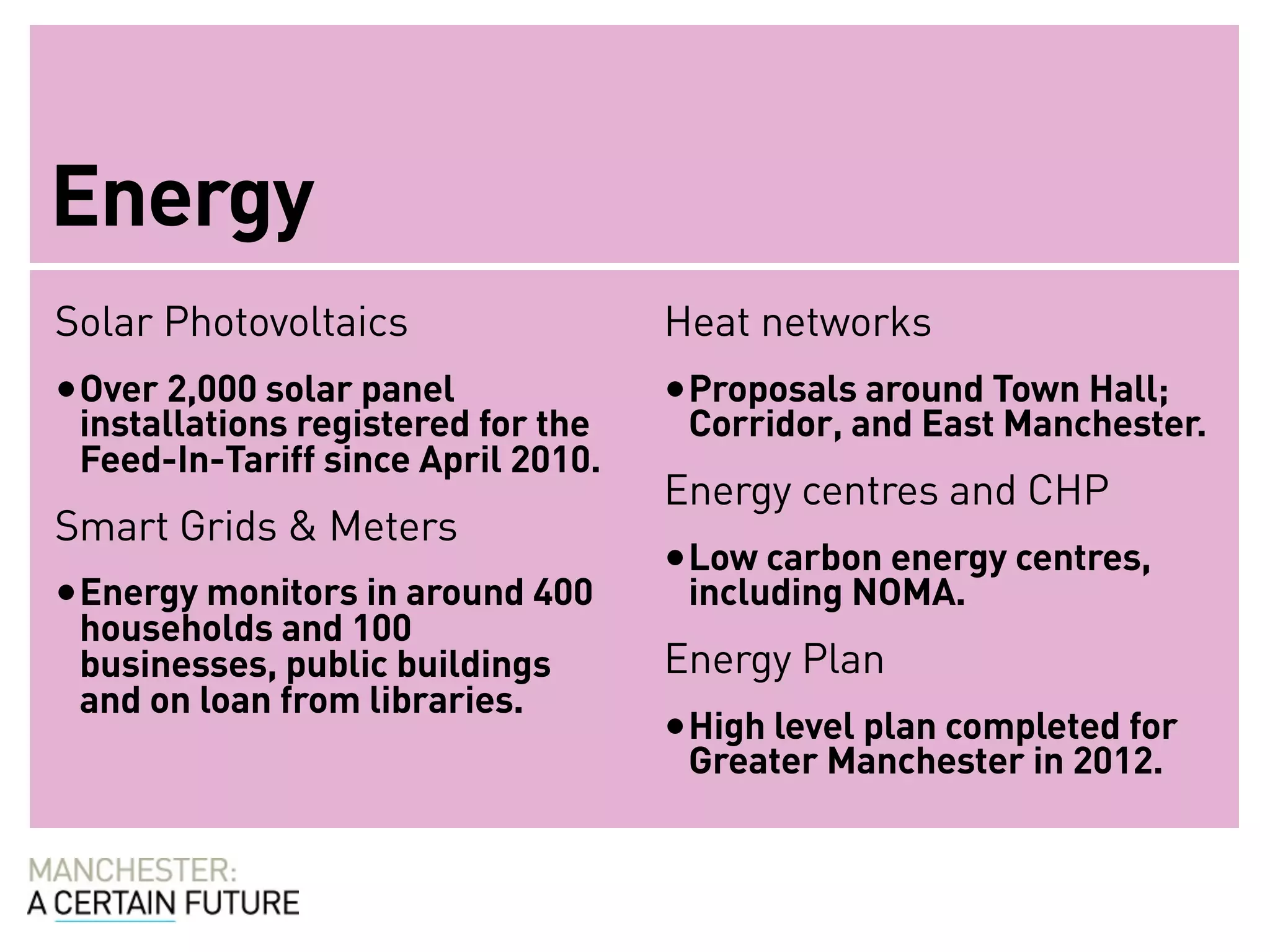
Energy
Solar Photovoltaics                 Heat networks
• Over 2,000 solar panel            • Proposals around Town Hall;
 installations registered for the    Corridor, and East Manchester.
 Feed-In-Tariff since April 2010.
                                    Energy centres and CHP
Smart Grids & Meters
                                    • Low carbon energy centres,
• Energy monitors in around 400      including NOMA.
 households and 100
 businesses, public buildings       Energy Plan
 and on loan from libraries.
                                    • High level plan completed for
                                     Greater Manchester in 2012.
Transport
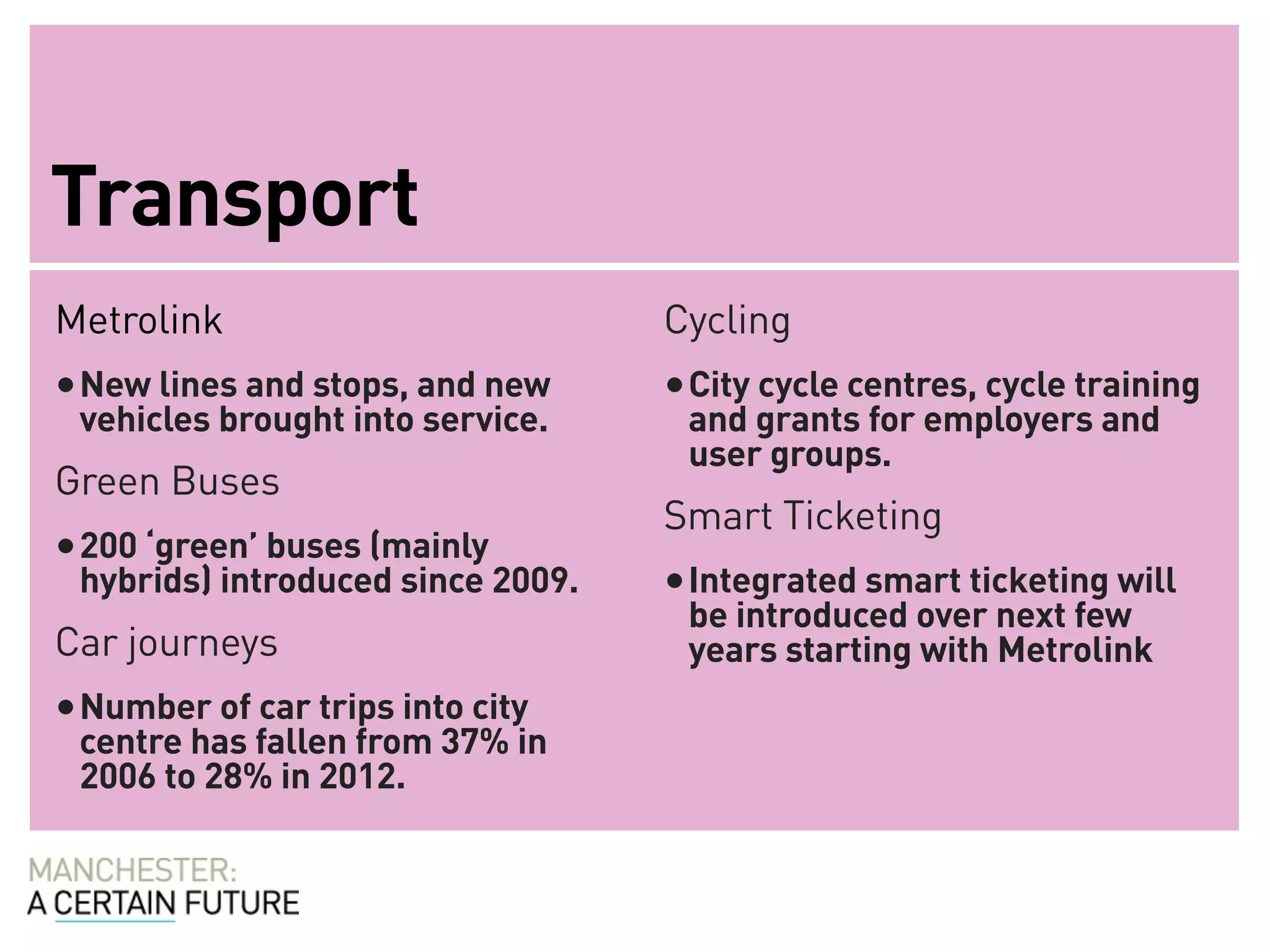
Transport
Metrolink                          Cycling
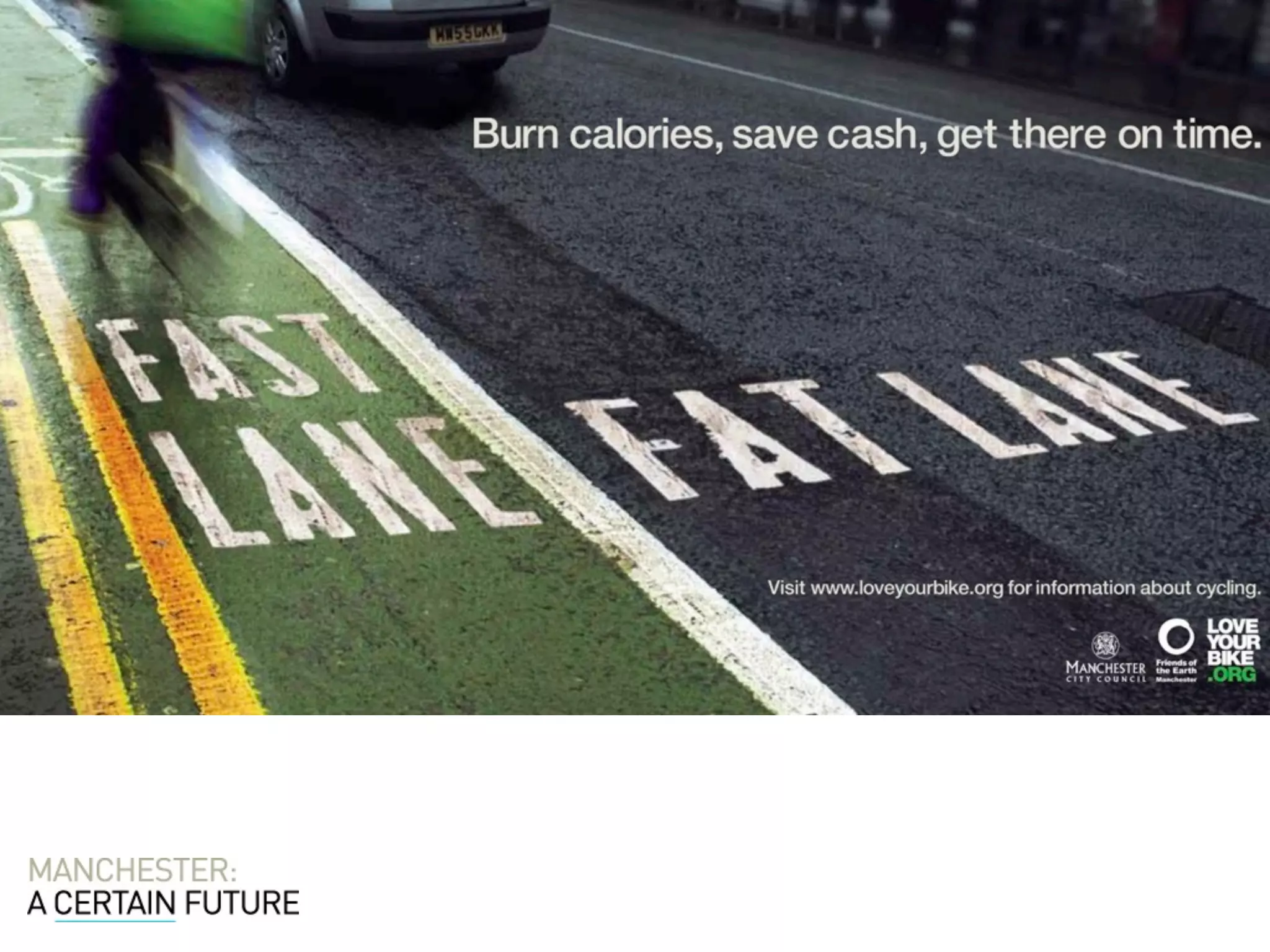
• New lines and stops, and new     • City cycle centres, cycle training
 vehicles brought into service.     and grants for employers and
                                    user groups.
Green Buses
                                   Smart Ticketing
• 200 ‘green’ buses (mainly
 hybrids) introduced since 2009.   • Integrated smart ticketing will
                                    be introduced over next few
Car journeys                        years starting with Metrolink
• Number of car trips into city
 centre has fallen from 37% in
 2006 to 28% in 2012.
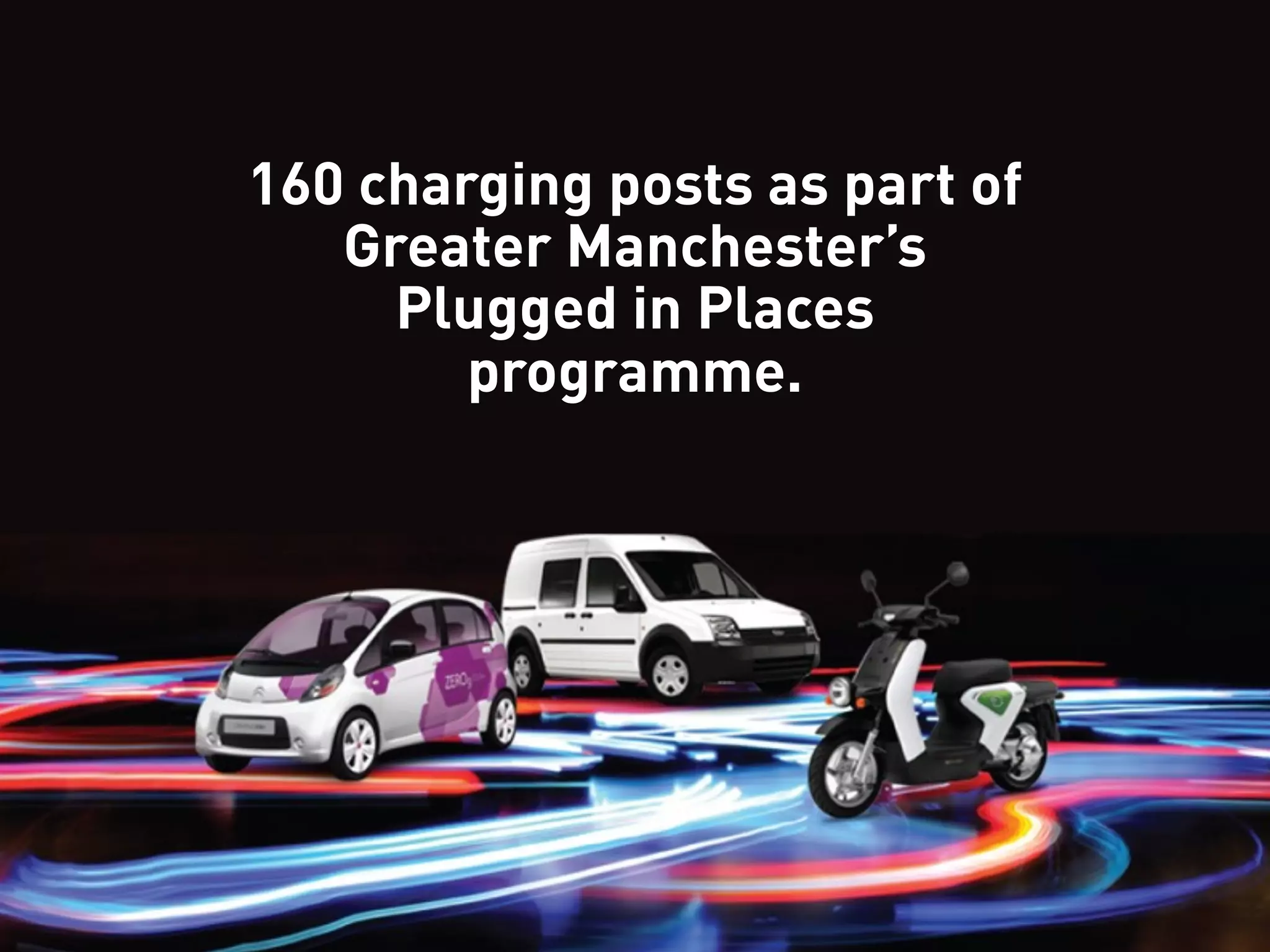
160 charging posts as part of
   Greater Manchester’s
     Plugged in Places
        programme.
Green & blue spaces
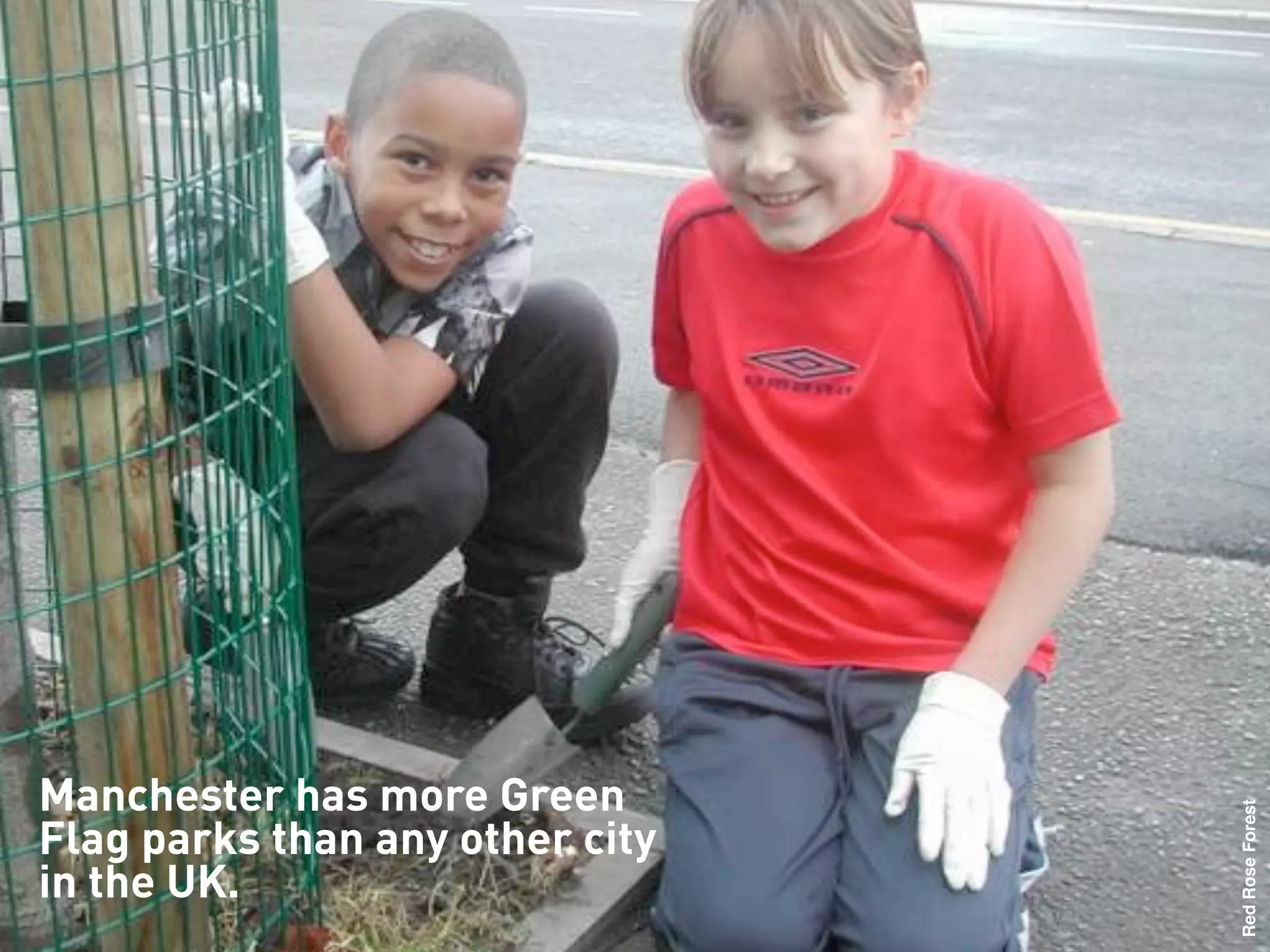
Manchester has more Green


                                 Red Rose Forest
Flag parks than any other city
in the UK.
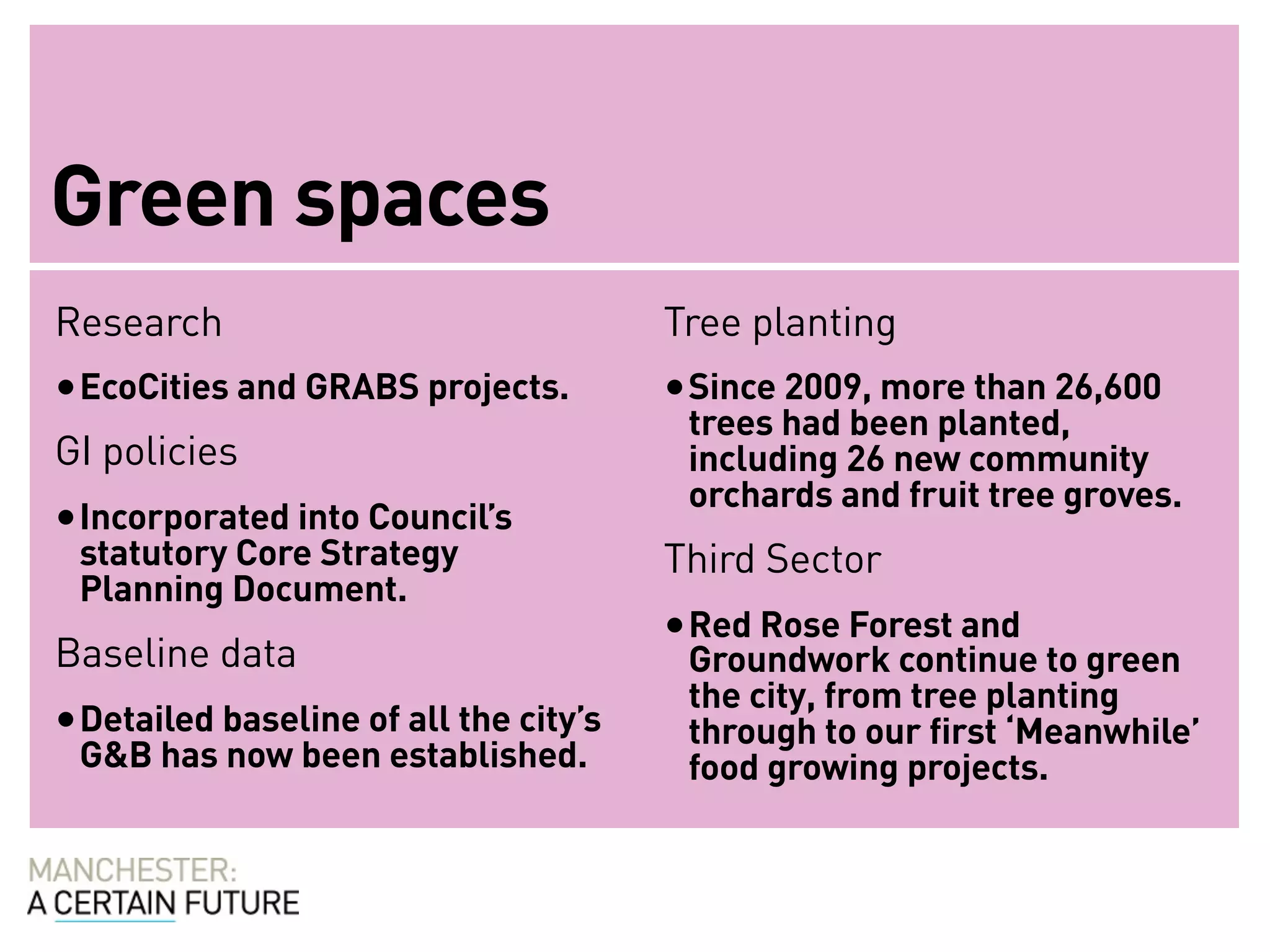
Green spaces
Research                                Tree planting
• EcoCities and GRABS projects.         • Since 2009, more than 26,600
                                         trees had been planted,
GI policies                              including 26 new community
                                         orchards and fruit tree groves.
• Incorporated into Council’s
 statutory Core Strategy                Third Sector
 Planning Document.
                                        • Red Rose Forest and
Baseline data                            Groundwork continue to green
                                         the city, from tree planting
• Detailed baseline of all the city’s    through to our first ‘Meanwhile’
 G&B has now been established.           food growing projects.
Sustainable Consumption
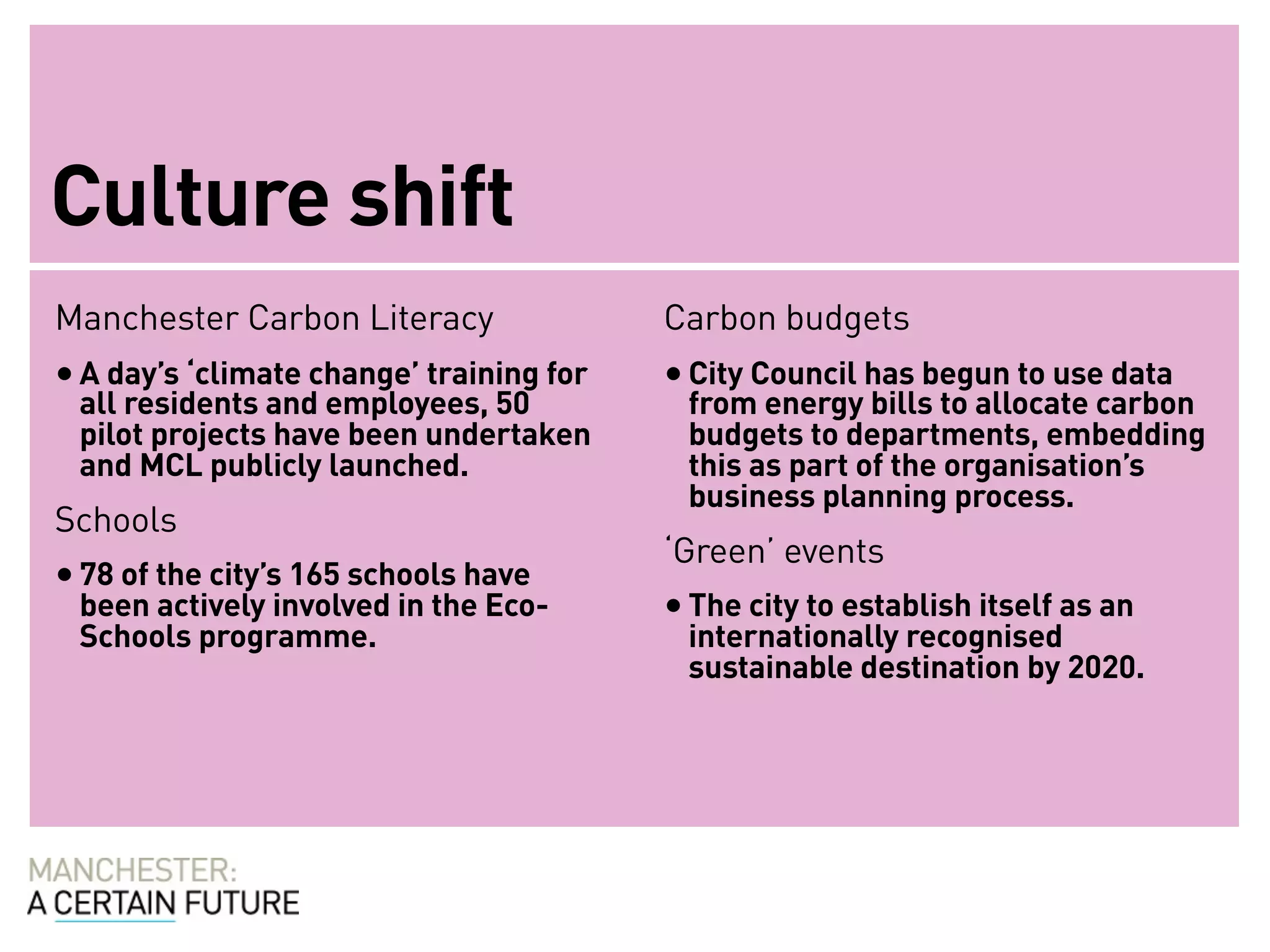
Culture shift
Manchester Carbon Literacy                Carbon budgets
• A day’s ‘climate change’ training for   • City Council has begun to use data
 all residents and employees, 50           from energy bills to allocate carbon
 pilot projects have been undertaken       budgets to departments, embedding
 and MCL publicly launched.                this as part of the organisation’s
                                           business planning process.
Schools
                                          ‘Green’ events
• 78 of the city’s 165 schools have
 been actively involved in the Eco-       • The city to establish itself as an
 Schools programme.                        internationally recognised
                                           sustainable destination by 2020.
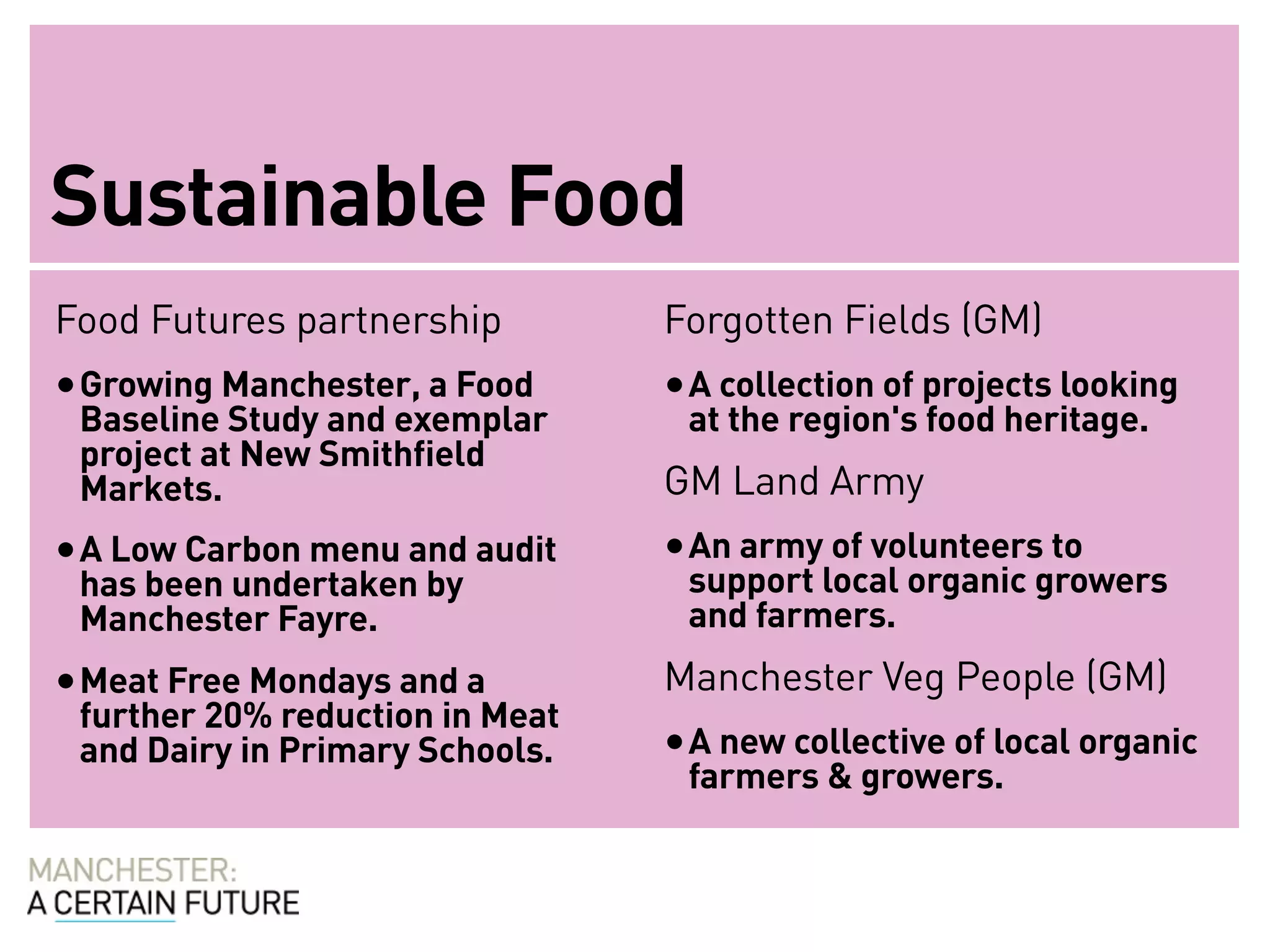
Sustainable Food
Food Futures partnership         Forgotten Fields (GM)
• Growing Manchester, a Food     • A collection of projects looking
 Baseline Study and exemplar      at the region's food heritage.
 project at New Smithfield
 Markets.                        GM Land Army
• A Low Carbon menu and audit    • An army of volunteers to
 has been undertaken by           support local organic growers
 Manchester Fayre.                and farmers.
• Meat Free Mondays and a        Manchester Veg People (GM)
 further 20% reduction in Meat
 and Dairy in Primary Schools.   • A new collective of local organic
                                  farmers & growers.
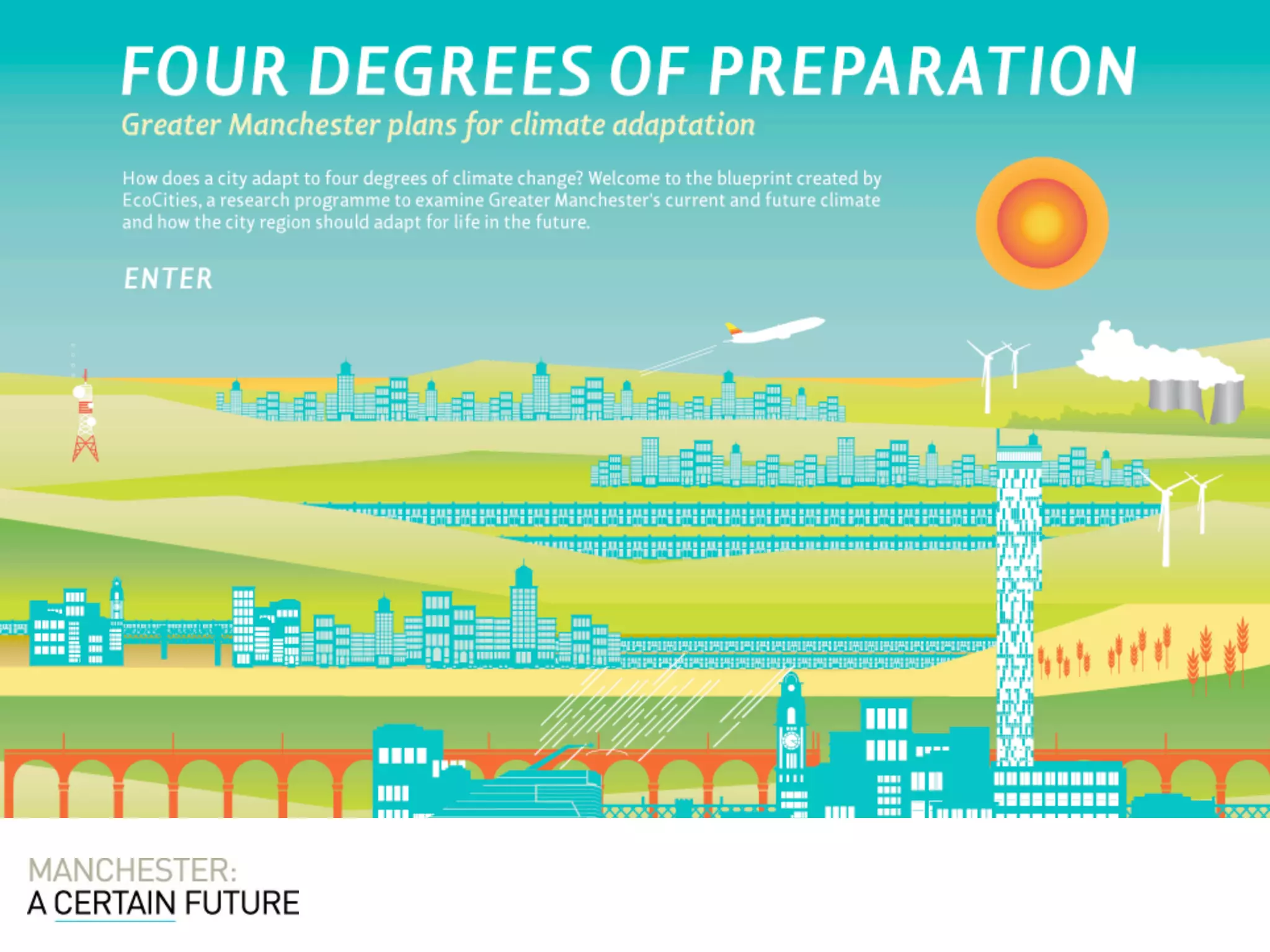
Adaptation
But...
The Plan Updated
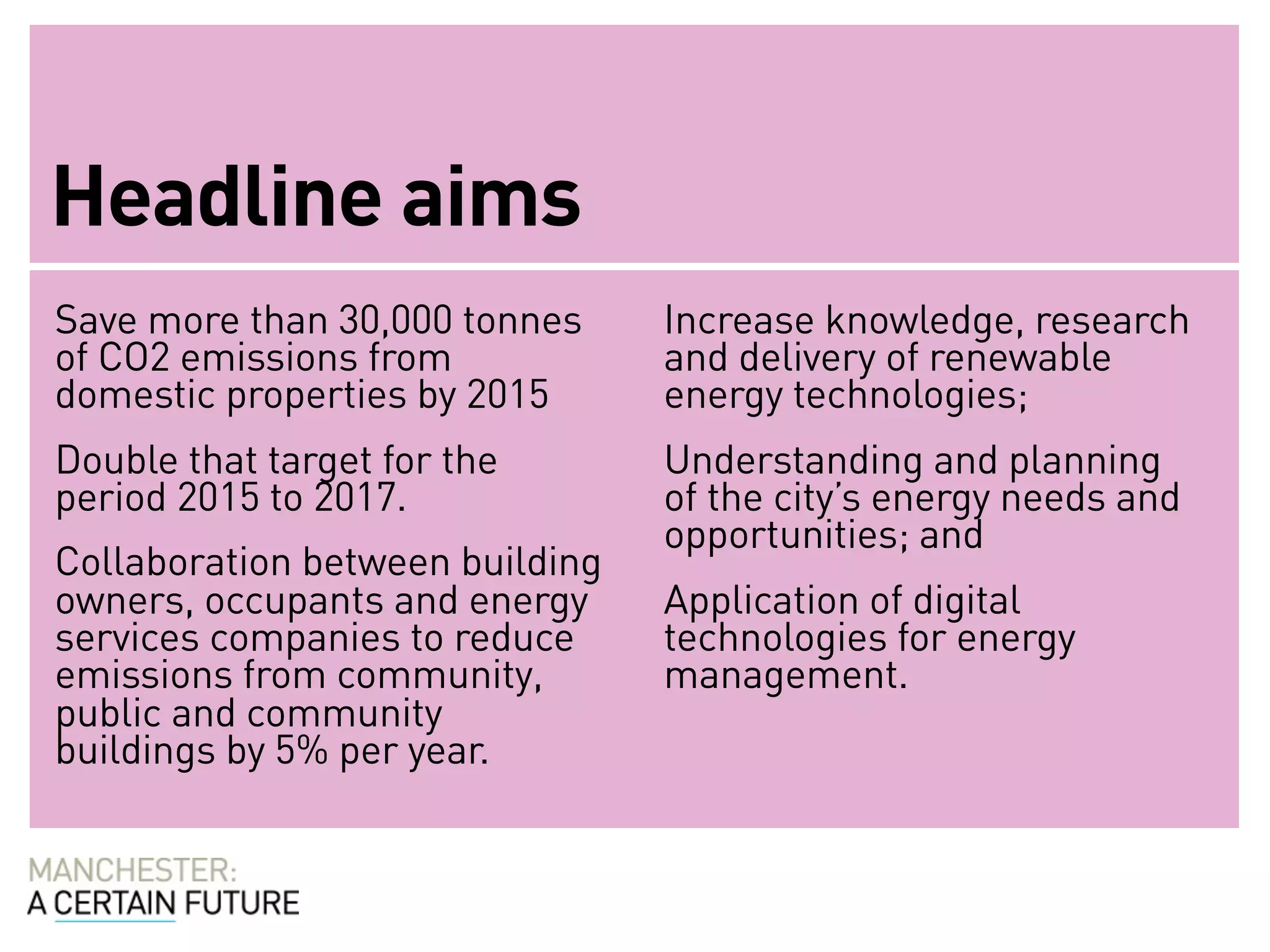
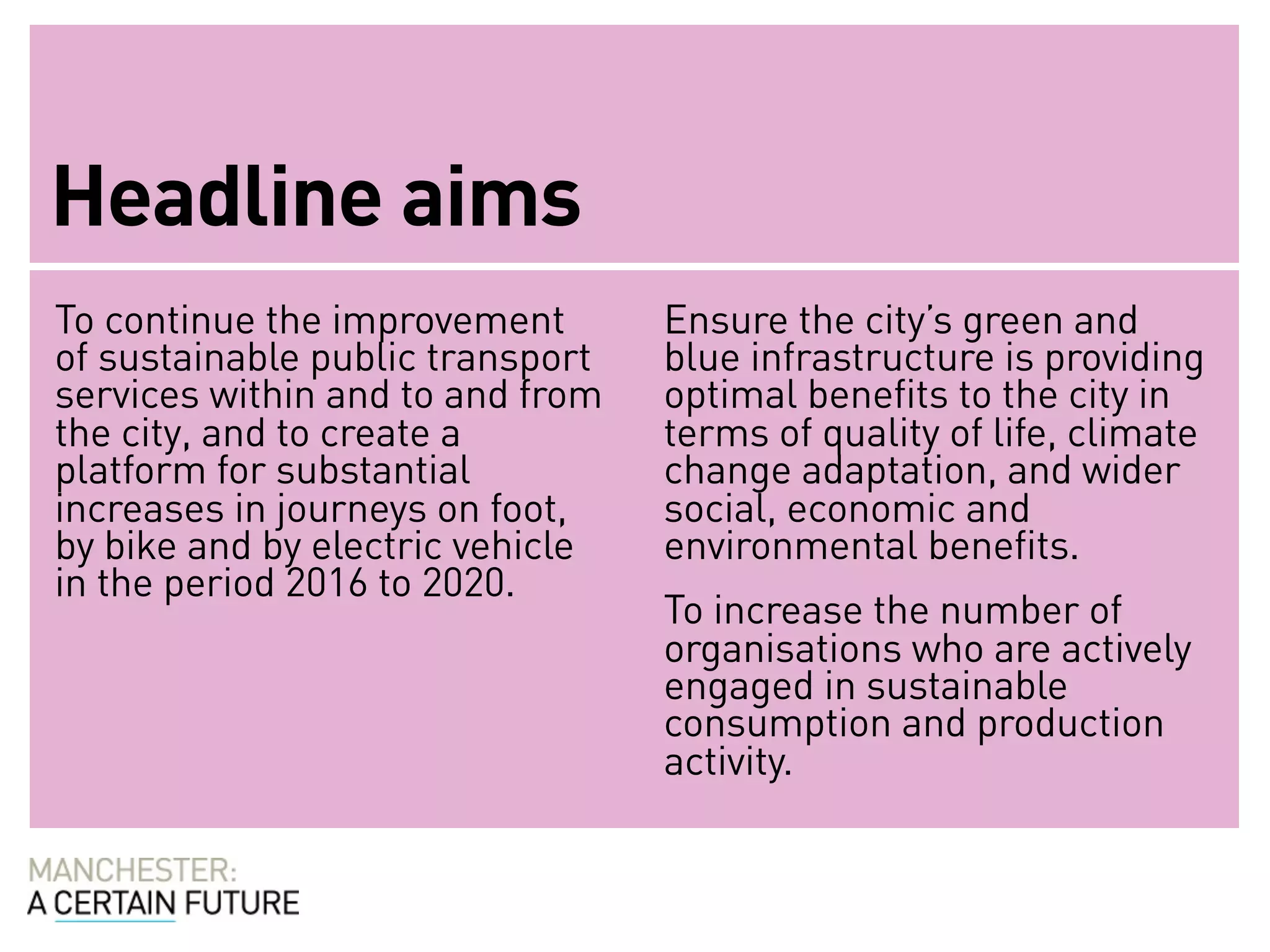
Headline aims
Save more than 30,000 tonnes     Increase knowledge, research
of CO2 emissions from            and delivery of renewable
domestic properties by 2015      energy technologies;
Double that target for the       Understanding and planning
period 2015 to 2017.             of the city’s energy needs and
                                 opportunities; and
Collaboration between building
owners, occupants and energy     Application of digital
services companies to reduce     technologies for energy
emissions from community,        management.
public and community
buildings by 5% per year.
Headline aims
To continue the improvement       Ensure the city’s green and
of sustainable public transport   blue infrastructure is providing
services within and to and from   optimal benefits to the city in
the city, and to create a         terms of quality of life, climate
platform for substantial          change adaptation, and wider
increases in journeys on foot,    social, economic and
by bike and by electric vehicle   environmental benefits.
in the period 2016 to 2020.
                                  To increase the number of
                                  organisations who are actively
                                  engaged in sustainable
                                  consumption and production
                                  activity.
THE BIGGEST
CHALLENGES?
2013: State of the City
Workshop One.
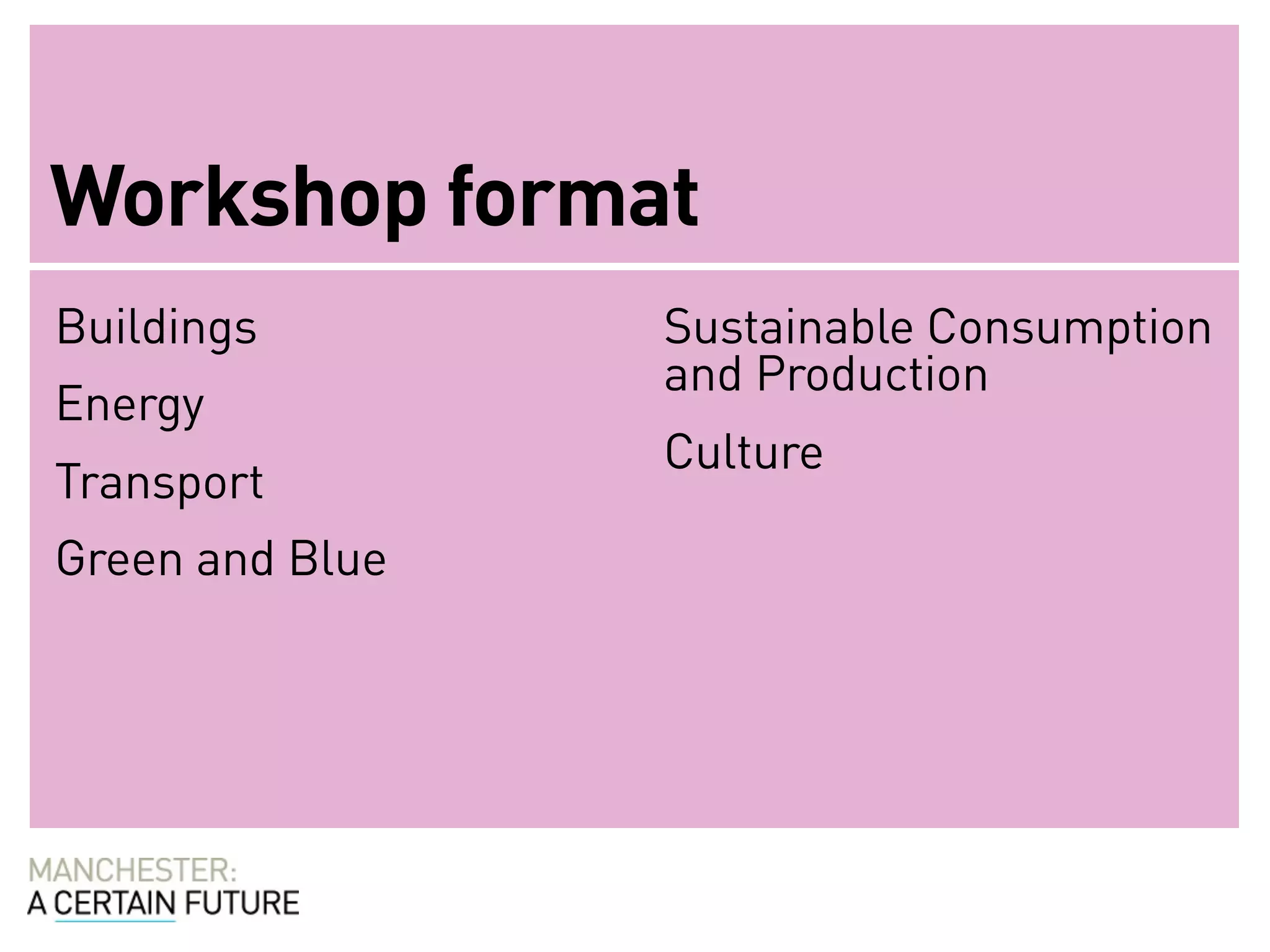
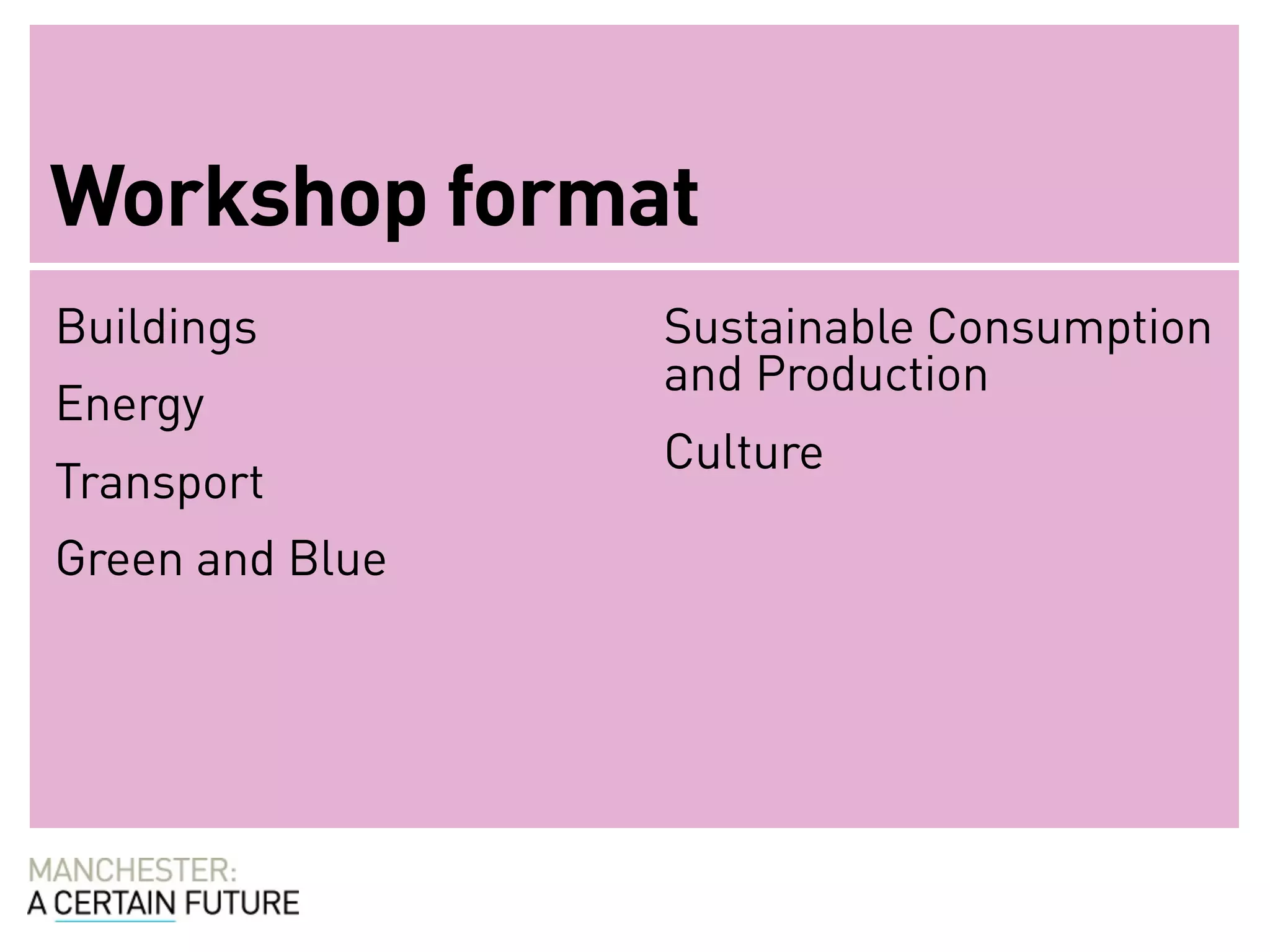
Workshop format
Buildings        Sustainable Consumption
                 and Production
Energy
                 Culture
Transport
Green and Blue
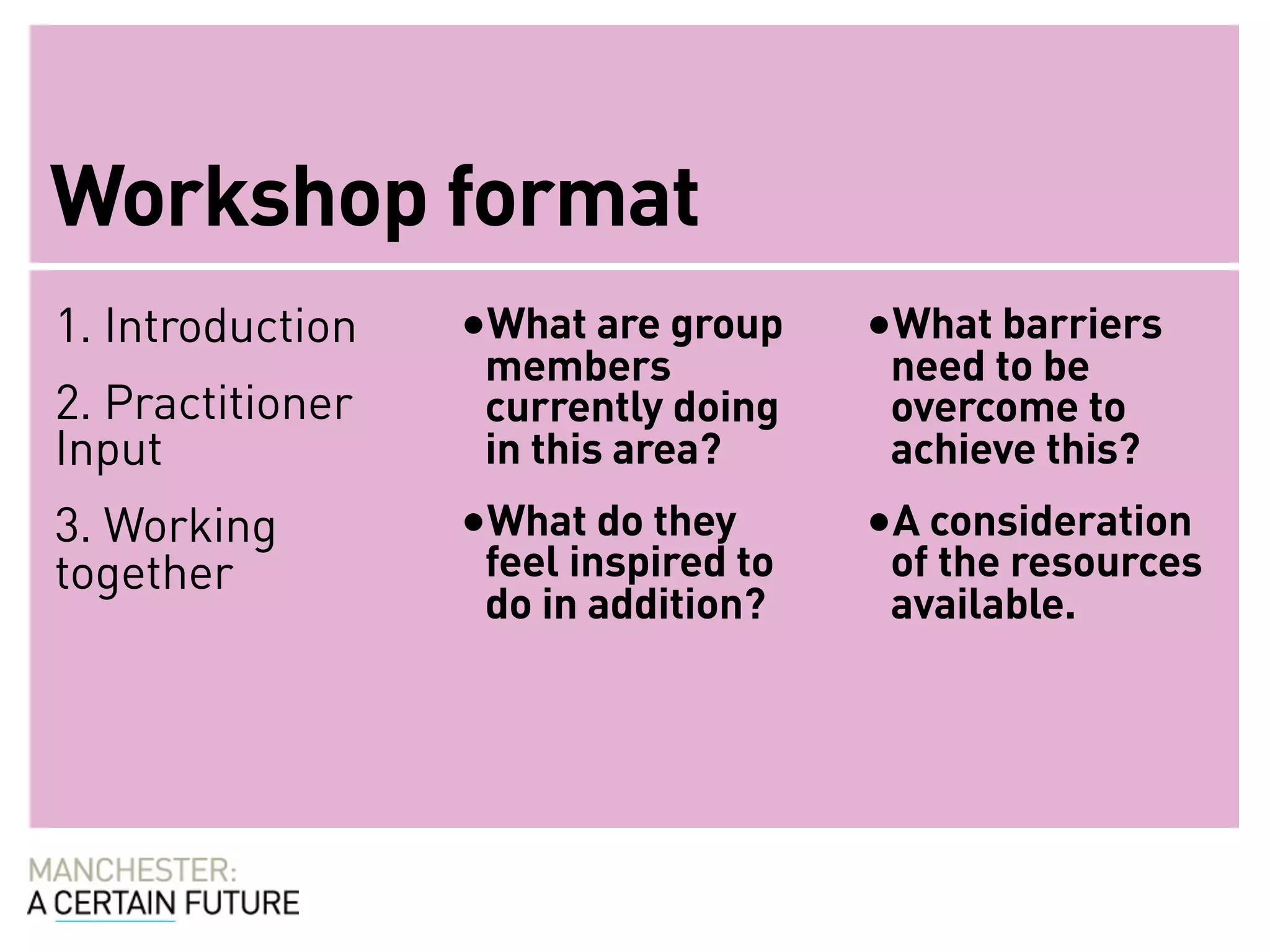
Workshop format
1. Introduction   •What are group     •What barriers
                   members             need to be
2. Practitioner    currently doing     overcome to
Input              in this area?       achieve this?
3. Working        •What do they       •A consideration
together           feel inspired to    of the resources
                   do in addition?     available.
Break.
Mark Knowles
  Head of Low Carbon at 
   Liverpool City Region
Local Economic Partnership
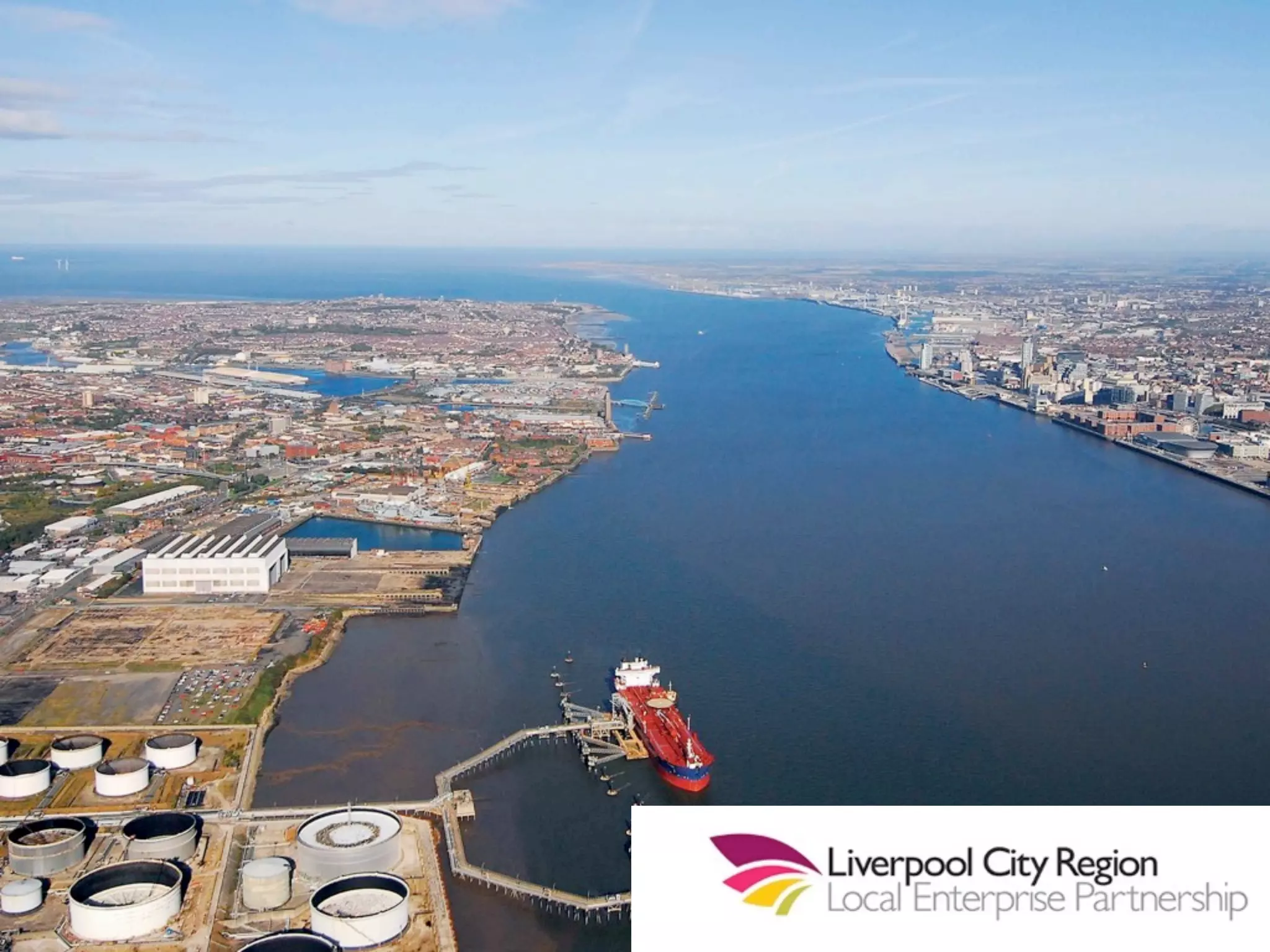
A Liverpool City Region
      Perspective


        Mark Knowles
 Head of Low Carbon Economy
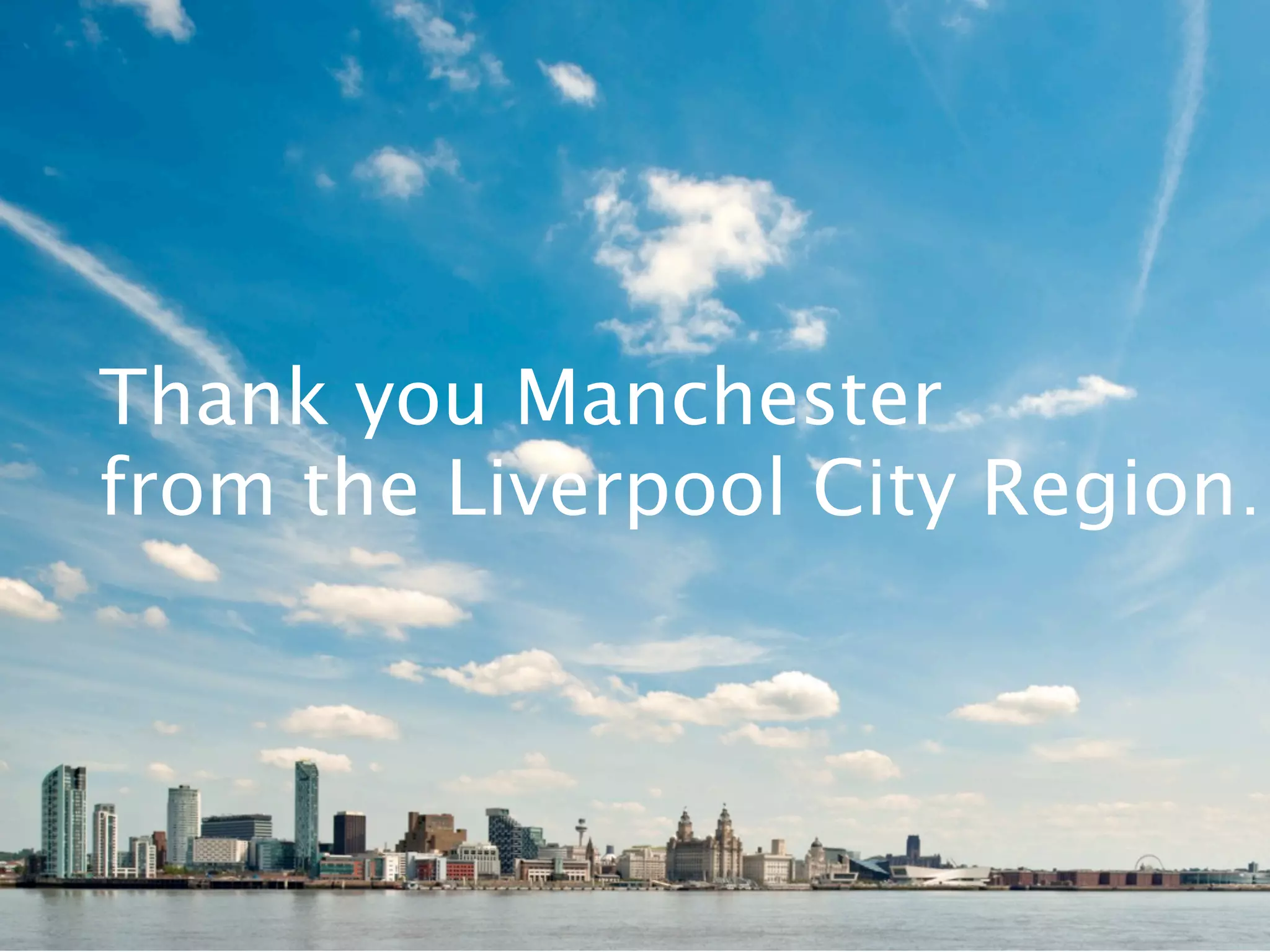
Thank you Manchester
from the Liverpool City Region…
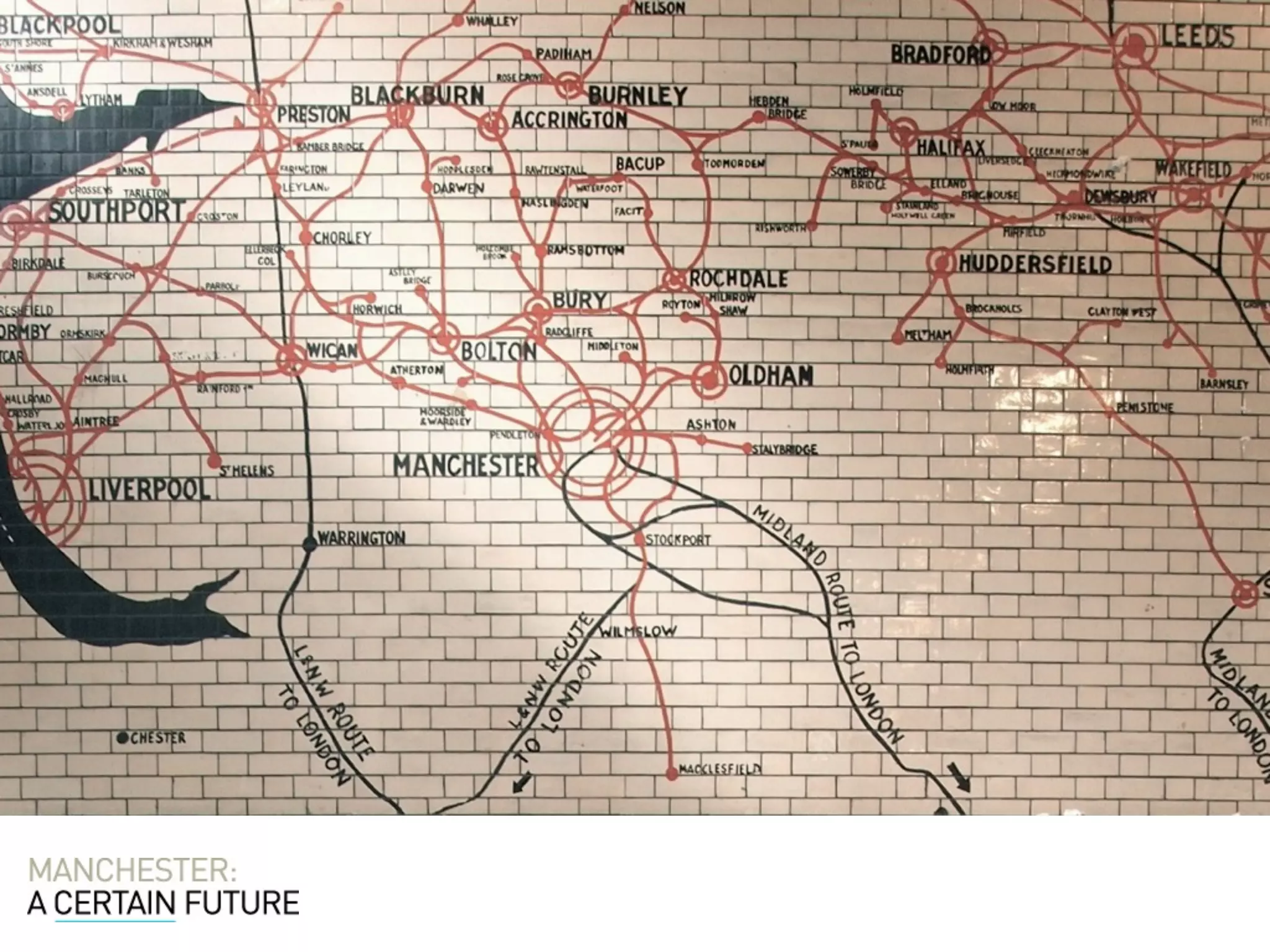
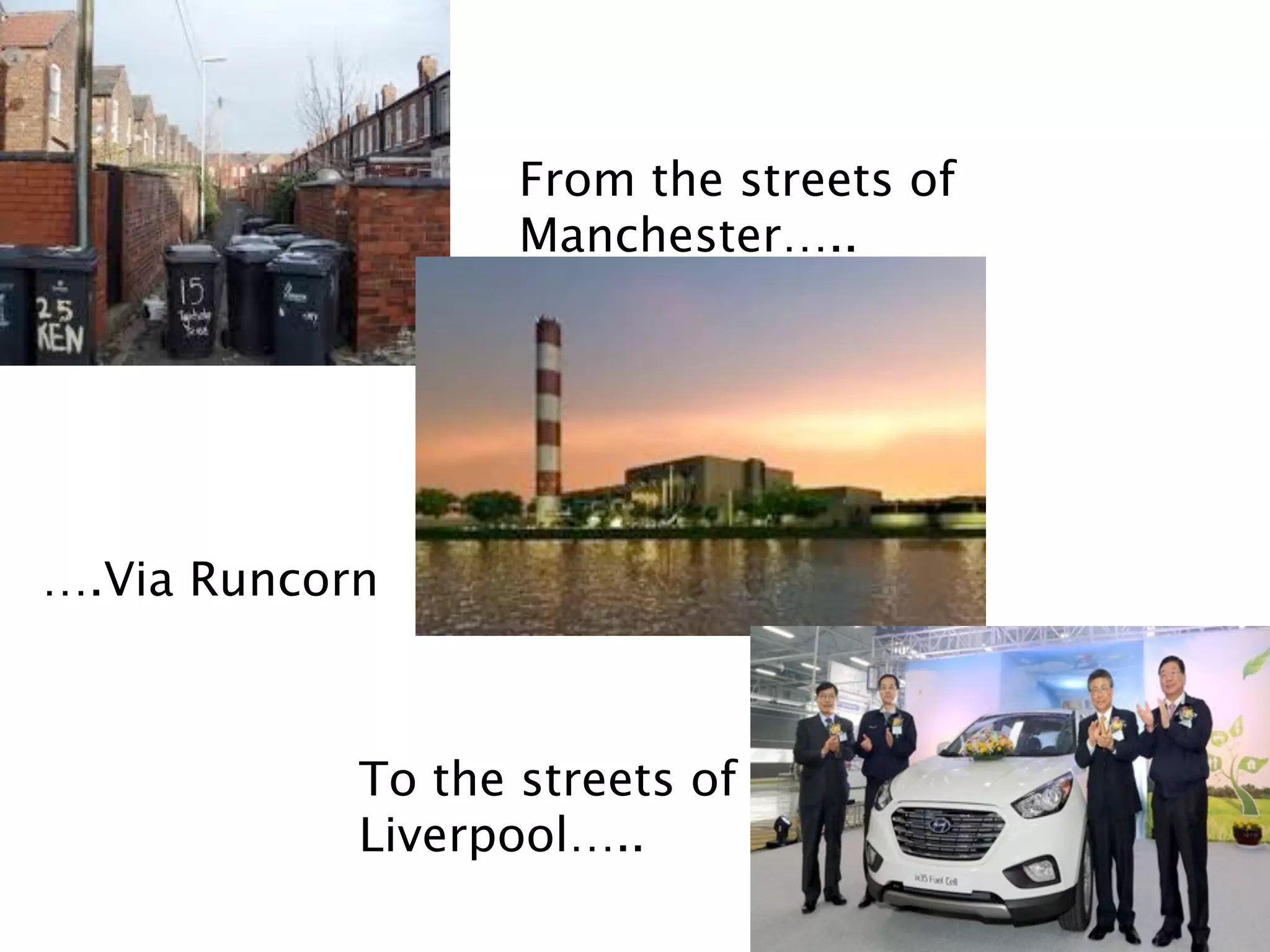
From the streets of
                   Manchester…..


….Via Runcorn


            To the streets of
            Liverpool…..
LCR Low Carbon:
Same but different…..

Implementing national policies
Exploiting our advantages

oMarine Energy
oH2Hub
oSEAP
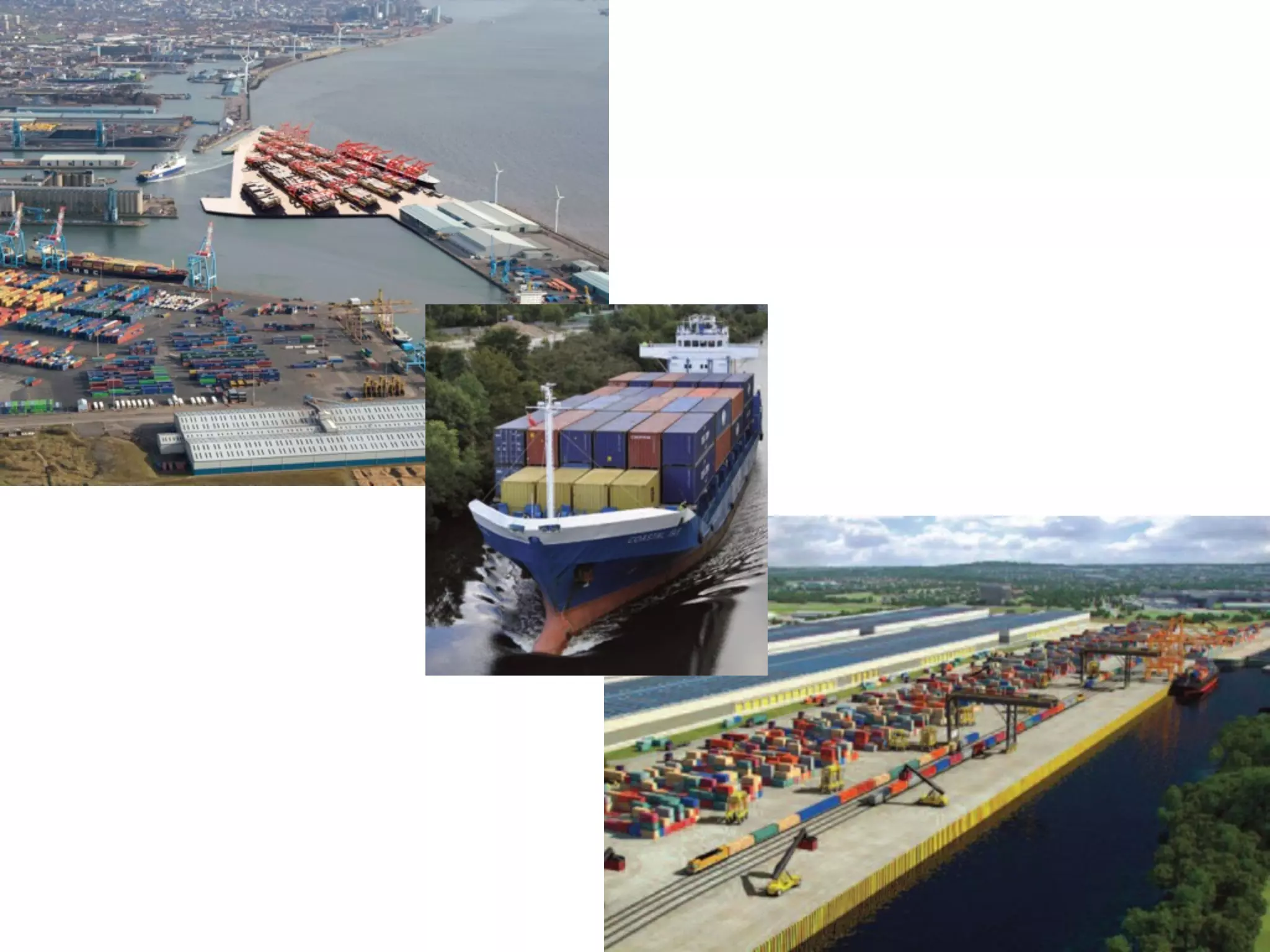
oProject Viridis
oPortCentric logistics
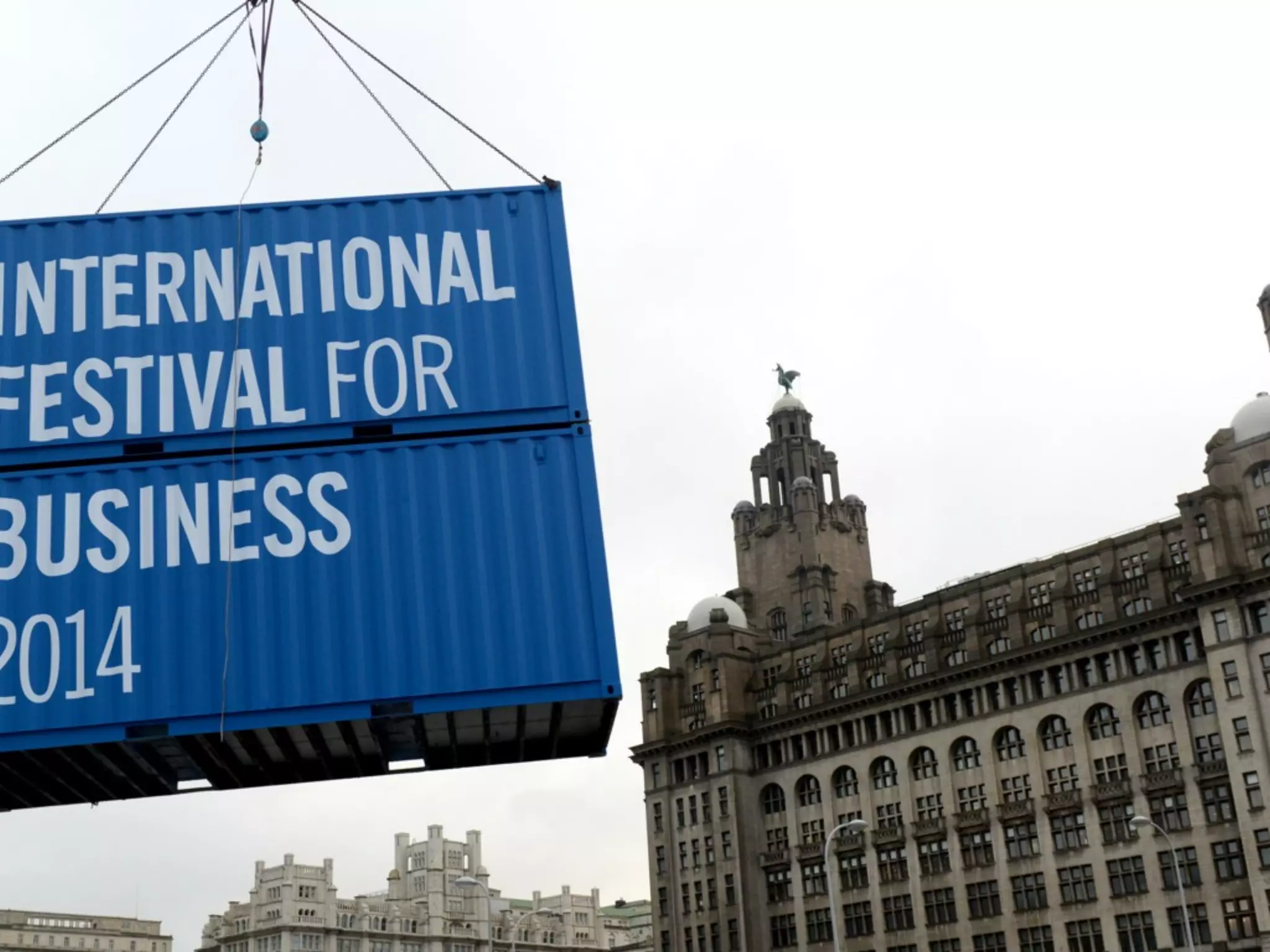
oIFB:14
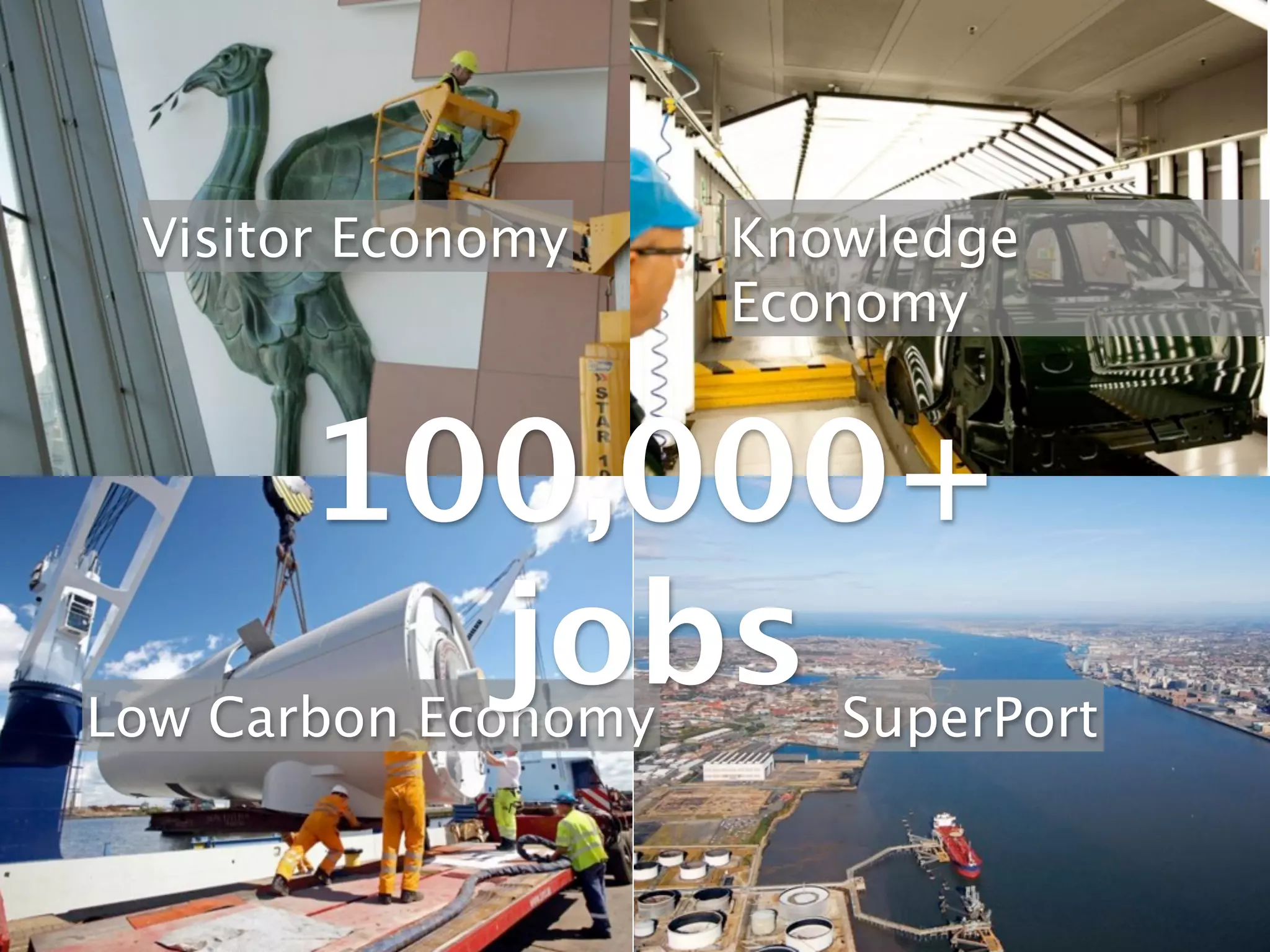
Visitor Economy     Knowledge
                     Economy


      100,000+
        jobs
Low Carbon Economy      SuperPort
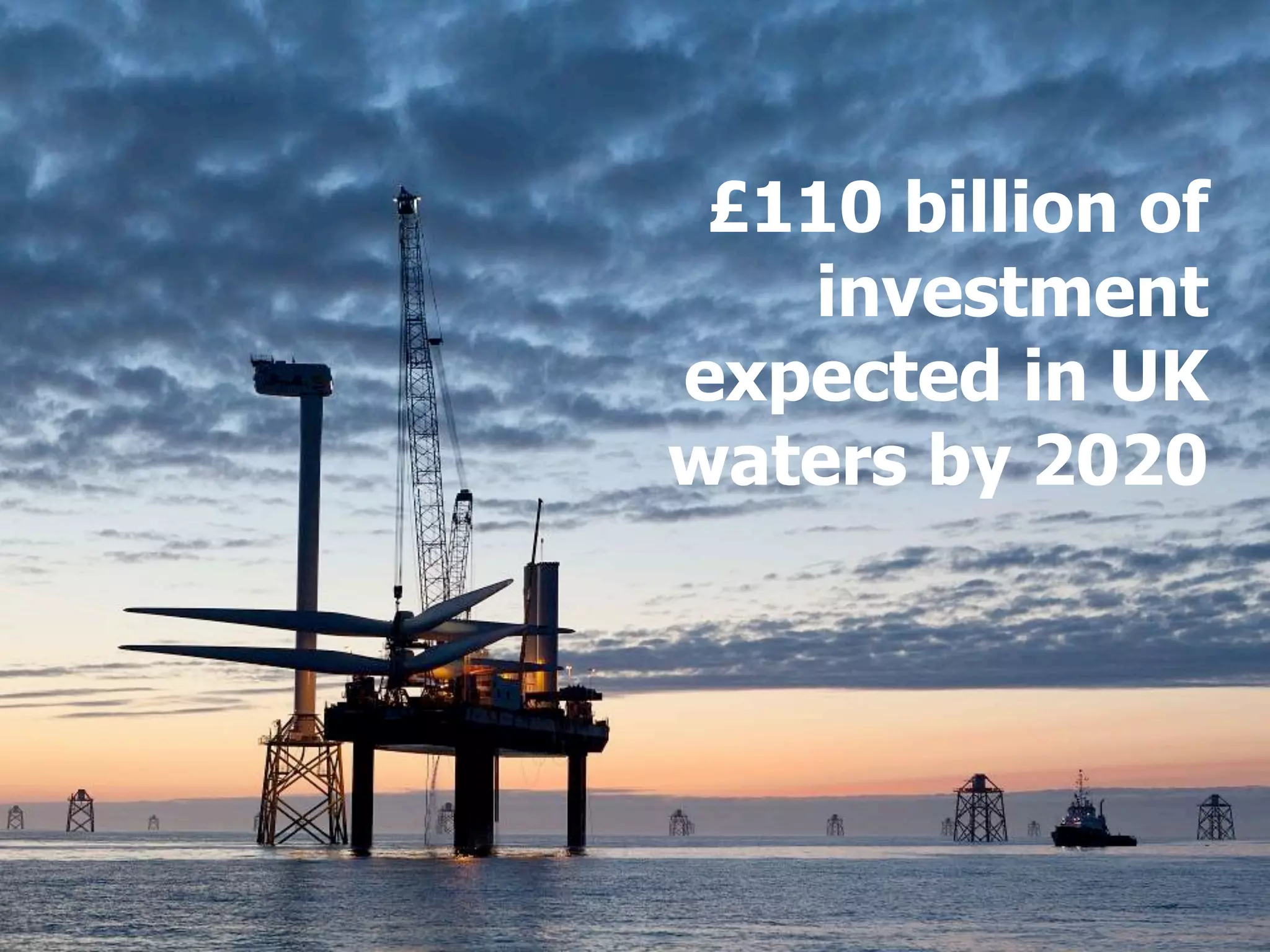
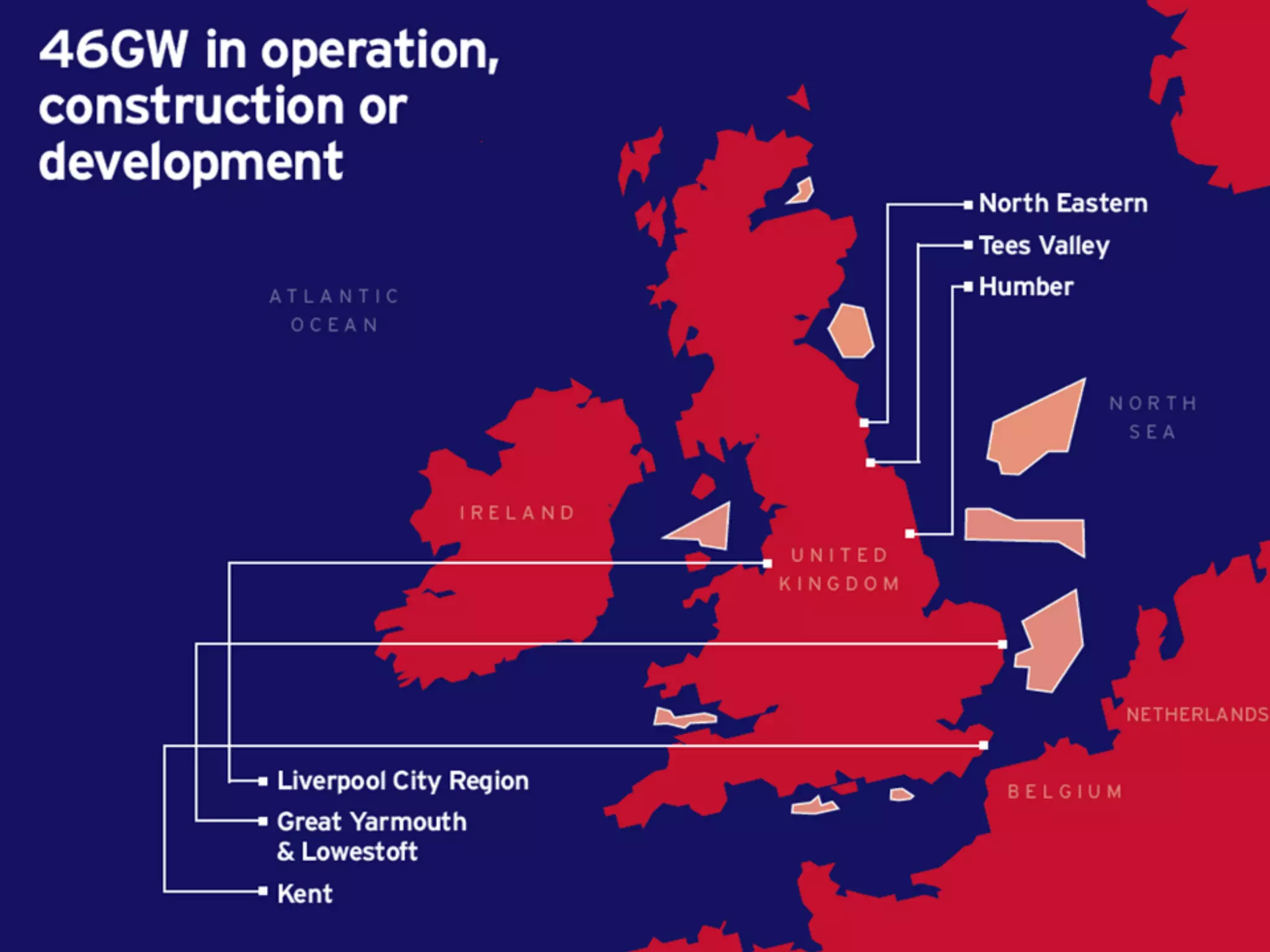
£110 billion of
   investment
expected in UK
waters by 2020
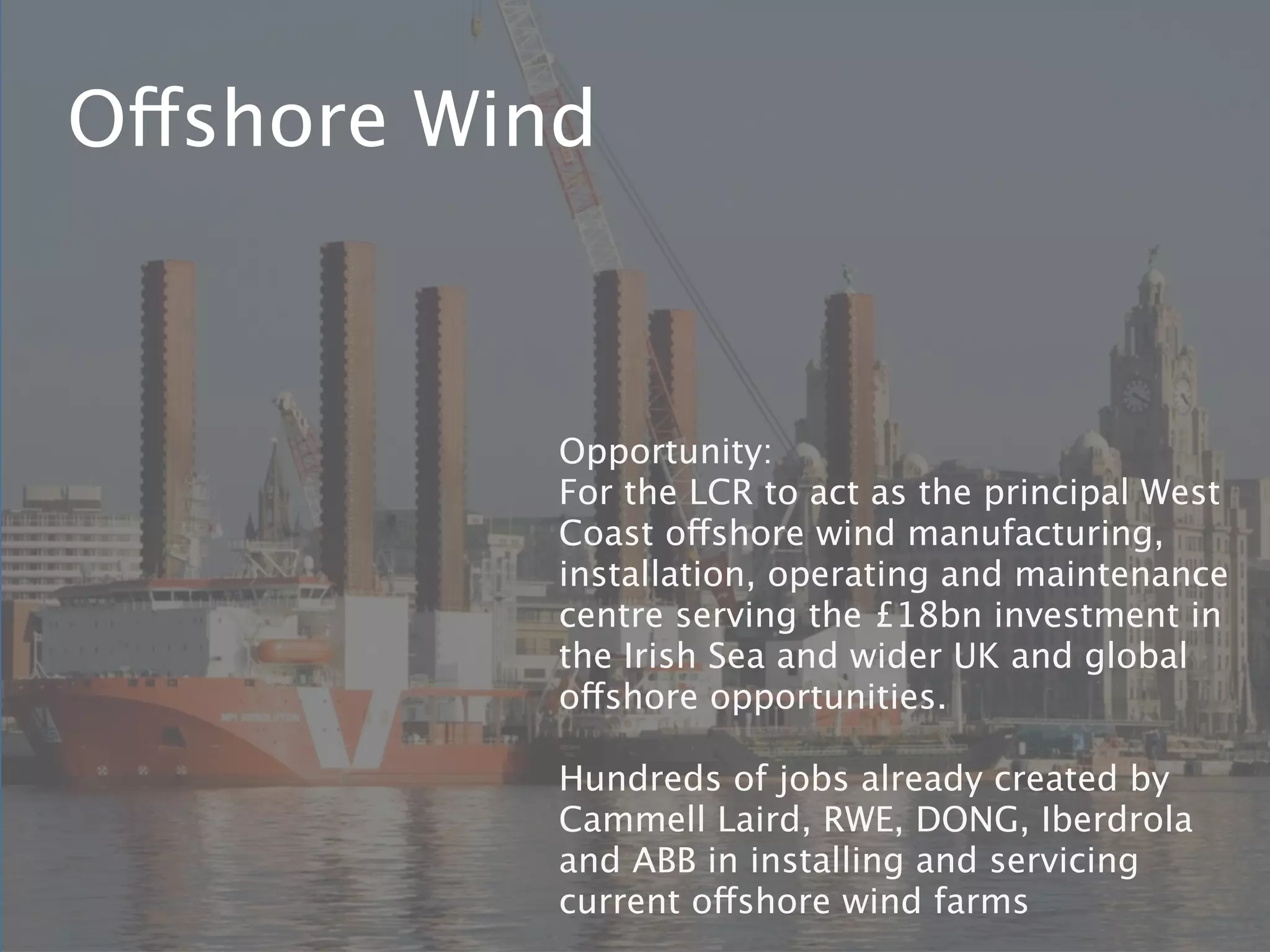
Offshore Wind


            Opportunity:
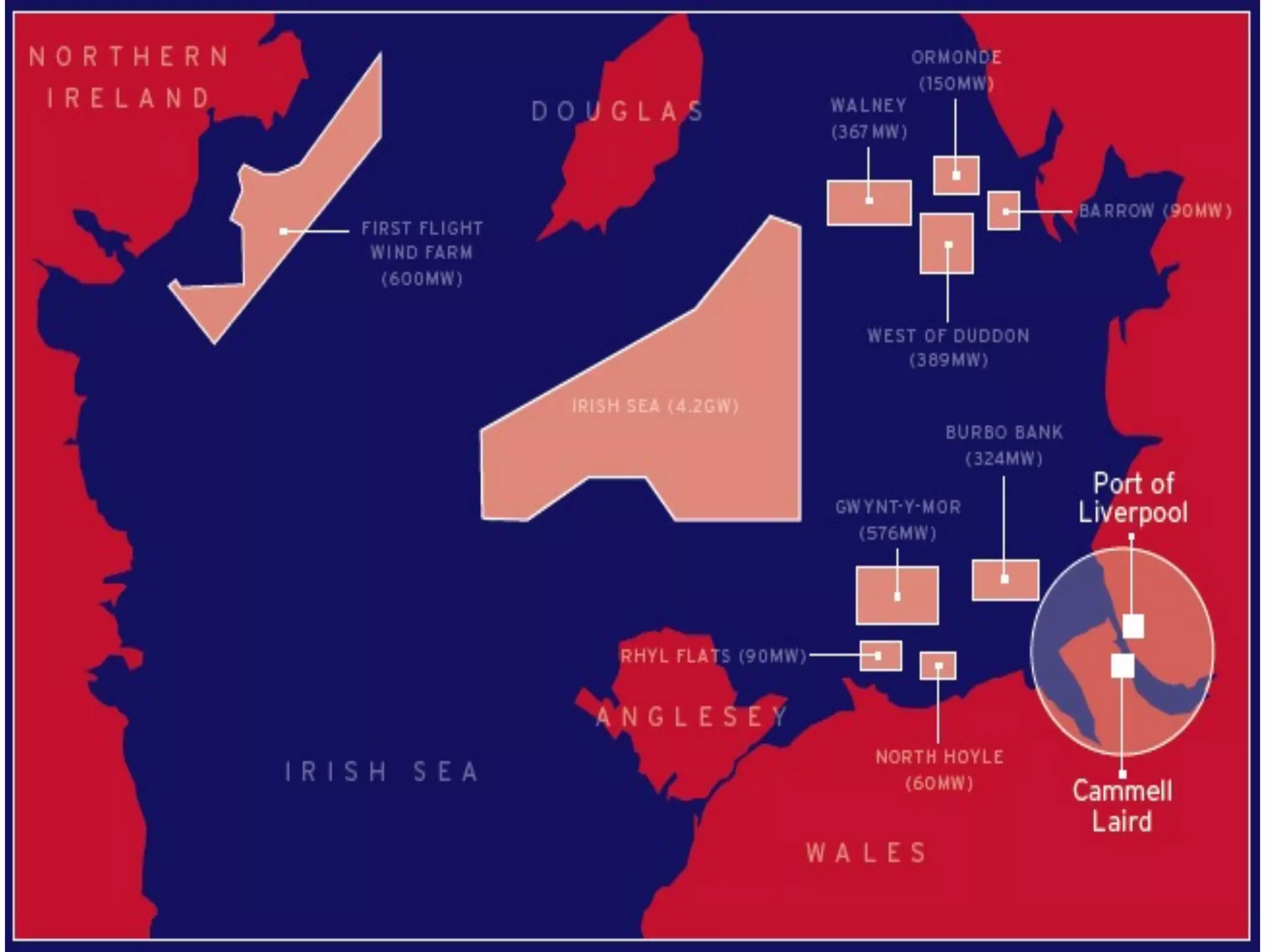
            For the LCR to act as the principal West
            Coast offshore wind manufacturing,
            installation, operating and maintenance
            centre serving the £18bn investment in
            the Irish Sea and wider UK and global
            offshore opportunities.

            Hundreds of jobs already created by
            Cammell Laird, RWE, DONG, Iberdrola
            and ABB in installing and servicing
            current offshore wind farms
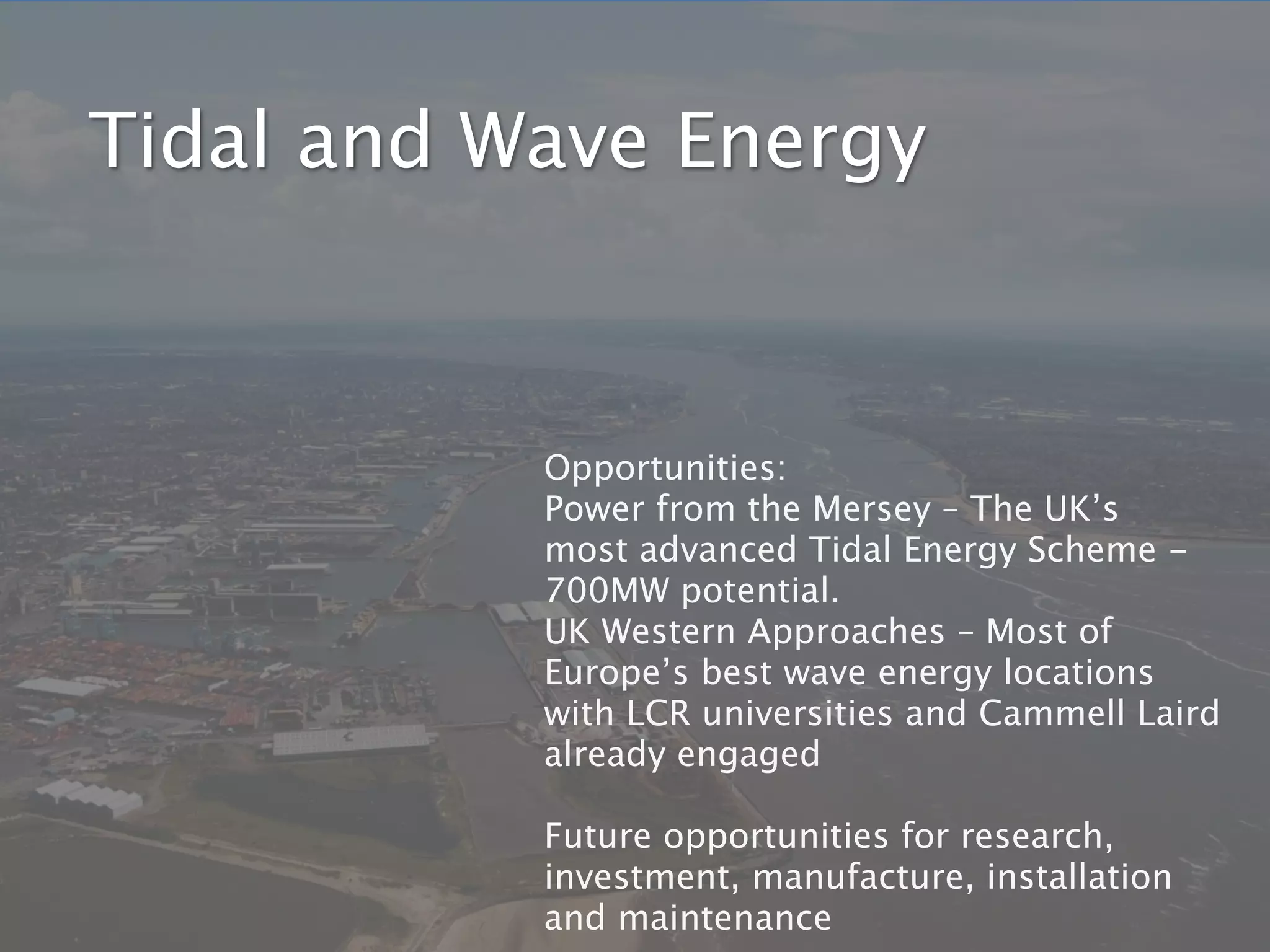
Tidal and Wave Energy


           Opportunities:
           Power from the Mersey – The UK’s
           most advanced Tidal Energy Scheme -
           700MW potential.
           UK Western Approaches – Most of
           Europe’s best wave energy locations
           with LCR universities and Cammell Laird
           already engaged

           Future opportunities for research,
           investment, manufacture, installation
           and maintenance
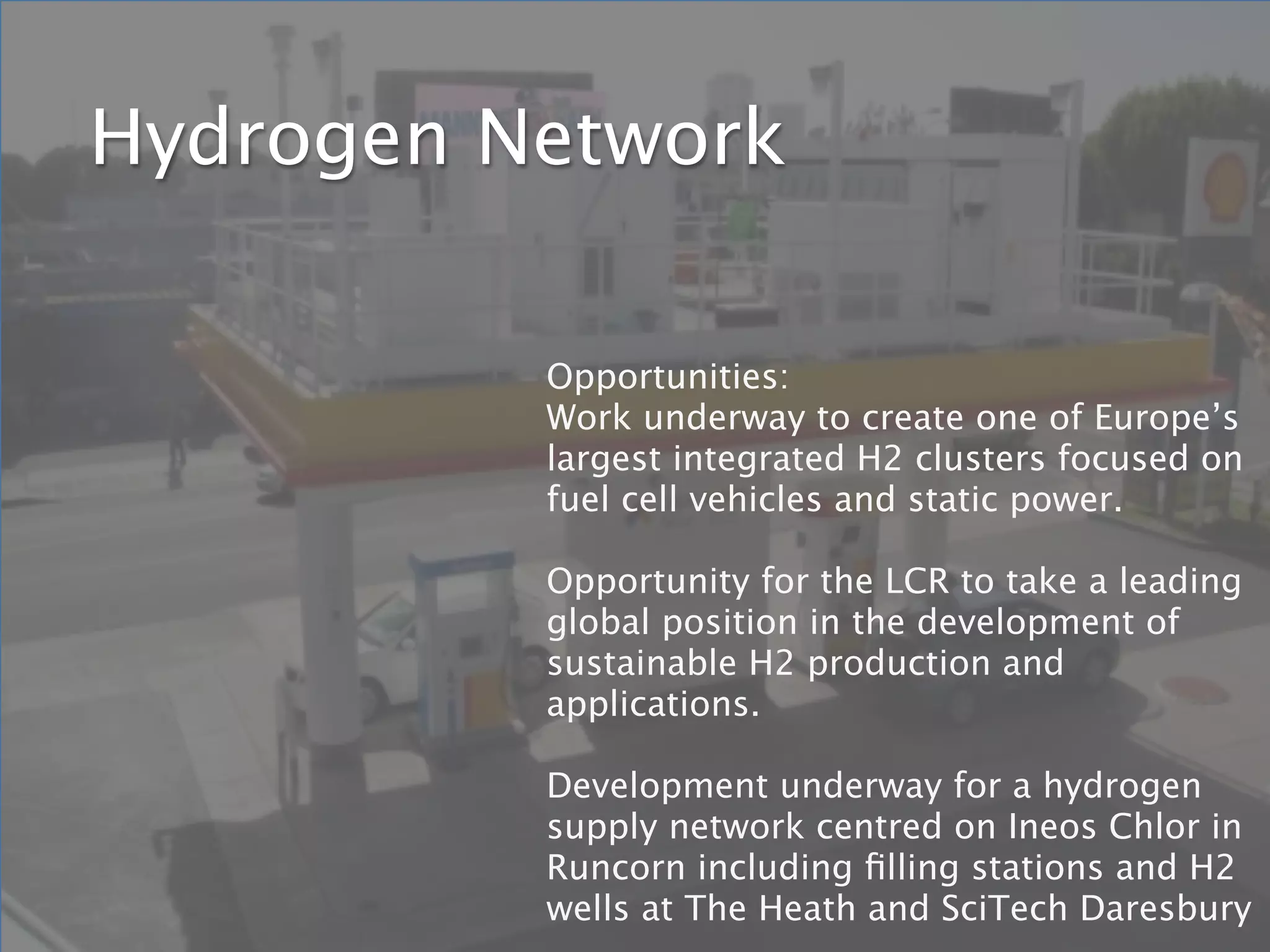
Hydrogen Network

          Opportunities:
          Work underway to create one of Europe’s
          largest integrated H2 clusters focused on
          fuel cell vehicles and static power.

          Opportunity for the LCR to take a leading
          global position in the development of
          sustainable H2 production and
          applications.

          Development underway for a hydrogen
          supply network centred on Ineos Chlor in
          Runcorn including filling stations and H2
          wells at The Heath and SciTech Daresbury
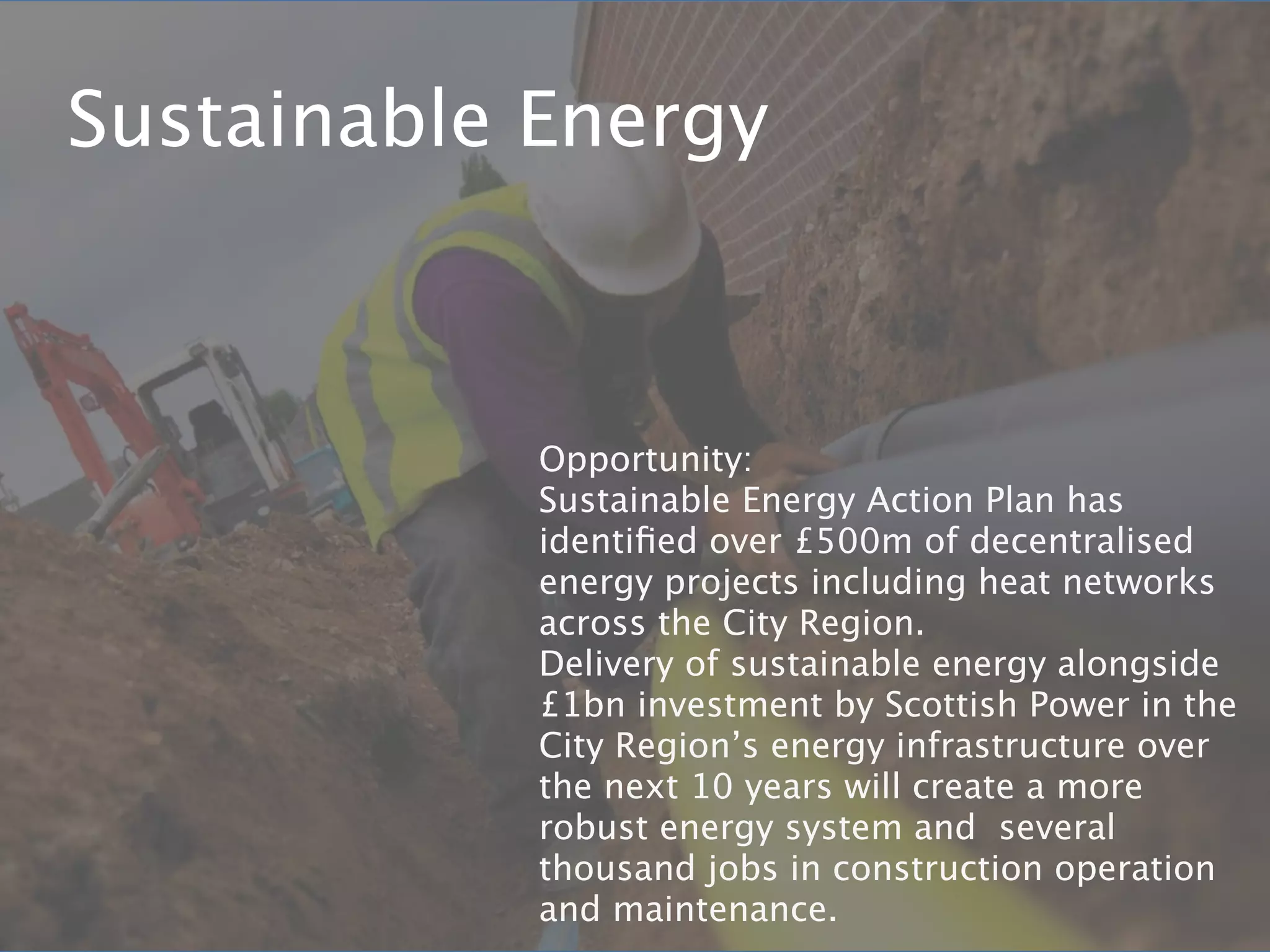
Sustainable Energy


            Opportunity:
            Sustainable Energy Action Plan has
            identified over £500m of decentralised
            energy projects including heat networks
            across the City Region.
            Delivery of sustainable energy alongside
            £1bn investment by Scottish Power in the
            City Region’s energy infrastructure over
            the next 10 years will create a more
            robust energy system and several
            thousand jobs in construction operation
            and maintenance.
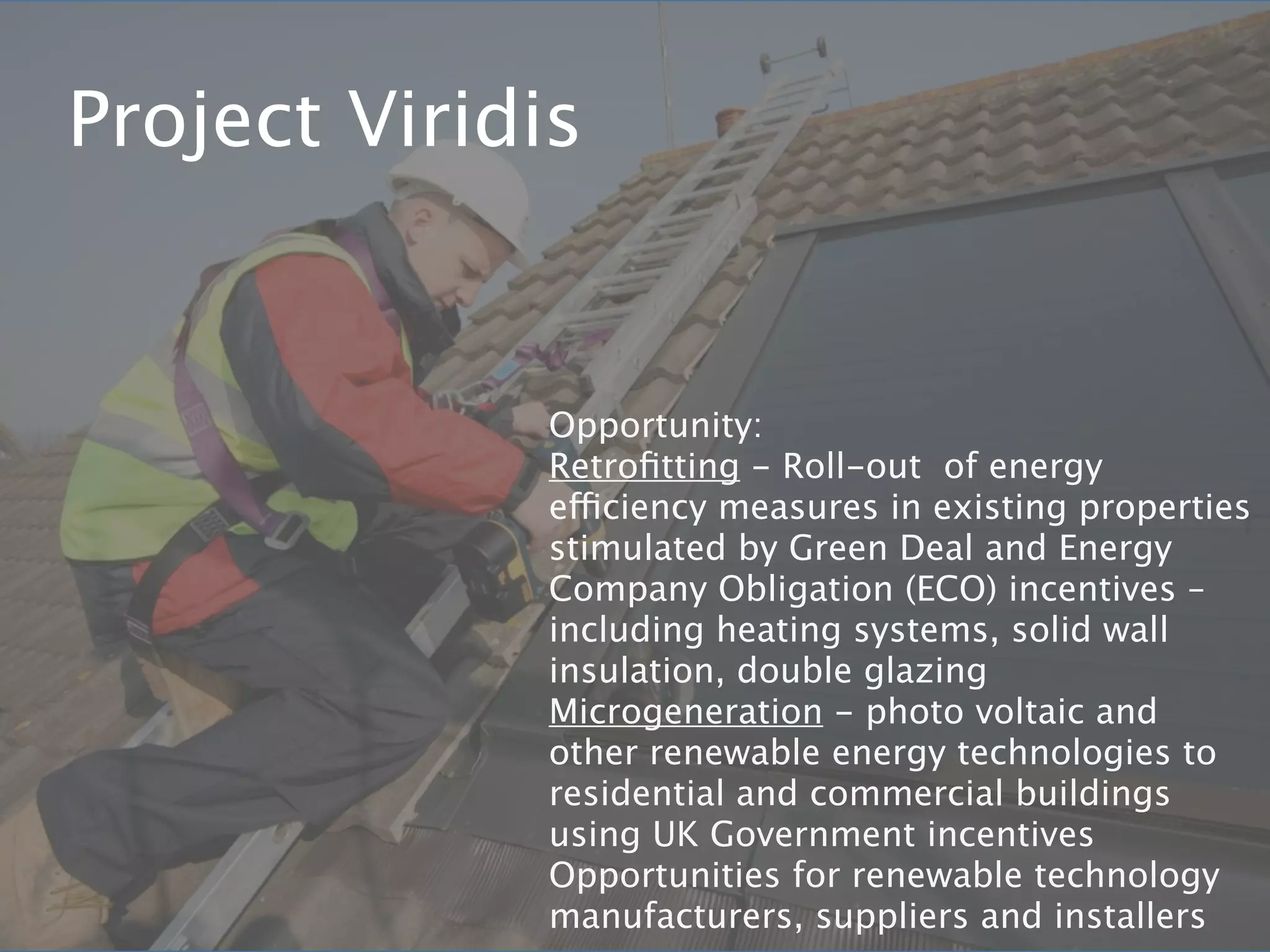
Project Viridis


              Opportunity:
              Retrofitting - Roll-out of energy
              efficiency measures in existing properties
              stimulated by Green Deal and Energy
              Company Obligation (ECO) incentives –
              including heating systems, solid wall
              insulation, double glazing
              Microgeneration - photo voltaic and
              other renewable energy technologies to
              residential and commercial buildings
              using UK Government incentives
              Opportunities for renewable technology
              manufacturers, suppliers and installers
Melanie Taylor
Green Economy Lead
 Leeds City Region
Melanie Taylor

    Green Economy Lead
Leeds City Region Partnership

melanie.taylor@leeds.gov.uk
Leeds City
 Region –
the place
An energy
  An energy
intensive
  intensive
economy…
 economy…
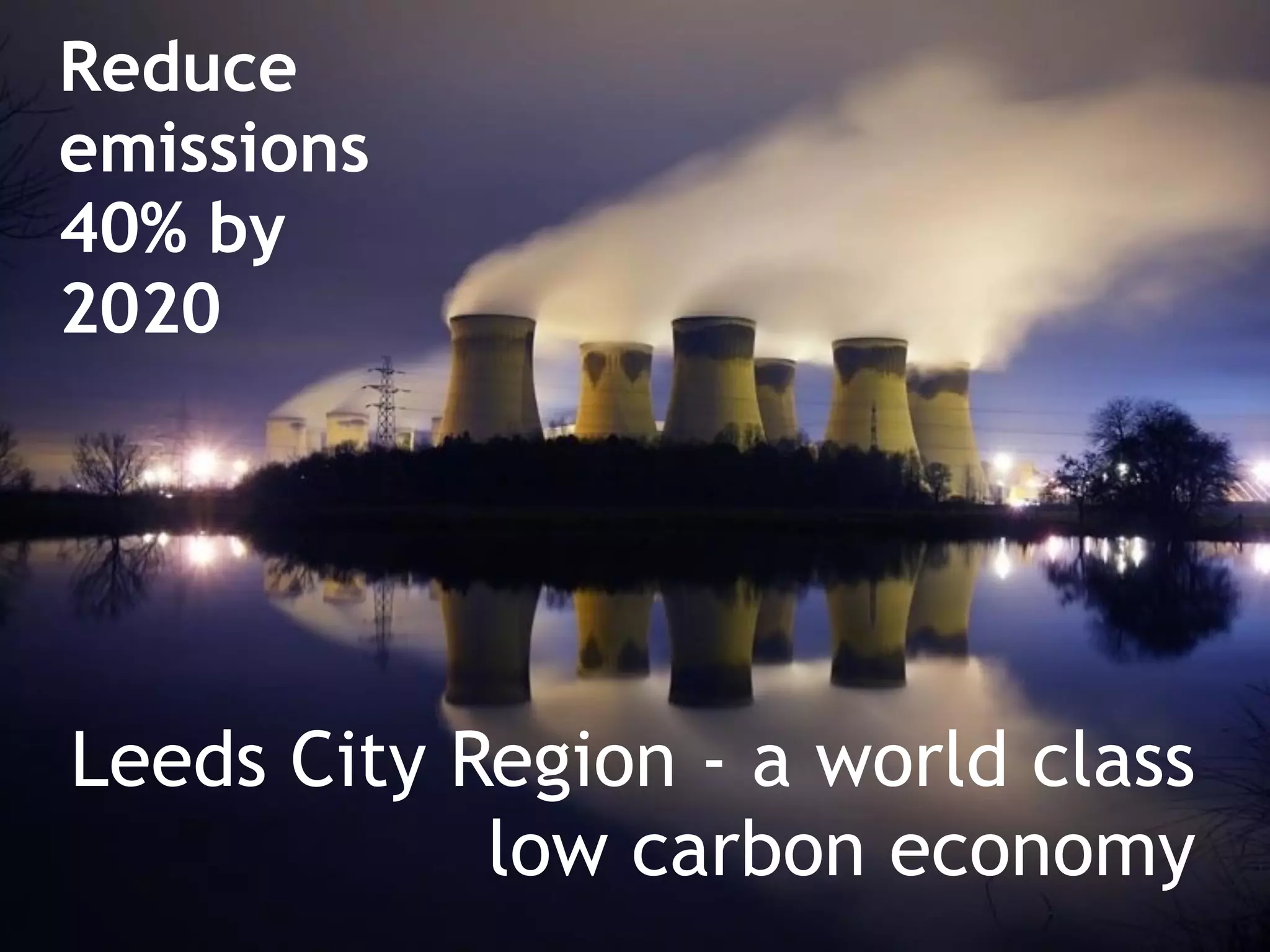
Reduce
emissions
40% by
2020


Leeds City Region - a world class
            low carbon economy
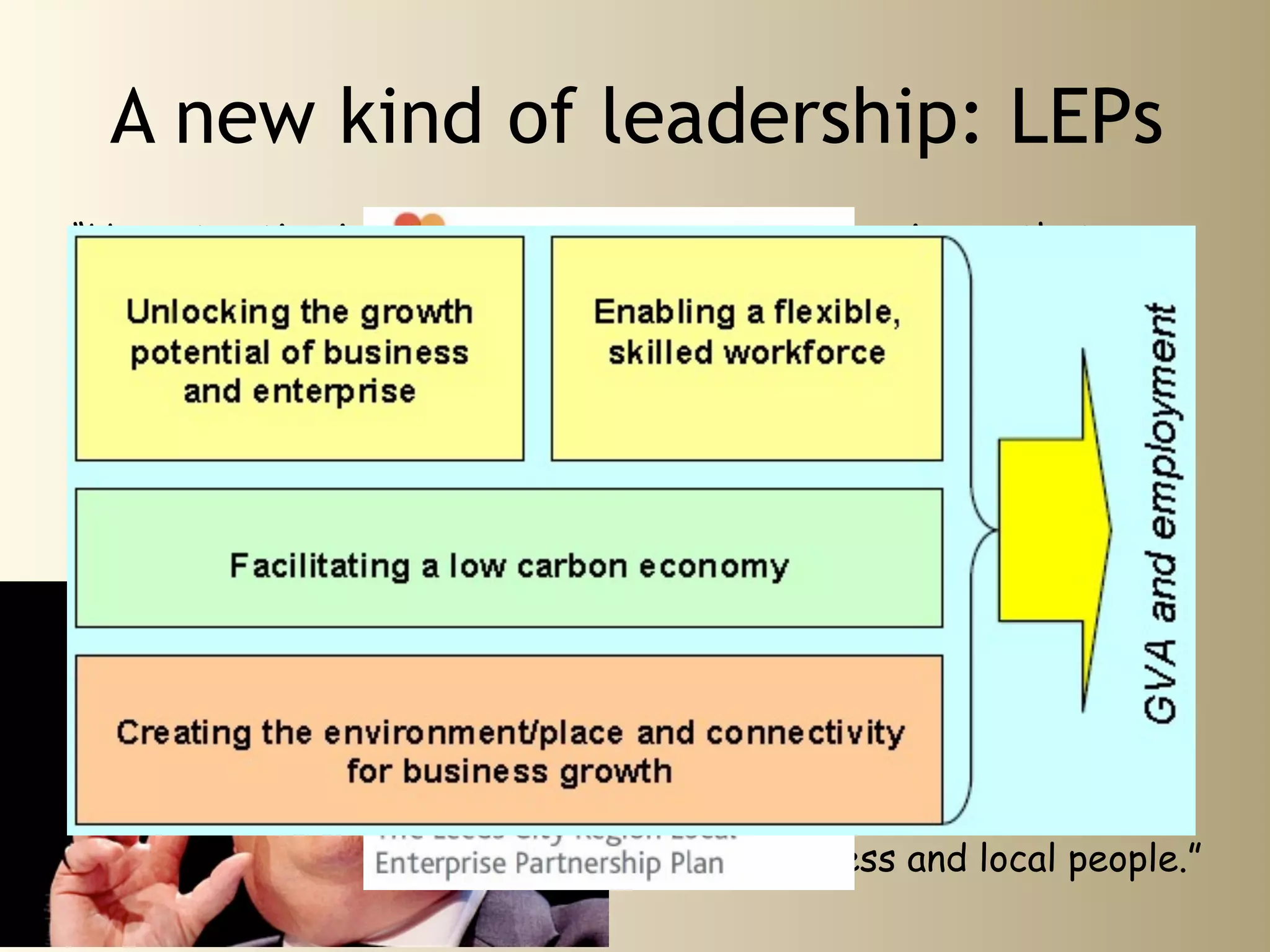
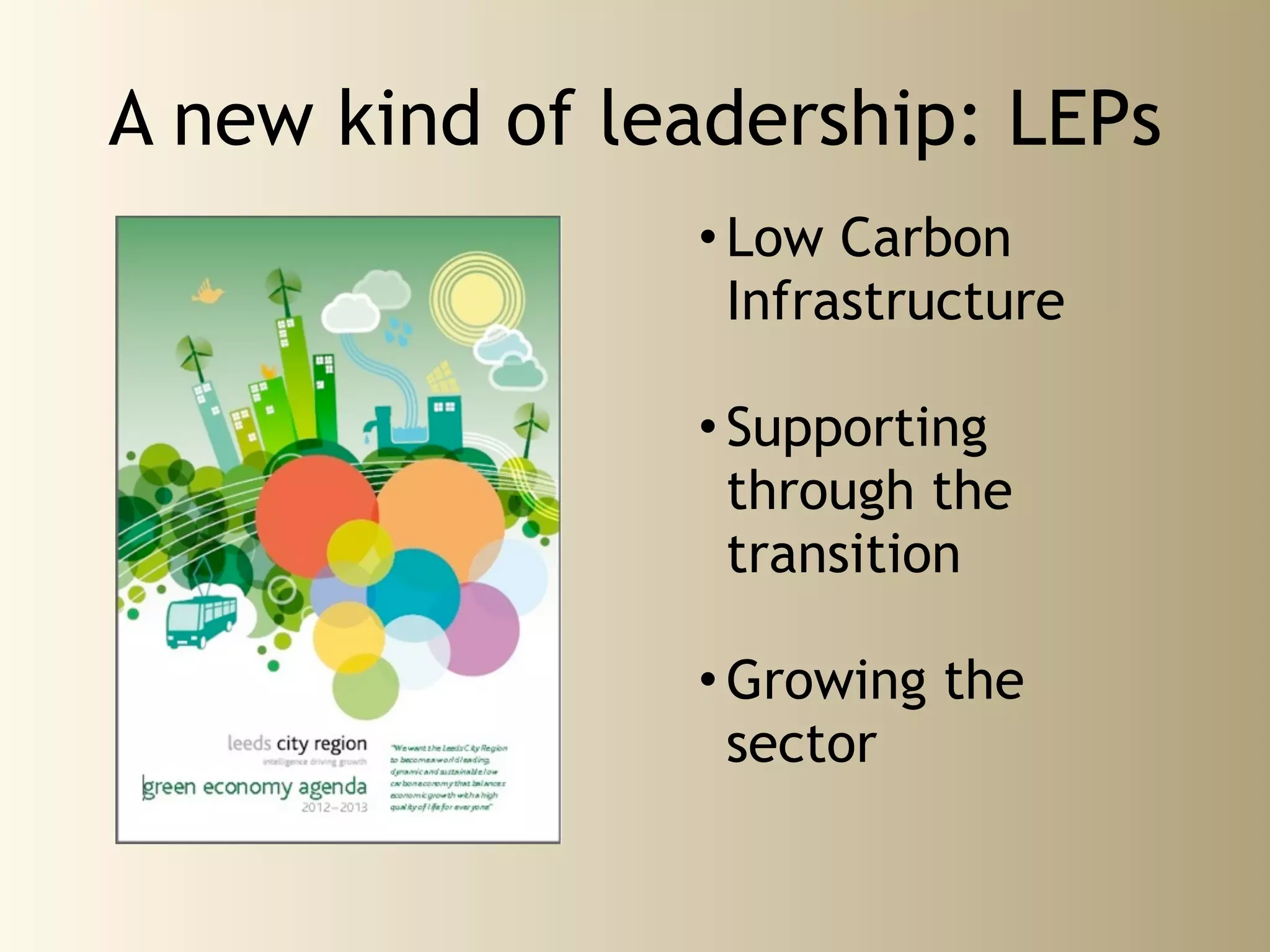
A new kind of leadership: LEPs
“Urgent action is needed to rebuild local economies so that
economic opportunities spread across the country.

The solution needs to be local - we know that when councils
and local business work hand in hand they can drive economic
growth together and places can be transformed.

                                 By giving up central control we
                                 will put democratic
                                 accountability back into the
                                 local economy making it
                                 responsive to the needs of
                                 local business and local people.”
A new kind of leadership: LEPs
                • Low Carbon
                  Infrastructure

                • Supporting
                  through the
                  transition

                • Growing the
                  sector
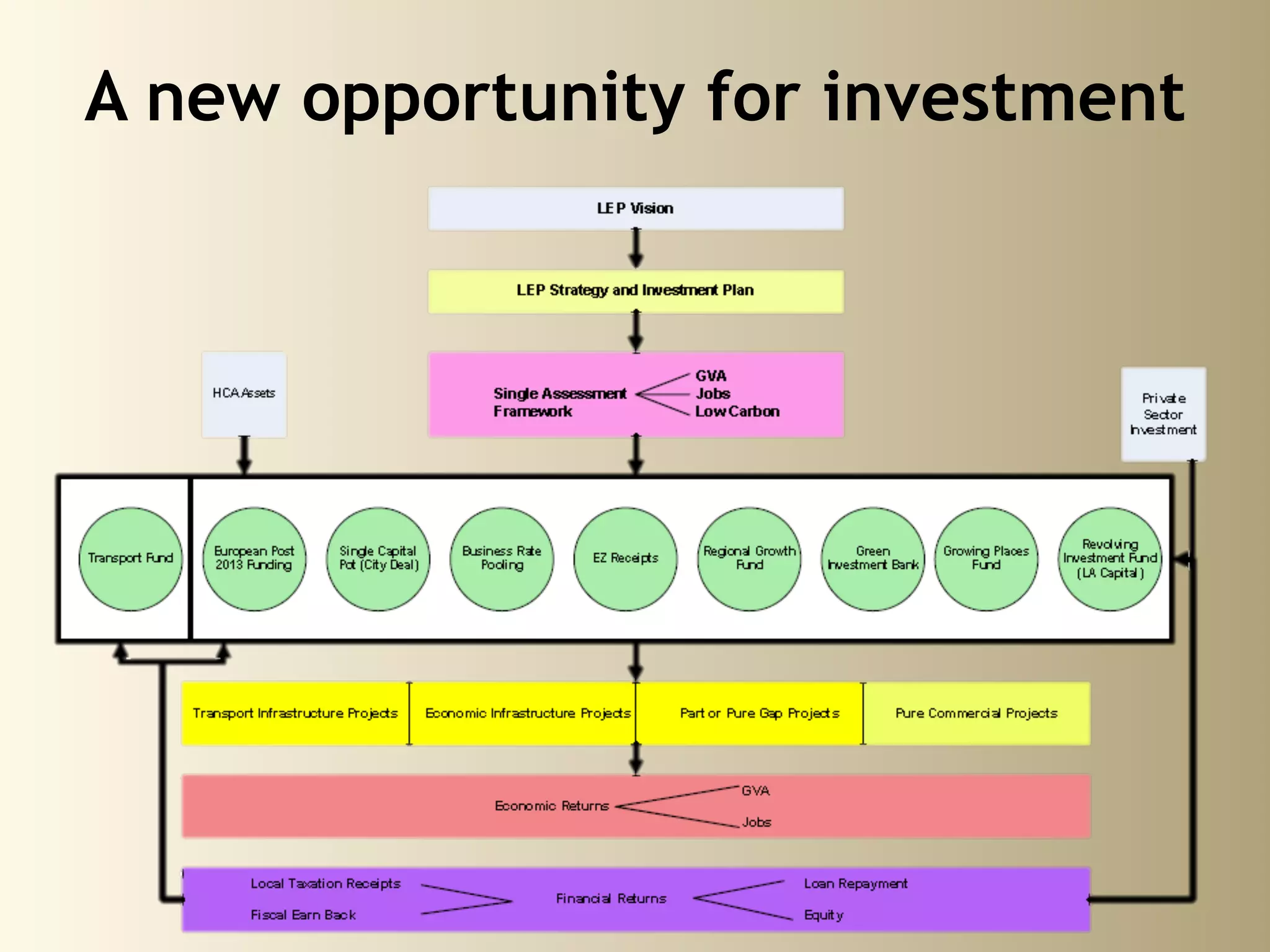
A new opportunity for investment
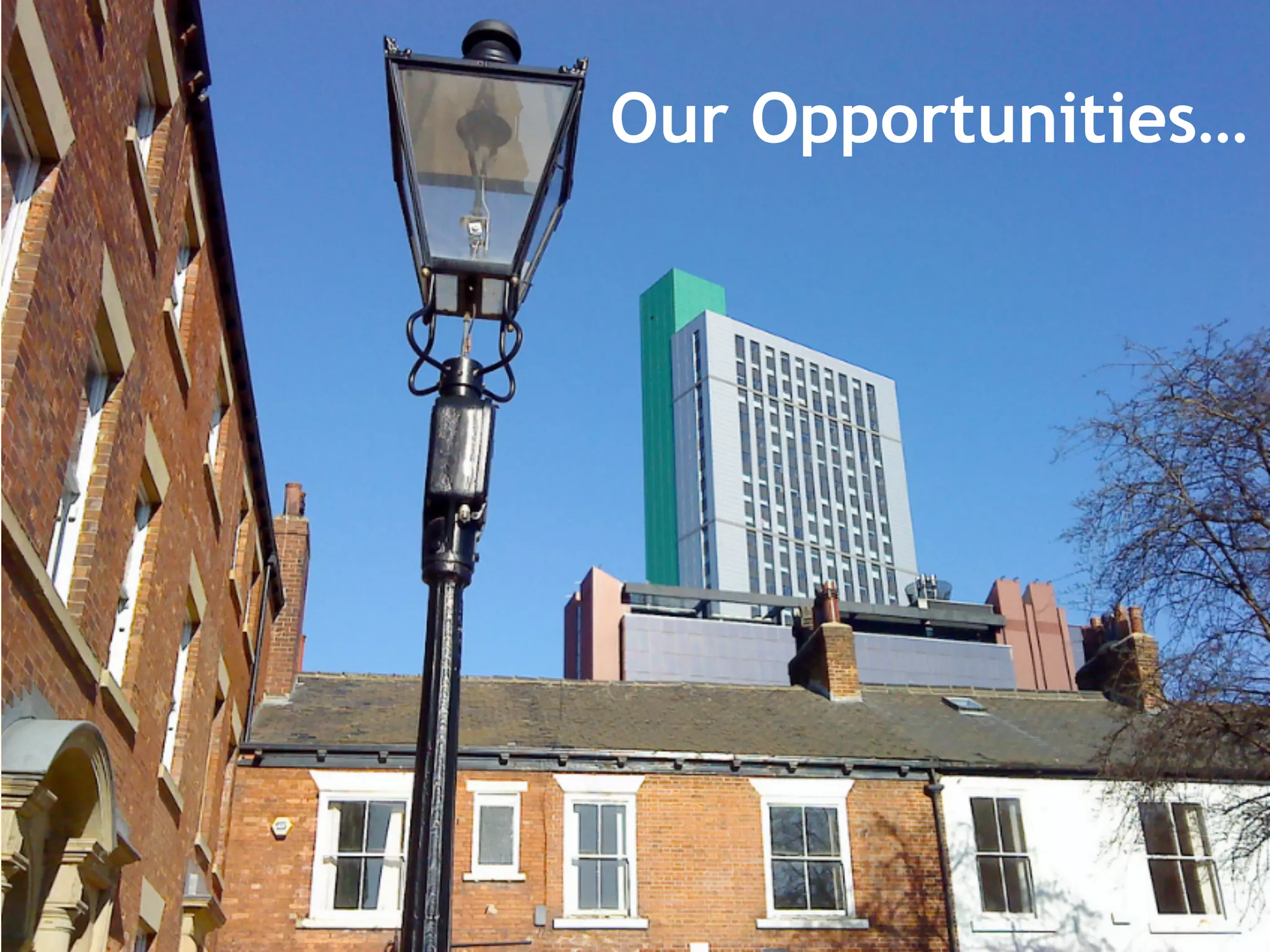
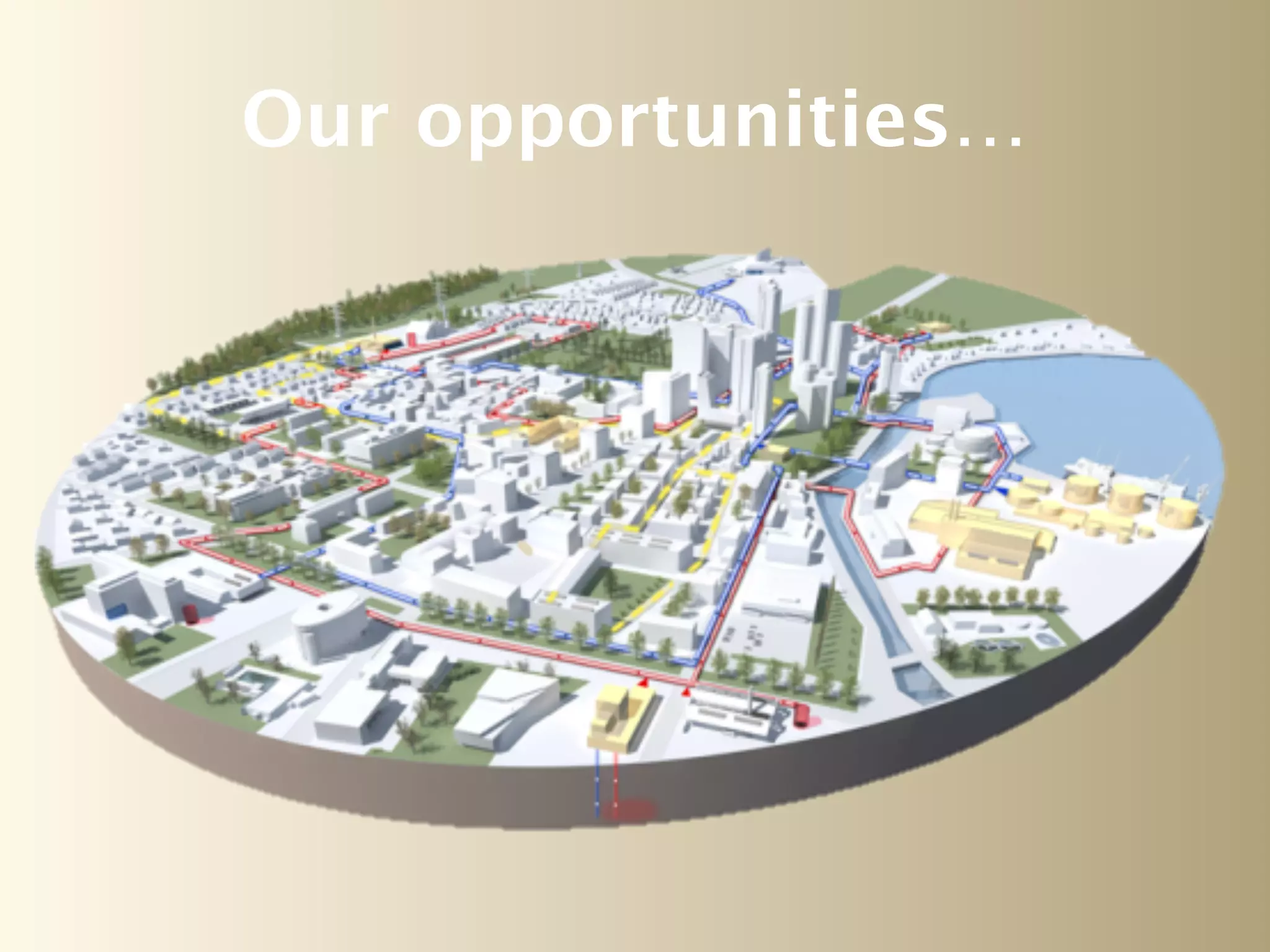
Our Opportunities…
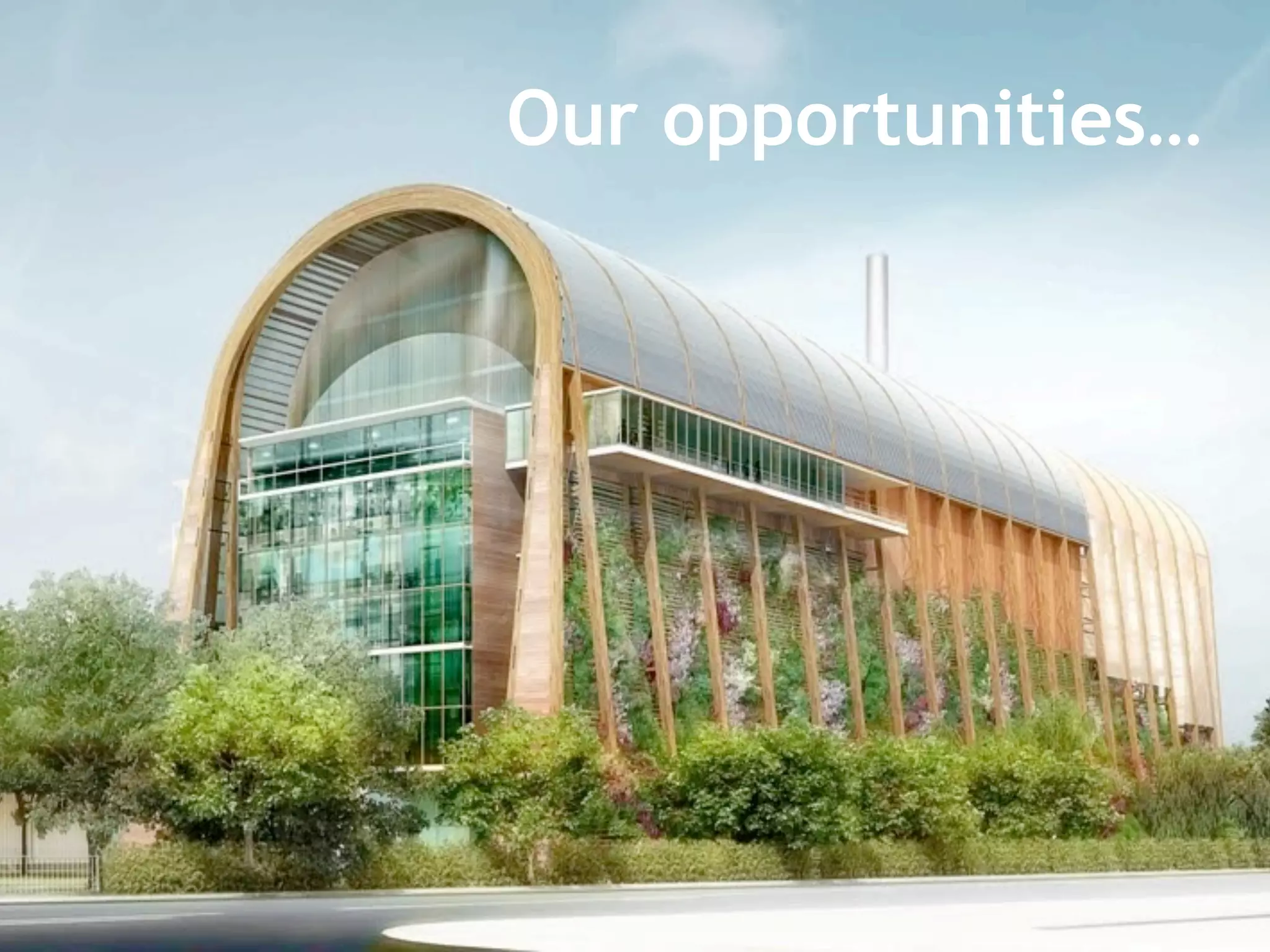
Our opportunities…
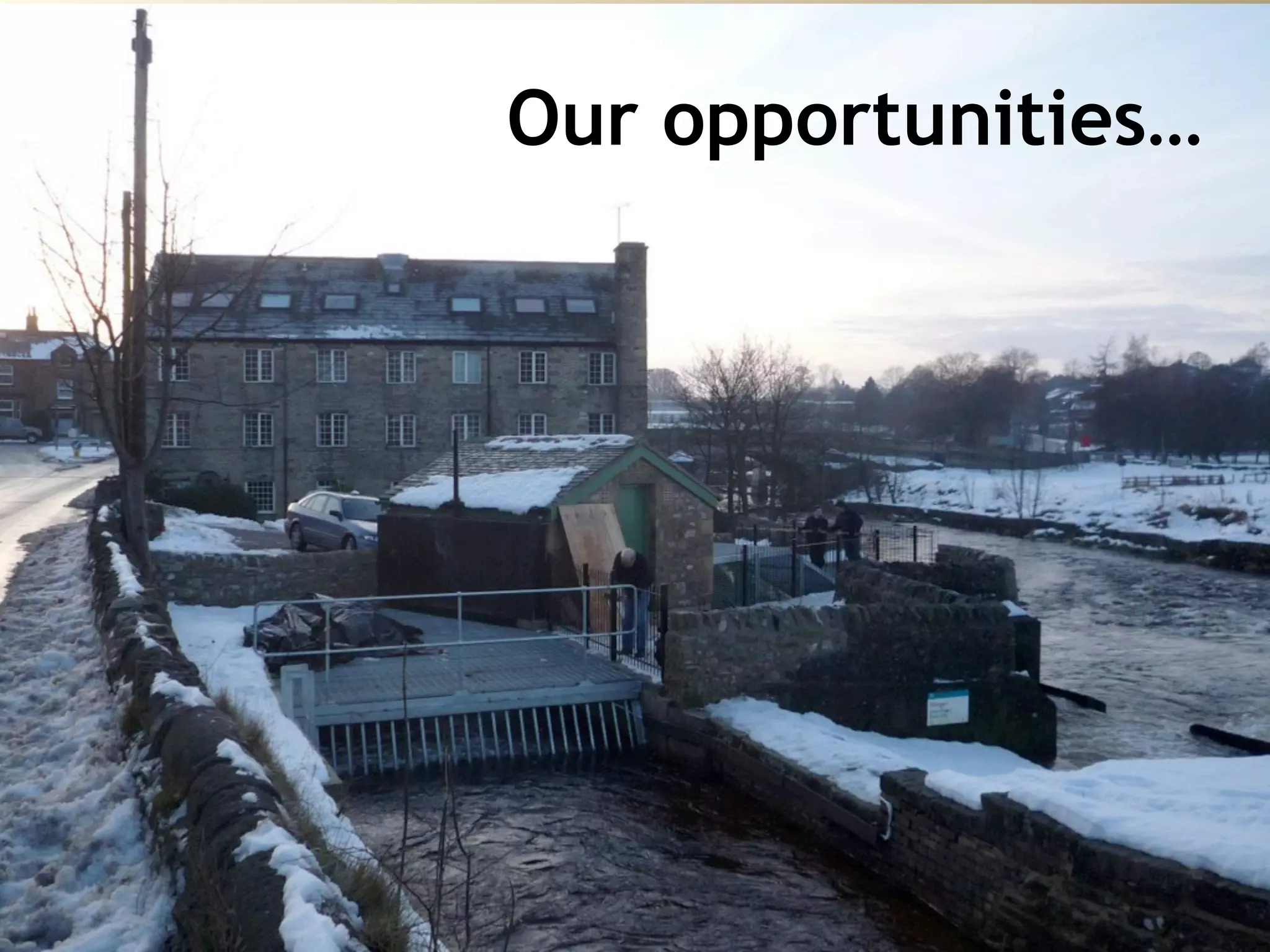
Our opportunities…
Our opportunities…
So, what do we want?...
• Fuel poverty eradicated?
• A resilient energy infrastructure for the
  future?
• A zero carbon energy infrastructure?
• A circular energy infrastructure?
• A decentralised energy infrastructure?
• Growth of a revolving income?
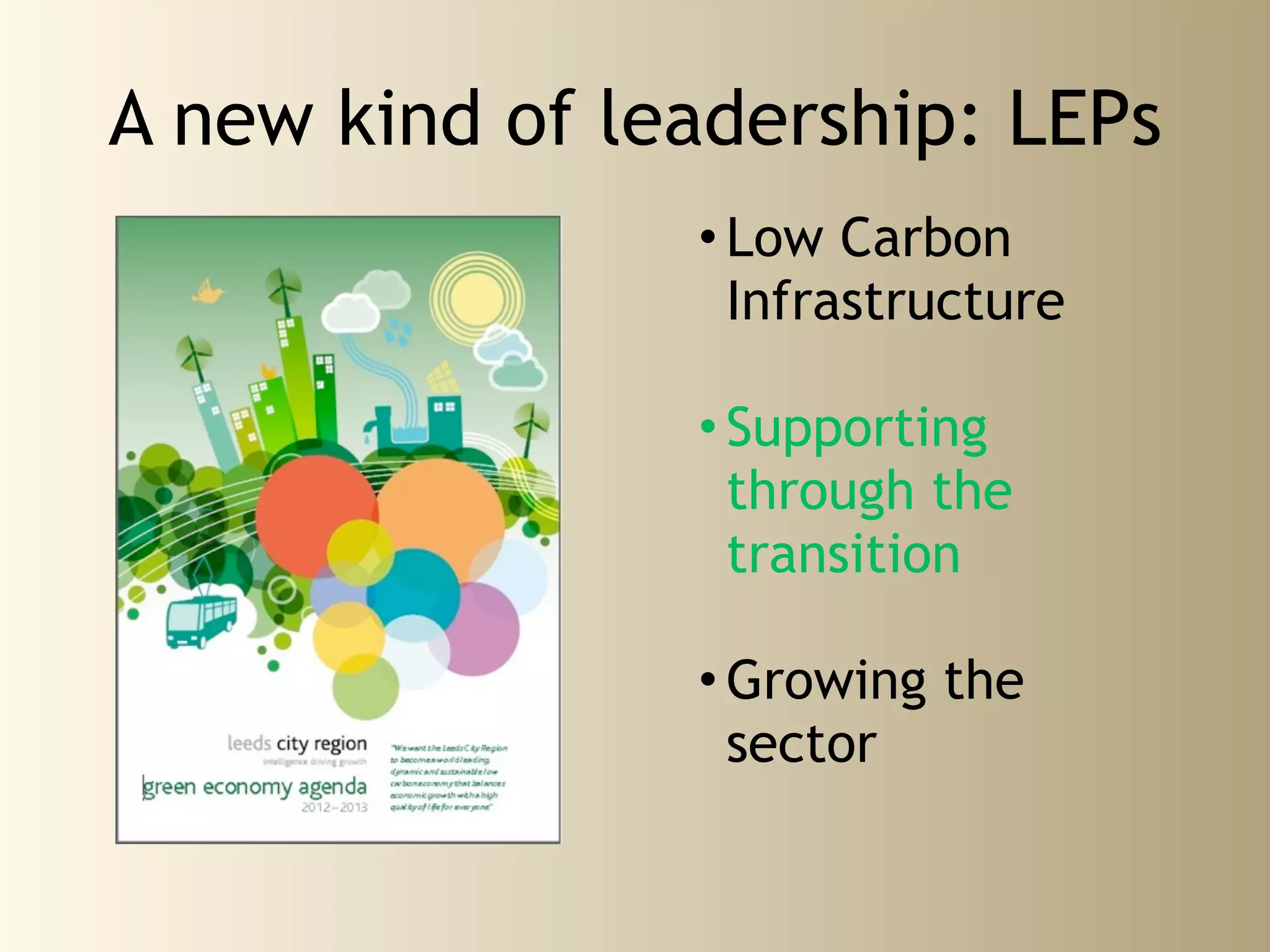
A new kind of leadership: LEPs
                • Low Carbon
                  Infrastructure

                • Supporting
                  through the
                  transition

                • Growing the
                  sector
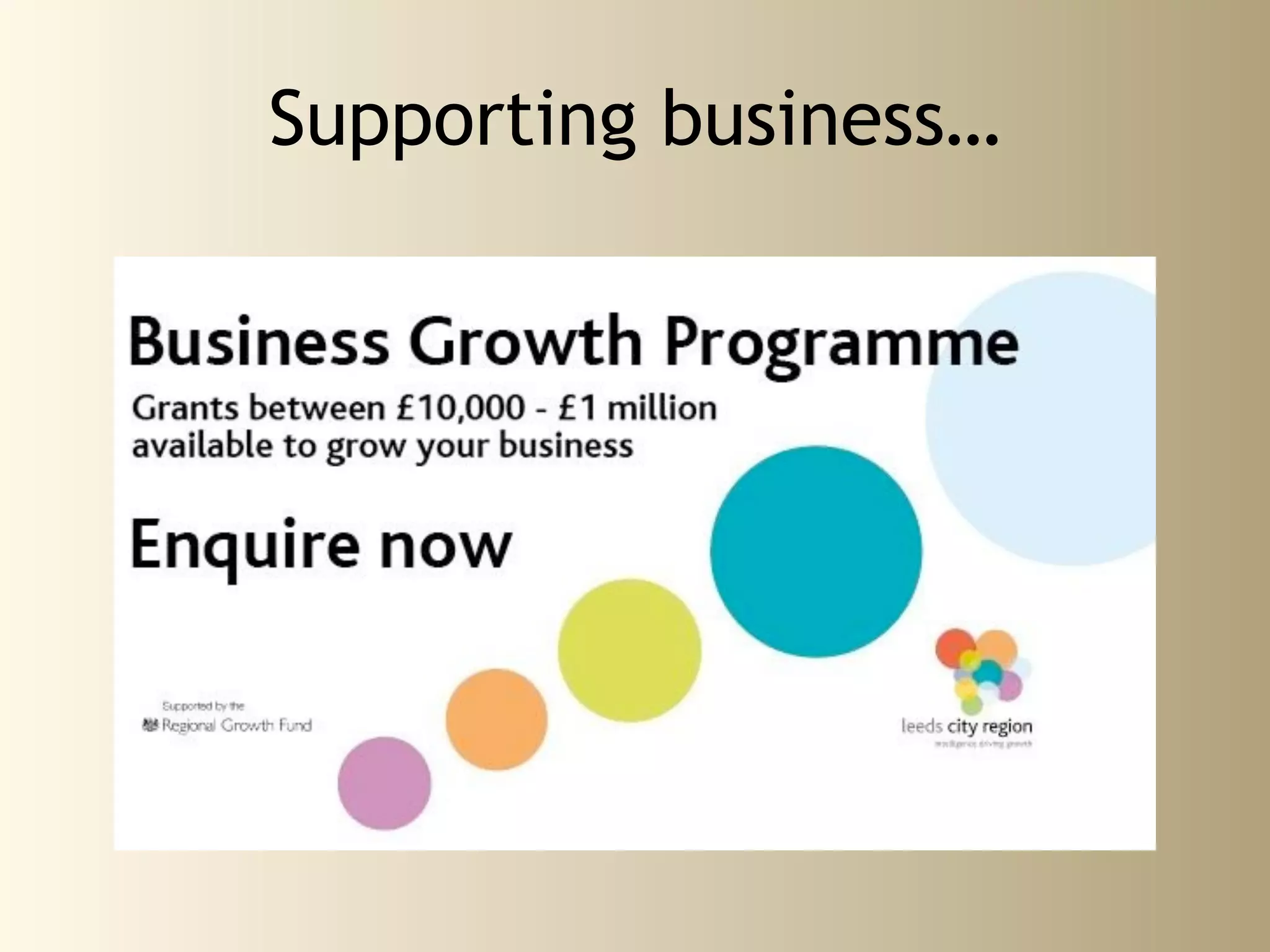
Supporting business…
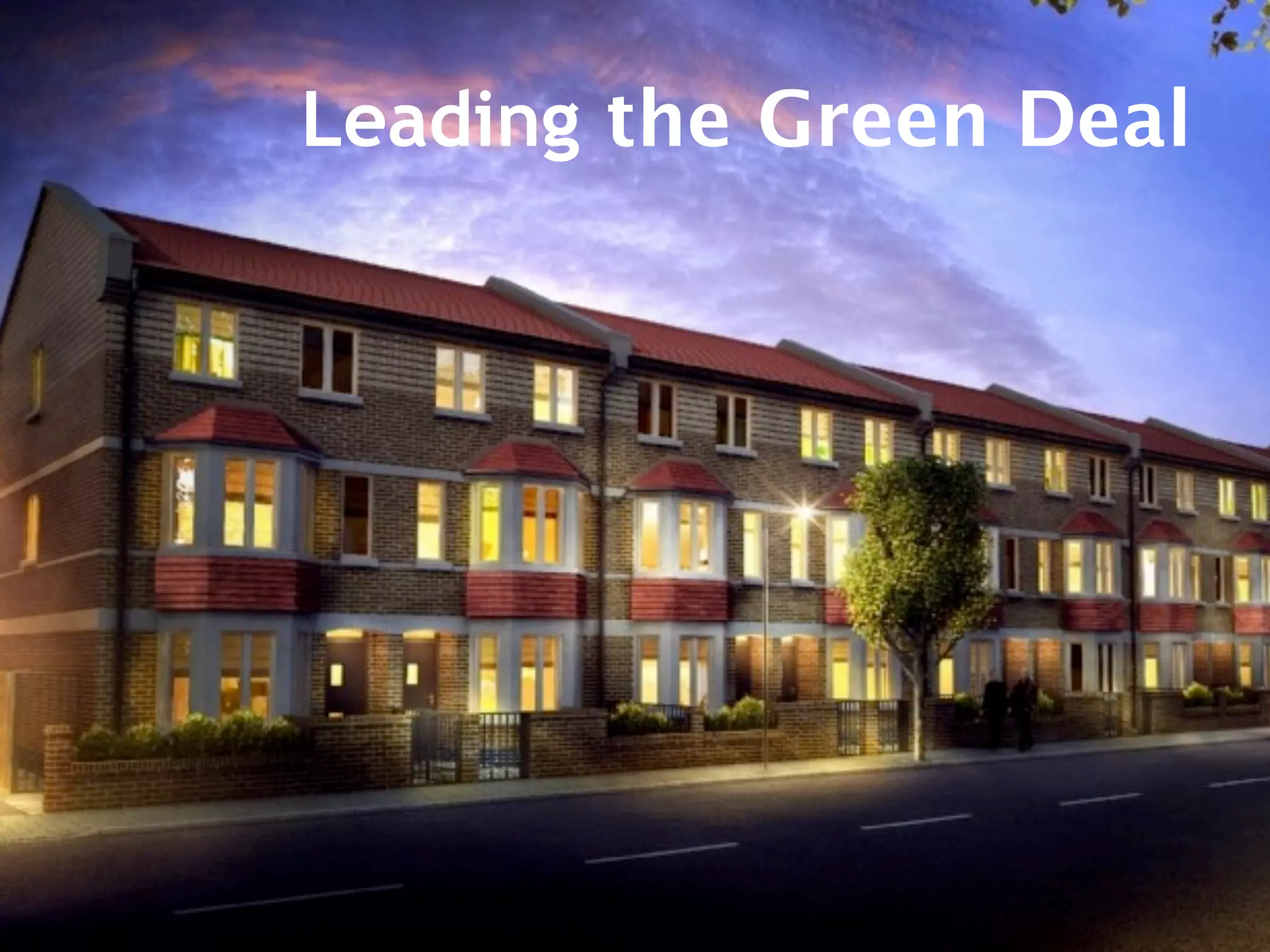
Leading the Green Deal
Consistent offer on commercial
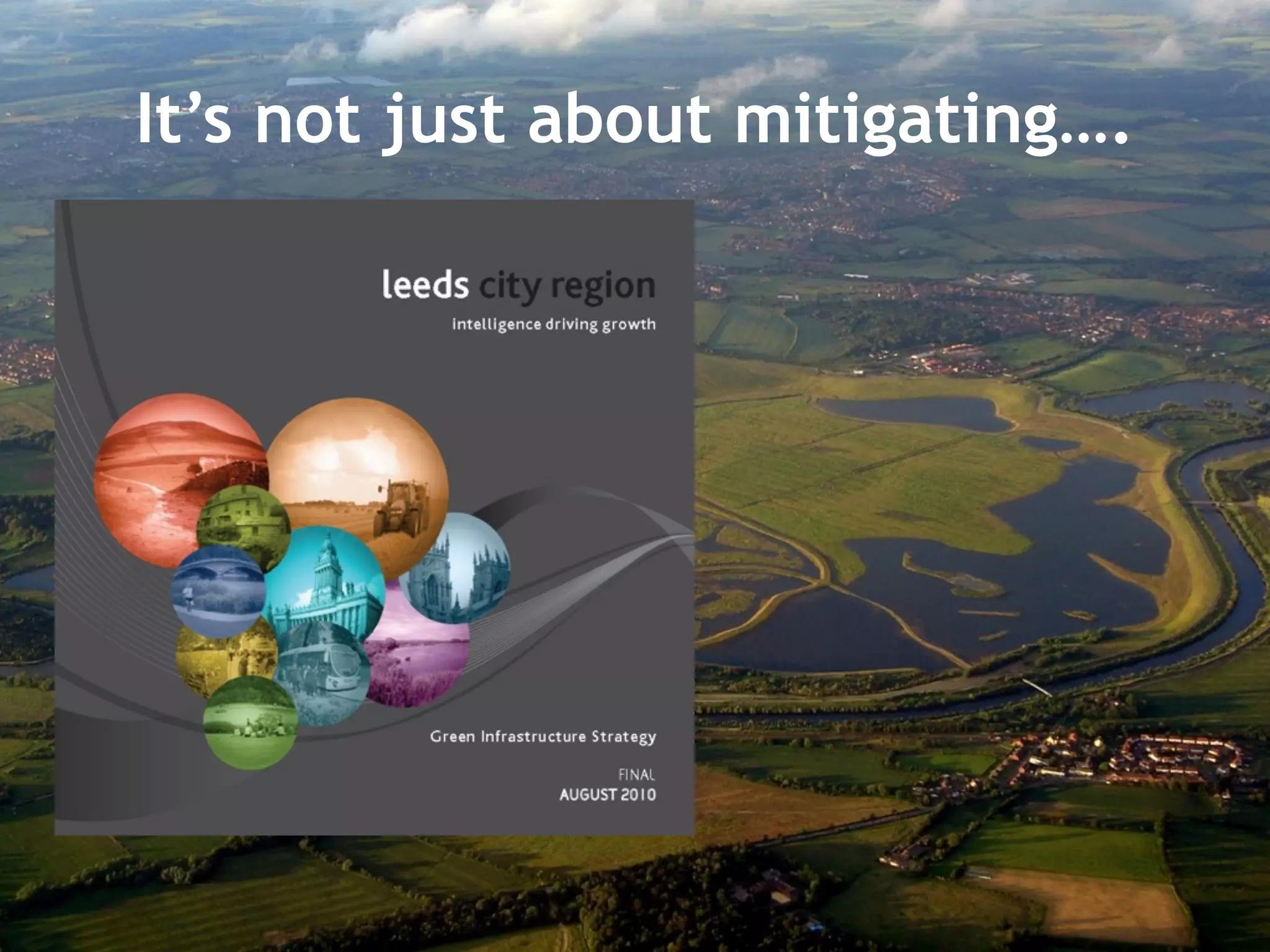
It’s not just about mitigating….
Melanie Taylor

    Green Economy Lead
Leeds City Region Partnership
melanie.taylor@leeds.gov.uk
Workshop Two.
Workshop format
Buildings        Sustainable Consumption
                 and Production
Energy
                 Culture
Transport
Green and Blue
Workshop format
1. Introduction   •What are group     •What barriers
                   members             need to be
2. Practitioner    currently doing     overcome to
Input              in this area?       achieve this?
3. Working        •What do they       •A consideration
together           feel inspired to    of the resources
                   do in addition?     available.
Wrap.
Thank you
Manchester: A Certain Future 2013 Conference

Manchester: A Certain Future 2013 Conference

  • 2.
  • 3.
  • 4.
  • 5.
    A word fromour sponsors
  • 7.
  • 8.
    Sir Richard Leese Leader,Manchester City Council
  • 9.
  • 11.
  • 12.
  • 13.
    Carbon trends 10,000 Carbon Dioxide Emissions (MtC) 8000 6000 4000 2000 1750 1800 1850 1900 1950 2000 (Graph adapted from Kevin Year Anderson/Tyndall Centre)
  • 14.
    Carbon Targets for2050 UK 80% EU 60-80% Bali 50%
  • 15.
    Cities hold thekey “The Top 20 cities in the UK are responsible for more than 20% of national carbon emissions and more than 20% of energy consumption, so local action by cities will be vital if we are to meet the UK national target of 80% reduction on 1990 levels by 2050.” RICS 2012
  • 16.
  • 18.
    Manchester: A CertainFuture •41% carbon reduction •Low carbon thinking by 2020, relative to embedded in our 2005 levels, and; operations and lifestyles.
  • 19.
    Greater Manchester Strategy Shiftto a low carbon economy for GM to establish long-term sustainable economic growth. At the same time as achieving a 48% reduction in CO2 emissions by 2020, from 1990 levels (40% from 2005). Approved in July 2011.
  • 20.
    How are wedoing? 7.4t 7.4t 7t 6.9t 6t 6.1t 2005 2006 2007 2008 2009 2010
  • 21.
    Plans & actionssince 2009 Action Plans Sector plans • Both universities • Retrofit Strategy (GM) • The Co-operative • EcoCities (adaptation strategy, GM) • Siemens • City Council • Green Infrastructure Plan (GM & Manchester) • Bruntwood • Energy Plan (GM) • Housing Associations • GMCCS Implementation Plan • Environmental Business (GM) Pledge + 60% in 3 years – over 1,800 businesses. • Low carbon hub/green economy
  • 23.
    Reasons to becheerful
  • 24.
  • 25.
  • 26.
  • 27.
    Since 2009, 32high schools and academies have completed capital projects under BSF and four new primary schools have been built.
  • 28.
    MMU carbon emissions downby 18.5% over 5 years
  • 29.
    Buildings NHS Commercial property •Carbon management plans •More work needed but and coordinated activities successful MACF offshoot through MACF NHS Group. event in 2012. •University Hospital South Manchester awarded Britain’s Greenest Hospital for reducing carbon emissions by 28% over 5 years.
  • 30.
    Buildings Exemplar buildings Green Deal •Two iconic buildings – one •Housing Associations and new build, one retrofit – Councils across GM have completing in 2013: the Co- developed a Housing Retrofit op’s NOMA and the Council’s Strategy and agreed the basis refurbished Town Hall of a GM Green Deal Extension and Central programme to launch in 2013. Library. •Also been given a ‘go early’ approval from government.
  • 31.
    Manchester Art Gallery- energy consumption of gallery lighting down by 60-70%.
  • 32.
    Midland Hotel -Engaging staff, guests and suppliers on sustainability. 10%+ year on year energy saving through new equipment. Green roof full of herbs! Waste Management is to get to 100% separation. www.qhotels.co.uk
  • 33.
  • 34.
    Co-operative Group CIS Tower- Europe’s largest vertical solar array.
  • 35.
  • 37.
    Energy Solar Photovoltaics Heat networks • Over 2,000 solar panel • Proposals around Town Hall; installations registered for the Corridor, and East Manchester. Feed-In-Tariff since April 2010. Energy centres and CHP Smart Grids & Meters • Low carbon energy centres, • Energy monitors in around 400 including NOMA. households and 100 businesses, public buildings Energy Plan and on loan from libraries. • High level plan completed for Greater Manchester in 2012.
  • 38.
  • 40.
    Transport Metrolink Cycling • New lines and stops, and new • City cycle centres, cycle training vehicles brought into service. and grants for employers and user groups. Green Buses Smart Ticketing • 200 ‘green’ buses (mainly hybrids) introduced since 2009. • Integrated smart ticketing will be introduced over next few Car journeys years starting with Metrolink • Number of car trips into city centre has fallen from 37% in 2006 to 28% in 2012.
  • 41.
    160 charging postsas part of Greater Manchester’s Plugged in Places programme.
  • 42.
  • 43.
    Manchester has moreGreen Red Rose Forest Flag parks than any other city in the UK.
  • 44.
    Green spaces Research Tree planting • EcoCities and GRABS projects. • Since 2009, more than 26,600 trees had been planted, GI policies including 26 new community orchards and fruit tree groves. • Incorporated into Council’s statutory Core Strategy Third Sector Planning Document. • Red Rose Forest and Baseline data Groundwork continue to green the city, from tree planting • Detailed baseline of all the city’s through to our first ‘Meanwhile’ G&B has now been established. food growing projects.
  • 45.
  • 47.
    Culture shift Manchester CarbonLiteracy Carbon budgets • A day’s ‘climate change’ training for • City Council has begun to use data all residents and employees, 50 from energy bills to allocate carbon pilot projects have been undertaken budgets to departments, embedding and MCL publicly launched. this as part of the organisation’s business planning process. Schools ‘Green’ events • 78 of the city’s 165 schools have been actively involved in the Eco- • The city to establish itself as an Schools programme. internationally recognised sustainable destination by 2020.
  • 48.
    Sustainable Food Food Futurespartnership Forgotten Fields (GM) • Growing Manchester, a Food • A collection of projects looking Baseline Study and exemplar at the region's food heritage. project at New Smithfield Markets. GM Land Army • A Low Carbon menu and audit • An army of volunteers to has been undertaken by support local organic growers Manchester Fayre. and farmers. • Meat Free Mondays and a Manchester Veg People (GM) further 20% reduction in Meat and Dairy in Primary Schools. • A new collective of local organic farmers & growers.
  • 49.
  • 51.
  • 53.
  • 54.
    Headline aims Save morethan 30,000 tonnes Increase knowledge, research of CO2 emissions from and delivery of renewable domestic properties by 2015 energy technologies; Double that target for the Understanding and planning period 2015 to 2017. of the city’s energy needs and opportunities; and Collaboration between building owners, occupants and energy Application of digital services companies to reduce technologies for energy emissions from community, management. public and community buildings by 5% per year.
  • 55.
    Headline aims To continuethe improvement Ensure the city’s green and of sustainable public transport blue infrastructure is providing services within and to and from optimal benefits to the city in the city, and to create a terms of quality of life, climate platform for substantial change adaptation, and wider increases in journeys on foot, social, economic and by bike and by electric vehicle environmental benefits. in the period 2016 to 2020. To increase the number of organisations who are actively engaged in sustainable consumption and production activity.
  • 56.
  • 60.
  • 61.
  • 62.
    Workshop format Buildings Sustainable Consumption and Production Energy Culture Transport Green and Blue
  • 63.
    Workshop format 1. Introduction •What are group •What barriers members need to be 2. Practitioner currently doing overcome to Input in this area? achieve this? 3. Working •What do they •A consideration together feel inspired to of the resources do in addition? available.
  • 64.
  • 66.
    Mark Knowles Head of Low Carbon at  Liverpool City Region Local Economic Partnership
  • 67.
    A Liverpool CityRegion Perspective Mark Knowles Head of Low Carbon Economy
  • 68.
    Thank you Manchester fromthe Liverpool City Region…
  • 69.
    From the streetsof Manchester….. ….Via Runcorn To the streets of Liverpool…..
  • 70.
    LCR Low Carbon: Samebut different….. Implementing national policies Exploiting our advantages oMarine Energy oH2Hub oSEAP oProject Viridis oPortCentric logistics oIFB:14
  • 71.
    Visitor Economy Knowledge Economy 100,000+ jobs Low Carbon Economy SuperPort
  • 72.
    £110 billion of investment expected in UK waters by 2020
  • 74.
    Offshore Wind Opportunity: For the LCR to act as the principal West Coast offshore wind manufacturing, installation, operating and maintenance centre serving the £18bn investment in the Irish Sea and wider UK and global offshore opportunities. Hundreds of jobs already created by Cammell Laird, RWE, DONG, Iberdrola and ABB in installing and servicing current offshore wind farms
  • 77.
    Tidal and WaveEnergy Opportunities: Power from the Mersey – The UK’s most advanced Tidal Energy Scheme - 700MW potential. UK Western Approaches – Most of Europe’s best wave energy locations with LCR universities and Cammell Laird already engaged Future opportunities for research, investment, manufacture, installation and maintenance
  • 78.
    Hydrogen Network Opportunities: Work underway to create one of Europe’s largest integrated H2 clusters focused on fuel cell vehicles and static power. Opportunity for the LCR to take a leading global position in the development of sustainable H2 production and applications. Development underway for a hydrogen supply network centred on Ineos Chlor in Runcorn including filling stations and H2 wells at The Heath and SciTech Daresbury
  • 79.
    Sustainable Energy Opportunity: Sustainable Energy Action Plan has identified over £500m of decentralised energy projects including heat networks across the City Region. Delivery of sustainable energy alongside £1bn investment by Scottish Power in the City Region’s energy infrastructure over the next 10 years will create a more robust energy system and several thousand jobs in construction operation and maintenance.
  • 80.
    Project Viridis Opportunity: Retrofitting - Roll-out of energy efficiency measures in existing properties stimulated by Green Deal and Energy Company Obligation (ECO) incentives – including heating systems, solid wall insulation, double glazing Microgeneration - photo voltaic and other renewable energy technologies to residential and commercial buildings using UK Government incentives Opportunities for renewable technology manufacturers, suppliers and installers
  • 85.
    Melanie Taylor Green EconomyLead Leeds City Region
  • 86.
    Melanie Taylor Green Economy Lead Leeds City Region Partnership melanie.taylor@leeds.gov.uk
  • 87.
    Leeds City Region– the place
  • 88.
    An energy An energy intensive intensive economy… economy…
  • 89.
    Reduce emissions 40% by 2020 Leeds CityRegion - a world class low carbon economy
  • 90.
    A new kindof leadership: LEPs “Urgent action is needed to rebuild local economies so that economic opportunities spread across the country. The solution needs to be local - we know that when councils and local business work hand in hand they can drive economic growth together and places can be transformed. By giving up central control we will put democratic accountability back into the local economy making it responsive to the needs of local business and local people.”
  • 91.
    A new kindof leadership: LEPs
  • 92.
    A new kindof leadership: LEPs • Low Carbon Infrastructure • Supporting through the transition • Growing the sector
  • 93.
    A new opportunityfor investment
  • 94.
  • 95.
  • 96.
  • 97.
  • 98.
    So, what dowe want?... • Fuel poverty eradicated? • A resilient energy infrastructure for the future? • A zero carbon energy infrastructure? • A circular energy infrastructure? • A decentralised energy infrastructure? • Growth of a revolving income?
  • 99.
    A new kindof leadership: LEPs • Low Carbon Infrastructure • Supporting through the transition • Growing the sector
  • 100.
  • 101.
  • 102.
  • 103.
    It’s not justabout mitigating….
  • 104.
    Melanie Taylor Green Economy Lead Leeds City Region Partnership melanie.taylor@leeds.gov.uk
  • 105.
  • 106.
    Workshop format Buildings Sustainable Consumption and Production Energy Culture Transport Green and Blue
  • 107.
    Workshop format 1. Introduction •What are group •What barriers members need to be 2. Practitioner currently doing overcome to Input in this area? achieve this? 3. Working •What do they •A consideration together feel inspired to of the resources do in addition? available.
  • 108.
  • 109.