Lumbar Degenerative
Spondylolisthesis
Dr. Prakash Paudel, MBBS, FCPS (Gold Medal 2016)
Dr. Prakash Paudel, MBBS (IOM), FCPS (PAK)
Neuroendoscopy Fellowship (Germany)
Associate Consultant Neurosurgeon
Nepal Mediciti, Saibu Lalitpur, Nepal
Jan 29, 2020@ Mediciti
Disclosure
• No conflict of interest
Outline:
Phylo - ontogenesis of spine
Recent literatures: controversies and confusion
Our experience with PLF
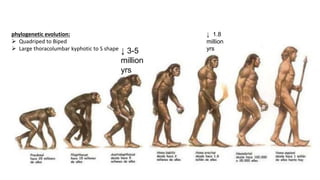
↓ 3-5
million
yrs
↓ 1.8
million
yrs
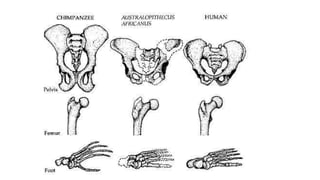
phylogenetic evolution:
 Quadriped to Biped
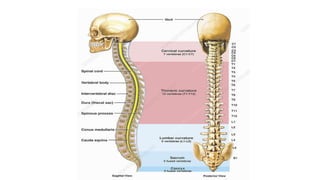
 Large thoracolumbar kyphotic to S shape
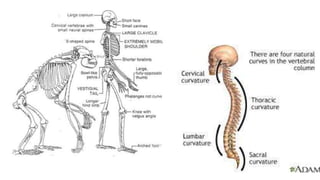
• spine has evolved as a hanging structure between the anterior and the
posterior parts of the body to S shaped elastic bar
• during development from quadruped to biped, the function of the
spine had to alter completely
• Adopt both static role (support) and dynamic role (of movement and
function) - this has serious consequences
• Significant addition of role without significant structural adaptation
• Except addition of compensatory lordosis to the lumbar spine
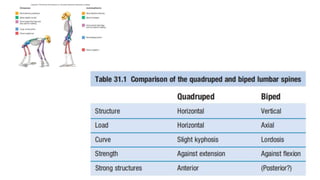
• quadruped spine has to resist extension
• In the upright position, the lumbar spine has to resist flexion,
• the spine is submitted to axial load, leads to the premature disc degeneration , leads to
human suffering
• The change to an upright position, however, has not yet been followed by anatomical
adaptation, and the human spine has an anatomy that more readily withstands extension
than flexion:
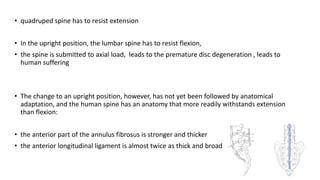
• the anterior part of the annulus fibrosus is stronger and thicker
• the anterior longitudinal ligament is almost twice as thick and broad
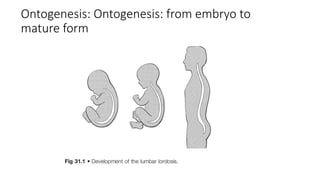
Ontogenesis: Ontogenesis: from embryo to
mature form
• In intrauterine life and first 5 months : spinal curves are absent
• only one slight kyphosis of the whole spine.
• At 13 months: lumbar spine is straight,
• at 3 years : some lumbar lordosis is present
• by 8 years: normal adult posture
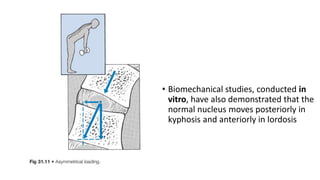
• Biomechanical studies, conducted in
vitro, have also demonstrated that the
normal nucleus moves posteriorly in
kyphosis and anteriorly in lordosis
Posterior elements are weakly developed to resist
flexion
• The posterior annular fibres are sparser and thinner than the anterior.
• diffusion is less posteriorly- less nutrition and mostly strained
• The posterior longitudinal ligament affords only weak reinforcement,
whereas the anterior fibres are strengthened by the powerful anterior
longitudinal ligament.
• the tangential tensile strain on the posterior annular fibres is 4–5
times the applied external load.
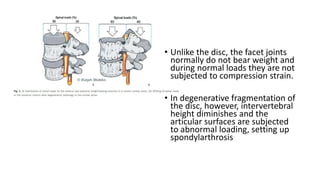
• Unlike the disc, the facet joints
normally do not bear weight and
during normal loads they are not
subjected to compression strain.
• In degenerative fragmentation of
the disc, however, intervertebral
height diminishes and the
articular surfaces are subjected
to abnormal loading, setting up
spondylarthrosis
• Ultimate aim is to protect posterior elements as it houses nerves
and cord and facets which main role is to facilitte movement because
of whcih we are homo sapiens sapiens: erect poster leads to use of
dextrous hand, horozotal vision and the mobility these defines and
distints us form other species
• to prevent early degeneration and internal derangementent, the erect body
has developed only one adequate defence system: namely, a slightly lordotic lumbar
posture.
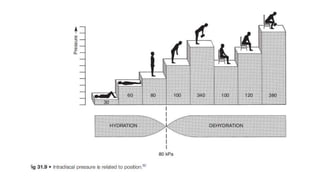
• This is the physiological lumbar lordosis, which diminishes the intradiscal
pressures and protects the disc against backward displacements of the nucleus
pulposus.
• ‘Keep your back hollow’ is still the best advice against recurrent discogenic
backache, even more so in recent decades because of the more sedentary jobs
many people have.
• A sitting position not only increases the intradiscal pressure but also forces the
lumbar spine into kyphosis by a backwards inclination of the sitting pelvis.
• it is good posture, rather than any ligamentous device, that protects
them against a posterior or posterolateral shift of the disc.
• Maintaining normal physiological lordosis is therefore important in
the prophylaxis of low back syndromes.
• Please check your posture NOW before I move forward......
Clinical consequences:
• Degenerative spine disease (DSD) is one of most common spine
pathology affecting up to 80% of the population at some point in their
life.
• It has an annual prevalence of 15% to 40% leading to disability in 1% to
2% of the population.
• Spinal stenosis and spondylolisthesis together affect up to 20% of the
U.S. population.
• Globally, an estimated 266 million people have LBP and DSD, amounting
to 3.63% of the world population and making spine disease one of the
most common medical conditions
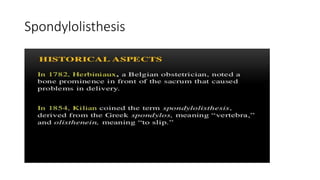
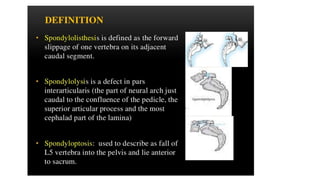
Spondylolisthesis
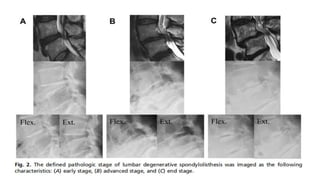
Degenerative Spondylolisthesis (DS)
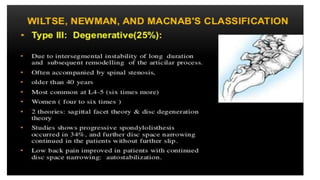
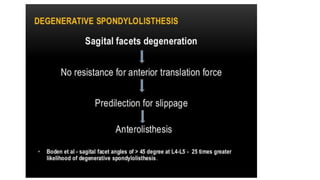
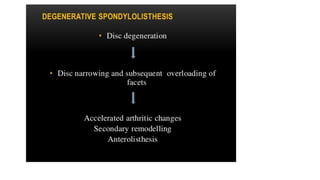
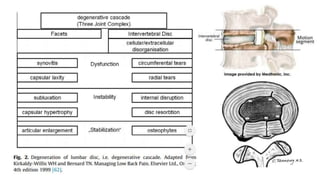
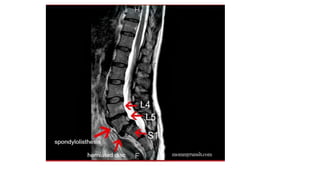
• DS : an acquired condition in which degenerative disc disease and
facet arthritis allow for forward slippage of a superior vertebra
relative to the lower one.
• Newman and Stone coined the term“degenerative spondylolisthesis”
in 1955
• suggested that slippage of the vertebrae with an intact neural arch
was the result of degenerative arthritis of the lumbar facet joints.
Etiology
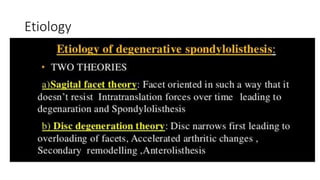
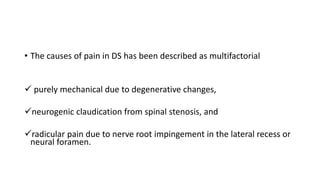
• The causes of pain in DS has been described as multifactorial
 purely mechanical due to degenerative changes,
neurogenic claudication from spinal stenosis, and
radicular pain due to nerve root impingement in the lateral recess or
neural foramen.
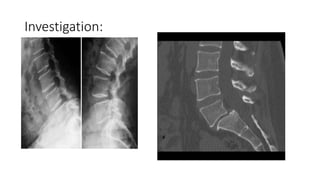
Investigation:
Management
• EBM: Decision Making process and choosing the right treatment
• SPORT Trial 2007, 2018
• SLIP trail 2016
• SSSS 2016
Conservative vs surgical management: SPORT Trial
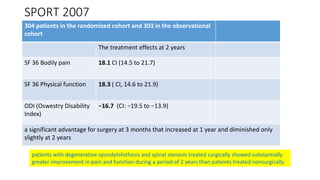
SPORT 2007
304 patients in the randomized cohort and 303 in the observational
cohort
The treatment effects at 2 years
SF 36 Bodily pain 18.1 CI (14.5 to 21.7)
SF 36 Physical function 18.3 ( CI, 14.6 to 21.9)
ODI (Oswestry Disability
Index)
−16.7 (CI: −19.5 to −13.9)
a significant advantage for surgery at 3 months that increased at 1 year and diminished only
slightly at 2 years
patients with degenerative spondylolisthesis and spinal stenosis treated surgically showed substantially
greater improvement in pain and function during a period of 2 years than patients treated nonsurgically
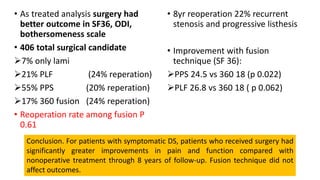
SPORT TRIAL 2018: N=607, 304 RCT, 303
observational cohort
• As treated analysis surgery had
better outcome in SF36, ODI,
bothersomeness scale
• 406 total surgical candidate
7% only lami
21% PLF (24% reperation)
55% PPS (20% reperation)
17% 360 fusion (24% reperation)
• Reoperation rate among fusion P
0.61
• 8yr reoperation 22% recurrent
stenosis and progressive listhesis
• Improvement with fusion
technique (SF 36):
PPS 24.5 vs 360 18 (p 0.022)
PLF 26.8 vs 360 18 ( p 0.062)
Conclusion. For patients with symptomatic DS, patients who received surgery had
significantly greater improvements in pain and function compared with
nonoperative treatment through 8 years of follow-up. Fusion technique did not
affect outcomes.
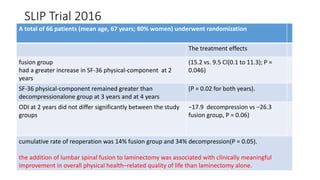
SLIP trial 2016 (Spinal Laminectomy vs Instrumented Pedical screw
fusion)
SLIP Trial 2016
A total of 66 patients (mean age, 67 years; 80% women) underwent randomization
The treatment effects
fusion group
had a greater increase in SF-36 physical-component at 2
years
(15.2 vs. 9.5 CI(0.1 to 11.3); P =
0.046)
SF-36 physical-component remained greater than
decompressionalone group at 3 years and at 4 years
(P = 0.02 for both years).
ODI at 2 years did not differ significantly between the study
groups
−17.9 decompression vs −26.3
fusion group, P = 0.06)
cumulative rate of reoperation was 14% fusion group and 34% decompression(P = 0.05).
the addition of lumbar spinal fusion to laminectomy was associated with clinically meaningful
improvement in overall physical health–related quality of life than laminectomy alone.
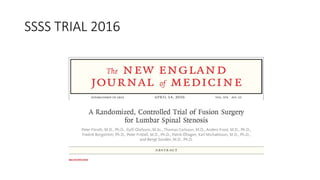
SSSS TRIAL 2016
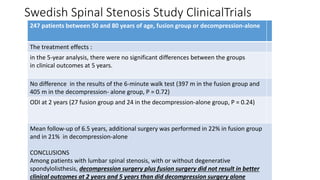
Swedish Spinal Stenosis Study ClinicalTrials
247 patients between 50 and 80 years of age, fusion group or decompression-alone
The treatment effects :
in the 5-year analysis, there were no significant differences between the groups
in clinical outcomes at 5 years.
No difference in the results of the 6-minute walk test (397 m in the fusion group and
405 m in the decompression- alone group, P = 0.72)
ODI at 2 years (27 fusion group and 24 in the decompression-alone group, P = 0.24)
Mean follow-up of 6.5 years, additional surgery was performed in 22% in fusion group
and in 21% in decompression-alone
CONCLUSIONS
Among patients with lumbar spinal stenosis, with or without degenerative
spondylolisthesis, decompression surgery plus fusion surgery did not result in better
clinical outcomes at 2 years and 5 years than did decompression surgery alone
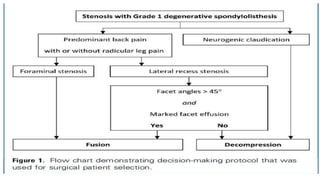
How to decide ? laminectomy alone or Fusion
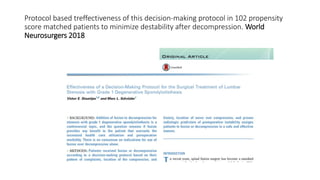
Protocol based treffectiveness of this decision-making protocol in 102 propensity
score matched patients to minimize destability after decompression. World
Neurosurgers 2018
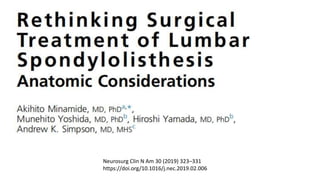
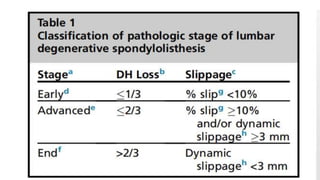
Neurosurg Clin N Am 30 (2019) 323–331
https://doi.org/10.1016/j.nec.2019.02.006
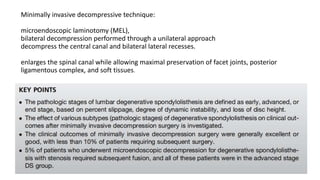
Minimally invasive decompressive technique:
microendoscopic laminotomy (MEL),
bilateral decompression performed through a unilateral approach
decompress the central canal and bilateral lateral recesses.
enlarges the spinal canal while allowing maximal preservation of facet joints, posterior
ligamentous complex, and soft tissues.
Our Surgical Expereince:
Materials and Methods
• Study Design and Patient Population
• A retrospective study was designed.
• A consecutive cohort of patients who had (PLF) surgery between
September 2017 and August 2019
• Exclusion:
• Patients whose files were incomplete,
• follow up period of less than three months and all other types of
spondylolisthesis were excluded.
Surgical indication
presence of one or more of the following:
an increase in translation of vertebral body on flexion-extension
lateral x-rays of lumbosacral spine,
incapacitating pain not responding to medical management,
neurological deficit and
grade II Spondylolisthesis
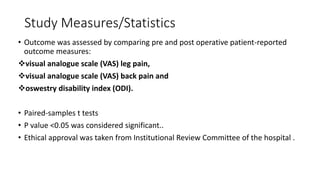
Study Measures/Statistics
• Outcome was assessed by comparing pre and post operative patient-reported
outcome measures:
visual analogue scale (VAS) leg pain,
visual analogue scale (VAS) back pain and
oswestry disability index (ODI).
• Paired-samples t tests
• P value <0.05 was considered significant..
• Ethical approval was taken from Institutional Review Committee of the hospital .
Patient Baseline Demographic and Clinical Characteristics, N=16
Age (mean ± SD) (y*) 58.8 ±10.5
Sex [n (%)]
Clinical symptomatology
Comorbidity
DOI
FU (Mean±SD) (m**)
F 13 (81.25)
M 3(18.75)
Back pain with caludication 11 (68.75)
Back pain with radiculopathy 5 (31.25)
DM 3 (18.75)
Bed ridden 3 (18.75)
Cushing disease 1(6.25)
(Mean±SD) (m**) 22.06±19.08
13.56±7.15
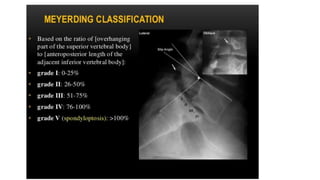
Mayerding grading
Mortality
Grade I 12 (75)
Grade II 4(25)
L4/5 10 (62.5)
L5/S1 6 (37.5)
1 (6.5)
3(18.75)
0
Note: *y: year,** m: month
Level of spondylolisthesis [n (%)]
Intraoperative complications [n (%)]
Postoperative complications [n (%)]
Dural tear
Wound dehiscence, superfificial infection
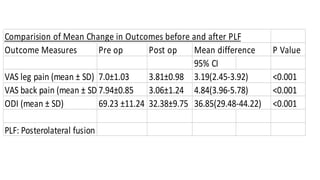
Comparision of Mean Change in Outcomes before and after PLF
Outcome Measures Pre op Post op Mean difference P Value
95% CI
VAS leg pain (mean ± SD)
VAS back pain (mean ± SD)
ODI (mean ± SD)
7.0±1.03 3.81±0.98 3.19(2.45-3.92) <0.001
7.94±0.85 3.06±1.24 4.84(3.96-5.78) <0.001
69.23 ±11.24 32.38±9.75 36.85(29.48-44.22) <0.001
PLF: Posterolateral fusion
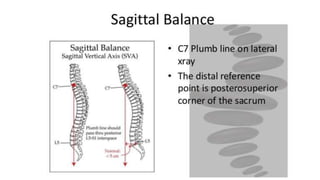
Before we fininsh....
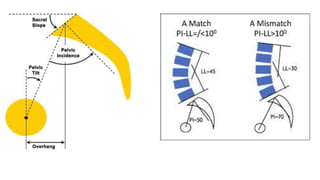
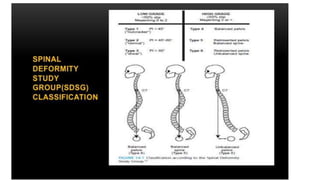
• Always conisder the SAGITTAL BALANCE in Spine
Thank you for listening

Lumbar degenerative spondylolisthesis

  • 1.
    Lumbar Degenerative Spondylolisthesis Dr. PrakashPaudel, MBBS, FCPS (Gold Medal 2016) Dr. Prakash Paudel, MBBS (IOM), FCPS (PAK) Neuroendoscopy Fellowship (Germany) Associate Consultant Neurosurgeon Nepal Mediciti, Saibu Lalitpur, Nepal Jan 29, 2020@ Mediciti
  • 2.
  • 3.
    Outline: Phylo - ontogenesisof spine Recent literatures: controversies and confusion Our experience with PLF
  • 5.
    ↓ 3-5 million yrs ↓ 1.8 million yrs phylogeneticevolution:  Quadriped to Biped  Large thoracolumbar kyphotic to S shape
  • 8.
    • spine hasevolved as a hanging structure between the anterior and the posterior parts of the body to S shaped elastic bar • during development from quadruped to biped, the function of the spine had to alter completely • Adopt both static role (support) and dynamic role (of movement and function) - this has serious consequences • Significant addition of role without significant structural adaptation • Except addition of compensatory lordosis to the lumbar spine
  • 9.
    • quadruped spinehas to resist extension • In the upright position, the lumbar spine has to resist flexion, • the spine is submitted to axial load, leads to the premature disc degeneration , leads to human suffering • The change to an upright position, however, has not yet been followed by anatomical adaptation, and the human spine has an anatomy that more readily withstands extension than flexion: • the anterior part of the annulus fibrosus is stronger and thicker • the anterior longitudinal ligament is almost twice as thick and broad
  • 11.
    Ontogenesis: Ontogenesis: fromembryo to mature form
  • 12.
    • In intrauterinelife and first 5 months : spinal curves are absent • only one slight kyphosis of the whole spine. • At 13 months: lumbar spine is straight, • at 3 years : some lumbar lordosis is present • by 8 years: normal adult posture
  • 14.
    • Biomechanical studies,conducted in vitro, have also demonstrated that the normal nucleus moves posteriorly in kyphosis and anteriorly in lordosis
  • 15.
    Posterior elements areweakly developed to resist flexion • The posterior annular fibres are sparser and thinner than the anterior. • diffusion is less posteriorly- less nutrition and mostly strained • The posterior longitudinal ligament affords only weak reinforcement, whereas the anterior fibres are strengthened by the powerful anterior longitudinal ligament. • the tangential tensile strain on the posterior annular fibres is 4–5 times the applied external load.
  • 16.
    • Unlike thedisc, the facet joints normally do not bear weight and during normal loads they are not subjected to compression strain. • In degenerative fragmentation of the disc, however, intervertebral height diminishes and the articular surfaces are subjected to abnormal loading, setting up spondylarthrosis
  • 17.
    • Ultimate aimis to protect posterior elements as it houses nerves and cord and facets which main role is to facilitte movement because of whcih we are homo sapiens sapiens: erect poster leads to use of dextrous hand, horozotal vision and the mobility these defines and distints us form other species
  • 18.
    • to preventearly degeneration and internal derangementent, the erect body has developed only one adequate defence system: namely, a slightly lordotic lumbar posture. • This is the physiological lumbar lordosis, which diminishes the intradiscal pressures and protects the disc against backward displacements of the nucleus pulposus. • ‘Keep your back hollow’ is still the best advice against recurrent discogenic backache, even more so in recent decades because of the more sedentary jobs many people have. • A sitting position not only increases the intradiscal pressure but also forces the lumbar spine into kyphosis by a backwards inclination of the sitting pelvis.
  • 20.
    • it isgood posture, rather than any ligamentous device, that protects them against a posterior or posterolateral shift of the disc. • Maintaining normal physiological lordosis is therefore important in the prophylaxis of low back syndromes.
  • 21.
    • Please checkyour posture NOW before I move forward......
  • 22.
    Clinical consequences: • Degenerativespine disease (DSD) is one of most common spine pathology affecting up to 80% of the population at some point in their life. • It has an annual prevalence of 15% to 40% leading to disability in 1% to 2% of the population. • Spinal stenosis and spondylolisthesis together affect up to 20% of the U.S. population. • Globally, an estimated 266 million people have LBP and DSD, amounting to 3.63% of the world population and making spine disease one of the most common medical conditions
  • 23.
  • 30.
    Degenerative Spondylolisthesis (DS) •DS : an acquired condition in which degenerative disc disease and facet arthritis allow for forward slippage of a superior vertebra relative to the lower one. • Newman and Stone coined the term“degenerative spondylolisthesis” in 1955 • suggested that slippage of the vertebrae with an intact neural arch was the result of degenerative arthritis of the lumbar facet joints.
  • 32.
  • 36.
    • The causesof pain in DS has been described as multifactorial  purely mechanical due to degenerative changes, neurogenic claudication from spinal stenosis, and radicular pain due to nerve root impingement in the lateral recess or neural foramen.
  • 38.
  • 40.
    Management • EBM: DecisionMaking process and choosing the right treatment • SPORT Trial 2007, 2018 • SLIP trail 2016 • SSSS 2016
  • 41.
    Conservative vs surgicalmanagement: SPORT Trial
  • 42.
    SPORT 2007 304 patientsin the randomized cohort and 303 in the observational cohort The treatment effects at 2 years SF 36 Bodily pain 18.1 CI (14.5 to 21.7) SF 36 Physical function 18.3 ( CI, 14.6 to 21.9) ODI (Oswestry Disability Index) −16.7 (CI: −19.5 to −13.9) a significant advantage for surgery at 3 months that increased at 1 year and diminished only slightly at 2 years patients with degenerative spondylolisthesis and spinal stenosis treated surgically showed substantially greater improvement in pain and function during a period of 2 years than patients treated nonsurgically
  • 43.
    SPORT TRIAL 2018:N=607, 304 RCT, 303 observational cohort
  • 44.
    • As treatedanalysis surgery had better outcome in SF36, ODI, bothersomeness scale • 406 total surgical candidate 7% only lami 21% PLF (24% reperation) 55% PPS (20% reperation) 17% 360 fusion (24% reperation) • Reoperation rate among fusion P 0.61 • 8yr reoperation 22% recurrent stenosis and progressive listhesis • Improvement with fusion technique (SF 36): PPS 24.5 vs 360 18 (p 0.022) PLF 26.8 vs 360 18 ( p 0.062) Conclusion. For patients with symptomatic DS, patients who received surgery had significantly greater improvements in pain and function compared with nonoperative treatment through 8 years of follow-up. Fusion technique did not affect outcomes.
  • 45.
    SLIP trial 2016(Spinal Laminectomy vs Instrumented Pedical screw fusion)
  • 46.
    SLIP Trial 2016 Atotal of 66 patients (mean age, 67 years; 80% women) underwent randomization The treatment effects fusion group had a greater increase in SF-36 physical-component at 2 years (15.2 vs. 9.5 CI(0.1 to 11.3); P = 0.046) SF-36 physical-component remained greater than decompressionalone group at 3 years and at 4 years (P = 0.02 for both years). ODI at 2 years did not differ significantly between the study groups −17.9 decompression vs −26.3 fusion group, P = 0.06) cumulative rate of reoperation was 14% fusion group and 34% decompression(P = 0.05). the addition of lumbar spinal fusion to laminectomy was associated with clinically meaningful improvement in overall physical health–related quality of life than laminectomy alone.
  • 47.
  • 48.
    Swedish Spinal StenosisStudy ClinicalTrials 247 patients between 50 and 80 years of age, fusion group or decompression-alone The treatment effects : in the 5-year analysis, there were no significant differences between the groups in clinical outcomes at 5 years. No difference in the results of the 6-minute walk test (397 m in the fusion group and 405 m in the decompression- alone group, P = 0.72) ODI at 2 years (27 fusion group and 24 in the decompression-alone group, P = 0.24) Mean follow-up of 6.5 years, additional surgery was performed in 22% in fusion group and in 21% in decompression-alone CONCLUSIONS Among patients with lumbar spinal stenosis, with or without degenerative spondylolisthesis, decompression surgery plus fusion surgery did not result in better clinical outcomes at 2 years and 5 years than did decompression surgery alone
  • 49.
    How to decide? laminectomy alone or Fusion
  • 50.
    Protocol based treffectivenessof this decision-making protocol in 102 propensity score matched patients to minimize destability after decompression. World Neurosurgers 2018
  • 52.
    Neurosurg Clin NAm 30 (2019) 323–331 https://doi.org/10.1016/j.nec.2019.02.006
  • 55.
    Minimally invasive decompressivetechnique: microendoscopic laminotomy (MEL), bilateral decompression performed through a unilateral approach decompress the central canal and bilateral lateral recesses. enlarges the spinal canal while allowing maximal preservation of facet joints, posterior ligamentous complex, and soft tissues.
  • 56.
  • 57.
    Materials and Methods •Study Design and Patient Population • A retrospective study was designed. • A consecutive cohort of patients who had (PLF) surgery between September 2017 and August 2019 • Exclusion: • Patients whose files were incomplete, • follow up period of less than three months and all other types of spondylolisthesis were excluded.
  • 58.
    Surgical indication presence ofone or more of the following: an increase in translation of vertebral body on flexion-extension lateral x-rays of lumbosacral spine, incapacitating pain not responding to medical management, neurological deficit and grade II Spondylolisthesis
  • 59.
    Study Measures/Statistics • Outcomewas assessed by comparing pre and post operative patient-reported outcome measures: visual analogue scale (VAS) leg pain, visual analogue scale (VAS) back pain and oswestry disability index (ODI). • Paired-samples t tests • P value <0.05 was considered significant.. • Ethical approval was taken from Institutional Review Committee of the hospital .
  • 60.
    Patient Baseline Demographicand Clinical Characteristics, N=16 Age (mean ± SD) (y*) 58.8 ±10.5 Sex [n (%)] Clinical symptomatology Comorbidity DOI FU (Mean±SD) (m**) F 13 (81.25) M 3(18.75) Back pain with caludication 11 (68.75) Back pain with radiculopathy 5 (31.25) DM 3 (18.75) Bed ridden 3 (18.75) Cushing disease 1(6.25) (Mean±SD) (m**) 22.06±19.08 13.56±7.15
  • 61.
    Mayerding grading Mortality Grade I12 (75) Grade II 4(25) L4/5 10 (62.5) L5/S1 6 (37.5) 1 (6.5) 3(18.75) 0 Note: *y: year,** m: month Level of spondylolisthesis [n (%)] Intraoperative complications [n (%)] Postoperative complications [n (%)] Dural tear Wound dehiscence, superfificial infection
  • 62.
    Comparision of MeanChange in Outcomes before and after PLF Outcome Measures Pre op Post op Mean difference P Value 95% CI VAS leg pain (mean ± SD) VAS back pain (mean ± SD) ODI (mean ± SD) 7.0±1.03 3.81±0.98 3.19(2.45-3.92) <0.001 7.94±0.85 3.06±1.24 4.84(3.96-5.78) <0.001 69.23 ±11.24 32.38±9.75 36.85(29.48-44.22) <0.001 PLF: Posterolateral fusion
  • 63.
    Before we fininsh.... •Always conisder the SAGITTAL BALANCE in Spine
  • 67.
    Thank you forlistening