LQAS
Lot Quality Assurance Sampling

  Fundaments and experience in EGPAF Uganda Program
                                            April 2012
                             Juan Seclen, M.D., MHPM
Origins of LQAS

• LQAS first used in the Manufacturing Industry in 1920s
• Used as a quality control method in the 1920s
   o To assess quality of batches (Lots)
   o The Lot would either be rejected or passed based on a predetermined
     criteria
• LQAS adapted in public health in mid 1980s
   – Stroh 1985, Valadez 1986 and 1991, Lwanga and Lemeshow 1991
Terminologies from Manufacturing to Public Health


• LQAS Terminology adapted into public health
   o Production Standard = Coverage target for intervention
   o Production unit = Catchment area / District
   o Lot = Community / Supervisor’s area of supervision
Fundaments of LQAS

• LQAS is used for the monitoring of programme coverage indicators,
based on a stratified simple random sample of a small number of
geographical units per stratum, also called a ‘lot’.
• It is seen as a good alternative to more complex and often more
costly sampling techniques.
• The method is particularly suitable for frequently conducted
monitoring surveys on programme coverage and other performance
indicators in settings that do not require a high level of statistical
precision.
• LQAS tests whether a given threshold value is achieved or not,
rather than producing estimates for an indicator, although different
‘lots’ can be combined in order to estimate overall programme
performance in terms of coverage.
Fundaments of LQAS
Lot = Supervision Area
Fundaments of LQAS
Fundaments of LQAS
LQAS: dichotomy - 19
Lot Quality Assurance Sampling
 in general small (19) RANDOM sample for acceptable precision of
   at least 92% on “dichotomic” conclusions

        For example, what LQAS can: just by sampling 19 farmers or
        mothers in a targeted population, at least 92% of the time LQAS
        will determine correctly whether yes or no the targeted farmers
        have adopted the soil preparation techniques, or whether a
        certain target coverage of exclusive breastfeeding is reached in a
        beneficiary population


    LQAS cannot be used for coverage estimates in lot!
    Only if it’s above/below target  Decision Rule
Applications of LQAS
• LQAS has been used in various areas such as:
     Proportion of target population what received an intervention
     Assessing immunization coverage
     Assessing compliance with health policy and guidelines (patience
      screening practices)
     Post disasters assessment
     Women’s health
     Growth and Nutrition
     Diarrheal disease control
     Quality management
     Neonatal tetanus mortality
     HIV/AIDS and STIs (for example, % of population that knows a risk
    related behavior)
LQAS in Uganda
•   Trypanosomiasis in Terego County; 1996
•   HIV/AIDS, STI and TB
     o World Bank, UACP project (30 districts) (HIV/AIDS, TB);
•   HIV/AIDS, TB, Education
     o UPHOLD (2003-2007), (29 districts)
•   HIV, TB and Malaria
     o NUMAT (2006, 2008) (9 Districts)
•   Education
     o UNICEF (2006) (13 districts)
     o CSOs e.g. Family life Education program (2005)
•   Other Health
     o Health Partners – Uganda Health Cooperative (Bushenyi)
•   HIV/AIDS, TB, Education
     – STAR EC (2009) (6 districts)
•   HIV/AIDS, TB, Malaria
     – STAR E (2009) (4 districts)
•   STAR-SW Project
     o Focus in South West Region (2010 onwards) 12 districts
LQAS in STAR-SW Project

• One commitment of this Project is institutionalizing LQAS at
district health level
• Conducted annually since 2010
• Collect information from community level (households)
• Random sample-based study
• Lot = Districts
• Focuses on measuring:
    • PMTCT/HCT
    • STI
    • HIV knowledge and sexual behavior
    • TB
    • Malaria
    • Reproductive health
    • Sanitation, hygiene, and feeding
LQAS study cover all STAR-SW Project’s districts

                                                             STAR-SW DISTRICTS


                                                                         IBANDA


                                                                                  KIRUHURA
                                              RUBIRIZI
                                                              BUHWEJU


                                                          BUSHENYI


                                                  MITO OMA
                                                               SHEEMA


                                              RUKUNGIRI
                                                                                     ISINGIRO
                                     KANUNGU                 NTUNG AMO


                                                  KABALE
                                     KISORO
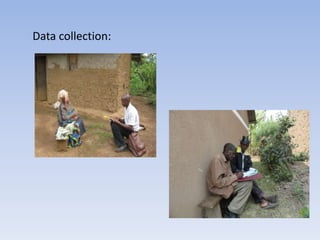
Data collection:
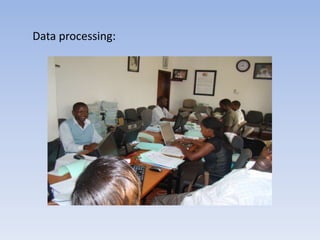
Data processing:
Results of Indicators aggregated at STAR-SW catchment area


           Indicators              Youth (15-24      Men (15-54         Women (15-49      Mothers of
                                      years)         years)               years)         Children 0-11
                                                                                            Months
Percentage of individuals             n=1,237            n=1,237            n=1,237         n=1,237
identifying at least 2 ways of    74.5 (72.1-76.9)    78 (75.7-80.3)    78.8 (76.5-81.1) 80.8 (78.6-
preventing sexual transmission                                                           83.1)
of HIV
Percentage of individuals who         n=1,237            n=1,237            n=1,237         n=1,237
reject all misconceptions about   45.8 (43.0-48.6)   49.7 (46.9-52.5)   43.2 (40.5-46.1)   43.8 (41.1-
HIV transmission                                                                              46.6)
Percentage of individuals who         n=1,237            n=1,237            n=1,237         n=1,237
both correctly identify ways of   32.3 (29.6-34.9)   36.1 (33.4-38.8)   31.7 (29.2-34.4)   33.3 (30.7-
preventing the sexual                                                                         35.9)
transmission of HIV and reject
major misconceptions about
HIV transmission
Result by STAR-SW districts


Performance       Buhw Bush     Iband Isingir Kabal Kanu Kisoro Mito Ntunga Rubiri        Rukun    Shee
indicator          eju enyi        a     o      e     ngu   n=114    ma    mo      zi      giri     ma
                  n=96 n=95      n=11 n=95 n=133 n=95               n=95 n=114 n=96       n=95     n=95
                                  4
Percentage of      65.6 93.7 75.4       73.7   88.0   81.1   93.9   93.7   83.3   92.7     82.1     87.4
mothers of        (55.2- (86.8- (66.5- (63.6- (81.2- (71.7- (87.8- (86.8- (75.2- (85.5-   (72.9-   (79.0-
children (0-11    75.0) 97.6) 83.0) 82.1) 92.9) 88.3) 97.4) 97.6) 89.6)           96.9)    89.2)    93.2)
months) who
were counselled
and received an
HIV test during
the last
pregnancy and
know their
results
Uses of LQAS findings in STAR-SW Project:

• Program improvement: A current challenge
• Dissemination of results:
• Documentation: Official reports to MOH, district reports,
abstracts
Sex Transm Infect. 2010 Feb;86 Suppl 1:i56-61.
Lot quality assurance sampling for monitoring coverage and quality of a targeted condom social
marketing program in traditional and non-traditional outlets in India.
Piot B, Mukherjee A, Navin D, Krishnan N, Bhardwaj A, Sharma V, Marjara P.
Source
Population Services International, Research & Metrics Department, Washington, DC, USA.
Abstract
OBJECTIVES:
This study reports on the results of a large-scale targeted condom social marketing campaign in and
around areas where female sex workers are present. The paper also describes the method that was used
for the routine monitoring of condom availability in these sites.
METHODS:
The lot quality assurance sampling (LQAS) method was used for the assessment of the geographical
coverage and quality of coverage of condoms in target areas in four states and along selected national
highways in India, as part of Avahan, the India AIDS initiative.
RESULTS:
A significant general increase in condom availability was observed in the intervention area between 2005
and 2008. High coverage rates were gradually achieved through an extensive network of pharmacies and
particularly of non-traditional outlets, whereas traditional outlets were instrumental in providing large
volumes of condoms.
CONCLUSION:
LQAS is seen as a valuable tool for the routine monitoring of the geographical coverage and of the quality
of delivery systems of condoms and of health products and services in general. With a relatively small
sample size, easy data collection procedures and simple analytical methods, it was possible to inform
decision-makers regularly on progress towards coverage targets.
LQAS 2011

LQAS 2011

  • 1.
    LQAS Lot Quality AssuranceSampling Fundaments and experience in EGPAF Uganda Program April 2012 Juan Seclen, M.D., MHPM
  • 2.
    Origins of LQAS •LQAS first used in the Manufacturing Industry in 1920s • Used as a quality control method in the 1920s o To assess quality of batches (Lots) o The Lot would either be rejected or passed based on a predetermined criteria • LQAS adapted in public health in mid 1980s – Stroh 1985, Valadez 1986 and 1991, Lwanga and Lemeshow 1991
  • 3.
    Terminologies from Manufacturingto Public Health • LQAS Terminology adapted into public health o Production Standard = Coverage target for intervention o Production unit = Catchment area / District o Lot = Community / Supervisor’s area of supervision
  • 4.
    Fundaments of LQAS •LQAS is used for the monitoring of programme coverage indicators, based on a stratified simple random sample of a small number of geographical units per stratum, also called a ‘lot’. • It is seen as a good alternative to more complex and often more costly sampling techniques. • The method is particularly suitable for frequently conducted monitoring surveys on programme coverage and other performance indicators in settings that do not require a high level of statistical precision. • LQAS tests whether a given threshold value is achieved or not, rather than producing estimates for an indicator, although different ‘lots’ can be combined in order to estimate overall programme performance in terms of coverage.
  • 5.
    Fundaments of LQAS Lot= Supervision Area
  • 6.
  • 7.
    Fundaments of LQAS LQAS:dichotomy - 19 Lot Quality Assurance Sampling  in general small (19) RANDOM sample for acceptable precision of at least 92% on “dichotomic” conclusions For example, what LQAS can: just by sampling 19 farmers or mothers in a targeted population, at least 92% of the time LQAS will determine correctly whether yes or no the targeted farmers have adopted the soil preparation techniques, or whether a certain target coverage of exclusive breastfeeding is reached in a beneficiary population  LQAS cannot be used for coverage estimates in lot!  Only if it’s above/below target  Decision Rule
  • 8.
    Applications of LQAS •LQAS has been used in various areas such as:  Proportion of target population what received an intervention  Assessing immunization coverage  Assessing compliance with health policy and guidelines (patience screening practices)  Post disasters assessment  Women’s health  Growth and Nutrition  Diarrheal disease control  Quality management  Neonatal tetanus mortality  HIV/AIDS and STIs (for example, % of population that knows a risk related behavior)
  • 9.
    LQAS in Uganda • Trypanosomiasis in Terego County; 1996 • HIV/AIDS, STI and TB o World Bank, UACP project (30 districts) (HIV/AIDS, TB); • HIV/AIDS, TB, Education o UPHOLD (2003-2007), (29 districts) • HIV, TB and Malaria o NUMAT (2006, 2008) (9 Districts) • Education o UNICEF (2006) (13 districts) o CSOs e.g. Family life Education program (2005) • Other Health o Health Partners – Uganda Health Cooperative (Bushenyi) • HIV/AIDS, TB, Education – STAR EC (2009) (6 districts) • HIV/AIDS, TB, Malaria – STAR E (2009) (4 districts) • STAR-SW Project o Focus in South West Region (2010 onwards) 12 districts
  • 10.
    LQAS in STAR-SWProject • One commitment of this Project is institutionalizing LQAS at district health level • Conducted annually since 2010 • Collect information from community level (households) • Random sample-based study • Lot = Districts • Focuses on measuring: • PMTCT/HCT • STI • HIV knowledge and sexual behavior • TB • Malaria • Reproductive health • Sanitation, hygiene, and feeding
  • 11.
    LQAS study coverall STAR-SW Project’s districts STAR-SW DISTRICTS IBANDA KIRUHURA RUBIRIZI BUHWEJU BUSHENYI MITO OMA SHEEMA RUKUNGIRI ISINGIRO KANUNGU NTUNG AMO KABALE KISORO
  • 13.
  • 14.
  • 15.
    Results of Indicatorsaggregated at STAR-SW catchment area Indicators Youth (15-24 Men (15-54 Women (15-49 Mothers of years) years) years) Children 0-11 Months Percentage of individuals n=1,237 n=1,237 n=1,237 n=1,237 identifying at least 2 ways of 74.5 (72.1-76.9) 78 (75.7-80.3) 78.8 (76.5-81.1) 80.8 (78.6- preventing sexual transmission 83.1) of HIV Percentage of individuals who n=1,237 n=1,237 n=1,237 n=1,237 reject all misconceptions about 45.8 (43.0-48.6) 49.7 (46.9-52.5) 43.2 (40.5-46.1) 43.8 (41.1- HIV transmission 46.6) Percentage of individuals who n=1,237 n=1,237 n=1,237 n=1,237 both correctly identify ways of 32.3 (29.6-34.9) 36.1 (33.4-38.8) 31.7 (29.2-34.4) 33.3 (30.7- preventing the sexual 35.9) transmission of HIV and reject major misconceptions about HIV transmission
  • 16.
    Result by STAR-SWdistricts Performance Buhw Bush Iband Isingir Kabal Kanu Kisoro Mito Ntunga Rubiri Rukun Shee indicator eju enyi a o e ngu n=114 ma mo zi giri ma n=96 n=95 n=11 n=95 n=133 n=95 n=95 n=114 n=96 n=95 n=95 4 Percentage of 65.6 93.7 75.4 73.7 88.0 81.1 93.9 93.7 83.3 92.7 82.1 87.4 mothers of (55.2- (86.8- (66.5- (63.6- (81.2- (71.7- (87.8- (86.8- (75.2- (85.5- (72.9- (79.0- children (0-11 75.0) 97.6) 83.0) 82.1) 92.9) 88.3) 97.4) 97.6) 89.6) 96.9) 89.2) 93.2) months) who were counselled and received an HIV test during the last pregnancy and know their results
  • 17.
    Uses of LQASfindings in STAR-SW Project: • Program improvement: A current challenge • Dissemination of results: • Documentation: Official reports to MOH, district reports, abstracts
  • 18.
    Sex Transm Infect.2010 Feb;86 Suppl 1:i56-61. Lot quality assurance sampling for monitoring coverage and quality of a targeted condom social marketing program in traditional and non-traditional outlets in India. Piot B, Mukherjee A, Navin D, Krishnan N, Bhardwaj A, Sharma V, Marjara P. Source Population Services International, Research & Metrics Department, Washington, DC, USA. Abstract OBJECTIVES: This study reports on the results of a large-scale targeted condom social marketing campaign in and around areas where female sex workers are present. The paper also describes the method that was used for the routine monitoring of condom availability in these sites. METHODS: The lot quality assurance sampling (LQAS) method was used for the assessment of the geographical coverage and quality of coverage of condoms in target areas in four states and along selected national highways in India, as part of Avahan, the India AIDS initiative. RESULTS: A significant general increase in condom availability was observed in the intervention area between 2005 and 2008. High coverage rates were gradually achieved through an extensive network of pharmacies and particularly of non-traditional outlets, whereas traditional outlets were instrumental in providing large volumes of condoms. CONCLUSION: LQAS is seen as a valuable tool for the routine monitoring of the geographical coverage and of the quality of delivery systems of condoms and of health products and services in general. With a relatively small sample size, easy data collection procedures and simple analytical methods, it was possible to inform decision-makers regularly on progress towards coverage targets.