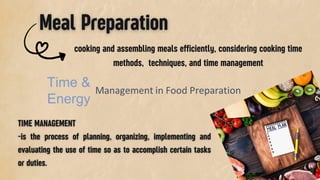
Meal Preparation
cooking andassembling meals efficiently, considering cooking time
methods, techniques, and time management
TIME MANAGEMENT
-is the process of planning, organizing, implementing and
evaluating the use of time so as to accomplish certain tasks
or duties.
3.
ENERGY MANAGEMENT
-is theprocess of planning and controlling
the use of energy so as to conserve it.
7.
CONSERVATION OF NUTRIENTS
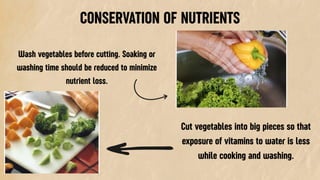
Washvegetables before cutting. Soaking or
washing time should be reduced to minimize
nutrient loss.
Cut vegetables into big pieces so that
exposure of vitamins to water is less
while cooking and washing.
8.
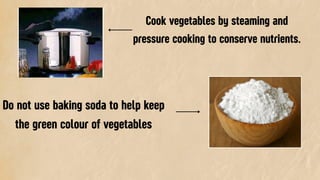
Cook vegetables bysteaming and
pressure cooking to conserve nutrients.
Do not use baking soda to help keep
the green colour of vegetables
9.
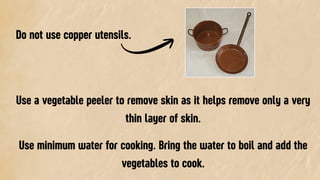
Do not usecopper utensils.
Use a vegetable peeler to remove skin as it helps remove only a very
thin layer of skin.
Use minimum water for cooking. Bring the water to boil and add the
vegetables to cook.
10.
Cover the vesselwith a lid while cooking as it hastens cooking.
Vegetables salads should be prepared just before serving to
conserve nutrients.
Use acids such as lime juice or vinegar to salads as it prevents
loss of Vitamin C
11.
Minimizing Food andEnergy Cost and Waste
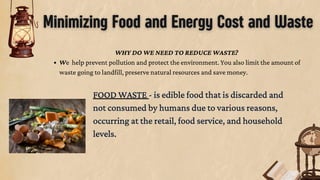
FOOD WASTE - is edible food that is discarded and
not consumed by humans due to various reasons,
occurring at the retail, food service, and household
levels.
FOOD WASTE - is edible food that is discarded and
not consumed by humans due to various reasons,
occurring at the retail, food service, and household
levels.
WHY DO WE NEED TO REDUCE WASTE?
We help prevent pollution and protect the environment. You also limit the amount of
waste going to landfill, preserve natural resources and save money.
12.
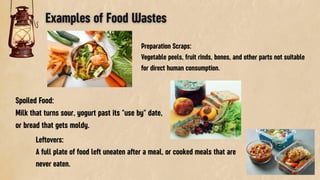
Examples of FoodWastes
Preparation Scraps:
Vegetable peels, fruit rinds, bones, and other parts not suitable
for direct human consumption.
Spoiled Food:
Milk that turns sour, yogurt past its "use by" date,
or bread that gets moldy.
Leftovers:
A full plate of food left uneaten after a meal, or cooked meals that are
never eaten.
13.
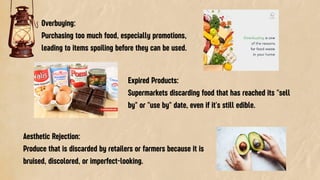
Overbuying:
Purchasing too muchfood, especially promotions,
leading to items spoiling before they can be used.
Expired Products:
Supermarkets discarding food that has reached its "sell
by" or "use by" date, even if it's still edible.
Aesthetic Rejection:
Produce that is discarded by retailers or farmers because it is
bruised, discolored, or imperfect-looking.
14.
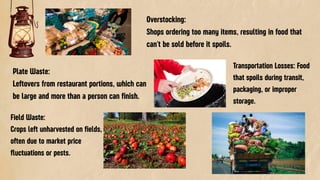
Overstocking:
Shops ordering toomany items, resulting in food that
can't be sold before it spoils.
Plate Waste:
Leftovers from restaurant portions, which can
be large and more than a person can finish.
Field Waste:
Crops left unharvested on fields,
often due to market price
fluctuations or pests.
Transportation Losses: Food
that spoils during transit,
packaging, or improper
storage.