Love
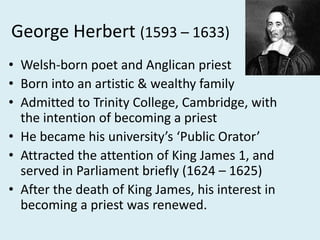
George Herbert
George Herbert (1593 – 1633)
• Welsh-born poet and Anglican priest
• Born into an artistic & wealthy family
• Admitted to Trinity College, Cambridge, with
the intention of becoming a priest
• He became his university’s ‘Public Orator’
• Attracted the attention of King James 1, and
served in Parliament briefly (1624 – 1625)
• After the death of King James, his interest in
becoming a priest was renewed.
• In his mid-thirties he took holy order in the
Church of England
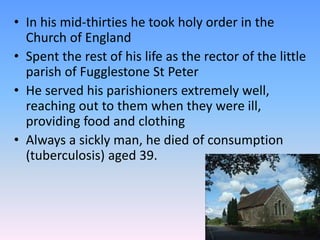
• Spent the rest of his life as the rector of the little
parish of Fugglestone St Peter
• He served his parishioners extremely well,
reaching out to them when they were ill,
providing food and clothing
• Always a sickly man, he died of consumption
(tuberculosis) aged 39.
Style & Influences
• Throughout his life he wrote religious poems
• Precision of language and ingenious use of imagery
• He is regarded as a ‘metaphysical’ poet – a style characterised
by far-fetched concepts and the use of unusual similes and
metaphors. Metaphysical poets often speculated about love
and religion.
• He was enormously popular and influential in his time
• All of his poems were published together in 1633
• When he sent his poems to Nicholas Ferrar, he said that "he
shall find in it a picture of the many spiritual conflicts that
have passed between God and my soul, before I could subject
mine to the will of Jesus, my Master".
• The poems imitate the architectural style of churches through
both the meaning of the words and their visual layout.
Summary
• This poem reads like a conversation.
• The dialogue is between the host of a feast and a
guest.
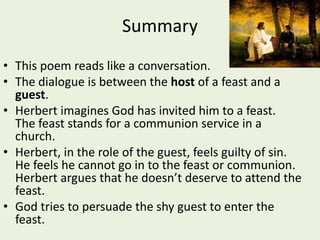
• Herbert imagines God has invited him to a feast.
The feast stands for a communion service in a
church.
• Herbert, in the role of the guest, feels guilty of sin.
He feels he cannot go in to the feast or communion.
Herbert argues that he doesn’t deserve to attend the
feast.
• God tries to persuade the shy guest to enter the
feast.
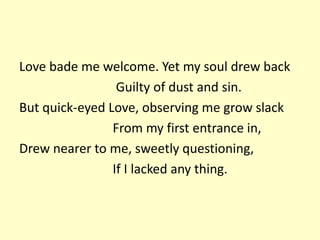
Love bade me welcome. Yet my soul drew back
Guilty of dust and sin.
But quick-eyed Love, observing me grow slack
From my first entrance in,
Drew nearer to me, sweetly questioning,
If I lacked any thing.
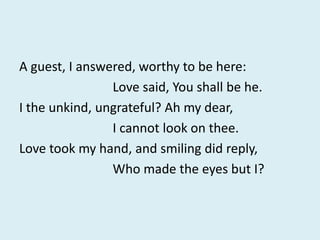
A guest, I answered, worthy to be here:
Love said, You shall be he.
I the unkind, ungrateful? Ah my dear,
I cannot look on thee.
Love took my hand, and smiling did reply,
Who made the eyes but I?
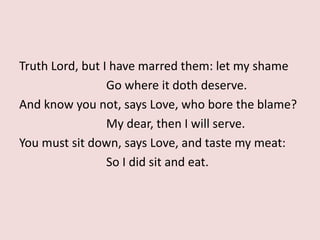
Truth Lord, but I have marred them: let my shame
Go where it doth deserve.
And know you not, says Love, who bore the blame?
My dear, then I will serve.
You must sit down, says Love, and taste my meat:
So I did sit and eat.
Wrap-up
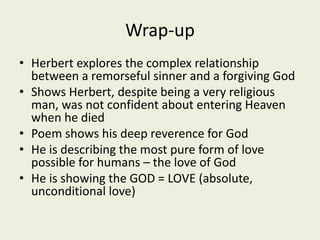
• Herbert explores the complex relationship
between a remorseful sinner and a forgiving God
• Shows Herbert, despite being a very religious
man, was not confident about entering Heaven
when he died
• Poem shows his deep reverence for God
• He is describing the most pure form of love
possible for humans – the love of God
• He is showing the GOD = LOVE (absolute,
unconditional love)
Essay Question
• Examine the ways in which Herbert vividly
portrays the love between God and Man in his
poem ‘Love’

Love by George Herbert

  • 1.
  • 2.
    George Herbert (1593– 1633) • Welsh-born poet and Anglican priest • Born into an artistic & wealthy family • Admitted to Trinity College, Cambridge, with the intention of becoming a priest • He became his university’s ‘Public Orator’ • Attracted the attention of King James 1, and served in Parliament briefly (1624 – 1625) • After the death of King James, his interest in becoming a priest was renewed.
  • 3.
    • In hismid-thirties he took holy order in the Church of England • Spent the rest of his life as the rector of the little parish of Fugglestone St Peter • He served his parishioners extremely well, reaching out to them when they were ill, providing food and clothing • Always a sickly man, he died of consumption (tuberculosis) aged 39.
  • 4.
    Style & Influences •Throughout his life he wrote religious poems • Precision of language and ingenious use of imagery • He is regarded as a ‘metaphysical’ poet – a style characterised by far-fetched concepts and the use of unusual similes and metaphors. Metaphysical poets often speculated about love and religion. • He was enormously popular and influential in his time • All of his poems were published together in 1633 • When he sent his poems to Nicholas Ferrar, he said that "he shall find in it a picture of the many spiritual conflicts that have passed between God and my soul, before I could subject mine to the will of Jesus, my Master". • The poems imitate the architectural style of churches through both the meaning of the words and their visual layout.
  • 5.
    Summary • This poemreads like a conversation. • The dialogue is between the host of a feast and a guest. • Herbert imagines God has invited him to a feast. The feast stands for a communion service in a church. • Herbert, in the role of the guest, feels guilty of sin. He feels he cannot go in to the feast or communion. Herbert argues that he doesn’t deserve to attend the feast. • God tries to persuade the shy guest to enter the feast.
  • 7.
    Love bade mewelcome. Yet my soul drew back Guilty of dust and sin. But quick-eyed Love, observing me grow slack From my first entrance in, Drew nearer to me, sweetly questioning, If I lacked any thing.
  • 8.
    A guest, Ianswered, worthy to be here: Love said, You shall be he. I the unkind, ungrateful? Ah my dear, I cannot look on thee. Love took my hand, and smiling did reply, Who made the eyes but I?
  • 9.
    Truth Lord, butI have marred them: let my shame Go where it doth deserve. And know you not, says Love, who bore the blame? My dear, then I will serve. You must sit down, says Love, and taste my meat: So I did sit and eat.
  • 10.
    Wrap-up • Herbert exploresthe complex relationship between a remorseful sinner and a forgiving God • Shows Herbert, despite being a very religious man, was not confident about entering Heaven when he died • Poem shows his deep reverence for God • He is describing the most pure form of love possible for humans – the love of God • He is showing the GOD = LOVE (absolute, unconditional love)
  • 11.
    Essay Question • Examinethe ways in which Herbert vividly portrays the love between God and Man in his poem ‘Love’