Emily Brontë
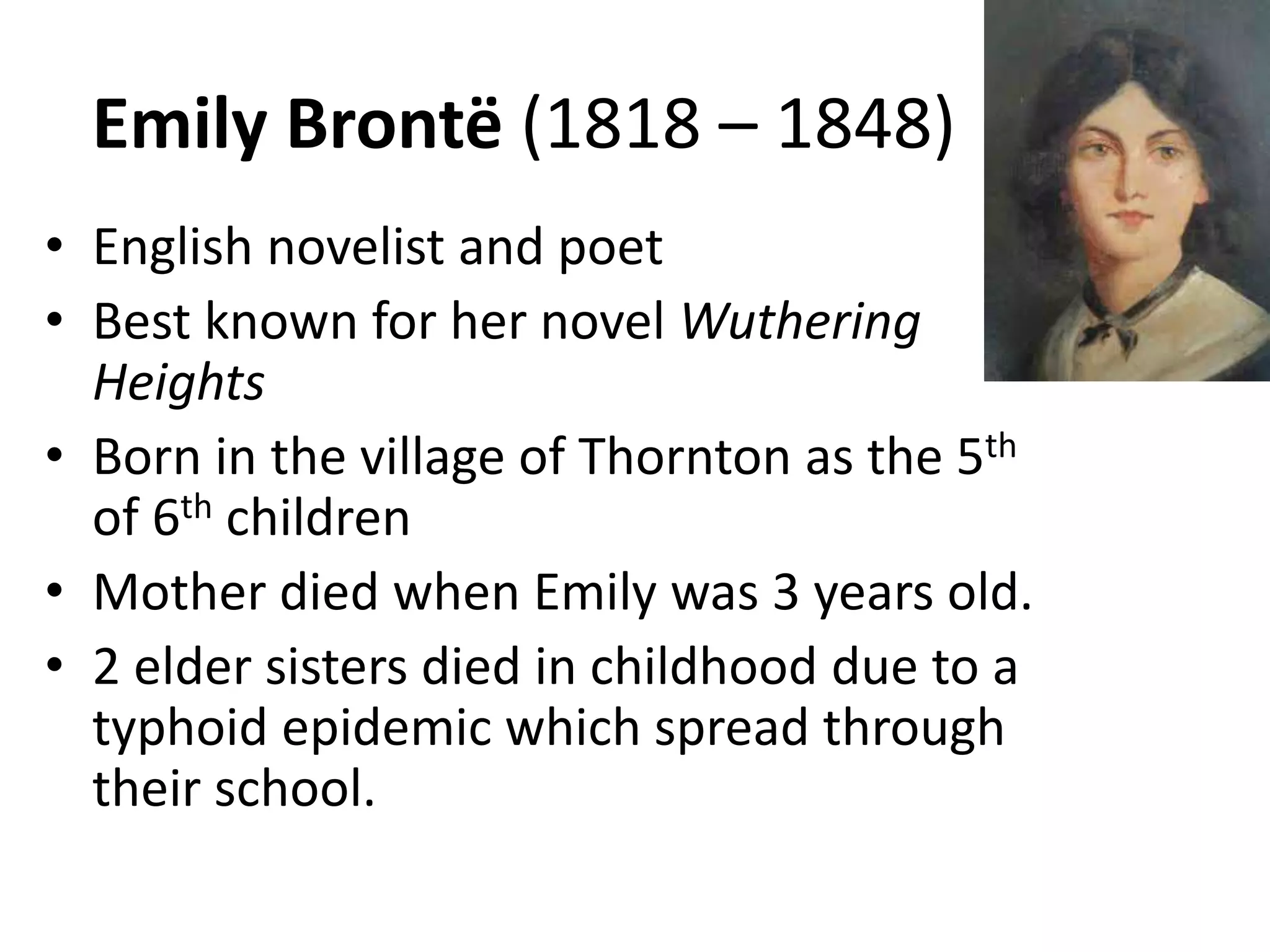
Emily Brontë (1818 – 1848)
• English novelist and poet
• Best known for her novel Wuthering
Heights
• Born in the village of Thornton as the 5th
of 6th children
• Mother died when Emily was 3 years old.
• 2 elder sisters died in childhood due to a
typhoid epidemic which spread through
their school.
• After the typhoid epidemic, their Anglican
clergyman father educated the children at home.
• She began to write as a child, creating a number
of fantasy worlds, including Gondal, which
absorbed much of her time.
• At 17 she returned to formal school, but left after
being too homesick.
• At 20 she became a teacher at Law Hill School in
Halifax, but the 17-hour work day was too
stressful for her, and she returned home to be a
stay-at-home daughter, where she cooked,
cleaned and taught herself German.
• Published a book of her poems, along with
poems from sisters Charlotte and Anne in 1846.
• Emily remained a reclusive character, and formed almost
no friendships outside of her home and family.
• Emily believed that her health, like her sisters', had been
weakened by the harsh local climate and by unsanitary
conditions at home, the source of water being
contaminated by runoff from the church's graveyard.
• While his sisters were on their way to becoming famous
authors, Branwell had failed as a painter and lapsed into
alcoholism and drug abuse. He died in September of
1848.
• She caught a severe cold during her brother’s funeral in
September 1848 and was soon showing symptoms of
tuberculosis.
• She died of TB 3 months after her brother, and was so
thin that her coffin was declared the narrowest ever
made by the local carpenter.
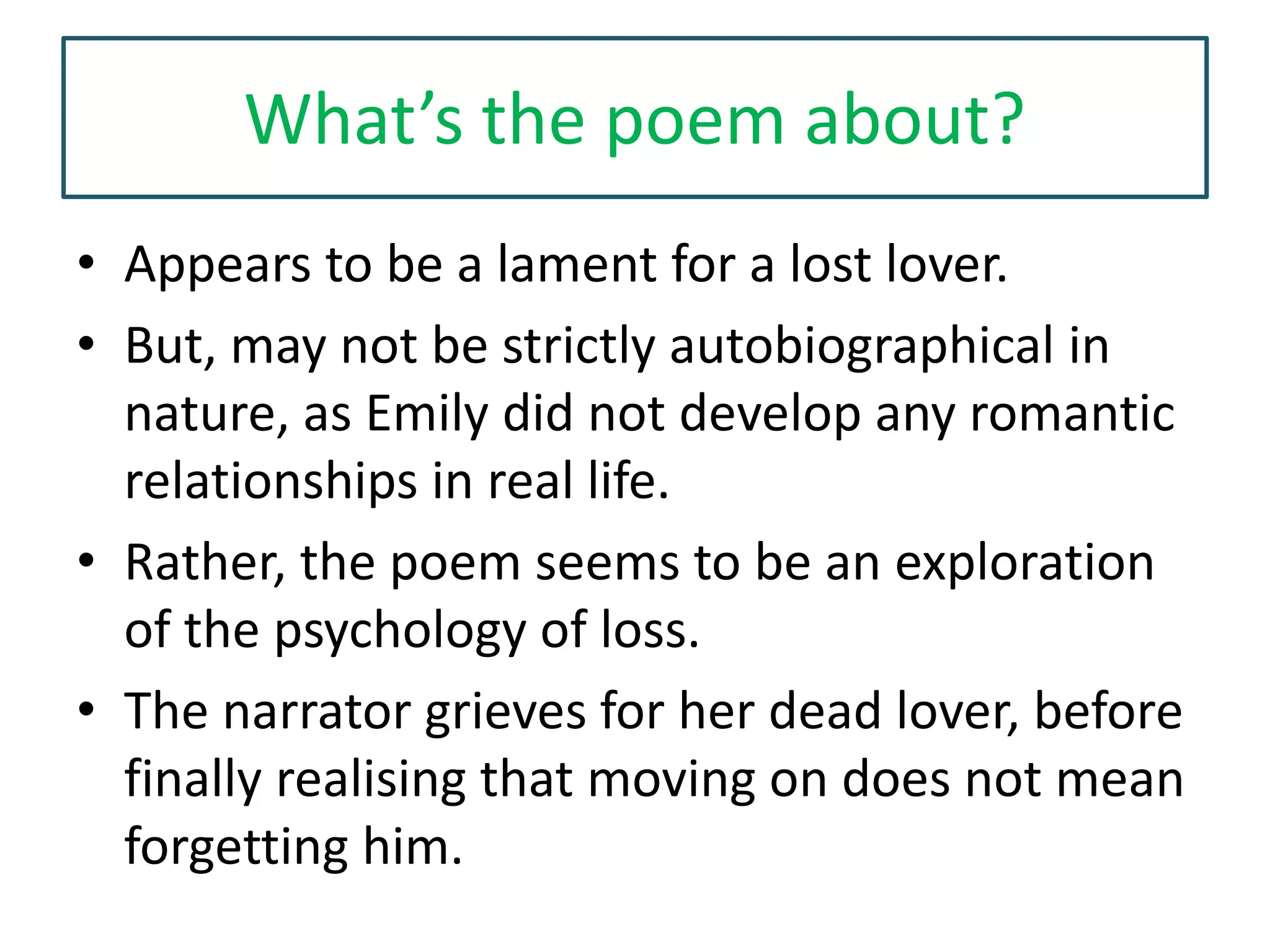
What’s the poem about?
• Appears to be a lament for a lost lover.
• But, may not be strictly autobiographical in
nature, as Emily did not develop any romantic
relationships in real life.
• Rather, the poem seems to be an exploration
of the psychology of loss.
• The narrator grieves for her dead lover, before
finally realising that moving on does not mean
forgetting him.
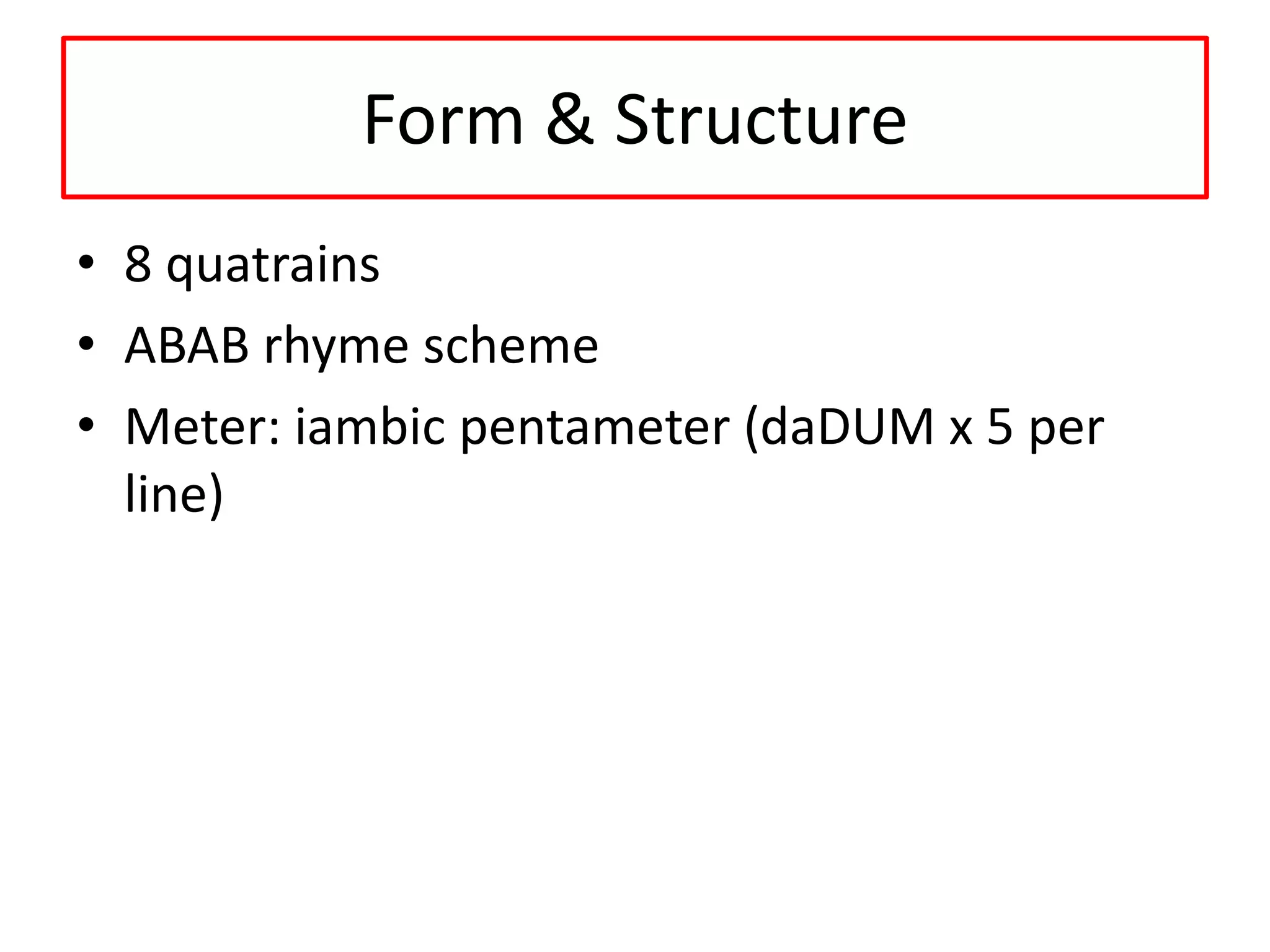
Form & Structure
• 8 quatrains
• ABAB rhyme scheme
• Meter: iambic pentameter (daDUM x 5 per
line)
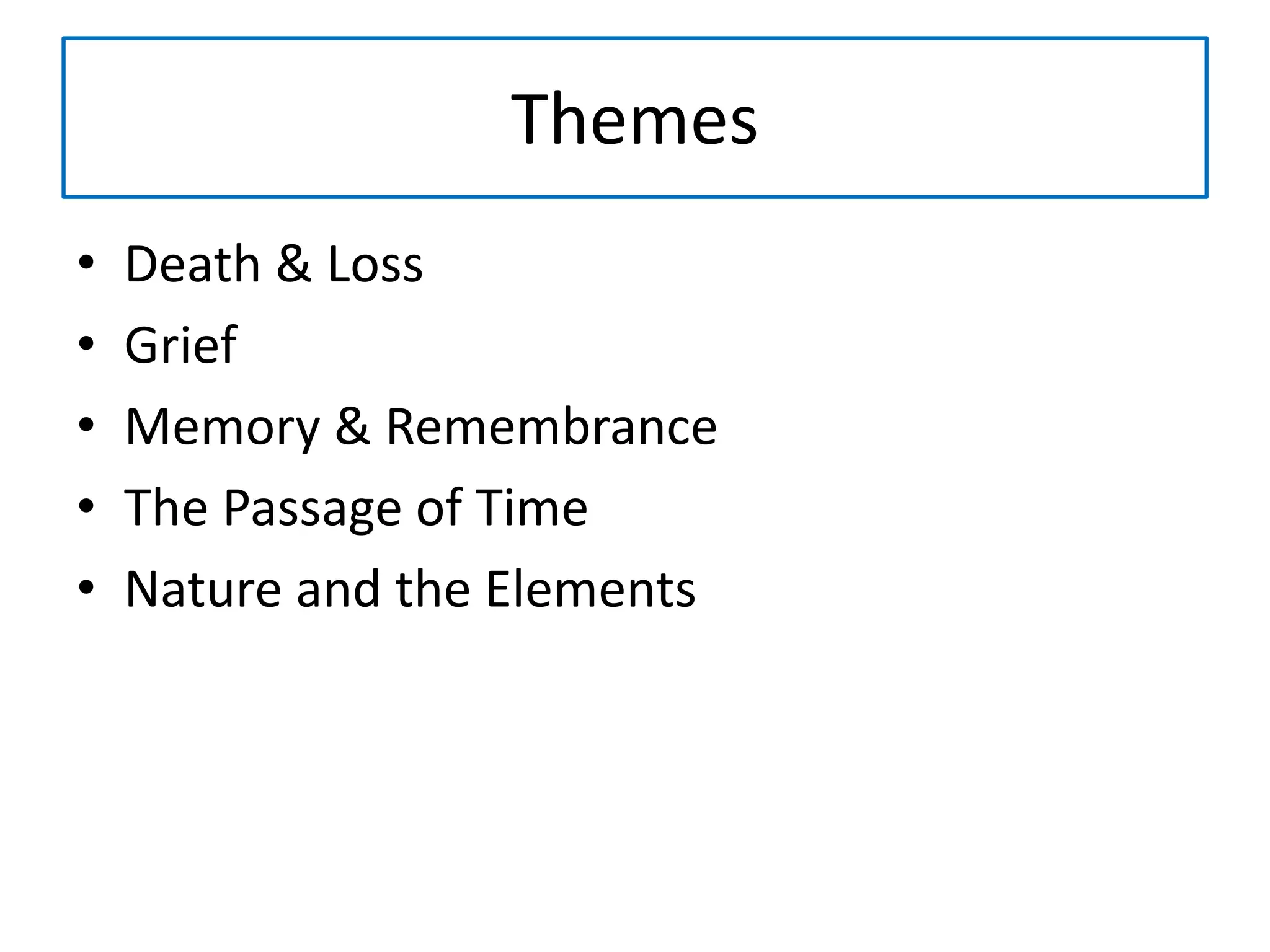
Themes
• Death & Loss
• Grief
• Memory & Remembrance
• The Passage of Time
• Nature and the Elements
Cold in the Earth/Remembrance
Cold in the earth—and the deep snow piled
above thee,
Far, far removed, cold in the dreary grave!
Have I forgot, my Only Love, to love thee,
Severed at last by Time's all-severing wave?
Now, when alone, do my thoughts no longer
hover
Over the mountains, on Angora’s shore;
Resting their wings where heath and fern-leaves
cover
Thy noble heart forever, ever more?
Cold in the earth, and fifteen wild Decembers,
From those brown hills, have melted into spring -
Faithful indeed is the spirit that remembers
After such years of change and suffering!
Sweet Love of youth, forgive if I forget thee,
While the World's tide is bearing me along:
Sterner desires and darker hopes beset me,
Hopes which obscure but cannot do thee wrong.
No other Sun has lightened up my heaven;
No other star has ever shone for me:
All my life's bliss from thy dear life was given -
All my life's bliss is in the grave with thee.
But, when the days of golden dreams had
perished,
And even Despair was powerless to destroy,
Then did I learn how existence could be
cherished,
Strengthened and fed without the aid of joy.
Then did I check the tears of useless passion,
Weaned my young soul from yearning after
thine;
Sternly denied its burning wish to hasten
Down to that tomb already more than mine!
And even yet, I dare not let it languish,
Dare not indulge in Memory's rapturous pain;
Once drinking deep of that divinest anguish,
How could I seek the empty world again?
Check out more resources here…
• https://prezi.com/qjyd6-n4pi-q/cold-in-the-
earth-emily-bronte/
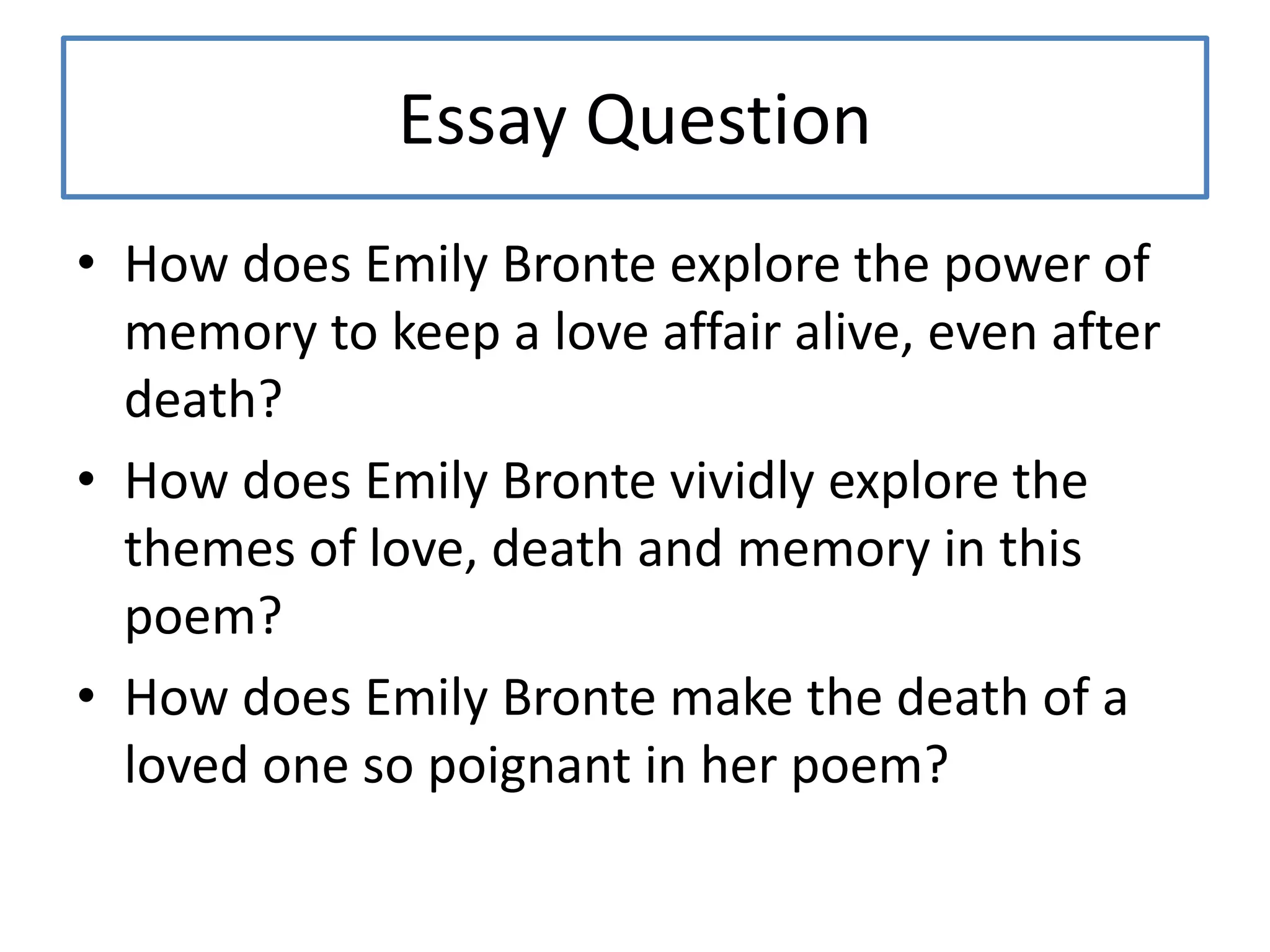
Essay Question
• How does Emily Bronte explore the power of
memory to keep a love affair alive, even after
death?
• How does Emily Bronte vividly explore the
themes of love, death and memory in this
poem?
• How does Emily Bronte make the death of a
loved one so poignant in her poem?

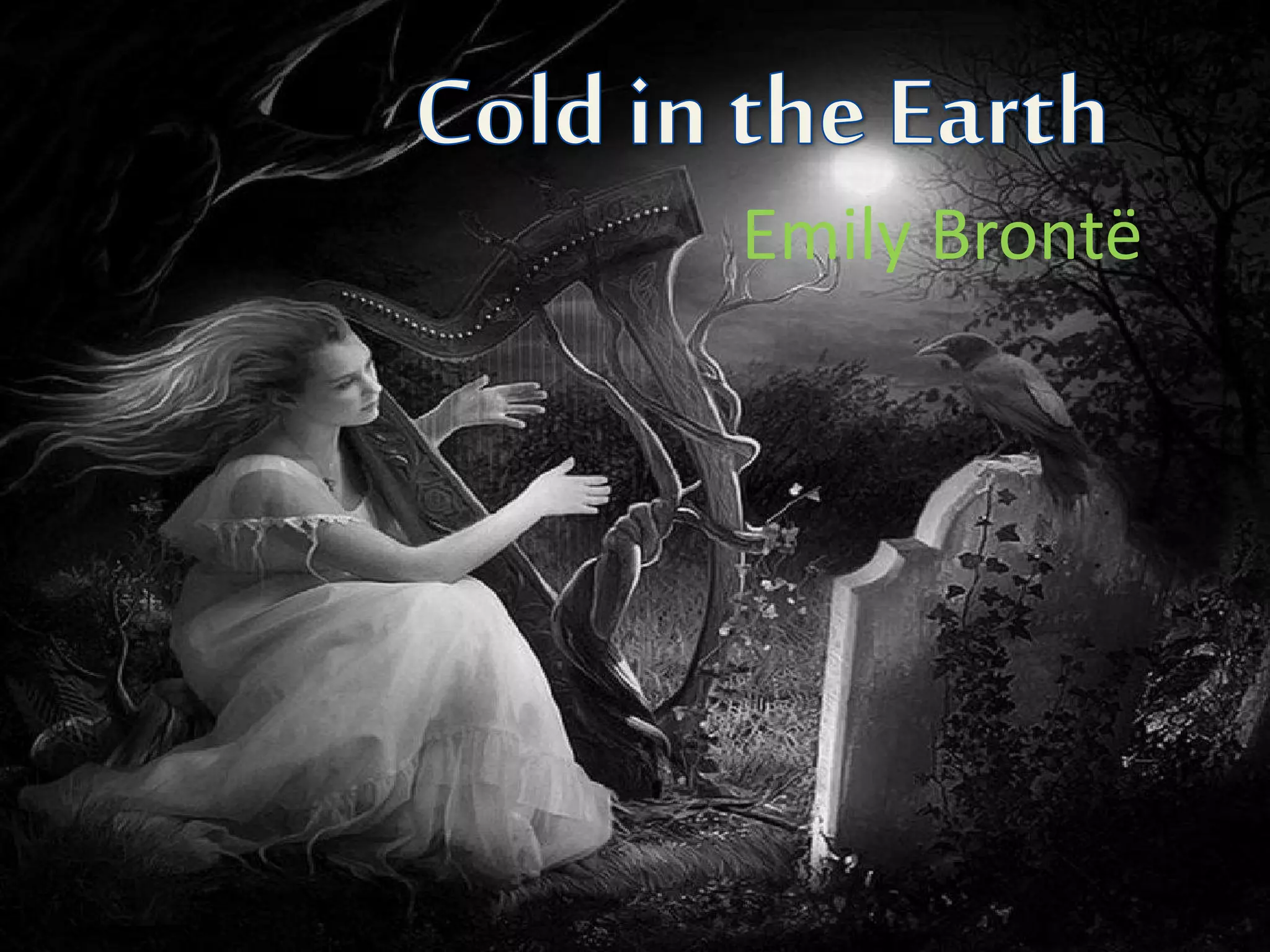
Cold in the Earth

  • 1.
  • 2.
    Emily Brontë (1818– 1848) • English novelist and poet • Best known for her novel Wuthering Heights • Born in the village of Thornton as the 5th of 6th children • Mother died when Emily was 3 years old. • 2 elder sisters died in childhood due to a typhoid epidemic which spread through their school.
  • 3.
    • After thetyphoid epidemic, their Anglican clergyman father educated the children at home. • She began to write as a child, creating a number of fantasy worlds, including Gondal, which absorbed much of her time. • At 17 she returned to formal school, but left after being too homesick. • At 20 she became a teacher at Law Hill School in Halifax, but the 17-hour work day was too stressful for her, and she returned home to be a stay-at-home daughter, where she cooked, cleaned and taught herself German. • Published a book of her poems, along with poems from sisters Charlotte and Anne in 1846.
  • 4.
    • Emily remaineda reclusive character, and formed almost no friendships outside of her home and family. • Emily believed that her health, like her sisters', had been weakened by the harsh local climate and by unsanitary conditions at home, the source of water being contaminated by runoff from the church's graveyard. • While his sisters were on their way to becoming famous authors, Branwell had failed as a painter and lapsed into alcoholism and drug abuse. He died in September of 1848. • She caught a severe cold during her brother’s funeral in September 1848 and was soon showing symptoms of tuberculosis. • She died of TB 3 months after her brother, and was so thin that her coffin was declared the narrowest ever made by the local carpenter.
  • 5.
    What’s the poemabout? • Appears to be a lament for a lost lover. • But, may not be strictly autobiographical in nature, as Emily did not develop any romantic relationships in real life. • Rather, the poem seems to be an exploration of the psychology of loss. • The narrator grieves for her dead lover, before finally realising that moving on does not mean forgetting him.
  • 6.
    Form & Structure •8 quatrains • ABAB rhyme scheme • Meter: iambic pentameter (daDUM x 5 per line)
  • 7.
    Themes • Death &Loss • Grief • Memory & Remembrance • The Passage of Time • Nature and the Elements
  • 8.
    Cold in theEarth/Remembrance Cold in the earth—and the deep snow piled above thee, Far, far removed, cold in the dreary grave! Have I forgot, my Only Love, to love thee, Severed at last by Time's all-severing wave?
  • 9.
    Now, when alone,do my thoughts no longer hover Over the mountains, on Angora’s shore; Resting their wings where heath and fern-leaves cover Thy noble heart forever, ever more?
  • 10.
    Cold in theearth, and fifteen wild Decembers, From those brown hills, have melted into spring - Faithful indeed is the spirit that remembers After such years of change and suffering!
  • 11.
    Sweet Love ofyouth, forgive if I forget thee, While the World's tide is bearing me along: Sterner desires and darker hopes beset me, Hopes which obscure but cannot do thee wrong.
  • 12.
    No other Sunhas lightened up my heaven; No other star has ever shone for me: All my life's bliss from thy dear life was given - All my life's bliss is in the grave with thee.
  • 13.
    But, when thedays of golden dreams had perished, And even Despair was powerless to destroy, Then did I learn how existence could be cherished, Strengthened and fed without the aid of joy.
  • 14.
    Then did Icheck the tears of useless passion, Weaned my young soul from yearning after thine; Sternly denied its burning wish to hasten Down to that tomb already more than mine!
  • 15.
    And even yet,I dare not let it languish, Dare not indulge in Memory's rapturous pain; Once drinking deep of that divinest anguish, How could I seek the empty world again?
  • 16.
    Check out moreresources here… • https://prezi.com/qjyd6-n4pi-q/cold-in-the- earth-emily-bronte/
  • 17.
    Essay Question • Howdoes Emily Bronte explore the power of memory to keep a love affair alive, even after death? • How does Emily Bronte vividly explore the themes of love, death and memory in this poem? • How does Emily Bronte make the death of a loved one so poignant in her poem?