The Internet as a Factor of Participation in 
Protests: Cross Country Analysis 
Kirkizh Eleonora, Olessia Koltsova 
Higher School of Economics (SPb)
Structure 
• Theory 
• Hypothesis 
• Data and Method 
• Results 
• Conclusions 
• Further research
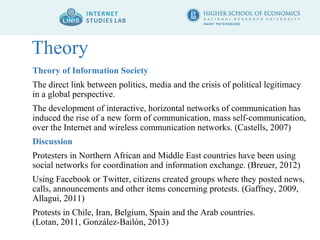
Theory 
Theory of Information Society 
The direct link between politics, media and the crisis of political legitimacy 
in a global perspective. 
The development of interactive, horizontal networks of communication has 
induced the rise of a new form of communication, mass self-communication, 
over the Internet and wireless communication networks. (Castells, 2007) 
Discussion 
Protesters in Northern African and Middle East countries have been using 
social networks for coordination and information exchange. (Breuer, 2012) 
Using Facebook or Twitter, citizens created groups where they posted news, 
calls, announcements and other items concerning protests. (Gaffney, 2009, 
Allagui, 2011) 
Protests in Chile, Iran, Belgium, Spain and the Arab countries. 
(Lotan, 2011, González-Bailón, 2013)
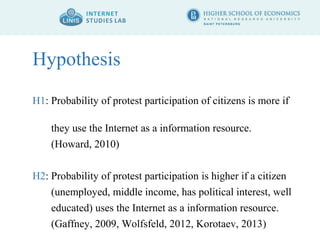
Hypothesis 
H1: Probability of protest participation of citizens is more if 
they use the Internet as a information resource. 
(Howard, 2010) 
H2: Probability of protest participation is higher if a citizen 
(unemployed, middle income, has political interest, well 
educated) uses the Internet as a information resource. 
(Gaffney, 2009, Wolfsfeld, 2012, Korotaev, 2013)
Data and Method 
World Value Survey, wave 6 (2011-2013) 
Countries: 40 
Individuals: over 42,000 
Variables: 
• Dependent: protest participation 
• Independent: employment status, age, confidence: the government, 
income, information recourse: Internet, friends, post materialist index 
(4-item), age, education, religiosity, political view. 
• Group level variable: country 
Method: multilevel logistic regression
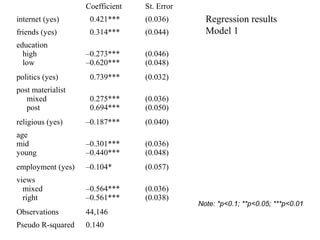
Coefficient St. Error 
internet (yes) 0.421*** (0.036) 
friends (yes) 0.314*** (0.044) 
education 
high 
–0.273*** 
(0.046) 
low 
–0.620*** 
(0.048) 
politics (yes) 0.739*** (0.032) 
post materialist 
mixed 
0.275*** 
(0.036) 
post 
0.694*** 
(0.050) 
religious (yes) –0.187*** (0.040) 
age 
mid 
–0.301*** 
(0.036) 
young 
–0.440*** 
(0.048) 
employment (yes) –0.104* (0.057) 
views 
mixed 
–0.564*** 
(0.036) 
right 
–0.561*** 
(0.038) 
Observations 44,146 
Pseudo R-squared 0.140 
Regression results 
Model 1 
Note: *p<0.1; **p<0.05; ***p<0.01
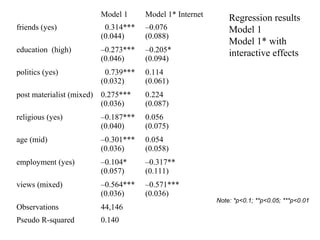
Model 1 Model 1* Internet 
friends (yes) 0.314*** 
(0.044) 
–0.076 
(0.088) 
education (high) –0.273*** 
(0.046) 
–0.205* 
(0.094) 
politics (yes) 0.739*** 
(0.032) 
0.114 
(0.061) 
post materialist (mixed) 0.275*** 
(0.036) 
0.224 
(0.087) 
religious (yes) –0.187*** 
(0.040) 
0.056 
(0.075) 
age (mid) –0.301*** 
(0.036) 
0.054 
(0.058) 
employment (yes) –0.104* 
(0.057) 
–0.317** 
(0.111) 
views (mixed) –0.564*** 
(0.036) 
–0.571*** 
(0.036) 
Observations 44,146 
Pseudo R-squared 0.140 
Regression results 
Model 1 
Model 1* with 
interactive effects 
Note: *p<0.1; **p<0.05; ***p<0.01
Conclusions 
Individual level 
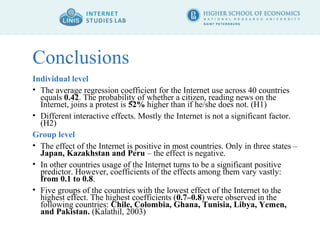
• The average regression coefficient for the Internet use across 40 countries 
equals 0.42. The probability of whether a citizen, reading news on the 
Internet, joins a protest is 52% higher than if he/she does not. (H1) 
• Different interactive effects. Mostly the Internet is not a significant factor. 
(H2) 
Group level 
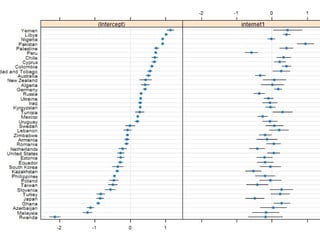
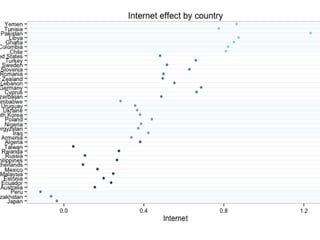
• The effect of the Internet is positive in most countries. Only in three states – 
Japan, Kazakhstan and Peru – the effect is negative. 
• In other countries usage of the Internet turns to be a significant positive 
predictor. However, coefficients of the effects among them vary vastly: 
from 0.1 to 0.8. 
• Five groups of the countries with the lowest effect of the Internet to the 
highest effect. The highest coefficients (0.7–0.8) were observed in the 
following countries: Chile, Colombia, Ghana, Tunisia, Libya, Yemen, 
and Pakistan. (Kalathil, 2003)
Further research 
• Analysis with group level variables (the Internet 
penetration, GDP, Human Rights Risk Index, 
Corruption Rate etc.)
Thank you for your attention 
Questions?

SMSM2014

  • 1.
    The Internet asa Factor of Participation in Protests: Cross Country Analysis Kirkizh Eleonora, Olessia Koltsova Higher School of Economics (SPb)
  • 2.
    Structure • Theory • Hypothesis • Data and Method • Results • Conclusions • Further research
  • 3.
    Theory Theory ofInformation Society The direct link between politics, media and the crisis of political legitimacy in a global perspective. The development of interactive, horizontal networks of communication has induced the rise of a new form of communication, mass self-communication, over the Internet and wireless communication networks. (Castells, 2007) Discussion Protesters in Northern African and Middle East countries have been using social networks for coordination and information exchange. (Breuer, 2012) Using Facebook or Twitter, citizens created groups where they posted news, calls, announcements and other items concerning protests. (Gaffney, 2009, Allagui, 2011) Protests in Chile, Iran, Belgium, Spain and the Arab countries. (Lotan, 2011, González-Bailón, 2013)
  • 4.
    Hypothesis H1: Probabilityof protest participation of citizens is more if they use the Internet as a information resource. (Howard, 2010) H2: Probability of protest participation is higher if a citizen (unemployed, middle income, has political interest, well educated) uses the Internet as a information resource. (Gaffney, 2009, Wolfsfeld, 2012, Korotaev, 2013)
  • 5.
    Data and Method World Value Survey, wave 6 (2011-2013) Countries: 40 Individuals: over 42,000 Variables: • Dependent: protest participation • Independent: employment status, age, confidence: the government, income, information recourse: Internet, friends, post materialist index (4-item), age, education, religiosity, political view. • Group level variable: country Method: multilevel logistic regression
  • 6.
    Coefficient St. Error internet (yes) 0.421*** (0.036) friends (yes) 0.314*** (0.044) education high –0.273*** (0.046) low –0.620*** (0.048) politics (yes) 0.739*** (0.032) post materialist mixed 0.275*** (0.036) post 0.694*** (0.050) religious (yes) –0.187*** (0.040) age mid –0.301*** (0.036) young –0.440*** (0.048) employment (yes) –0.104* (0.057) views mixed –0.564*** (0.036) right –0.561*** (0.038) Observations 44,146 Pseudo R-squared 0.140 Regression results Model 1 Note: *p<0.1; **p<0.05; ***p<0.01
  • 7.
    Model 1 Model1* Internet friends (yes) 0.314*** (0.044) –0.076 (0.088) education (high) –0.273*** (0.046) –0.205* (0.094) politics (yes) 0.739*** (0.032) 0.114 (0.061) post materialist (mixed) 0.275*** (0.036) 0.224 (0.087) religious (yes) –0.187*** (0.040) 0.056 (0.075) age (mid) –0.301*** (0.036) 0.054 (0.058) employment (yes) –0.104* (0.057) –0.317** (0.111) views (mixed) –0.564*** (0.036) –0.571*** (0.036) Observations 44,146 Pseudo R-squared 0.140 Regression results Model 1 Model 1* with interactive effects Note: *p<0.1; **p<0.05; ***p<0.01
  • 10.
    Conclusions Individual level • The average regression coefficient for the Internet use across 40 countries equals 0.42. The probability of whether a citizen, reading news on the Internet, joins a protest is 52% higher than if he/she does not. (H1) • Different interactive effects. Mostly the Internet is not a significant factor. (H2) Group level • The effect of the Internet is positive in most countries. Only in three states – Japan, Kazakhstan and Peru – the effect is negative. • In other countries usage of the Internet turns to be a significant positive predictor. However, coefficients of the effects among them vary vastly: from 0.1 to 0.8. • Five groups of the countries with the lowest effect of the Internet to the highest effect. The highest coefficients (0.7–0.8) were observed in the following countries: Chile, Colombia, Ghana, Tunisia, Libya, Yemen, and Pakistan. (Kalathil, 2003)
  • 11.
    Further research •Analysis with group level variables (the Internet penetration, GDP, Human Rights Risk Index, Corruption Rate etc.)
  • 12.
    Thank you foryour attention Questions?