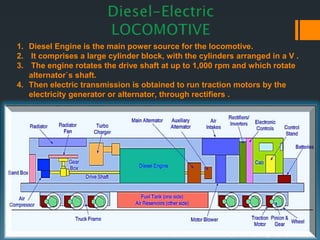
1. Diesel Engine is the main power source for the locomotive.
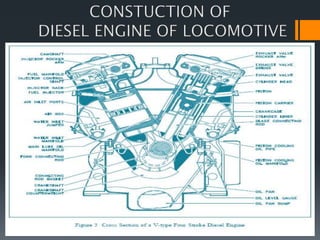
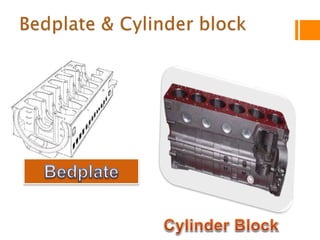
2. It comprises a large cylinder block, with the cylinders arranged in a V .
3. The engine rotates the drive shaft at up to 1,000 rpm and which rotate
alternator`s shaft.
4. Then electric transmission is obtained to run traction motors by the
electricity generator or alternator, through rectifiers .
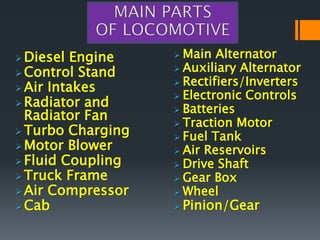
 Diesel Engine
 Control Stand
 Air Intakes
 Radiator and
Radiator Fan
 Turbo Charging
 Motor Blower
 Fluid Coupling
 Truck Frame
 Air Compressor
 Cab
 Main Alternator
 Auxiliary Alternator
 Rectifiers/Inverters
 Electronic Controls
 Batteries
 Traction Motor
 Fuel Tank
 Air Reservoirs
 Drive Shaft
 Gear Box
 Wheel
 Pinion/Gear
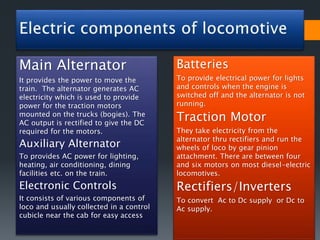
Main Alternator
It provides the power to move the
train. The alternator generates AC
electricity which is used to provide
power for the traction motors
mounted on the trucks (bogies). The
AC output is rectified to give the DC
required for the motors.
Auxiliary Alternator
To provides AC power for lighting,
heating, air conditioning, dining
facilities etc. on the train.
Electronic Controls
It consists of various components of
loco and usually collected in a control
cubicle near the cab for easy access
Batteries
To provide electrical power for lights
and controls when the engine is
switched off and the alternator is not
running.
Traction Motor
They take electricity from the
alternator thru rectifiers and run the
wheels of loco by gear pinion
attachment. There are between four
and six motors on most diesel-electric
locomotives.
Rectifiers/Inverters
To convert Ac to Dc supply or Dc to
Ac supply.
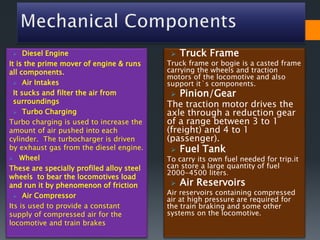
 Diesel Engine
It is the prime mover of engine & runs
all components.
 Air Intakes
It sucks and filter the air from
surroundings
 Turbo Charging
Turbo charging is used to increase the
amount of air pushed into each
cylinder. The turbocharger is driven
by exhaust gas from the diesel engine.
 Wheel
These are specially profiled alloy steel
wheels to bear the locomotives load
and run it by phenomenon of friction
 Air Compressor
Its is used to provide a constant
supply of compressed air for the
locomotive and train brakes
 Truck Frame
Truck frame or bogie is a casted frame
carrying the wheels and traction
motors of the locomotive and also
support it`s components.
 Pinion/Gear
The traction motor drives the
axle through a reduction gear
of a range between 3 to 1
(freight) and 4 to 1
(passenger).
 Fuel Tank
To carry its own fuel needed for trip.it
can store a large quantity of fuel
2000-4500 liters.
 Air Reservoirs
Air reservoirs containing compressed
air at high pressure are required for
the train braking and some other
systems on the locomotive.
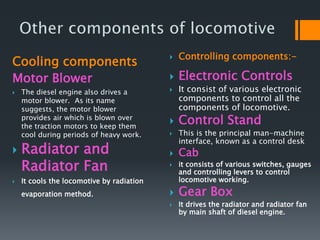
Cooling components
Motor Blower
 The diesel engine also drives a
motor blower. As its name
suggests, the motor blower
provides air which is blown over
the traction motors to keep them
cool during periods of heavy work.
 Radiator and
Radiator Fan
 It cools the locomotive by radiation
evaporation method.
 Controlling components:-
 Electronic Controls
 It consist of various electronic
components to control all the
components of locomotive.
 Control Stand
 This is the principal man-machine
interface, known as a control desk
 Cab
 it consists of various switches, gauges
and controlling levers to control
locomotive working.
 Gear Box
 It drives the radiator and radiator fan
by main shaft of diesel engine.
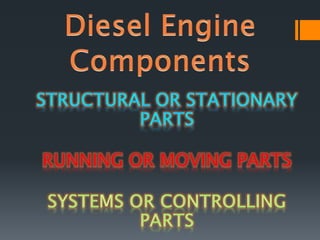
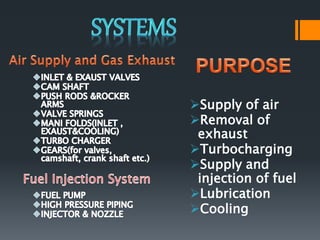
Supply of air
Removal of
exhaust
Turbocharging
Supply and
injection of fuel
Lubrication
Cooling
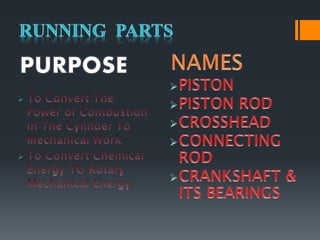
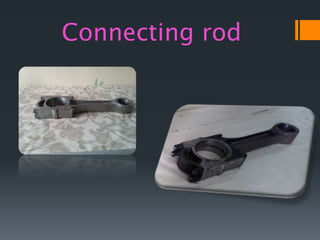
Connecting rod
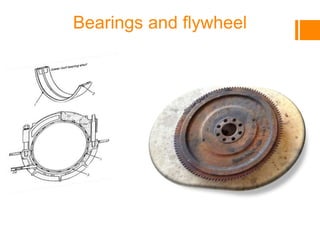
Bearings and flywheel
Locomotive

Locomotive

  • 5.
    1. Diesel Engineis the main power source for the locomotive. 2. It comprises a large cylinder block, with the cylinders arranged in a V . 3. The engine rotates the drive shaft at up to 1,000 rpm and which rotate alternator`s shaft. 4. Then electric transmission is obtained to run traction motors by the electricity generator or alternator, through rectifiers .
  • 6.
     Diesel Engine Control Stand  Air Intakes  Radiator and Radiator Fan  Turbo Charging  Motor Blower  Fluid Coupling  Truck Frame  Air Compressor  Cab  Main Alternator  Auxiliary Alternator  Rectifiers/Inverters  Electronic Controls  Batteries  Traction Motor  Fuel Tank  Air Reservoirs  Drive Shaft  Gear Box  Wheel  Pinion/Gear
  • 7.
    Main Alternator It providesthe power to move the train. The alternator generates AC electricity which is used to provide power for the traction motors mounted on the trucks (bogies). The AC output is rectified to give the DC required for the motors. Auxiliary Alternator To provides AC power for lighting, heating, air conditioning, dining facilities etc. on the train. Electronic Controls It consists of various components of loco and usually collected in a control cubicle near the cab for easy access Batteries To provide electrical power for lights and controls when the engine is switched off and the alternator is not running. Traction Motor They take electricity from the alternator thru rectifiers and run the wheels of loco by gear pinion attachment. There are between four and six motors on most diesel-electric locomotives. Rectifiers/Inverters To convert Ac to Dc supply or Dc to Ac supply.
  • 8.
     Diesel Engine Itis the prime mover of engine & runs all components.  Air Intakes It sucks and filter the air from surroundings  Turbo Charging Turbo charging is used to increase the amount of air pushed into each cylinder. The turbocharger is driven by exhaust gas from the diesel engine.  Wheel These are specially profiled alloy steel wheels to bear the locomotives load and run it by phenomenon of friction  Air Compressor Its is used to provide a constant supply of compressed air for the locomotive and train brakes  Truck Frame Truck frame or bogie is a casted frame carrying the wheels and traction motors of the locomotive and also support it`s components.  Pinion/Gear The traction motor drives the axle through a reduction gear of a range between 3 to 1 (freight) and 4 to 1 (passenger).  Fuel Tank To carry its own fuel needed for trip.it can store a large quantity of fuel 2000-4500 liters.  Air Reservoirs Air reservoirs containing compressed air at high pressure are required for the train braking and some other systems on the locomotive.
  • 9.
    Cooling components Motor Blower The diesel engine also drives a motor blower. As its name suggests, the motor blower provides air which is blown over the traction motors to keep them cool during periods of heavy work.  Radiator and Radiator Fan  It cools the locomotive by radiation evaporation method.  Controlling components:-  Electronic Controls  It consist of various electronic components to control all the components of locomotive.  Control Stand  This is the principal man-machine interface, known as a control desk  Cab  it consists of various switches, gauges and controlling levers to control locomotive working.  Gear Box  It drives the radiator and radiator fan by main shaft of diesel engine.
  • 14.
    Supply of air Removalof exhaust Turbocharging Supply and injection of fuel Lubrication Cooling
  • 17.
  • 21.