Loads On Driven Piles
Introduction to Driven Piles
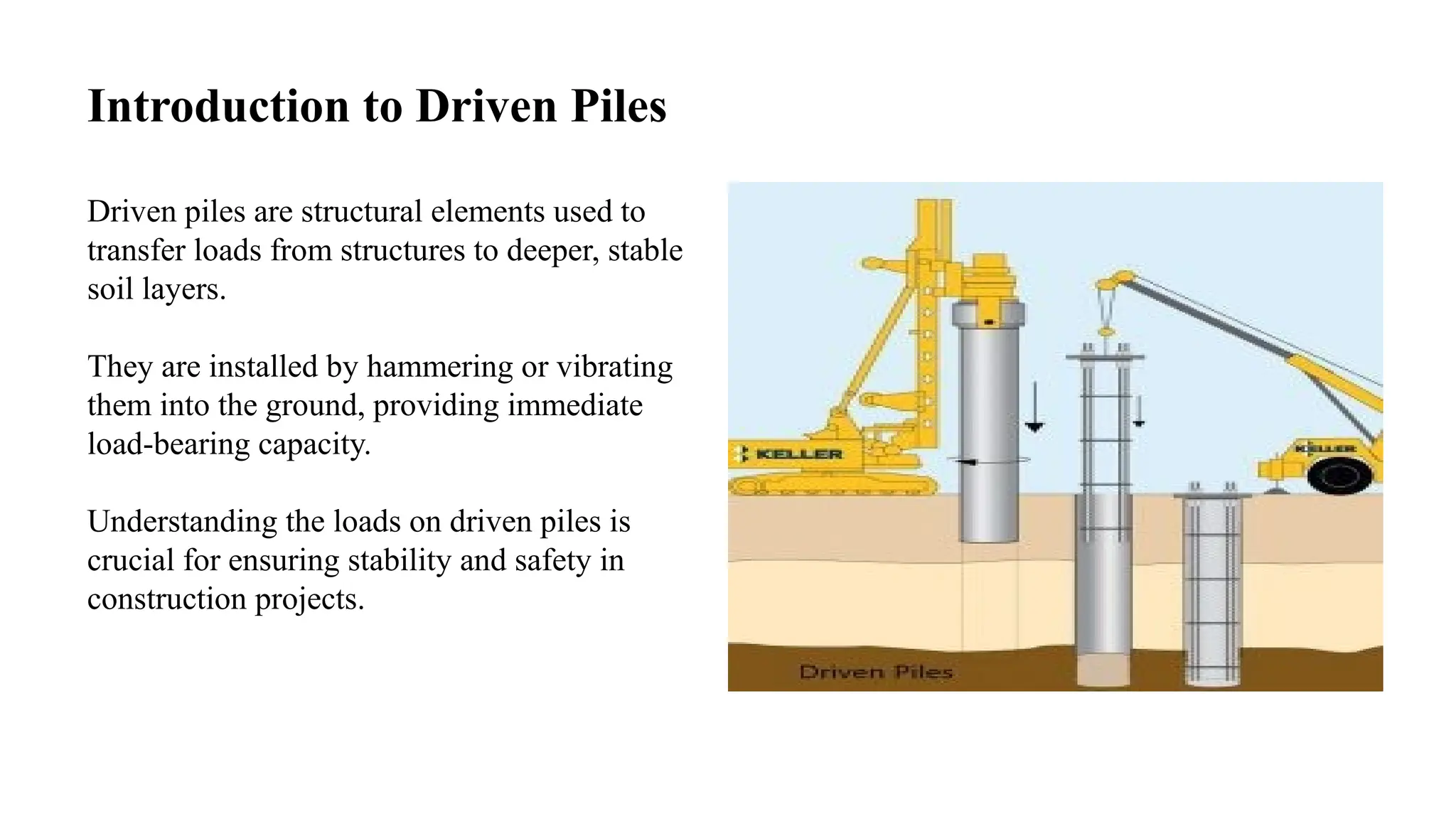
Driven piles are structural elements used to
transfer loads from structures to deeper, stable
soil layers.
They are installed by hammering or vibrating
them into the ground, providing immediate
load-bearing capacity.
Understanding the loads on driven piles is
crucial for ensuring stability and safety in
construction projects.
Types of Loads on Driven Piles
Driven piles experience vertical loads, lateral
loads, and moment loads during their service
life.
Vertical loads consist of both dead loads from
the structure and live loads from temporary or
permanent use.
Lateral loads are often caused by wind, seismic
activity, or earth pressure, affecting the pile's
stability.
Vertical Loads
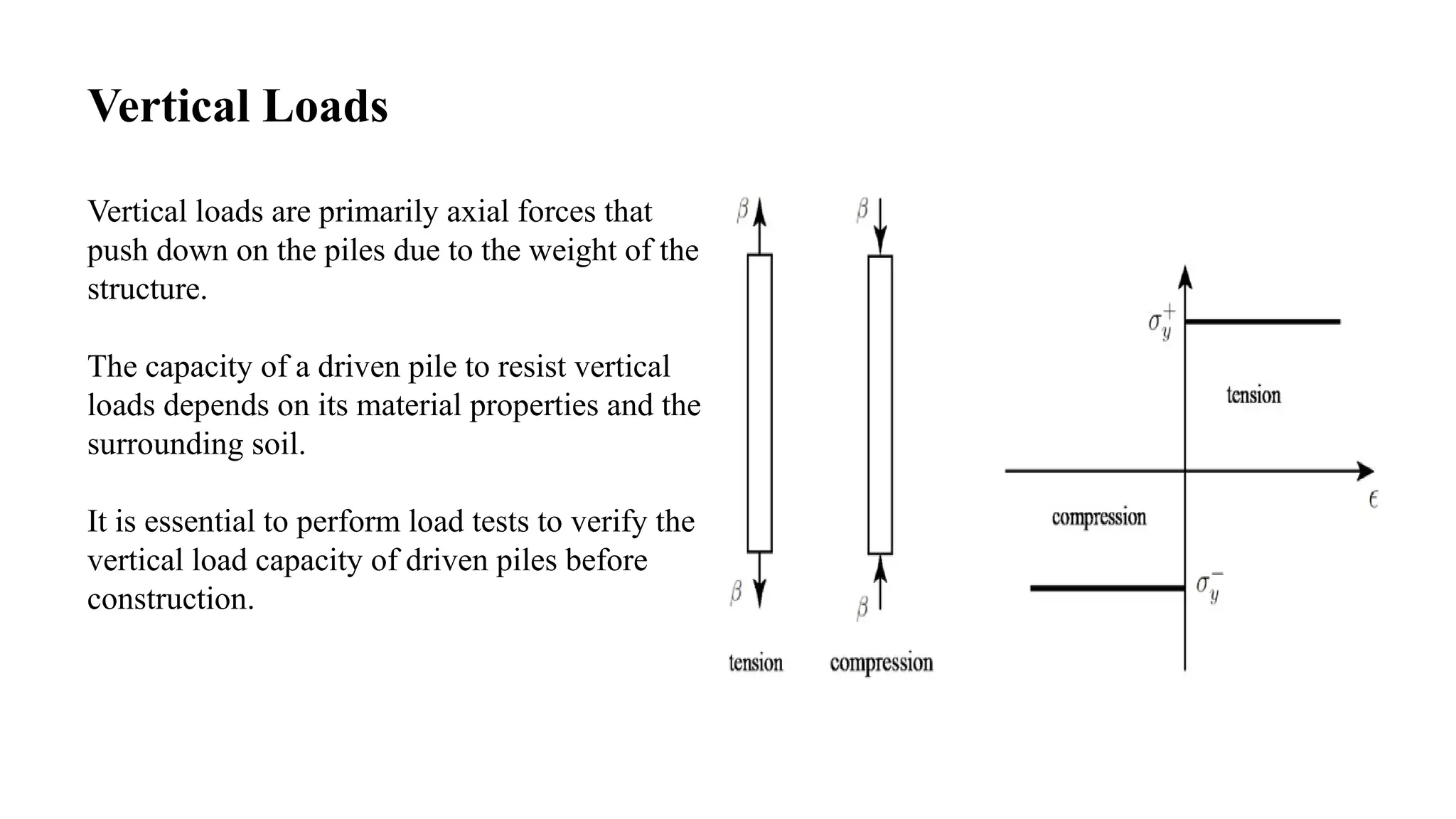
Vertical loads are primarily axial forces that
push down on the piles due to the weight of the
structure.
The capacity of a driven pile to resist vertical
loads depends on its material properties and the
surrounding soil.
It is essential to perform load tests to verify the
vertical load capacity of driven piles before
construction.
Lateral Loads
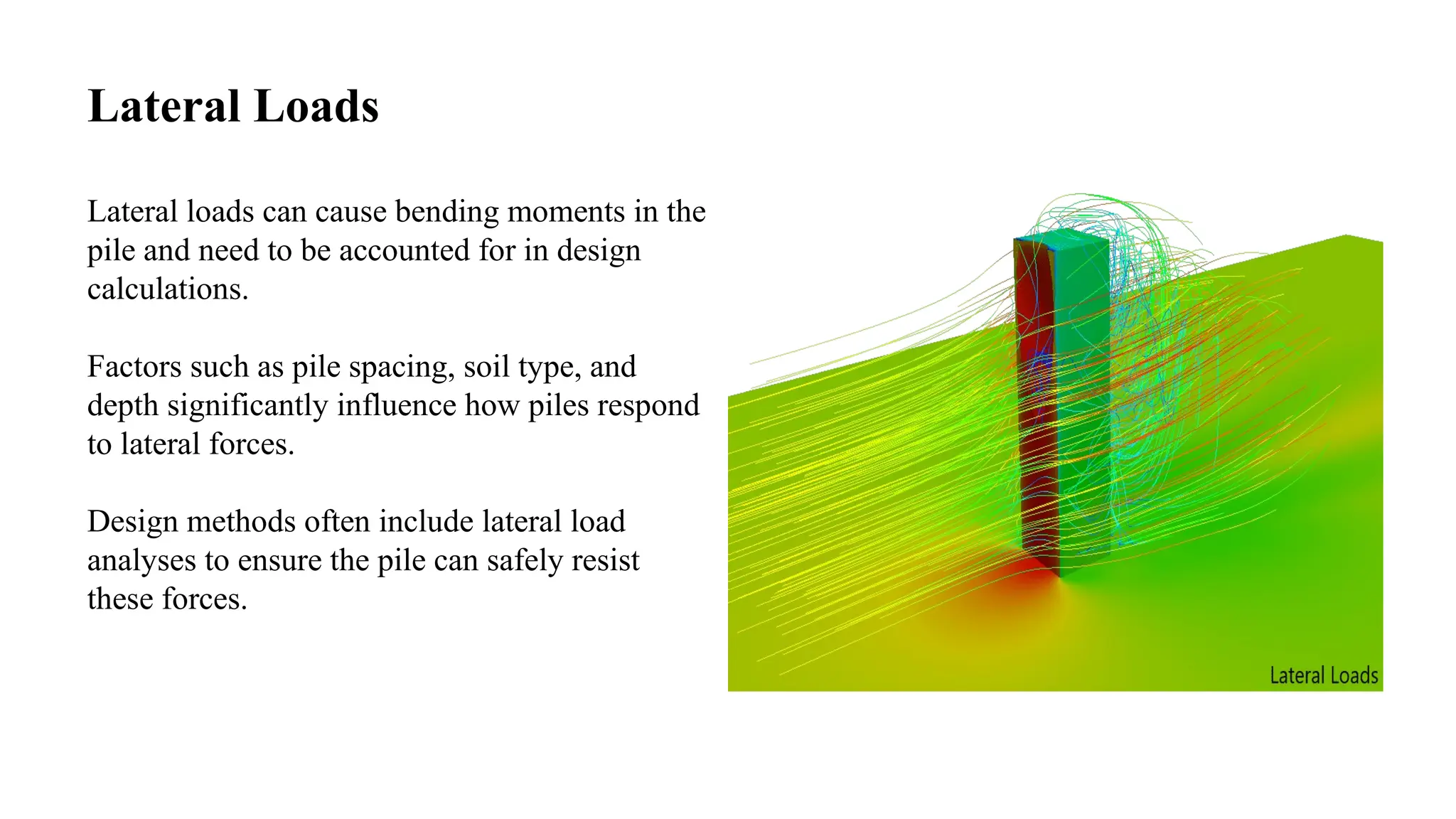
Lateral loads can cause bending moments in the
pile and need to be accounted for in design
calculations.
Factors such as pile spacing, soil type, and
depth significantly influence how piles respond
to lateral forces.
Design methods often include lateral load
analyses to ensure the pile can safely resist
these forces.
Moment Loads
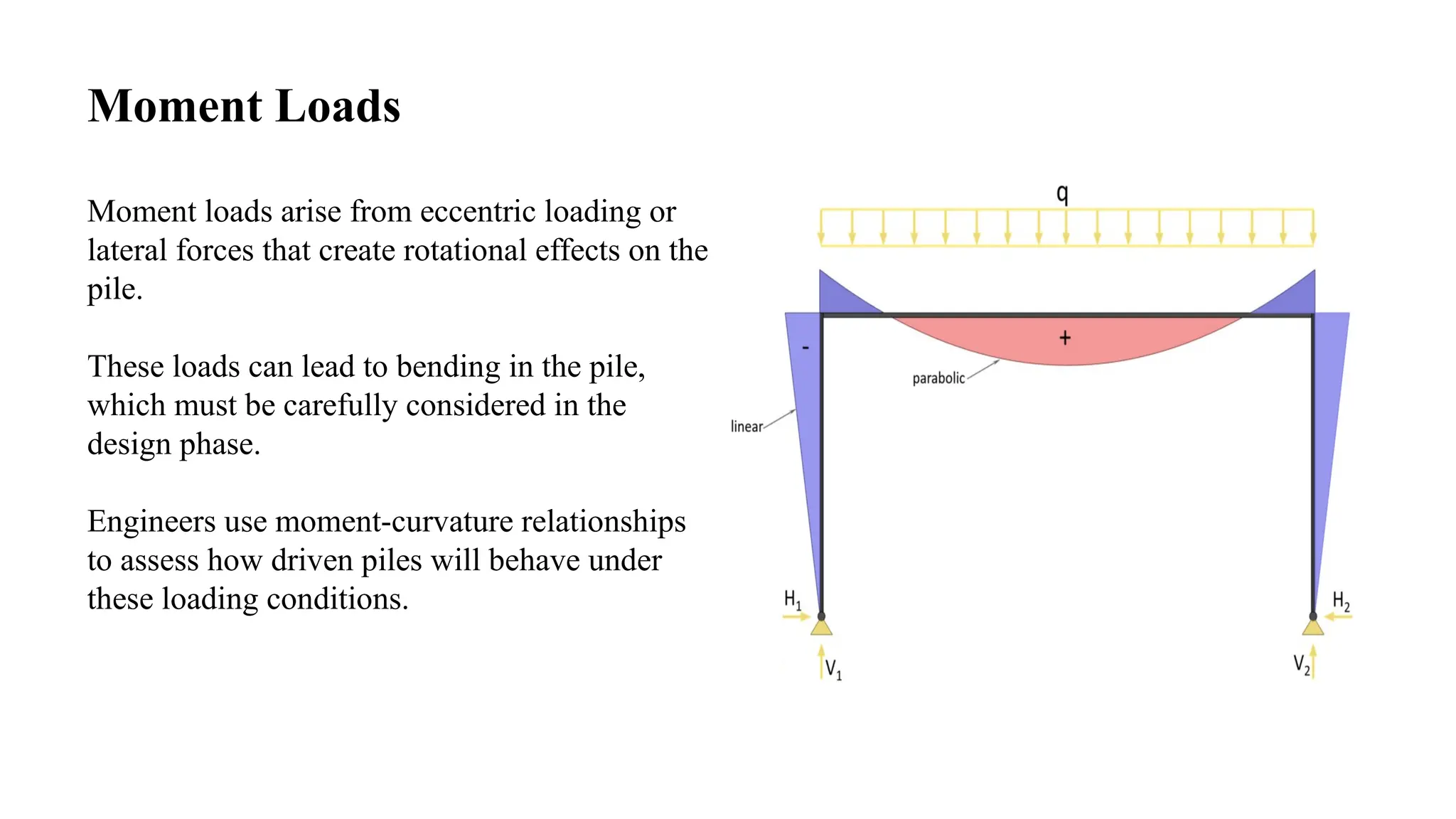
Moment loads arise from eccentric loading or
lateral forces that create rotational effects on the
pile.
These loads can lead to bending in the pile,
which must be carefully considered in the
design phase.
Engineers use moment-curvature relationships
to assess how driven piles will behave under
these loading conditions.
Factors Affecting Load Capacity
1.Soil Type and Condition: Different soil types (cohesive, cohesionless, or mixed)
significantly influence the load capacity. Cohesive soils, like clay, provide more
frictional resistance, while cohesionless soils, like sand, rely more on end-bearing
capacity.
2.Pile Material and Geometric Properties: The material (concrete, steel, timber) and
geometric properties (length, diameter) of the pile affect the load transfer mechanism.
Larger diameters and longer lengths generally increase load capacity.
3.Installation Method: The method of pile installation (driven, bored, or cast-in-situ)
impacts the soil-pile interaction and hence the load capacity. Driven piles can densify the
surrounding soil, potentially increasing capacity.
4.Depth of Penetration: The depth to which the pile is driven affects its load capacity.
Deeper piles can reach stronger soil layers, increasing end-bearing capacity.
Load Testing Methods
Load testing is essential to verify the
performance of driven piles under various load
conditions.
Common methods include static load tests,
dynamic load tests, and lateral load tests, each
serving different purposes.
These tests provide valuable data that can
inform design decisions and ensure safety and
reliability.
Conclusion and Best Practices
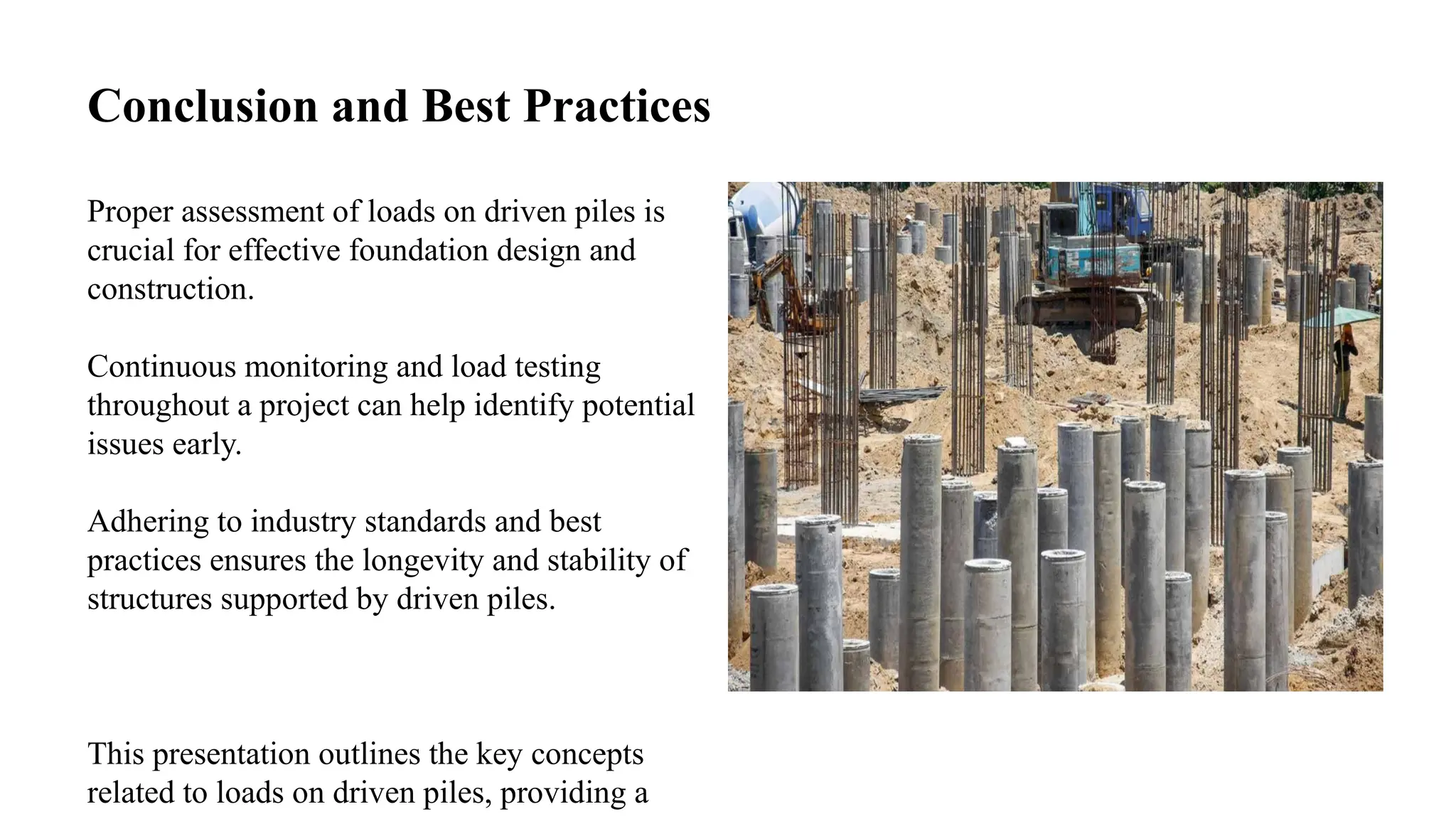
Proper assessment of loads on driven piles is
crucial for effective foundation design and
construction.
Continuous monitoring and load testing
throughout a project can help identify potential
issues early.
Adhering to industry standards and best
practices ensures the longevity and stability of
structures supported by driven piles.
This presentation outlines the key concepts
related to loads on driven piles, providing a

Loads On Driven Piles on the presentation

  • 1.
  • 2.
    Introduction to DrivenPiles Driven piles are structural elements used to transfer loads from structures to deeper, stable soil layers. They are installed by hammering or vibrating them into the ground, providing immediate load-bearing capacity. Understanding the loads on driven piles is crucial for ensuring stability and safety in construction projects.
  • 3.
    Types of Loadson Driven Piles Driven piles experience vertical loads, lateral loads, and moment loads during their service life. Vertical loads consist of both dead loads from the structure and live loads from temporary or permanent use. Lateral loads are often caused by wind, seismic activity, or earth pressure, affecting the pile's stability.
  • 4.
    Vertical Loads Vertical loadsare primarily axial forces that push down on the piles due to the weight of the structure. The capacity of a driven pile to resist vertical loads depends on its material properties and the surrounding soil. It is essential to perform load tests to verify the vertical load capacity of driven piles before construction.
  • 5.
    Lateral Loads Lateral loadscan cause bending moments in the pile and need to be accounted for in design calculations. Factors such as pile spacing, soil type, and depth significantly influence how piles respond to lateral forces. Design methods often include lateral load analyses to ensure the pile can safely resist these forces.
  • 6.
    Moment Loads Moment loadsarise from eccentric loading or lateral forces that create rotational effects on the pile. These loads can lead to bending in the pile, which must be carefully considered in the design phase. Engineers use moment-curvature relationships to assess how driven piles will behave under these loading conditions.
  • 7.
    Factors Affecting LoadCapacity 1.Soil Type and Condition: Different soil types (cohesive, cohesionless, or mixed) significantly influence the load capacity. Cohesive soils, like clay, provide more frictional resistance, while cohesionless soils, like sand, rely more on end-bearing capacity. 2.Pile Material and Geometric Properties: The material (concrete, steel, timber) and geometric properties (length, diameter) of the pile affect the load transfer mechanism. Larger diameters and longer lengths generally increase load capacity. 3.Installation Method: The method of pile installation (driven, bored, or cast-in-situ) impacts the soil-pile interaction and hence the load capacity. Driven piles can densify the surrounding soil, potentially increasing capacity. 4.Depth of Penetration: The depth to which the pile is driven affects its load capacity. Deeper piles can reach stronger soil layers, increasing end-bearing capacity.
  • 8.
    Load Testing Methods Loadtesting is essential to verify the performance of driven piles under various load conditions. Common methods include static load tests, dynamic load tests, and lateral load tests, each serving different purposes. These tests provide valuable data that can inform design decisions and ensure safety and reliability.
  • 9.
    Conclusion and BestPractices Proper assessment of loads on driven piles is crucial for effective foundation design and construction. Continuous monitoring and load testing throughout a project can help identify potential issues early. Adhering to industry standards and best practices ensures the longevity and stability of structures supported by driven piles. This presentation outlines the key concepts related to loads on driven piles, providing a

Editor's Notes

  • #2 Image source: https://www.structuralguide.com
  • #3 Image source: https://civilguidelines.com
  • #4 Image source: https://punchlistzero.com
  • #5 Image source: https://www.structuralguide.com
  • #6 Image source: https://structuralbasics.com
  • #7 Image source: https://www.researchgate.net
  • #8 Image source: https://www.etelligens.com
  • #9 Image source: https://housing.com