Supported by: Sir Dorabji Tata Trust (SDTT) & allied Trusts, Mumbai
Coordinated by: SRI Secretariat, Bhubaneswar
SDTT-SRI Programme
ACHIEVEMENTS & PROGRESS
1st phase
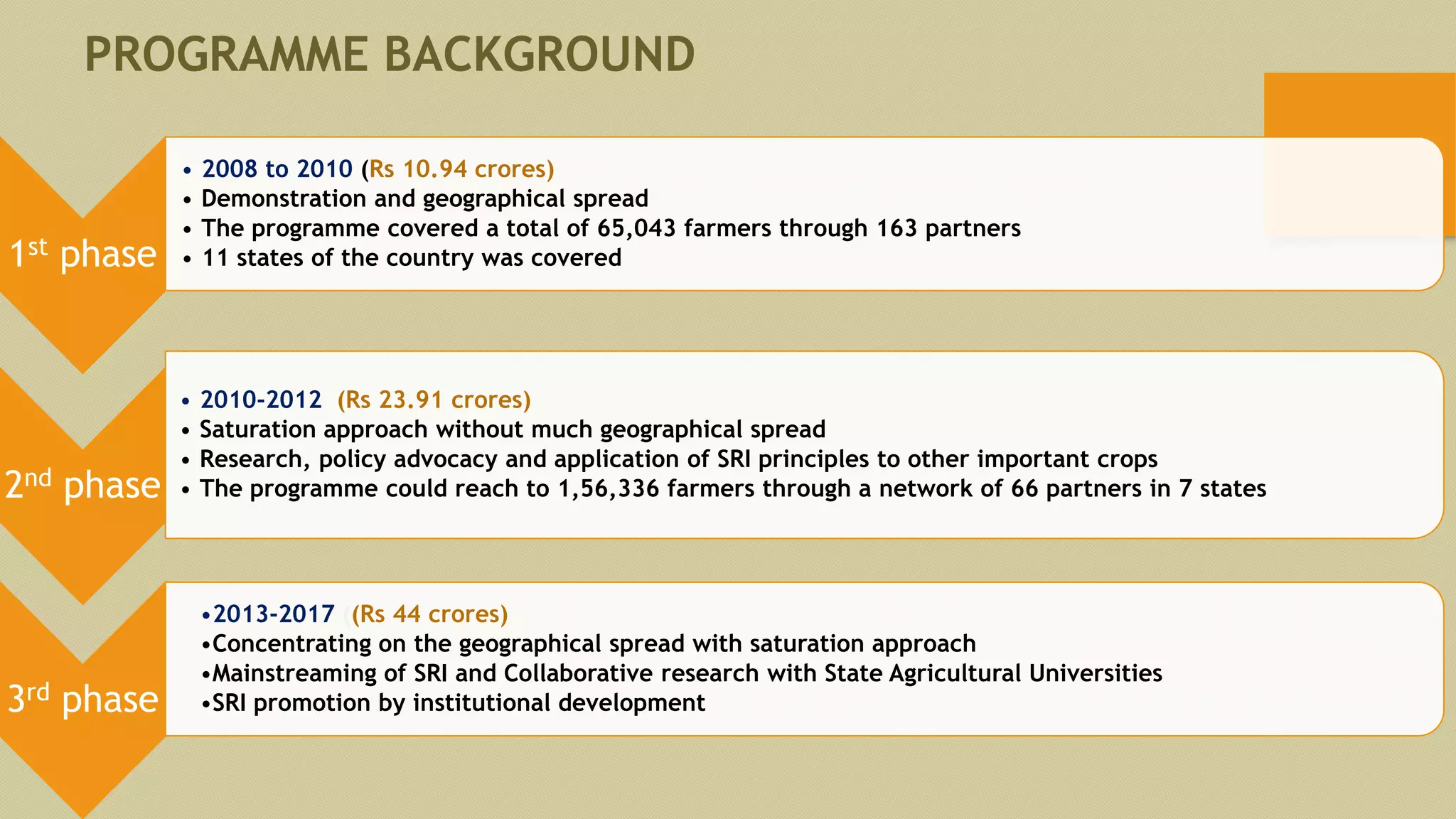
• 2008 to 2010 (Rs 10.94 crores)
• Demonstration and geographical spread
• The programme covered a total of 65,043 farmers through 163 partners
• 11 states of the country was covered
2nd phase
• 2010-2012 (Rs 23.91 crores)
• Saturation approach without much geographical spread
• Research, policy advocacy and application of SRI principles to other important crops
• The programme could reach to 1,56,336 farmers through a network of 66 partners in 7 states
3rd phase
•2013-2017 ((Rs 44 crores)
•Concentrating on the geographical spread with saturation approach
•Mainstreaming of SRI and Collaborative research with State Agricultural Universities
•SRI promotion by institutional development
PROGRAMME BACKGROUND
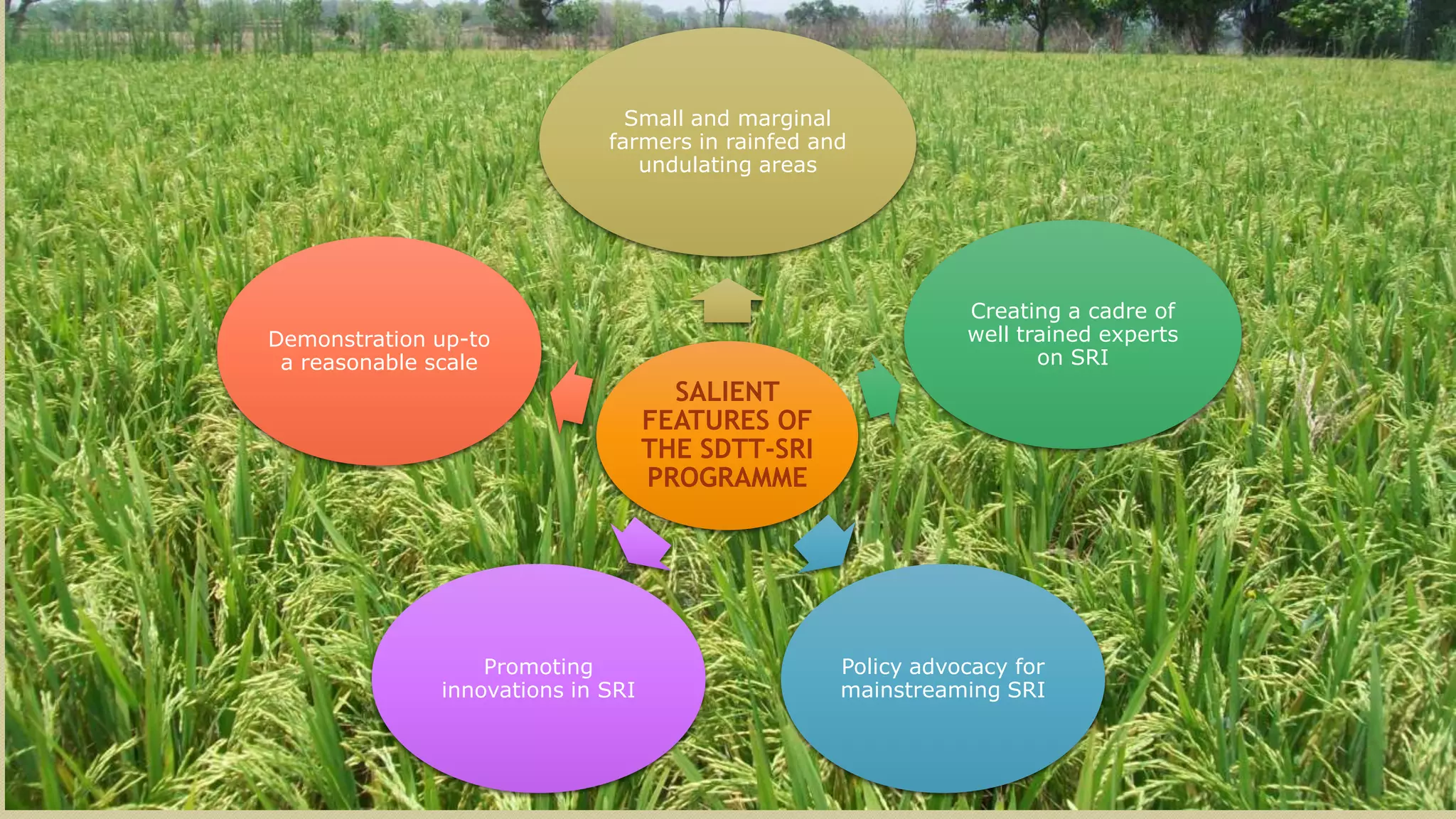
SALIENT
FEATURES OF
THE SDTT-SRI
PROGRAMME
Small and marginal
farmers in rainfed and
undulating areas
Creating a cadre of
well trained experts
on SRI
Policy advocacy for
mainstreaming SRI
Promoting
innovations in SRI
Demonstration up-to
a reasonable scale
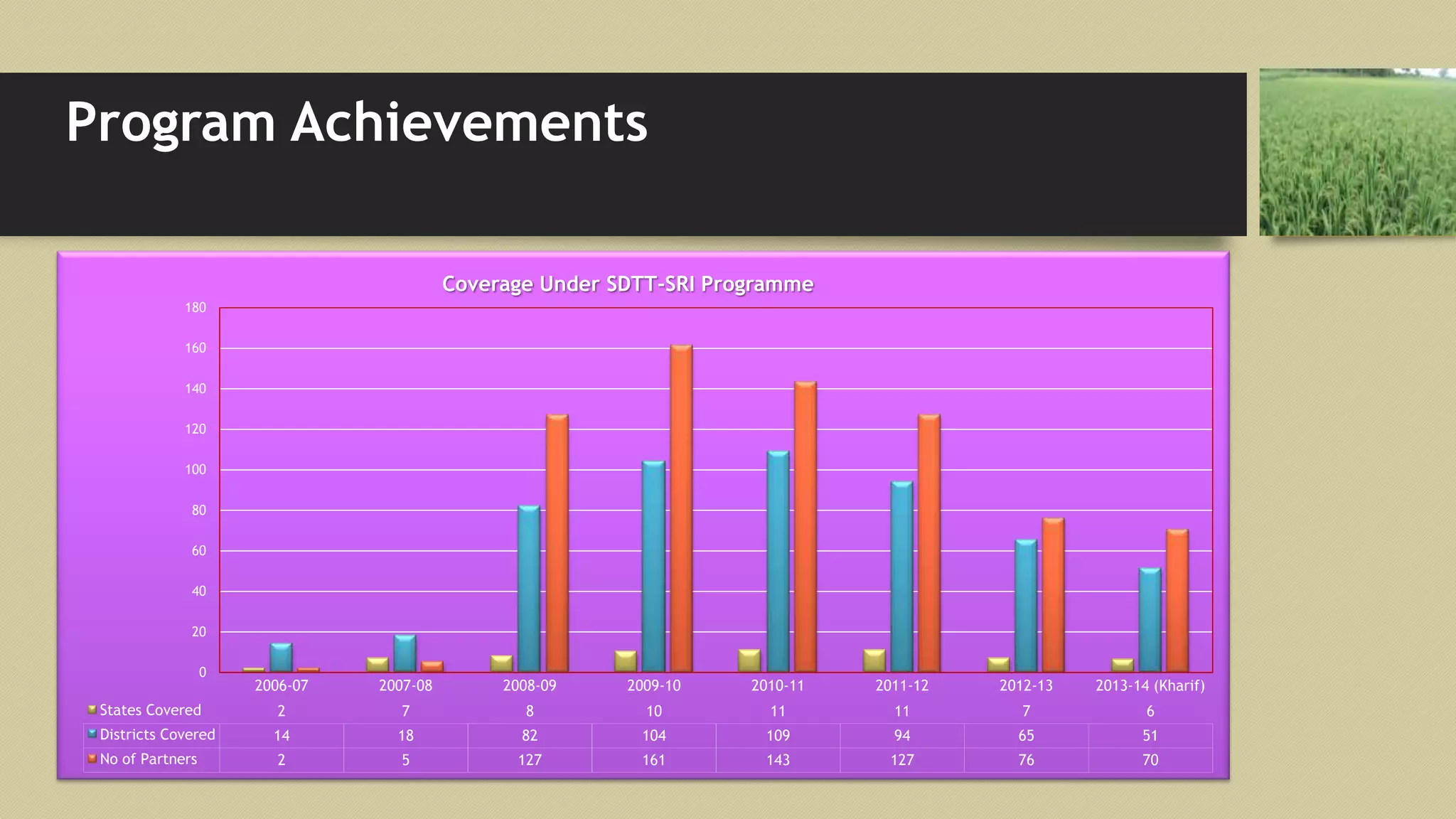
Program Achievements
2006-07 2007-08 2008-09 2009-10 2010-11 2011-12 2012-13 2013-14 (Kharif)
States Covered 2 7 8 10 11 11 7 6
Districts Covered 14 18 82 104 109 94 65 51
No of Partners 2 5 127 161 143 127 76 70
0
20
40
60
80
100
120
140
160
180
Coverage Under SDTT-SRI Programme
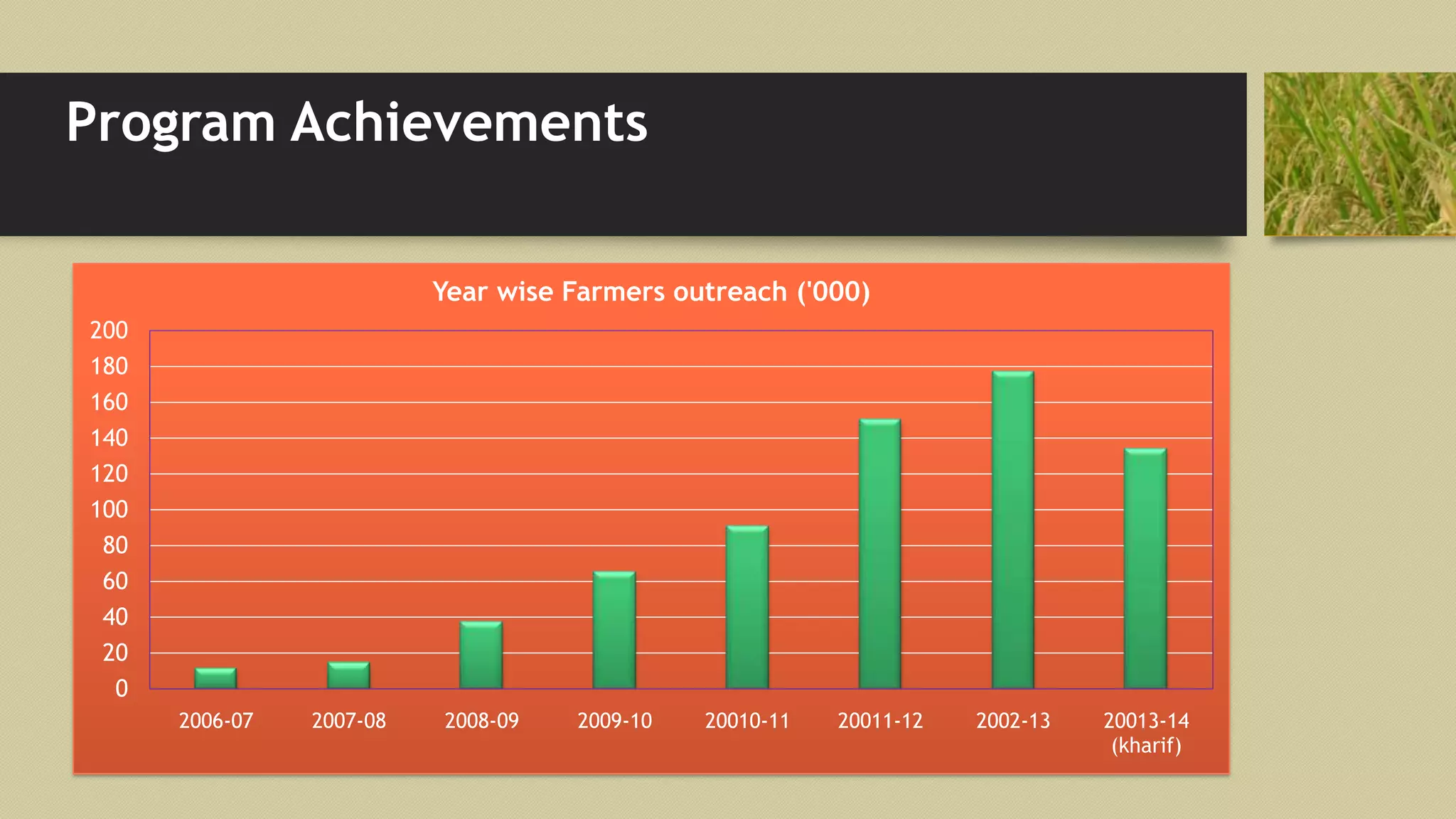
Program Achievements
0
20
40
60
80
100
120
140
160
180
200
2006-07 2007-08 2008-09 2009-10 20010-11 20011-12 2002-13 20013-14
(kharif)
Year wise Farmers outreach ('000)
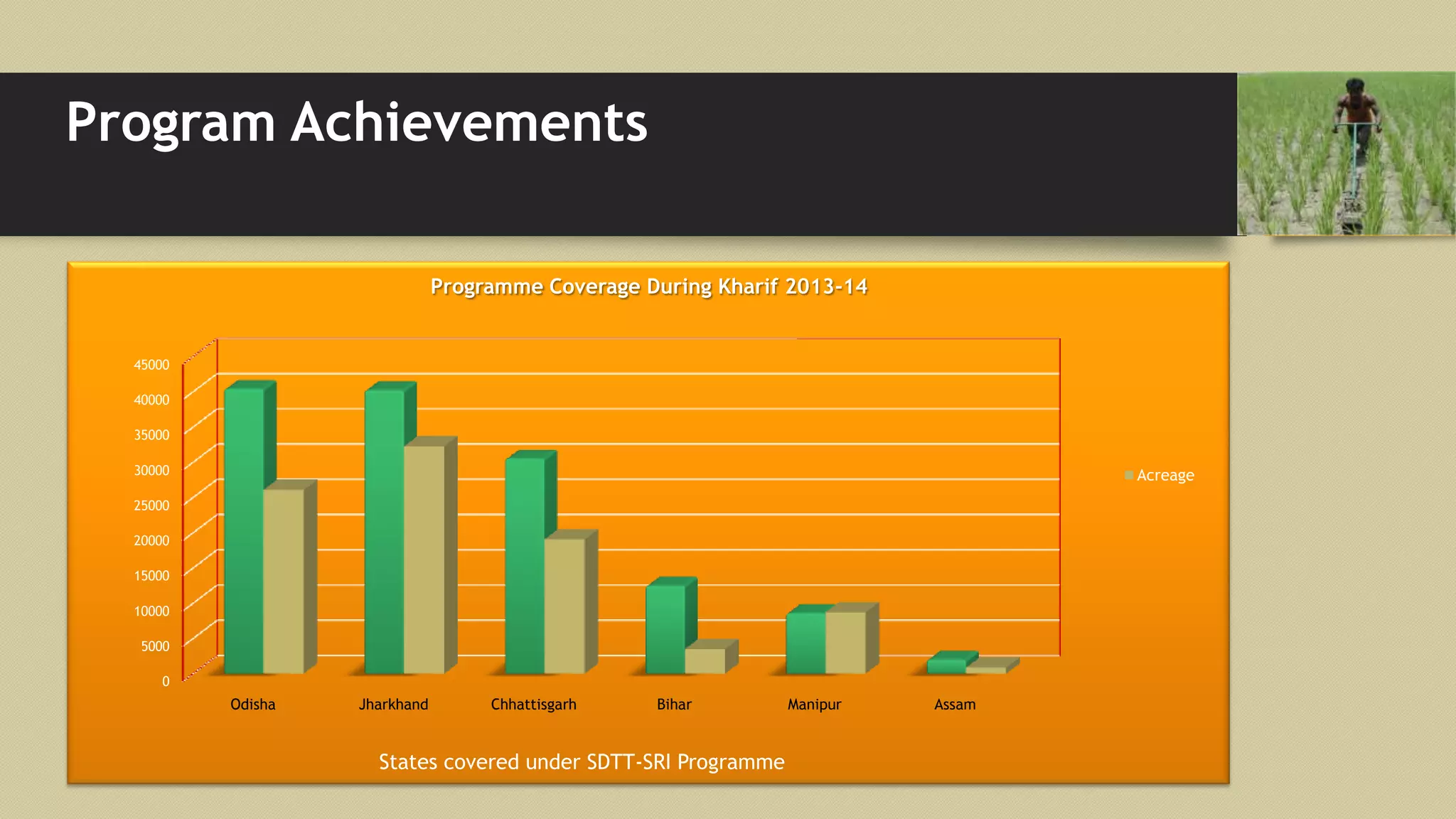
Program Achievements
0
5000
10000
15000
20000
25000
30000
35000
40000
45000
Odisha Jharkhand Chhattisgarh Bihar Manipur Assam
States covered under SDTT-SRI Programme
Programme Coverage During Kharif 2013-14
Acreage
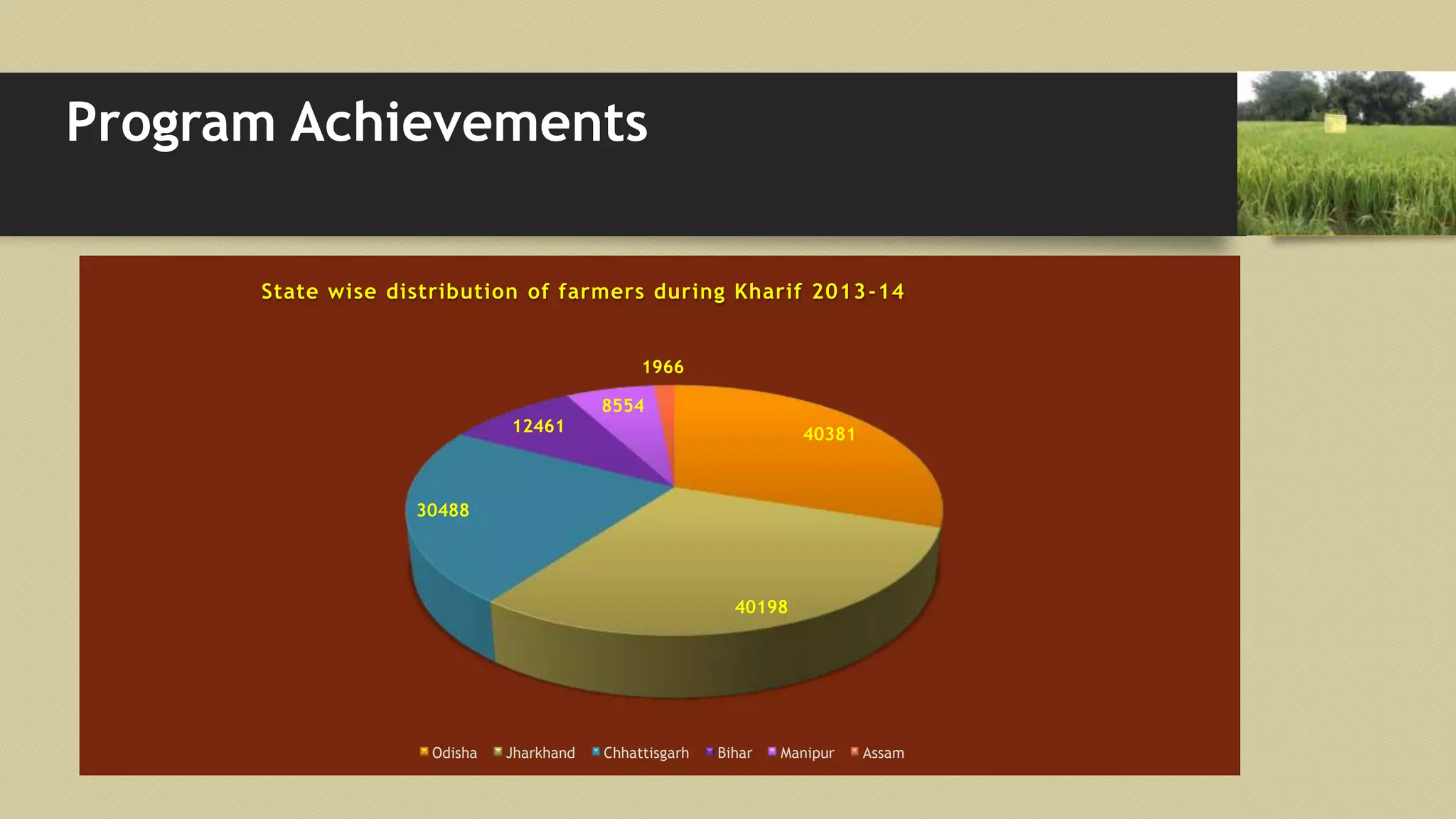
Program Achievements
40381
40198
30488
12461
8554
1966
State wise distribution of farmers during Kharif 2013-14
Odisha Jharkhand Chhattisgarh Bihar Manipur Assam
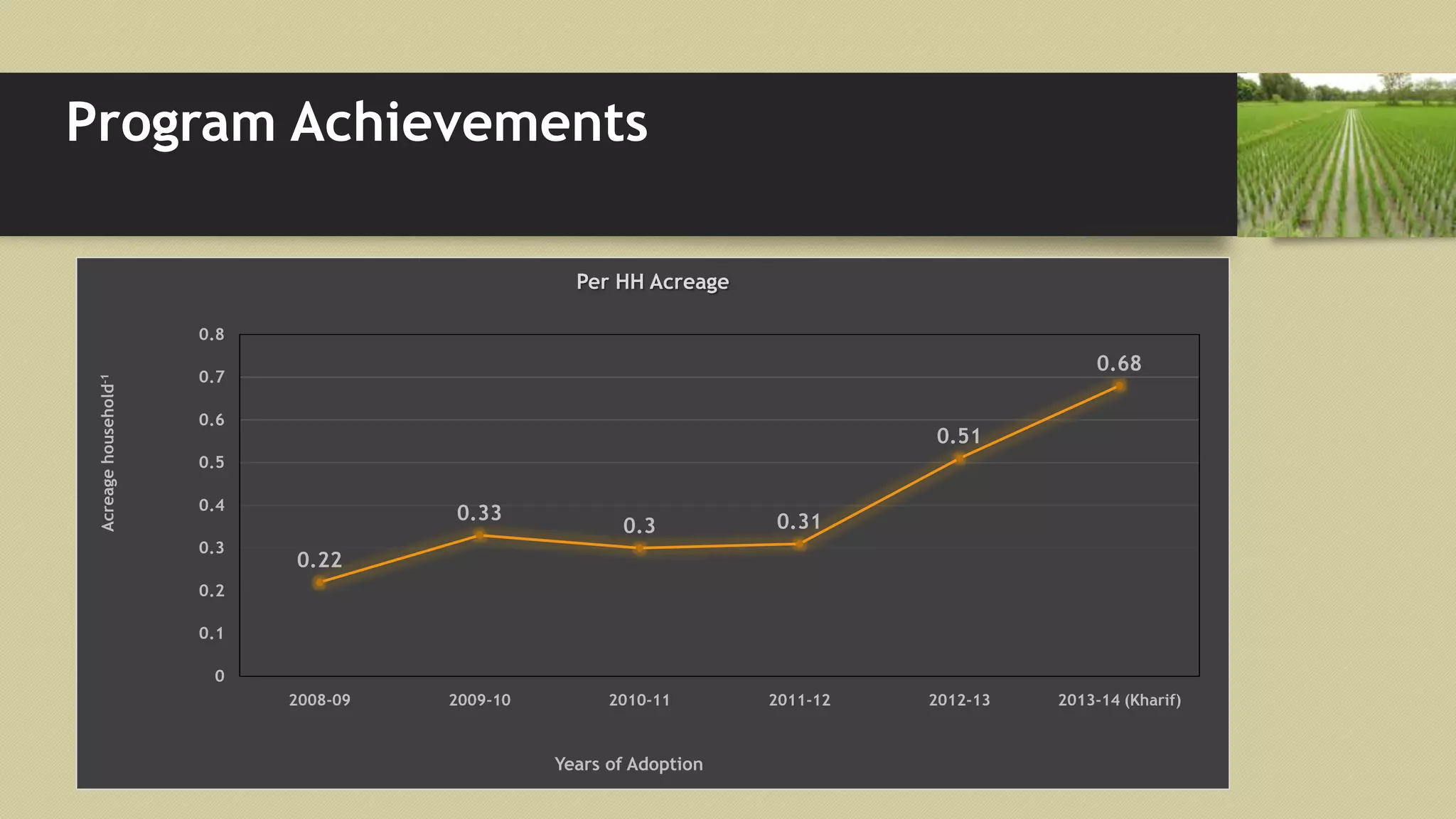
Program Achievements
0.22
0.33
0.3 0.31
0.51
0.68
0
0.1
0.2
0.3
0.4
0.5
0.6
0.7
0.8
2008-09 2009-10 2010-11 2011-12 2012-13 2013-14 (Kharif)
Acreagehousehold-1
Years of Adoption
Per HH Acreage
Key Program Achievements
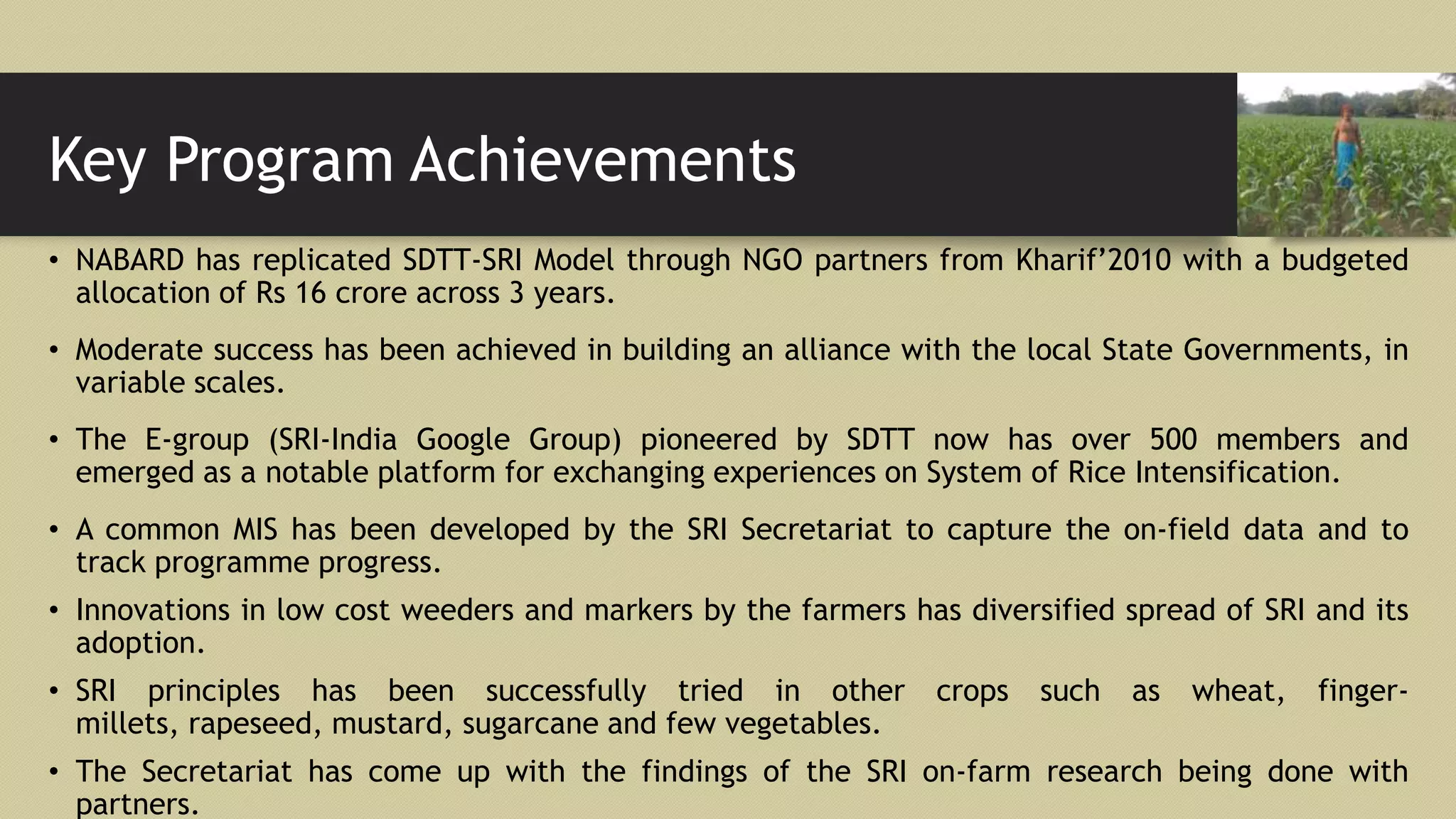
• NABARD has replicated SDTT-SRI Model through NGO partners from Kharif’2010 with a budgeted
allocation of Rs 16 crore across 3 years.
• Moderate success has been achieved in building an alliance with the local State Governments, in
variable scales.
• The E-group (SRI-India Google Group) pioneered by SDTT now has over 500 members and
emerged as a notable platform for exchanging experiences on System of Rice Intensification.
• A common MIS has been developed by the SRI Secretariat to capture the on-field data and to
track programme progress.
• Innovations in low cost weeders and markers by the farmers has diversified spread of SRI and its
adoption.
• SRI principles has been successfully tried in other crops such as wheat, finger-
millets, rapeseed, mustard, sugarcane and few vegetables.
• The Secretariat has come up with the findings of the SRI on-farm research being done with
partners.
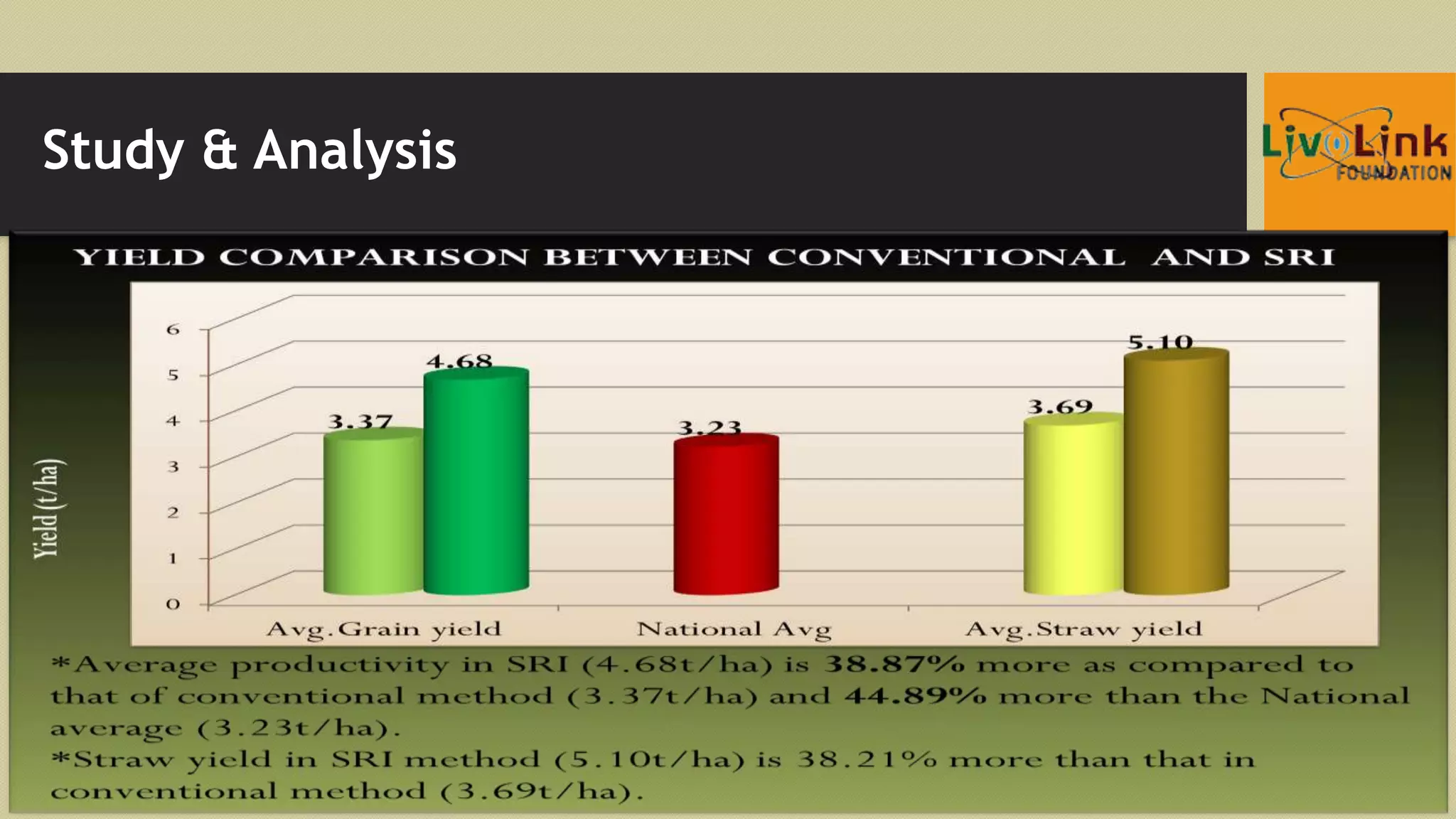
Study & Analysis
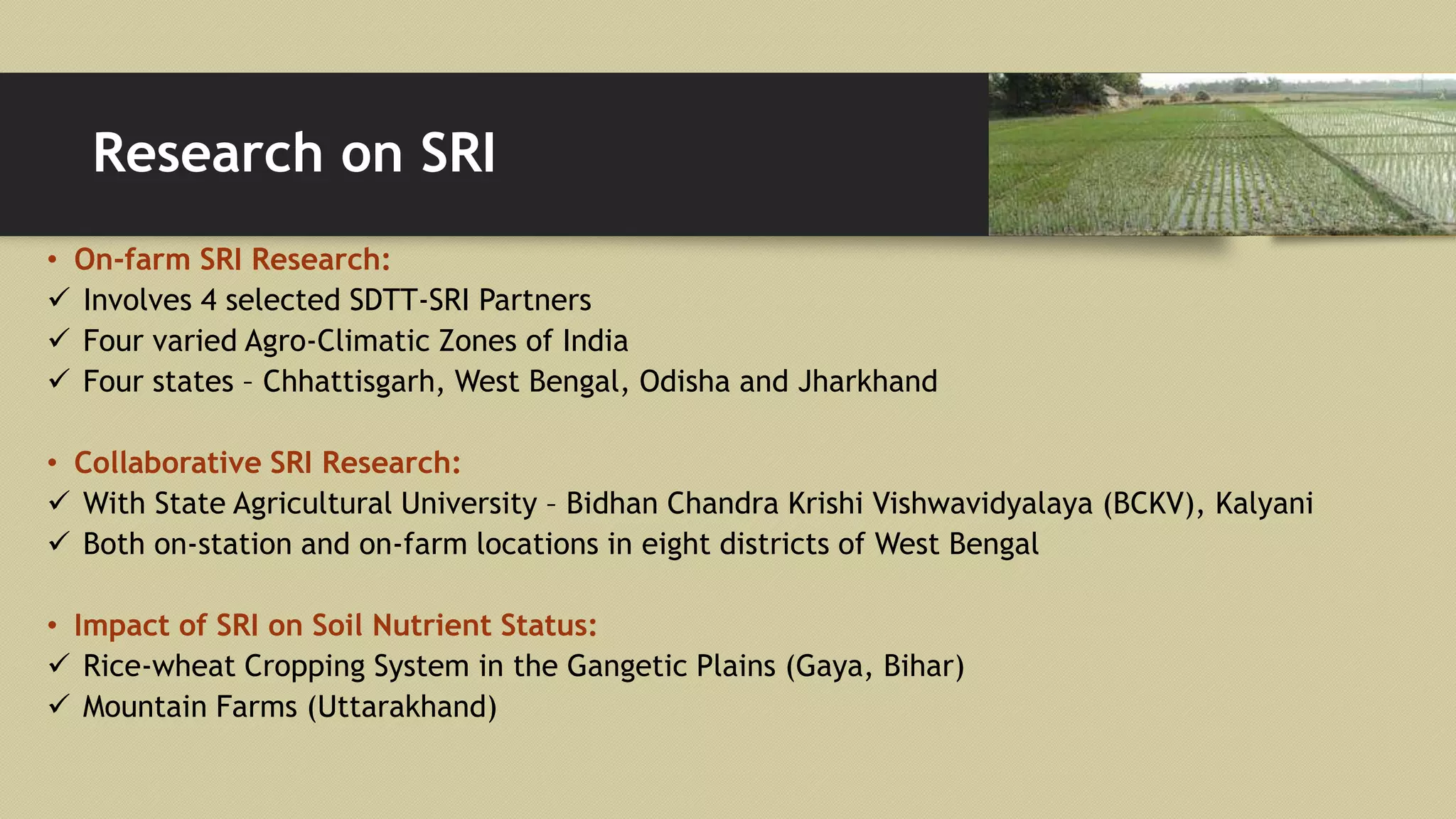
Research on SRI
• On-farm SRI Research:
 Involves 4 selected SDTT-SRI Partners
 Four varied Agro-Climatic Zones of India
 Four states – Chhattisgarh, West Bengal, Odisha and Jharkhand
• Collaborative SRI Research:
 With State Agricultural University – Bidhan Chandra Krishi Vishwavidyalaya (BCKV), Kalyani
 Both on-station and on-farm locations in eight districts of West Bengal
• Impact of SRI on Soil Nutrient Status:
 Rice-wheat Cropping System in the Gangetic Plains (Gaya, Bihar)
 Mountain Farms (Uttarakhand)
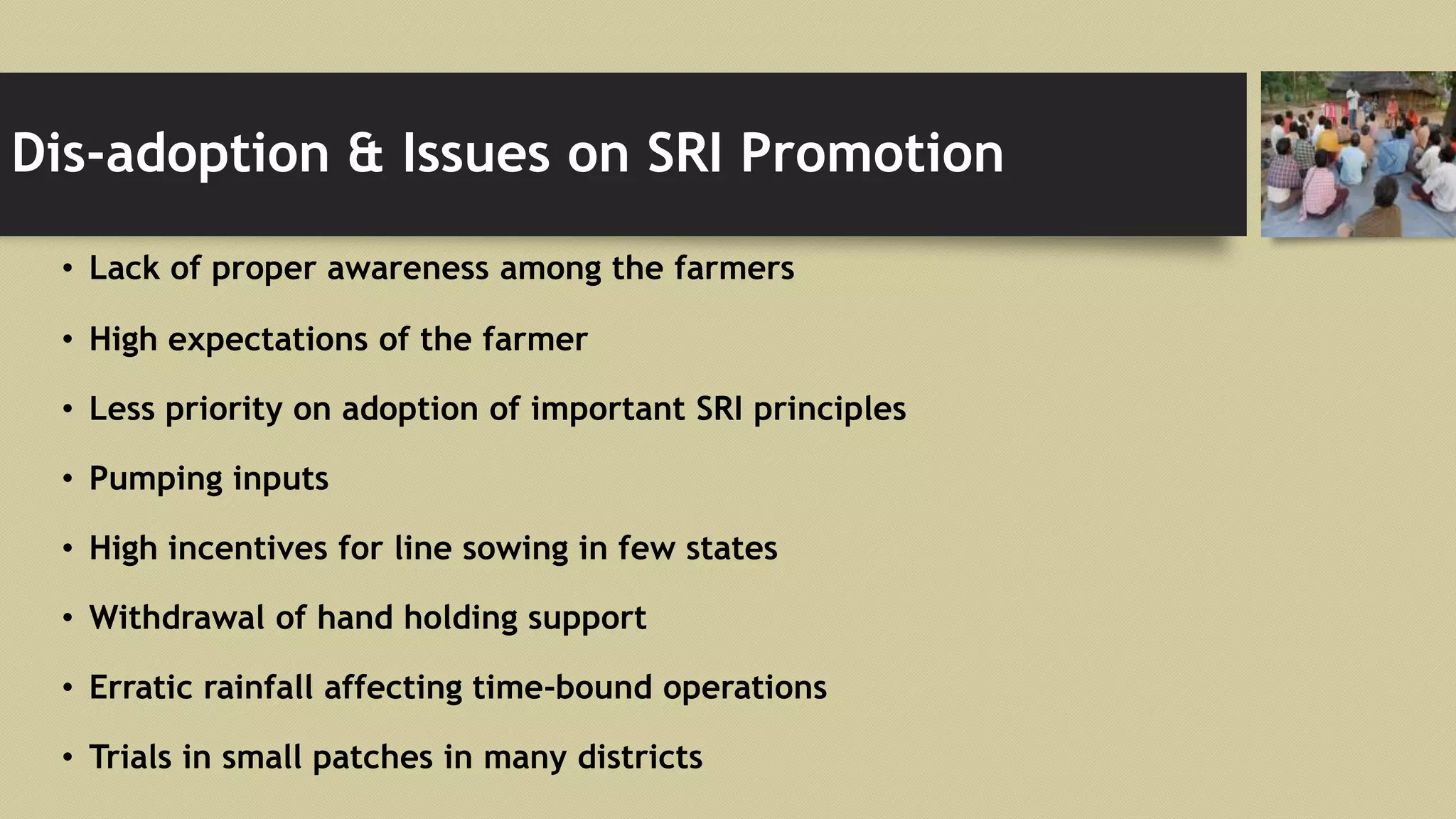
Dis-adoption & Issues on SRI Promotion
• Lack of proper awareness among the farmers
• High expectations of the farmer
• Less priority on adoption of important SRI principles
• Pumping inputs
• High incentives for line sowing in few states
• Withdrawal of hand holding support
• Erratic rainfall affecting time-bound operations
• Trials in small patches in many districts
THANKS

Livolink ppt

  • 1.
    Supported by: SirDorabji Tata Trust (SDTT) & allied Trusts, Mumbai Coordinated by: SRI Secretariat, Bhubaneswar SDTT-SRI Programme ACHIEVEMENTS & PROGRESS
  • 2.
    1st phase • 2008to 2010 (Rs 10.94 crores) • Demonstration and geographical spread • The programme covered a total of 65,043 farmers through 163 partners • 11 states of the country was covered 2nd phase • 2010-2012 (Rs 23.91 crores) • Saturation approach without much geographical spread • Research, policy advocacy and application of SRI principles to other important crops • The programme could reach to 1,56,336 farmers through a network of 66 partners in 7 states 3rd phase •2013-2017 ((Rs 44 crores) •Concentrating on the geographical spread with saturation approach •Mainstreaming of SRI and Collaborative research with State Agricultural Universities •SRI promotion by institutional development PROGRAMME BACKGROUND
  • 3.
    SALIENT FEATURES OF THE SDTT-SRI PROGRAMME Smalland marginal farmers in rainfed and undulating areas Creating a cadre of well trained experts on SRI Policy advocacy for mainstreaming SRI Promoting innovations in SRI Demonstration up-to a reasonable scale
  • 4.
    Program Achievements 2006-07 2007-082008-09 2009-10 2010-11 2011-12 2012-13 2013-14 (Kharif) States Covered 2 7 8 10 11 11 7 6 Districts Covered 14 18 82 104 109 94 65 51 No of Partners 2 5 127 161 143 127 76 70 0 20 40 60 80 100 120 140 160 180 Coverage Under SDTT-SRI Programme
  • 5.
    Program Achievements 0 20 40 60 80 100 120 140 160 180 200 2006-07 2007-082008-09 2009-10 20010-11 20011-12 2002-13 20013-14 (kharif) Year wise Farmers outreach ('000)
  • 6.
    Program Achievements 0 5000 10000 15000 20000 25000 30000 35000 40000 45000 Odisha JharkhandChhattisgarh Bihar Manipur Assam States covered under SDTT-SRI Programme Programme Coverage During Kharif 2013-14 Acreage
  • 7.
    Program Achievements 40381 40198 30488 12461 8554 1966 State wisedistribution of farmers during Kharif 2013-14 Odisha Jharkhand Chhattisgarh Bihar Manipur Assam
  • 8.
    Program Achievements 0.22 0.33 0.3 0.31 0.51 0.68 0 0.1 0.2 0.3 0.4 0.5 0.6 0.7 0.8 2008-092009-10 2010-11 2011-12 2012-13 2013-14 (Kharif) Acreagehousehold-1 Years of Adoption Per HH Acreage
  • 9.
    Key Program Achievements •NABARD has replicated SDTT-SRI Model through NGO partners from Kharif’2010 with a budgeted allocation of Rs 16 crore across 3 years. • Moderate success has been achieved in building an alliance with the local State Governments, in variable scales. • The E-group (SRI-India Google Group) pioneered by SDTT now has over 500 members and emerged as a notable platform for exchanging experiences on System of Rice Intensification. • A common MIS has been developed by the SRI Secretariat to capture the on-field data and to track programme progress. • Innovations in low cost weeders and markers by the farmers has diversified spread of SRI and its adoption. • SRI principles has been successfully tried in other crops such as wheat, finger- millets, rapeseed, mustard, sugarcane and few vegetables. • The Secretariat has come up with the findings of the SRI on-farm research being done with partners.
  • 10.
  • 11.
    Research on SRI •On-farm SRI Research:  Involves 4 selected SDTT-SRI Partners  Four varied Agro-Climatic Zones of India  Four states – Chhattisgarh, West Bengal, Odisha and Jharkhand • Collaborative SRI Research:  With State Agricultural University – Bidhan Chandra Krishi Vishwavidyalaya (BCKV), Kalyani  Both on-station and on-farm locations in eight districts of West Bengal • Impact of SRI on Soil Nutrient Status:  Rice-wheat Cropping System in the Gangetic Plains (Gaya, Bihar)  Mountain Farms (Uttarakhand)
  • 12.
    Dis-adoption & Issueson SRI Promotion • Lack of proper awareness among the farmers • High expectations of the farmer • Less priority on adoption of important SRI principles • Pumping inputs • High incentives for line sowing in few states • Withdrawal of hand holding support • Erratic rainfall affecting time-bound operations • Trials in small patches in many districts
  • 13.