Livelihood
(Permaculture)
Understanding the concept of
Permaculture
• Etymologically the word permaculture was
derived from two common English words;
perma nent and agri culture combined to
mean permaculture, by taking the first five
words from permanent and the last seven
words from agriculture
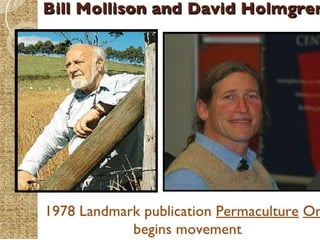
• It was coined by two Australian men Bill
Mollison and David Holmgren in the 1970’s.
Integrating lessons from ecology, organic
gardening, energy-efficient building and agro-
forestry, permaculture[4] principles help
people to design rich and sustainable ways of
living. What we might usually think of as
waste put back into the system, recycling
precious resources. Landscapes are designed
to conserve water, energy and soil nutrients
• The principles and techniques of permaculture
are used to design sustainable systems of food
production that work with nature for
maximum long-term efficiency, mainly
promoting home and large scale sustainable
agriculture
• Permaculture is defined as consciously
designed landscapes which mimic the patterns
and relationships found in nature, while
yielding an abundance of food, fiber and
energy for the provision of local needs
• Mollison (1988) gave an elaborated definition and
wrote that permaculture (permanent agriculture)
is a conscious design and maintenance of
agriculturally productive ecosystems which have
the diversity, sustainability, stability and resilience
of natural ecosystem. It is the harmonious
integration of landscape and people providing
their food, energy shelter and other material and
non-material needs in a sustainable manner.
• Permaculture is an approach to designing
human settlements and agricultural
systems that mimic the relationships
found in natural ecologies. It is a
philosophy of working with, rather than
against nature. It is a design science that is
rooted in the observation of nature. It is a
positive, solution-based way of thinking,
using a practical set of ecological design
principles and methods
• Permaculture shows how to observe the dynamics of
natural ecosystems. We can apply this knowledge in
designing constructed ecosystems that serve the needs
of human populations without degrading our natural
environment. Permaculture design requires careful
observation of the natural cycles, energies and
resources on a site, we can design a system that
imitates nature and takes on a life of its own. Once the
design is implemented on the ground, the system can
be largely self-maintaining. It can yield a variety of high
quality food, fiber and energy to meet basic human
needs and by reconciling life hood and the ecosystem
makes livelihood environmentally friendly
• Nature works in its own, even more perfect
without human intervention. This can shortly
expressed as nature’s closed system, for nature’s
population meet their needs internally without
external intervention. Therefore, learning from
nature’s self-regulation, permaculture tries to
design a system which is approximately a closed
system to meet the needs of nature (including
human beings) in a sustainable and undisturbed
natural ecosystem
• Ethics and Principles of Permaculture
• Permaculture is to large extent concerned with
attitudinal change towards the natural ecology, a
culture of conserving the natural ecosystem by
getting our necessities from and without
depleting the system. For this the proponents
adopted some ethical grounds of permaculture
and the principles to work with permaculture.
These ethical grounds and principles of
permaculture are discussed below
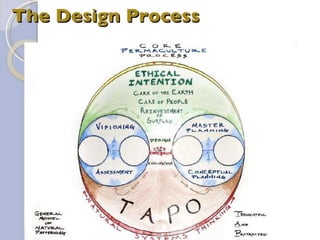
Ethics of Permaculture
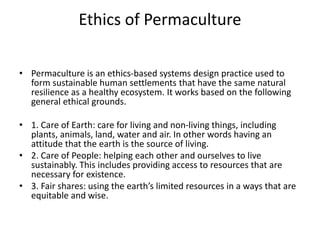
• Permaculture is an ethics-based systems design practice used to
form sustainable human settlements that have the same natural
resilience as a healthy ecosystem. It works based on the following
general ethical grounds.
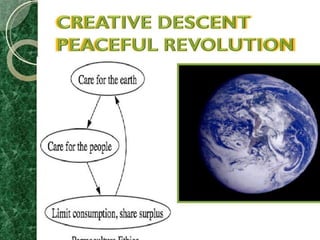
• 1. Care of Earth: care for living and non-living things, including
plants, animals, land, water and air. In other words having an
attitude that the earth is the source of living.
• 2. Care of People: helping each other and ourselves to live
sustainably. This includes providing access to resources that are
necessary for existence.
• 3. Fair shares: using the earth’s limited resources in a ways that are
equitable and wise.
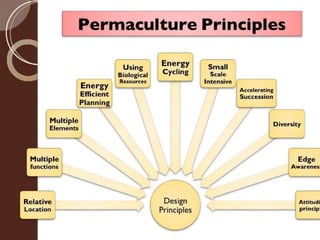
Principles of Permaculture
• The first principle is about observation and
interaction. Since the practice of permaculture
is based on design, it requires careful
observation of the elements of the
environment and the landscape in the vicinity
Principles of Permaculture
The second principle states about harvesting
resources that enable for maintaining the
ecosystem sustainably. This includes
dependence on renewable resources than non-
renewable resources for livelihood asset
formation
Livelihood (permaculture) By Allah Dad Khan

Livelihood (permaculture) By Allah Dad Khan

  • 1.
  • 2.
    Understanding the conceptof Permaculture • Etymologically the word permaculture was derived from two common English words; perma nent and agri culture combined to mean permaculture, by taking the first five words from permanent and the last seven words from agriculture
  • 3.
    • It wascoined by two Australian men Bill Mollison and David Holmgren in the 1970’s. Integrating lessons from ecology, organic gardening, energy-efficient building and agro- forestry, permaculture[4] principles help people to design rich and sustainable ways of living. What we might usually think of as waste put back into the system, recycling precious resources. Landscapes are designed to conserve water, energy and soil nutrients
  • 4.
    • The principlesand techniques of permaculture are used to design sustainable systems of food production that work with nature for maximum long-term efficiency, mainly promoting home and large scale sustainable agriculture
  • 5.
    • Permaculture isdefined as consciously designed landscapes which mimic the patterns and relationships found in nature, while yielding an abundance of food, fiber and energy for the provision of local needs
  • 6.
    • Mollison (1988)gave an elaborated definition and wrote that permaculture (permanent agriculture) is a conscious design and maintenance of agriculturally productive ecosystems which have the diversity, sustainability, stability and resilience of natural ecosystem. It is the harmonious integration of landscape and people providing their food, energy shelter and other material and non-material needs in a sustainable manner.
  • 10.
    • Permaculture isan approach to designing human settlements and agricultural systems that mimic the relationships found in natural ecologies. It is a philosophy of working with, rather than against nature. It is a design science that is rooted in the observation of nature. It is a positive, solution-based way of thinking, using a practical set of ecological design principles and methods
  • 11.
    • Permaculture showshow to observe the dynamics of natural ecosystems. We can apply this knowledge in designing constructed ecosystems that serve the needs of human populations without degrading our natural environment. Permaculture design requires careful observation of the natural cycles, energies and resources on a site, we can design a system that imitates nature and takes on a life of its own. Once the design is implemented on the ground, the system can be largely self-maintaining. It can yield a variety of high quality food, fiber and energy to meet basic human needs and by reconciling life hood and the ecosystem makes livelihood environmentally friendly
  • 12.
    • Nature worksin its own, even more perfect without human intervention. This can shortly expressed as nature’s closed system, for nature’s population meet their needs internally without external intervention. Therefore, learning from nature’s self-regulation, permaculture tries to design a system which is approximately a closed system to meet the needs of nature (including human beings) in a sustainable and undisturbed natural ecosystem
  • 13.
    • Ethics andPrinciples of Permaculture • Permaculture is to large extent concerned with attitudinal change towards the natural ecology, a culture of conserving the natural ecosystem by getting our necessities from and without depleting the system. For this the proponents adopted some ethical grounds of permaculture and the principles to work with permaculture. These ethical grounds and principles of permaculture are discussed below
  • 26.
    Ethics of Permaculture •Permaculture is an ethics-based systems design practice used to form sustainable human settlements that have the same natural resilience as a healthy ecosystem. It works based on the following general ethical grounds. • 1. Care of Earth: care for living and non-living things, including plants, animals, land, water and air. In other words having an attitude that the earth is the source of living. • 2. Care of People: helping each other and ourselves to live sustainably. This includes providing access to resources that are necessary for existence. • 3. Fair shares: using the earth’s limited resources in a ways that are equitable and wise.
  • 28.
    Principles of Permaculture •The first principle is about observation and interaction. Since the practice of permaculture is based on design, it requires careful observation of the elements of the environment and the landscape in the vicinity
  • 29.
    Principles of Permaculture Thesecond principle states about harvesting resources that enable for maintaining the ecosystem sustainably. This includes dependence on renewable resources than non- renewable resources for livelihood asset formation