Literary Terms
Alliteration The repetition of sounds in a group of words as in  “Peter Piper Picked a Peck of Pickled Peppers.”
Allusion A reference to a person, place, or thing--often literary, mythological, or historical.  The infinitive of allusion is  to allude.   e.g.  Romeo alludes to the mythological figure Diana in the balcony scene.
Antagonist A major character who opposes the protagonist in a story or play.
Assonance The repetition of vowel  sounds as in  “And so, all the n i ght-t i de,  I  l i e down by the s i de Of my darling, my darling, my l i fe and my br i de.  --Edgar Allan Poe,  Annabel Lee
Atmosphere The overall feeling of a work, which is related to tone and mood.
Audience The audience for a piece of literature may be a single person or a group of people. To what person or group is the text directed?
Characterization   The means by which an author establishes character.  An author may directly describe the appearance and personality of character or show it through action or dialogue.
Climax The point at which the action in a story or play reaches its emotional peak.
Conflict The struggle in the story.  Traditionally, there are four main conflicts: person vs. self (internal) person vs. person (external) person vs. society (external) person vs. nature (external)
Consonance The repetition of consonant sounds as in “ The fair  b reeze  b lew, the white  f oam  f lew, The  f urrow  f ollowed  f ree;” --The Rime of the Ancient Mariner
Contrast To explain how two things differ.  To compare and contrast is to explain how two things are alike and how they are different.
D enotation 1)The  d efinition of a word found in the  d ictionary. 2)Literal meaning of a word. 3) The verb form is “to denote” which means “to mean.” e.g. The word “indolence” denotes “laziness.”
Connotation 1)The definition of a word found outside the dictionary. 2)Figurative meaning of a word. 3) The verb form is “to connote” which means “to suggest or imply a meaning beyond the literal meaning of a word.” e.g. The word “cool” connotes  “ an awesome or exciting thing.”
End rhyme Rhyming words that are at the ends of their respective lines—what we typically think of as normal rhyme.
Fable A story that illustrates a moral often using animals as characters e.g.  The Tortoise and the Hare
Figurative Language Whenever you describe something by comparing it with something else, you are using figurative language. Any language that goes beyond the literal meaning of words in order to furnish new effects or fresh insights into an idea or a subject.    e.g. Whenever you call something “cool,” you’re not talking about its temperature but referring to some other quality it possesses.
Foreshadowing A technique in which an author gives clues about something that will happen later in the story.
Free Verse Poetry with no set  meter (rhythm) or  rhyme scheme.
Genre A term used to describe a particular category or type of literature. Some literary genres are mysteries, westerns, and romances.
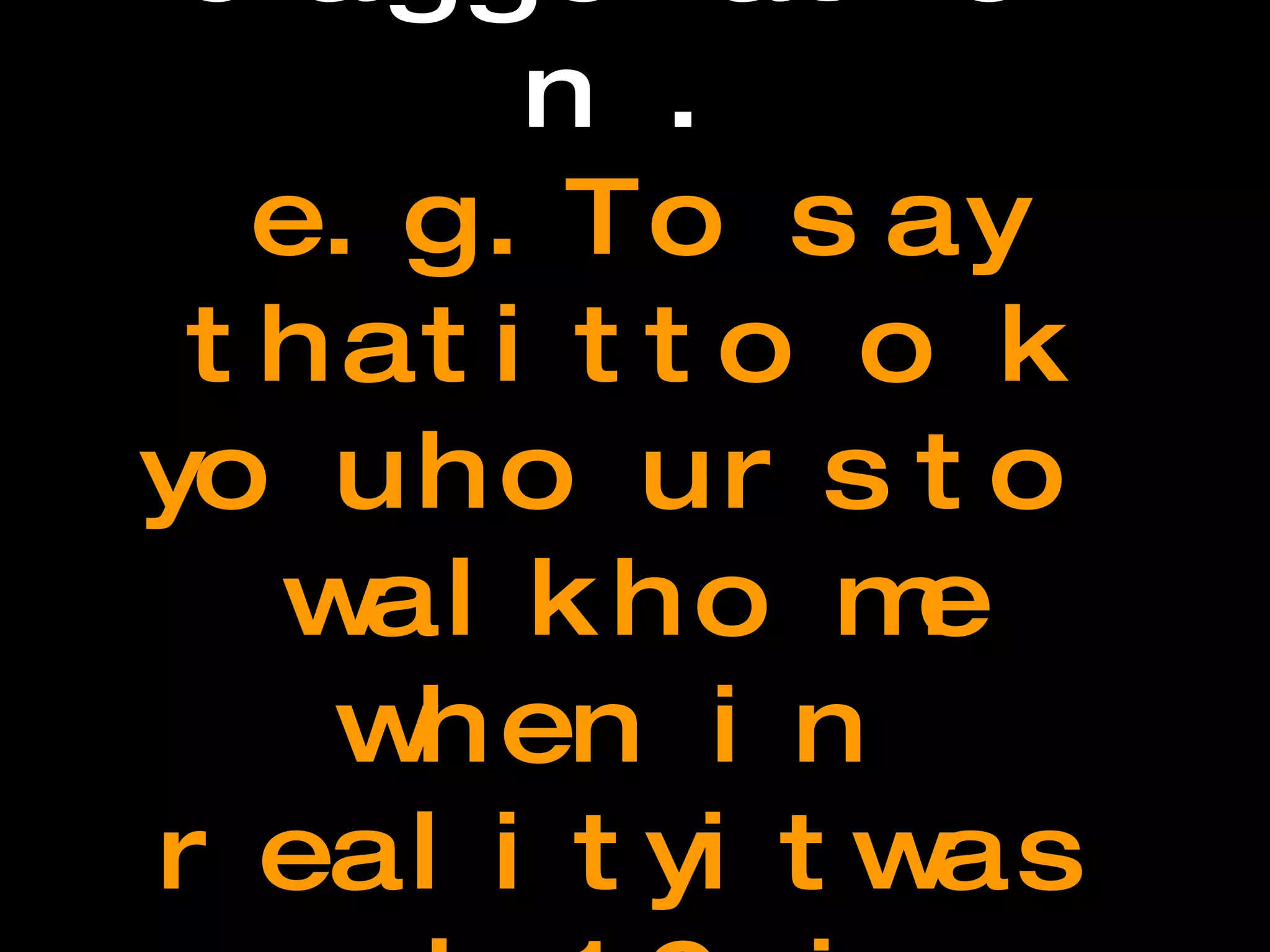
Hyperbole An extreme exaggeration.  e.g. To say that it took you hours to walk home when in reality it was only 10 mins would be a hyperbole.
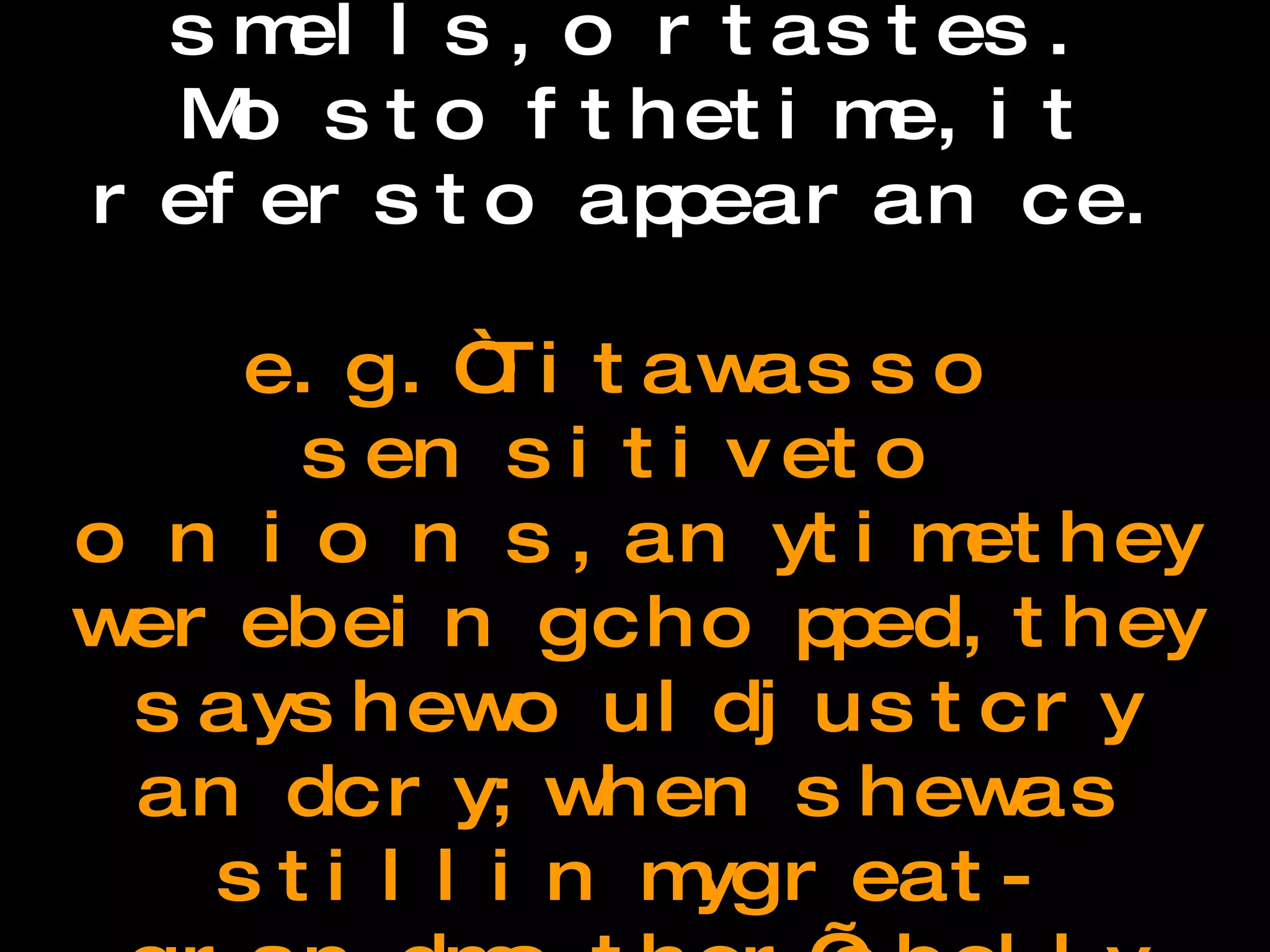
Imagery The use of description that helps the reader imagine how something looks, sounds, feels, smells, or tastes. Most of the time, it refers to appearance.   e.g. “Tita was so sensitive to onions, any time they were being chopped, they say she would just cry and cry; when she was still in my great-grandmother’s belly her sobs were so loud that even Nacha, the cook, who was half-deaf, could hear them easily.”  -- Like Water for Chocolate
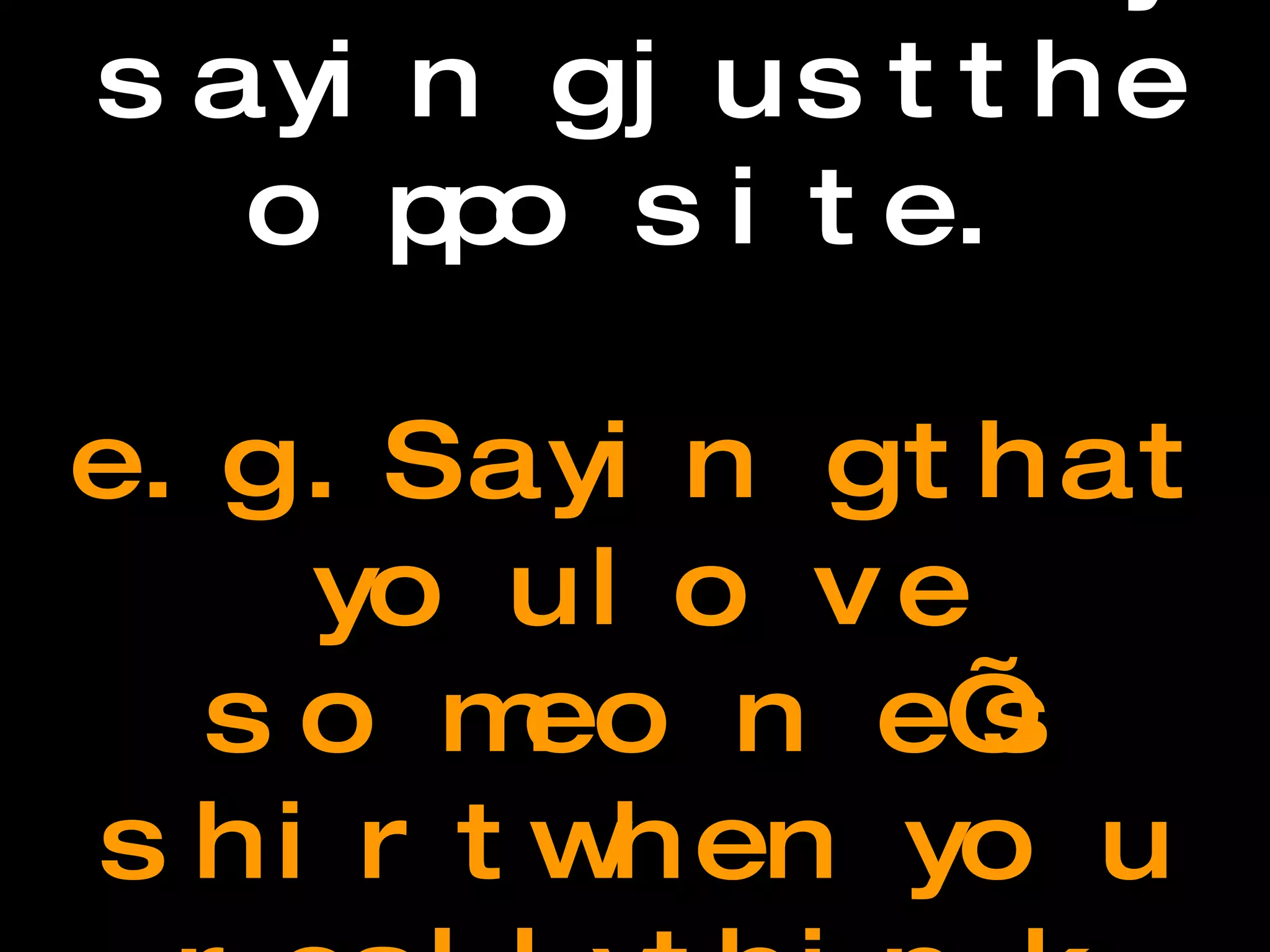
Irony Language that conveys a certain idea by saying just the opposite.  e.g. Saying that you love someone’s shirt when you really think it’s ugly is being ironic.
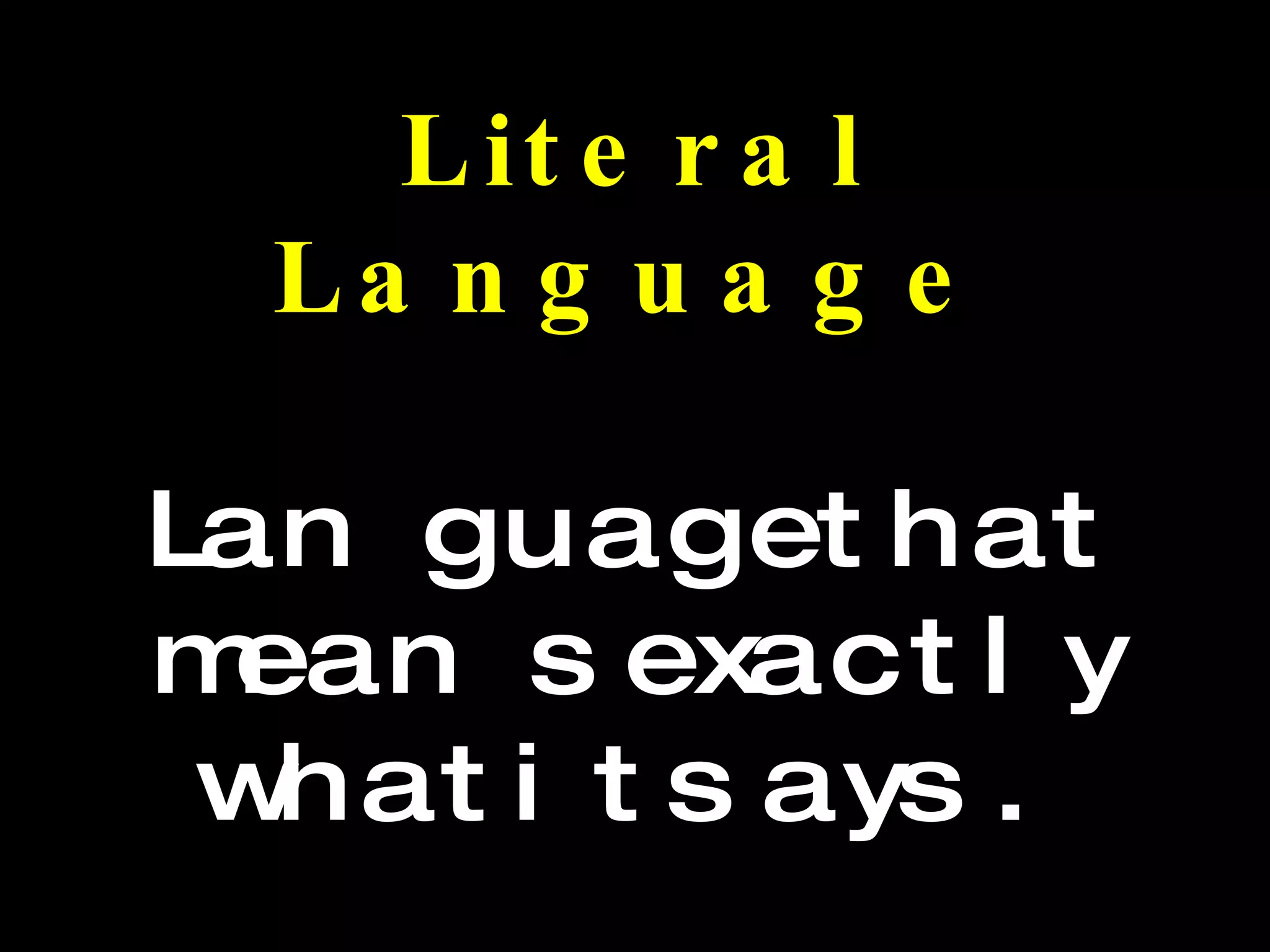
Literal Language Language that means exactly what it says.
Metaphor A comparison of two unlike things using any form of the verb “to be”–-i.e. am, are, is, was, were.  Ex: “This chair is a rock,” or  “I am an island.”
Monologue A long speech by one character in a play or story.
Mood The feeling created in the reader by a literary work or passage.  The mood may be suggested by the writer's choice of words, by events in the work, or by the physical setting.  
Myth A legend that embodies the beliefs of people and offers some explanation for natural and social phenomena.
Onomatopoeia The use of words that sound like what they mean such as  “buzz,” “bang,” or “tic-tock.”
Parody A humorous, exaggerated imitation of a work of literature.
Personification Giving inanimate objects human characteristics.  e.g. “The wind howled through the night.”
Plot The series of events that form the story.
Prose Writing organized into sentences and paragraphs that is not poetry. e.g. Novels and short stories are examples of prose.
Protagonist The main character of a novel, play, or story.
Simile Comparing two unlike things using “like” or “as.”  e.g. “I’m as hungry as a pig,” or “Your eyes are like stars that brighten my night.”
Stanza A major subdivision in a poem. A stanza of two lines is called a couplet; a stanza of three lines is called a tercet; a stanza of four lines is called a quatrain.
Theme The central idea of a work.
Tone The author’s attitude toward the subject of the work. Usually positive or negative. e.g. The tone of a piece of literature could be pessimistic, optimistic, angry, or sarcastic.
Haiku A three-line poem with five syllables in the first line, seven syllables in the second line and five syllables in the third line. 

Literary+Terms+Power Point[1]

  • 1.
  • 2.
    Alliteration The repetitionof sounds in a group of words as in “Peter Piper Picked a Peck of Pickled Peppers.”
  • 3.
    Allusion A referenceto a person, place, or thing--often literary, mythological, or historical. The infinitive of allusion is to allude. e.g. Romeo alludes to the mythological figure Diana in the balcony scene.
  • 4.
    Antagonist A majorcharacter who opposes the protagonist in a story or play.
  • 5.
    Assonance The repetitionof vowel sounds as in “And so, all the n i ght-t i de, I l i e down by the s i de Of my darling, my darling, my l i fe and my br i de. --Edgar Allan Poe, Annabel Lee
  • 6.
    Atmosphere The overallfeeling of a work, which is related to tone and mood.
  • 7.
    Audience The audiencefor a piece of literature may be a single person or a group of people. To what person or group is the text directed?
  • 8.
    Characterization The means by which an author establishes character. An author may directly describe the appearance and personality of character or show it through action or dialogue.
  • 9.
    Climax The pointat which the action in a story or play reaches its emotional peak.
  • 10.
    Conflict The strugglein the story. Traditionally, there are four main conflicts: person vs. self (internal) person vs. person (external) person vs. society (external) person vs. nature (external)
  • 11.
    Consonance The repetitionof consonant sounds as in “ The fair b reeze b lew, the white f oam f lew, The f urrow f ollowed f ree;” --The Rime of the Ancient Mariner
  • 12.
    Contrast To explainhow two things differ. To compare and contrast is to explain how two things are alike and how they are different.
  • 13.
    D enotation 1)The d efinition of a word found in the d ictionary. 2)Literal meaning of a word. 3) The verb form is “to denote” which means “to mean.” e.g. The word “indolence” denotes “laziness.”
  • 14.
    Connotation 1)The definitionof a word found outside the dictionary. 2)Figurative meaning of a word. 3) The verb form is “to connote” which means “to suggest or imply a meaning beyond the literal meaning of a word.” e.g. The word “cool” connotes “ an awesome or exciting thing.”
  • 15.
    End rhyme Rhymingwords that are at the ends of their respective lines—what we typically think of as normal rhyme.
  • 16.
    Fable A storythat illustrates a moral often using animals as characters e.g. The Tortoise and the Hare
  • 17.
    Figurative Language Wheneveryou describe something by comparing it with something else, you are using figurative language. Any language that goes beyond the literal meaning of words in order to furnish new effects or fresh insights into an idea or a subject. e.g. Whenever you call something “cool,” you’re not talking about its temperature but referring to some other quality it possesses.
  • 18.
    Foreshadowing A techniquein which an author gives clues about something that will happen later in the story.
  • 19.
    Free Verse Poetrywith no set meter (rhythm) or rhyme scheme.
  • 20.
    Genre A termused to describe a particular category or type of literature. Some literary genres are mysteries, westerns, and romances.
  • 21.
    Hyperbole An extremeexaggeration. e.g. To say that it took you hours to walk home when in reality it was only 10 mins would be a hyperbole.
  • 22.
    Imagery The useof description that helps the reader imagine how something looks, sounds, feels, smells, or tastes. Most of the time, it refers to appearance. e.g. “Tita was so sensitive to onions, any time they were being chopped, they say she would just cry and cry; when she was still in my great-grandmother’s belly her sobs were so loud that even Nacha, the cook, who was half-deaf, could hear them easily.” -- Like Water for Chocolate
  • 23.
    Irony Language thatconveys a certain idea by saying just the opposite. e.g. Saying that you love someone’s shirt when you really think it’s ugly is being ironic.
  • 24.
    Literal Language Languagethat means exactly what it says.
  • 25.
    Metaphor A comparisonof two unlike things using any form of the verb “to be”–-i.e. am, are, is, was, were. Ex: “This chair is a rock,” or “I am an island.”
  • 26.
    Monologue A longspeech by one character in a play or story.
  • 27.
    Mood The feelingcreated in the reader by a literary work or passage.  The mood may be suggested by the writer's choice of words, by events in the work, or by the physical setting.  
  • 28.
    Myth A legendthat embodies the beliefs of people and offers some explanation for natural and social phenomena.
  • 29.
    Onomatopoeia The useof words that sound like what they mean such as “buzz,” “bang,” or “tic-tock.”
  • 30.
    Parody A humorous,exaggerated imitation of a work of literature.
  • 31.
    Personification Giving inanimateobjects human characteristics. e.g. “The wind howled through the night.”
  • 32.
    Plot The seriesof events that form the story.
  • 33.
    Prose Writing organizedinto sentences and paragraphs that is not poetry. e.g. Novels and short stories are examples of prose.
  • 34.
    Protagonist The maincharacter of a novel, play, or story.
  • 35.
    Simile Comparing twounlike things using “like” or “as.” e.g. “I’m as hungry as a pig,” or “Your eyes are like stars that brighten my night.”
  • 36.
    Stanza A majorsubdivision in a poem. A stanza of two lines is called a couplet; a stanza of three lines is called a tercet; a stanza of four lines is called a quatrain.
  • 37.
    Theme The centralidea of a work.
  • 38.
    Tone The author’sattitude toward the subject of the work. Usually positive or negative. e.g. The tone of a piece of literature could be pessimistic, optimistic, angry, or sarcastic.
  • 39.
    Haiku A three-linepoem with five syllables in the first line, seven syllables in the second line and five syllables in the third line.