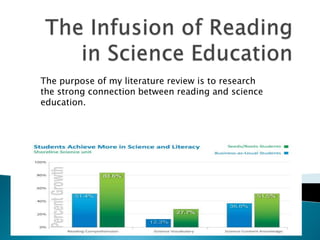
The purpose of my literature review is to research
the strong connection between reading and science
education.
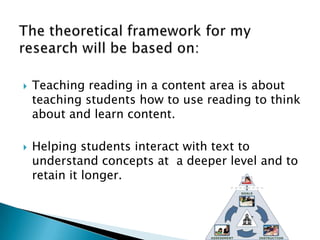
   Teaching reading in a content area is about
    teaching students how to use reading to think
    about and learn content.

   Helping students interact with text to
    understand concepts at a deeper level and to
    retain it longer.
Language is important in science and science
    education:
   Communicate ideas
   Presentation of information
   Support or argue a claim
    Encompasses all aspects of learning,
     understanding, and performing science.

    Significant Study--Norris and Phillips divided
     science literacy into 2 parts:

1.   The Derived Sense –-science knowledge

2.   The Fundamental Sense-- reading and writing
     when the content is science
   How text in science has changed over time
   Reading strategies and skills–- pre-reading,
    during reading, and post reading.

Gaps in the research:
• Limited attention given to including reading in
  science instruction .
• No agreement upon a course of action.
• Science teachers’ curriculum constraints and
  limited literacy training.
Conclusion: Purposeful inclusion of reading in
  science will benefit the students in
  their learning.
   The participants in this study will be two
    groups of 30 students each enrolled in the SP
    program.

   Each group will be taught using the same
    textbook with one group given additional
    reading material.

Literacy in science education presentation

  • 1.
    The purpose ofmy literature review is to research the strong connection between reading and science education.
  • 2.
    Teaching reading in a content area is about teaching students how to use reading to think about and learn content.  Helping students interact with text to understand concepts at a deeper level and to retain it longer.
  • 3.
    Language is importantin science and science education:  Communicate ideas  Presentation of information  Support or argue a claim
  • 4.
    Encompasses all aspects of learning, understanding, and performing science.  Significant Study--Norris and Phillips divided science literacy into 2 parts: 1. The Derived Sense –-science knowledge 2. The Fundamental Sense-- reading and writing when the content is science
  • 5.
    How text in science has changed over time  Reading strategies and skills–- pre-reading, during reading, and post reading. Gaps in the research: • Limited attention given to including reading in science instruction . • No agreement upon a course of action. • Science teachers’ curriculum constraints and limited literacy training. Conclusion: Purposeful inclusion of reading in science will benefit the students in their learning.
  • 6.
    The participants in this study will be two groups of 30 students each enrolled in the SP program.  Each group will be taught using the same textbook with one group given additional reading material.