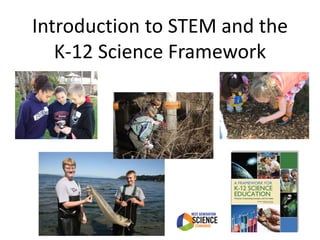
Introduction to STEM and the
   K-12 Science Framework
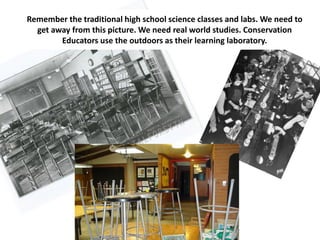
Remember the traditional high school science classes and labs. We need to
  get away from this picture. We need real world studies. Conservation
        Educators use the outdoors as their learning laboratory.
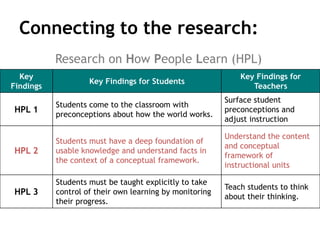
Connecting to the research:
           Research on How People Learn (HPL)
  Key                                                        Key Findings for
                    Key Findings for Students
Findings                                                        Teachers
                                                         Surface student
           Students come to the classroom with
HPL 1                                                    preconceptions and
           preconceptions about how the world works.
                                                         adjust instruction

                                                         Understand the content
           Students must have a deep foundation of
                                                         and conceptual
HPL 2      usable knowledge and understand facts in
                                                         framework of
           the context of a conceptual framework.
                                                         instructional units

           Students must be taught explicitly to take
                                                         Teach students to think
HPL 3      control of their own learning by monitoring
                                                         about their thinking.
           their progress.
Focusing on How People Learn: Finding #2

• Educators need to connect to the research to
  understand how students learn science best.

• The Conservation Education tools provide the
  conceptual framework that teachers need to
  develop instructional units for student learning.

• A conceptual framework is a logical process that
  educators can follow that takes students through
  a learning experience.
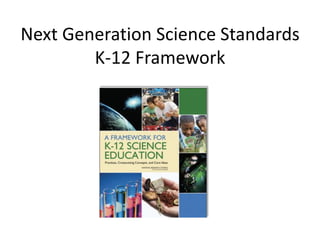
Next Generation Science Standards
        K-12 Framework
The Vision of the Framework

 “(All) students, over multiple years of
 school, actively engage in science and
    engineering practices and apply
 crosscutting concepts to deepen their
   understanding of the core ideas.”
Next Generation Science Standards
      K-12 Framework Focus
“The Framework principally concerns itself with
the first task – what all students should know in
  preparation for their individual lives and for
their roles as citizens in this technology-rich and
           scientifically complex world.”
Goals for Science Education
The Framework’s vision takes into account
two major goals for K-12 science education:
  (1)Educating all students in science and
     engineering.
  (2)Providing the foundational knowledge
     for those who will become the scientists,
     engineers, technologists, and technicians
     of the future.
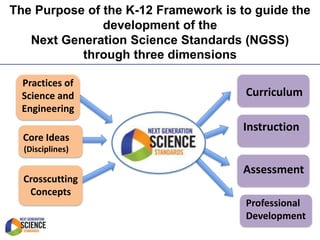
The Purpose of the K-12 Framework is to guide the
               development of the
   Next Generation Science Standards (NGSS)
           through three dimensions

  Practices of
  Science and                         Curriculum
  Engineering
                                      Instruction
  Core Ideas
  (Disciplines)

                                      Assessment
  Crosscutting
   Concepts
                                      Professional
                                      Development
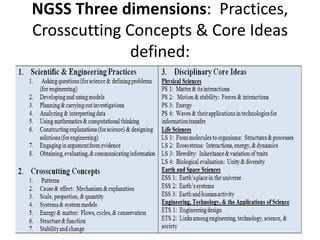
NGSS Three dimensions: Practices,
Crosscutting Concepts & Core Ideas
              defined:
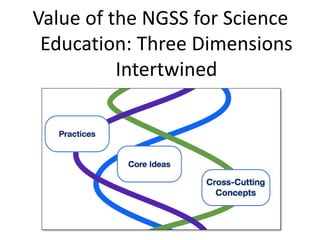
Value of the NGSS for Science
 Education: Three Dimensions
          Intertwined
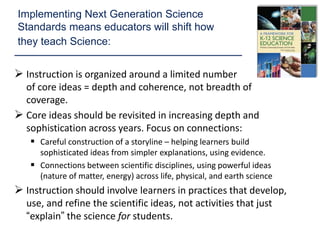
Implementing Next Generation Science
Standards means educators will shift how
they teach Science:


 Instruction is organized around a limited number
  of core ideas = depth and coherence, not breadth of
  coverage.
 Core ideas should be revisited in increasing depth and
  sophistication across years. Focus on connections:
    Careful construction of a storyline – helping learners build
     sophisticated ideas from simpler explanations, using evidence.
    Connections between scientific disciplines, using powerful ideas
     (nature of matter, energy) across life, physical, and earth science
 Instruction should involve learners in practices that develop,
  use, and refine the scientific ideas, not activities that just
  “explain” the science for students.
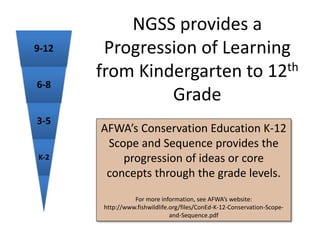
NGSS provides a
9-12    Progression of Learning
       from Kindergarten to 12 th
6-8
                Grade
3-5
       AFWA’s Conservation Education K-12
        Scope and Sequence provides the
K-2        progression of ideas or core
        concepts through the grade levels.
                  For more information, see AFWA’s website:
        http://www.fishwildlife.org/files/ConEd-K-12-Conservation-Scope-
                                and-Sequence.pdf
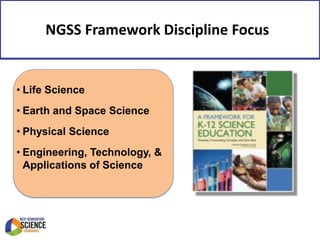
NGSS Framework Discipline Focus


• Life Science
• Earth and Space Science
• Physical Science
• Engineering, Technology, &
  Applications of Science
How Discipline Core Ideas that Relate to
               Conservation:
• Life Science             •   Physical Science
   – Ecosystem Dynamics         – Energy
   – Biodiversity and      •   Engineering &
     Humans                    Technology
• Earth and Space Science       – Engineering Design
   – Natural Resources          – Interdependence
   – Human Impacts              – Influence on Society
   – Global Climate Change        and the Natural World
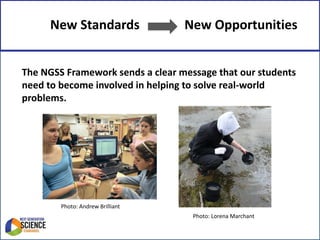
New Standards                New Opportunities


The NGSS Framework sends a clear message that our students
need to become involved in helping to solve real-world
problems.


        Photo: Andrew Brilliant
                                    Photo: Lorena Marchant
What is STEM and how does it
connect to the NGSS Standards?

      S = Science
      T = Technology
      E = Engineering
      M = Mathematics
What is STEM and how does it
 connect to Conservation Education?
Conservation professionals utilize Science, Technology, Engineering
   and Mathematics on a daily basis.

In school, students can participate in STEM-focused conservation
    education projects such as:
      •Collecting water quality data at a local stream and determining ways to
      protect and/or improve the stream health.
      •Creating a GIS map to represent data collected in the field and reporting
      on findings related to that data.
      •Designing and installing rain gardens or features to improve wildlife
      habitat.
      •Determining the best way to manage invasive species based on re-
      generation and growth rates.
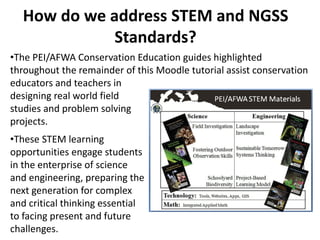
How do we address STEM and NGSS
             Standards?
•The PEI/AFWA Conservation Education guides highlighted
throughout the remainder of this Moodle tutorial assist conservation
educators and teachers in
designing real world field
studies and problem solving
projects.
•These STEM learning
opportunities engage students
in the enterprise of science
and engineering, preparing the
next generation for complex
and critical thinking essential
to facing present and future
challenges.

CE-FE-1 Introduction to Stem and the K-12 Science Framework

  • 1.
    Introduction to STEMand the K-12 Science Framework
  • 2.
    Remember the traditionalhigh school science classes and labs. We need to get away from this picture. We need real world studies. Conservation Educators use the outdoors as their learning laboratory.
  • 3.
    Connecting to theresearch: Research on How People Learn (HPL) Key Key Findings for Key Findings for Students Findings Teachers Surface student Students come to the classroom with HPL 1 preconceptions and preconceptions about how the world works. adjust instruction Understand the content Students must have a deep foundation of and conceptual HPL 2 usable knowledge and understand facts in framework of the context of a conceptual framework. instructional units Students must be taught explicitly to take Teach students to think HPL 3 control of their own learning by monitoring about their thinking. their progress.
  • 4.
    Focusing on HowPeople Learn: Finding #2 • Educators need to connect to the research to understand how students learn science best. • The Conservation Education tools provide the conceptual framework that teachers need to develop instructional units for student learning. • A conceptual framework is a logical process that educators can follow that takes students through a learning experience.
  • 5.
    Next Generation ScienceStandards K-12 Framework
  • 6.
    The Vision ofthe Framework “(All) students, over multiple years of school, actively engage in science and engineering practices and apply crosscutting concepts to deepen their understanding of the core ideas.”
  • 7.
    Next Generation ScienceStandards K-12 Framework Focus “The Framework principally concerns itself with the first task – what all students should know in preparation for their individual lives and for their roles as citizens in this technology-rich and scientifically complex world.”
  • 8.
    Goals for ScienceEducation The Framework’s vision takes into account two major goals for K-12 science education: (1)Educating all students in science and engineering. (2)Providing the foundational knowledge for those who will become the scientists, engineers, technologists, and technicians of the future.
  • 9.
    The Purpose ofthe K-12 Framework is to guide the development of the Next Generation Science Standards (NGSS) through three dimensions Practices of Science and Curriculum Engineering Instruction Core Ideas (Disciplines) Assessment Crosscutting Concepts Professional Development
  • 10.
    NGSS Three dimensions:Practices, Crosscutting Concepts & Core Ideas defined:
  • 11.
    Value of theNGSS for Science Education: Three Dimensions Intertwined
  • 12.
    Implementing Next GenerationScience Standards means educators will shift how they teach Science:  Instruction is organized around a limited number of core ideas = depth and coherence, not breadth of coverage.  Core ideas should be revisited in increasing depth and sophistication across years. Focus on connections:  Careful construction of a storyline – helping learners build sophisticated ideas from simpler explanations, using evidence.  Connections between scientific disciplines, using powerful ideas (nature of matter, energy) across life, physical, and earth science  Instruction should involve learners in practices that develop, use, and refine the scientific ideas, not activities that just “explain” the science for students.
  • 13.
    NGSS provides a 9-12 Progression of Learning from Kindergarten to 12 th 6-8 Grade 3-5 AFWA’s Conservation Education K-12 Scope and Sequence provides the K-2 progression of ideas or core concepts through the grade levels. For more information, see AFWA’s website: http://www.fishwildlife.org/files/ConEd-K-12-Conservation-Scope- and-Sequence.pdf
  • 14.
    NGSS Framework DisciplineFocus • Life Science • Earth and Space Science • Physical Science • Engineering, Technology, & Applications of Science
  • 15.
    How Discipline CoreIdeas that Relate to Conservation: • Life Science • Physical Science – Ecosystem Dynamics – Energy – Biodiversity and • Engineering & Humans Technology • Earth and Space Science – Engineering Design – Natural Resources – Interdependence – Human Impacts – Influence on Society – Global Climate Change and the Natural World
  • 16.
    New Standards New Opportunities The NGSS Framework sends a clear message that our students need to become involved in helping to solve real-world problems. Photo: Andrew Brilliant Photo: Lorena Marchant
  • 17.
    What is STEMand how does it connect to the NGSS Standards? S = Science T = Technology E = Engineering M = Mathematics
  • 18.
    What is STEMand how does it connect to Conservation Education? Conservation professionals utilize Science, Technology, Engineering and Mathematics on a daily basis. In school, students can participate in STEM-focused conservation education projects such as: •Collecting water quality data at a local stream and determining ways to protect and/or improve the stream health. •Creating a GIS map to represent data collected in the field and reporting on findings related to that data. •Designing and installing rain gardens or features to improve wildlife habitat. •Determining the best way to manage invasive species based on re- generation and growth rates.
  • 19.
    How do weaddress STEM and NGSS Standards? •The PEI/AFWA Conservation Education guides highlighted throughout the remainder of this Moodle tutorial assist conservation educators and teachers in designing real world field studies and problem solving projects. •These STEM learning opportunities engage students in the enterprise of science and engineering, preparing the next generation for complex and critical thinking essential to facing present and future challenges.