L I S T E N , L E A R N , L E A D :
C U S T O M E R E X P E R I E N C E
L E S S O N S F O R P R O D U C T
M A N A G E R S
L I S A C RY M E S
J E R RY S E U F E R T
LESSONS LEARNED FOR
PRODUCT MANAGERS FROM
THE CUSTOMER EXPERIENCE
WORLD
• What is Customer Experience?
• Customer Experience case studies
• Customer Experience tools
• How to apply Customer Experience
lessons and tools to Product
Management
SPEAKERS
Lisa Crymes the Chief Marketing Officer for Preventric, a digital health company based in Birmingham,
AL. She has provided progressive, strategic leadership to the healthcare field for more than 20 years,
emphasizing marketing, product management, business development, strategic planning and consulting.
The connecting threads running throughout Ms. Crymes’ career are innovation and revenue growth. Her
accomplishments include successful new product development and launches, business and channel
partner development, marketing and strategic planning, product life cycle development, portfolio
management, and go-to-market strategies. Ms. Crymes earned her Master of Business Administration and
Bachelor of Science in Management degrees from Shorter University. She is also a Certified Customer
Experience Professional.
Jerry Seufert is a consultant and executive coach based in Alpharetta. Jerry is an accomplished customer
experience visionary, executive counselor, product management advisor, change management expert,
critical thinker, writer, and facilitator. Jerry’s ‘first home’ was in the health industries where he led more
than 100 projects for hospitals, health systems, provider groups, federal and state health agencies, and
solutions vendors, and now serves clients across a number of product and service sectors. Jerry has a
B.S., Biology, and M.S., Industrial Engineering, from Rensselaer Polytechnic Institute and joins the Product
Coffee sessions most every week.
WHAT IS CUSTOMER
EXPERIENCE?
Customer experience (CX) is the sum total of customers'
perceptions and feelings resulting from interactions with a
company’s or brand’s products and services.
Listen.
Empathy – “Walking in Customer Shoes”
Voice of the Customer
• NPS/C-Sat Client Surveys
• User group meetings, Advisory Board
• Win/Loss Data
Voice of the Associates
• Engagement Survey
• Workshops
Voice of the Industry
• Analyst
Learn.
Design & Development
Process Redesign
Critical Thinking
Develop Personas/Customer Profiles
Analysis
Synthesis
Root Cause
Moments of Truth/Themes
Ideation
Prioritization
Personas
Affinity Map
Execute
Develop Awareness
Educating Executive Team
Creating CX Champions
Storytelling Development
Product roadmaps
Lead.
Change Management
Continuous Process Improvements
CX Governance Committee
Close the Loop
Personalize Customer Experiences
Unique experiences
Evaluate
Measurement
Productivity & Standards
Assessment of Impact
Traceability to Listening Posts
ROI
Implementation
EXPERIENCE DESIGN MODEL
DESIGN THINKING
• Design thinking is a human-centered approach to innovation—anchored in
understanding customer’s needs, rapid prototyping, and generating creative
ideas—that will transform the way you develop products, services, processes,
and organizations.
• Design thinking brings together what is desirable from a human point of
view with what is technologically feasible and economically viable.
– Desirability:What makes sense to people and for people?
– Feasibility: What is technically possible within the foreseeable future?
– Viability: What is likely to become part of a sustainable business
model?
“Design thinking is a human-centered approach to innovation that
draws from the designer’s toolkit to integrate the needs of people, the
possibilities of technology, and the requirements for business success.”
—Tim Brown, Chair of IDEO
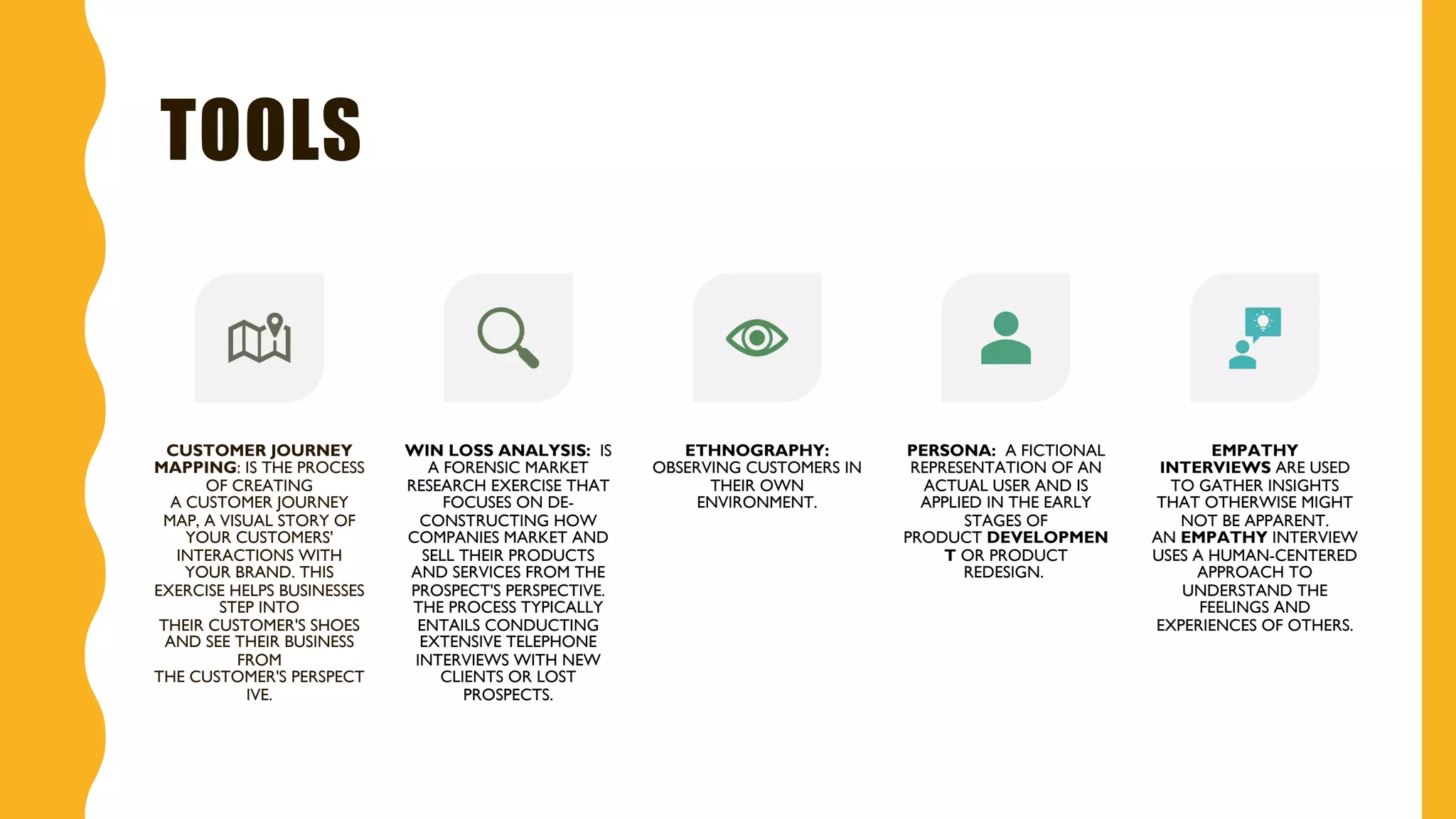
TOOLS
CUSTOMER JOURNEY
MAPPING: IS THE PROCESS
OF CREATING
A CUSTOMER JOURNEY
MAP, A VISUAL STORY OF
YOUR CUSTOMERS'
INTERACTIONS WITH
YOUR BRAND. THIS
EXERCISE HELPS BUSINESSES
STEP INTO
THEIR CUSTOMER'S SHOES
AND SEE THEIR BUSINESS
FROM
THE CUSTOMER'S PERSPECT
IVE.
WIN LOSS ANALYSIS: IS
A FORENSIC MARKET
RESEARCH EXERCISE THAT
FOCUSES ON DE-
CONSTRUCTING HOW
COMPANIES MARKET AND
SELL THEIR PRODUCTS
AND SERVICES FROM THE
PROSPECT'S PERSPECTIVE.
THE PROCESS TYPICALLY
ENTAILS CONDUCTING
EXTENSIVE TELEPHONE
INTERVIEWS WITH NEW
CLIENTS OR LOST
PROSPECTS.
ETHNOGRAPHY:
OBSERVING CUSTOMERS IN
THEIR OWN
ENVIRONMENT.
PERSONA: A FICTIONAL
REPRESENTATION OF AN
ACTUAL USER AND IS
APPLIED IN THE EARLY
STAGES OF
PRODUCT DEVELOPMEN
T OR PRODUCT
REDESIGN.
EMPATHY
INTERVIEWS ARE USED
TO GATHER INSIGHTS
THAT OTHERWISE MIGHT
NOT BE APPARENT.
AN EMPATHY INTERVIEW
USES A HUMAN-CENTERED
APPROACH TO
UNDERSTAND THE
FEELINGS AND
EXPERIENCES OF OTHERS.
CX CASE
STUDY #1
Problem
• $1B Revenue Healthcare Technology Organization
• Newly created CX Organization
• Looked for opportunities to show value
• Asked by dev/product to lead UX/UI project because of
customer complaints
Approach
• Ethnographic research
• Stakeholder interviews/empathy interviews
• Developed personas
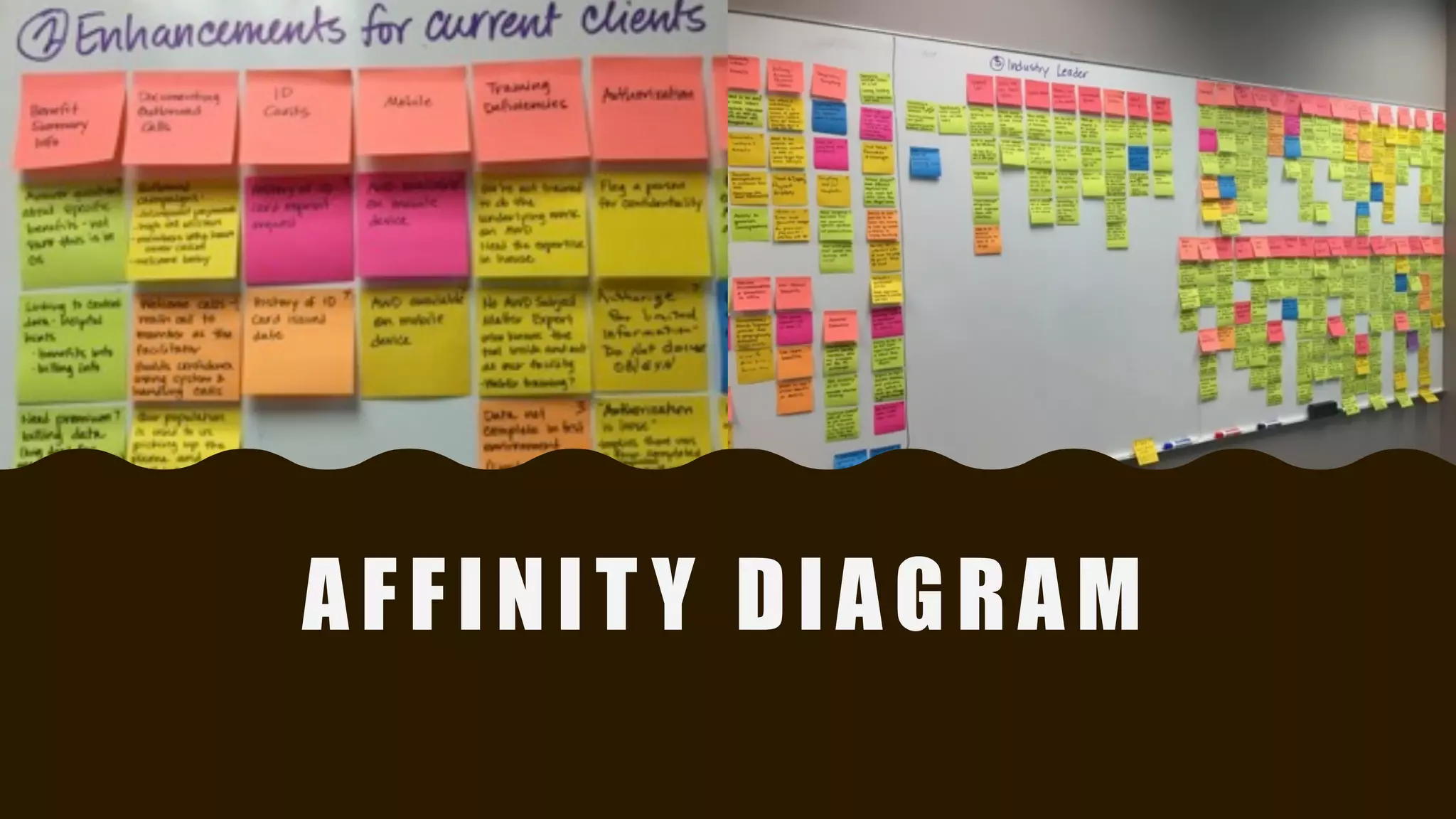
• Affinity Diagram
Outcome
• Able to provide the product management team back insights on
what customers were really asking
• Added in market research and business case with new solution
Tara Trainer
Systems Trainer at Health System
I. Age 54
II. Married
with grown
children
III. Was a
clinical
social
worker and
retired from
that
position
IV. In current
role for 1
year
Core Characteristics
Education
Insurance
Expertise
Call Center
Experience
Customer
Svc Skill
Technical
Expertise
LOW HIGH
Behaviors and Beliefs
• Designed training manuals and
curriculum to train reps on Customer
Service Product .
• Hired when original trainer left the
company; that person had the benefit
of working with the trainer, but Tara is
starting from scratch.
• Wants to revamp the curriculum to be
Goals and Needs
• Needs comprehensive training
herself from the source. She’s
afraid there are nuances of the
system she doesn’t understand.
• Wishes there were downloadable
training materials from she could
leverage.
• Wants to better understand best
AFFINIT Y DIAGRAM
CX CASE
STUDY #2
Problem
• New solution was developed to meet a regulatory requirement
• Little product management process or client input was included in
the design
• Customers were unhappy with product and the service process
because it didn’t meet their needs
Approach
• Dev/product teams asked for CX to partner and lead an effort to
understand the client’s experience
• Used customer journey maps to understand the end-to-end process
and problems
Outcome
• Next version of the product was much closer to the
customers requirements and delivered an improved
experience.
Customer Journey Mapping
CX CASE
STUDY #3
Problem
• Sales process and growth were being reviewed.
• Narrative across the business the problem was with the
sales team
Approach
• Win loss analysis
• Stakeholder interviews/empathy interviews
Outcome
• Insights were consistent with other CX themes
and supported how organization was prioritizing
efforts.
CX TOOLS
Listen
Journey Mapping
Win/Loss Analysis
Stakeholder Interviews
Empathy Interviews
Ethnographic Research
Learn
Data synthesis
Affinity mapping
Developing themes
Lead
Cross functional teams
Collaborative efforts across
the company
HOW DO YOU APPLY THESE TOOLS
TO PRODUCT MANAGEMENT
• You don’t have to build a CX department
• Use CX colored glasses to bring a customer’s
perspective to your organization
• Develop a deeper understanding of overall customer
experience by developing a customer journey map
• Understand what resources are already available in
your organization
BREAKOUT GROUP 10 MINUTES
Review the list of tools
(Pick one)
Talk about experiences
with the tool and how
you might apply in your
organization
Consider picking a tool
that you haven’t used and
how you would apply in
your organization
Discuss - Is this
something that would
benefit you in product
management work?

Listen learn lead product coffee 01272021

  • 1.
    L I ST E N , L E A R N , L E A D : C U S T O M E R E X P E R I E N C E L E S S O N S F O R P R O D U C T M A N A G E R S L I S A C RY M E S J E R RY S E U F E R T
  • 2.
    LESSONS LEARNED FOR PRODUCTMANAGERS FROM THE CUSTOMER EXPERIENCE WORLD • What is Customer Experience? • Customer Experience case studies • Customer Experience tools • How to apply Customer Experience lessons and tools to Product Management
  • 3.
    SPEAKERS Lisa Crymes theChief Marketing Officer for Preventric, a digital health company based in Birmingham, AL. She has provided progressive, strategic leadership to the healthcare field for more than 20 years, emphasizing marketing, product management, business development, strategic planning and consulting. The connecting threads running throughout Ms. Crymes’ career are innovation and revenue growth. Her accomplishments include successful new product development and launches, business and channel partner development, marketing and strategic planning, product life cycle development, portfolio management, and go-to-market strategies. Ms. Crymes earned her Master of Business Administration and Bachelor of Science in Management degrees from Shorter University. She is also a Certified Customer Experience Professional. Jerry Seufert is a consultant and executive coach based in Alpharetta. Jerry is an accomplished customer experience visionary, executive counselor, product management advisor, change management expert, critical thinker, writer, and facilitator. Jerry’s ‘first home’ was in the health industries where he led more than 100 projects for hospitals, health systems, provider groups, federal and state health agencies, and solutions vendors, and now serves clients across a number of product and service sectors. Jerry has a B.S., Biology, and M.S., Industrial Engineering, from Rensselaer Polytechnic Institute and joins the Product Coffee sessions most every week.
  • 4.
    WHAT IS CUSTOMER EXPERIENCE? Customerexperience (CX) is the sum total of customers' perceptions and feelings resulting from interactions with a company’s or brand’s products and services.
  • 5.
    Listen. Empathy – “Walkingin Customer Shoes” Voice of the Customer • NPS/C-Sat Client Surveys • User group meetings, Advisory Board • Win/Loss Data Voice of the Associates • Engagement Survey • Workshops Voice of the Industry • Analyst Learn. Design & Development Process Redesign Critical Thinking Develop Personas/Customer Profiles Analysis Synthesis Root Cause Moments of Truth/Themes Ideation Prioritization Personas Affinity Map Execute Develop Awareness Educating Executive Team Creating CX Champions Storytelling Development Product roadmaps Lead. Change Management Continuous Process Improvements CX Governance Committee Close the Loop Personalize Customer Experiences Unique experiences Evaluate Measurement Productivity & Standards Assessment of Impact Traceability to Listening Posts ROI Implementation EXPERIENCE DESIGN MODEL
  • 6.
    DESIGN THINKING • Designthinking is a human-centered approach to innovation—anchored in understanding customer’s needs, rapid prototyping, and generating creative ideas—that will transform the way you develop products, services, processes, and organizations. • Design thinking brings together what is desirable from a human point of view with what is technologically feasible and economically viable. – Desirability:What makes sense to people and for people? – Feasibility: What is technically possible within the foreseeable future? – Viability: What is likely to become part of a sustainable business model? “Design thinking is a human-centered approach to innovation that draws from the designer’s toolkit to integrate the needs of people, the possibilities of technology, and the requirements for business success.” —Tim Brown, Chair of IDEO
  • 7.
    TOOLS CUSTOMER JOURNEY MAPPING: ISTHE PROCESS OF CREATING A CUSTOMER JOURNEY MAP, A VISUAL STORY OF YOUR CUSTOMERS' INTERACTIONS WITH YOUR BRAND. THIS EXERCISE HELPS BUSINESSES STEP INTO THEIR CUSTOMER'S SHOES AND SEE THEIR BUSINESS FROM THE CUSTOMER'S PERSPECT IVE. WIN LOSS ANALYSIS: IS A FORENSIC MARKET RESEARCH EXERCISE THAT FOCUSES ON DE- CONSTRUCTING HOW COMPANIES MARKET AND SELL THEIR PRODUCTS AND SERVICES FROM THE PROSPECT'S PERSPECTIVE. THE PROCESS TYPICALLY ENTAILS CONDUCTING EXTENSIVE TELEPHONE INTERVIEWS WITH NEW CLIENTS OR LOST PROSPECTS. ETHNOGRAPHY: OBSERVING CUSTOMERS IN THEIR OWN ENVIRONMENT. PERSONA: A FICTIONAL REPRESENTATION OF AN ACTUAL USER AND IS APPLIED IN THE EARLY STAGES OF PRODUCT DEVELOPMEN T OR PRODUCT REDESIGN. EMPATHY INTERVIEWS ARE USED TO GATHER INSIGHTS THAT OTHERWISE MIGHT NOT BE APPARENT. AN EMPATHY INTERVIEW USES A HUMAN-CENTERED APPROACH TO UNDERSTAND THE FEELINGS AND EXPERIENCES OF OTHERS.
  • 8.
    CX CASE STUDY #1 Problem •$1B Revenue Healthcare Technology Organization • Newly created CX Organization • Looked for opportunities to show value • Asked by dev/product to lead UX/UI project because of customer complaints Approach • Ethnographic research • Stakeholder interviews/empathy interviews • Developed personas • Affinity Diagram Outcome • Able to provide the product management team back insights on what customers were really asking • Added in market research and business case with new solution
  • 9.
    Tara Trainer Systems Trainerat Health System I. Age 54 II. Married with grown children III. Was a clinical social worker and retired from that position IV. In current role for 1 year Core Characteristics Education Insurance Expertise Call Center Experience Customer Svc Skill Technical Expertise LOW HIGH Behaviors and Beliefs • Designed training manuals and curriculum to train reps on Customer Service Product . • Hired when original trainer left the company; that person had the benefit of working with the trainer, but Tara is starting from scratch. • Wants to revamp the curriculum to be Goals and Needs • Needs comprehensive training herself from the source. She’s afraid there are nuances of the system she doesn’t understand. • Wishes there were downloadable training materials from she could leverage. • Wants to better understand best
  • 10.
  • 11.
    CX CASE STUDY #2 Problem •New solution was developed to meet a regulatory requirement • Little product management process or client input was included in the design • Customers were unhappy with product and the service process because it didn’t meet their needs Approach • Dev/product teams asked for CX to partner and lead an effort to understand the client’s experience • Used customer journey maps to understand the end-to-end process and problems Outcome • Next version of the product was much closer to the customers requirements and delivered an improved experience.
  • 12.
  • 13.
    CX CASE STUDY #3 Problem •Sales process and growth were being reviewed. • Narrative across the business the problem was with the sales team Approach • Win loss analysis • Stakeholder interviews/empathy interviews Outcome • Insights were consistent with other CX themes and supported how organization was prioritizing efforts.
  • 14.
    CX TOOLS Listen Journey Mapping Win/LossAnalysis Stakeholder Interviews Empathy Interviews Ethnographic Research Learn Data synthesis Affinity mapping Developing themes Lead Cross functional teams Collaborative efforts across the company
  • 15.
    HOW DO YOUAPPLY THESE TOOLS TO PRODUCT MANAGEMENT • You don’t have to build a CX department • Use CX colored glasses to bring a customer’s perspective to your organization • Develop a deeper understanding of overall customer experience by developing a customer journey map • Understand what resources are already available in your organization
  • 16.
    BREAKOUT GROUP 10MINUTES Review the list of tools (Pick one) Talk about experiences with the tool and how you might apply in your organization Consider picking a tool that you haven’t used and how you would apply in your organization Discuss - Is this something that would benefit you in product management work?