
MARKETING
ARSHDEEP SINGH(CEO) , Kritika Vasisht(VP)
MD.TUFFAIL(MD), AMRIT KUMAR DEEPAK(MD),SOURABH
MEENA, ABHISHEK KUMAR, HIMANSHU SHEKHAWAT
•
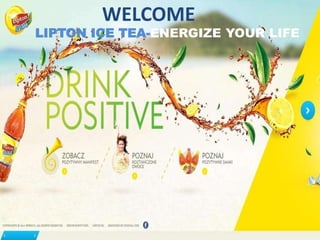
WELCOME
LIPTON ICE TEA-ENERGIZE YOUR LIFE
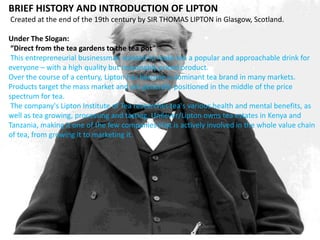
BRIEF HISTORY AND INTRODUCTION OF LIPTON
Created at the end of the 19th century by SIR THOMAS LIPTON in Glasgow, Scotland.
Under The Slogan:
“Direct from the tea gardens to the tea pot”
This entrepreneurial businessman wanted to make tea a popular and approachable drink for
everyone – with a high quality but reasonably priced product.
Over the course of a century, Lipton has become a dominant tea brand in many markets.
Products target the mass market and are generally positioned in the middle of the price
spectrum for tea.
The company's Lipton Institute of Tea researches tea's various health and mental benefits, as
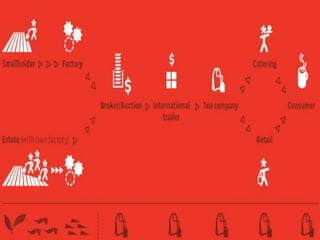
well as tea growing, processing and tasting. Unilever/Lipton owns tea estates in Kenya and
Tanzania, making it one of the few companies that is actively involved in the whole value chain
of tea, from growing it to marketing it.
LIPTON ICE TEA
• Provides protective falconoid antioxidants.
• Drink provides the taste, quality and also good for health.
• Committed to making iced tea as healthy and delicious with
essential nutrients needed for optimal growth, development and
refreshment.
• Instant tea drink, consisting of various nutrients and herb extracts.
• Tea is sweet, though it has less sugar than a typical soft drink.
• The drink is a mix of tea, sugar and peach with different herb extracts
Product Features And Attributes
Why to prefer the Lipton Ice Tea?
Green tea is renowned for its healthful properties. Green tea is full of clean taste, vitality, and
great flavor.
Ice Tea Provides protective falconoid antioxidants provide the taste, quality and it is also good
for health
MarketDescriptionOf Lipton Ice Tea
• Lipton Ice Tea is a multi vitamin and nutritious drink. It is available in one flavor.
• Lipton Ice Tea provides refreshment, energy and also helps in reducing weight.
• Features:
• Lipton is introduced only in one flavor :
• Flavor:
• Lipton iced green tea
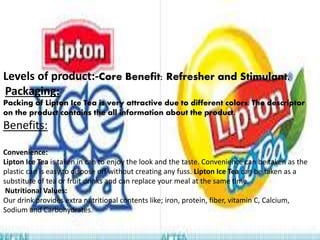
Levels of product:-Core Benefit: Refresher and Stimulant.
Packaging:
Packing of Lipton Ice Tea is very attractive due to different colors. The descriptor
on the product contains the all information about the product.
Benefits:
Convenience:
Lipton Ice Tea is taken in can to enjoy the look and the taste. Convenience can be taken as the
plastic can is easy to dispose off without creating any fuss. Lipton Ice Tea can be taken as a
substitute of tea or fruit drinks and can replace your meal at the same time.
Nutritional Values:
Our drink provides extra nutritional contents like; iron, protein, fiber, vitamin C, Calcium,
Sodium and Carbohydrates.
•
MISSION STATEMENT
“CHANGING THE LIVES OF THE TEA LOVERS BY INNOVATING THE ICE TEA”
•
To provide value and quality to our consumers, our aim is constantly to provide world
class service for our customers, deliver value for our products and make Lipton a great
place to work for our employees. We aim to have a reputation for innovative thinking
in the areas that matter to our customers
To be an innovative, marketing and research oriented.
GOALS AND OBJECTIVES
Non Financial:
Delivering the good quality and taste to the consumers.
Improve the company’s image
Contribution in the community activities
Increasing the number of jobs and enhancing quality of life of employees
Financial:
Improve Profitability
Increasing the net profit as percentage sale
Increasing the net profit as percentage of investment
Increasing the net profit as per share common stock
Increasing Volume
Increase the market share
Continuous growth in sales
Improving the sales ranking in the market
Increasing the production capacity and its utilization
Increase the seasonal sales volume
CORE COMPETENCYCore competence
 Core Distinctive Competency Of The Lipton
• Multi National Company is certified from ISO.
• They have highly effective Human Resource Management.
• Offer versatile, high quality products.
• Use Sterile Filling Process and Tunnel Pasteurization in packaging process.
• Offers the products worldwide according to the taste of people in a particular country.
• Has a separate supply chain department. Supplies chain makes sure that products are
available, no matter where you are in India.
• Lipton Ice Tea is renowned for its healthful properties. Other beverages and soft drinks
however, represent the epitome of sugary soft drinks.
• Lipton Ice Tea is full of clean taste, vitality, and great flavor. Plus, Lipton Ice Tea provides
protective falconoid antioxidants.
• Lipton Ice Tea is the drink which provides the taste, quality and it is also good for health.
STRATEGY
 The Customers Come First- Wants to win and keep its customers: distributers,
supermarkets, hotels, shopkeepers and the final buyers.
• Trade customers expect excellent service, correct information and timely delivery.
• Consumers consider taste, appearance and price when they make their choice.
• Task is to understand what consumers want and respond to their expectations
rapidly and effectively.
• Lipton serves various groups of consumers and there is demand for products at
different levels of perceived quality and price.
• Lipton Ice Tea shares society’s concern for the environment and is committed to
environmentally sound business practices throughout the world.
• Customers are central to business and we must always respect their needs and
preferences.
Marketing environment
 Internal Environment
In HUL Internal environment ensures
• Employees are on side with the goals of an organization
• They have direct impact on product quality, dependability and overall productivity.
• They are internal market, which impact every department within an organization; a
satisfied internal market will be better able to satisfy external market.
• Unilever under the top management runs the departments of finance, accounting,
sales and marketing, research and development to achieve the goals of
organization.
 Micro Environment
In Unilever the microenvironment factors includes:
 Suppliers:
• Suppliers provide the resources like labor and material resources to produce goods and services.
They add to customers overall value delivery system.
 Labor supplies include handling of
• Quality of labor
• Quantity of labor
• Labor strikes
• Labor relations
 Material supplies deals with
• Quantity of material
• Quality of material
• Price of material
• Stability of material inputs
• Delivery delays
Unilever efficiency handles the quality, quality, price and stability of both material and labor supplies.
Management maps out the strategies for labor strikes, supply shortages and delays to avoid the cost
of production, which can badly affect sales in short run and customer satisfaction in long run.
 MACRO ENVIRONMENT
 MACRO-ENVIRONMENTAL FACTORS: The societal factors that have a direct and
influential effect on the Unilever progress come under the baseline of macro-
environmental factors. The company’s sales revenues and purchases are somehow
dependent on it. The different macro-environmental factors affect differently
depending on the nature of different Lipton products. These factors are
• DEMOGRAPHIC FACTORS: Demographic factors have no effect on Lipton Ice Tea.
As it has been offered to groups of all ages and it is not depending on the
limitations defined by gender, size, racial discrimination, occupation and location.
• ECONOMIC FACTORS: Lipton brand has been of all class brand. It generates it
revenue from the sales coming from upper class, upper-middle class and middle
class but it is usually not consumed by lower income groups.
• POLITICAL FACTORS: Lipton Ice Tea and its other products do not include
substances that can cause dizziness, drowsiness and addiction. Its composition is
purely natural and no harmful chemicals or artificial flavors are added in it.
• CULTURAL FACTORS: Unilever has always been offering products that are
acceptable by our cultural society and always keep focusing on basic values and
perceptions of Indian society. It has never launched such products which are
forbidden in Indian society and in Islam. The Unilever Corporate always focus on
providing Halal products.
Competitors in Market
For Lipton Ice Tea, the direct competitors belong to the tea and the indirect competitors are of the
beverage industry.
 State Of Market and Competition: As far as the competitors are concerned, Lipton has a strong
competitor in this field. Nestea and Coca-Cola is also producing ice tea in India. Lipton can have a
competitive edge over Nestea by producing iced tea in the country and making it available for
target customers at a lower price than competitors. Secondly Unilever is a trusted company so
people prefer buying its products and they are not reluctant in trying its products.
 DIRECT COMPETITORS:
The direct competitors of our Product are:
• Nestea: We are competing our product with them because they are the main competitors of the
ice tea market and they are providing the many flavor of ice tea and also they have contain 73%
market share of ice tea.-
• Coca-Cola- Coca cola is coming with their ice tea drink Fuze with six flavor. Coca cola is new entrant
for Lipton as well as Nestea.
 INDIRECT COMPETITORS:As the ice tea is the symbol of the refreshment and nutrition and its is
also a substitute for the other soft drinks, so in the soft drink market we have the competitors like
carbonate drinks, juice.
COMPANY ANALYSIS
• Research And Competitive Analysis: They have to analyze the competitor
all the strengths, weakness, opportunities, and threats of them and also
their Product’s price, features etc. They have to conduct the market
research to find out what costumers want and what is available in the
market and what can their company do for the costumers
 Quality Is Our Competitive Advantage
We live in competitive world and must never forget that our customers have
choice .if they are not satisfied with Lipton product, they will switch to
another brand. Our goal, therefore, is to provide superior value in every
product category and market sector in which we compete. The pursuit of
highest quality at any cost is no guarantee for success, nor is a single-minded
cost cutting approach. Lasting competitive advantage is gained from a
balanced search for optimal value to customers, by simultaneous
improvement of quality and reduction cost. We must watch and learn from
our competitors. If they do something better, we must improve our own
performance. We can achieve competitive advantage through Quality.
SWOT ANALYSIS LIPTON ICE TEA
 STRENGTHS:
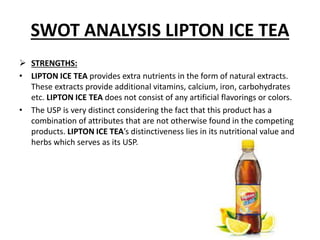
• LIPTON ICE TEA provides extra nutrients in the form of natural extracts.
These extracts provide additional vitamins, calcium, iron, carbohydrates
etc. LIPTON ICE TEA does not consist of any artificial flavorings or colors.
• The USP is very distinct considering the fact that this product has a
combination of attributes that are not otherwise found in the competing
products. LIPTON ICE TEA’s distinctiveness lies in its nutritional value and
herbs which serves as its USP.
 WEAKNESS:
• Strong Direct & Indirect Competition:-There is strong competition in the
industry through the presence of Tea industry giants like Tata tea, Taza etc.
and in addition Pepsi and Coca-Cola capture a large market share through
efficient and widespread promotional campaigns and distribution
network.
• Conventional Perception About Tea:-In a country like India the
consumption of tea is very high. Keeping this in mind there are a lot of
companies catering to this need segment. LIPTON ICE TEA, though is a
differentiated product, has tea as its base, therefore the first image that it
conjures up in the mind of users is that of a drink that is taken chilled in
different flavours.
• Competition:-Lipton has intense competition, as our analysis is one of
their weaknesses as to stay alive against a giant as Lipton and the other
one new entrant in the beverages industries. Our product is suitable only
for summer season.
 OPPORTUNITY:
• High Potential In Terms Of Increasing Market Share:- LIPTON TEA Pvt. Ltd
views the ever increasing market share of 1.2 billon population as an
opportunity for LIPTON ICE TEA.
• Higher degree of adaptability from the younger generation:-The youth of
India in contrast to their precedents are more adaptable and recipient
towards new ideas. It will attract these youngsters as well as people in
their thirties through these features, who over all other things rate
convenience and quality first.
• Nutritional Product:-LIPTON ICE TEA, in contrast to tea and other fruit
drinks available in the market, contains no artificial flavors or coloring.
Apart from this it’s low caffeine content, non- carbonated and presence of
additional vitamins, calcium, carbohydrate and iron contents make it an
attractive alternative to the already present drinks in the market. The
novelty of our drink will attract the health conscious group of consumers
who are otherwise neglected.
 THREATS:
• Government Policies:-Government Policies like GST, which has been levied upon
all consumer products, poses as a threat to us as to fulfill this criterion and to
cover our costs we have to set our prices higher than we initially hoped for. Apart
from this the discouraging policies regarding the import of tealeaves is another
threat for us.
• Competitor’s Strategies And Polices:-The very fact that LIPTON ICE TEA is
competing against names like Nestea, Coca-Cola Fuze, etc. poses to be a threat for
us. At this initial stage, though LIPTON ICE TEA will be substantiated with an
adequate advertising budget, it may still fall short of that of its competitors.
• NEW competitor enters in the market like Coca-Cola with Fuze tea.
• As we are distributors if company increase their price or stop manufacturing the
product our business will lead to failure.
MARKETING STRATEGY AND
OBJECTIVES
 Marketing Strategy:
• Lipton Ice Tea would be considered product development as it is a new
product and targets new market.
• The target market is younger, energetic and moderate-to-high-income
individuals who seek different tastes in their drinks and teas. Lipton Ice
Tea will be positioned as a drink more fun and refreshing , for more
outgoing people and for people with a distinctive taste.
• Lipton aims to catch more of market share in the long run. To achieve this
Lipton will maintain high quality of materials and products and keep
improving it over the years. Prices could vary slightly depending on
competition from other firms
• TARGET MARKETS- Teenagers And Young Adults.
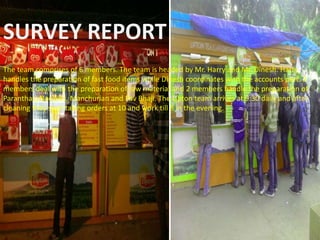
SURVEY REPORT
The team comprises of 6 members. The team is headed by Mr. Harry and Mr. Dinesh. Harry
handles the preparation of fast food items while Dinesh coordinates with the accounts part. 2
members deal with the preparation of raw material and 2 members handle the preparation of
Paranthas, Noodles, Manchurian and Pav Bhaji. The Lipton team arrives at 9:30 daily and after
cleaning they start taking orders at 10 and work till 8 in the evening.
Inventory and sales
• Lipton expects around 500 students everyday.
• They bring fresh material daily which helps them to maintain their quality and their
customer loyalty.
• However, these figures don’t hold true for the months of December, June and July
when students are not in campus and the sales also decrease during exam days.
• But during the fests the sales increase.
Competitors if any…
 Bean-O-Mania
 Jain Kiryana Shop
 C-Cubes
 Verka
But the Lipton team believes that :
 All are different organizations
 They don’t feel any kind of pressure when it comes to competition.
Initial Days
• Bean-O-Mania and The Departmental Store were the only competitors at that time.
• The first day of the shop was good and people turned up irrespective of the existing
shops.
• Lipton made a mark quickly in NITJ because it had a good variety and quality at that
time when NITJ was looking for a change.
• And since then, the working model has been improving.
•
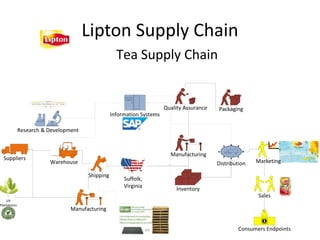
Suppliers
Distribution Marketing
Shipping
Sales
Warehouse
Manufacturing
Inventory
Research & Development
Quality Assurance
Consumers Endpoints
Information Systems
UV
Plantations
Suf
folk
Packaging
Manufacturing
Suffolk,
Virginia
Lipton Supply Chain
Tea Supply Chain
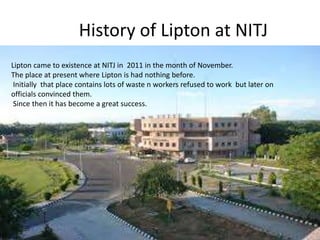
History of Lipton at NITJ
Lipton came to existence at NITJ in 2011 in the month of November.
The place at present where Lipton is had nothing before.
Initially that place contains lots of waste n workers refused to work but later on
officials convinced them.
Since then it has become a great success.
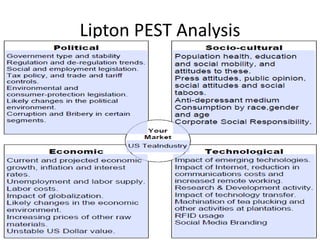
Lipton PEST Analysis
Product Life Cycle
 Just how humans are born, grow, mature and eventually pass away, similar
is the story with products.
 Products also follow the same life cycle as humans and is the called Product
Life Cycle.
 On similar lines, Industries also follow the same trend and is called the
Industry Life Cycle.
There are four basic stages that all products go through which are -
 The Introductory Stage
 The Growth Stage
 The Maturity Stage
 The Decline Stage.
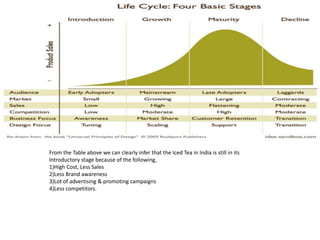
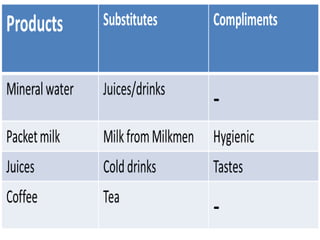
From the Table above we can clearly infer that the Iced Tea in India is still in its
Introductory stage because of the following,
1)High Cost, Less Sales
2)Less Brand awareness
3)Lot of advertising & promoting campaigns
4)Less competitors.
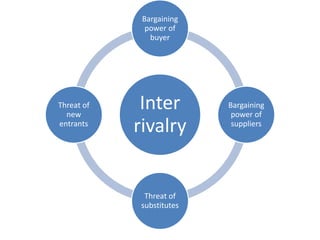
Porter model
• THREATS OF NEW ENTRANTS
 High capital
Lipton is the market leader of tea worldwide. Any new entrant in the market needs
a huge capital to participate in the race with the Lipton
 OWN DISTRIBUTION SYSTEM
To own a distributor channel in the market where large organization like Lipton are
already present is very difficult for the new entrants
 BRAND IDENTITY
How to identify our brand in the market is more difficult for any new entrants,
because Lipton is a very recognizable brand so it is very difficult for the new entrant
to compete.
• BARGAINING POWER OF BUYERS
The bargaining power of buyers with Lipton products is very high in India because
of their price sensitivity, brand loyalty status which is becoming high inIndia and
they are becoming more familiar with the products and the features of different
brands including Unilevers brand Lipton.
BARGAINING POWER OF SUPPLIERS
The bargaining power of suppliers with Lipton in India is very low because of the
availability of large numbers of suppliers in the market and it becomes the honor
for the suppliers to become a supplier of Lipton, the world’s largest HOUSEHOLD
Company, but now Unilever has almost its own suppliers.
• THREATS OF NEW Substitutes
Lipton does not have so many threats of substitutes for its products except for few
which are:
Inter
rivalry
Bargaining
power of
buyer
Bargaining
power of
suppliers
Threat of
substitutes
Threat of
new
entrants
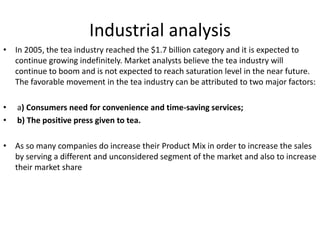
Industrial analysis
• In 2005, the tea industry reached the $1.7 billion category and it is expected to
continue growing indefinitely. Market analysts believe the tea industry will
continue to boom and is not expected to reach saturation level in the near future.
The favorable movement in the tea industry can be attributed to two major factors:
• a) Consumers need for convenience and time-saving services;
• b) The positive press given to tea.
• As so many companies do increase their Product Mix in order to increase the sales
by serving a different and unconsidered segment of the market and also to increase
their market share
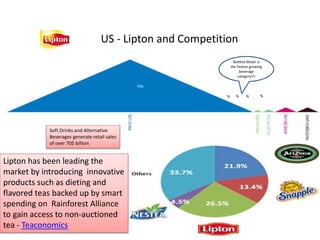
US - Lipton and Competition
79%
3%% 4%% 7%% 7%%
Soft Drinks and Alternative
Beverages generate retail sales
of over 70$ billion
Bottled Water is
the fastest growing
beverage
category!!!
Lipton has been leading the
market by introducing innovative
products such as dieting and
flavored teas backed up by smart
spending on Rainforest Alliance
to gain access to non-auctioned
tea - Teaconomics
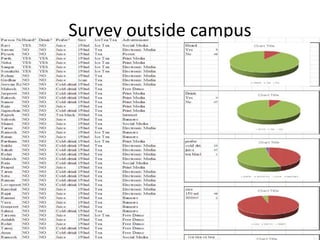
Survey outside campus
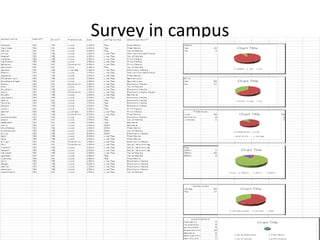
Survey in campus
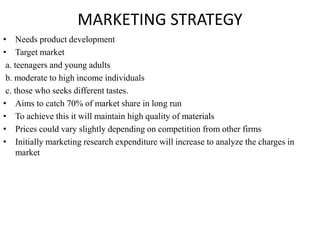
MARKETING STRATEGY
• Needs product development
• Target market
a. teenagers and young adults
b. moderate to high income individuals
c. those who seeks different tastes.
• Aims to catch 70% of market share in long run
• To achieve this it will maintain high quality of materials
• Prices could vary slightly depending on competition from other firms
• Initially marketing research expenditure will increase to analyze the charges in
market
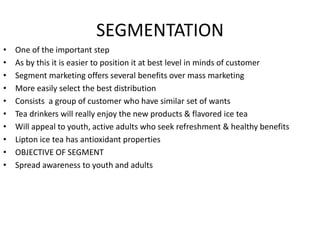
SEGMENTATION
• One of the important step
• As by this it is easier to position it at best level in minds of customer
• Segment marketing offers several benefits over mass marketing
• More easily select the best distribution
• Consists a group of customer who have similar set of wants
• Tea drinkers will really enjoy the new products & flavored ice tea
• Will appeal to youth, active adults who seek refreshment & healthy benefits
• Lipton ice tea has antioxidant properties
• OBJECTIVE OF SEGMENT
• Spread awareness to youth and adults
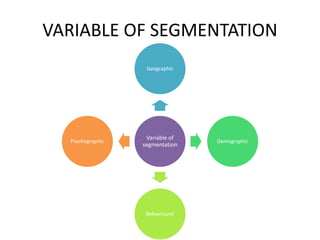
VARIABLE OF SEGMENTATION
Variable of
segmentation
Geographic
Demographic
Behavioural
Psychographic
OUR PHILOSPHY & STRATEGY
• Win consumer’s trust
• Understand consumer nutritional & emotional preference
• Serving our consumer & improve their quality of life
• Our strategy starts & ends with consumer
• Creating customer loyalty & retention
• growing share of customer
• Building customer equity
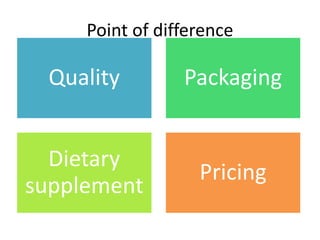
Point of difference
Quality Packaging
Dietary
supplement
Pricing
THANK YOU

Liptonicetea1.docx (1)

  • 2.
    MARKETING ARSHDEEP SINGH(CEO) ,Kritika Vasisht(VP) MD.TUFFAIL(MD), AMRIT KUMAR DEEPAK(MD),SOURABH MEENA, ABHISHEK KUMAR, HIMANSHU SHEKHAWAT
  • 3.
  • 4.
    BRIEF HISTORY ANDINTRODUCTION OF LIPTON Created at the end of the 19th century by SIR THOMAS LIPTON in Glasgow, Scotland. Under The Slogan: “Direct from the tea gardens to the tea pot” This entrepreneurial businessman wanted to make tea a popular and approachable drink for everyone – with a high quality but reasonably priced product. Over the course of a century, Lipton has become a dominant tea brand in many markets. Products target the mass market and are generally positioned in the middle of the price spectrum for tea. The company's Lipton Institute of Tea researches tea's various health and mental benefits, as well as tea growing, processing and tasting. Unilever/Lipton owns tea estates in Kenya and Tanzania, making it one of the few companies that is actively involved in the whole value chain of tea, from growing it to marketing it.
  • 5.
    LIPTON ICE TEA •Provides protective falconoid antioxidants. • Drink provides the taste, quality and also good for health. • Committed to making iced tea as healthy and delicious with essential nutrients needed for optimal growth, development and refreshment. • Instant tea drink, consisting of various nutrients and herb extracts. • Tea is sweet, though it has less sugar than a typical soft drink. • The drink is a mix of tea, sugar and peach with different herb extracts
  • 6.
    Product Features AndAttributes Why to prefer the Lipton Ice Tea? Green tea is renowned for its healthful properties. Green tea is full of clean taste, vitality, and great flavor. Ice Tea Provides protective falconoid antioxidants provide the taste, quality and it is also good for health
  • 7.
    MarketDescriptionOf Lipton IceTea • Lipton Ice Tea is a multi vitamin and nutritious drink. It is available in one flavor. • Lipton Ice Tea provides refreshment, energy and also helps in reducing weight. • Features: • Lipton is introduced only in one flavor : • Flavor: • Lipton iced green tea
  • 8.
    Levels of product:-CoreBenefit: Refresher and Stimulant. Packaging: Packing of Lipton Ice Tea is very attractive due to different colors. The descriptor on the product contains the all information about the product. Benefits: Convenience: Lipton Ice Tea is taken in can to enjoy the look and the taste. Convenience can be taken as the plastic can is easy to dispose off without creating any fuss. Lipton Ice Tea can be taken as a substitute of tea or fruit drinks and can replace your meal at the same time. Nutritional Values: Our drink provides extra nutritional contents like; iron, protein, fiber, vitamin C, Calcium, Sodium and Carbohydrates.
  • 9.
    • MISSION STATEMENT “CHANGING THELIVES OF THE TEA LOVERS BY INNOVATING THE ICE TEA”
  • 10.
    • To provide valueand quality to our consumers, our aim is constantly to provide world class service for our customers, deliver value for our products and make Lipton a great place to work for our employees. We aim to have a reputation for innovative thinking in the areas that matter to our customers To be an innovative, marketing and research oriented.
  • 11.
    GOALS AND OBJECTIVES NonFinancial: Delivering the good quality and taste to the consumers. Improve the company’s image Contribution in the community activities Increasing the number of jobs and enhancing quality of life of employees Financial: Improve Profitability Increasing the net profit as percentage sale Increasing the net profit as percentage of investment Increasing the net profit as per share common stock Increasing Volume Increase the market share Continuous growth in sales Improving the sales ranking in the market Increasing the production capacity and its utilization Increase the seasonal sales volume
  • 12.
    CORE COMPETENCYCore competence Core Distinctive Competency Of The Lipton • Multi National Company is certified from ISO. • They have highly effective Human Resource Management. • Offer versatile, high quality products. • Use Sterile Filling Process and Tunnel Pasteurization in packaging process. • Offers the products worldwide according to the taste of people in a particular country. • Has a separate supply chain department. Supplies chain makes sure that products are available, no matter where you are in India. • Lipton Ice Tea is renowned for its healthful properties. Other beverages and soft drinks however, represent the epitome of sugary soft drinks. • Lipton Ice Tea is full of clean taste, vitality, and great flavor. Plus, Lipton Ice Tea provides protective falconoid antioxidants. • Lipton Ice Tea is the drink which provides the taste, quality and it is also good for health.
  • 13.
    STRATEGY  The CustomersCome First- Wants to win and keep its customers: distributers, supermarkets, hotels, shopkeepers and the final buyers. • Trade customers expect excellent service, correct information and timely delivery. • Consumers consider taste, appearance and price when they make their choice. • Task is to understand what consumers want and respond to their expectations rapidly and effectively. • Lipton serves various groups of consumers and there is demand for products at different levels of perceived quality and price. • Lipton Ice Tea shares society’s concern for the environment and is committed to environmentally sound business practices throughout the world. • Customers are central to business and we must always respect their needs and preferences.
  • 14.
    Marketing environment  InternalEnvironment In HUL Internal environment ensures • Employees are on side with the goals of an organization • They have direct impact on product quality, dependability and overall productivity. • They are internal market, which impact every department within an organization; a satisfied internal market will be better able to satisfy external market. • Unilever under the top management runs the departments of finance, accounting, sales and marketing, research and development to achieve the goals of organization.
  • 15.
     Micro Environment InUnilever the microenvironment factors includes:  Suppliers: • Suppliers provide the resources like labor and material resources to produce goods and services. They add to customers overall value delivery system.  Labor supplies include handling of • Quality of labor • Quantity of labor • Labor strikes • Labor relations  Material supplies deals with • Quantity of material • Quality of material • Price of material • Stability of material inputs • Delivery delays Unilever efficiency handles the quality, quality, price and stability of both material and labor supplies. Management maps out the strategies for labor strikes, supply shortages and delays to avoid the cost of production, which can badly affect sales in short run and customer satisfaction in long run.
  • 16.
     MACRO ENVIRONMENT MACRO-ENVIRONMENTAL FACTORS: The societal factors that have a direct and influential effect on the Unilever progress come under the baseline of macro- environmental factors. The company’s sales revenues and purchases are somehow dependent on it. The different macro-environmental factors affect differently depending on the nature of different Lipton products. These factors are • DEMOGRAPHIC FACTORS: Demographic factors have no effect on Lipton Ice Tea. As it has been offered to groups of all ages and it is not depending on the limitations defined by gender, size, racial discrimination, occupation and location. • ECONOMIC FACTORS: Lipton brand has been of all class brand. It generates it revenue from the sales coming from upper class, upper-middle class and middle class but it is usually not consumed by lower income groups. • POLITICAL FACTORS: Lipton Ice Tea and its other products do not include substances that can cause dizziness, drowsiness and addiction. Its composition is purely natural and no harmful chemicals or artificial flavors are added in it. • CULTURAL FACTORS: Unilever has always been offering products that are acceptable by our cultural society and always keep focusing on basic values and perceptions of Indian society. It has never launched such products which are forbidden in Indian society and in Islam. The Unilever Corporate always focus on providing Halal products.
  • 17.
    Competitors in Market ForLipton Ice Tea, the direct competitors belong to the tea and the indirect competitors are of the beverage industry.  State Of Market and Competition: As far as the competitors are concerned, Lipton has a strong competitor in this field. Nestea and Coca-Cola is also producing ice tea in India. Lipton can have a competitive edge over Nestea by producing iced tea in the country and making it available for target customers at a lower price than competitors. Secondly Unilever is a trusted company so people prefer buying its products and they are not reluctant in trying its products.  DIRECT COMPETITORS: The direct competitors of our Product are: • Nestea: We are competing our product with them because they are the main competitors of the ice tea market and they are providing the many flavor of ice tea and also they have contain 73% market share of ice tea.- • Coca-Cola- Coca cola is coming with their ice tea drink Fuze with six flavor. Coca cola is new entrant for Lipton as well as Nestea.  INDIRECT COMPETITORS:As the ice tea is the symbol of the refreshment and nutrition and its is also a substitute for the other soft drinks, so in the soft drink market we have the competitors like carbonate drinks, juice.
  • 18.
    COMPANY ANALYSIS • ResearchAnd Competitive Analysis: They have to analyze the competitor all the strengths, weakness, opportunities, and threats of them and also their Product’s price, features etc. They have to conduct the market research to find out what costumers want and what is available in the market and what can their company do for the costumers
  • 19.
     Quality IsOur Competitive Advantage We live in competitive world and must never forget that our customers have choice .if they are not satisfied with Lipton product, they will switch to another brand. Our goal, therefore, is to provide superior value in every product category and market sector in which we compete. The pursuit of highest quality at any cost is no guarantee for success, nor is a single-minded cost cutting approach. Lasting competitive advantage is gained from a balanced search for optimal value to customers, by simultaneous improvement of quality and reduction cost. We must watch and learn from our competitors. If they do something better, we must improve our own performance. We can achieve competitive advantage through Quality.
  • 20.
    SWOT ANALYSIS LIPTONICE TEA  STRENGTHS: • LIPTON ICE TEA provides extra nutrients in the form of natural extracts. These extracts provide additional vitamins, calcium, iron, carbohydrates etc. LIPTON ICE TEA does not consist of any artificial flavorings or colors. • The USP is very distinct considering the fact that this product has a combination of attributes that are not otherwise found in the competing products. LIPTON ICE TEA’s distinctiveness lies in its nutritional value and herbs which serves as its USP.
  • 21.
     WEAKNESS: • StrongDirect & Indirect Competition:-There is strong competition in the industry through the presence of Tea industry giants like Tata tea, Taza etc. and in addition Pepsi and Coca-Cola capture a large market share through efficient and widespread promotional campaigns and distribution network. • Conventional Perception About Tea:-In a country like India the consumption of tea is very high. Keeping this in mind there are a lot of companies catering to this need segment. LIPTON ICE TEA, though is a differentiated product, has tea as its base, therefore the first image that it conjures up in the mind of users is that of a drink that is taken chilled in different flavours. • Competition:-Lipton has intense competition, as our analysis is one of their weaknesses as to stay alive against a giant as Lipton and the other one new entrant in the beverages industries. Our product is suitable only for summer season.
  • 22.
     OPPORTUNITY: • HighPotential In Terms Of Increasing Market Share:- LIPTON TEA Pvt. Ltd views the ever increasing market share of 1.2 billon population as an opportunity for LIPTON ICE TEA. • Higher degree of adaptability from the younger generation:-The youth of India in contrast to their precedents are more adaptable and recipient towards new ideas. It will attract these youngsters as well as people in their thirties through these features, who over all other things rate convenience and quality first. • Nutritional Product:-LIPTON ICE TEA, in contrast to tea and other fruit drinks available in the market, contains no artificial flavors or coloring. Apart from this it’s low caffeine content, non- carbonated and presence of additional vitamins, calcium, carbohydrate and iron contents make it an attractive alternative to the already present drinks in the market. The novelty of our drink will attract the health conscious group of consumers who are otherwise neglected.
  • 23.
     THREATS: • GovernmentPolicies:-Government Policies like GST, which has been levied upon all consumer products, poses as a threat to us as to fulfill this criterion and to cover our costs we have to set our prices higher than we initially hoped for. Apart from this the discouraging policies regarding the import of tealeaves is another threat for us. • Competitor’s Strategies And Polices:-The very fact that LIPTON ICE TEA is competing against names like Nestea, Coca-Cola Fuze, etc. poses to be a threat for us. At this initial stage, though LIPTON ICE TEA will be substantiated with an adequate advertising budget, it may still fall short of that of its competitors. • NEW competitor enters in the market like Coca-Cola with Fuze tea. • As we are distributors if company increase their price or stop manufacturing the product our business will lead to failure.
  • 24.
    MARKETING STRATEGY AND OBJECTIVES Marketing Strategy: • Lipton Ice Tea would be considered product development as it is a new product and targets new market. • The target market is younger, energetic and moderate-to-high-income individuals who seek different tastes in their drinks and teas. Lipton Ice Tea will be positioned as a drink more fun and refreshing , for more outgoing people and for people with a distinctive taste. • Lipton aims to catch more of market share in the long run. To achieve this Lipton will maintain high quality of materials and products and keep improving it over the years. Prices could vary slightly depending on competition from other firms • TARGET MARKETS- Teenagers And Young Adults.
  • 26.
    SURVEY REPORT The teamcomprises of 6 members. The team is headed by Mr. Harry and Mr. Dinesh. Harry handles the preparation of fast food items while Dinesh coordinates with the accounts part. 2 members deal with the preparation of raw material and 2 members handle the preparation of Paranthas, Noodles, Manchurian and Pav Bhaji. The Lipton team arrives at 9:30 daily and after cleaning they start taking orders at 10 and work till 8 in the evening.
  • 27.
    Inventory and sales •Lipton expects around 500 students everyday. • They bring fresh material daily which helps them to maintain their quality and their customer loyalty. • However, these figures don’t hold true for the months of December, June and July when students are not in campus and the sales also decrease during exam days. • But during the fests the sales increase.
  • 28.
    Competitors if any… Bean-O-Mania  Jain Kiryana Shop  C-Cubes  Verka But the Lipton team believes that :  All are different organizations  They don’t feel any kind of pressure when it comes to competition.
  • 29.
    Initial Days • Bean-O-Maniaand The Departmental Store were the only competitors at that time. • The first day of the shop was good and people turned up irrespective of the existing shops. • Lipton made a mark quickly in NITJ because it had a good variety and quality at that time when NITJ was looking for a change. • And since then, the working model has been improving. •
  • 31.
    Suppliers Distribution Marketing Shipping Sales Warehouse Manufacturing Inventory Research &Development Quality Assurance Consumers Endpoints Information Systems UV Plantations Suf folk Packaging Manufacturing Suffolk, Virginia Lipton Supply Chain Tea Supply Chain
  • 32.
    History of Liptonat NITJ Lipton came to existence at NITJ in 2011 in the month of November. The place at present where Lipton is had nothing before. Initially that place contains lots of waste n workers refused to work but later on officials convinced them. Since then it has become a great success.
  • 33.
  • 34.
    Product Life Cycle Just how humans are born, grow, mature and eventually pass away, similar is the story with products.  Products also follow the same life cycle as humans and is the called Product Life Cycle.  On similar lines, Industries also follow the same trend and is called the Industry Life Cycle. There are four basic stages that all products go through which are -  The Introductory Stage  The Growth Stage  The Maturity Stage  The Decline Stage.
  • 35.
    From the Tableabove we can clearly infer that the Iced Tea in India is still in its Introductory stage because of the following, 1)High Cost, Less Sales 2)Less Brand awareness 3)Lot of advertising & promoting campaigns 4)Less competitors.
  • 36.
    Porter model • THREATSOF NEW ENTRANTS  High capital Lipton is the market leader of tea worldwide. Any new entrant in the market needs a huge capital to participate in the race with the Lipton  OWN DISTRIBUTION SYSTEM To own a distributor channel in the market where large organization like Lipton are already present is very difficult for the new entrants  BRAND IDENTITY How to identify our brand in the market is more difficult for any new entrants, because Lipton is a very recognizable brand so it is very difficult for the new entrant to compete.
  • 37.
    • BARGAINING POWEROF BUYERS The bargaining power of buyers with Lipton products is very high in India because of their price sensitivity, brand loyalty status which is becoming high inIndia and they are becoming more familiar with the products and the features of different brands including Unilevers brand Lipton. BARGAINING POWER OF SUPPLIERS The bargaining power of suppliers with Lipton in India is very low because of the availability of large numbers of suppliers in the market and it becomes the honor for the suppliers to become a supplier of Lipton, the world’s largest HOUSEHOLD Company, but now Unilever has almost its own suppliers. • THREATS OF NEW Substitutes Lipton does not have so many threats of substitutes for its products except for few which are:
  • 38.
  • 40.
    Industrial analysis • In2005, the tea industry reached the $1.7 billion category and it is expected to continue growing indefinitely. Market analysts believe the tea industry will continue to boom and is not expected to reach saturation level in the near future. The favorable movement in the tea industry can be attributed to two major factors: • a) Consumers need for convenience and time-saving services; • b) The positive press given to tea. • As so many companies do increase their Product Mix in order to increase the sales by serving a different and unconsidered segment of the market and also to increase their market share
  • 41.
    US - Liptonand Competition 79% 3%% 4%% 7%% 7%% Soft Drinks and Alternative Beverages generate retail sales of over 70$ billion Bottled Water is the fastest growing beverage category!!! Lipton has been leading the market by introducing innovative products such as dieting and flavored teas backed up by smart spending on Rainforest Alliance to gain access to non-auctioned tea - Teaconomics
  • 42.
  • 43.
  • 44.
    MARKETING STRATEGY • Needsproduct development • Target market a. teenagers and young adults b. moderate to high income individuals c. those who seeks different tastes. • Aims to catch 70% of market share in long run • To achieve this it will maintain high quality of materials • Prices could vary slightly depending on competition from other firms • Initially marketing research expenditure will increase to analyze the charges in market
  • 45.
    SEGMENTATION • One ofthe important step • As by this it is easier to position it at best level in minds of customer • Segment marketing offers several benefits over mass marketing • More easily select the best distribution • Consists a group of customer who have similar set of wants • Tea drinkers will really enjoy the new products & flavored ice tea • Will appeal to youth, active adults who seek refreshment & healthy benefits • Lipton ice tea has antioxidant properties • OBJECTIVE OF SEGMENT • Spread awareness to youth and adults
  • 46.
    VARIABLE OF SEGMENTATION Variableof segmentation Geographic Demographic Behavioural Psychographic
  • 47.
    OUR PHILOSPHY &STRATEGY • Win consumer’s trust • Understand consumer nutritional & emotional preference • Serving our consumer & improve their quality of life • Our strategy starts & ends with consumer • Creating customer loyalty & retention • growing share of customer • Building customer equity
  • 48.
    Point of difference QualityPackaging Dietary supplement Pricing
  • 49.