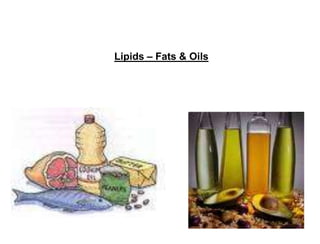
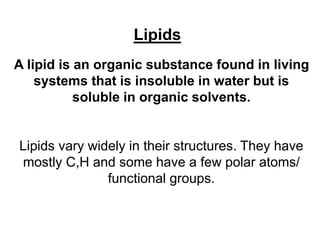
Lipids – Fats & Oils
Lipids
A lipid is an organic substance found in living
systems that is insoluble in water but is
soluble in organic solvents.
Lipids vary widely in their structures. They have
mostly C,H and some have a few polar atoms/
functional groups.
Lipids
• occur in plants and animals as storage and
structural components.
• Structural lipids present in animals and
plants are in the form of meat and
vegetables, respectively.
• Storage fats occur in milk and adipose
tissue of farm animals and in seed oils
Uses of Lipids
• Palatability- fat- free diet would be unpleasant to
eat.
• supply the essential fatty acids which are not
synthesized in human beings but are essential for
growth.
Uses of Lipids
• effective absorption of fat-soluble vitamins A, D, E
and K from intestine
• acts as insulation against excessive heat loss to the
environment.
Classification of Lipids
1. Simple Lipids
• Esters
• Fats (triacylglycerols) or oils
• waxes.
Classification of Lipids
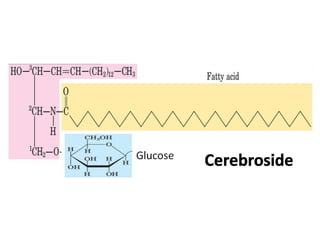
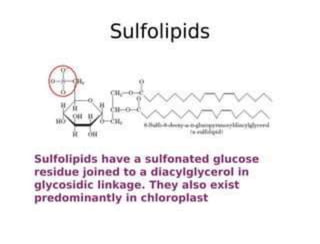
2. Compound Lipids
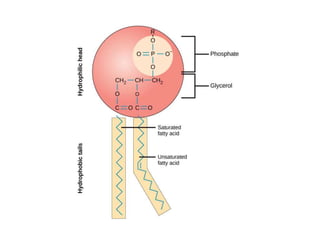
• Phospholipids- phosphate group
• Glycolipids- galactose
• Sulpholipids
• Lipoproteins
Classification of Lipids
3. Derived Lipids
- derived from simple and compound lipids
by hydrolysis of alcohols, fatty acids,
aldehydes, ketones, sterols and hydrocarbons.
The Fatty Acids
• are long chain carboxylic acids synthesised
by the condensation and reduction of acetyl
co enzyme-A units by fatty acid synthase.
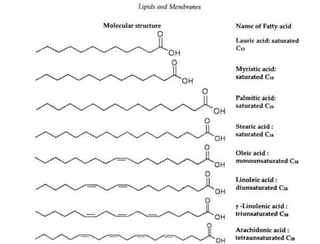
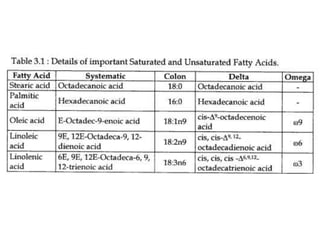
• Stearic and palmitic acids are saturated (no
double bonds), oleic acid is
monounsaturated, and linoleic and linolenic
are polyunsaturated
The Fatty Acids
• Bacteria and plants (which cannot
thermoregulate) will use more unsaturated
acids in their cell membranes when they are
exposed to cold: this helps to maintain
membrane fluidity.
• the most important use for lipids in the cell
is in the formation of membranes,
membranes contain amphipathic
molecules, i.e., ones with a hydrophobic
end and a hydrophilic end.
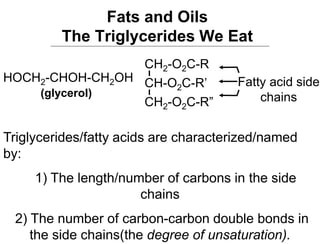
Fats and Oils
The Triglycerides We Eat
Triglycerides/fatty acids are characterized/named
by:
1) The length/number of carbons in the side
chains
2) The number of carbon-carbon double bonds in
the side chains(the degree of unsaturation).
CH2-O2C-R
CH2-O2C-R”
CH-O2C-R’ Fatty acid side
chains
HOCH2-CHOH-CH2OH
(glycerol)
Structural or Hidden Fats in
Plants
• The leaves of higher plants contain up to
7% of their dry weight as fats, surface
lipids, components of leaf cells- chloroplast
membrane
• Six fatty acids- palmitic, palmitoleic,
stearic, oleic, linoleic and y-linolenic
generally account for over 90% of the total
fatty acids.
Waxes
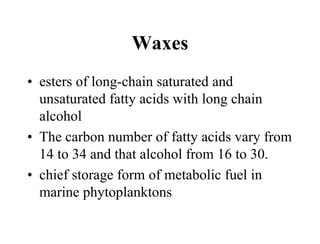
• esters of long-chain saturated and
unsaturated fatty acids with long chain
alcohol
• The carbon number of fatty acids vary from
14 to 34 and that alcohol from 16 to 30.
• chief storage form of metabolic fuel in
marine phytoplanktons
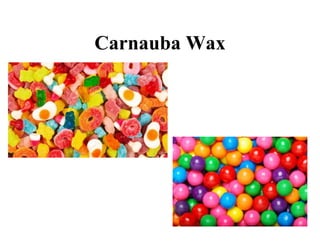
Carnauba Wax
Beeswax
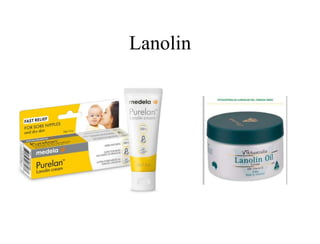
Lanolin
Lipids include:
fats and oils
steroids
waxes
Fats & oils make up 95% of the nutritional lipids,
the other 5% are steroids. Waxes are functional
only.
Fats are solid triglycerides
Oils are liquid triglycerides
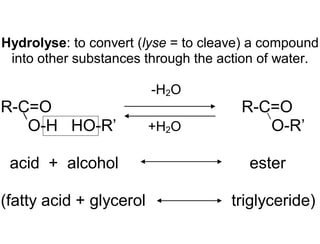
Hydrolyse: to convert (lyse = to cleave) a compound
into other substances through the action of water.
-H2O
R-C=O R-C=O
O-H HO-R’ +H2O O-R’
acid + alcohol ester
(fatty acid + glycerol triglyceride)
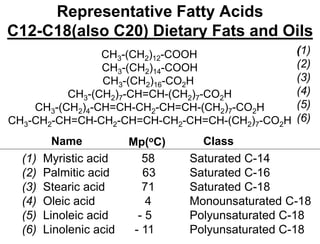
Representative Fatty Acids
C12-C18(also C20) Dietary Fats and Oils
CH3-(CH2)12-COOH
CH3-(CH2)14-COOH
CH3-(CH2)16-CO2H
CH3-(CH2)7-CH=CH-(CH2)7-CO2H
CH3-(CH2)4-CH=CH-CH2-CH=CH-(CH2)7-CO2H
CH3-CH2-CH=CH-CH2-CH=CH-CH2-CH=CH-(CH2)7-CO2H
(1)
(2)
(3)
(4)
(5)
(6)
(1) Myristic acid 58 Saturated C-14
(2) Palmitic acid 63 Saturated C-16
(3) Stearic acid 71 Saturated C-18
(4) Oleic acid 4 Monounsaturated C-18
(5) Linoleic acid - 5 Polyunsaturated C-18
(6) Linolenic acid - 11 Polyunsaturated C-18
Name Class
Mp(oC)
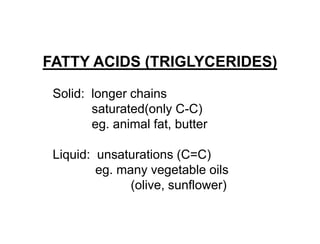
FATTY ACIDS (TRIGLYCERIDES)
Solid: longer chains
saturated(only C-C)
eg. animal fat, butter
Liquid: unsaturations (C=C)
eg. many vegetable oils
(olive, sunflower)
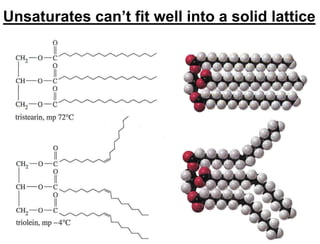
Unsaturates can’t fit well into a solid lattice
Properties of Fats
Physical
• insoluble in water and soluble in organic
solvents.
• Pure triacylglycerols are tasteless,
odourless, colourless and neutral in reaction.
• have lesser specific gravity (density) than
water and therefore float in water
Properties of Fats
Physical
• can be broken down into minute droplets
and dispersed in water. This is called
emulsification.
• contain hydrophilic colloidal particles such
as proteins, carbohydrates and phospholipids
which act as stabilizing agents.
Properties of Fats
Physical
• Emulsification greatly increases the surface
area of the fat and this is an essential requisite
for digestion of fat in the intestine.
Properties of Fats
Chemical
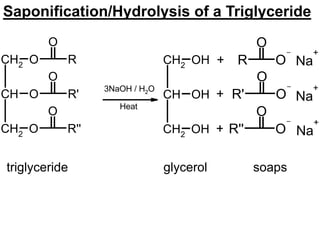
• Fat is hydrolysed to yield three molecules of
fatty acid and one molecule of glycerol. The
hydrolysis of fat is affected by alkali and
enzyme.
• The process of alkali hydrolysis is called
'saponification’.
• The alkali salt of fatty acid resulting from
saponification is soap
CH2
O R
O
CH
CH2
O
O
R'
O
O
R''
CH2
OH
CH
CH2
OH
OH
R
O
O Na
+
Na
+
Na
+
R'
O
O
R''
O
O
3NaOH / H2O
Heat
+
+
+
Saponification/Hydrolysis of a Triglyceride
triglyceride glycerol soaps
Properties of Fats
Chemical
• Hydrolysis of triacylglycerol may be
accomplished enzymatically through the action
of lipases.
• Development of disagreeable odour and taste
in fat or oil upon storage is called rancidity.
Rancidity reactions may be due to hydrolysis of
ester bonds (hydrolytic rancidity) or due to
oxidation of unsaturated fatty acids (oxidative
rancidity).
Properties of Fats
Chemical
• The partial hydrolysis of the triacylglycerol
to mono and diacylglycerol is called
Hydrolytic rancidity. The hydrolysis is
hastened by the presence of moisture, warmth
and lipases present in fats or air. In fats like
butter which contains a high percentage of
volatile fatty acids, hydrolytic rancidity
produces disagreeable odour and taste due to
the liberation of the volatile butyric acid.
Properties of Fats
Chemical
• The unsaturated fatty acids are oxidised at
the double bonds to form peroxides, which
then decompose to form aldehydes and acids
of objectionable odour and taste (Oxidative
rancidity).
Biological Membranes
• Proteins and polar lipids account for mass
of biological membranes (cell membranes)
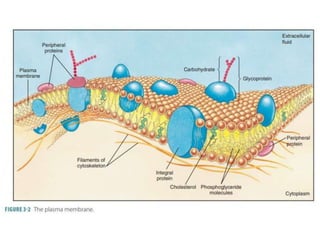
• Amphipathic molecules form a lipid bilayer
with the non polar region of lipids facing
outward.
• In this lipid bilayer, globular proteins are
embedded at regular intervals held by
hydrophobic interactions.
Biological Membranes
• The membrane is fluid because the
interactions among lipids, between lipids
and proteins are non-covalent interactions,
leaving individual lipid and protein
molecules free to move laterally.
Common Features
• Membranes are sheetlike, just a few
molecules thick and form closed
boundaries between cell compartments.
• Membranes contain lipids and proteins,
with small amounts of carbohydrayes
linked to the lipids and proteins
Common Features
• Lipids in membranes are small with
hydrophobic and hydrophilic portions.
Lipid bilayers provide a barrier to the
diffusion of polar molecules.
• Characteristic functions of membranes are
mediated by specific proteins, serving as
pumps, channels, receptors, energy
transducers and enzymes.
Common Features
• Membrane components associate through
noncovalent interactions.
• Membranes are asymmetrical, with two
sides of the membrane differing from each
other.
• Lipid and protein molecules often diffuse
rapidly in the plane of the membrane.
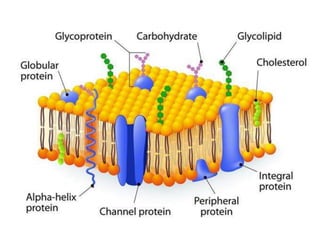
Fluid Mosaic Model
• lipids are arranged in a bilayer, which is
both a permeability barrier and solvent for
integral proteins
• Some lipids interact with specific proteins
to produce characteristic functions of the
membrane.
Fluid Mosaic Model
• describes the cell membrane as a tapestry
of several types of molecules
(phospholipids, cholesterols, and proteins)
that are constantly moving. This movement
helps the cell membrane maintain its role
as a barrier between the inside and outside
of the cell environments.
Carbohydrates in Cell Membranes
(Carbohydrate Chain)
• Cell membrane carbohydrates such as
glycolipids, glycoproteins, and
proteoglycans are found on the outside
surface of the cell.
• The main purpose of a carbohydrate chains
is cell-to-cell recognition.
Carbohydrates in Cell Membranes
(Carbohydrate Chain)
• responsible for labeling red blood cells
according to blood type.
• allow the immune system to be able to
distinguish cells belonging to the organism
and cells that are foreign and need to be
destroyed.
CH3
CH3
O
H
C
H3
CH3
C
H3
Cholesterol (animal "fat")
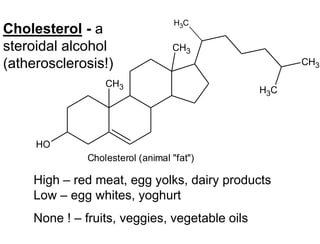
Cholesterol - a
steroidal alcohol
(atherosclerosis!)
High – red meat, egg yolks, dairy products
Low – egg whites, yoghurt
None ! – fruits, veggies, vegetable oils
Body fat is stored energy
The body converts the unused carbohydrates,
proteins and triglycerides that make up our
macronutrients into small globules of fat that
end up in the specialized cells of adipose
tissue, the fatty tissue of the body.
Fat = Essential Energy
Most of our long term energy supplies operates
via the formation, storage and metabolism of
body fat (triglycerides).
Short term energy storage, from one meal to
another, occurs through a starch-like substance
called glycogen(a carbohydrate).
Adipose Tissue / Fat
Adipose tissue forms cushioning shields
around our major organs, protecting
them against damage from physical
shock and provides insulation to our
bodies, guarding against a rapid loss of
body heat to the external environment .
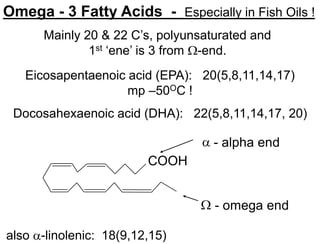
COOH
 - alpha end
 - omega end
Omega - 3 Fatty Acids - Especially in Fish Oils !
Eicosapentaenoic acid (EPA): 20(5,8,11,14,17)
mp –50OC !
Docosahexaenoic acid (DHA): 22(5,8,11,14,17, 20)
also -linolenic: 18(9,12,15)
Mainly 20 & 22 C’s, polyunsaturated and
1st ‘ene’ is 3 from -end.
Other omega -3 enriched
products
• Orange juice
• Other fruit juices
• They provide the starting point for making
hormones that regulate blood clotting,
contraction and relaxation of artery walls,
and inflammation.
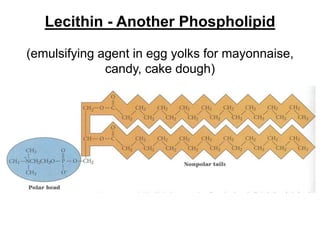
Lecithin - Another Phospholipid
(emulsifying agent in egg yolks for mayonnaise,
candy, cake dough)
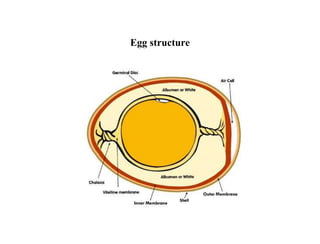
Egg yolks
• Yolk; weighs~20 grams; 33% of weight of total
egg liquid
• 50% water, 16% protein, 34% lipid
• Functions as stored food for the embryo
• Supermarket eggs do not contain an ovum, since
they have not been fertilized (no rooster!)
Egg structure
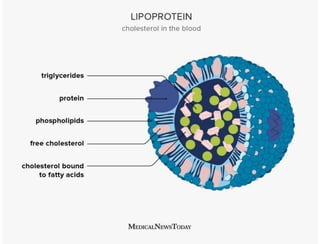
Lipoproteins
• are particles made of protein and fats
(lipids).
• carry cholesterol through your bloodstream
to your cells.
• The two main groups of lipoproteins:
a) HDL (high-density lipoprotein) or
"good" cholesterol
b) LDL (low-density lipoprotein) or "bad"
cholesterol.
High-Density Lipoproteins
• absorbs cholesterol in the blood and carries
it back to the liver.
• The liver then flushes it from the body.
• High levels of HDL cholesterol can lower
your risk for heart disease and stroke.
• HDL contains unsaturated cis Fatty acids
Low-Density Lipoproteins
• makes up most of your body's cholesterol.
High levels of LDL cholesterol raise your
risk for heart disease and stroke.
• it causes plaque to build up inside your
arteries and leads to heart disease.
• LDL contains more saturated and trans
fatty acids
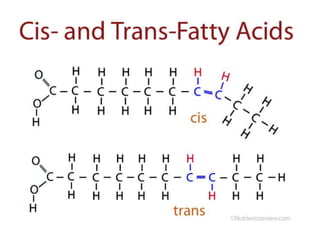
Cis vs. Trans Fatty acids
• Almost all natural unsaturated fatty acids
have cis stereochemistry in C=C’s.
• Small amounts of trans are produced in
stomachs of ruminating animals by partial
enzymatic hydrogenation of
polyunsaturated fats, and thus are present in
small amounts in milk and butter
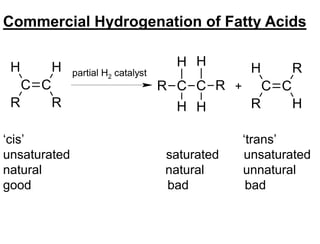
C C
R
H
H
R
partial H2 catalyst
C C
H
R
H
R
C C R
H
H
R
H
H
+
Commercial Hydrogenation of Fatty Acids
‘cis’ ‘trans’
unsaturated saturated unsaturated
natural natural unnatural
good bad bad
An unwanted byproduct
• Trans fats increase the level of Low density
lipoprotein (LDL).
• Thus they are deemed to be “heart
unhealthy” since LDL tends to deposit
cholesterol in the arteries rather than
transport it (as does HDL) to cells for use
in cell membrane construction.
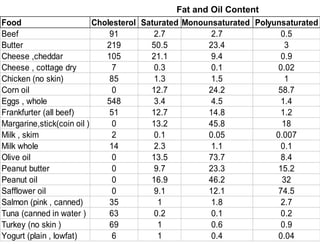
Fat and Oil Content
Food Cholesterol Saturated Monounsaturated Polyunsaturated
Beef 91 2.7 2.7 0.5
Butter 219 50.5 23.4 3
Cheese ,cheddar 105 21.1 9.4 0.9
Cheese , cottage dry 7 0.3 0.1 0.02
Chicken (no skin) 85 1.3 1.5 1
Corn oil 0 12.7 24.2 58.7
Eggs , whole 548 3.4 4.5 1.4
Frankfurter (all beef) 51 12.7 14.8 1.2
Margarine,stick(coin oil ) 0 13.2 45.8 18
Milk , skim 2 0.1 0.05 0.007
Milk whole 14 2.3 1.1 0.1
Olive oil 0 13.5 73.7 8.4
Peanut butter 0 9.7 23.3 15.2
Peanut oil 0 16.9 46.2 32
Safflower oil 0 9.1 12.1 74.5
Salmon (pink , canned) 35 1 1.8 2.7
Tuna (canned in water ) 63 0.2 0.1 0.2
Turkey (no skin ) 69 1 0.6 0.9
Yogurt (plain , lowfat) 6 1 0.4 0.04

Lipids-Part-I.ppt

  • 1.
  • 2.
    Lipids A lipid isan organic substance found in living systems that is insoluble in water but is soluble in organic solvents. Lipids vary widely in their structures. They have mostly C,H and some have a few polar atoms/ functional groups.
  • 3.
    Lipids • occur inplants and animals as storage and structural components. • Structural lipids present in animals and plants are in the form of meat and vegetables, respectively. • Storage fats occur in milk and adipose tissue of farm animals and in seed oils
  • 4.
    Uses of Lipids •Palatability- fat- free diet would be unpleasant to eat. • supply the essential fatty acids which are not synthesized in human beings but are essential for growth.
  • 5.
    Uses of Lipids •effective absorption of fat-soluble vitamins A, D, E and K from intestine • acts as insulation against excessive heat loss to the environment.
  • 6.
    Classification of Lipids 1.Simple Lipids • Esters • Fats (triacylglycerols) or oils • waxes.
  • 7.
    Classification of Lipids 2.Compound Lipids • Phospholipids- phosphate group • Glycolipids- galactose • Sulpholipids • Lipoproteins
  • 12.
    Classification of Lipids 3.Derived Lipids - derived from simple and compound lipids by hydrolysis of alcohols, fatty acids, aldehydes, ketones, sterols and hydrocarbons.
  • 14.
    The Fatty Acids •are long chain carboxylic acids synthesised by the condensation and reduction of acetyl co enzyme-A units by fatty acid synthase. • Stearic and palmitic acids are saturated (no double bonds), oleic acid is monounsaturated, and linoleic and linolenic are polyunsaturated
  • 15.
    The Fatty Acids •Bacteria and plants (which cannot thermoregulate) will use more unsaturated acids in their cell membranes when they are exposed to cold: this helps to maintain membrane fluidity.
  • 18.
    • the mostimportant use for lipids in the cell is in the formation of membranes, membranes contain amphipathic molecules, i.e., ones with a hydrophobic end and a hydrophilic end.
  • 19.
    Fats and Oils TheTriglycerides We Eat Triglycerides/fatty acids are characterized/named by: 1) The length/number of carbons in the side chains 2) The number of carbon-carbon double bonds in the side chains(the degree of unsaturation). CH2-O2C-R CH2-O2C-R” CH-O2C-R’ Fatty acid side chains HOCH2-CHOH-CH2OH (glycerol)
  • 20.
    Structural or HiddenFats in Plants • The leaves of higher plants contain up to 7% of their dry weight as fats, surface lipids, components of leaf cells- chloroplast membrane • Six fatty acids- palmitic, palmitoleic, stearic, oleic, linoleic and y-linolenic generally account for over 90% of the total fatty acids.
  • 21.
    Waxes • esters oflong-chain saturated and unsaturated fatty acids with long chain alcohol • The carbon number of fatty acids vary from 14 to 34 and that alcohol from 16 to 30. • chief storage form of metabolic fuel in marine phytoplanktons
  • 22.
  • 23.
  • 24.
  • 25.
    Lipids include: fats andoils steroids waxes Fats & oils make up 95% of the nutritional lipids, the other 5% are steroids. Waxes are functional only. Fats are solid triglycerides Oils are liquid triglycerides
  • 26.
    Hydrolyse: to convert(lyse = to cleave) a compound into other substances through the action of water. -H2O R-C=O R-C=O O-H HO-R’ +H2O O-R’ acid + alcohol ester (fatty acid + glycerol triglyceride)
  • 27.
    Representative Fatty Acids C12-C18(alsoC20) Dietary Fats and Oils CH3-(CH2)12-COOH CH3-(CH2)14-COOH CH3-(CH2)16-CO2H CH3-(CH2)7-CH=CH-(CH2)7-CO2H CH3-(CH2)4-CH=CH-CH2-CH=CH-(CH2)7-CO2H CH3-CH2-CH=CH-CH2-CH=CH-CH2-CH=CH-(CH2)7-CO2H (1) (2) (3) (4) (5) (6) (1) Myristic acid 58 Saturated C-14 (2) Palmitic acid 63 Saturated C-16 (3) Stearic acid 71 Saturated C-18 (4) Oleic acid 4 Monounsaturated C-18 (5) Linoleic acid - 5 Polyunsaturated C-18 (6) Linolenic acid - 11 Polyunsaturated C-18 Name Class Mp(oC)
  • 28.
    FATTY ACIDS (TRIGLYCERIDES) Solid:longer chains saturated(only C-C) eg. animal fat, butter Liquid: unsaturations (C=C) eg. many vegetable oils (olive, sunflower)
  • 29.
    Unsaturates can’t fitwell into a solid lattice
  • 30.
    Properties of Fats Physical •insoluble in water and soluble in organic solvents. • Pure triacylglycerols are tasteless, odourless, colourless and neutral in reaction. • have lesser specific gravity (density) than water and therefore float in water
  • 31.
    Properties of Fats Physical •can be broken down into minute droplets and dispersed in water. This is called emulsification. • contain hydrophilic colloidal particles such as proteins, carbohydrates and phospholipids which act as stabilizing agents.
  • 32.
    Properties of Fats Physical •Emulsification greatly increases the surface area of the fat and this is an essential requisite for digestion of fat in the intestine.
  • 33.
    Properties of Fats Chemical •Fat is hydrolysed to yield three molecules of fatty acid and one molecule of glycerol. The hydrolysis of fat is affected by alkali and enzyme. • The process of alkali hydrolysis is called 'saponification’. • The alkali salt of fatty acid resulting from saponification is soap
  • 34.
    CH2 O R O CH CH2 O O R' O O R'' CH2 OH CH CH2 OH OH R O O Na + Na + Na + R' O O R'' O O 3NaOH/ H2O Heat + + + Saponification/Hydrolysis of a Triglyceride triglyceride glycerol soaps
  • 35.
    Properties of Fats Chemical •Hydrolysis of triacylglycerol may be accomplished enzymatically through the action of lipases. • Development of disagreeable odour and taste in fat or oil upon storage is called rancidity. Rancidity reactions may be due to hydrolysis of ester bonds (hydrolytic rancidity) or due to oxidation of unsaturated fatty acids (oxidative rancidity).
  • 36.
    Properties of Fats Chemical •The partial hydrolysis of the triacylglycerol to mono and diacylglycerol is called Hydrolytic rancidity. The hydrolysis is hastened by the presence of moisture, warmth and lipases present in fats or air. In fats like butter which contains a high percentage of volatile fatty acids, hydrolytic rancidity produces disagreeable odour and taste due to the liberation of the volatile butyric acid.
  • 37.
    Properties of Fats Chemical •The unsaturated fatty acids are oxidised at the double bonds to form peroxides, which then decompose to form aldehydes and acids of objectionable odour and taste (Oxidative rancidity).
  • 38.
    Biological Membranes • Proteinsand polar lipids account for mass of biological membranes (cell membranes) • Amphipathic molecules form a lipid bilayer with the non polar region of lipids facing outward. • In this lipid bilayer, globular proteins are embedded at regular intervals held by hydrophobic interactions.
  • 40.
    Biological Membranes • Themembrane is fluid because the interactions among lipids, between lipids and proteins are non-covalent interactions, leaving individual lipid and protein molecules free to move laterally.
  • 41.
    Common Features • Membranesare sheetlike, just a few molecules thick and form closed boundaries between cell compartments. • Membranes contain lipids and proteins, with small amounts of carbohydrayes linked to the lipids and proteins
  • 42.
    Common Features • Lipidsin membranes are small with hydrophobic and hydrophilic portions. Lipid bilayers provide a barrier to the diffusion of polar molecules. • Characteristic functions of membranes are mediated by specific proteins, serving as pumps, channels, receptors, energy transducers and enzymes.
  • 43.
    Common Features • Membranecomponents associate through noncovalent interactions. • Membranes are asymmetrical, with two sides of the membrane differing from each other. • Lipid and protein molecules often diffuse rapidly in the plane of the membrane.
  • 44.
    Fluid Mosaic Model •lipids are arranged in a bilayer, which is both a permeability barrier and solvent for integral proteins • Some lipids interact with specific proteins to produce characteristic functions of the membrane.
  • 46.
    Fluid Mosaic Model •describes the cell membrane as a tapestry of several types of molecules (phospholipids, cholesterols, and proteins) that are constantly moving. This movement helps the cell membrane maintain its role as a barrier between the inside and outside of the cell environments.
  • 47.
    Carbohydrates in CellMembranes (Carbohydrate Chain) • Cell membrane carbohydrates such as glycolipids, glycoproteins, and proteoglycans are found on the outside surface of the cell. • The main purpose of a carbohydrate chains is cell-to-cell recognition.
  • 48.
    Carbohydrates in CellMembranes (Carbohydrate Chain) • responsible for labeling red blood cells according to blood type. • allow the immune system to be able to distinguish cells belonging to the organism and cells that are foreign and need to be destroyed.
  • 49.
    CH3 CH3 O H C H3 CH3 C H3 Cholesterol (animal "fat") Cholesterol- a steroidal alcohol (atherosclerosis!) High – red meat, egg yolks, dairy products Low – egg whites, yoghurt None ! – fruits, veggies, vegetable oils
  • 50.
    Body fat isstored energy The body converts the unused carbohydrates, proteins and triglycerides that make up our macronutrients into small globules of fat that end up in the specialized cells of adipose tissue, the fatty tissue of the body.
  • 51.
    Fat = EssentialEnergy Most of our long term energy supplies operates via the formation, storage and metabolism of body fat (triglycerides). Short term energy storage, from one meal to another, occurs through a starch-like substance called glycogen(a carbohydrate).
  • 52.
    Adipose Tissue /Fat Adipose tissue forms cushioning shields around our major organs, protecting them against damage from physical shock and provides insulation to our bodies, guarding against a rapid loss of body heat to the external environment .
  • 53.
    COOH  - alphaend  - omega end Omega - 3 Fatty Acids - Especially in Fish Oils ! Eicosapentaenoic acid (EPA): 20(5,8,11,14,17) mp –50OC ! Docosahexaenoic acid (DHA): 22(5,8,11,14,17, 20) also -linolenic: 18(9,12,15) Mainly 20 & 22 C’s, polyunsaturated and 1st ‘ene’ is 3 from -end.
  • 54.
    Other omega -3enriched products • Orange juice • Other fruit juices • They provide the starting point for making hormones that regulate blood clotting, contraction and relaxation of artery walls, and inflammation.
  • 55.
    Lecithin - AnotherPhospholipid (emulsifying agent in egg yolks for mayonnaise, candy, cake dough)
  • 56.
    Egg yolks • Yolk;weighs~20 grams; 33% of weight of total egg liquid • 50% water, 16% protein, 34% lipid • Functions as stored food for the embryo • Supermarket eggs do not contain an ovum, since they have not been fertilized (no rooster!)
  • 57.
  • 58.
    Lipoproteins • are particlesmade of protein and fats (lipids). • carry cholesterol through your bloodstream to your cells. • The two main groups of lipoproteins: a) HDL (high-density lipoprotein) or "good" cholesterol b) LDL (low-density lipoprotein) or "bad" cholesterol.
  • 59.
    High-Density Lipoproteins • absorbscholesterol in the blood and carries it back to the liver. • The liver then flushes it from the body. • High levels of HDL cholesterol can lower your risk for heart disease and stroke. • HDL contains unsaturated cis Fatty acids
  • 60.
    Low-Density Lipoproteins • makesup most of your body's cholesterol. High levels of LDL cholesterol raise your risk for heart disease and stroke. • it causes plaque to build up inside your arteries and leads to heart disease. • LDL contains more saturated and trans fatty acids
  • 61.
    Cis vs. TransFatty acids • Almost all natural unsaturated fatty acids have cis stereochemistry in C=C’s. • Small amounts of trans are produced in stomachs of ruminating animals by partial enzymatic hydrogenation of polyunsaturated fats, and thus are present in small amounts in milk and butter
  • 63.
    C C R H H R partial H2catalyst C C H R H R C C R H H R H H + Commercial Hydrogenation of Fatty Acids ‘cis’ ‘trans’ unsaturated saturated unsaturated natural natural unnatural good bad bad
  • 64.
    An unwanted byproduct •Trans fats increase the level of Low density lipoprotein (LDL). • Thus they are deemed to be “heart unhealthy” since LDL tends to deposit cholesterol in the arteries rather than transport it (as does HDL) to cells for use in cell membrane construction.
  • 65.
    Fat and OilContent Food Cholesterol Saturated Monounsaturated Polyunsaturated Beef 91 2.7 2.7 0.5 Butter 219 50.5 23.4 3 Cheese ,cheddar 105 21.1 9.4 0.9 Cheese , cottage dry 7 0.3 0.1 0.02 Chicken (no skin) 85 1.3 1.5 1 Corn oil 0 12.7 24.2 58.7 Eggs , whole 548 3.4 4.5 1.4 Frankfurter (all beef) 51 12.7 14.8 1.2 Margarine,stick(coin oil ) 0 13.2 45.8 18 Milk , skim 2 0.1 0.05 0.007 Milk whole 14 2.3 1.1 0.1 Olive oil 0 13.5 73.7 8.4 Peanut butter 0 9.7 23.3 15.2 Peanut oil 0 16.9 46.2 32 Safflower oil 0 9.1 12.1 74.5 Salmon (pink , canned) 35 1 1.8 2.7 Tuna (canned in water ) 63 0.2 0.1 0.2 Turkey (no skin ) 69 1 0.6 0.9 Yogurt (plain , lowfat) 6 1 0.4 0.04

Editor's Notes

  • #2 The word lipids is derived from the Greek word 'lipoS' meaning fat.