Lighting
Light is a fundamental part of any cinematic
experience as it helps to create mood, drama,
and suspense. lighting remains crucial to the
success of both black and white classics and
modern Technicolor blockbusters. Its greatest
impact, however, is in the horror genre. From the
earliest days of German impressionist films such as
Robert Wiene’s The Cabinet of Doctor Caligari
(1919) and Friedrich Wilhelm Murnau’s Nosferatu
(1921) to Ridley Scott’s Alien (1979) and Donahue,
Leonard and William’s Blair Witch Project (2002),
the light – or in many cases the lack of it – has
been integral to creating the fear factor. In horror
films light is commonly used to reveal or conceal
the object of horror by employing various lighting
techniques
Silhouette
the use of a bright
light source behind
the figure allows it
become a dark figure
void of any features
or expression of
mood. It is the
menacing posture of
figure with the
occasional use of
colour that creates
suspense.
Uplighting
the lighting of a
figure or face from
below creates
heavy shadowing to
the face especially
to the eyes, nose
and brow. Distorting
our perception of
human features
generates a feeling
of unease and
mistrust.
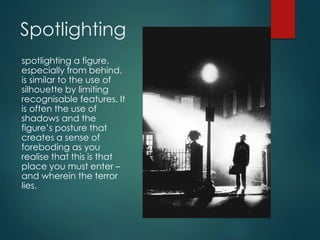
Spotlighting
spotlighting a figure,
especially from behind,
is similar to the use of
silhouette by limiting
recognisable features. It
is often the use of
shadows and the
figure’s posture that
creates a sense of
foreboding as you
realise that this is that
place you must enter –
and wherein the terror
lies.
Shadow
the use of
projected shadow
creeping along a
surface creates
tension and fear.
While you do not
see the figure
directly, the
distorted shadow
exaggerates its
features and feeds
the imagination
Angles
Back lighting
The main light source comes from behind the
character
It is used to create a silhouette. The character can
be made to look mysterious due to the effect of
the shadows. It can create a sense of impending
doom and is often used in horror movies.
Key and fill lighting
It is the main light source in a particular scene
It is usually directed onto the main character. Fill
lighting can be added to soften the effect of
shadows
Under-lighting
The main light source comes from below the
character.
Top lighting
The main light source comes from above the
character
It is used to remove shadows produced by the
key lighting. It can also create the illusion of a
bright, sunny day
Side lighting
The main light source comes from one side of the
screen
It is used to light one side of the character’s face
and produces shadows across the set, creating a
sense of mystery.
As my key role in the production of the film is to
assure that the production set is correctly set up, I
have taken up the role to assure that the lighting is
correctly used to produce an appropriate
atmosphere. I will mainly be using spotlighting, under
lighting and low key. I will also be using red gel
during the attack scene to give a sense of danger
and the idea of blood being shed and filling the
room

Lighting

  • 1.
  • 2.
    Light is afundamental part of any cinematic experience as it helps to create mood, drama, and suspense. lighting remains crucial to the success of both black and white classics and modern Technicolor blockbusters. Its greatest impact, however, is in the horror genre. From the earliest days of German impressionist films such as Robert Wiene’s The Cabinet of Doctor Caligari (1919) and Friedrich Wilhelm Murnau’s Nosferatu (1921) to Ridley Scott’s Alien (1979) and Donahue, Leonard and William’s Blair Witch Project (2002), the light – or in many cases the lack of it – has been integral to creating the fear factor. In horror films light is commonly used to reveal or conceal the object of horror by employing various lighting techniques
  • 3.
    Silhouette the use ofa bright light source behind the figure allows it become a dark figure void of any features or expression of mood. It is the menacing posture of figure with the occasional use of colour that creates suspense.
  • 4.
    Uplighting the lighting ofa figure or face from below creates heavy shadowing to the face especially to the eyes, nose and brow. Distorting our perception of human features generates a feeling of unease and mistrust.
  • 5.
    Spotlighting spotlighting a figure, especiallyfrom behind, is similar to the use of silhouette by limiting recognisable features. It is often the use of shadows and the figure’s posture that creates a sense of foreboding as you realise that this is that place you must enter – and wherein the terror lies.
  • 6.
    Shadow the use of projectedshadow creeping along a surface creates tension and fear. While you do not see the figure directly, the distorted shadow exaggerates its features and feeds the imagination
  • 7.
  • 8.
    Back lighting The mainlight source comes from behind the character It is used to create a silhouette. The character can be made to look mysterious due to the effect of the shadows. It can create a sense of impending doom and is often used in horror movies.
  • 10.
    Key and filllighting It is the main light source in a particular scene It is usually directed onto the main character. Fill lighting can be added to soften the effect of shadows
  • 12.
    Under-lighting The main lightsource comes from below the character.
  • 14.
    Top lighting The mainlight source comes from above the character It is used to remove shadows produced by the key lighting. It can also create the illusion of a bright, sunny day
  • 16.
    Side lighting The mainlight source comes from one side of the screen It is used to light one side of the character’s face and produces shadows across the set, creating a sense of mystery.
  • 18.
    As my keyrole in the production of the film is to assure that the production set is correctly set up, I have taken up the role to assure that the lighting is correctly used to produce an appropriate atmosphere. I will mainly be using spotlighting, under lighting and low key. I will also be using red gel during the attack scene to give a sense of danger and the idea of blood being shed and filling the room