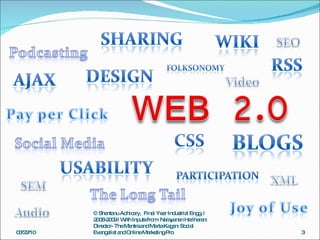
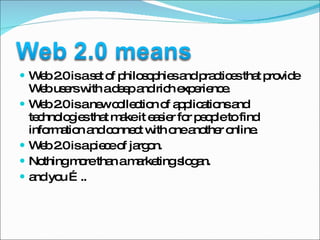
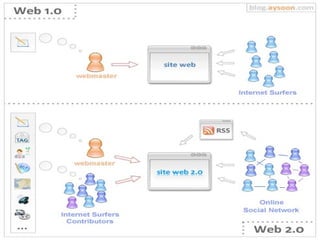
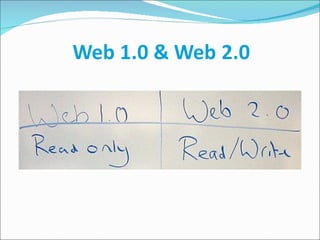
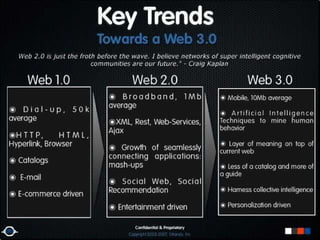
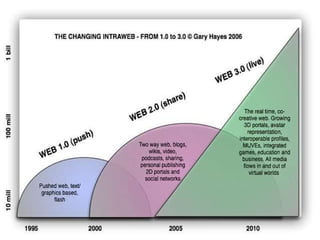
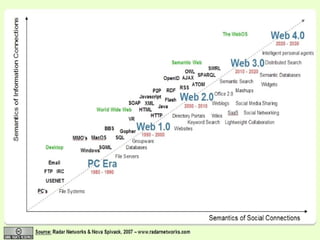
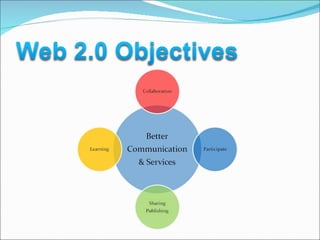
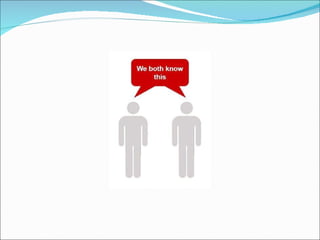
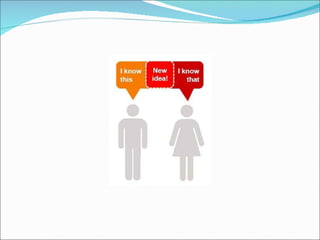
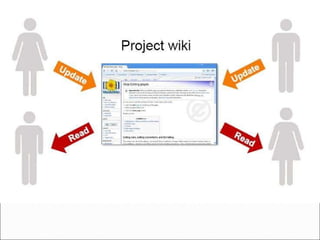
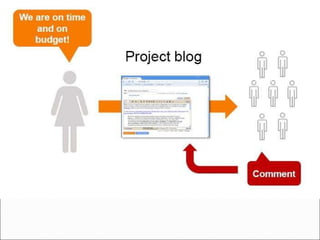
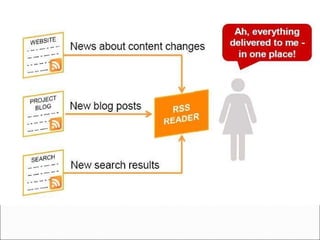
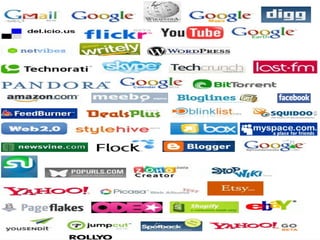
Web 2.0 isa set of philosophies and practices that provide Web users with a deep and rich experience. Web 2.0 is a new collection of applications and technologies that make it easier for people to find information and connect with one another online. Web 2.0 is a piece of jargon. Nothing more than a marketing slogan. and you …..
5.
6.
7.
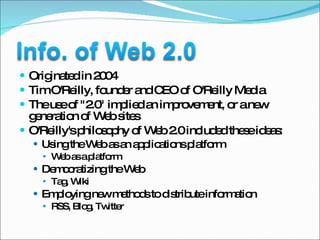
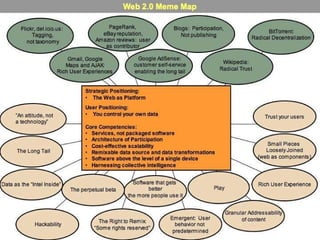
Originated in 2004Tim O'Reilly, founder and CEO of O'Reilly Media The use of "2.0" implied an improvement, or a new generation of Web sites O'Reilly's philosophy of Web 2.0 included these ideas: Using the Web as an applications platform Web as a platform Democratizing the Web Tag, Wiki Employing new methods to distribute information RSS, Blog, Twitter
8.
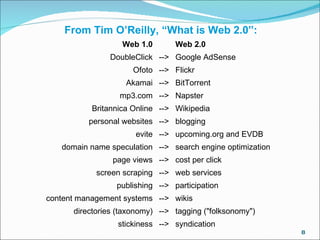
From Tim O’Reilly,“What is Web 2.0”: Web 1.0 Web 2.0 DoubleClick --> Google AdSense Ofoto --> Flickr Akamai --> BitTorrent mp3.com --> Napster Britannica Online --> Wikipedia personal websites --> blogging evite --> upcoming.org and EVDB domain name speculation --> search engine optimization page views --> cost per click screen scraping --> web services publishing --> participation content management systems --> wikis directories (taxonomy) --> tagging ("folksonomy") stickiness --> syndication
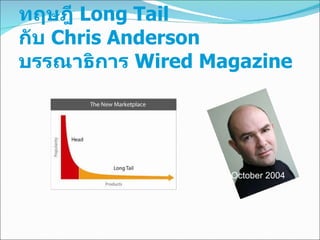
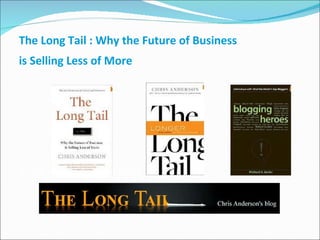
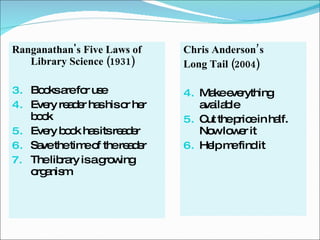
Ranganathan's Five Lawsof Library Science (1931) Books are for use Every reader has his or her book Every book has its reader Save the time of the reader The library is a growing organism Chris Anderson’s Long Tail (2004) Make everything available Cut the price in half . Now lower it Help me find it
20.
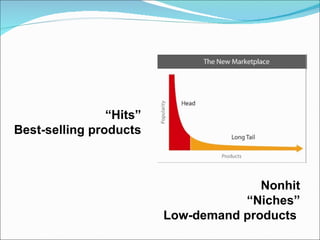
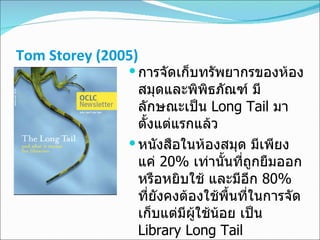
Tom Storey ( 2005 ) การจัดเก็บทรัพยากรของห้องสมุดและพิพิธภัณฑ์ มีลักษณะเป็น Long Tail มาตั้งแต่แรกแล้ว หนังสือในห้องสมุด มีเพียงแค่ 20% เท่านั้นที่ถูกยืมออกหรือหยิบใช้ และมีอีก 80% ที่ยังคงต้องใช้พื้นที่ในการจัดเก็บแต่มีผู้ใช้น้อย เป็น Library Long Tail ห้องสมุดเป็น content renter แต่สำนักพิมพ์หรือ Database Provider เป็น content owner
21.
Lorcan Dempsey ( 2006 ) Libraries and the Long Tail . Some Thoughts about Libraries in a Network Age . สิ่งที่จำเป็นสำหรับห้องสมุด คือการบริการแบบใหม่ที่เป็นความร่วมมือในระดับเครือข่าย ซึ่งจะอยู่เหนือกว่าการบริการเฉพาะห้องสมุดของตน Circulation 10% / Interlibrary Loan 4.7% Aggregation of Demand Aggregation of Supply ลด transaction costs
22.
Paul Genoni ( 2007 ) Libraries, the long tail and the future of legacy print collections . ห้องสมุดเป็น uncommercial เป็นเรื่องของการเก็บรักษาและวิชาการ ไม่ใช่ในแง่ของการค้า การที่ทรัพยากรห้องสมุดใดจะเป็นส่วนหัว ( Head ) หรือส่วนหาง ( Tail ) นั้น ขึ้นอยู่กับคุณภาพทางวิชาการ ไม่ได้ขึ้นกับความนิยมหรืออิทธิพลทางการตลาด ทรัพยากรของห้องสมุด ประเภทวารสาร และประเภทหนังสือ มี Long Tail ที่แตกต่างกัน Shared Repositories
23.
Lori Bowen Ayre ( 2007 ) Library Delivery 2.0 : Delivering Library Materials in the Age of Netflix . ทำทุกอย่างให้ง่ายขึ้น ลูกค้าชอบทำเอง ไม่ต้องผ่านคนกลาง ใช้เทคโนโลยีใหม่ๆ ที่ง่ายต่อการสืบค้นข้อมูลมากขึ้น มีระบบจัดเก็บข้อมูลประวัติการยืมหนังสือของผู้ใช้บริการ และมีช่องทางออนไลน์ให้ผู้ใช้สามารถแสดงความคิดเห็นเกี่ยวกับหนังสือที่ยืมไปได้ ลด transaction costs ส่งตรงถึงบ้าน
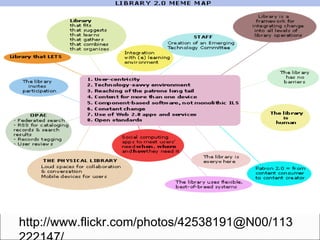
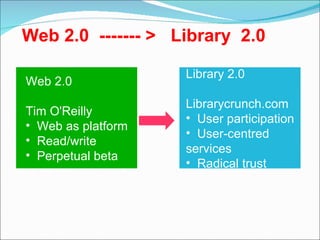
Web 2.0 TimO'Reilly Web as platform Read/write Perpetual beta Library 2.0 Librarycrunch.com User participation User-centred services Radical trust Web 2.0 ------- > Library 2.0
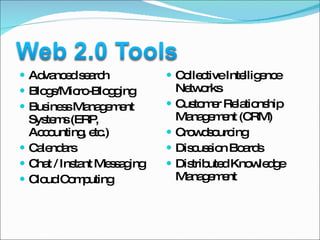
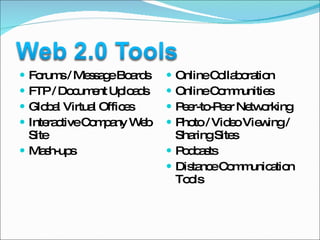
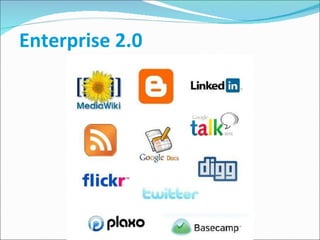
Forums / MessageBoards FTP / Document Uploads Global Virtual Offices Interactive Company Web Site Mash-ups Online Collaboration Online Communities Peer-to-Peer Networking Photo / Video Viewing / Sharing Sites Podcasts Distance Communication Tools
30.
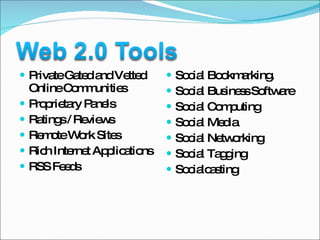
Private Gated andVetted Online Communities Proprietary Panels Ratings / Reviews Remote Work Sites Rich Internet Applications RSS Feeds Social Bookmarking. Social Business Software Social Computing Social Media Social Networking Social Tagging Socialcasting
31.
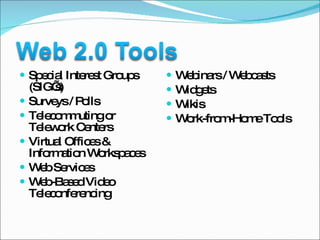
Special Interest Groups(SIG’s) Surveys / Polls Telecommuting or Telework Centers Virtual Offices & Information Workspaces Web Services Web-Based Video Teleconferencing Webinars / Webcasts Widgets Wikis Work-from-Home Tools