The story of the U.S. Constitution Liberty Tree
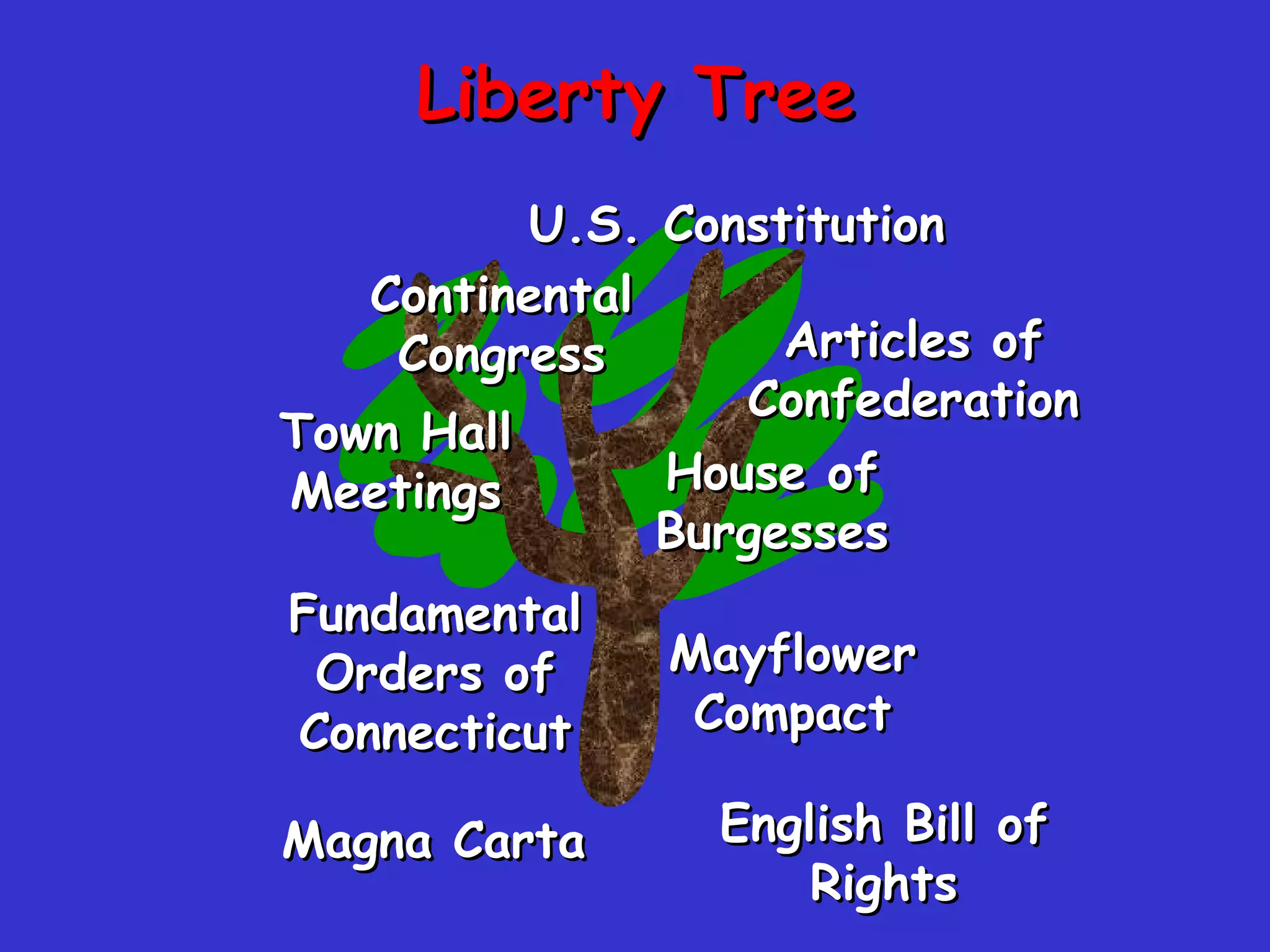
Liberty Tree U.S. Constitution Magna Carta English Bill of Rights Fundamental Orders of Connecticut Mayflower Compact Town Hall Meetings House of Burgesses Articles of Confederation Continental Congress
At the Constitutional Convention, the delegates created a new plan for the U.S. government that focused on two things. Structure and Function
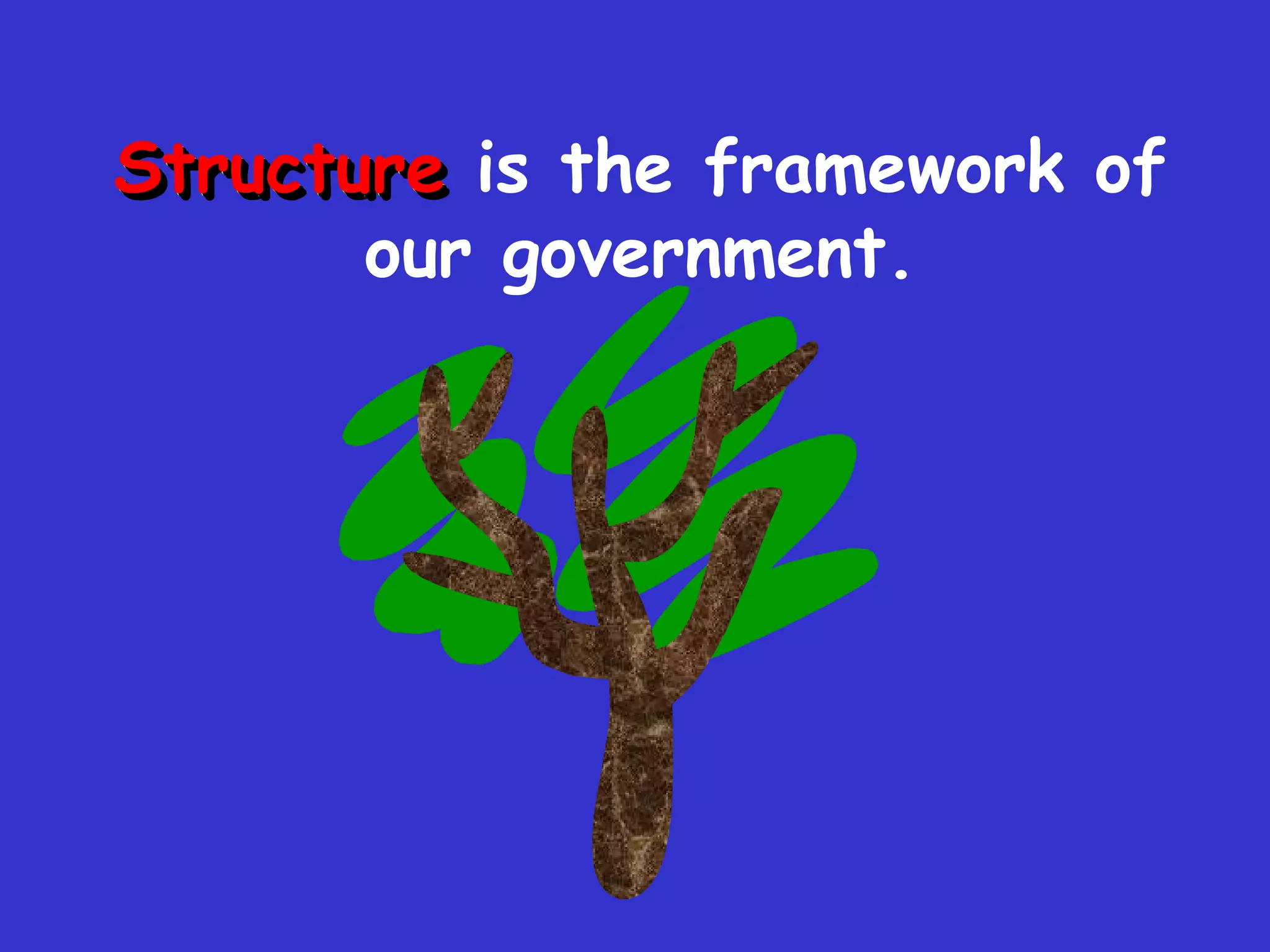
Structure Structure   is the framework of our government.
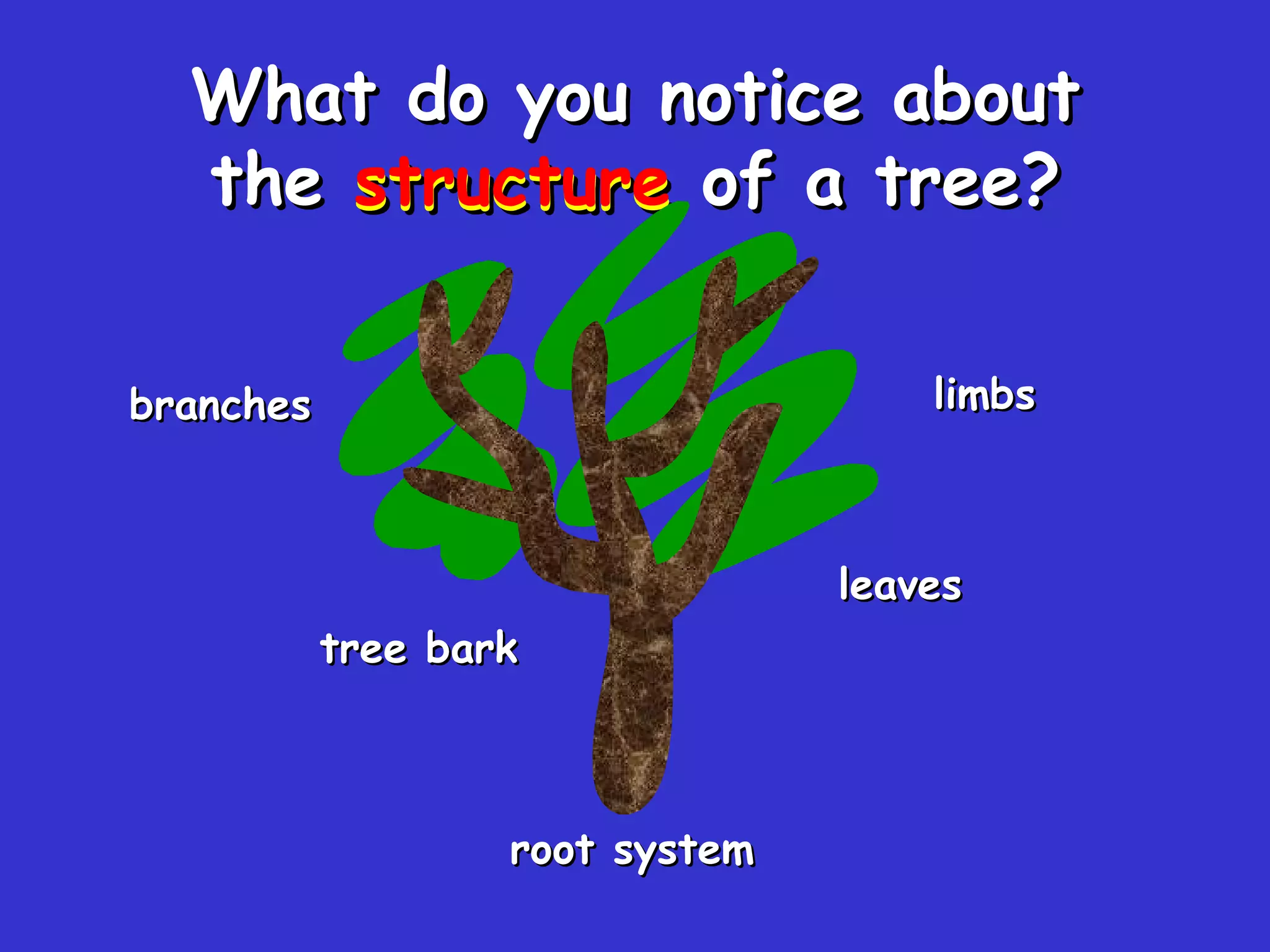
structure What do you notice about the  structure  of a tree? limbs root system branches leaves tree bark
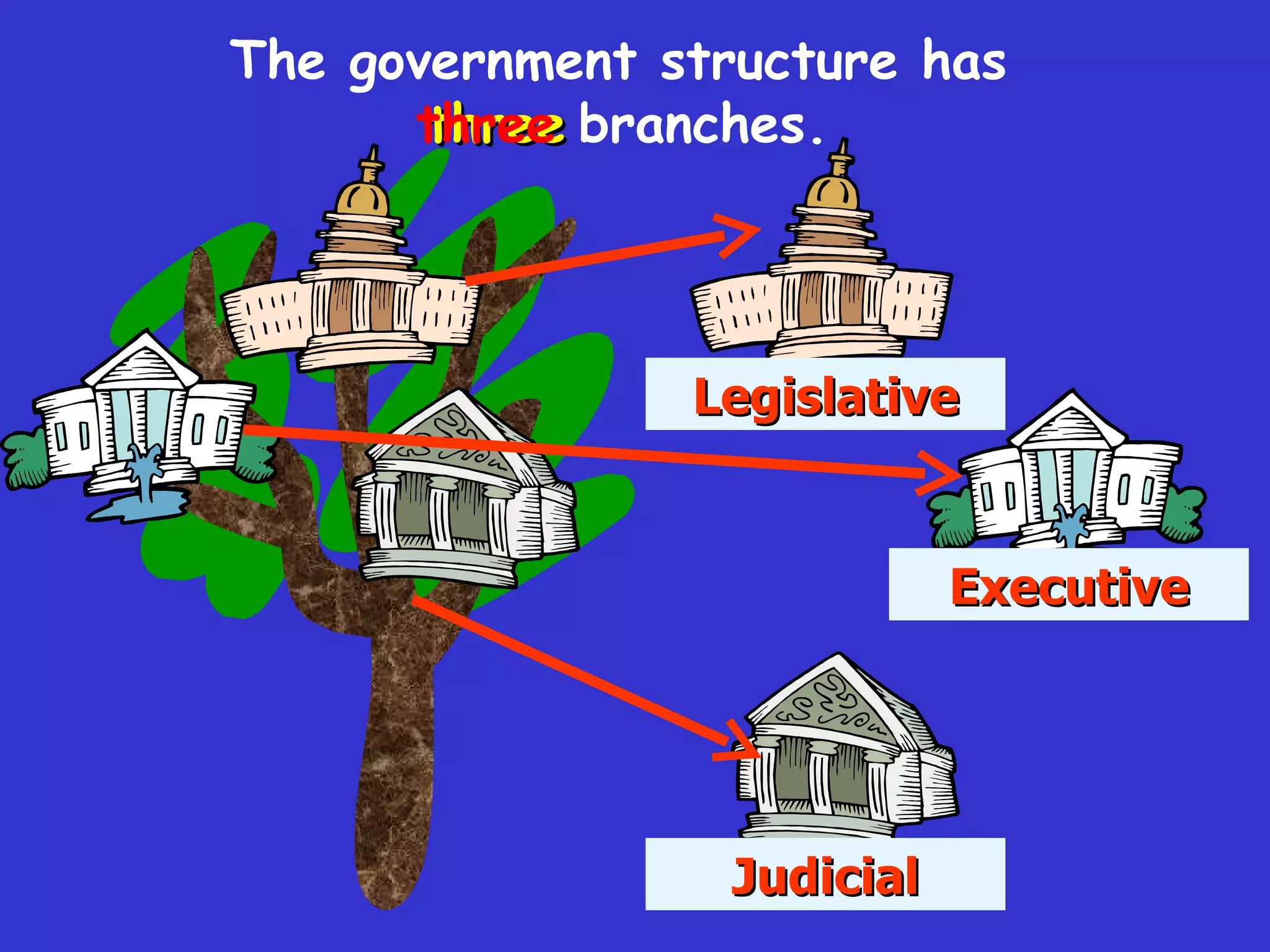
three The government structure has  three  branches.   Judicial Legislative Executive
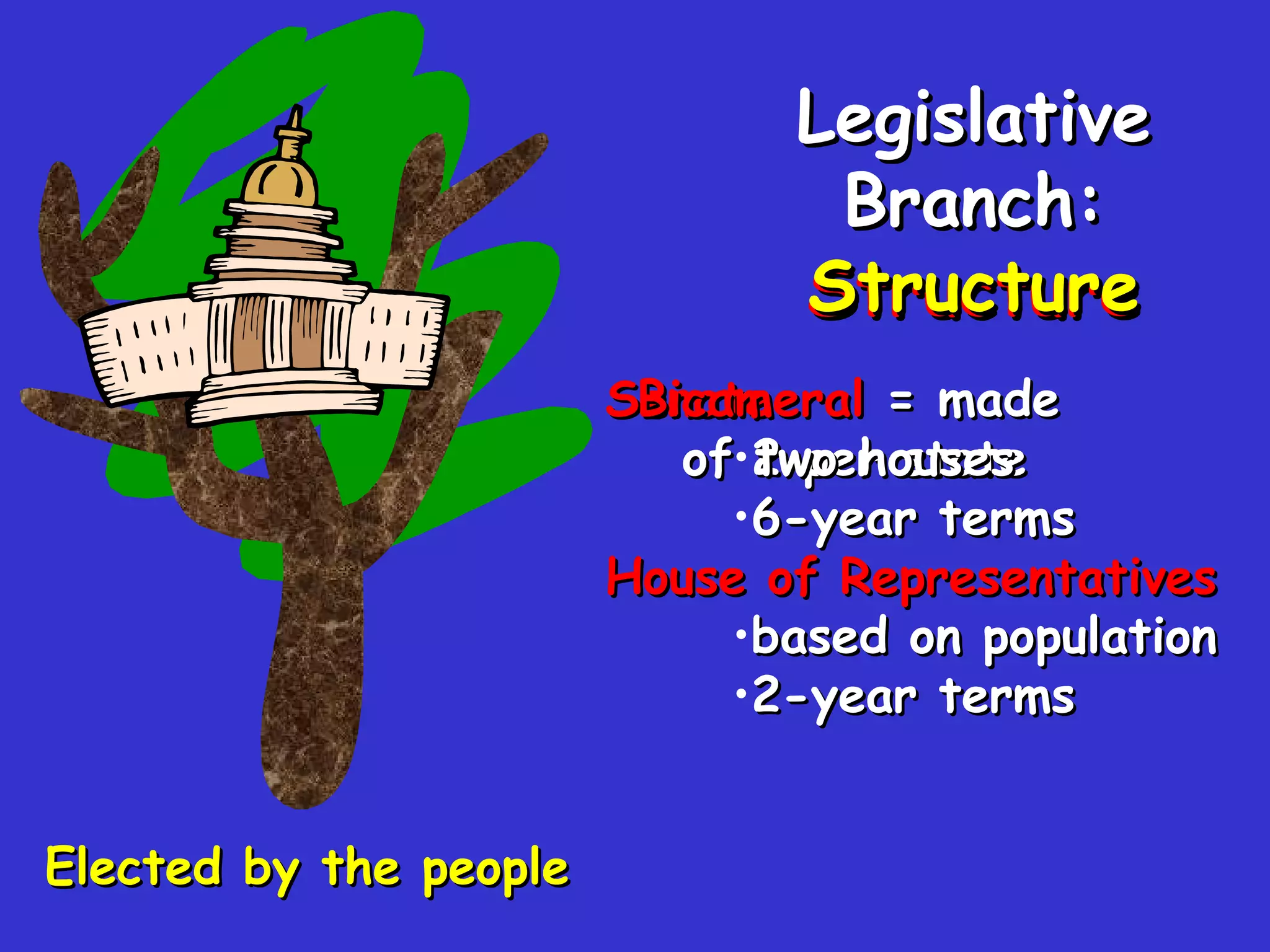
Structure Legislative Branch: Structure Senate   2 per state 6-year terms House of Representatives   based on population 2-year terms Elected by the people Bicameral  = made of two houses
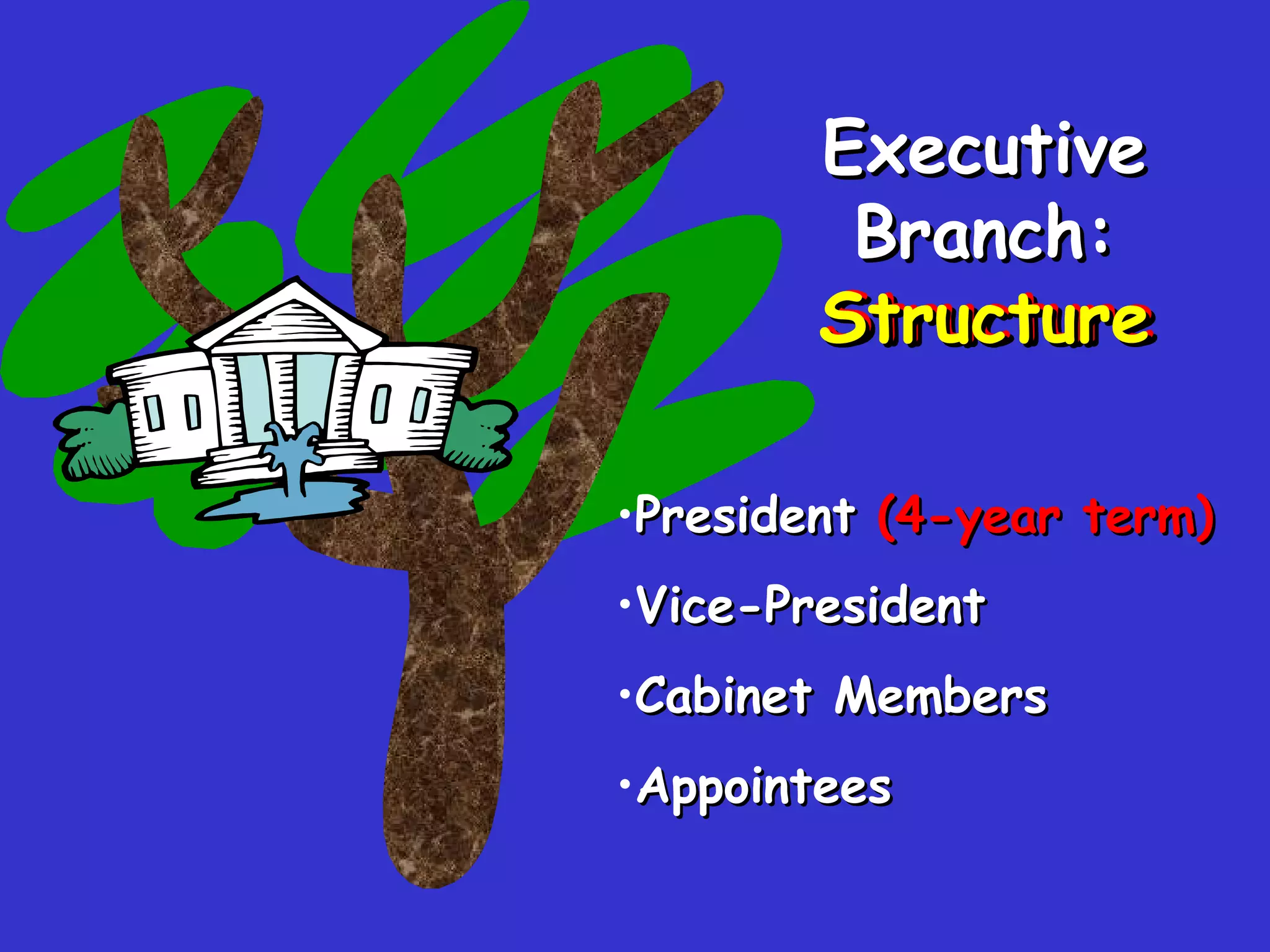
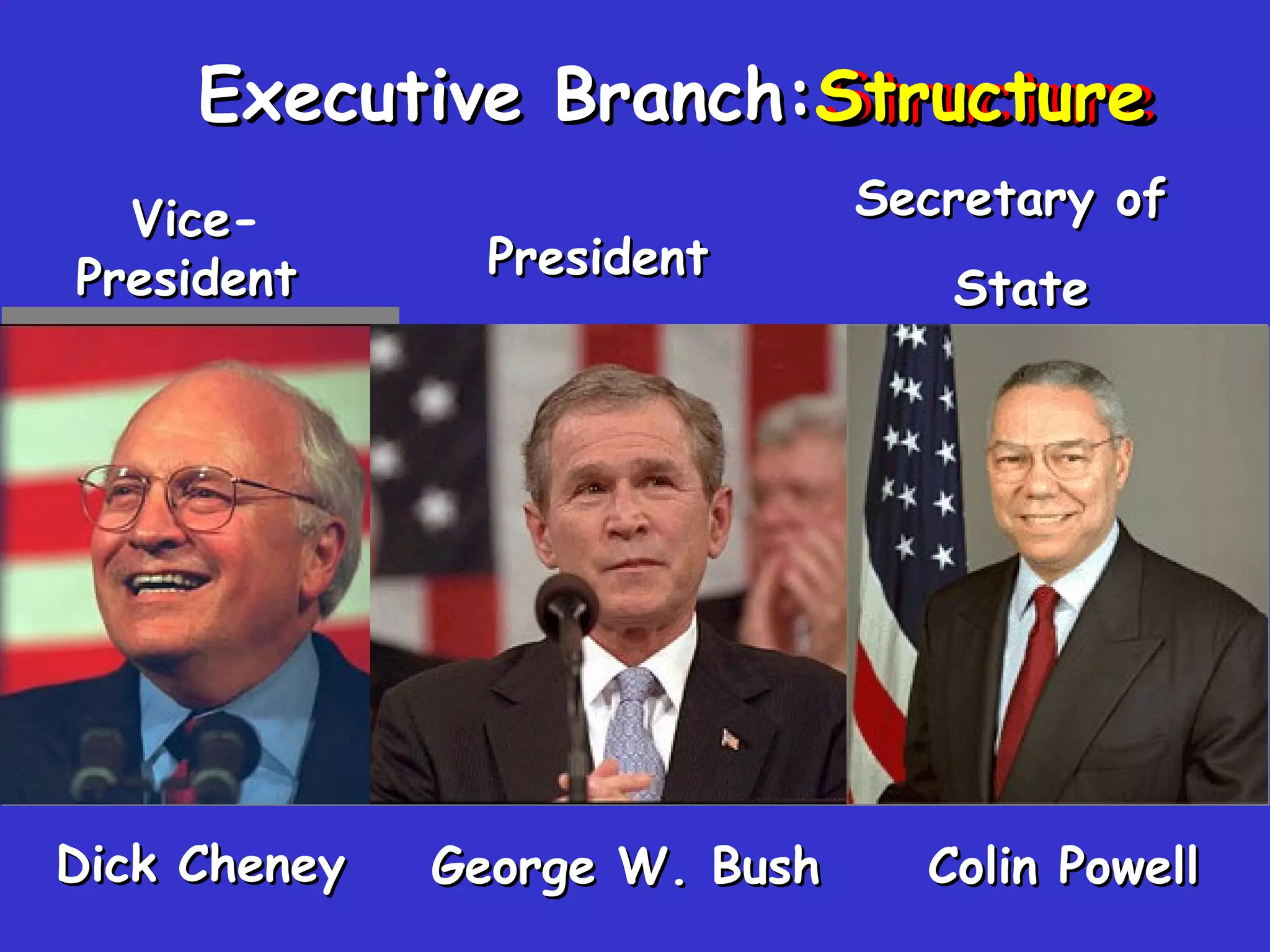
Structure President  (4-year term) Vice-President Cabinet Members Appointees Executive Branch:   Structure
Structure Executive Branch: Structure Vice - President   Dick   Cheney George W. Bush   President Secretary   of  State Colin   Powell
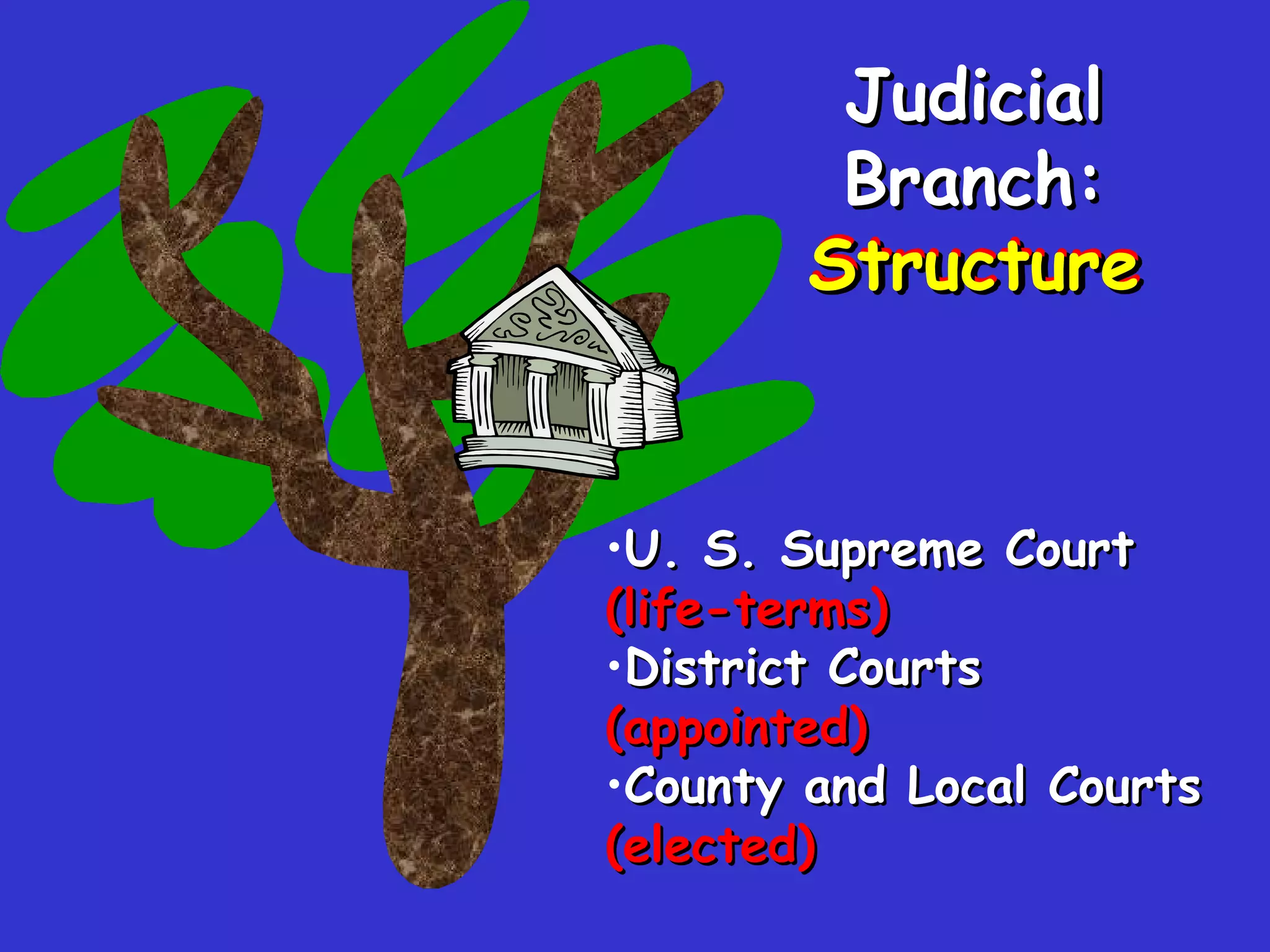
Structure U. S. Supreme Court  (life-terms) District Courts  (appointed)   County and Local Courts  (elected) Judicial Branch: Structure
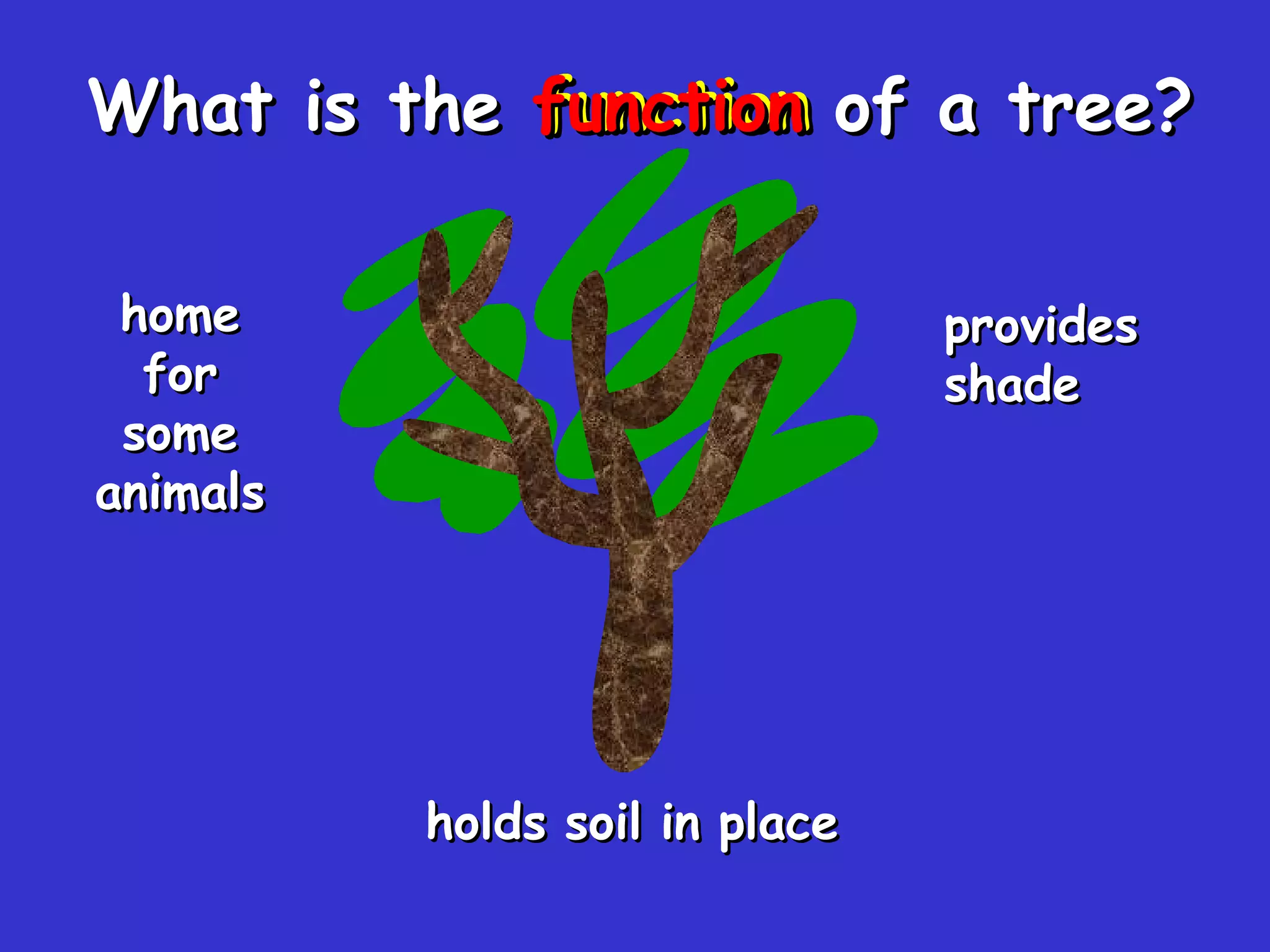
function provides   shade home for some animals holds   soil   in   place What is the  function  of a tree?
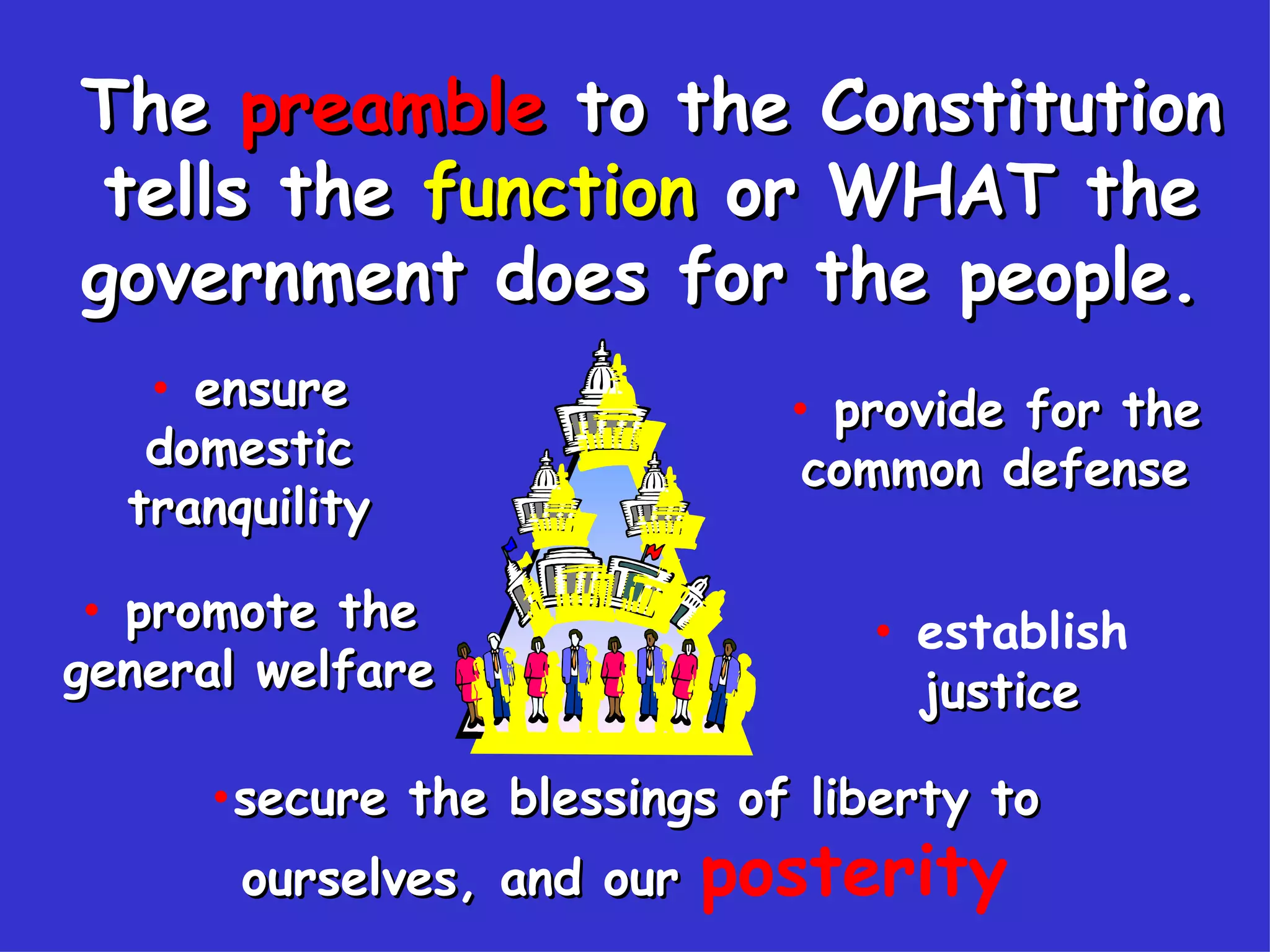
provide for the common defense ensure domestic tranquility promote the general welfare establish  justice secure the blessings of liberty to ourselves, and our  posterity The  preamble  to the Constitution tells the  function  or WHAT the government does for the people.
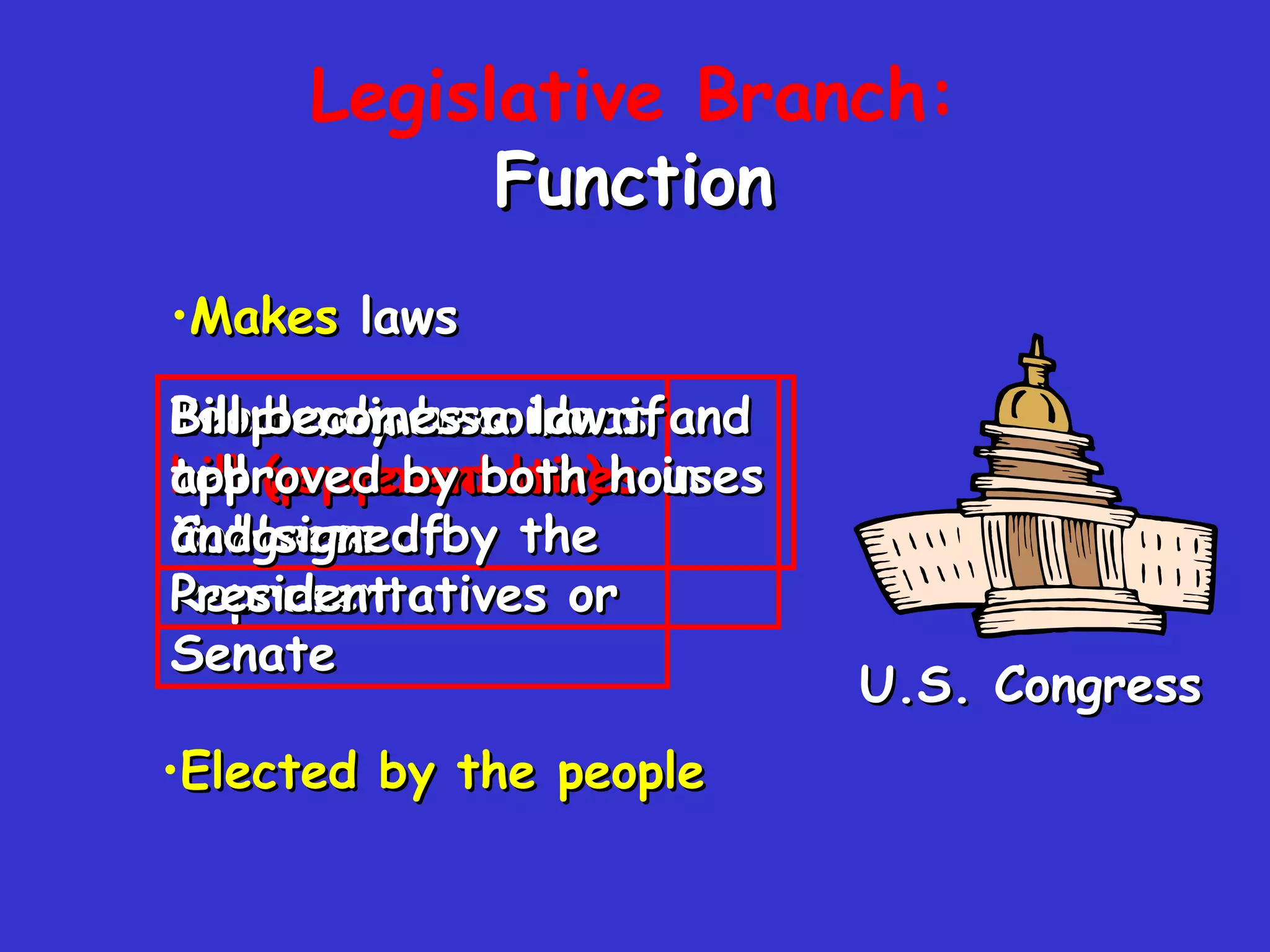
Idea may become a  bill (proposed law)  in House of Representatives or Senate Makes  laws Legislative Branch: Function U.S. Congress Elected   by   the   people People discuss ideas and tell  representatives  in Congress Bill becomes a law if approved by both houses and signed by the President
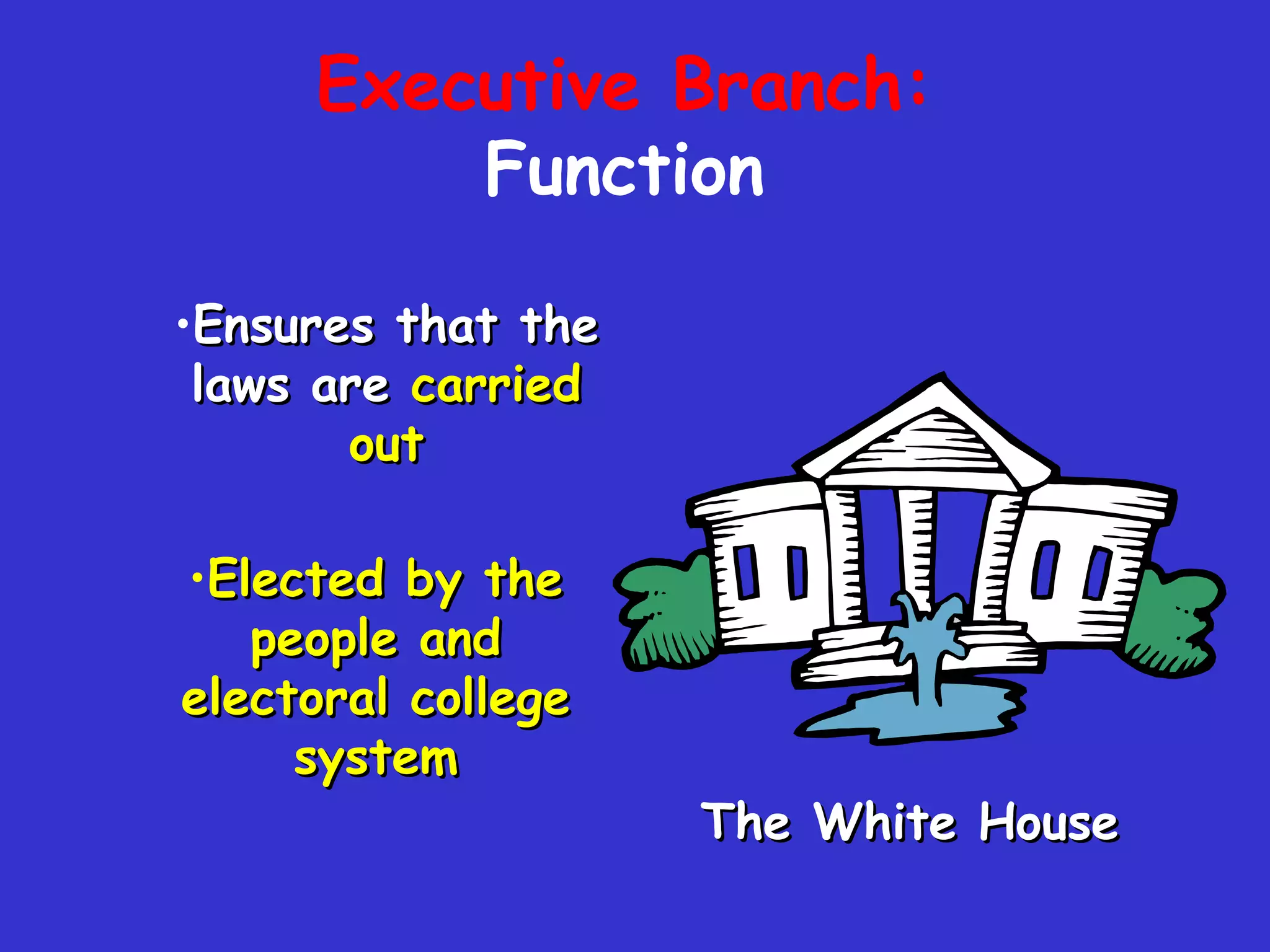
Executive Branch:   Function The White House Ensures that the laws are  carried out Elected by the people and electoral college system
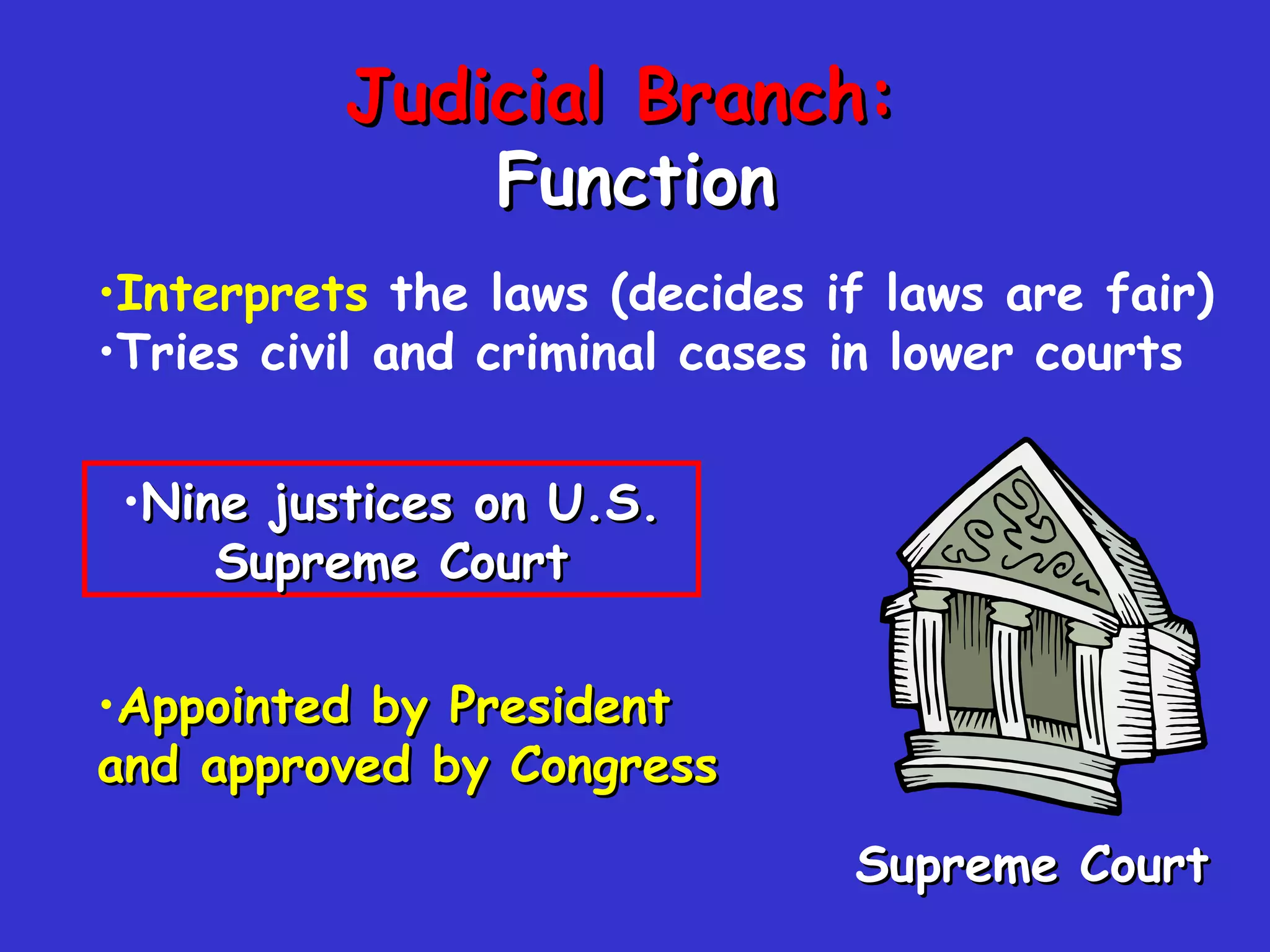
Judicial Branch:  Function Supreme Court Interprets   the laws (decides if laws are fair) Tries civil and criminal cases in lower courts Nine justices on U.S. Supreme Court Appointed   by   President   and   approved   by   Congress
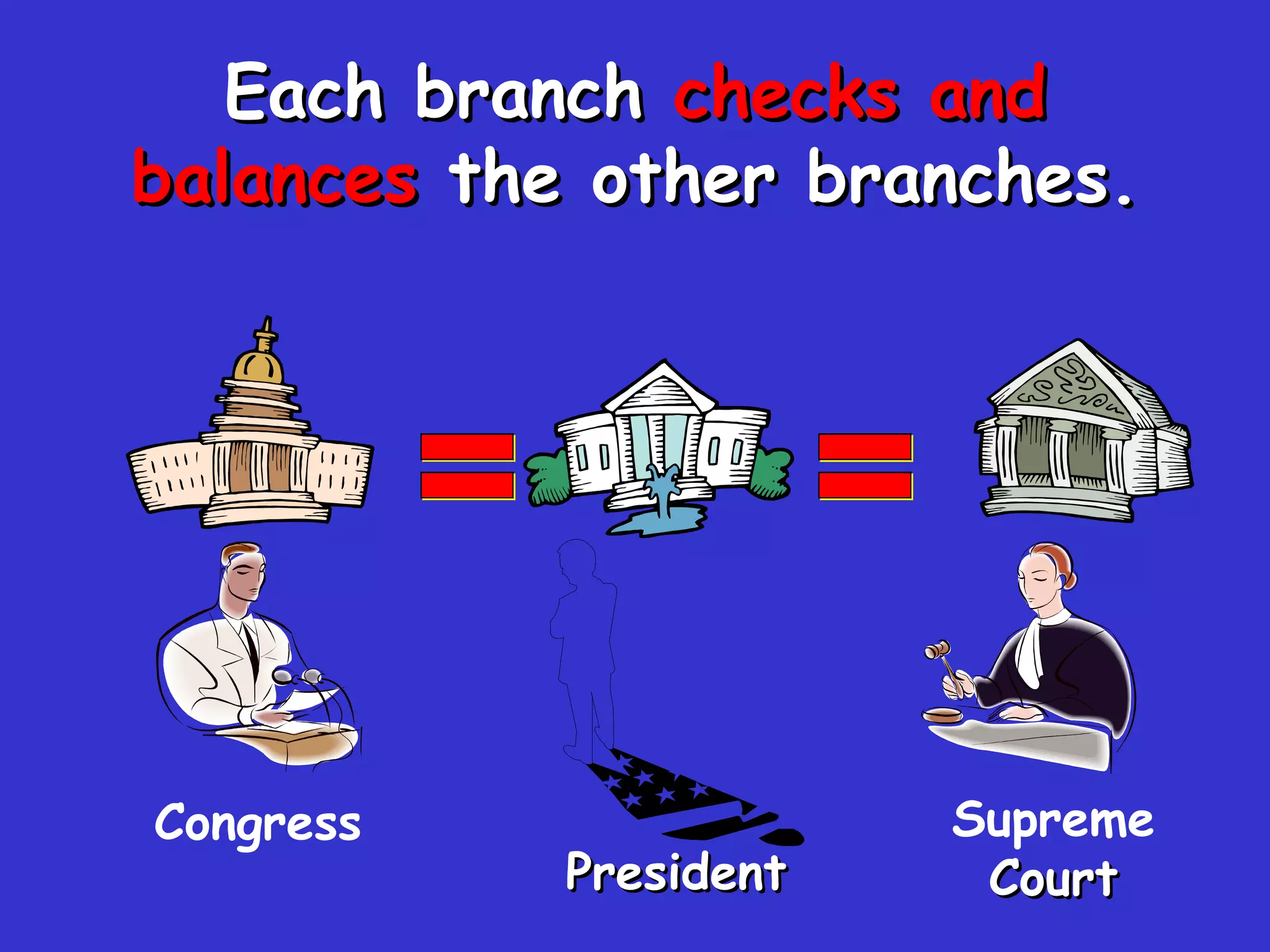
Each branch  checks and balances  the other branches. = = President Congress Supreme  Court
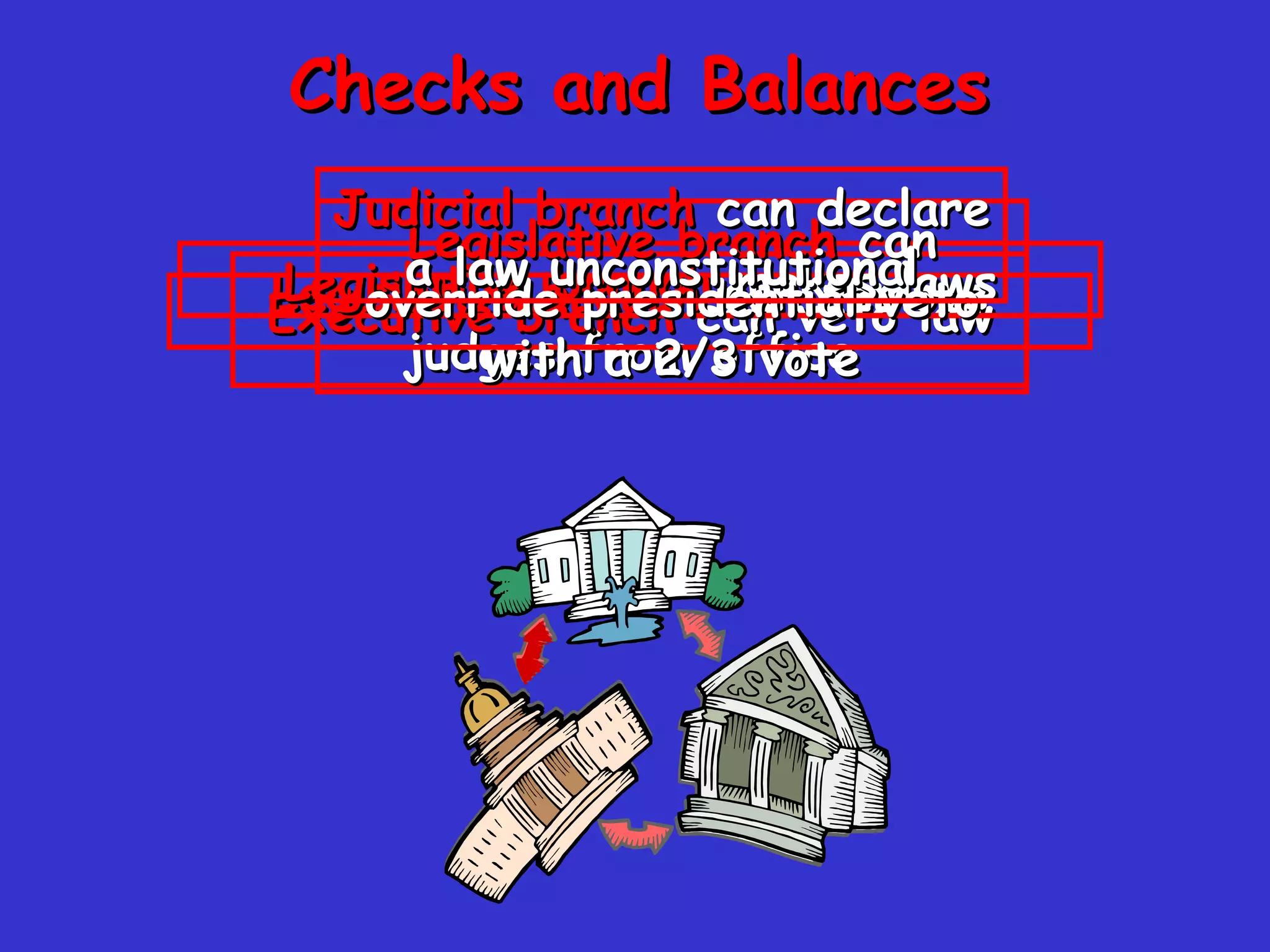
Legislative branch  can remove judges from office Executive branch  can veto law Legislative branch  makes laws Checks and Balances Legislative branch  can override presidential veto with a 2/3 vote Judicial branch  can declare a law unconstitutional
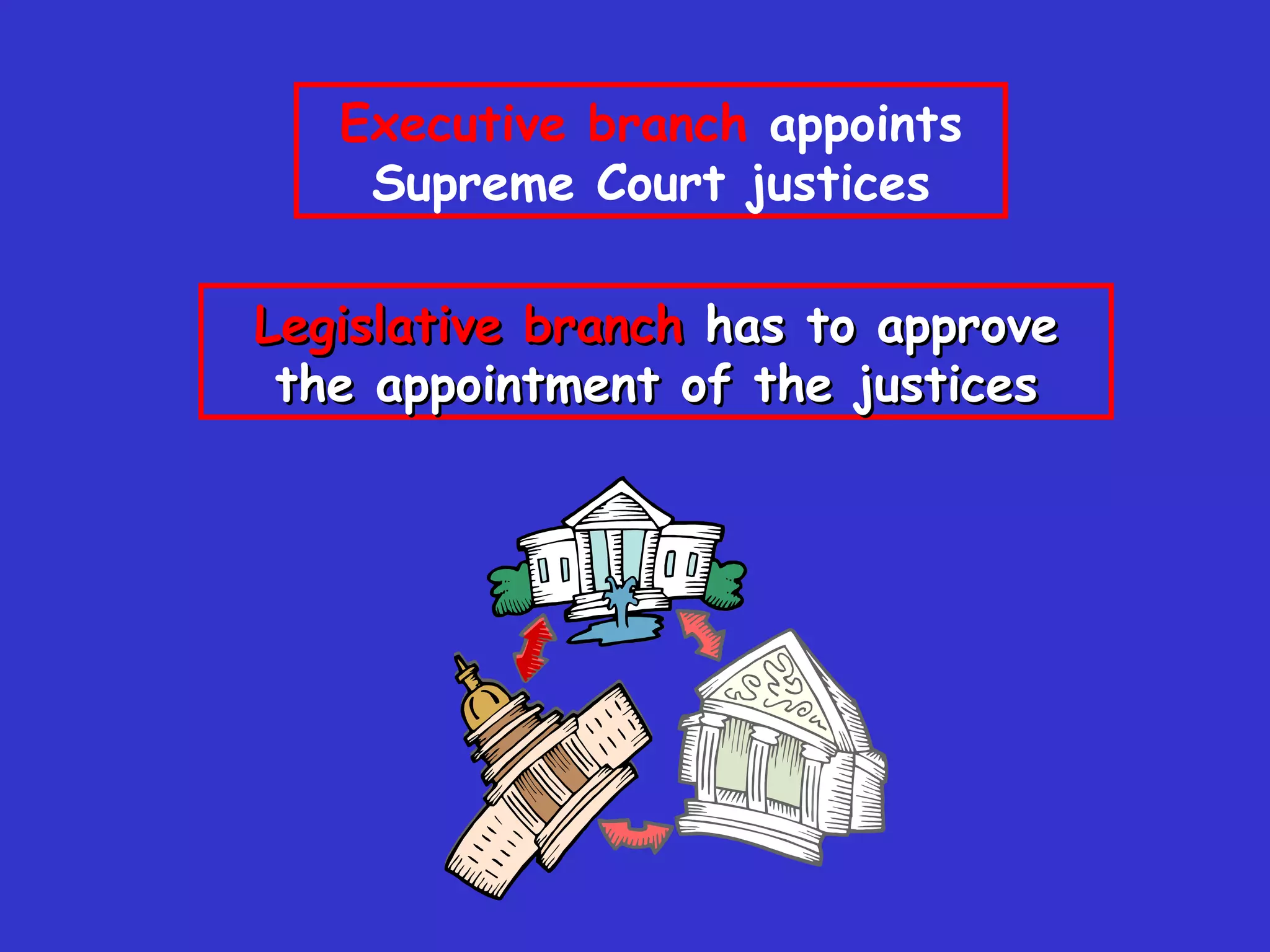
Executive branch  appoints Supreme Court justices Legislative   branch  has   to   approve   the   appointment   of   the   justices
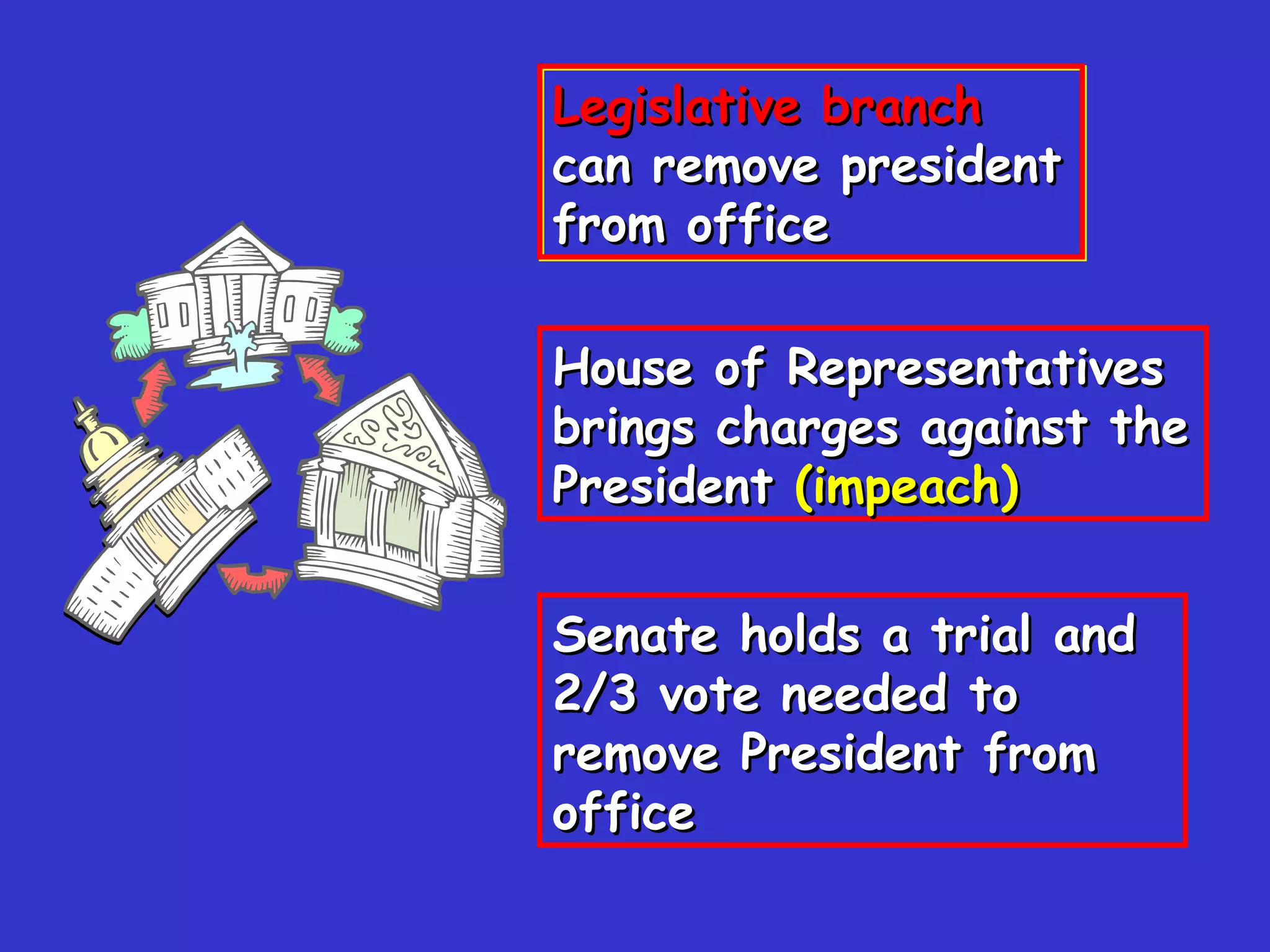
House of Representatives brings charges against the President  (impeach) Legislative branch  can remove president from office Senate holds a trial and 2/3 vote needed to remove President from office
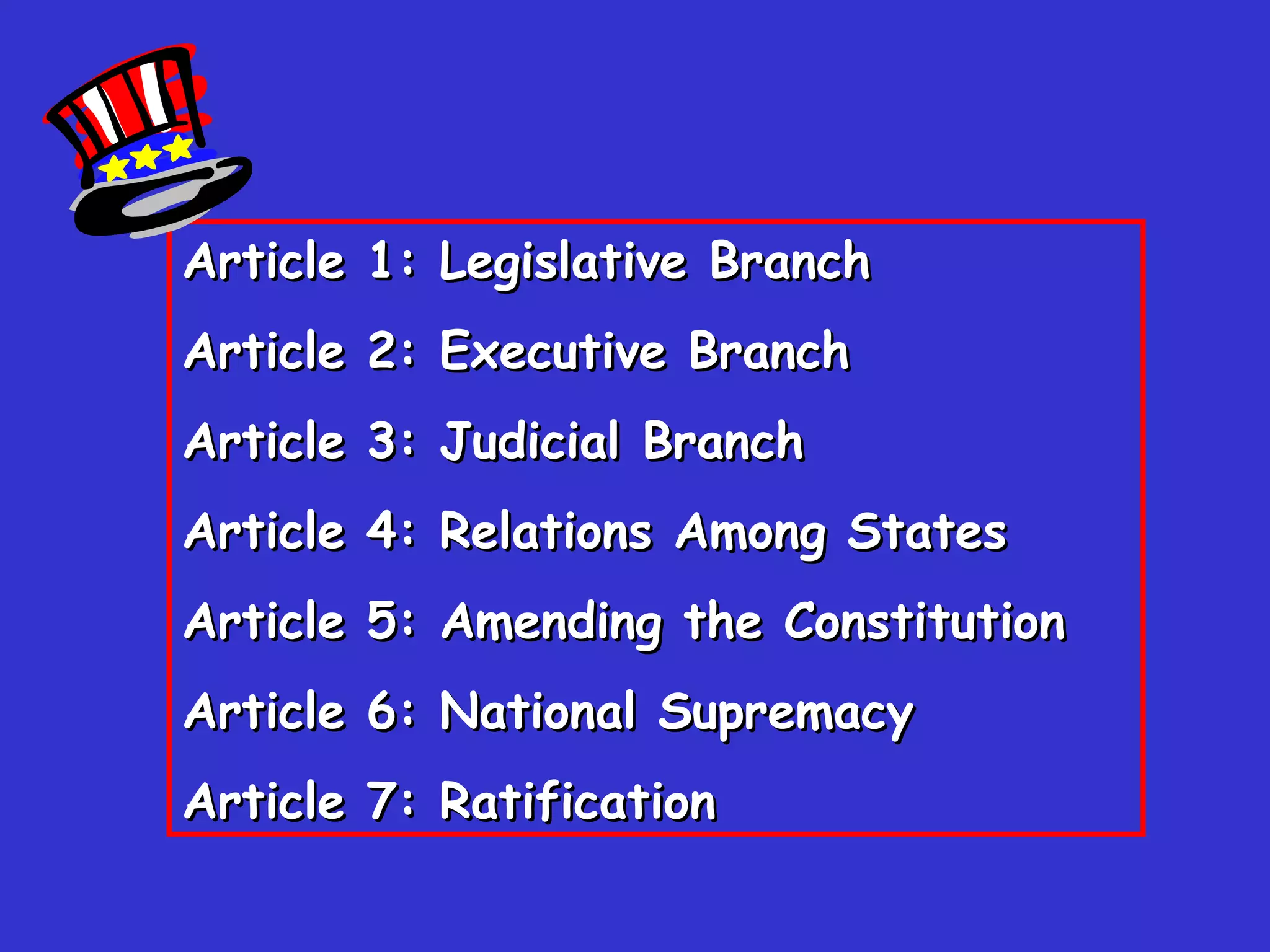
The U.S. Constitution has  seven   articles that explain the structure and function of the government.
Article 1: Legislative Branch Article 2: Executive Branch Article 3: Judicial Branch Article 4: Relations Among States Article 5: Amending the Constitution Article 6: National Supremacy Article 7: Ratification
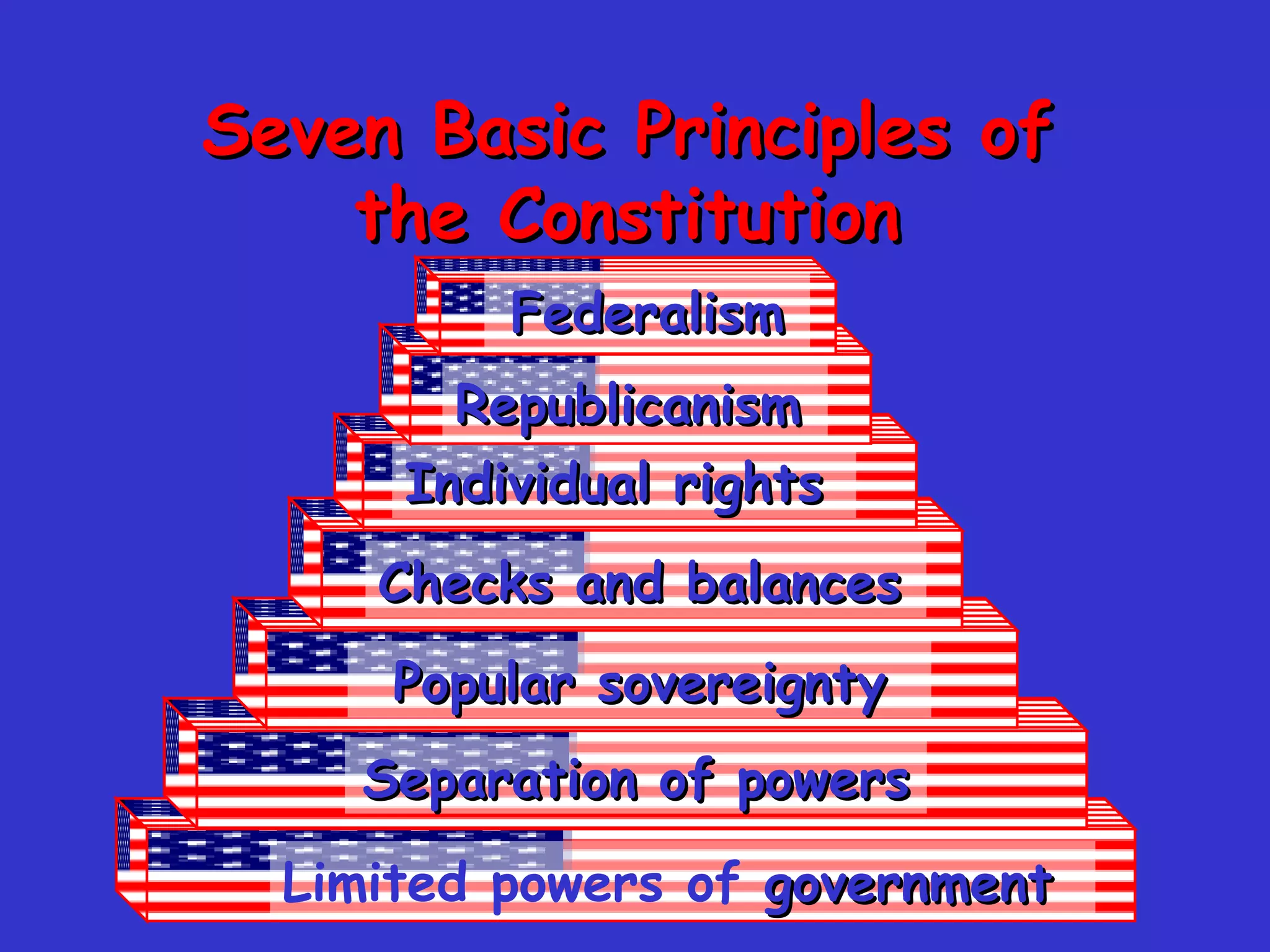
The  structure  and  function  of our government are based on seven basic principles.
Seven Basic Principles of the Constitution Limited powers of  government Separation of powers Popular sovereignty Checks and balances Individual rights Republicanism Federalism
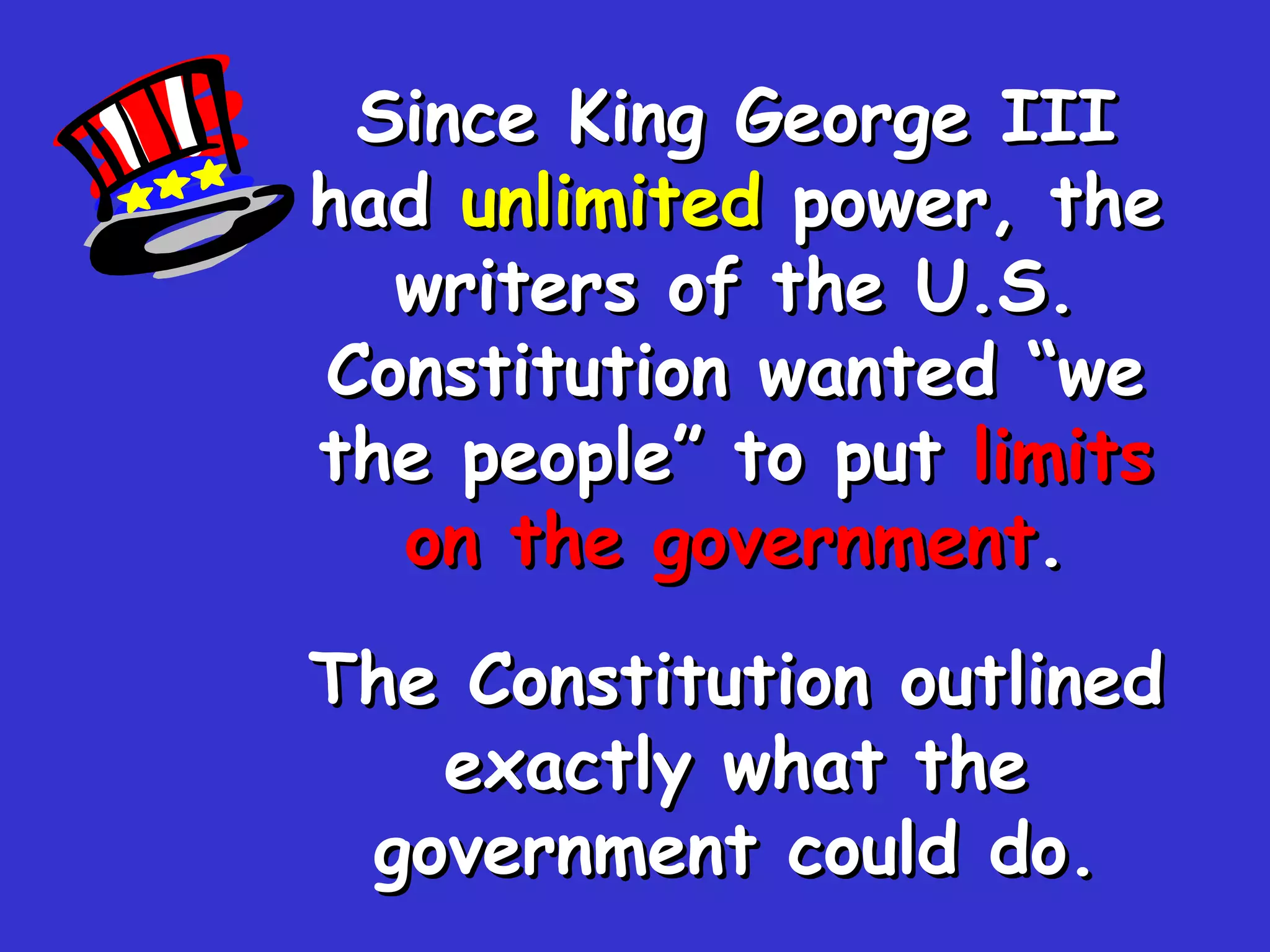
Since King George III had  unlimited  power, the writers of the U.S. Constitution wanted “we the people” to put  limits on the government . The Constitution outlined exactly what the government could do.
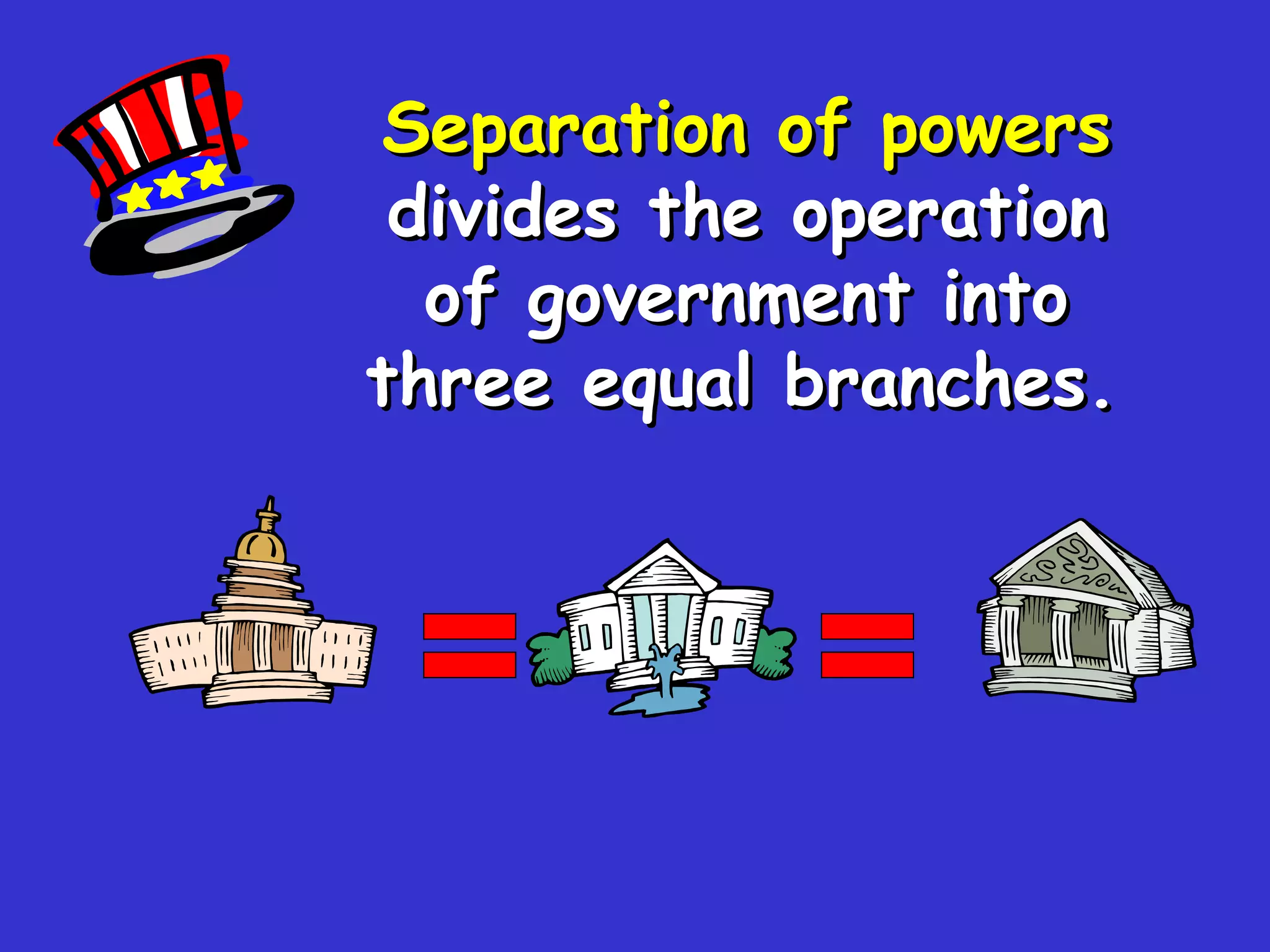
Separation of powers   divides the operation of government into three equal branches.   = =
“ Sovereignty”   comes from “sovereign” which means ruler.   “ Popular”  means people. . Popular sovereignty  =   people choose  In other words…
Popular sovereignty  is the belief that the people hold the final authority in government.
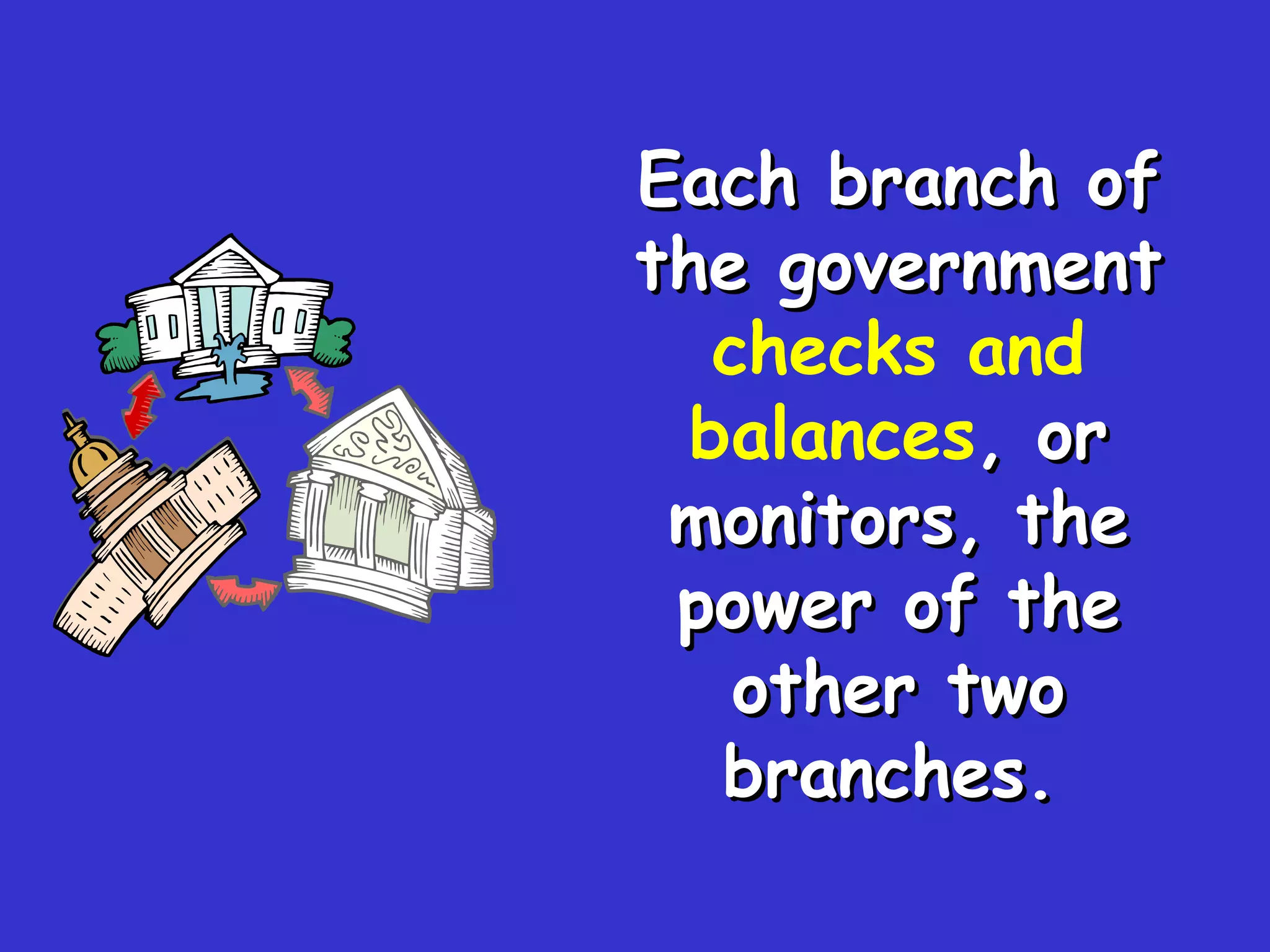
Each branch of the government  checks and balances , or monitors, the power of the other two branches.
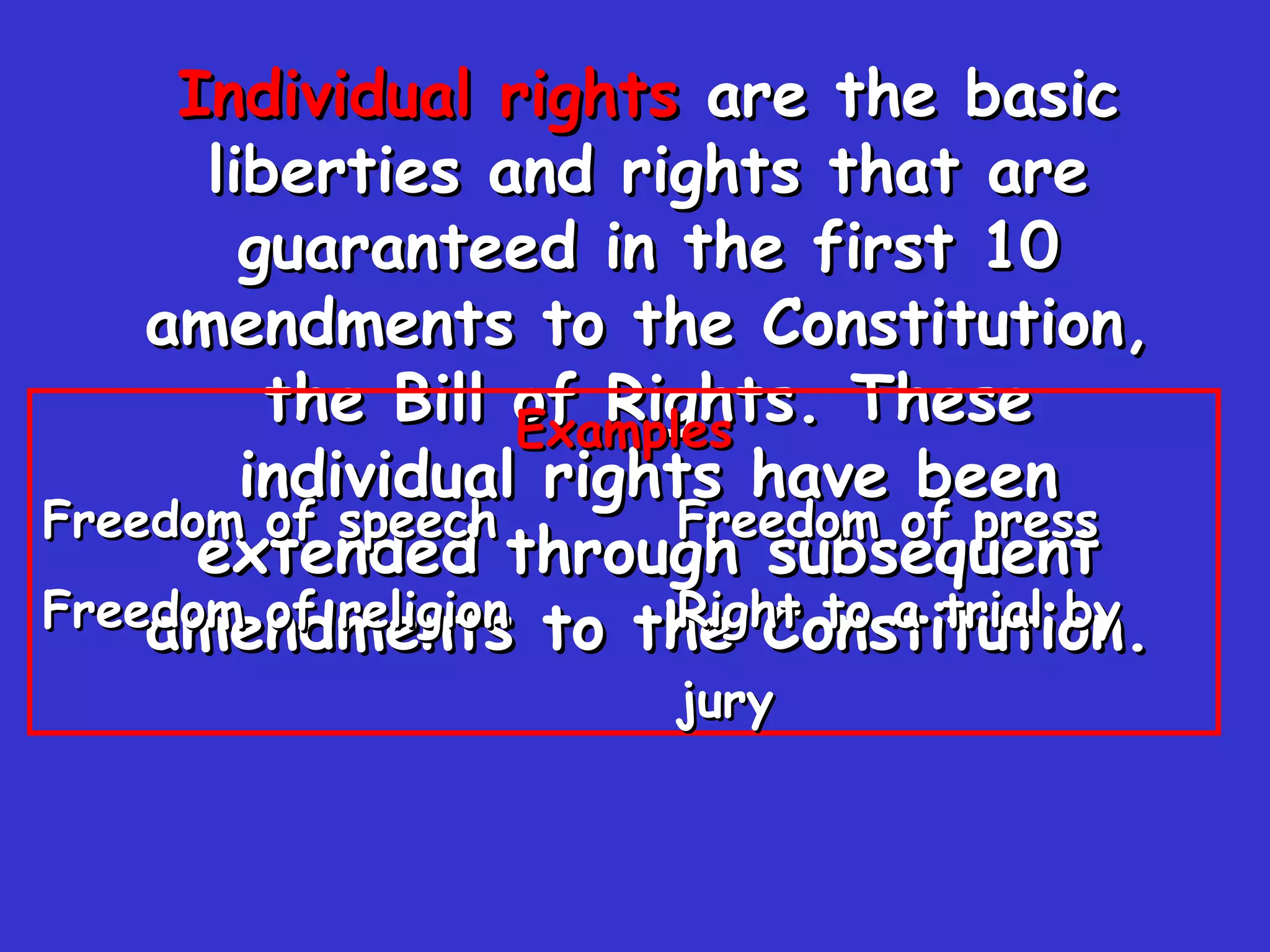
Individual rights  are the basic liberties and rights that are guaranteed in the first 10 amendments to the Constitution, the Bill of Rights. These individual rights have been extended through subsequent amendments to the Constitution. Examples Freedom of speech Freedom of press Freedom of religion Right to a trial by  jury
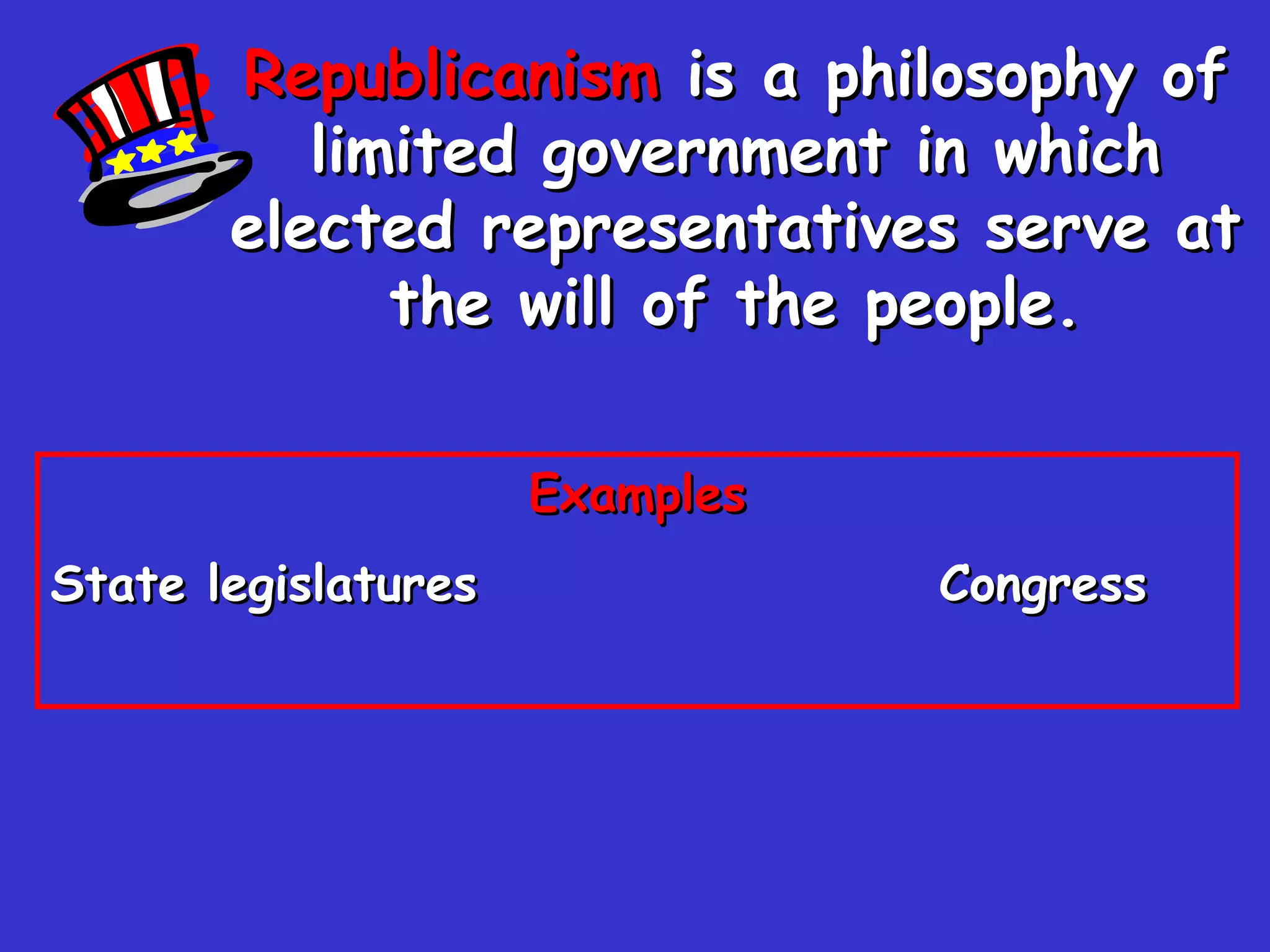
Republicanism  is a philosophy of limited government in which elected representatives serve at the will of the people. Examples State legislatures Congress
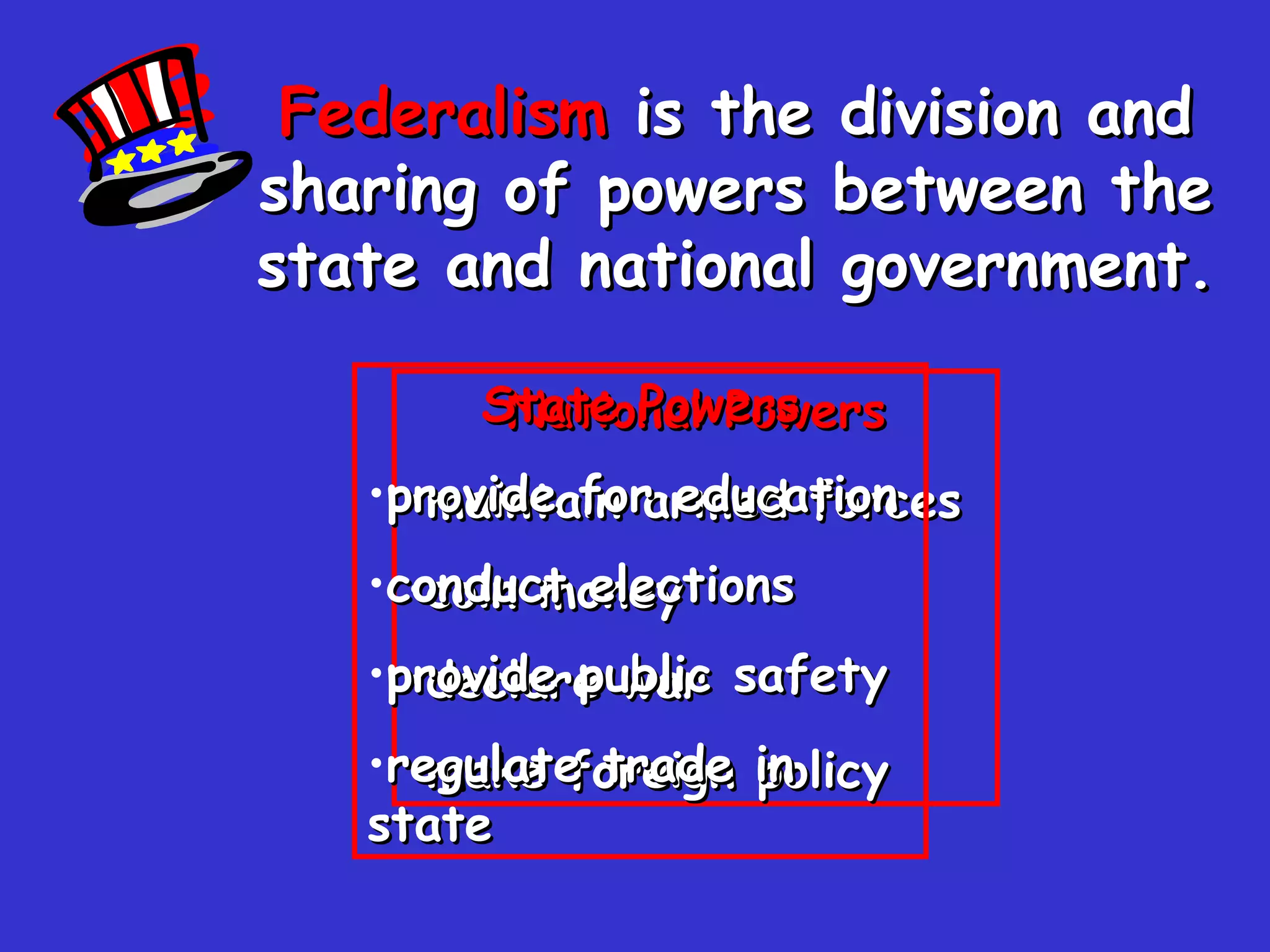
Federalism  is the division and sharing of powers between the state and national government. National Powers maintain armed forces coin money declare war make foreign policy State Powers provide for education conduct elections provide public safety regulate trade in state
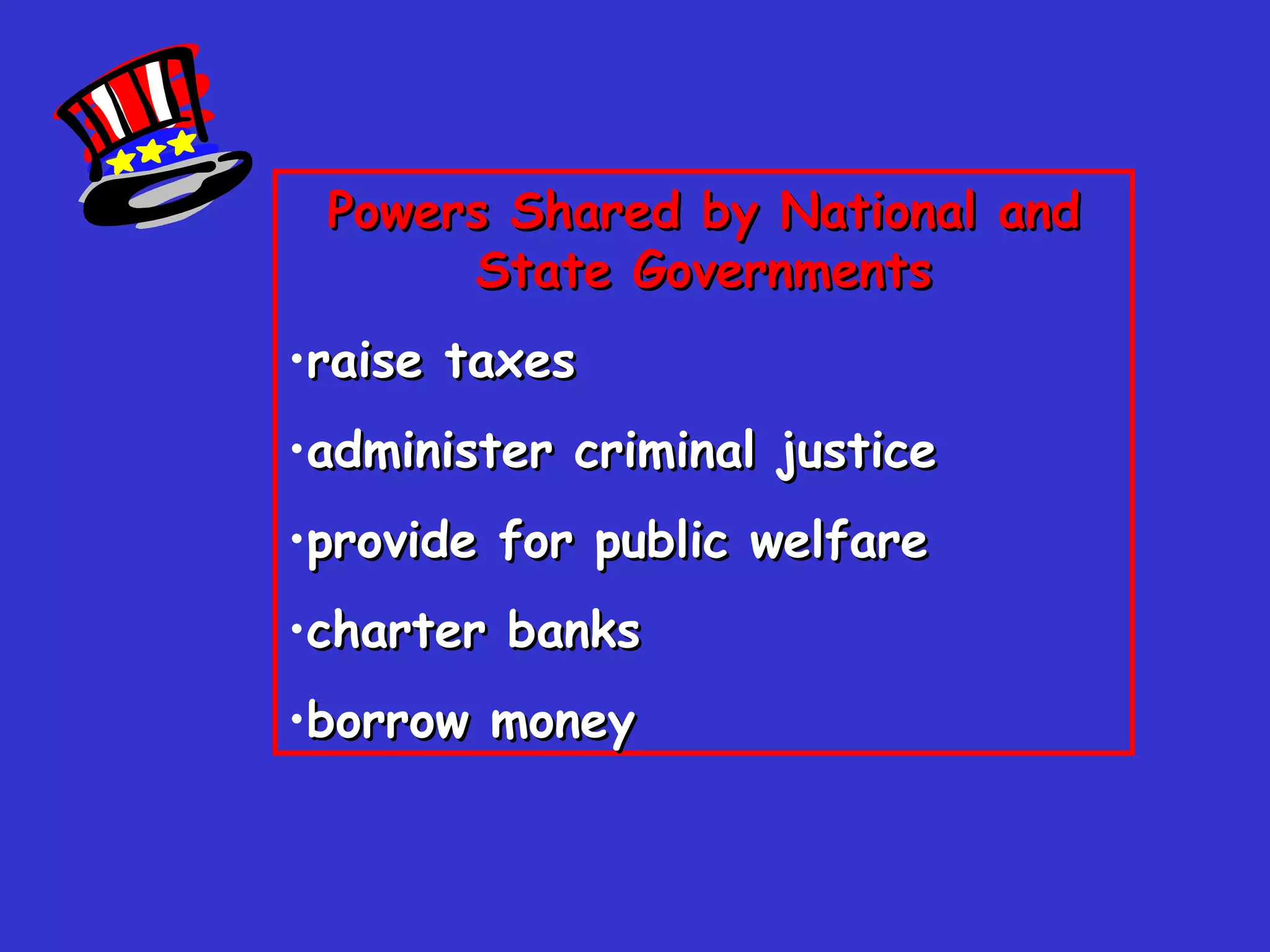
Powers Shared by National and State Governments raise taxes administer criminal justice provide for public welfare charter banks borrow money
This living document  protects  the rights of the individuals by  limiting the power  of the government. Rooted in these seven principles, the U.S. Constitution has endured since 1787.
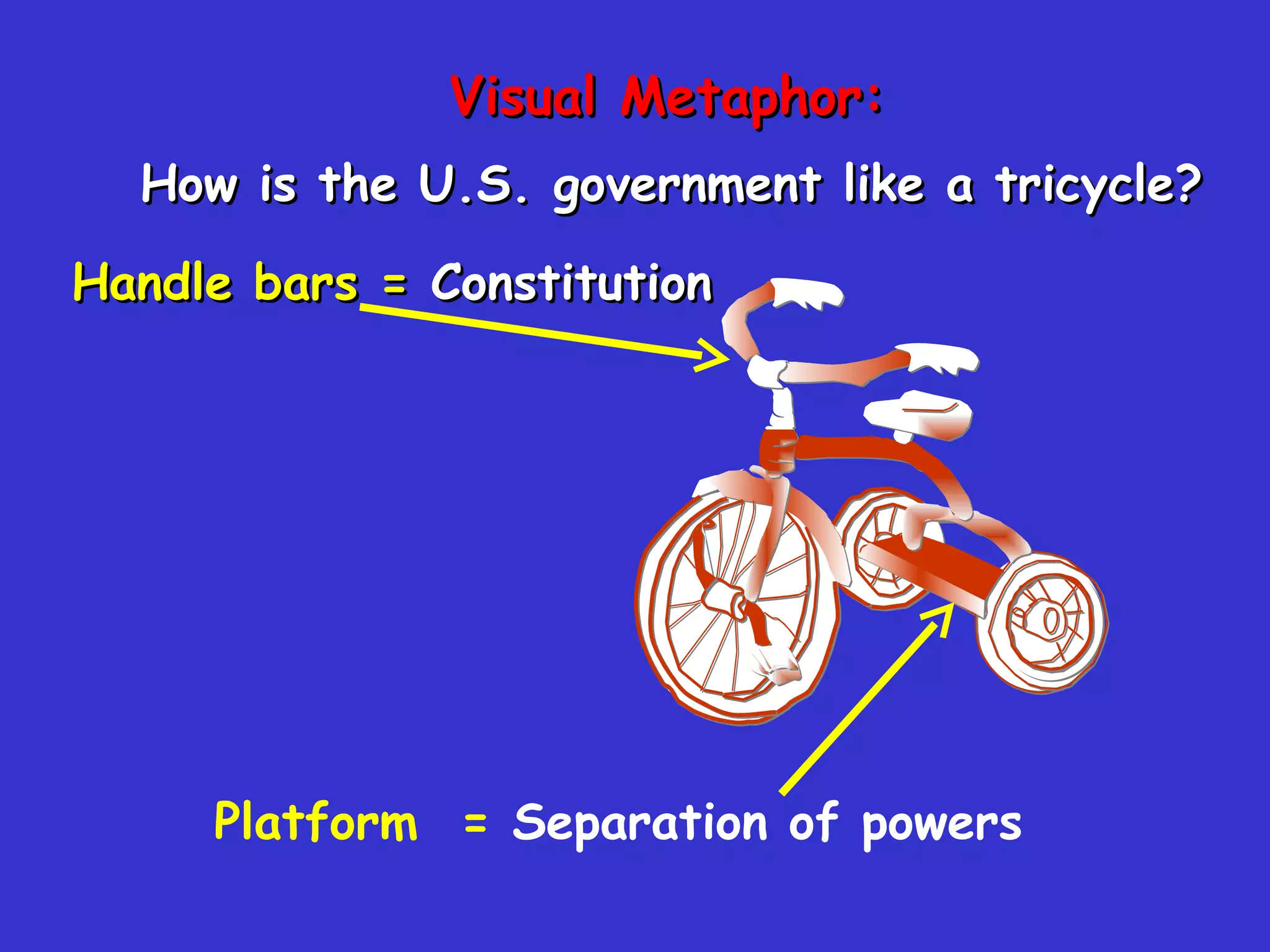
Visual Metaphor: How is the U.S. government like a tricycle?   Handle bars =   Constitution Platform  =   Separation of powers
Label the parts of the tricycle with these other words.   The People Executive Branch Legislative Branch Judicial Branch President Congress Supreme Court Checks and Balances
The foundation of our government and the supreme law of the land The Tree  of Liberty

Liberty Tree

  • 1.
    The story ofthe U.S. Constitution Liberty Tree
  • 2.
    Liberty Tree U.S.Constitution Magna Carta English Bill of Rights Fundamental Orders of Connecticut Mayflower Compact Town Hall Meetings House of Burgesses Articles of Confederation Continental Congress
  • 3.
    At the ConstitutionalConvention, the delegates created a new plan for the U.S. government that focused on two things. Structure and Function
  • 4.
    Structure Structure is the framework of our government.
  • 5.
    structure What doyou notice about the structure of a tree? limbs root system branches leaves tree bark
  • 6.
    three The governmentstructure has three branches. Judicial Legislative Executive
  • 7.
    Structure Legislative Branch:Structure Senate 2 per state 6-year terms House of Representatives based on population 2-year terms Elected by the people Bicameral = made of two houses
  • 8.
    Structure President (4-year term) Vice-President Cabinet Members Appointees Executive Branch: Structure
  • 9.
    Structure Executive Branch:Structure Vice - President Dick Cheney George W. Bush President Secretary of State Colin Powell
  • 10.
    Structure U. S.Supreme Court (life-terms) District Courts (appointed) County and Local Courts (elected) Judicial Branch: Structure
  • 11.
    function provides shade home for some animals holds soil in place What is the function of a tree?
  • 12.
    provide for thecommon defense ensure domestic tranquility promote the general welfare establish justice secure the blessings of liberty to ourselves, and our posterity The preamble to the Constitution tells the function or WHAT the government does for the people.
  • 13.
    Idea may becomea bill (proposed law) in House of Representatives or Senate Makes laws Legislative Branch: Function U.S. Congress Elected by the people People discuss ideas and tell representatives in Congress Bill becomes a law if approved by both houses and signed by the President
  • 14.
    Executive Branch: Function The White House Ensures that the laws are carried out Elected by the people and electoral college system
  • 15.
    Judicial Branch: Function Supreme Court Interprets the laws (decides if laws are fair) Tries civil and criminal cases in lower courts Nine justices on U.S. Supreme Court Appointed by President and approved by Congress
  • 16.
    Each branch checks and balances the other branches. = = President Congress Supreme Court
  • 17.
    Legislative branch can remove judges from office Executive branch can veto law Legislative branch makes laws Checks and Balances Legislative branch can override presidential veto with a 2/3 vote Judicial branch can declare a law unconstitutional
  • 18.
    Executive branch appoints Supreme Court justices Legislative branch has to approve the appointment of the justices
  • 19.
    House of Representativesbrings charges against the President (impeach) Legislative branch can remove president from office Senate holds a trial and 2/3 vote needed to remove President from office
  • 20.
    The U.S. Constitutionhas seven articles that explain the structure and function of the government.
  • 21.
    Article 1: LegislativeBranch Article 2: Executive Branch Article 3: Judicial Branch Article 4: Relations Among States Article 5: Amending the Constitution Article 6: National Supremacy Article 7: Ratification
  • 22.
    The structure and function of our government are based on seven basic principles.
  • 23.
    Seven Basic Principlesof the Constitution Limited powers of government Separation of powers Popular sovereignty Checks and balances Individual rights Republicanism Federalism
  • 24.
    Since King GeorgeIII had unlimited power, the writers of the U.S. Constitution wanted “we the people” to put limits on the government . The Constitution outlined exactly what the government could do.
  • 25.
    Separation of powers divides the operation of government into three equal branches. = =
  • 26.
    “ Sovereignty” comes from “sovereign” which means ruler. “ Popular” means people. . Popular sovereignty = people choose In other words…
  • 27.
    Popular sovereignty is the belief that the people hold the final authority in government.
  • 28.
    Each branch ofthe government checks and balances , or monitors, the power of the other two branches.
  • 29.
    Individual rights are the basic liberties and rights that are guaranteed in the first 10 amendments to the Constitution, the Bill of Rights. These individual rights have been extended through subsequent amendments to the Constitution. Examples Freedom of speech Freedom of press Freedom of religion Right to a trial by jury
  • 30.
    Republicanism isa philosophy of limited government in which elected representatives serve at the will of the people. Examples State legislatures Congress
  • 31.
    Federalism isthe division and sharing of powers between the state and national government. National Powers maintain armed forces coin money declare war make foreign policy State Powers provide for education conduct elections provide public safety regulate trade in state
  • 32.
    Powers Shared byNational and State Governments raise taxes administer criminal justice provide for public welfare charter banks borrow money
  • 33.
    This living document protects the rights of the individuals by limiting the power of the government. Rooted in these seven principles, the U.S. Constitution has endured since 1787.
  • 34.
    Visual Metaphor: Howis the U.S. government like a tricycle? Handle bars = Constitution Platform = Separation of powers
  • 35.
    Label the partsof the tricycle with these other words. The People Executive Branch Legislative Branch Judicial Branch President Congress Supreme Court Checks and Balances
  • 36.
    The foundation ofour government and the supreme law of the land The Tree of Liberty