THEORY: 
• Acc to ; Chinn & Kramer: 
“Theory is a creative and rigorous 
structuring of ideas that projects a 
tentative purposeful and systemic view of 
phenomena.”
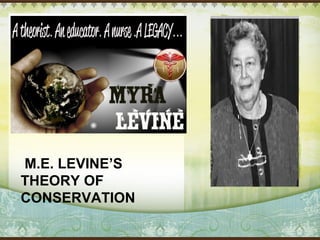
M.E. LEVINE’S 

THEORY OF 
CONSERVATION
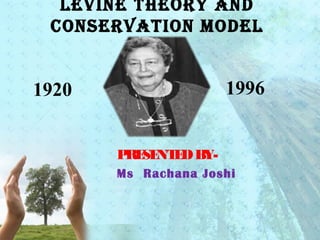
Levine theory and 
conservation modeL 
1920 1996 
PRESENTED BY-Ms 
Rachana Joshi
MILESTONES 
• 1920- Myra Estrine Levine was born in Chicago 
• The eldest among the three children ( has 1sister & 1 brother ) 
• 1969/1973/1989- Publication on " An Introduction to Clinical Nursing" 
made a significant contribution to the "why's" of nursing actions. 
•1992- awarded as Honorary Doctorate from Loyola University 
1996 - She died at the age of 75. 
Educational Achievement 
1944- Diploma in nursing:-Cook county SON, Chicago 
1949 - Bachelor of Science in Nursing-University of Chicago 
1962 - Masters of Science in Nursing -Wayne state University, Detroit
Achievements 
• 
Clinical experience in OT technique and oncology 
nursing 
• Civilian nurse at the Gardiner General Hospital 
• Director of Nursing at Drexel Home in Chicago 
• Clinical instructor at Bryan Memorial Hospital in 
Lincoln, Nebraska 
• Administrative supervisor at university of Chicago 
• Chairperson of clinical nursing at Cook Country 
SON 
• Visiting professor at Tel Aviv University in Israel 
• Authored 77 published articles
CONCEPTS OF LEVINE THEORY
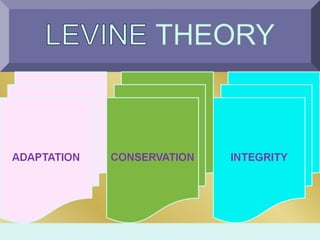
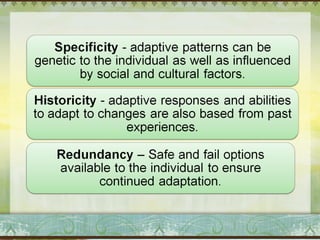
Adaptation 
"Change is the life 
process and 
Adaptation is the 
method of change."
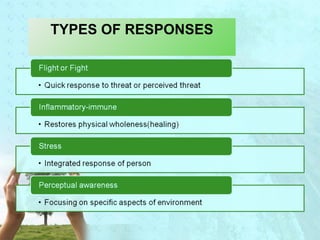
TYPES OF RESPONSES
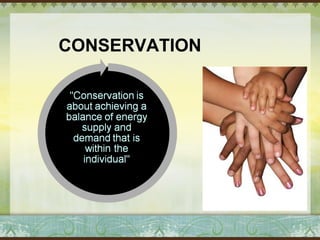
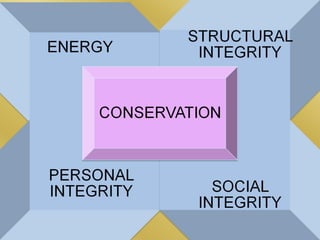
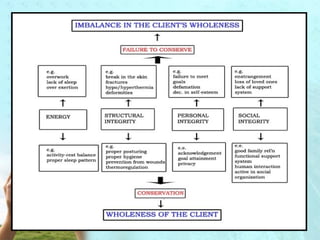
CONSERVATION
conservation
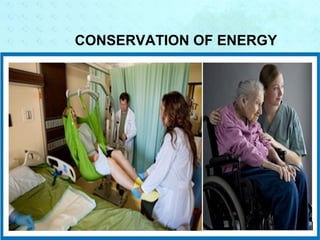
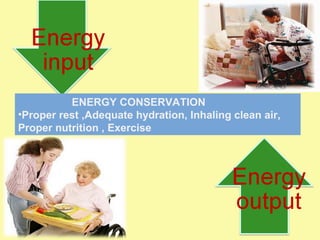
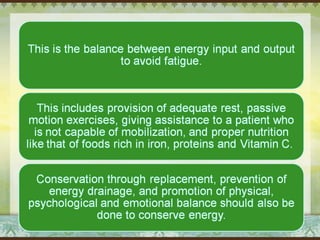
CONSERVATION OF ENERGY
ENERGY CONSERVATION 
•Proper rest ,Adequate hydration, Inhaling clean air, 
Proper nutrition , Exercise
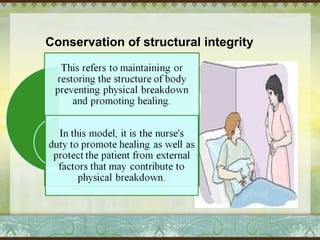
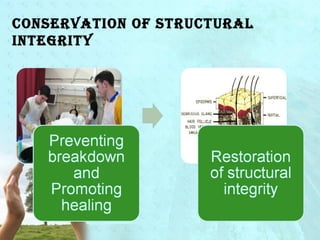
Conservation of structural integrity
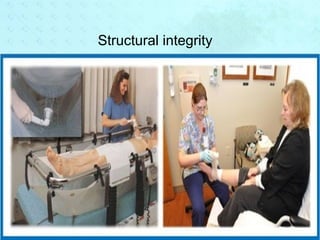
Structural integrity
Conservation of struCtural 
integrity
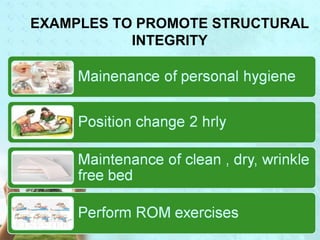
EXAMPLES TO PROMOTE STRUCTURAL 
INTEGRITY
Conservation 
of personal 
integrity
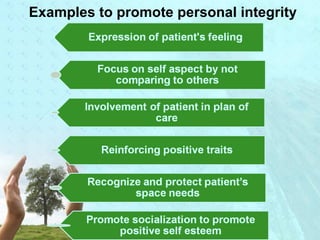
Examples to promote personal integrity
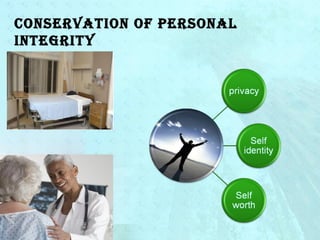
Conservation of personal 
integrity
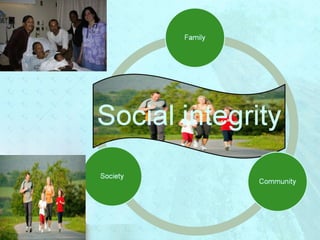
Help the individual to preserve his or her place 
in a family, community, and society. 
Position patient in bed to foster social interaction 
with other patients. 
Provide support and assistance to family 
Promote patient’s use of newspaper, magazine, 
radio, TV.
environmen 
t
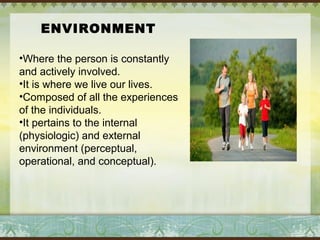
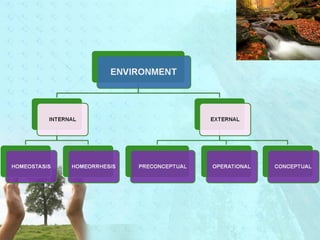
ENVIRONMENT 
•Where the person is constantly 
and actively involved. 
•It is where we live our lives. 
•Composed of all the experiences 
of the individuals. 
•It pertains to the internal 
(physiologic) and external 
environment (perceptual, 
operational, and conceptual).
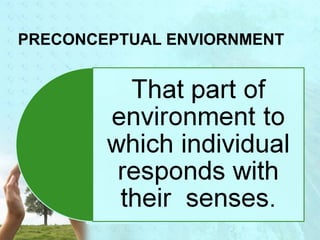
PRECONCEPTUAL ENVIORNMENT
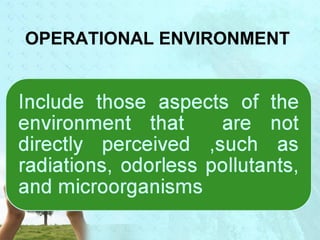
OPERATIONAL ENVIRONMENT
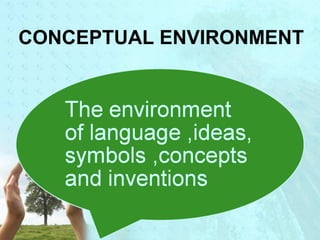
CONCEPTUAL ENVIRONMENT
HEALTH
State of being "whole" not just the absence of illness or 
disease. 
 Is determined by the ability to function in a reasonably 
normal manner 
Health is wholeness and successful adaptation. 
Not merely healing of an affected part, it is return to daily 
activities & selfhood. 
Health can be socially determined (through their 
interaction with the significant others).
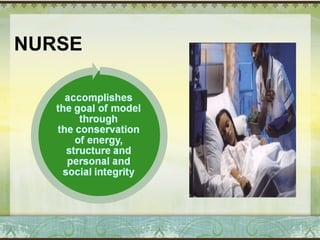
NURSE
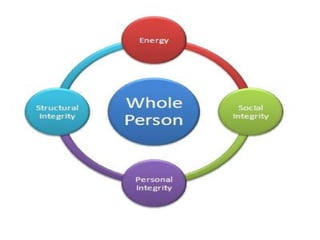
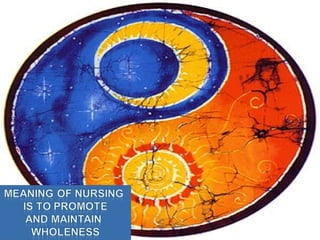
Wholeness 
"Wholeness 
is heath, 
health is 
integrity"
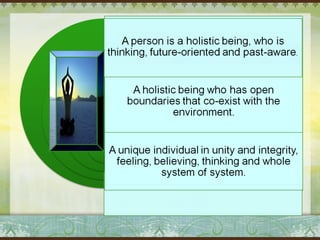
Human being respond in a 
predictable way
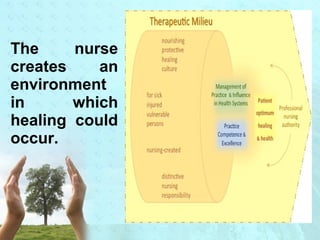
The nurse 
creates an 
environment 
in which 
healing could 
occur.
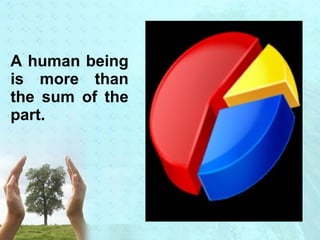
A human being 
is more than 
the sum of the 
part.
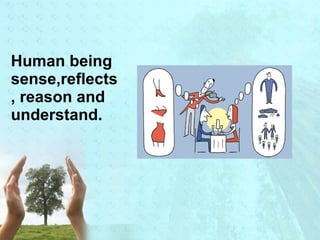
Human being 
sense,reflects 
, reason and 
understand.
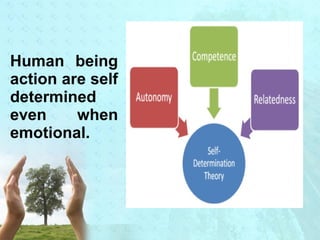
Human being 
action are self 
determined 
even when 
emotional.
Human being 
make decision 
through prioritizing 
course of action
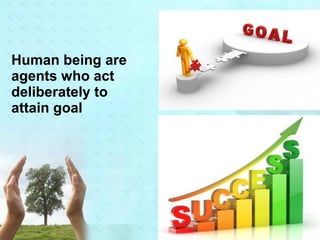
Human being are 
agents who act 
deliberately to 
attain goal
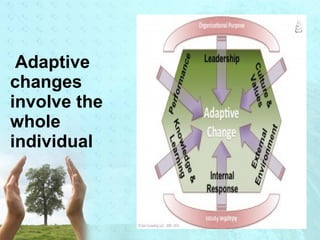
Adaptive 
changes 
involve the 
whole 
individual
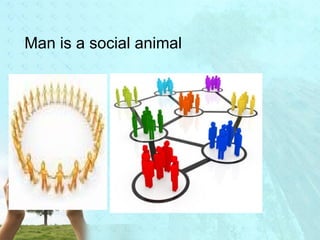
Man is a social animal
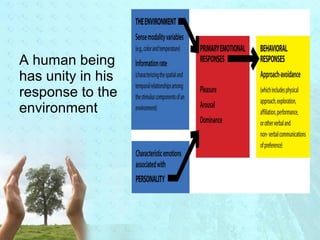
A human being 
has unity in his 
response to the 
environment
order and 
continuity to 
life change is 
not random
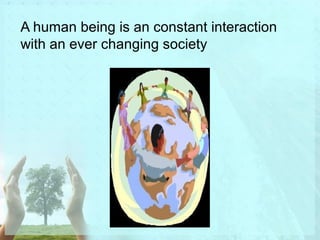
A human being is an constant interaction 
with an ever changing society
Change is 
inevitable 
in life
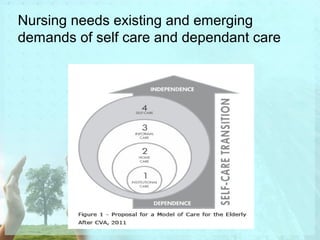
Nursing needs existing and emerging 
demands of self care and dependant care
A human being respond organismically in an 
ever changing manner
Theory and the Nursing Process 
•
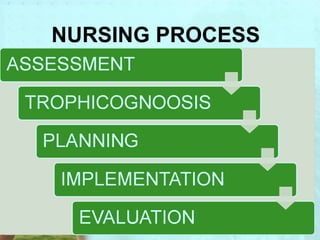
NURSING PROCESS
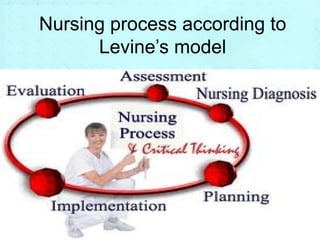
Nursing process according to 
Levine’s model
Nursing Process 
Assessment 
• Collection of facts 
through observation 
and interview of 
challenges to the 
internal and external 
environment using four 
conservation principles
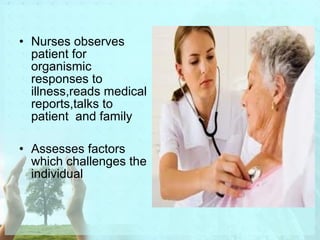
• Nurses observes 
patient for 
organismic 
responses to 
illness,reads medical 
reports,talks to 
patient and family 
• Assesses factors 
which challenges the 
individual
Nursing Process 
TROPHICOGNOSIS 
• Nursing diagnosis-gives provocative facts meaning 
• A nursing care judgment arrived at through the use of the 
scientific process 
• Judgment is made about patient’s needs for assistance
Nursing Process 
• Hypothesis 
• Planning 
• Nurse proposes hypothesis about the problems and the 
solutions which becomes the plan of care 
• Goal is to maintain wholeness and promoting adaptation
Nursing Process 
Interventions 
• Testing the hypothesis 
• Interventions are designed based on the conservation 
principles 
• Mutually acceptable 
• Goal is to maintain wholeness and promoting adaptation
Nursing Process 
Evaluation 
• Observation of organismic response to interventions 
• It assess whether hypothesis is supported or not supported 
• If not supported,plan is revised,new hypothesis is proposed
APPLICATIONS 
NURSING RESEARCH 
· Principles of conservation have been used for data collection 
in various researches 
· Conservational model was used by Hanson et al in their study 
of incidence and prevalence of pressure ulcers in hospice 
patient 
NURSING EDUCATION 
· Conservational model was used as guidelines for curriculum 
development 
NURSING PRACTICE 
· Conservational model has been used for nursing practice in 
different settings
STRENGTHS 
• Values the holistic approach to all individual, well or 
sick 
• Values patient’s participation in nursing care 
Comprehensive content, in-depth Scientific 
principles are emphasized. 
• Provides direction of nursing research , education, 
administration and practice .
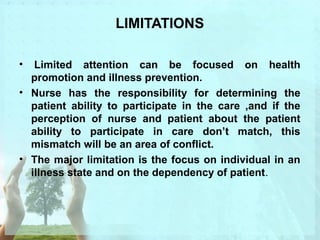
LIMITATIONS 
• Limited attention can be focused on health 
promotion and illness prevention. 
• Nurse has the responsibility for determining the 
patient ability to participate in the care ,and if the 
perception of nurse and patient about the patient 
ability to participate in care don’t match, this 
mismatch will be an area of conflict. 
• The major limitation is the focus on individual in an 
illness state and on the dependency of patient.
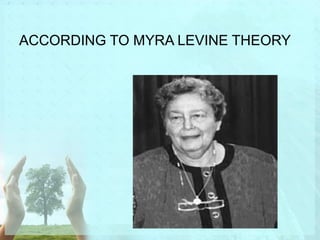
ACCORDING TO MYRA LEVINE THEORY
Levine's theory
Levine's theory
Levine's theory
Levine's theory
Levine's theory
Levine's theory
Levine's theory
Levine's theory

Levine's theory

  • 6.
    THEORY: • Accto ; Chinn & Kramer: “Theory is a creative and rigorous structuring of ideas that projects a tentative purposeful and systemic view of phenomena.”
  • 8.
    M.E. LEVINE’S THEORYOF CONSERVATION
  • 9.
    Levine theory and conservation modeL 1920 1996 PRESENTED BY-Ms Rachana Joshi
  • 11.
    MILESTONES • 1920-Myra Estrine Levine was born in Chicago • The eldest among the three children ( has 1sister & 1 brother ) • 1969/1973/1989- Publication on " An Introduction to Clinical Nursing" made a significant contribution to the "why's" of nursing actions. •1992- awarded as Honorary Doctorate from Loyola University 1996 - She died at the age of 75. Educational Achievement 1944- Diploma in nursing:-Cook county SON, Chicago 1949 - Bachelor of Science in Nursing-University of Chicago 1962 - Masters of Science in Nursing -Wayne state University, Detroit
  • 12.
    Achievements • Clinicalexperience in OT technique and oncology nursing • Civilian nurse at the Gardiner General Hospital • Director of Nursing at Drexel Home in Chicago • Clinical instructor at Bryan Memorial Hospital in Lincoln, Nebraska • Administrative supervisor at university of Chicago • Chairperson of clinical nursing at Cook Country SON • Visiting professor at Tel Aviv University in Israel • Authored 77 published articles
  • 14.
  • 16.
    Adaptation "Change isthe life process and Adaptation is the method of change."
  • 19.
  • 20.
  • 22.
  • 23.
  • 24.
    ENERGY CONSERVATION •Properrest ,Adequate hydration, Inhaling clean air, Proper nutrition , Exercise
  • 26.
  • 27.
  • 28.
  • 29.
    EXAMPLES TO PROMOTESTRUCTURAL INTEGRITY
  • 30.
  • 32.
    Examples to promotepersonal integrity
  • 33.
  • 35.
    Help the individualto preserve his or her place in a family, community, and society. Position patient in bed to foster social interaction with other patients. Provide support and assistance to family Promote patient’s use of newspaper, magazine, radio, TV.
  • 39.
  • 40.
    ENVIRONMENT •Where theperson is constantly and actively involved. •It is where we live our lives. •Composed of all the experiences of the individuals. •It pertains to the internal (physiologic) and external environment (perceptual, operational, and conceptual).
  • 42.
  • 43.
  • 44.
  • 45.
  • 46.
    State of being"whole" not just the absence of illness or disease.  Is determined by the ability to function in a reasonably normal manner Health is wholeness and successful adaptation. Not merely healing of an affected part, it is return to daily activities & selfhood. Health can be socially determined (through their interaction with the significant others).
  • 47.
  • 49.
    Wholeness "Wholeness isheath, health is integrity"
  • 51.
    Human being respondin a predictable way
  • 52.
    The nurse createsan environment in which healing could occur.
  • 53.
    A human being is more than the sum of the part.
  • 54.
    Human being sense,reflects , reason and understand.
  • 55.
    Human being actionare self determined even when emotional.
  • 56.
    Human being makedecision through prioritizing course of action
  • 57.
    Human being are agents who act deliberately to attain goal
  • 58.
    Adaptive changes involvethe whole individual
  • 59.
    Man is asocial animal
  • 60.
    A human being has unity in his response to the environment
  • 61.
    order and continuityto life change is not random
  • 62.
    A human beingis an constant interaction with an ever changing society
  • 63.
  • 64.
    Nursing needs existingand emerging demands of self care and dependant care
  • 65.
    A human beingrespond organismically in an ever changing manner
  • 66.
    Theory and theNursing Process •
  • 67.
  • 68.
    Nursing process accordingto Levine’s model
  • 69.
    Nursing Process Assessment • Collection of facts through observation and interview of challenges to the internal and external environment using four conservation principles
  • 70.
    • Nurses observes patient for organismic responses to illness,reads medical reports,talks to patient and family • Assesses factors which challenges the individual
  • 71.
    Nursing Process TROPHICOGNOSIS • Nursing diagnosis-gives provocative facts meaning • A nursing care judgment arrived at through the use of the scientific process • Judgment is made about patient’s needs for assistance
  • 72.
    Nursing Process •Hypothesis • Planning • Nurse proposes hypothesis about the problems and the solutions which becomes the plan of care • Goal is to maintain wholeness and promoting adaptation
  • 73.
    Nursing Process Interventions • Testing the hypothesis • Interventions are designed based on the conservation principles • Mutually acceptable • Goal is to maintain wholeness and promoting adaptation
  • 74.
    Nursing Process Evaluation • Observation of organismic response to interventions • It assess whether hypothesis is supported or not supported • If not supported,plan is revised,new hypothesis is proposed
  • 75.
    APPLICATIONS NURSING RESEARCH · Principles of conservation have been used for data collection in various researches · Conservational model was used by Hanson et al in their study of incidence and prevalence of pressure ulcers in hospice patient NURSING EDUCATION · Conservational model was used as guidelines for curriculum development NURSING PRACTICE · Conservational model has been used for nursing practice in different settings
  • 76.
    STRENGTHS • Valuesthe holistic approach to all individual, well or sick • Values patient’s participation in nursing care Comprehensive content, in-depth Scientific principles are emphasized. • Provides direction of nursing research , education, administration and practice .
  • 77.
    LIMITATIONS • Limitedattention can be focused on health promotion and illness prevention. • Nurse has the responsibility for determining the patient ability to participate in the care ,and if the perception of nurse and patient about the patient ability to participate in care don’t match, this mismatch will be an area of conflict. • The major limitation is the focus on individual in an illness state and on the dependency of patient.
  • 79.
    ACCORDING TO MYRALEVINE THEORY