Lesson plan
DATE: 9.4.2022
TOPIC: Land mark committees in the history of public health
of India and levels of prevention
SUBJECT: Public Health Dentistry
TARGET GROUP: Final year BDS students
NO. OF STUDENTS: Approx. 50.
DURATION: 20minutes
TEACHING AIDS: LCD projection aid used
MODE: Lecture
Land mark committees in the history of public health of India
and levels of prevention
• Bhore committee
• Mudaliar committee
• Kartar singh committee
• Shrivastav committee
• Rural health scheme
1946
What is bhore?
BHORE COMMITTEE
The Health survey and Development committee
40,000 population
Comprehensive health care
(Preventive, curative and promotional
health services)
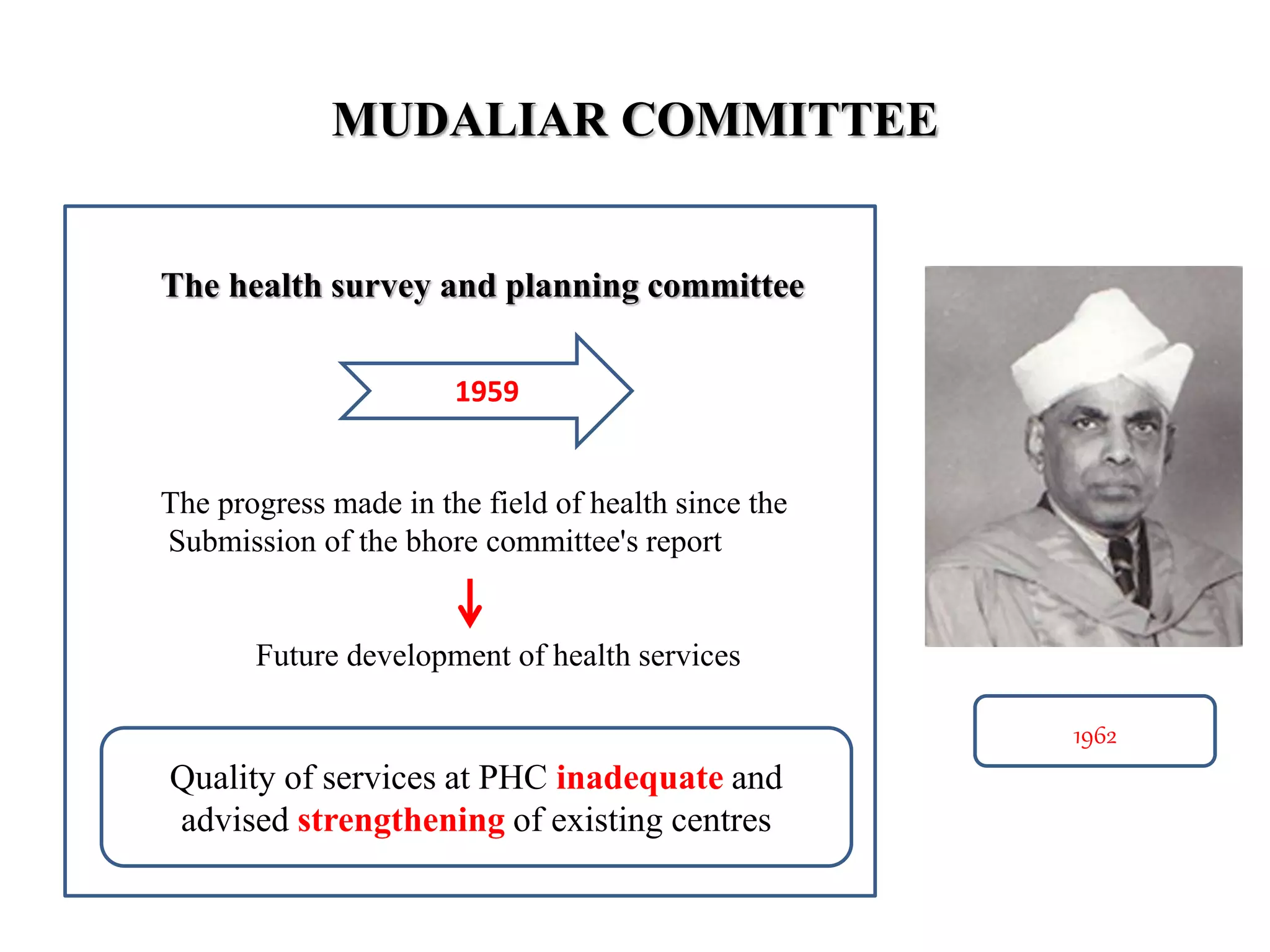
MUDALIAR COMMITTEE
1962
1959
The health survey and planning committee
The progress made in the field of health since the
Submission of the bhore committee's report
Future development of health services
Quality of services at PHC inadequate and
advised strengthening of existing centres
Kartar singh committee
1973
The committee on multipurpose workers under health
and family planning
1972
One health centre -50,000
population
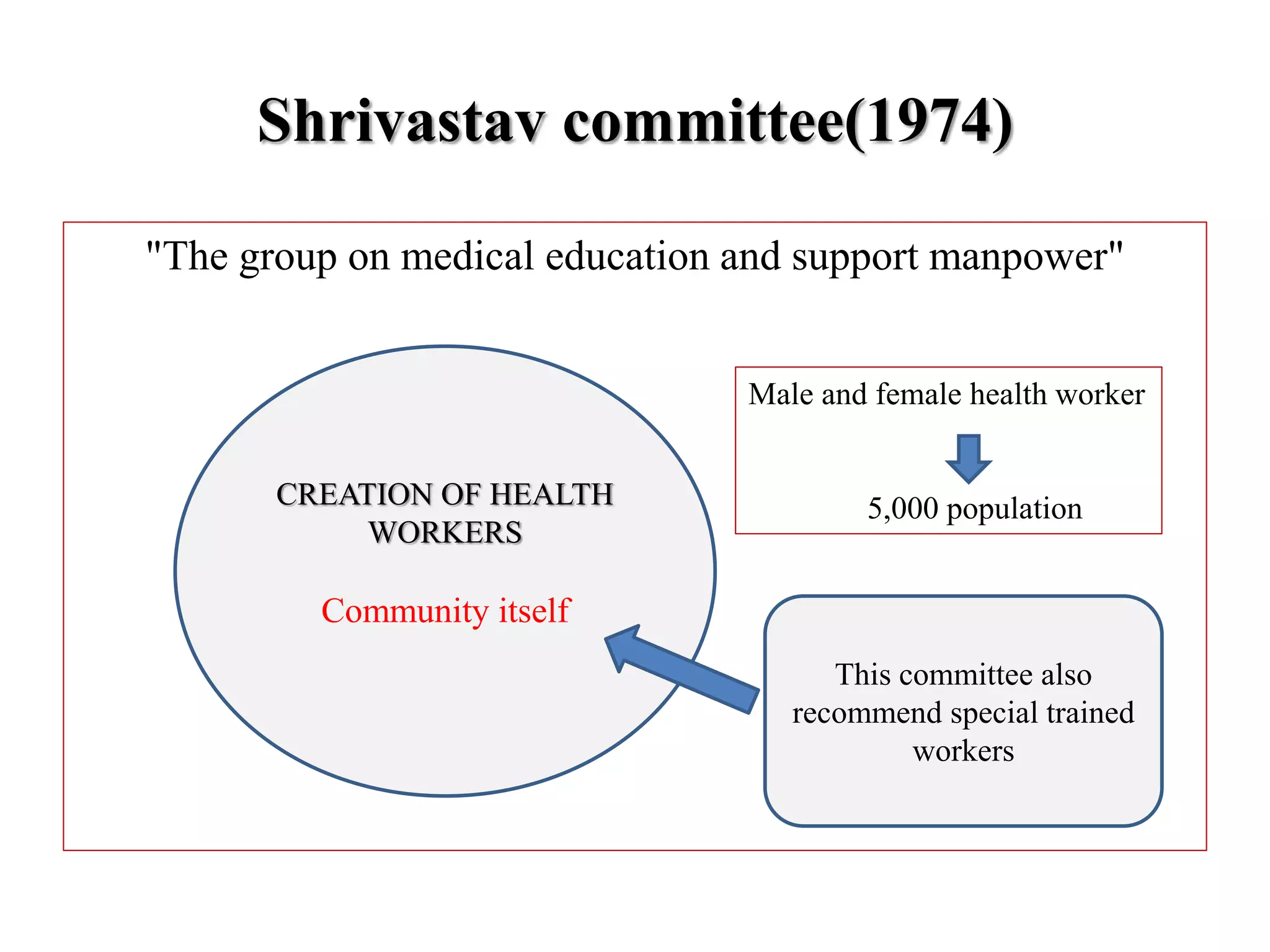
Shrivastav committee(1974)
"The group on medical education and support manpower"
CREATION OF HEALTH
WORKERS
Community itself
Male and female health worker
5,000 population
This committee also
recommend special trained
workers
Rural health scheme(1977)
Based on 4 tier system of services provided at
the level of
sub centre
PHC
CHC
157541
1421
30,045
5335 20
Concept of prevention
To promote the health
To preserve the health
To restore health
primary
secondary
Tertiary
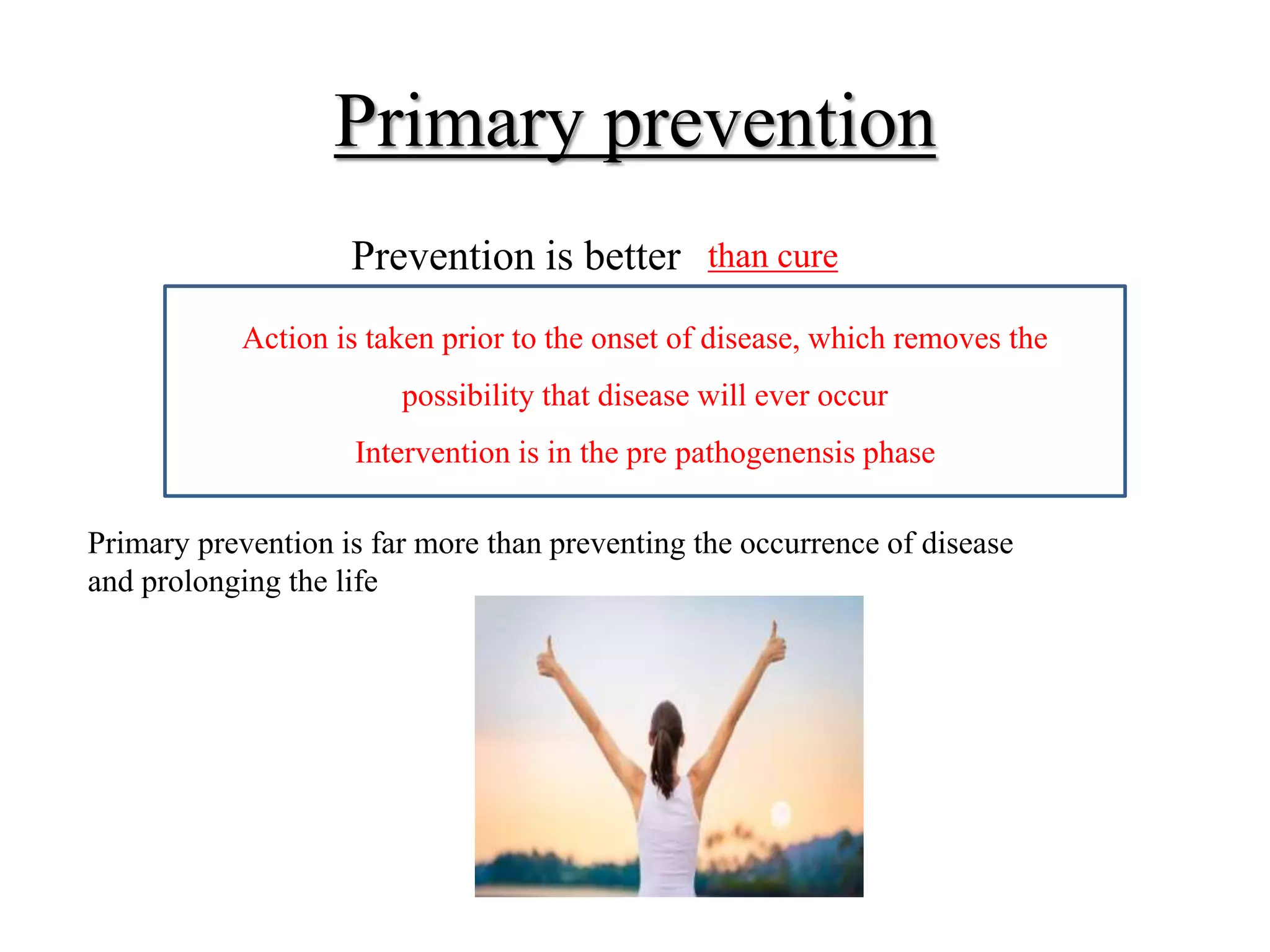
Primary prevention
Prevention is better than cure
Action is taken prior to the onset of disease, which removes the
possibility that disease will ever occur
Intervention is in the pre pathogenensis phase
Primary prevention is far more than preventing the occurrence of disease
and prolonging the life
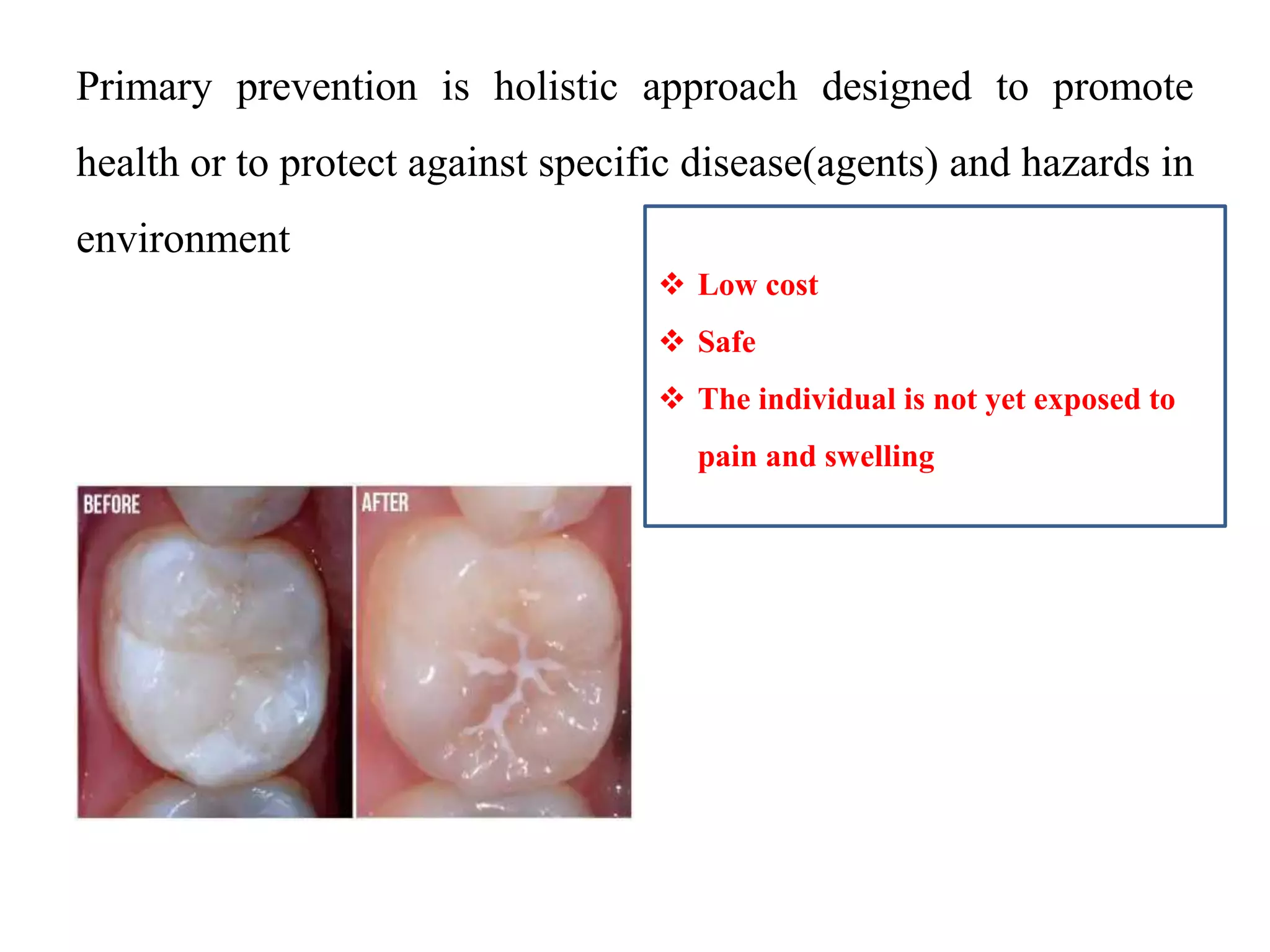
Primary prevention is holistic approach designed to promote
health or to protect against specific disease(agents) and hazards in
environment
 Low cost
 Safe
 The individual is not yet exposed to
pain and swelling
The approaches for primary prevention
recommended by WHO
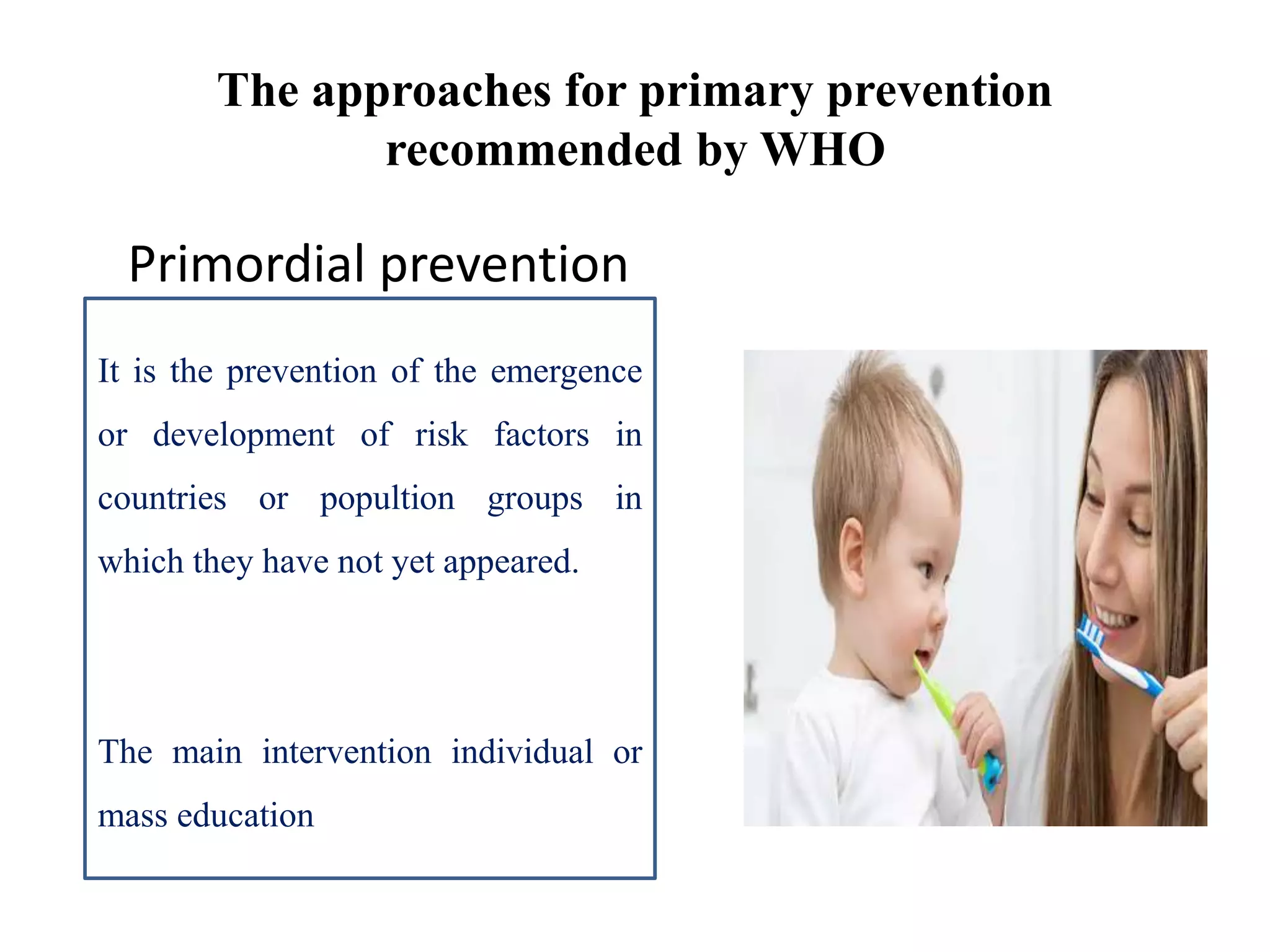
Primordial prevention
It is the prevention of the emergence
or development of risk factors in
countries or popultion groups in
which they have not yet appeared.
The main intervention individual or
mass education
Population (mass strategy)
It is directed at the whole population irrespective of individual risk level so as
to bring about behavioral and life changes
High risk strategy
It aims to bring preventive care to individual at special risk
These three approaches are complimentary and should be implemented
together to have an impact on the population
THE MODE OF INTERVENTION IN PRIMARY PREVENTION ARE-
Health promotion
specific protection
Health promotion
It is the process of enabling people to increase control over, and
to improve health
It is not directed any particular disease,but it is intended to
strengthen the host through a variety of intervention like
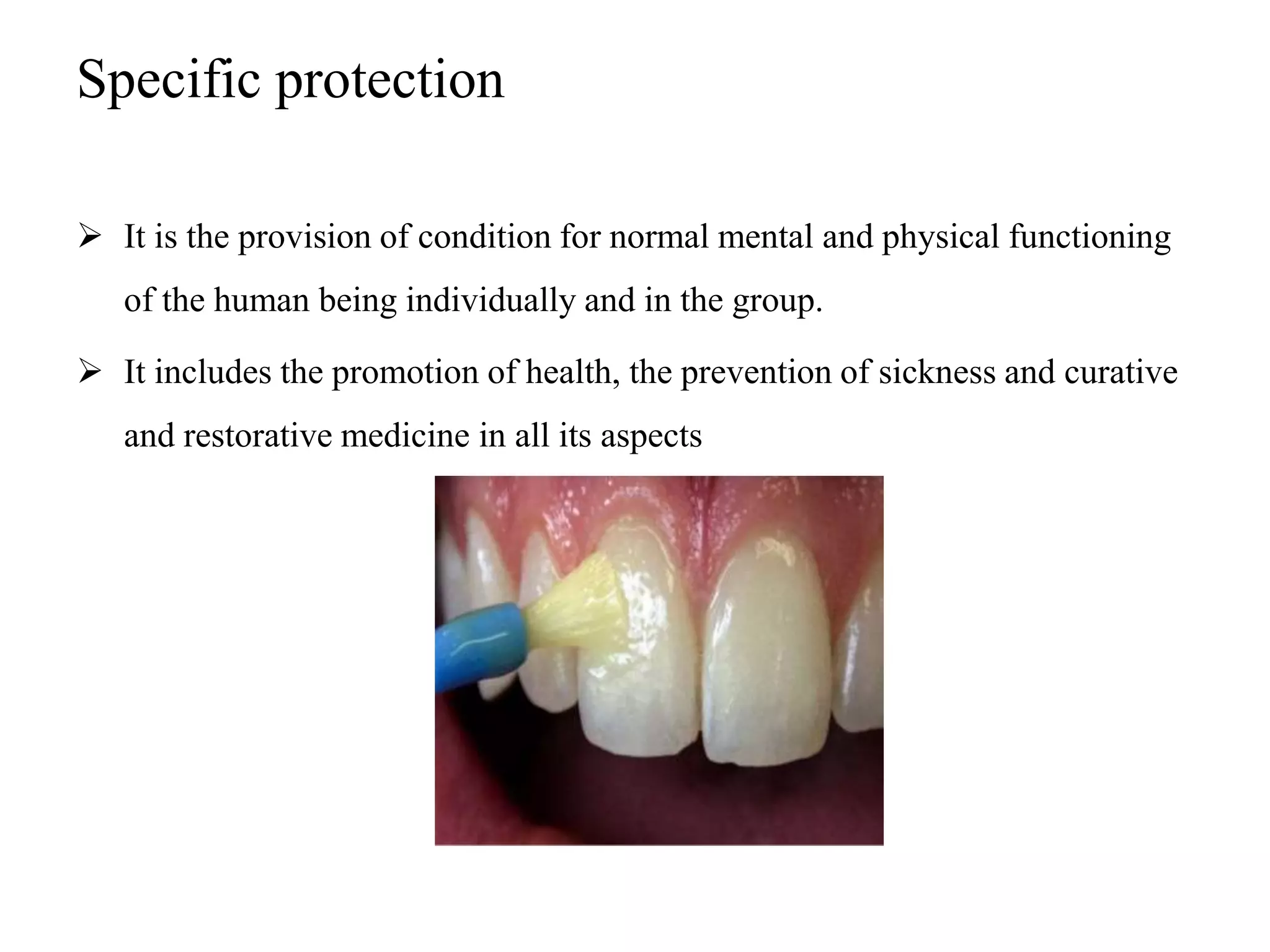
Specific protection
 It is the provision of condition for normal mental and physical functioning
of the human being individually and in the group.
 It includes the promotion of health, the prevention of sickness and curative
and restorative medicine in all its aspects
SECONDARY PREVENTION
Action which halts the progress of disease at its incipient stage and
prevents complication
Specific interventions
Early diagnosis
Adequate treatment
• The earlier disease is diagnosed and treated the better it is from the point of
view of prognosis and preventing further complications or long term
disability
• Strictly speaking early diagnosis and treatment cannot be considered
prevention since the disease process is already started.
• However it has been included under prevention because this mode of
intervention will intercept the disease and prevent further complication.
Reducing the high mortality and morbidity
of certain disease like hypertension
Reducing the mortality and
morbidity of certain disease
Expensive
Tertiary prevention
It is intervention in the late pathogenesis phase.
All measures available to reduce or limit impairments and
disabilities, minimize suffering caused by existing departures
from good health and to promote the patients adjustment to
irremidiable conditions
Disease Impairement
Disability
Handicap
Impairement-is any loss or abnormality of psychological, physiological or
anatomical structure or function.
Eg. Loss of teeth due to disease in teacher
Disability-Is any restriction or lack of ability to perform an activity in the
manner or within the range considered normal for a human being
Eg.,Inability to talk or pronounce certain words clearly
Handicap-is a disadvantage for a given individual, resulting from an
impairments or a disability, that limits or prevents the fulfillment of a role that
is normal for that individual.
Eg. The teacher loses his job and becomes unemployed
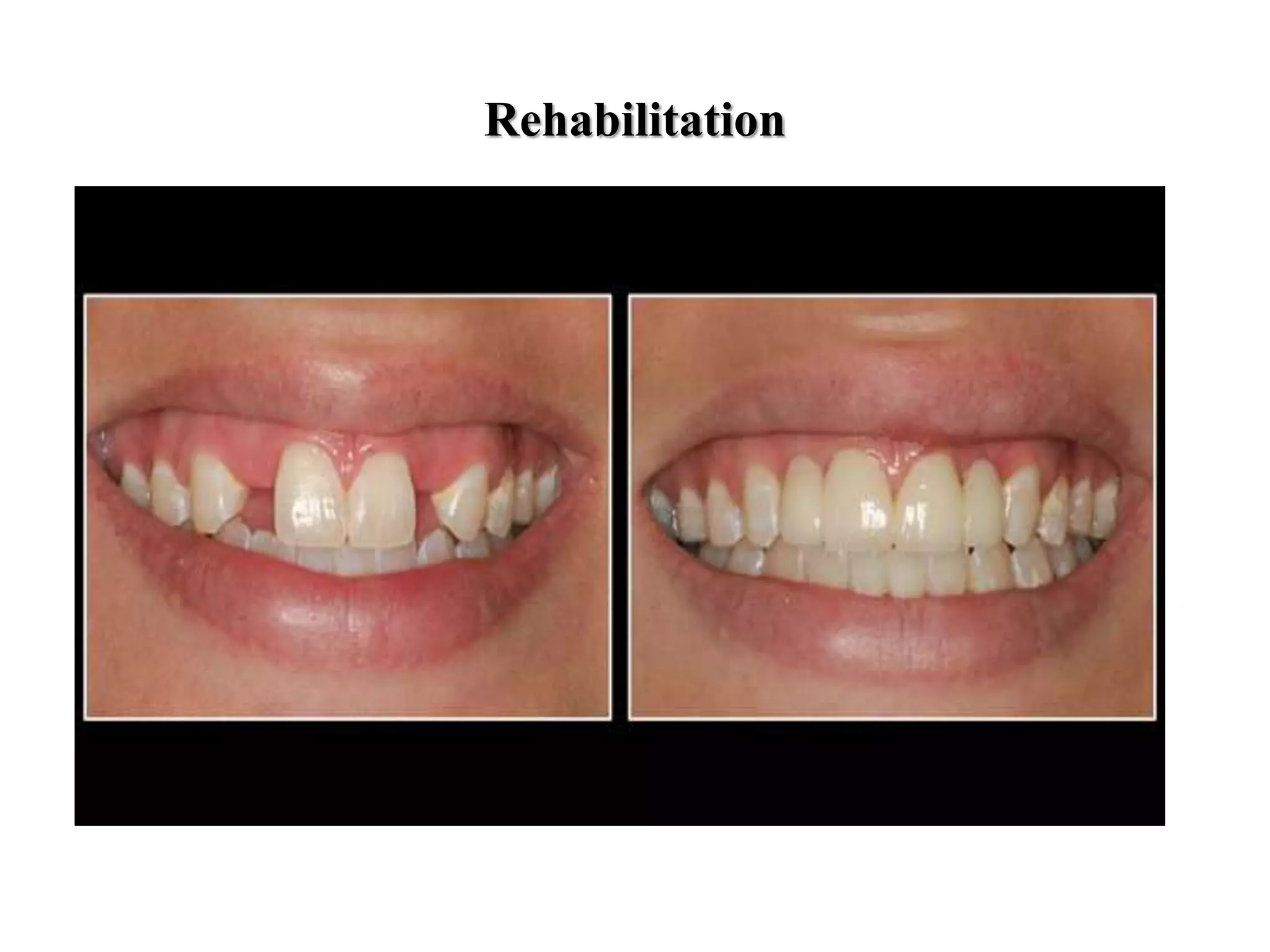
Rehabilitation
It is combines and coordinated use of
medical,vocational,social and eductional
measures for training and retraining the individual
to the highest possible level of functional ability
It reduces the impact of the disabling condition
and helps the person to participate activiely and
join the main stream
Peter S. Essentials of Public health dentistry.
Sixth Edition Arya Medi Publishing house.
2017 June 292-3.
Bhore committee
Mudaliar committee
Kartar singh committee
Primary prevention
Secondary prevention
Tertiary prevention
levels of prevention

levels of prevention

  • 2.
    Lesson plan DATE: 9.4.2022 TOPIC:Land mark committees in the history of public health of India and levels of prevention SUBJECT: Public Health Dentistry TARGET GROUP: Final year BDS students NO. OF STUDENTS: Approx. 50. DURATION: 20minutes TEACHING AIDS: LCD projection aid used MODE: Lecture
  • 3.
    Land mark committeesin the history of public health of India and levels of prevention • Bhore committee • Mudaliar committee • Kartar singh committee • Shrivastav committee • Rural health scheme
  • 4.
  • 5.
    BHORE COMMITTEE The Healthsurvey and Development committee 40,000 population Comprehensive health care (Preventive, curative and promotional health services)
  • 6.
    MUDALIAR COMMITTEE 1962 1959 The healthsurvey and planning committee The progress made in the field of health since the Submission of the bhore committee's report Future development of health services Quality of services at PHC inadequate and advised strengthening of existing centres
  • 7.
    Kartar singh committee 1973 Thecommittee on multipurpose workers under health and family planning 1972 One health centre -50,000 population
  • 8.
    Shrivastav committee(1974) "The groupon medical education and support manpower" CREATION OF HEALTH WORKERS Community itself Male and female health worker 5,000 population This committee also recommend special trained workers
  • 9.
    Rural health scheme(1977) Basedon 4 tier system of services provided at the level of sub centre PHC CHC 157541 1421 30,045 5335 20
  • 10.
    Concept of prevention Topromote the health To preserve the health To restore health primary secondary Tertiary
  • 11.
    Primary prevention Prevention isbetter than cure Action is taken prior to the onset of disease, which removes the possibility that disease will ever occur Intervention is in the pre pathogenensis phase Primary prevention is far more than preventing the occurrence of disease and prolonging the life
  • 12.
    Primary prevention isholistic approach designed to promote health or to protect against specific disease(agents) and hazards in environment  Low cost  Safe  The individual is not yet exposed to pain and swelling
  • 13.
    The approaches forprimary prevention recommended by WHO Primordial prevention It is the prevention of the emergence or development of risk factors in countries or popultion groups in which they have not yet appeared. The main intervention individual or mass education
  • 14.
    Population (mass strategy) Itis directed at the whole population irrespective of individual risk level so as to bring about behavioral and life changes
  • 15.
    High risk strategy Itaims to bring preventive care to individual at special risk These three approaches are complimentary and should be implemented together to have an impact on the population THE MODE OF INTERVENTION IN PRIMARY PREVENTION ARE- Health promotion specific protection
  • 16.
    Health promotion It isthe process of enabling people to increase control over, and to improve health It is not directed any particular disease,but it is intended to strengthen the host through a variety of intervention like
  • 17.
    Specific protection  Itis the provision of condition for normal mental and physical functioning of the human being individually and in the group.  It includes the promotion of health, the prevention of sickness and curative and restorative medicine in all its aspects
  • 18.
    SECONDARY PREVENTION Action whichhalts the progress of disease at its incipient stage and prevents complication Specific interventions Early diagnosis Adequate treatment
  • 19.
    • The earlierdisease is diagnosed and treated the better it is from the point of view of prognosis and preventing further complications or long term disability • Strictly speaking early diagnosis and treatment cannot be considered prevention since the disease process is already started. • However it has been included under prevention because this mode of intervention will intercept the disease and prevent further complication.
  • 20.
    Reducing the highmortality and morbidity of certain disease like hypertension Reducing the mortality and morbidity of certain disease Expensive
  • 21.
    Tertiary prevention It isintervention in the late pathogenesis phase. All measures available to reduce or limit impairments and disabilities, minimize suffering caused by existing departures from good health and to promote the patients adjustment to irremidiable conditions Disease Impairement Disability Handicap
  • 22.
    Impairement-is any lossor abnormality of psychological, physiological or anatomical structure or function. Eg. Loss of teeth due to disease in teacher Disability-Is any restriction or lack of ability to perform an activity in the manner or within the range considered normal for a human being Eg.,Inability to talk or pronounce certain words clearly Handicap-is a disadvantage for a given individual, resulting from an impairments or a disability, that limits or prevents the fulfillment of a role that is normal for that individual. Eg. The teacher loses his job and becomes unemployed
  • 23.
    Rehabilitation It is combinesand coordinated use of medical,vocational,social and eductional measures for training and retraining the individual to the highest possible level of functional ability It reduces the impact of the disabling condition and helps the person to participate activiely and join the main stream
  • 24.
    Peter S. Essentialsof Public health dentistry. Sixth Edition Arya Medi Publishing house. 2017 June 292-3.
  • 26.
  • 27.

Editor's Notes

  • #10 The primary tier is designed to have three types of health care institutions, namely, a Sub-Centre (SC) for a population of 3000-5000, a Primary Health Centre (PHC) for 20000 to 30000 people and a Community Health Centre (CHC) as referral centre for every four PHCs covering a population of 80,000 to 1.2 lakh