Personal tastles
I really like chocolate. It tastes
               really good.
 It tastes EVEN BETTER when
 you melt it. It has an EVEN
 BETTER taste.
What is taste? Another meaning of
“taste” is something we like.
 Everybody has different personal tastes.


 For example, if somebody dresses well and always
 wears nice clothes we can say that they have good taste
 in clothes.
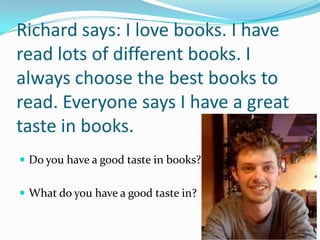
Richard says: I love books. I have
read lots of different books. I
always choose the best books to
read. Everyone says I have a great
taste in books.
 Do you have a good taste in books?


 What do you have a good taste in?
However, your taste really isn’t
“good” or “bad”, it’s just your
personal opinion on something.

We all have very different tastes.
 Look at the pictures in the book.
 People can have different tastes
 about all of these things.
What tastes are people talking
about in the pictures?
Music
Clothes
Cars
Hairstyles
Conversation club each category
In pairs – Ask your partner about
their tastes.
 A “What kind of…do you
 like?”

B “I like…”
You are going to a very important
party.
 What kind of clothes will you wear?


 What kind of car will you go in?


 What kind of hairstyle will you have?


 What CDs will you listen to in the car?
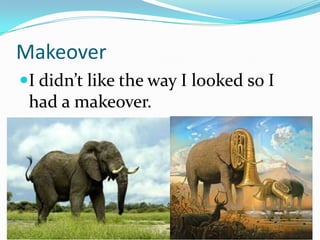
Makeover
I didn’t like the way I looked so I
 had a makeover.
Yes, a makeover is a way to change
the way you look.
 You can change your clothes, hair etc.


 Have Cindy and Ben changed?


 Listen and don’t look at the text. How
 have they changed?
Now read the text. One group can
find new grammar and vocabulary
for each text.
 Then do the questions.
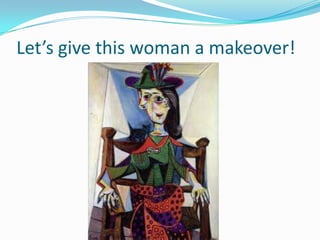
Let’s give this woman a makeover!
Comparatives
 Find all of the comparatives in the texts.
 Remind them of the comparatives rule.
 Do Comparatives activity. (maybe made smaller).
“As…as” is another type of
comparative. We use it when two
factors are the same.
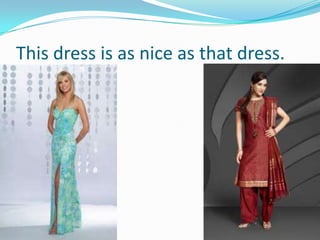
This dress is as nice as that dress.
Which dress is better?
We can also use “as…as…” with
pronouns.
 “I get dressed as quickly as I can”
 “as quickly”
 “as I can” which refers to ability.
 Therefore, in this sentence the “speed”
  and “the ability” are equal.
 Therefore, the woman wants to get
  dressed with the maximum speed that
  her ability to dress will allow her.
Try to use ”as…as…” with these
sentences
Nouns
Now make your own
Speaking naturally
 What do you notice about these sentences?


 When we put words with the same sound together
  their sound changes.

 Let’s try it!
Lesson B
What is “shopping”?
Shopping
 !!!!!!!!!!!!!!!!!!!!!!!!!!!!!!!!!!!!!!!!!!!!!!!!!!!!!!!!!!!!!!!!!!!!!!!!!!!!!!!!!!!!!
  !!!!!!!!!!!!!!!!!!!!!!!!!!!!!!!!!!!!!!!!!!!!!!!!!!!!!!!!!!!!!!!!!!!!!!!!!!!!!!!!!!!!!
Do you like shopping? What do you
like to buy?
 Ask your partner these
 things.
Lesson B - What are Yoko and Ben
      doing in the picture?
 They are shopping.


 Do you often go shopping?


 Which do you prefer: to buy things or watch
 other people buy things?
Which one is Ben and which one is
Yoko? How do they look? Describe
them.
Do you think that Ben is having a
good time?
Do task B
We can use negative sentences to
express positive things?
 Like the examples in the text.


 1) To express opinions.
 2) To show surprise.
 3) To suggest an idea.
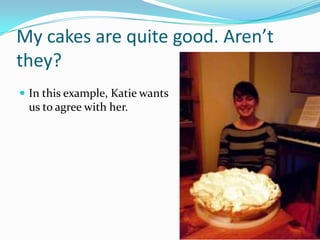
My cakes are quite good. Aren’t
they?
 In this example, Katie wants
 us to agree with her.
This wine is really good – Why
don’t you try some?
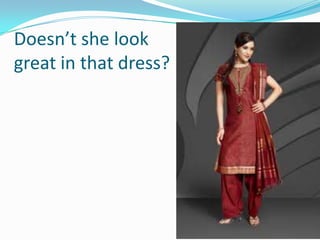
Doesn’t she look
great in that dress?
Isn’t that
odd/
strange/
weird?
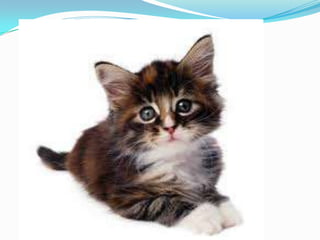
Use the pictures and
comment about them using
negative questions.
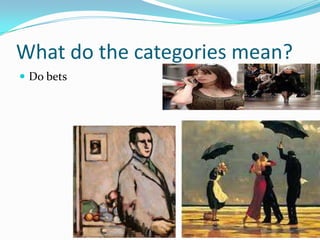
What do the categories mean?
 Do bets
Choose one of these pieces of
 clothing. How would you describe
                it?
Then, describe it to the class.


We will guess which piece of
 clothing you are describing.
What category of the table do all of
the words in bold go into?
 Do bets.
What words can we use to soften
what we say?
 Do you like this?


Sometimes
Perhaps
Maybe
It has good and bad points
Now, ask your partner what they
think.
Homework – Write a 200 word
conversation between two friends
about how they used to dress and
how they dress now.
 Use questions and answers
 Retell dramatic stories about fashion.
 Use “this” and “these”.
 Describe your personal tastes. (What kind of
  clothes do you like?
 Use “as…as…”
 Use negative expressions like, “That’s lovely, isn’t
  it?”
Lesson C – He has really broad
tastes
Why do we summarise what people
say?

How would you summarise the
following?
Richard says: I love books. I have
read lots of different books. I
always choose the best books to
read. Everyone says I have a great
taste in books.
 Do you have a good taste in books?


 What do you have a good taste in?
B – Why do these people
summarise?
 Do the Exercise.


 Think about your partner’s
  taste of music. Ask them
  about it and write it down.
 WE’LL DO THIS TOGETHER!!!!


 Now summarise it!
Now, use the structure of the
dialogue to make your own
dialogue in pairs about…?
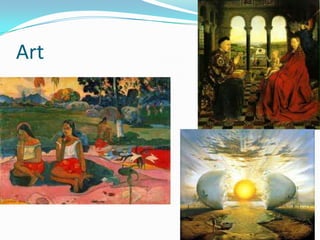
Art
Books
Clothes
What words can we use to
introduce new topics and points.
“Now”
What other words can we use?
Tracey follows up one aspect of
Omar’s speech.


Which aspect of what Omar says
does Tracey ask about?
Do the exercise!
Do the listening!
Write about your personal tastes
on a small piece of paper.


Now, put it in a hat.

Now, pull it out and follow it up.
Lesson D – A free spirit
 Describe the word.
Personal
Style
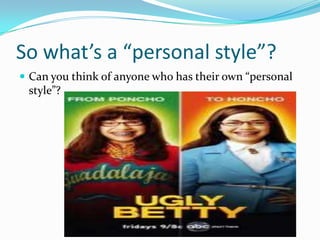
So what’s a “personal style”?
 Can you think of anyone who has their own “personal
 style”?
Do these people have personal
styles. What styles are they?
Compare these people above.
Which is your favourite? Use
 superlatives.

Use “…as…as…” to compare
 them.
Look at the woman in the picture.
What tastes do you think she has
in…
Clothes
Jewellery
Home decor
Do you like Lesley’s style? What do
you not like?
Free
Spirit
Let’s read the text. Were your
guesses about Lesley correct?
(We’l dae the summarisin activity
efter)
(…I guessed that….)


Do you have anything in common
 with Lesley? What?
Feng Shui
Now summarise what other people
said.
Explain your personal style (maybe
for homework)
 Use ideas and styles from this unit.
Find “eclectic” in the text.

What does “eclectic” mean?
It’s my thing…/it’s not my thing…
 What does this mean?
 I love War & Peace. Russian literature’s really my thing.
What’s your thing?
What’s not your thing?
Level 10   persaonal tastes

Level 10 persaonal tastes

  • 1.
  • 2.
    I really likechocolate. It tastes really good.  It tastes EVEN BETTER when you melt it. It has an EVEN BETTER taste.
  • 3.
    What is taste?Another meaning of “taste” is something we like.  Everybody has different personal tastes.  For example, if somebody dresses well and always wears nice clothes we can say that they have good taste in clothes.
  • 4.
    Richard says: Ilove books. I have read lots of different books. I always choose the best books to read. Everyone says I have a great taste in books.  Do you have a good taste in books?  What do you have a good taste in?
  • 5.
    However, your tastereally isn’t “good” or “bad”, it’s just your personal opinion on something. We all have very different tastes. Look at the pictures in the book. People can have different tastes about all of these things.
  • 6.
    What tastes arepeople talking about in the pictures? Music Clothes Cars Hairstyles
  • 7.
  • 8.
    In pairs –Ask your partner about their tastes. A “What kind of…do you like?” B “I like…”
  • 9.
    You are goingto a very important party.  What kind of clothes will you wear?  What kind of car will you go in?  What kind of hairstyle will you have?  What CDs will you listen to in the car?
  • 10.
    Makeover I didn’t likethe way I looked so I had a makeover.
  • 11.
    Yes, a makeoveris a way to change the way you look.  You can change your clothes, hair etc.  Have Cindy and Ben changed?  Listen and don’t look at the text. How have they changed?
  • 12.
    Now read thetext. One group can find new grammar and vocabulary for each text.  Then do the questions.
  • 13.
    Let’s give thiswoman a makeover!
  • 14.
    Comparatives  Find allof the comparatives in the texts.  Remind them of the comparatives rule.  Do Comparatives activity. (maybe made smaller).
  • 15.
    “As…as” is anothertype of comparative. We use it when two factors are the same.
  • 16.
    This dress isas nice as that dress.
  • 17.
  • 18.
    We can alsouse “as…as…” with pronouns.  “I get dressed as quickly as I can”  “as quickly”  “as I can” which refers to ability.  Therefore, in this sentence the “speed” and “the ability” are equal.  Therefore, the woman wants to get dressed with the maximum speed that her ability to dress will allow her.
  • 19.
    Try to use”as…as…” with these sentences
  • 20.
  • 23.
  • 24.
    Speaking naturally  Whatdo you notice about these sentences?  When we put words with the same sound together their sound changes.  Let’s try it!
  • 25.
    Lesson B What is“shopping”?
  • 26.
    Shopping  !!!!!!!!!!!!!!!!!!!!!!!!!!!!!!!!!!!!!!!!!!!!!!!!!!!!!!!!!!!!!!!!!!!!!!!!!!!!!!!!!!!!! !!!!!!!!!!!!!!!!!!!!!!!!!!!!!!!!!!!!!!!!!!!!!!!!!!!!!!!!!!!!!!!!!!!!!!!!!!!!!!!!!!!!!
  • 27.
    Do you likeshopping? What do you like to buy? Ask your partner these things.
  • 28.
    Lesson B -What are Yoko and Ben doing in the picture?  They are shopping.  Do you often go shopping?  Which do you prefer: to buy things or watch other people buy things?
  • 29.
    Which one isBen and which one is Yoko? How do they look? Describe them.
  • 30.
    Do you thinkthat Ben is having a good time?
  • 31.
  • 32.
    We can usenegative sentences to express positive things?  Like the examples in the text.  1) To express opinions.  2) To show surprise.  3) To suggest an idea.
  • 33.
    My cakes arequite good. Aren’t they?  In this example, Katie wants us to agree with her.
  • 34.
    This wine isreally good – Why don’t you try some?
  • 35.
  • 36.
  • 37.
    Use the picturesand comment about them using negative questions.
  • 42.
    What do thecategories mean?  Do bets
  • 43.
    Choose one ofthese pieces of clothing. How would you describe it? Then, describe it to the class. We will guess which piece of clothing you are describing.
  • 44.
    What category ofthe table do all of the words in bold go into?  Do bets.
  • 45.
    What words canwe use to soften what we say?  Do you like this? Sometimes Perhaps Maybe It has good and bad points
  • 46.
    Now, ask yourpartner what they think.
  • 47.
    Homework – Writea 200 word conversation between two friends about how they used to dress and how they dress now.  Use questions and answers  Retell dramatic stories about fashion.  Use “this” and “these”.  Describe your personal tastes. (What kind of clothes do you like?  Use “as…as…”  Use negative expressions like, “That’s lovely, isn’t it?”
  • 48.
    Lesson C –He has really broad tastes Why do we summarise what people say? How would you summarise the following?
  • 49.
    Richard says: Ilove books. I have read lots of different books. I always choose the best books to read. Everyone says I have a great taste in books.  Do you have a good taste in books?  What do you have a good taste in?
  • 50.
    B – Whydo these people summarise?  Do the Exercise.  Think about your partner’s taste of music. Ask them about it and write it down.  WE’LL DO THIS TOGETHER!!!!  Now summarise it!
  • 51.
    Now, use thestructure of the dialogue to make your own dialogue in pairs about…?
  • 52.
  • 53.
  • 54.
  • 55.
    What words canwe use to introduce new topics and points.
  • 56.
  • 57.
    Tracey follows upone aspect of Omar’s speech. Which aspect of what Omar says does Tracey ask about?
  • 58.
    Do the exercise! Dothe listening!
  • 59.
    Write about yourpersonal tastes on a small piece of paper. Now, put it in a hat. Now, pull it out and follow it up.
  • 60.
    Lesson D –A free spirit  Describe the word.
  • 61.
  • 62.
  • 63.
    So what’s a“personal style”?  Can you think of anyone who has their own “personal style”?
  • 64.
    Do these peoplehave personal styles. What styles are they?
  • 66.
    Compare these peopleabove. Which is your favourite? Use superlatives. Use “…as…as…” to compare them.
  • 67.
    Look at thewoman in the picture. What tastes do you think she has in… Clothes Jewellery Home decor
  • 68.
    Do you likeLesley’s style? What do you not like?
  • 69.
  • 70.
  • 71.
    Let’s read thetext. Were your guesses about Lesley correct? (We’l dae the summarisin activity efter) (…I guessed that….) Do you have anything in common with Lesley? What?
  • 72.
  • 73.
    Now summarise whatother people said.
  • 74.
    Explain your personalstyle (maybe for homework)  Use ideas and styles from this unit.
  • 75.
    Find “eclectic” inthe text. What does “eclectic” mean?
  • 77.
    It’s my thing…/it’snot my thing…  What does this mean?  I love War & Peace. Russian literature’s really my thing.
  • 78.