Introduction to Nouns – part 1 TYPES OF WORDS Common vs. Proper Nouns Concrete vs. Abstract Nouns
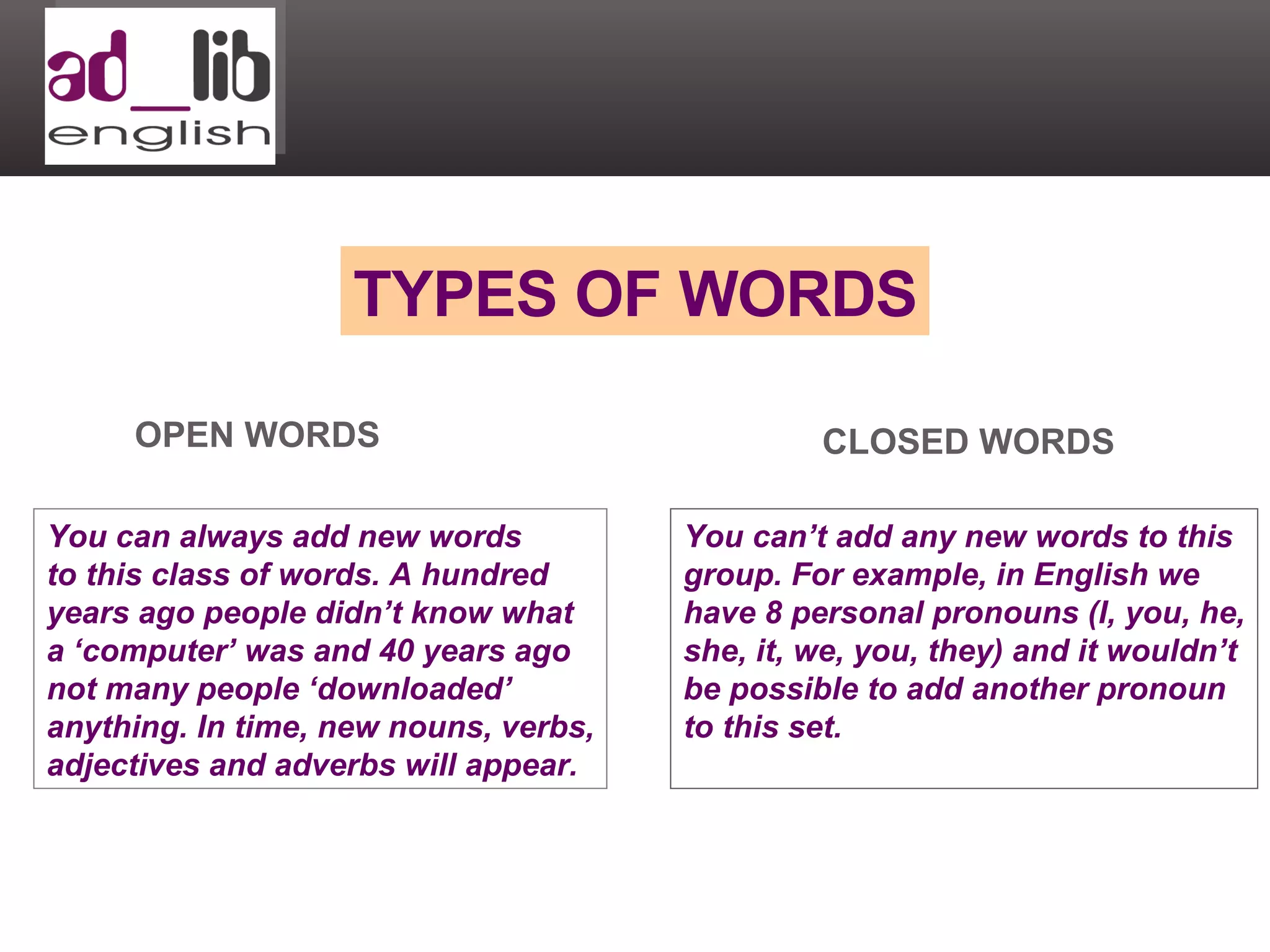
TYPES OF WORDS OPEN WORDS CLOSED WORDS You can always add new words to this class of words. A hundred  years ago people didn’t know what a ‘computer’ was and 40 years ago not many people ‘downloaded’  anything. In time, new nouns, verbs, adjectives and adverbs will appear. You can’t add any new words to this group. For example, in English we  have 8 personal pronouns (I, you, he, she, it, we, you, they) and it wouldn’t be possible to add another pronoun to this set.
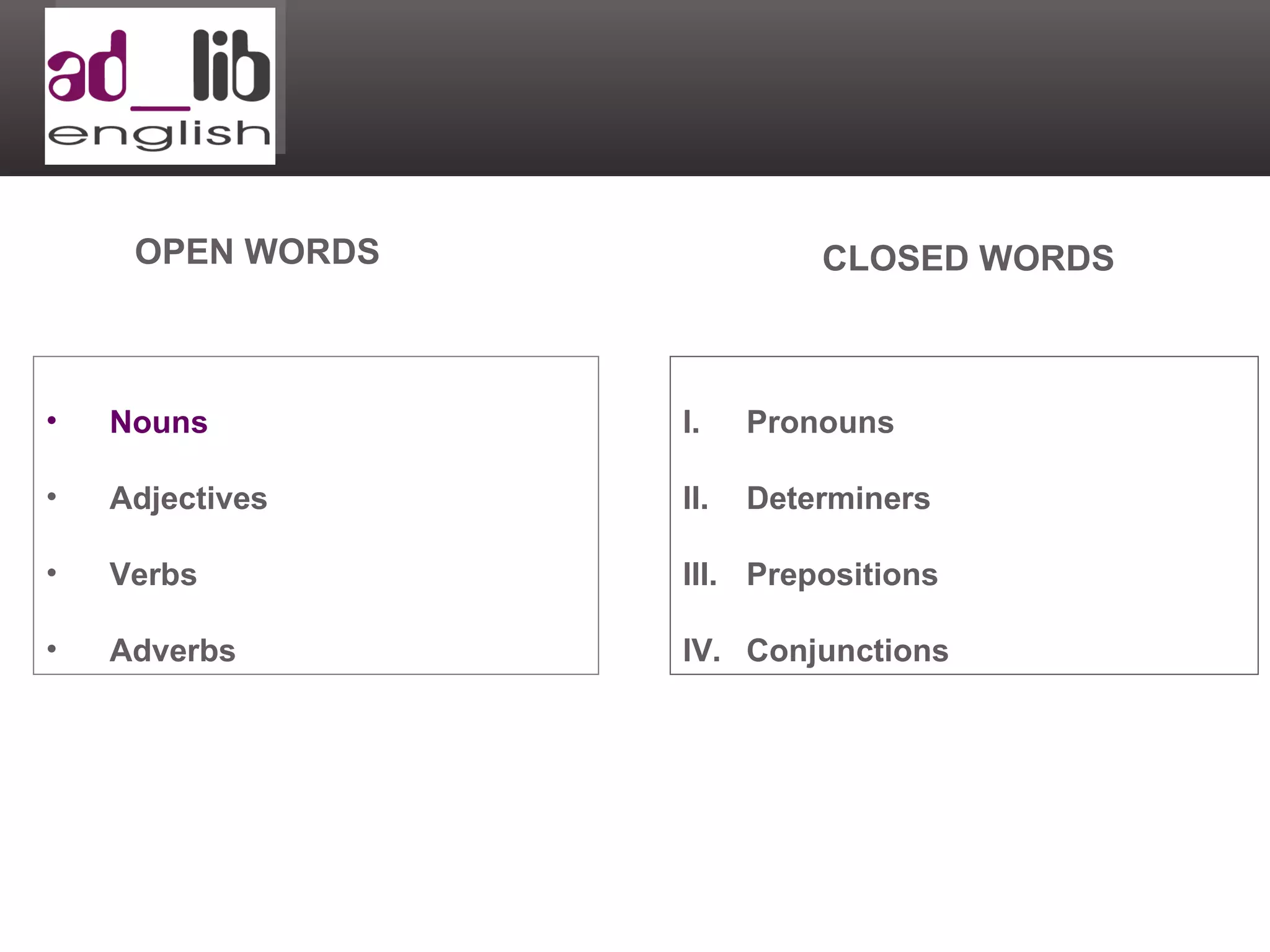
OPEN WORDS CLOSED WORDS Nouns Adjectives Verbs Adverbs Pronouns Determiners Prepositions Conjunctions
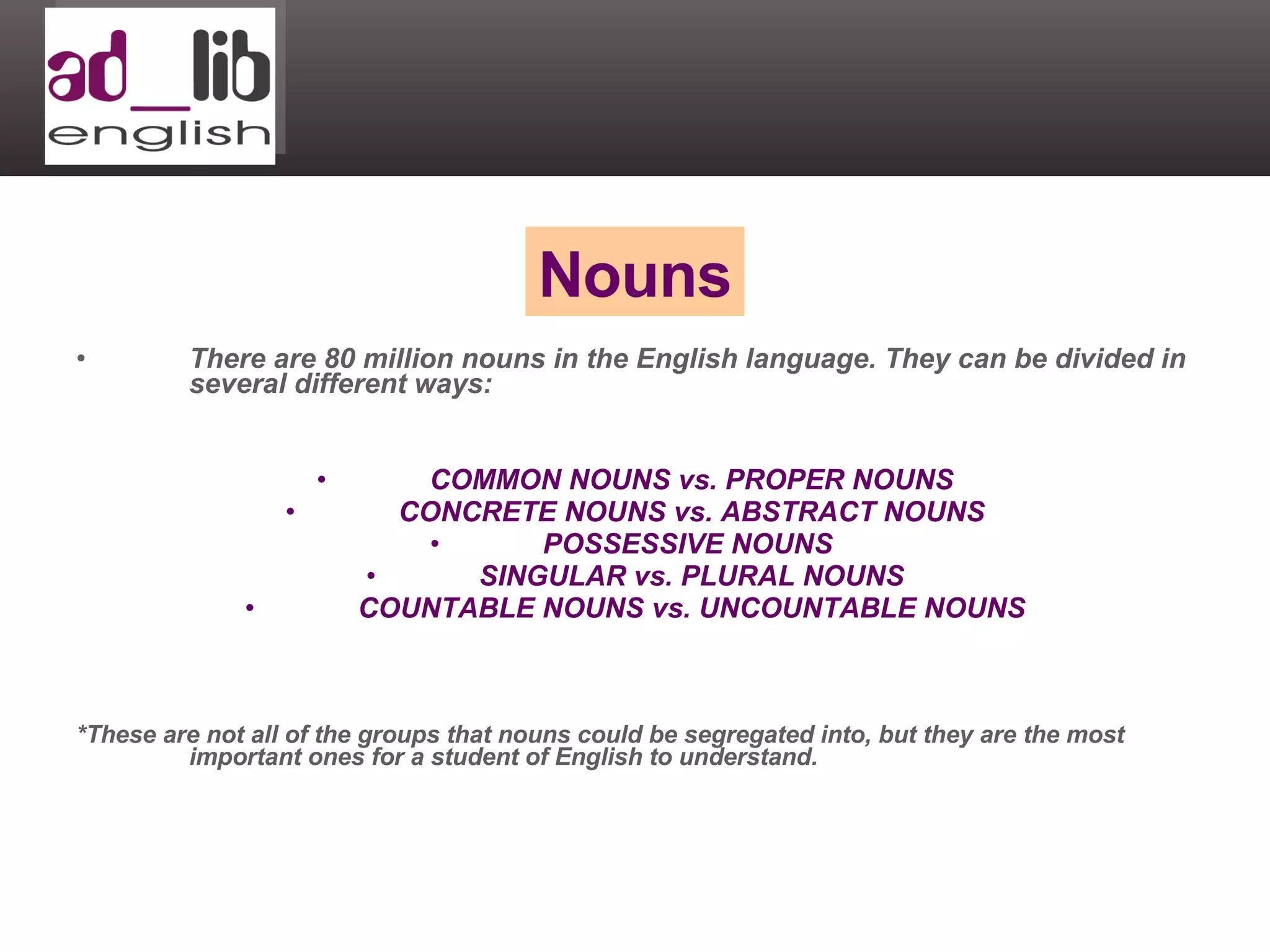
There are 80 million nouns in the English language. They can be divided in several different ways: COMMON NOUNS vs. PROPER NOUNS CONCRETE NOUNS vs. ABSTRACT NOUNS POSSESSIVE NOUNS  SINGULAR vs. PLURAL NOUNS COUNTABLE NOUNS vs. UNCOUNTABLE NOUNS *These are not all of the groups that nouns could be segregated into, but they are the most important ones for a student of English to understand. Nouns
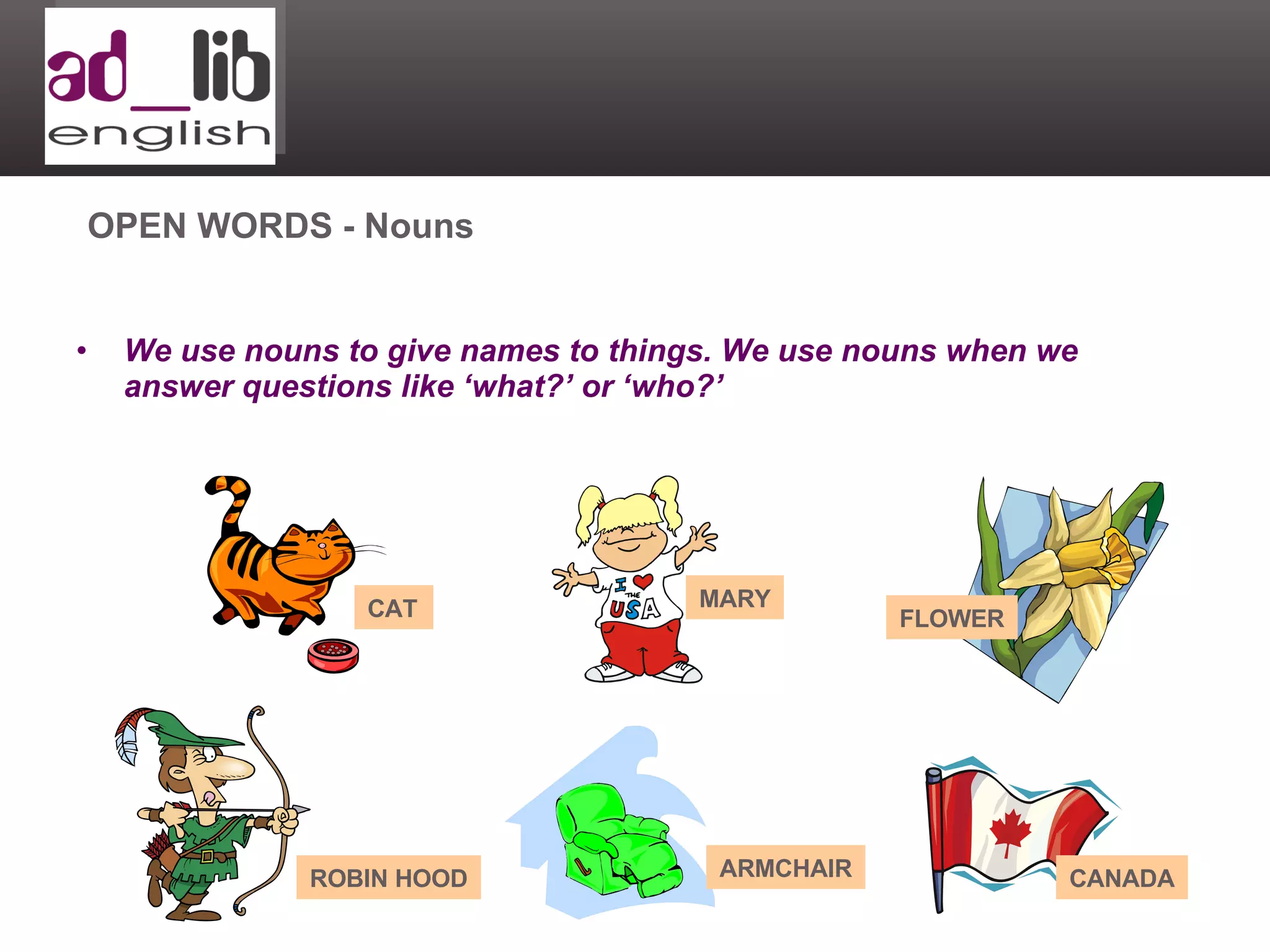
We use nouns to give names to things. We use nouns when we answer questions like ‘what?’ or ‘who?’ OPEN WORDS - Nouns CAT MARY FLOWER CANADA ROBIN HOOD ARMCHAIR
Common vs. Proper Nouns
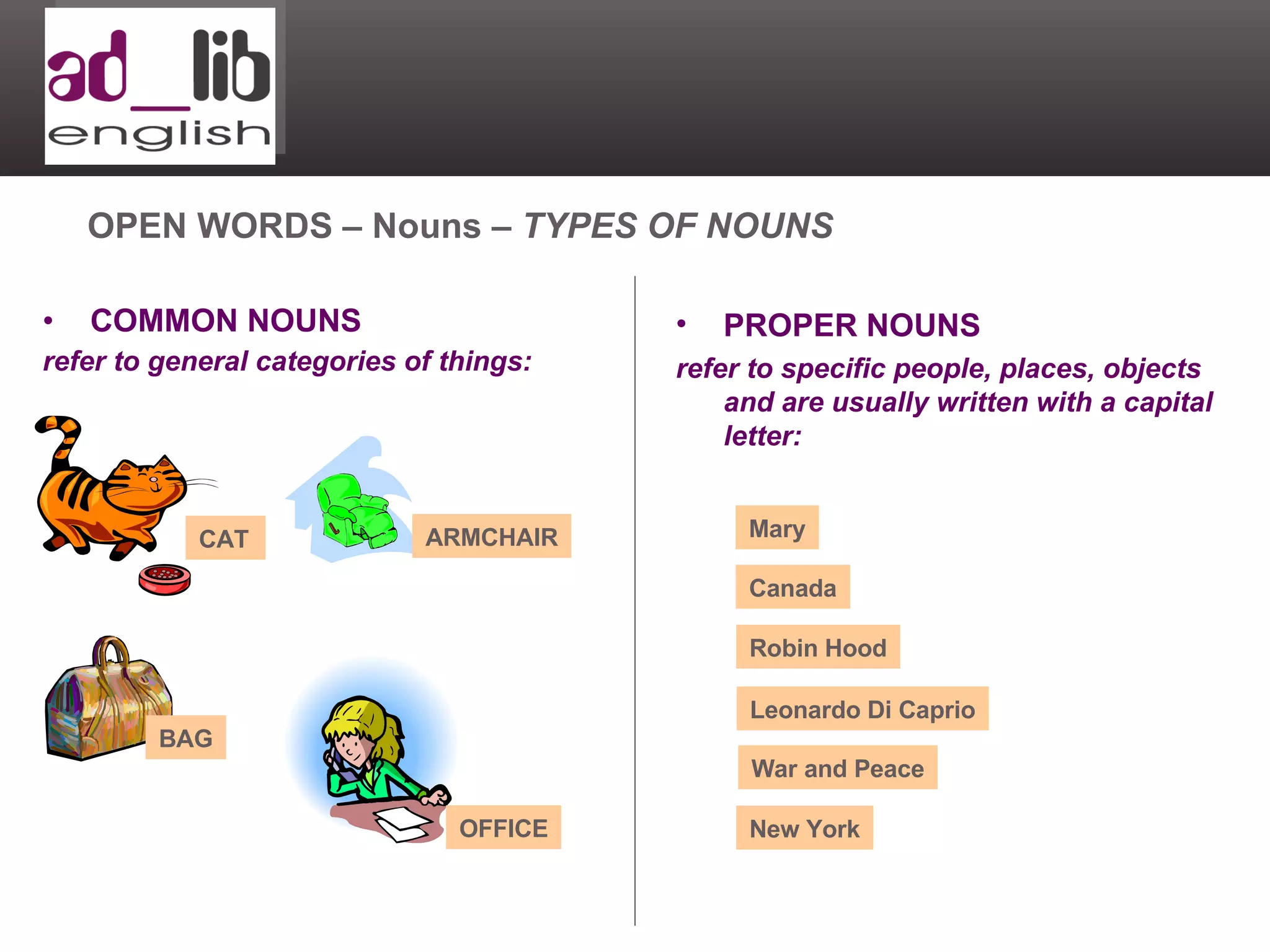
COMMON NOUNS refer to general categories of things: OPEN WORDS – Nouns –  TYPES OF NOUNS PROPER NOUNS refer to specific people, places, objects and are usually written with a capital letter: Mary Canada Robin Hood Leonardo Di Caprio War and Peace New York CAT ARMCHAIR BAG OFFICE
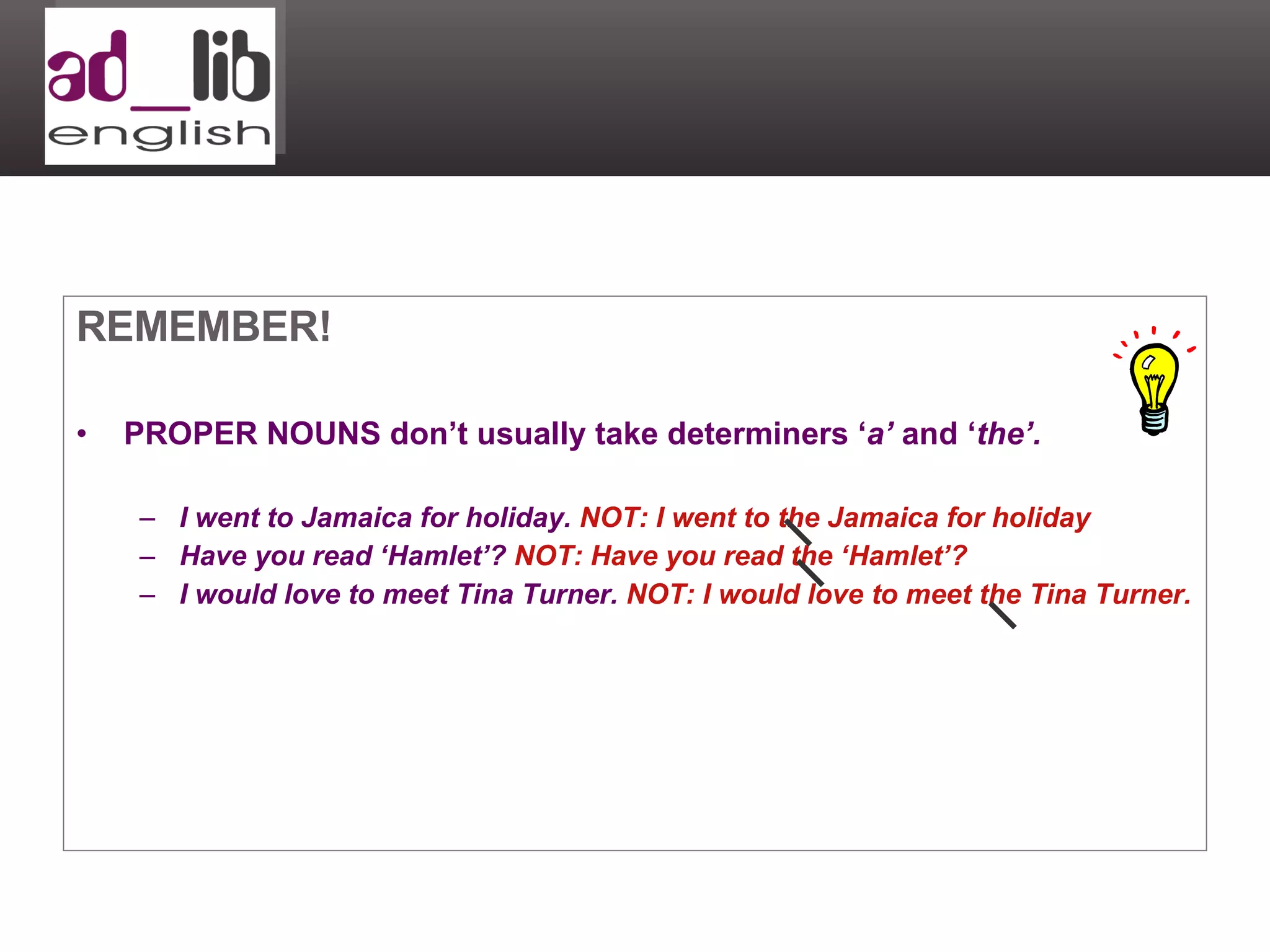
REMEMBER! PROPER NOUNS don’t usually take determiners ‘ a’  and ‘ the’. I went to Jamaica for holiday.  NOT: I went to the Jamaica for holiday Have you read ‘Hamlet’?  NOT: Have you read the ‘Hamlet’? I would love to meet Tina Turner.  NOT: I would love to meet the Tina Turner.
REMEMBER! PROPER NOUNS can in time turn into COMMON NOUNS .  It happens when a brand becomes so popular that people start to use its name with reference to items produced by other companies. hoover = any vacuum cleaner ‘ Where do you keep your hoover?’ biro = any pen ‘ Do you have a biro I could borrow?’
Concrete vs. Abstract Nouns
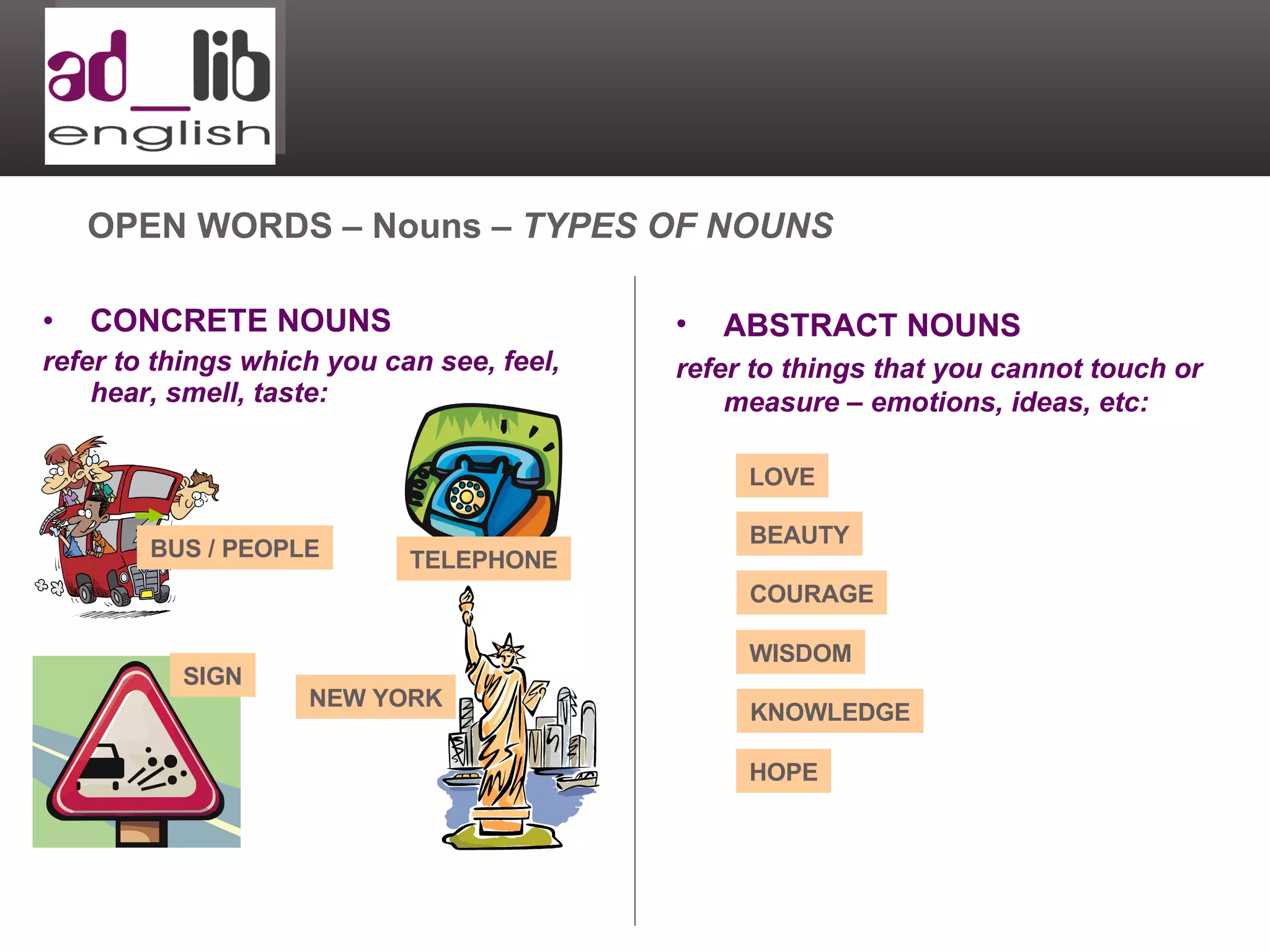
CONCRETE NOUNS refer to things which you can see, feel, hear, smell, taste: OPEN WORDS – Nouns –  TYPES OF NOUNS ABSTRACT NOUNS refer to things that you cannot touch or measure – emotions, ideas, etc: LOVE BEAUTY COURAGE WISDOM KNOWLEDGE HOPE TELEPHONE SIGN BUS / PEOPLE NEW YORK
REMEMBER! Some ABSTRACT NOUNS (but never CONCRETE NOUNS) can be used in sentences like: It is  a wonder  (that) he didn’t get killed. It is  a pity  (that) I hadn’t met him earlier. It would be  a crime  to leave her like that.
Introduction to English Nouns - part 1

Introduction to English Nouns - part 1

  • 1.
    Introduction to Nouns– part 1 TYPES OF WORDS Common vs. Proper Nouns Concrete vs. Abstract Nouns
  • 2.
    TYPES OF WORDSOPEN WORDS CLOSED WORDS You can always add new words to this class of words. A hundred years ago people didn’t know what a ‘computer’ was and 40 years ago not many people ‘downloaded’ anything. In time, new nouns, verbs, adjectives and adverbs will appear. You can’t add any new words to this group. For example, in English we have 8 personal pronouns (I, you, he, she, it, we, you, they) and it wouldn’t be possible to add another pronoun to this set.
  • 3.
    OPEN WORDS CLOSEDWORDS Nouns Adjectives Verbs Adverbs Pronouns Determiners Prepositions Conjunctions
  • 4.
    There are 80million nouns in the English language. They can be divided in several different ways: COMMON NOUNS vs. PROPER NOUNS CONCRETE NOUNS vs. ABSTRACT NOUNS POSSESSIVE NOUNS SINGULAR vs. PLURAL NOUNS COUNTABLE NOUNS vs. UNCOUNTABLE NOUNS *These are not all of the groups that nouns could be segregated into, but they are the most important ones for a student of English to understand. Nouns
  • 5.
    We use nounsto give names to things. We use nouns when we answer questions like ‘what?’ or ‘who?’ OPEN WORDS - Nouns CAT MARY FLOWER CANADA ROBIN HOOD ARMCHAIR
  • 6.
  • 7.
    COMMON NOUNS referto general categories of things: OPEN WORDS – Nouns – TYPES OF NOUNS PROPER NOUNS refer to specific people, places, objects and are usually written with a capital letter: Mary Canada Robin Hood Leonardo Di Caprio War and Peace New York CAT ARMCHAIR BAG OFFICE
  • 8.
    REMEMBER! PROPER NOUNSdon’t usually take determiners ‘ a’ and ‘ the’. I went to Jamaica for holiday. NOT: I went to the Jamaica for holiday Have you read ‘Hamlet’? NOT: Have you read the ‘Hamlet’? I would love to meet Tina Turner. NOT: I would love to meet the Tina Turner.
  • 9.
    REMEMBER! PROPER NOUNScan in time turn into COMMON NOUNS . It happens when a brand becomes so popular that people start to use its name with reference to items produced by other companies. hoover = any vacuum cleaner ‘ Where do you keep your hoover?’ biro = any pen ‘ Do you have a biro I could borrow?’
  • 10.
  • 11.
    CONCRETE NOUNS referto things which you can see, feel, hear, smell, taste: OPEN WORDS – Nouns – TYPES OF NOUNS ABSTRACT NOUNS refer to things that you cannot touch or measure – emotions, ideas, etc: LOVE BEAUTY COURAGE WISDOM KNOWLEDGE HOPE TELEPHONE SIGN BUS / PEOPLE NEW YORK
  • 12.
    REMEMBER! Some ABSTRACTNOUNS (but never CONCRETE NOUNS) can be used in sentences like: It is a wonder (that) he didn’t get killed. It is a pity (that) I hadn’t met him earlier. It would be a crime to leave her like that.