THE EVOLUTION
OF MEDIA: FROM
TRADITIONAL TO
NEW MEDIA
THE IMPORTANCE OF MEDIA
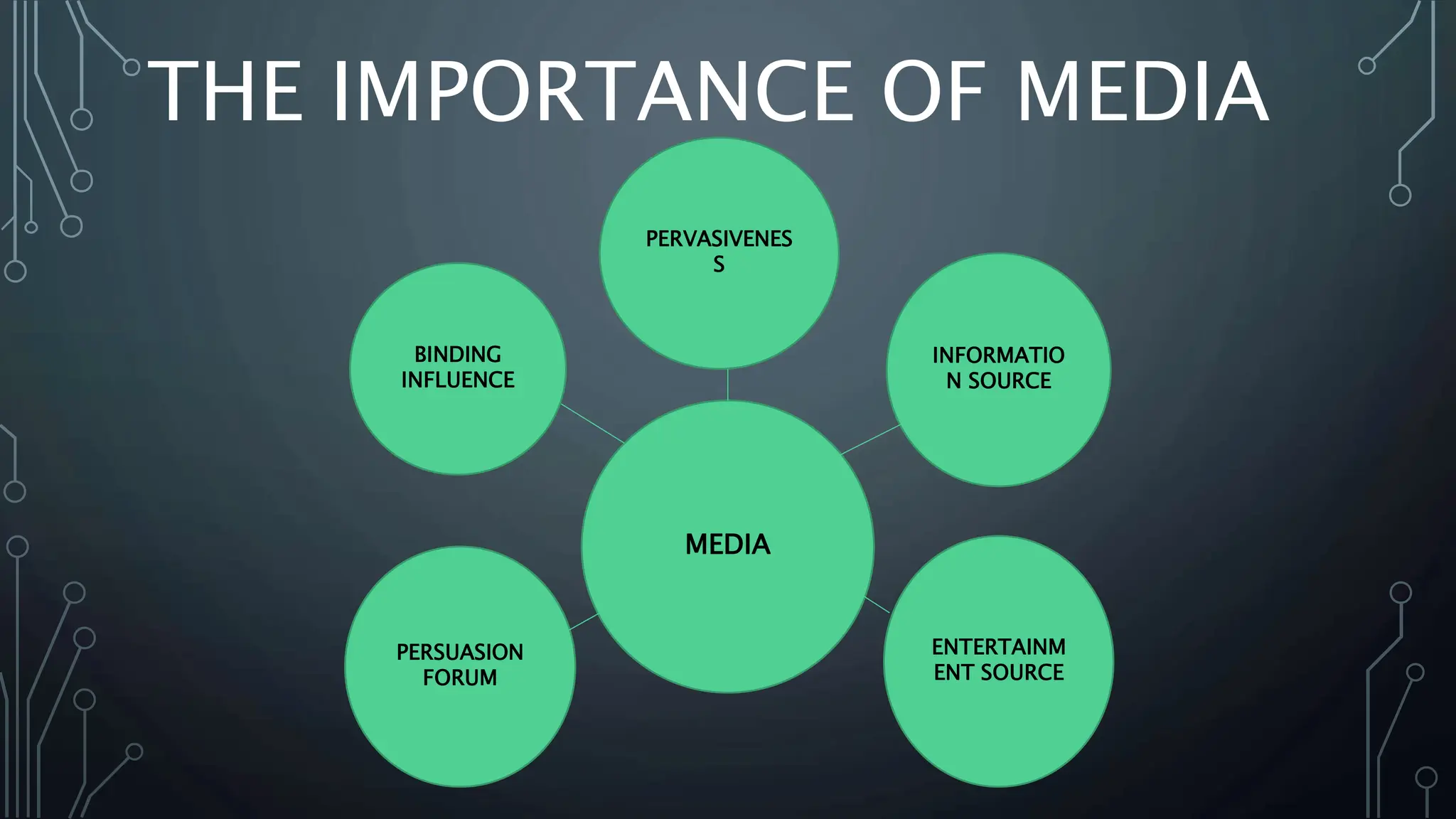
MEDIA
BINDING
INFLUENCE
PERVASIVENES
S
INFORMATIO
N SOURCE
ENTERTAINM
ENT SOURCE
PERSUASION
FORUM
THE CONCEPTS OF MASS MEDIA AND
MEDIA DEMASSIFICATION
• MASS MEDIA – REFERS TO THE CHANNELS OF COMMUNICATION
THAT INVOLVE TRANSMITTING INFORMATION IN SOME WAY,
SHAPE OR FORM TO LARGE NUMBERS OF PEOPLE. DUTTON ET
AL (1998) SUGGEST THAT TRADITIONALLY THE MASS MEDIA
HAS BEEN DIFFERENTIATED FROM OTHER TYPES OF
COMMUNICATION IN TERMS OF FOUR ESSENTIAL
CHARACTERISTICS:
DISTANCE: Unlike face-to-face communication, there is
considerable amount of distance between the sender and
receiver of the information in mass media. This makes mass
media impersonal, lacking immediacy, and one way.
TECHNOLOGY: TV and radio networks won’t be able to
transmit information without satellites. Connecting to the
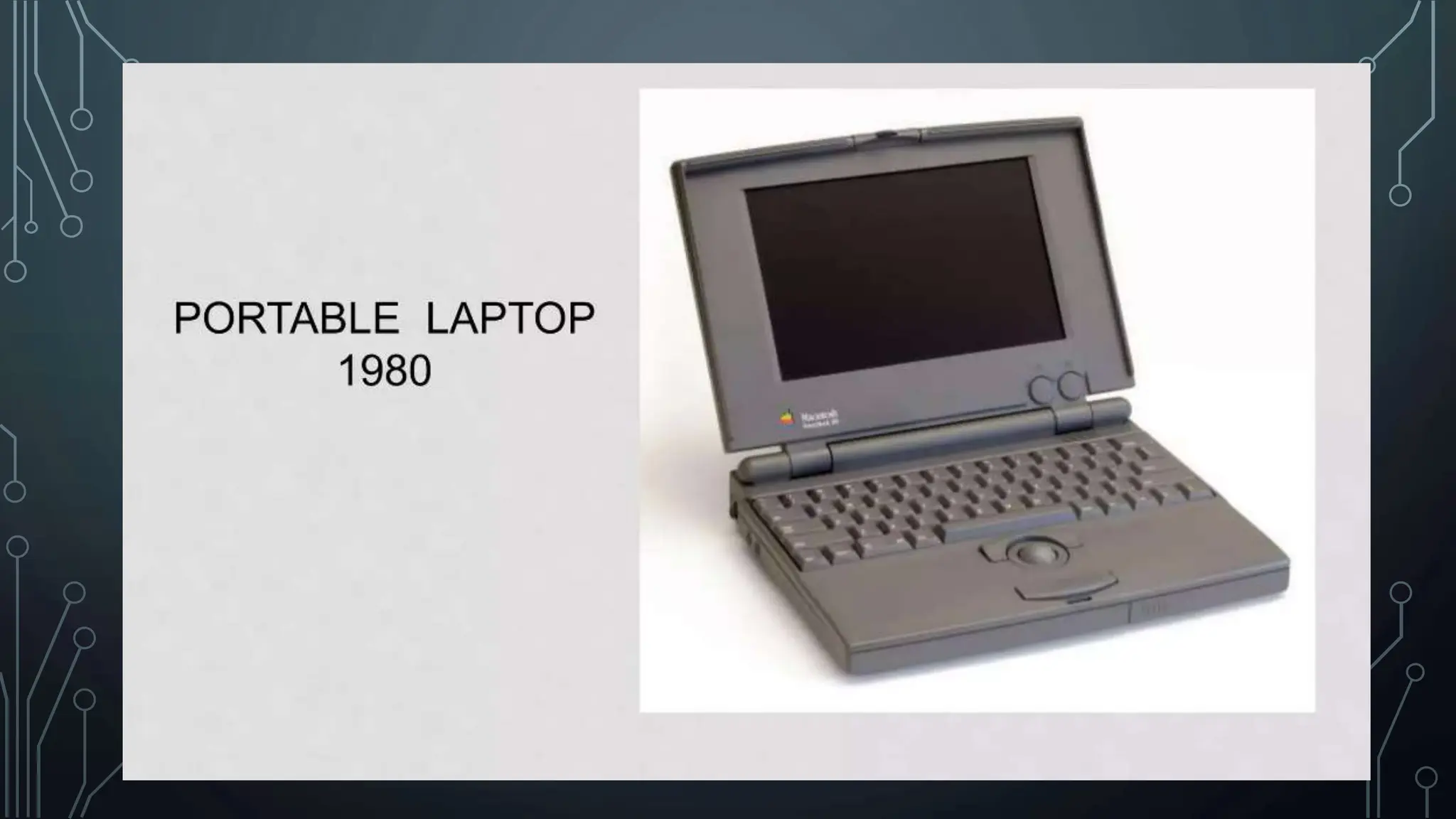
Internet requires electronic equipment like laptops and
smartphones. Mass media communication is only possible
through technology.
SCALE: Mass media communication deals with broadcasting
information to the masses simultaneously.
COMMODITY: Due to its massive scale and the technological
equipment it requires, mass media is an expensive type of
communication.
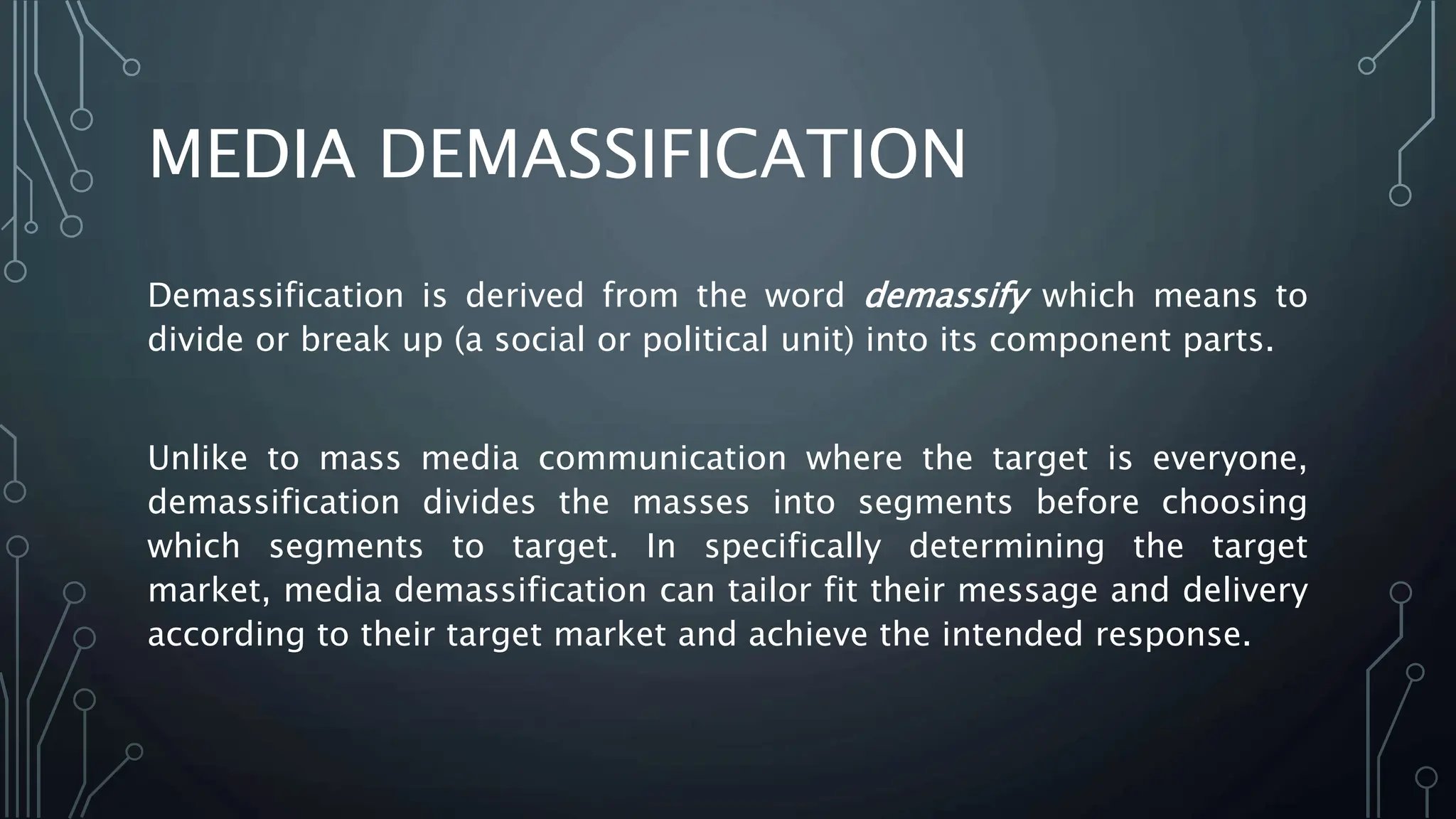
MEDIA DEMASSIFICATION
Demassification is derived from the word demassify which means to
divide or break up (a social or political unit) into its component parts.
Unlike to mass media communication where the target is everyone,
demassification divides the masses into segments before choosing
which segments to target. In specifically determining the target
market, media demassification can tailor fit their message and delivery
according to their target market and achieve the intended response.
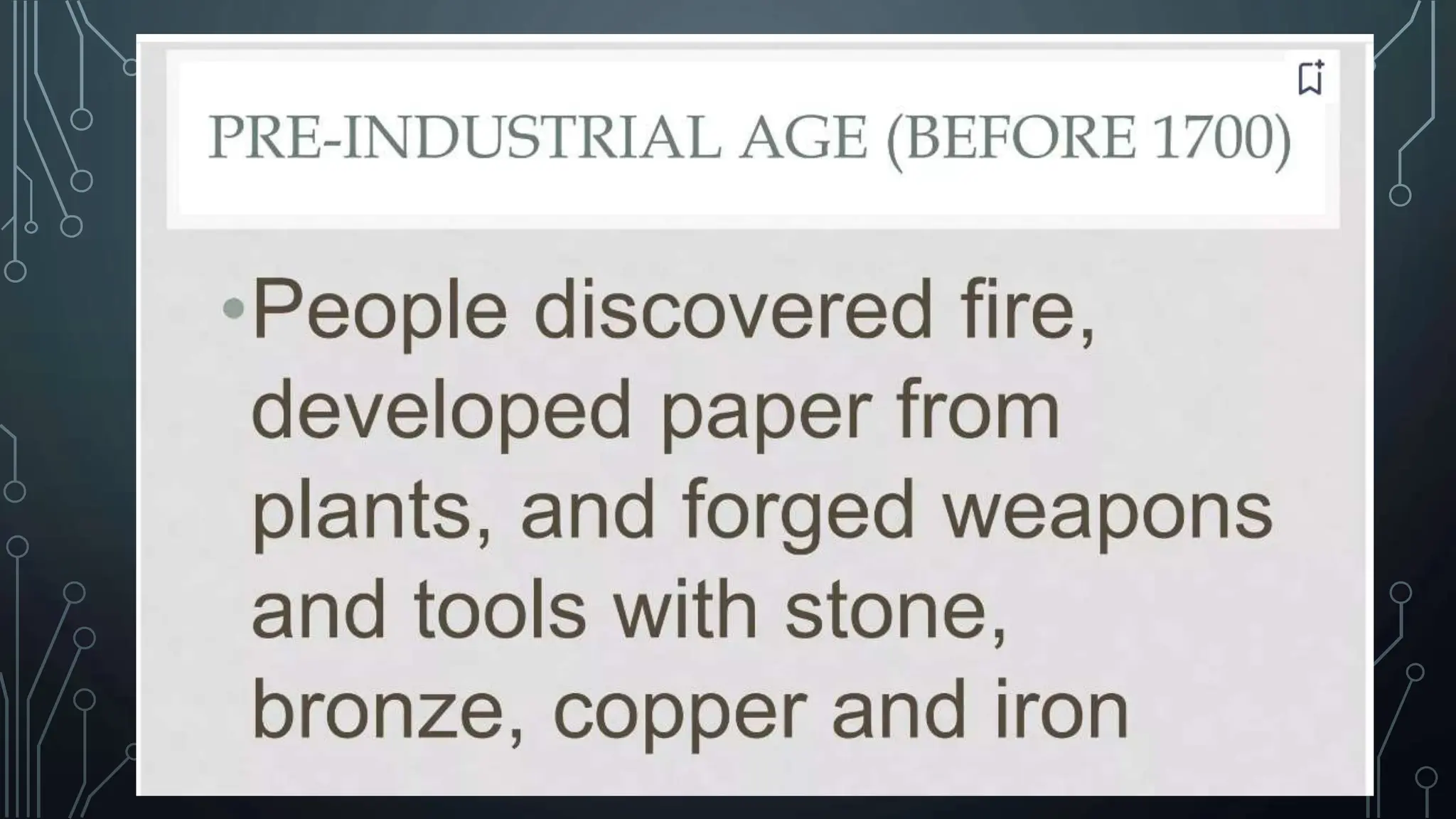
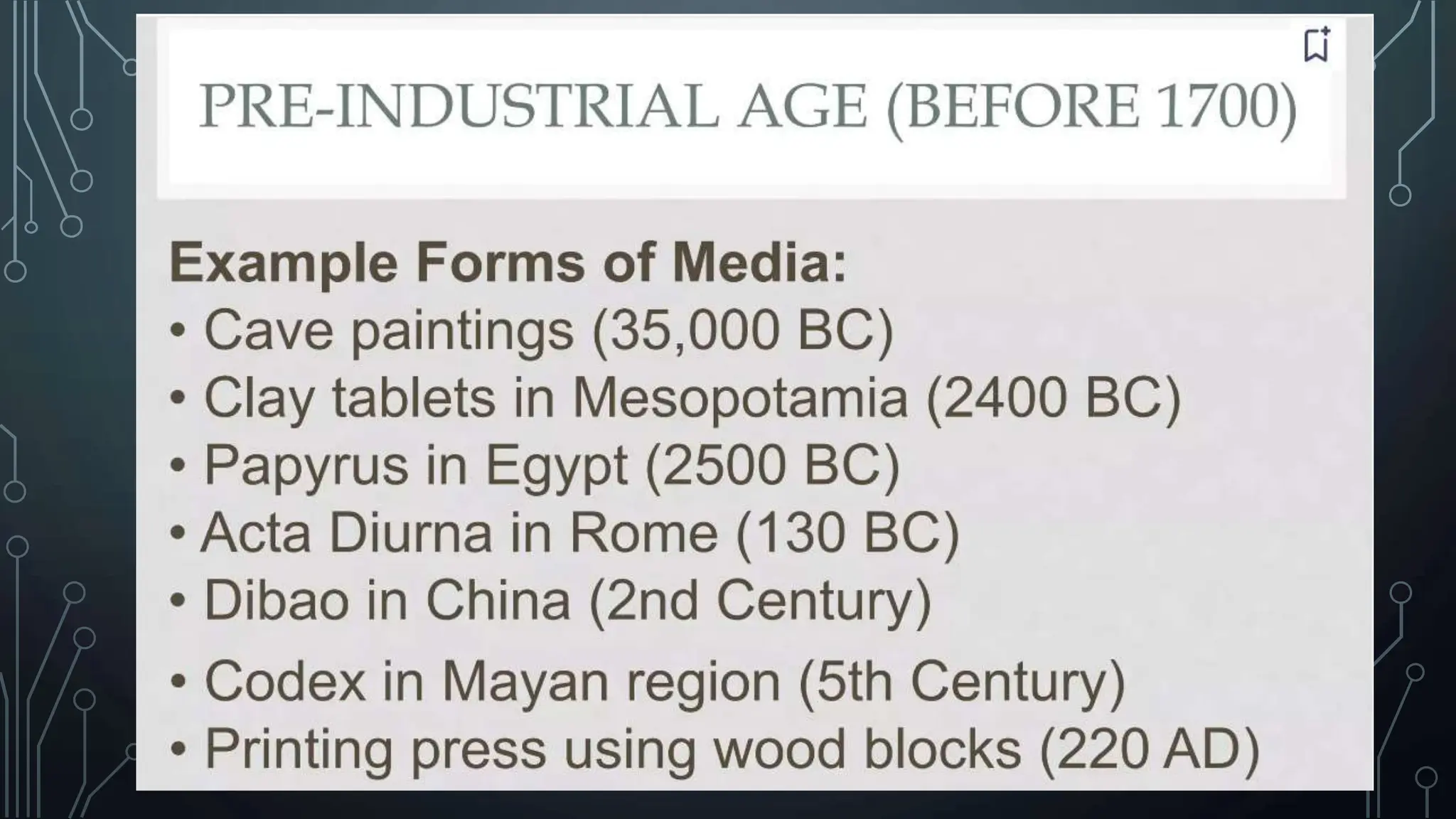
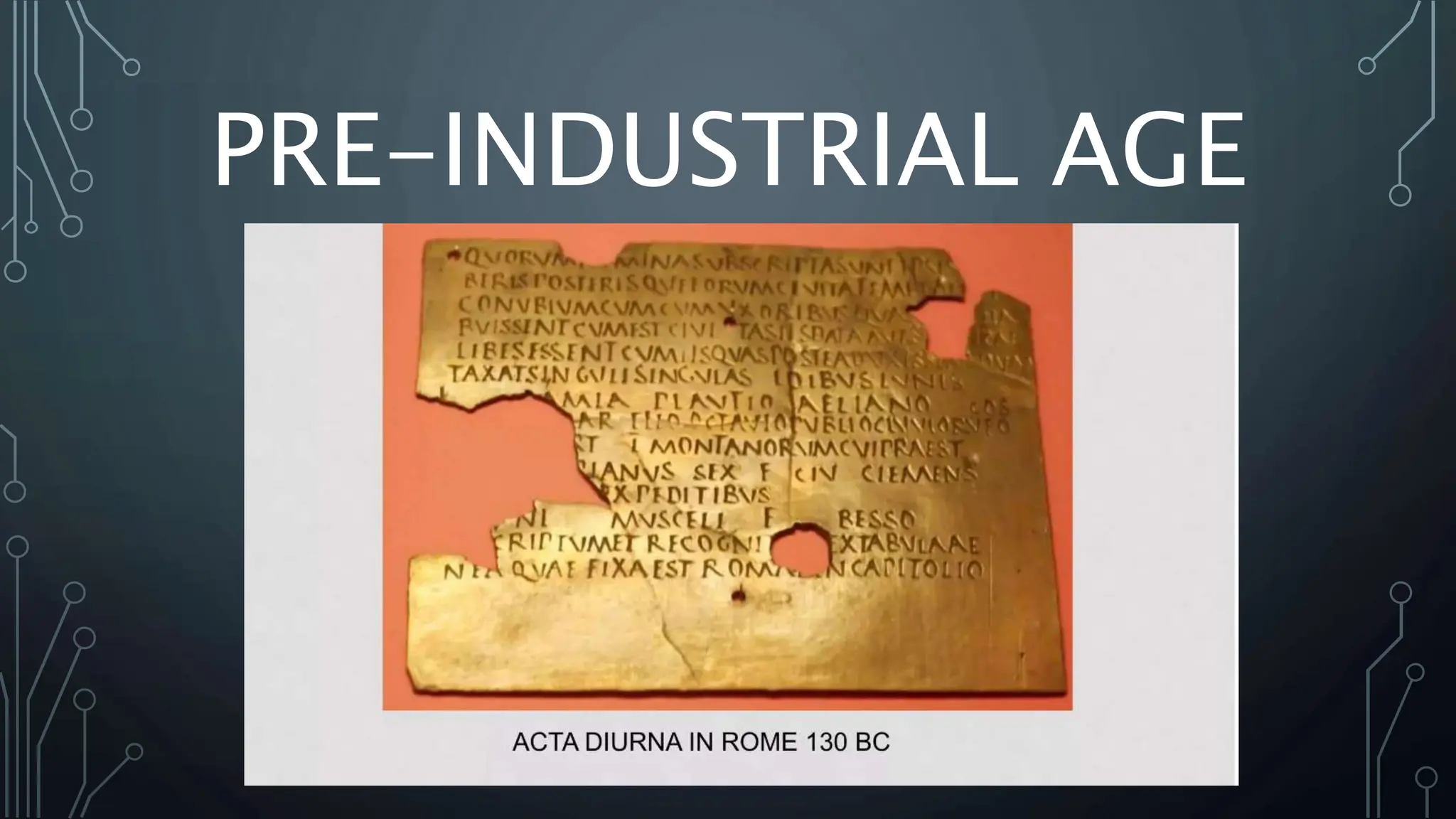
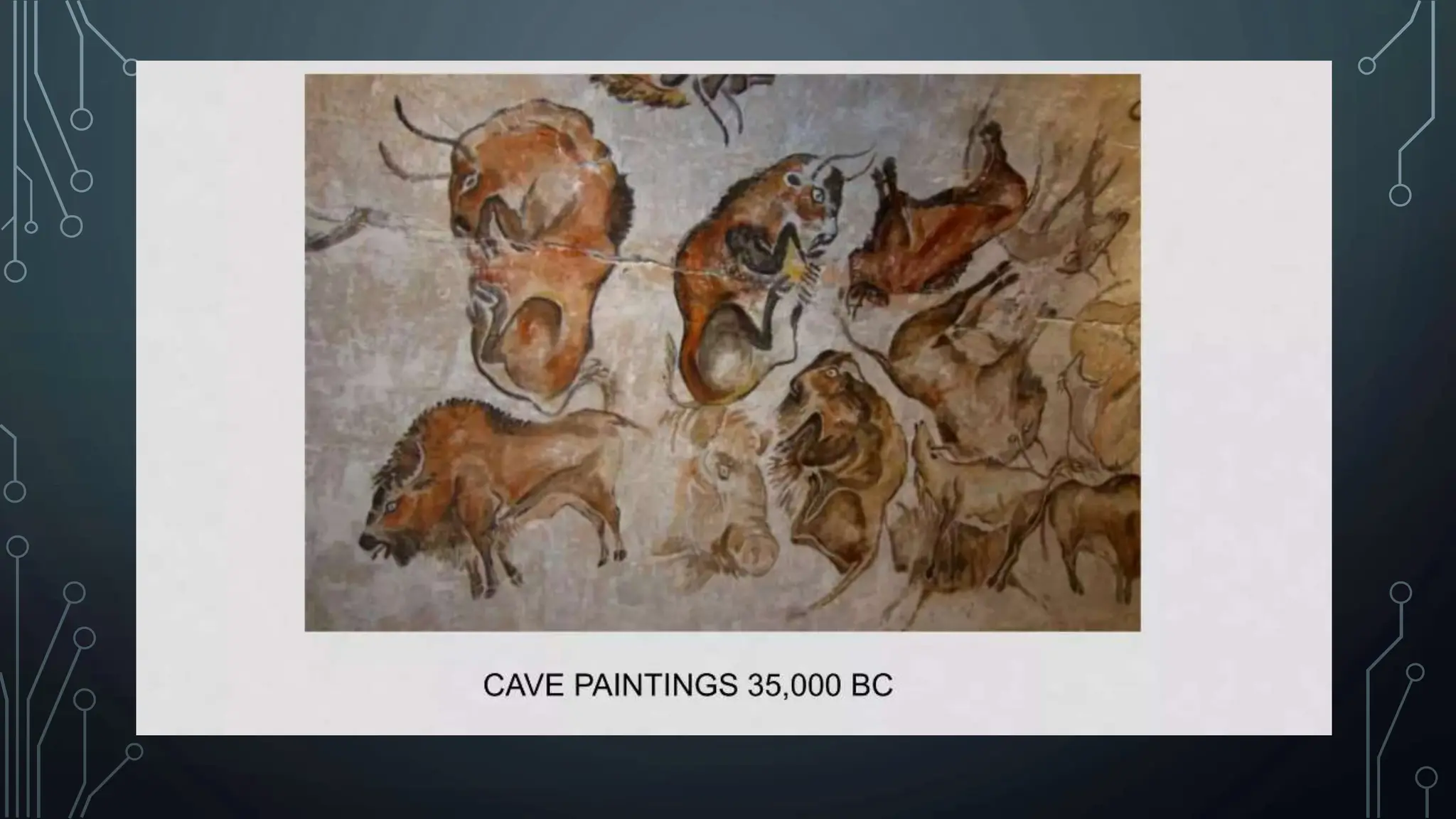
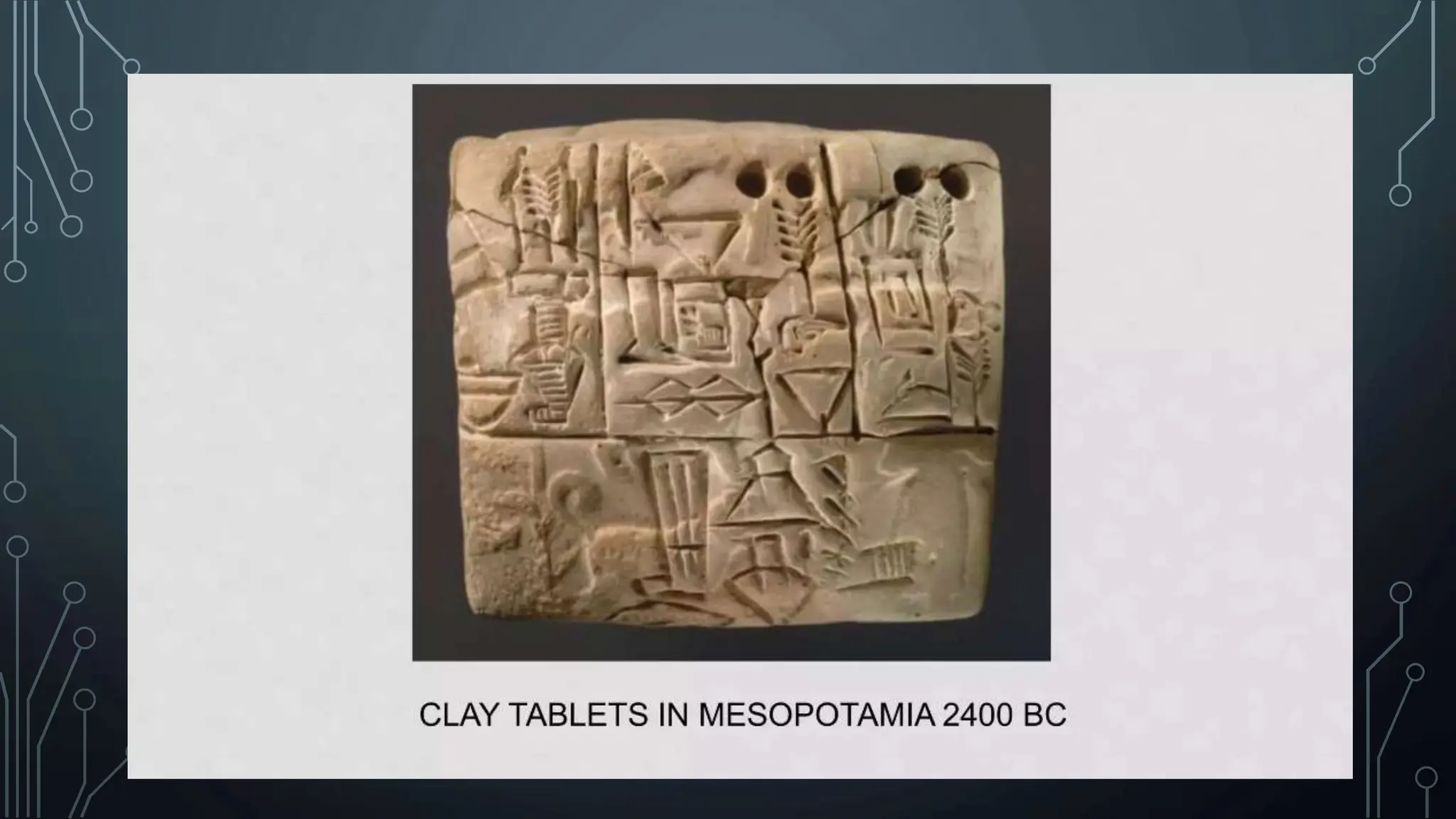
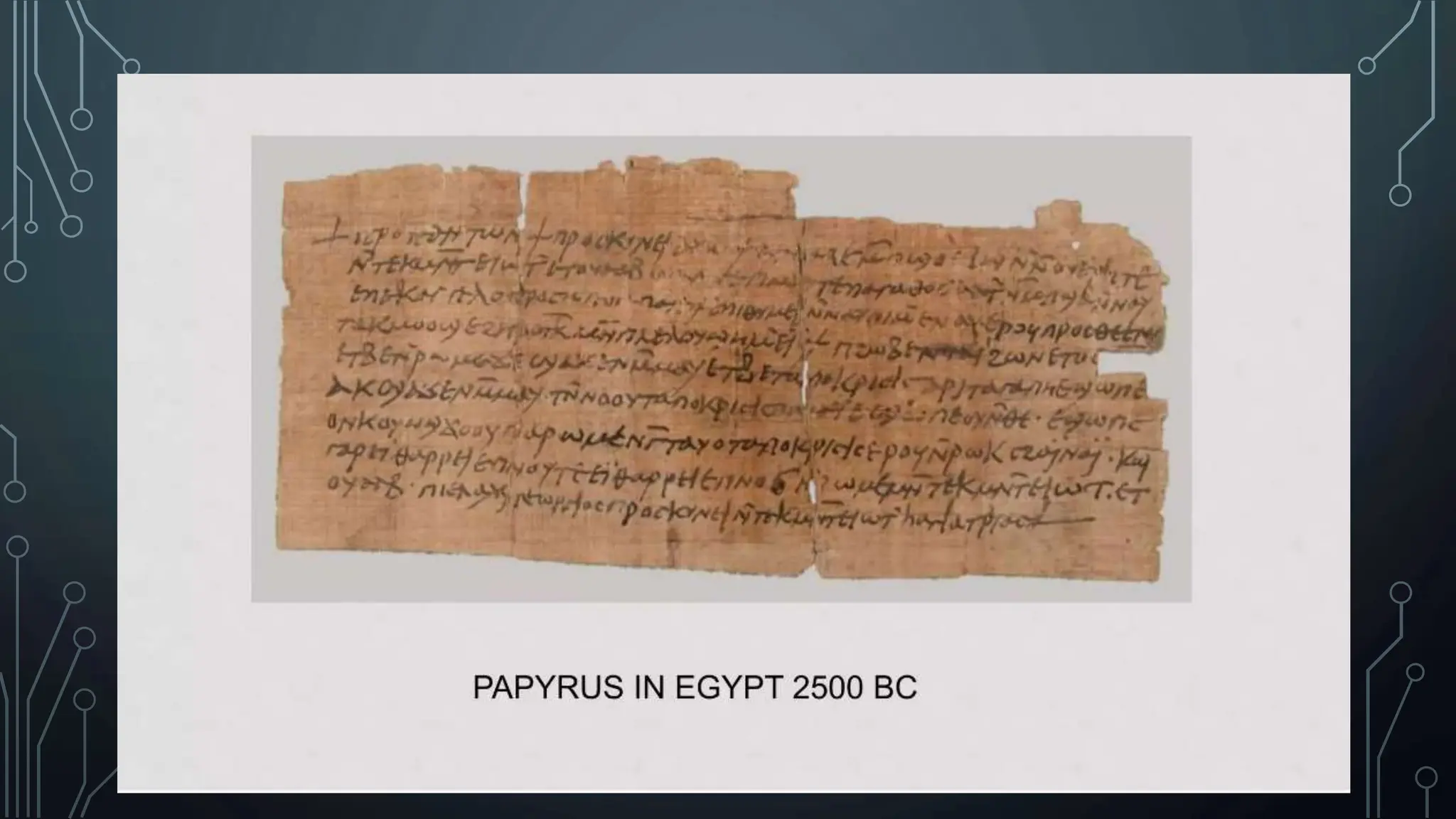
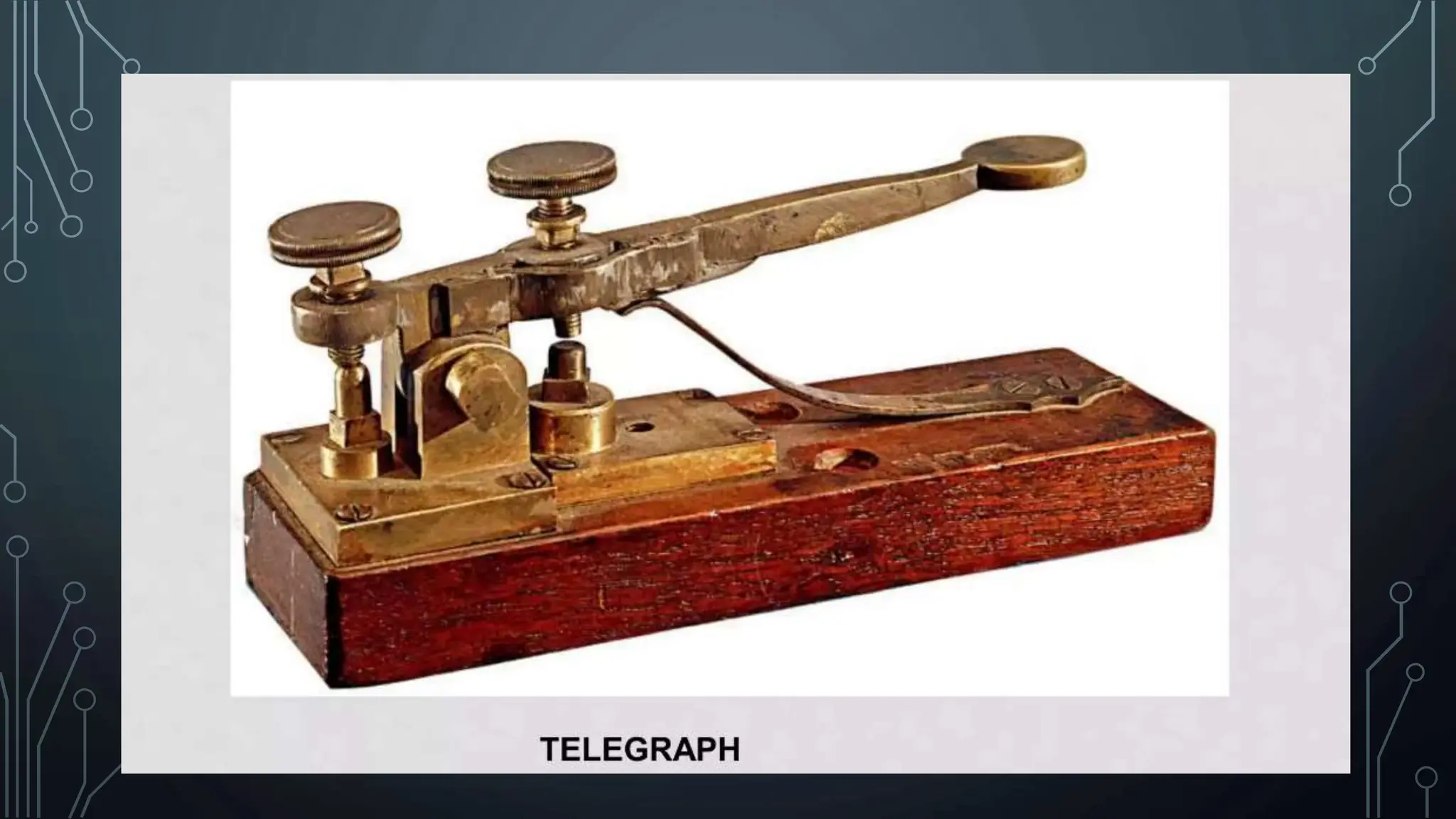
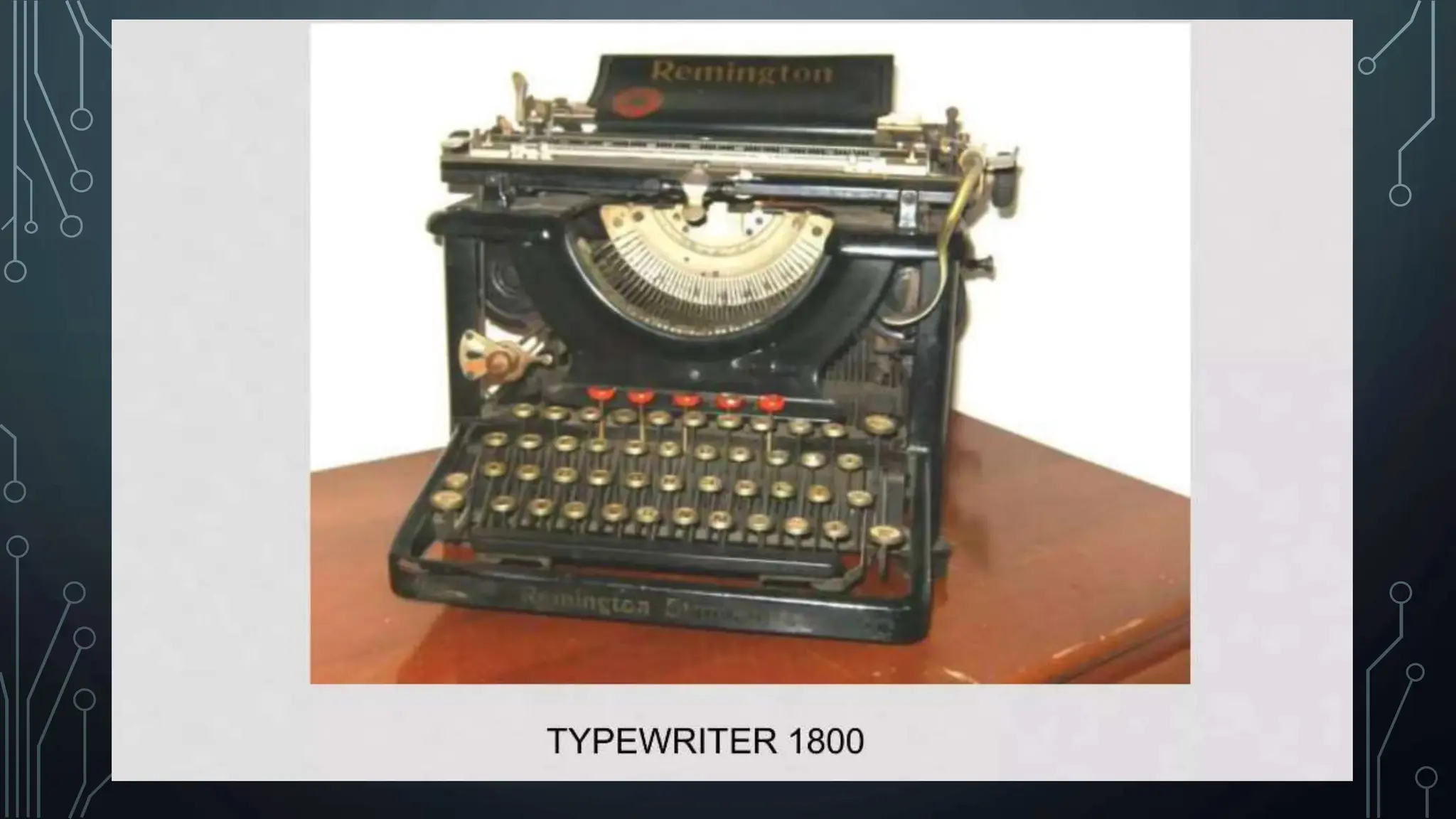
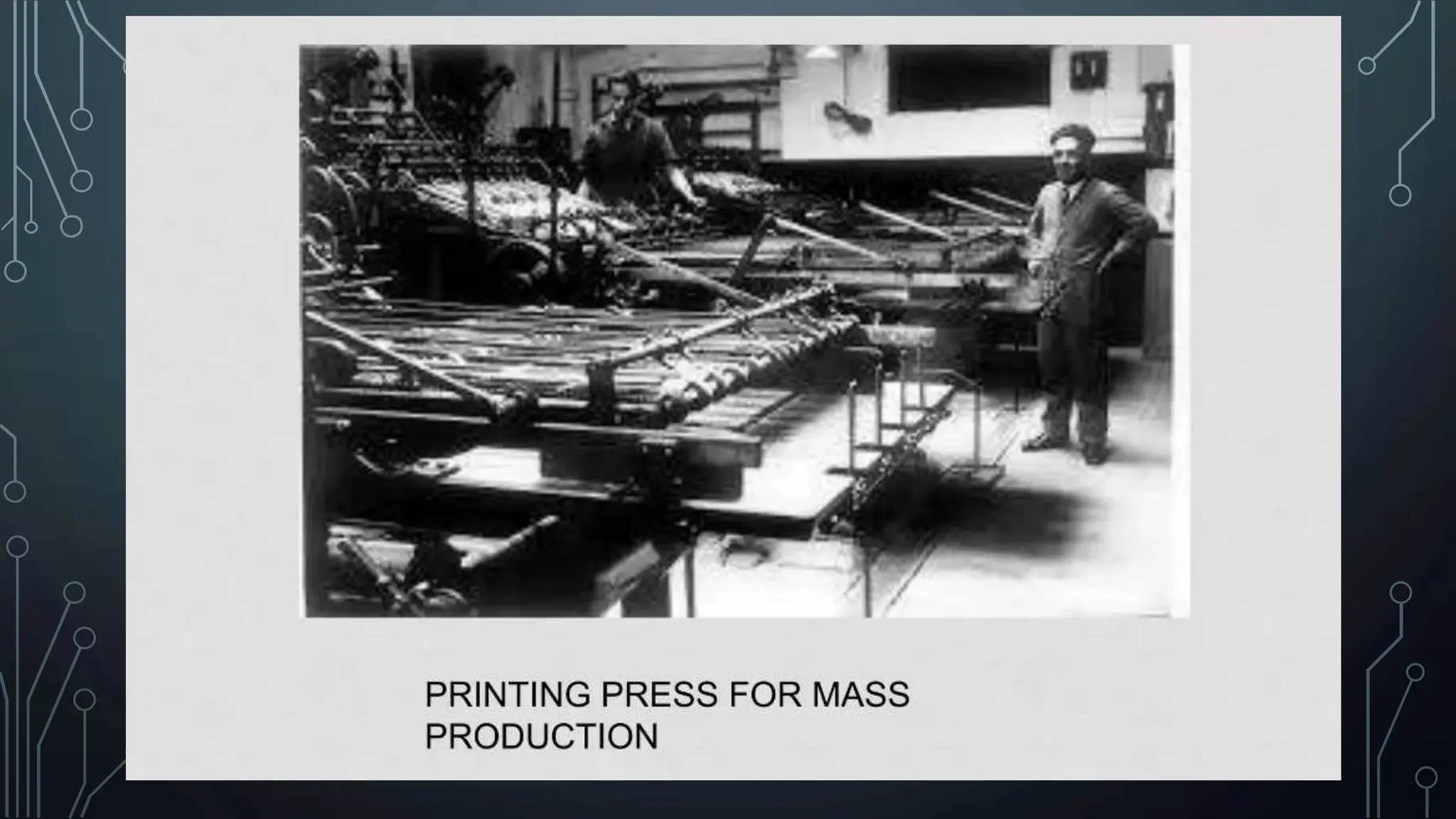
PRE-INDUSTRIAL AGE
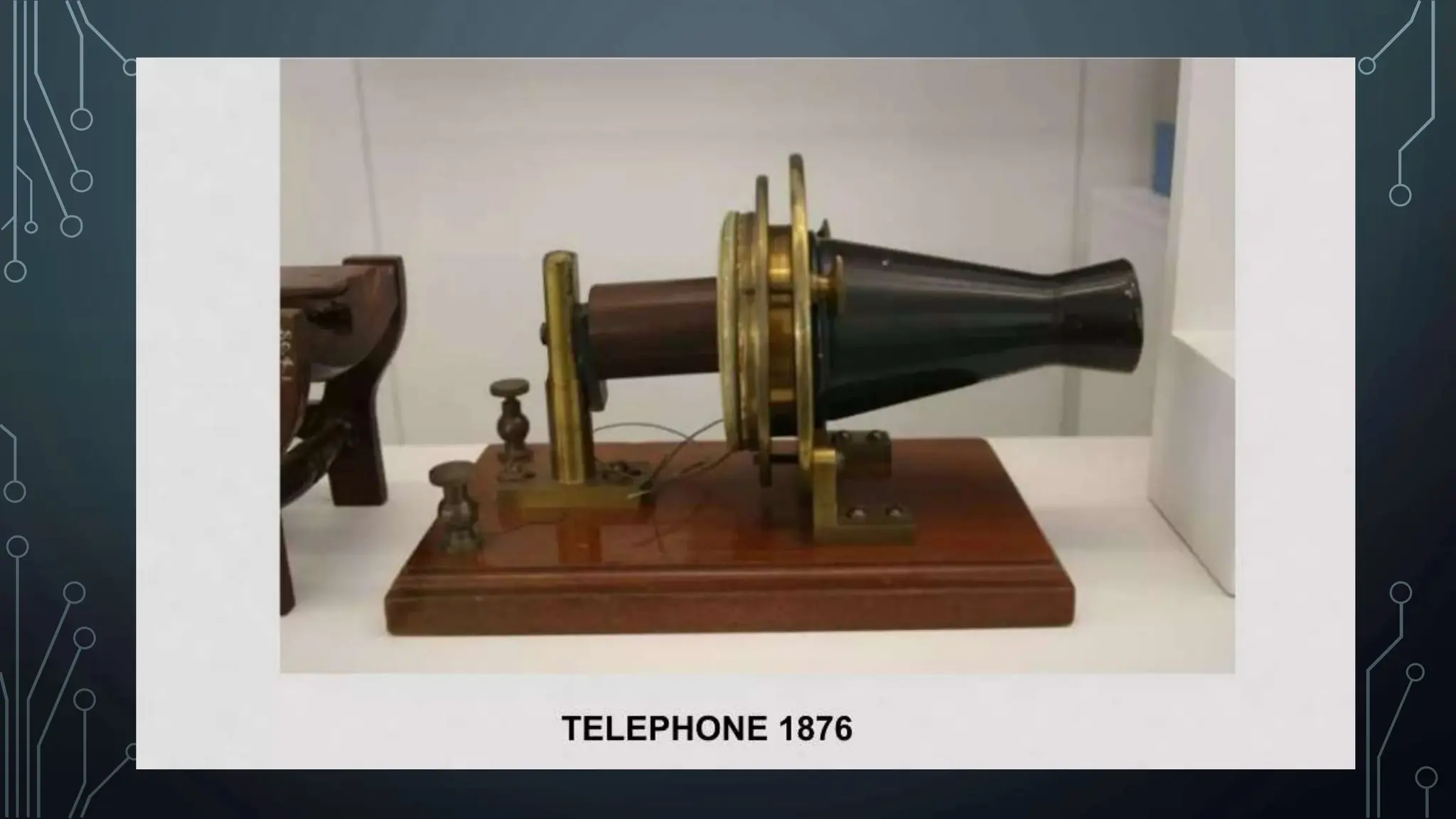
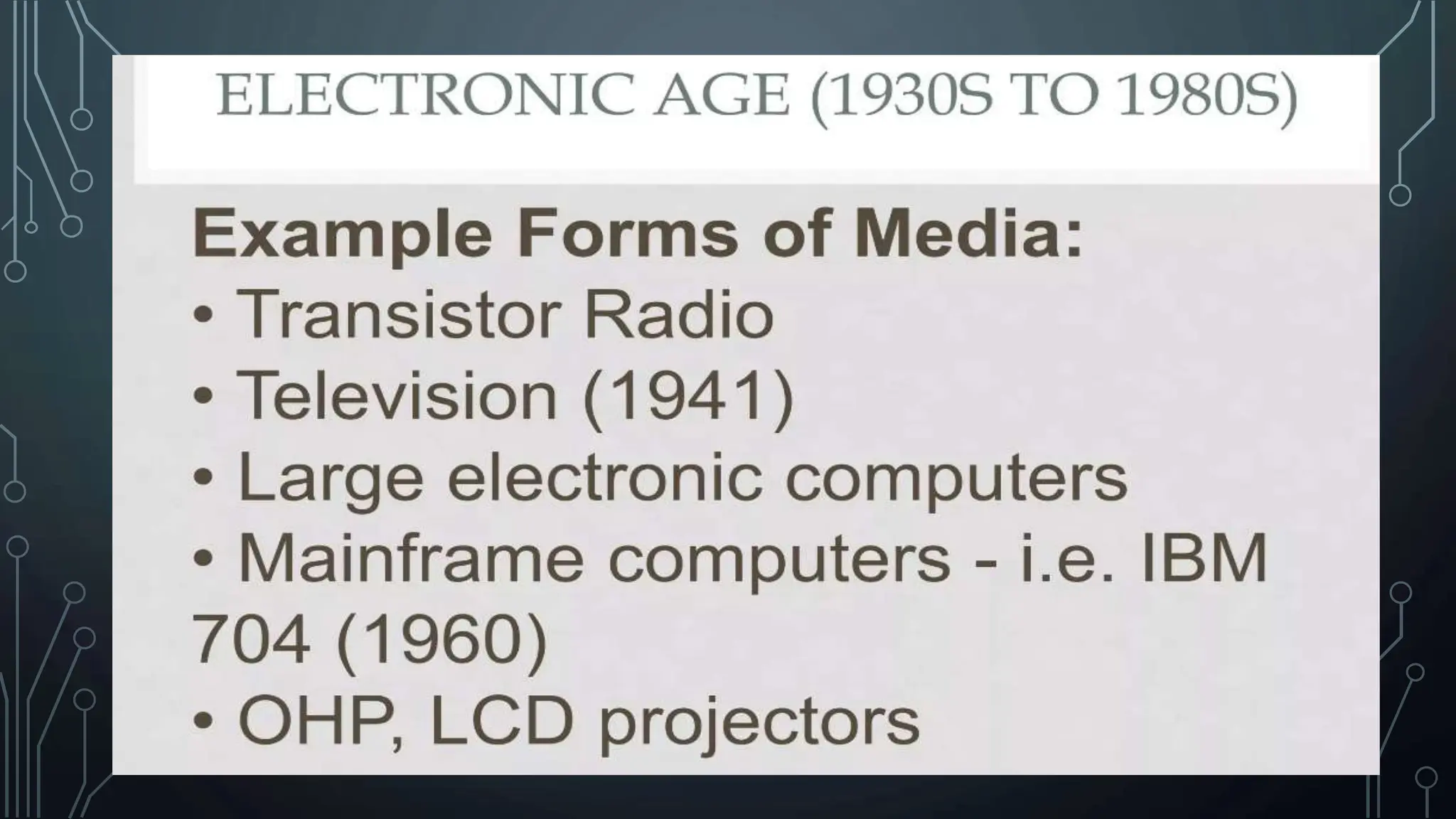
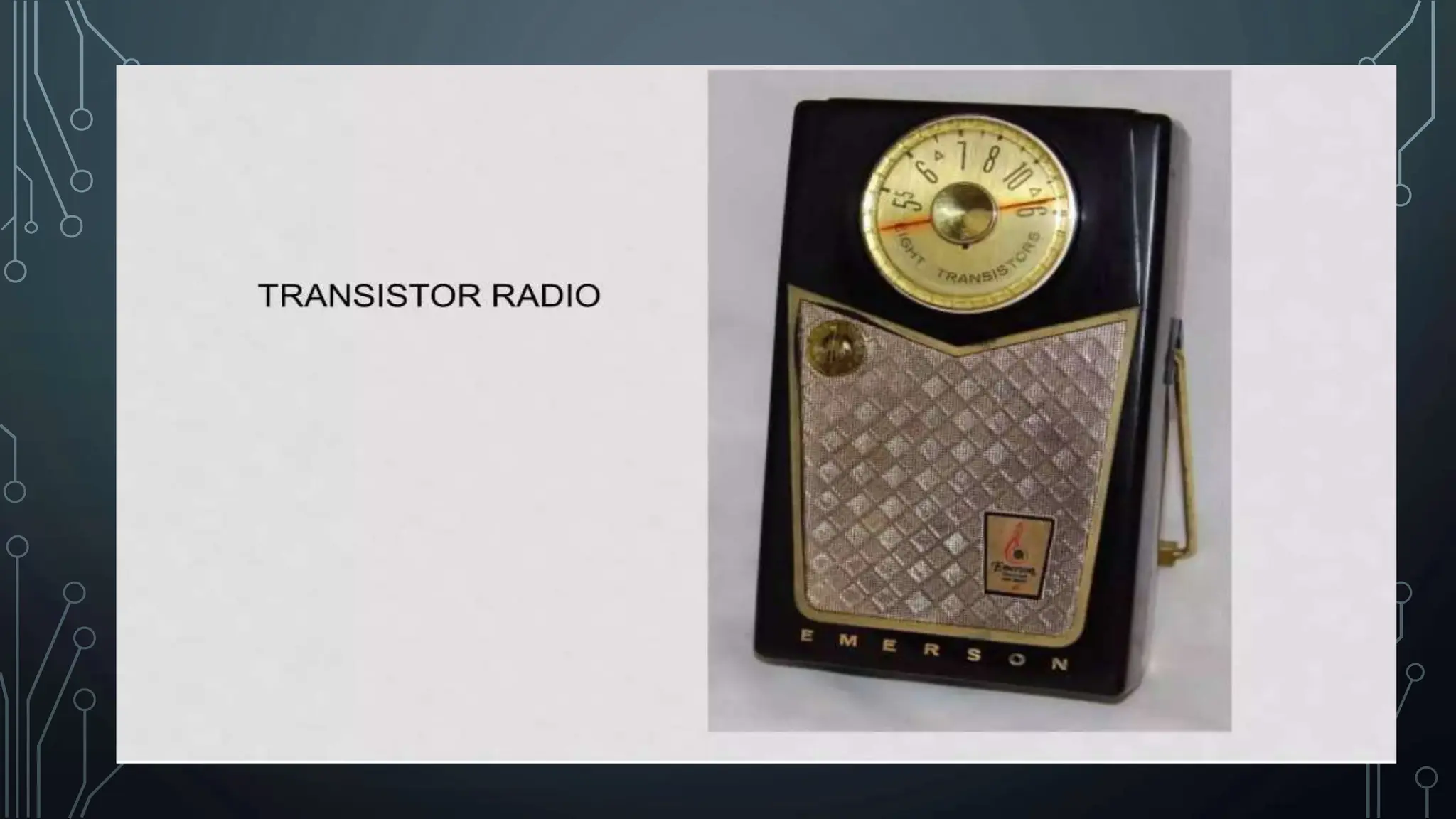
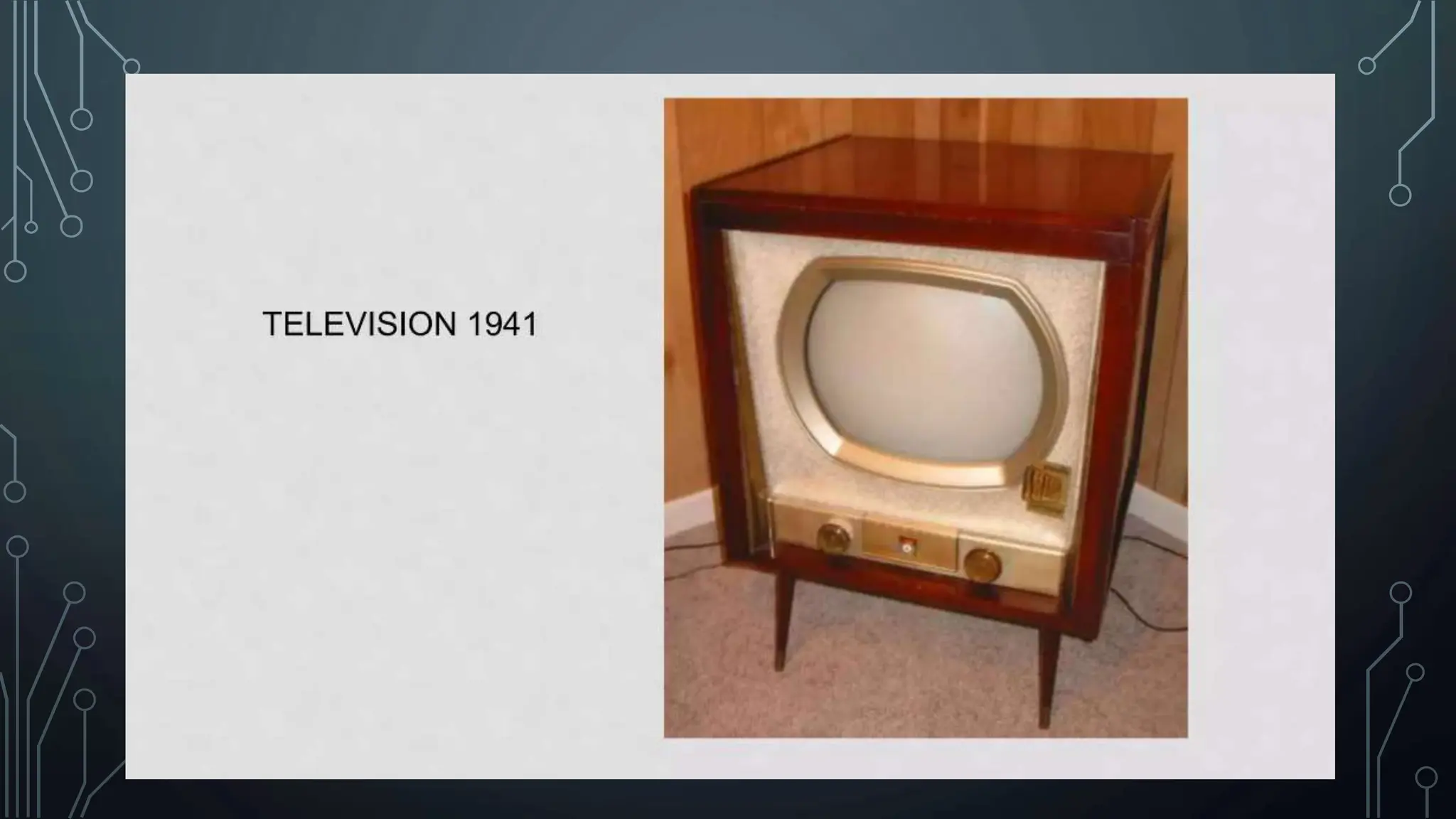
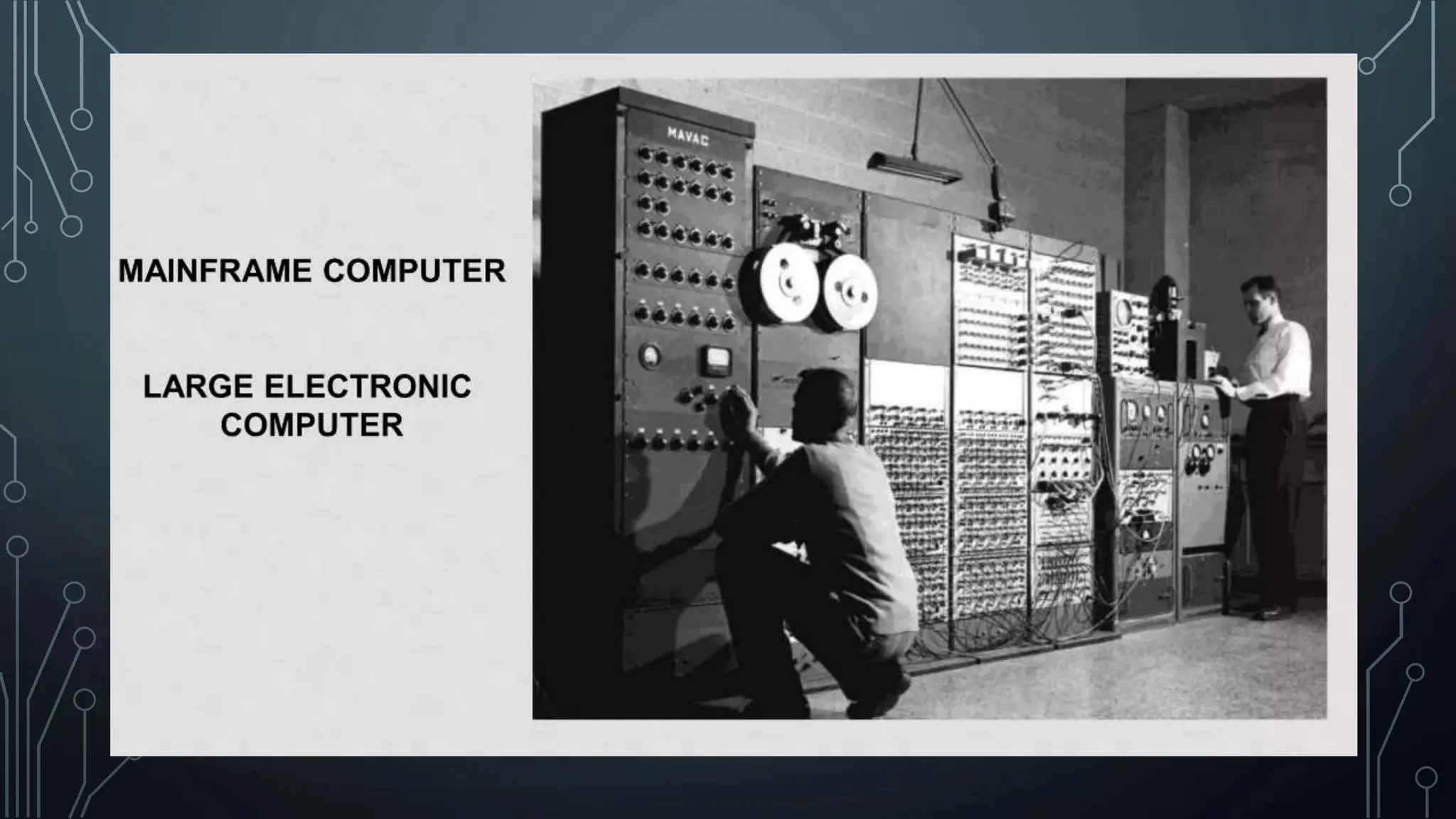
ELECTRONIC AGE (1930S TO 1980S)
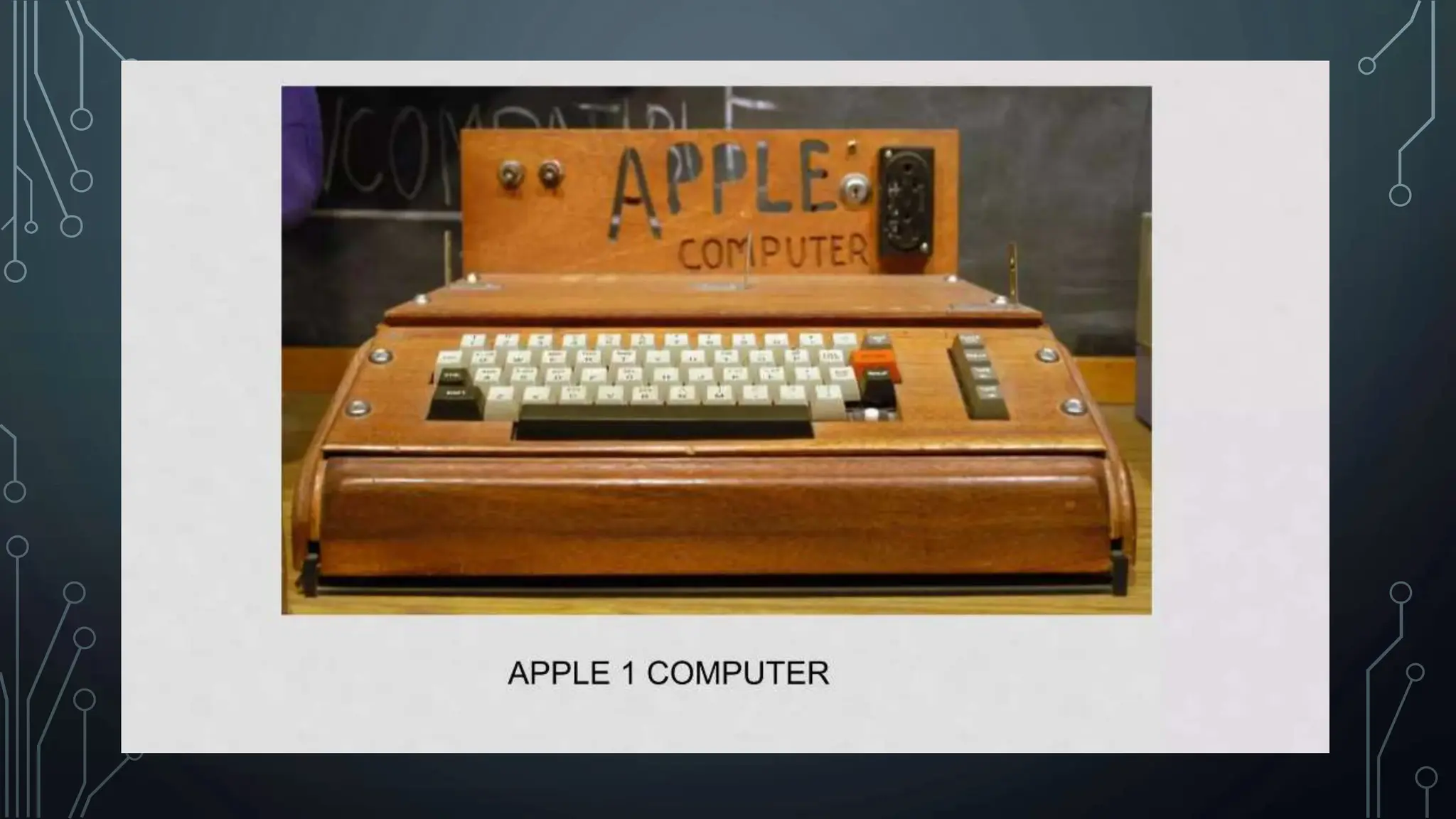
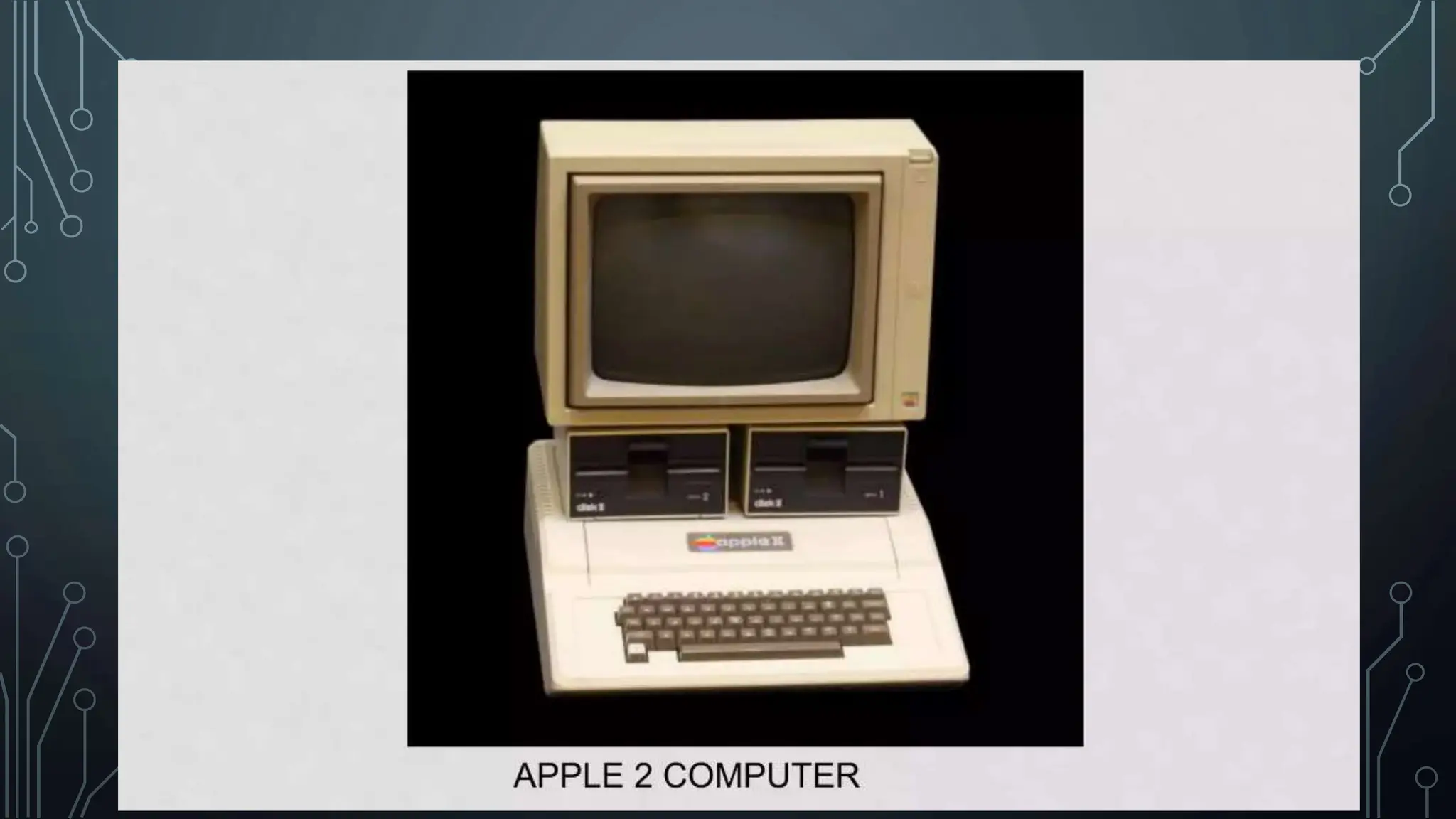
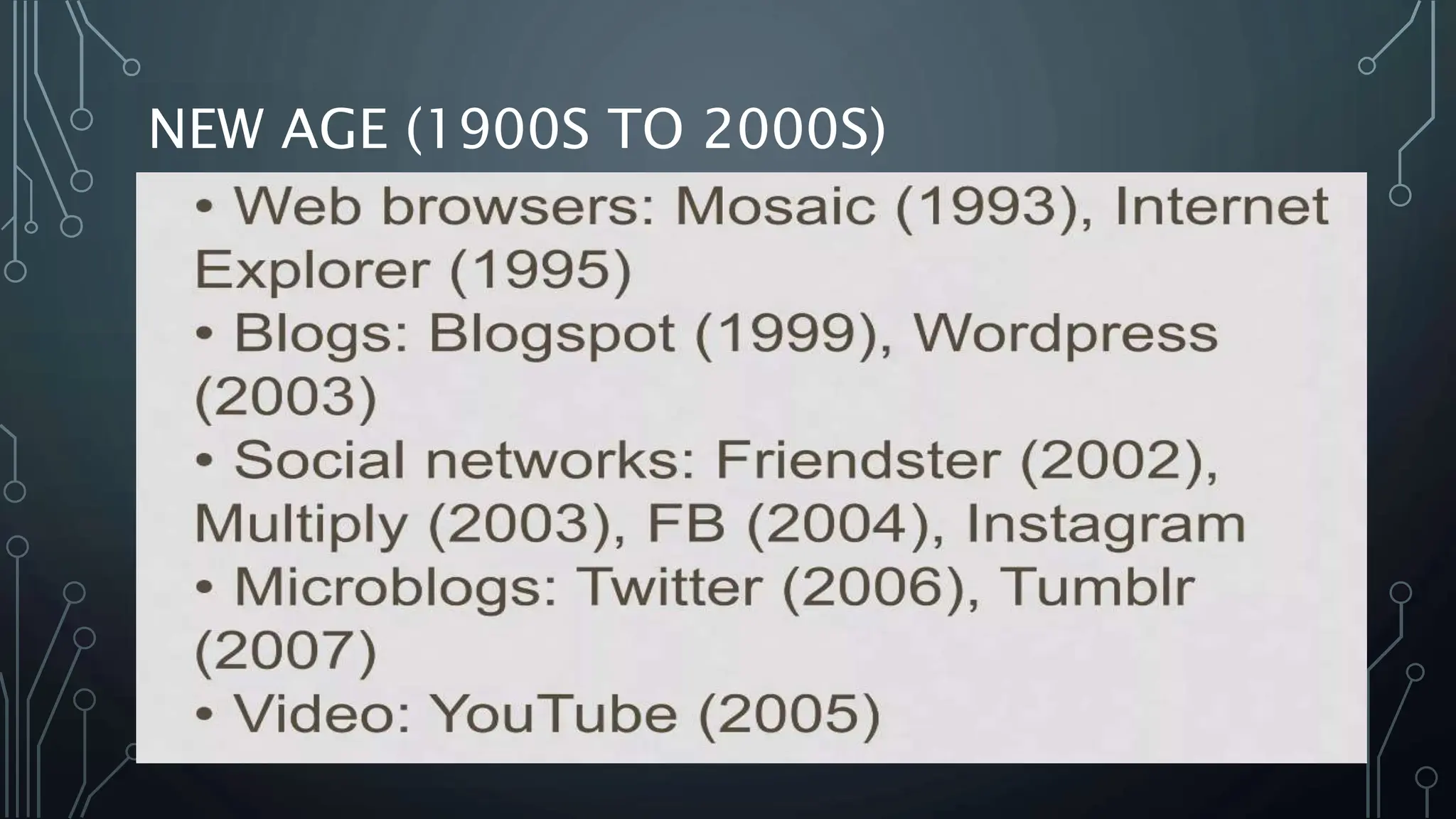
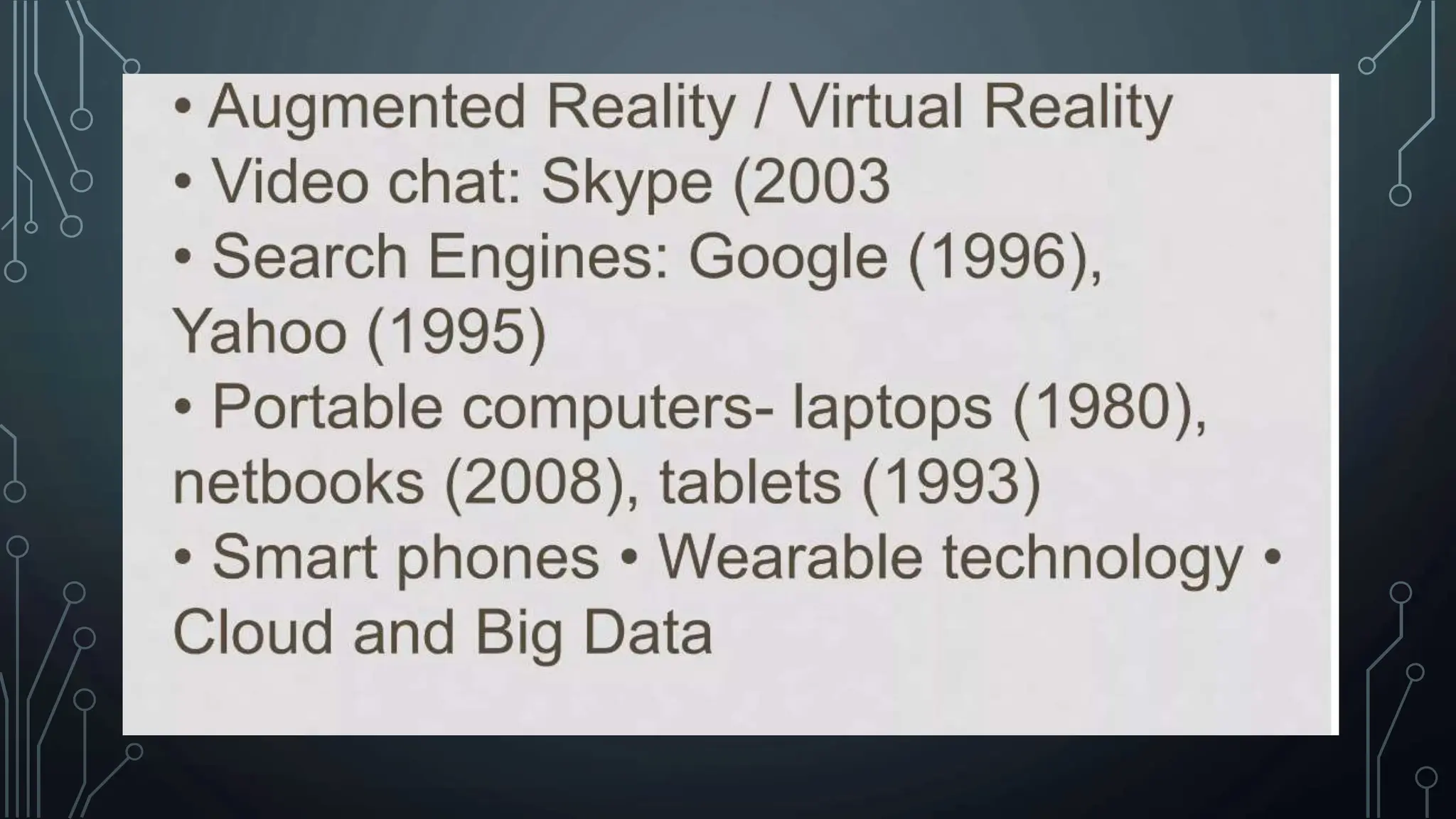
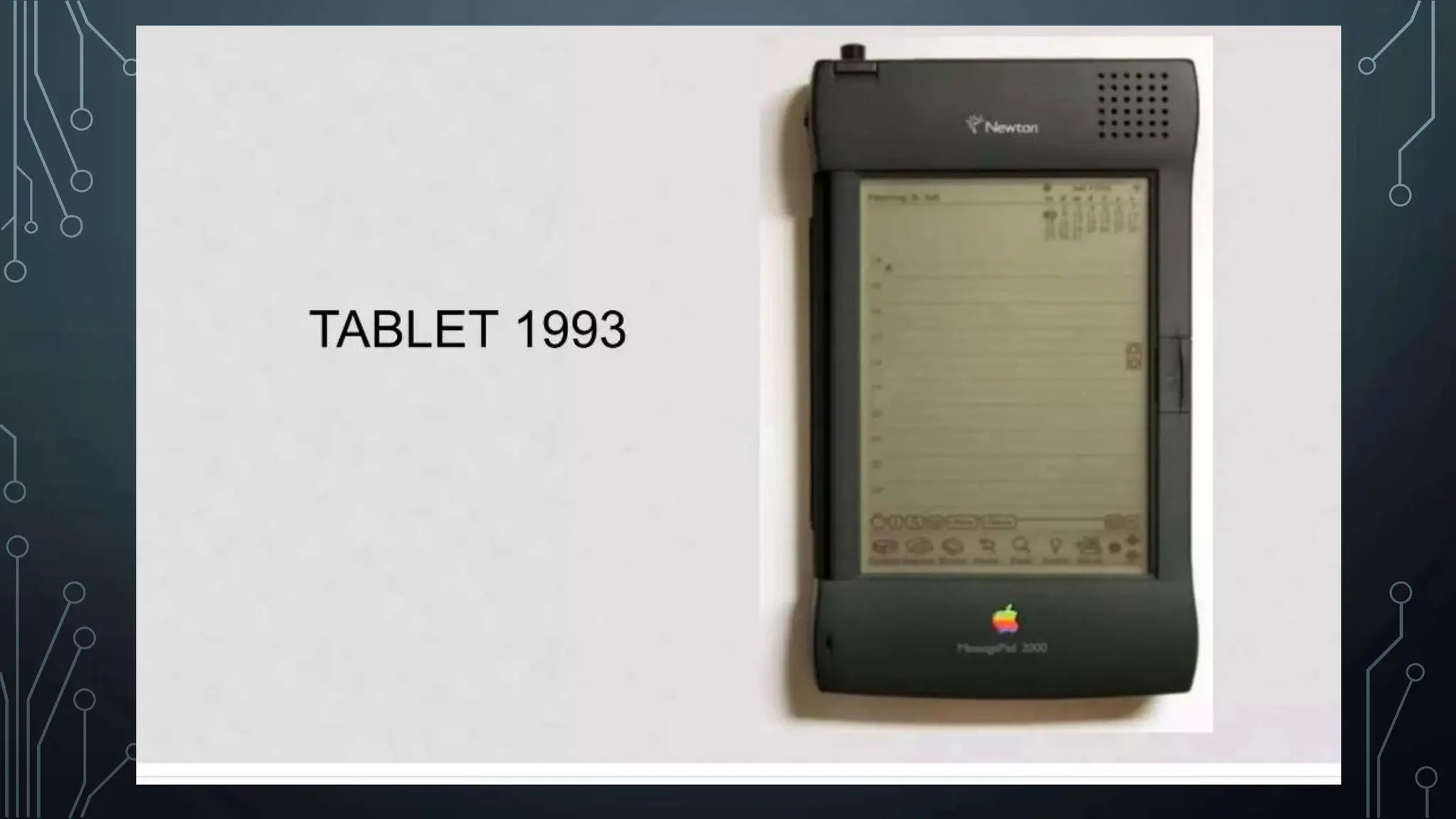
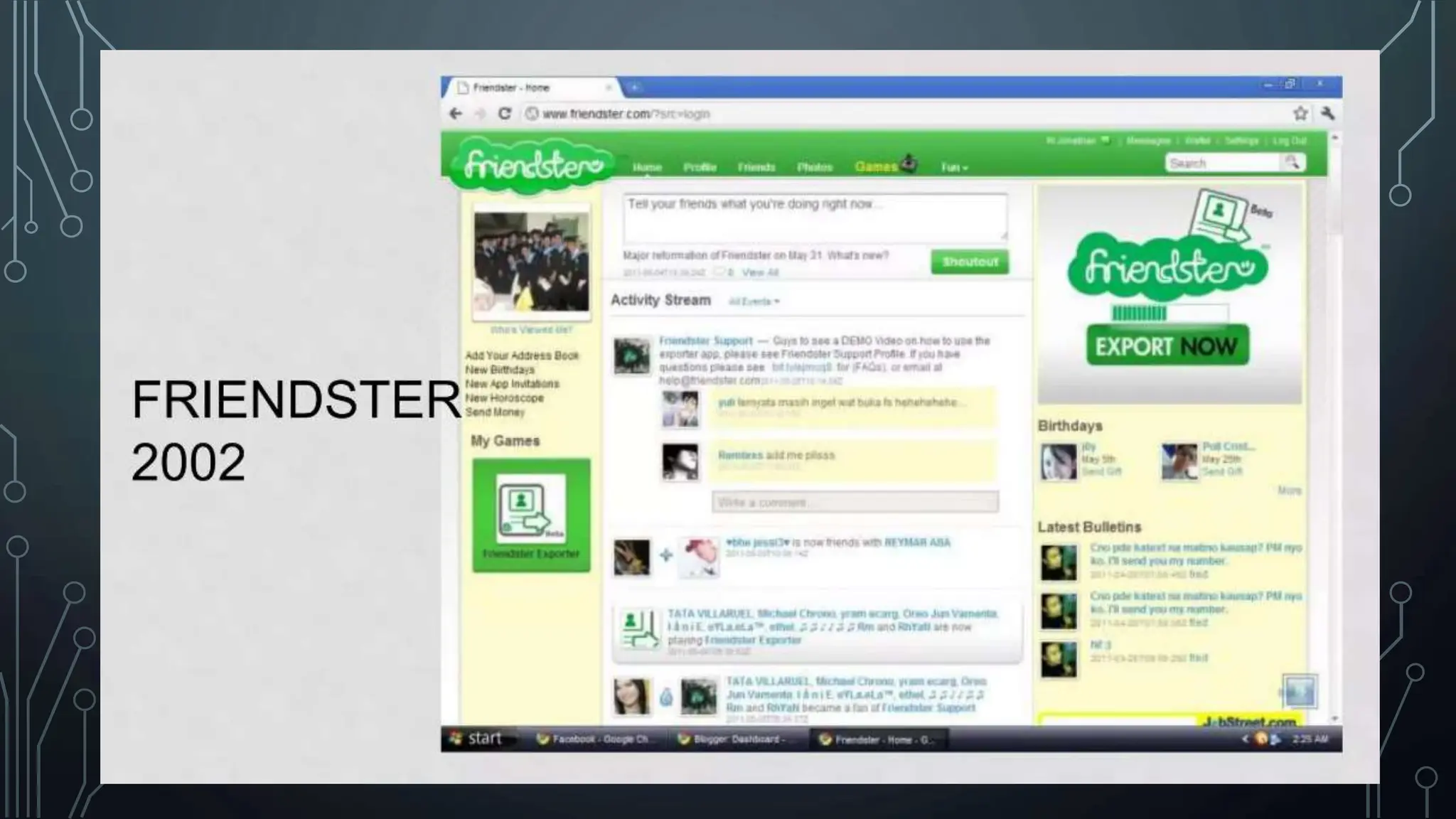
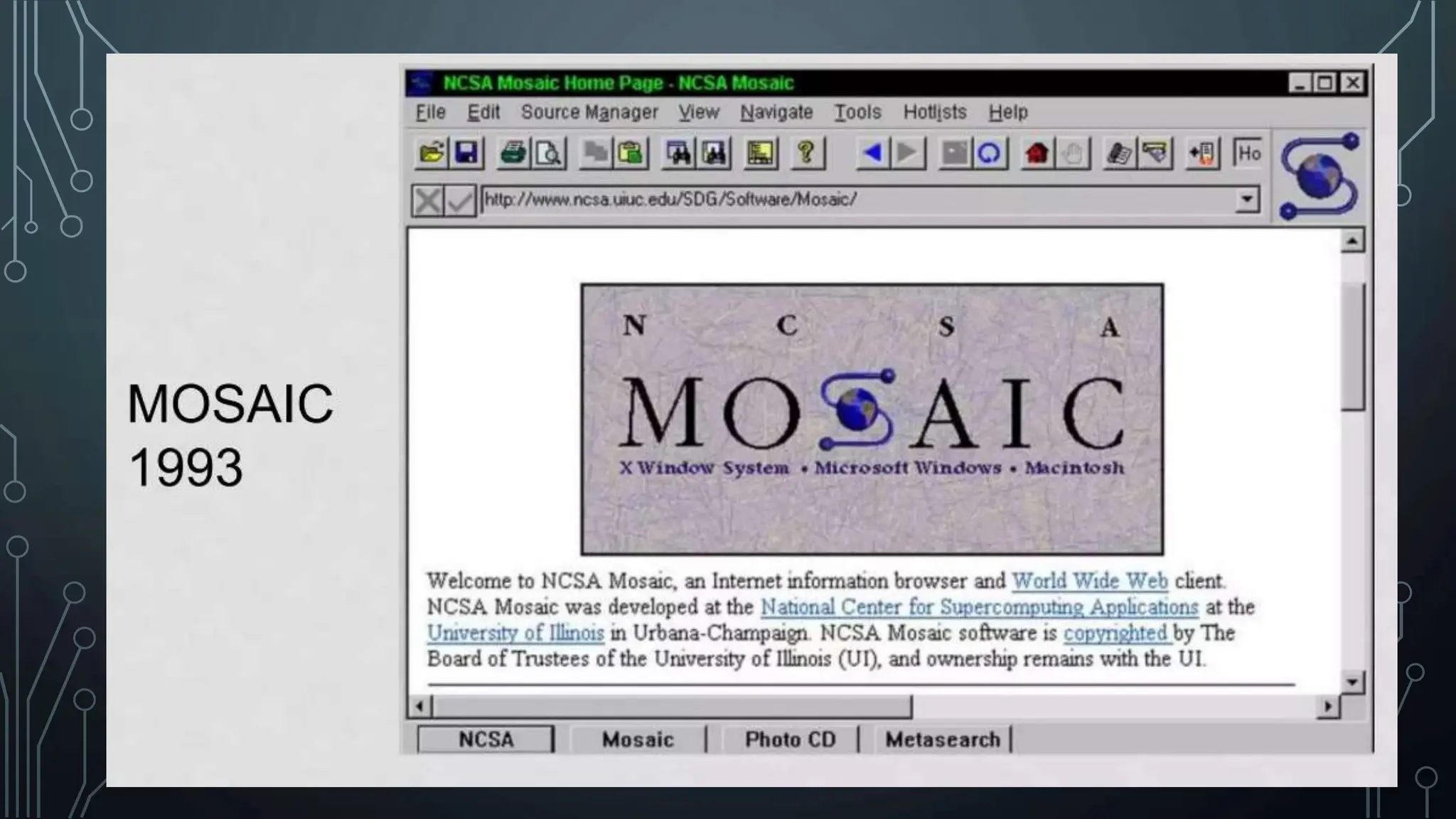
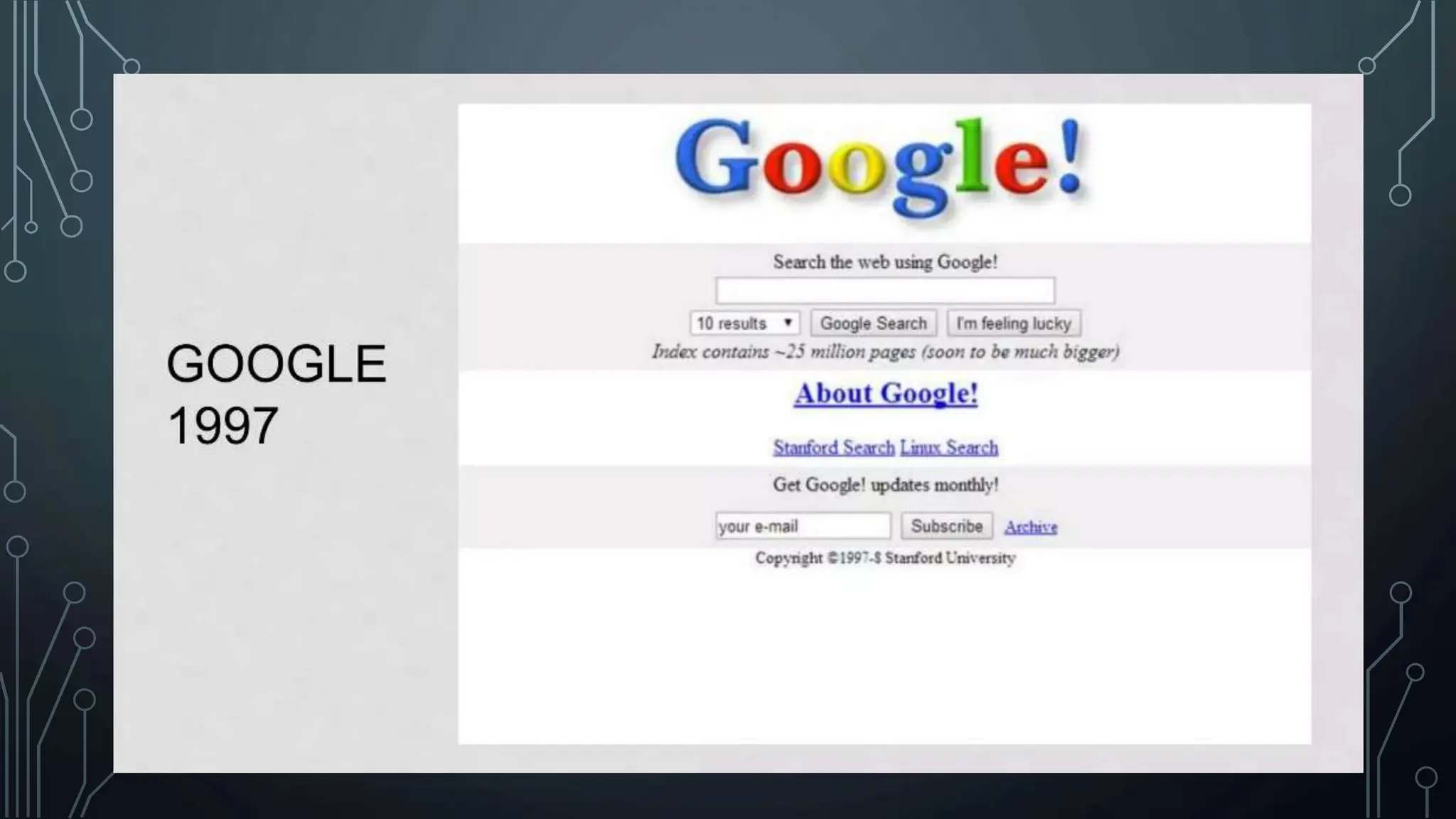
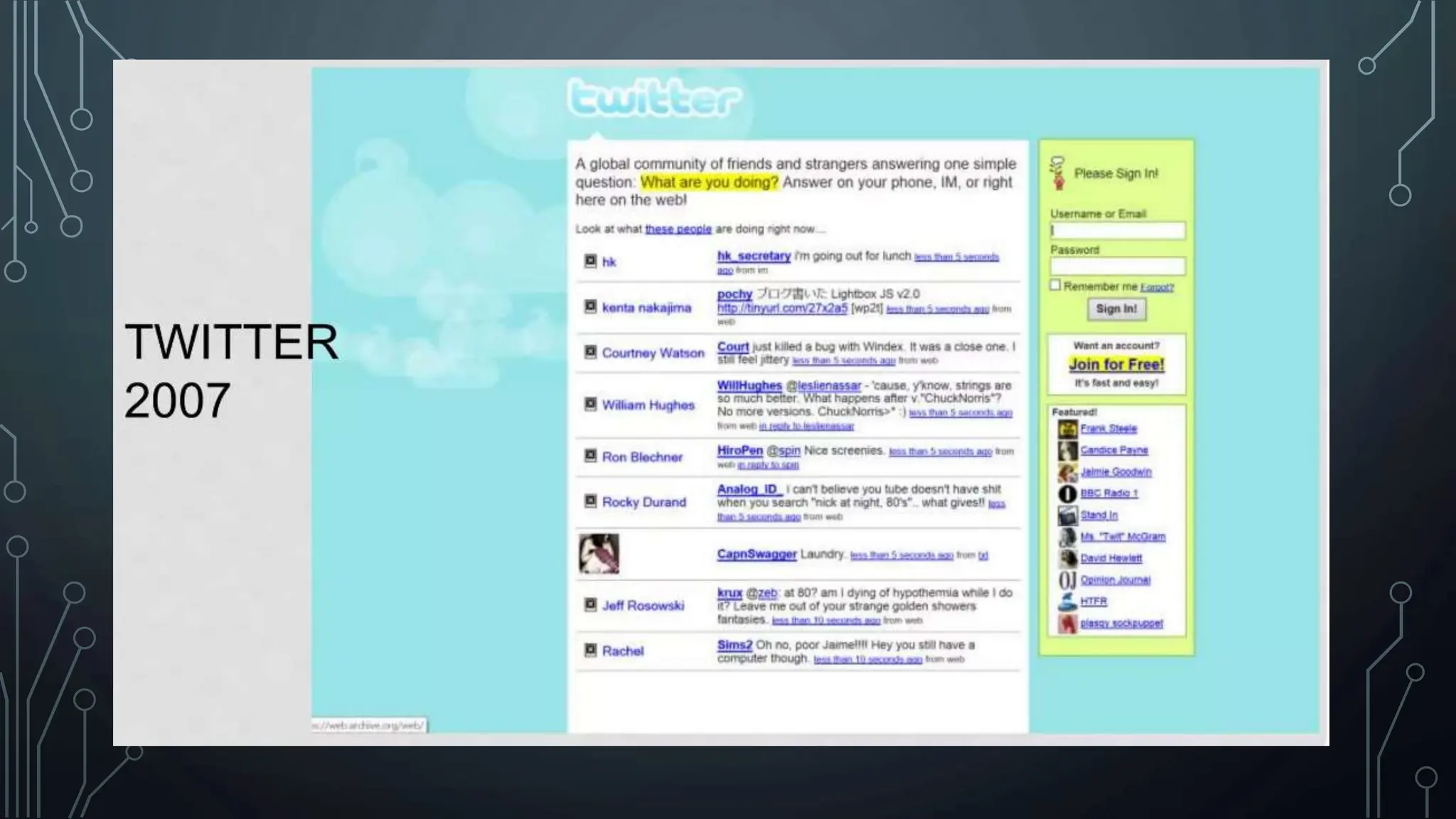
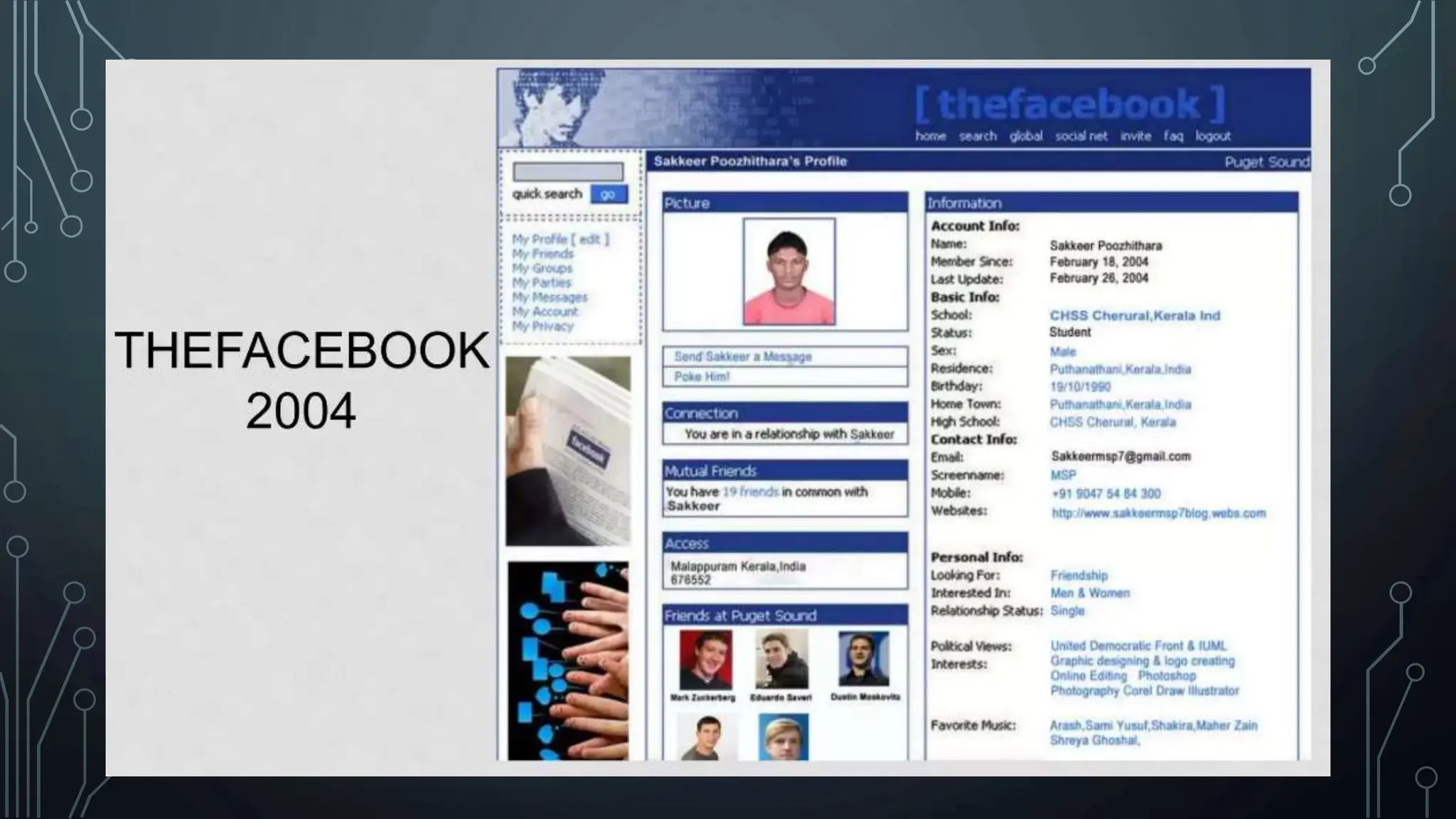
NEW AGE (1900S TO 2000S)
Lesson-2-The-evolution-of-media(1).ppttx

Lesson-2-The-evolution-of-media(1).ppttx

  • 1.
    THE EVOLUTION OF MEDIA:FROM TRADITIONAL TO NEW MEDIA
  • 2.
    THE IMPORTANCE OFMEDIA MEDIA BINDING INFLUENCE PERVASIVENES S INFORMATIO N SOURCE ENTERTAINM ENT SOURCE PERSUASION FORUM
  • 3.
    THE CONCEPTS OFMASS MEDIA AND MEDIA DEMASSIFICATION • MASS MEDIA – REFERS TO THE CHANNELS OF COMMUNICATION THAT INVOLVE TRANSMITTING INFORMATION IN SOME WAY, SHAPE OR FORM TO LARGE NUMBERS OF PEOPLE. DUTTON ET AL (1998) SUGGEST THAT TRADITIONALLY THE MASS MEDIA HAS BEEN DIFFERENTIATED FROM OTHER TYPES OF COMMUNICATION IN TERMS OF FOUR ESSENTIAL CHARACTERISTICS:
  • 4.
    DISTANCE: Unlike face-to-facecommunication, there is considerable amount of distance between the sender and receiver of the information in mass media. This makes mass media impersonal, lacking immediacy, and one way. TECHNOLOGY: TV and radio networks won’t be able to transmit information without satellites. Connecting to the Internet requires electronic equipment like laptops and smartphones. Mass media communication is only possible through technology. SCALE: Mass media communication deals with broadcasting information to the masses simultaneously. COMMODITY: Due to its massive scale and the technological equipment it requires, mass media is an expensive type of communication.
  • 5.
    MEDIA DEMASSIFICATION Demassification isderived from the word demassify which means to divide or break up (a social or political unit) into its component parts. Unlike to mass media communication where the target is everyone, demassification divides the masses into segments before choosing which segments to target. In specifically determining the target market, media demassification can tailor fit their message and delivery according to their target market and achieve the intended response.
  • 10.
  • 23.
  • 31.
    NEW AGE (1900STO 2000S)