The Reading
and Writing
Connection
LESSON 1
Objectives:
Explain the connection of reading and writing.
Explain
Define reading and writing.
Define
Appreciate the benefits of reading and writing.
Appreciate
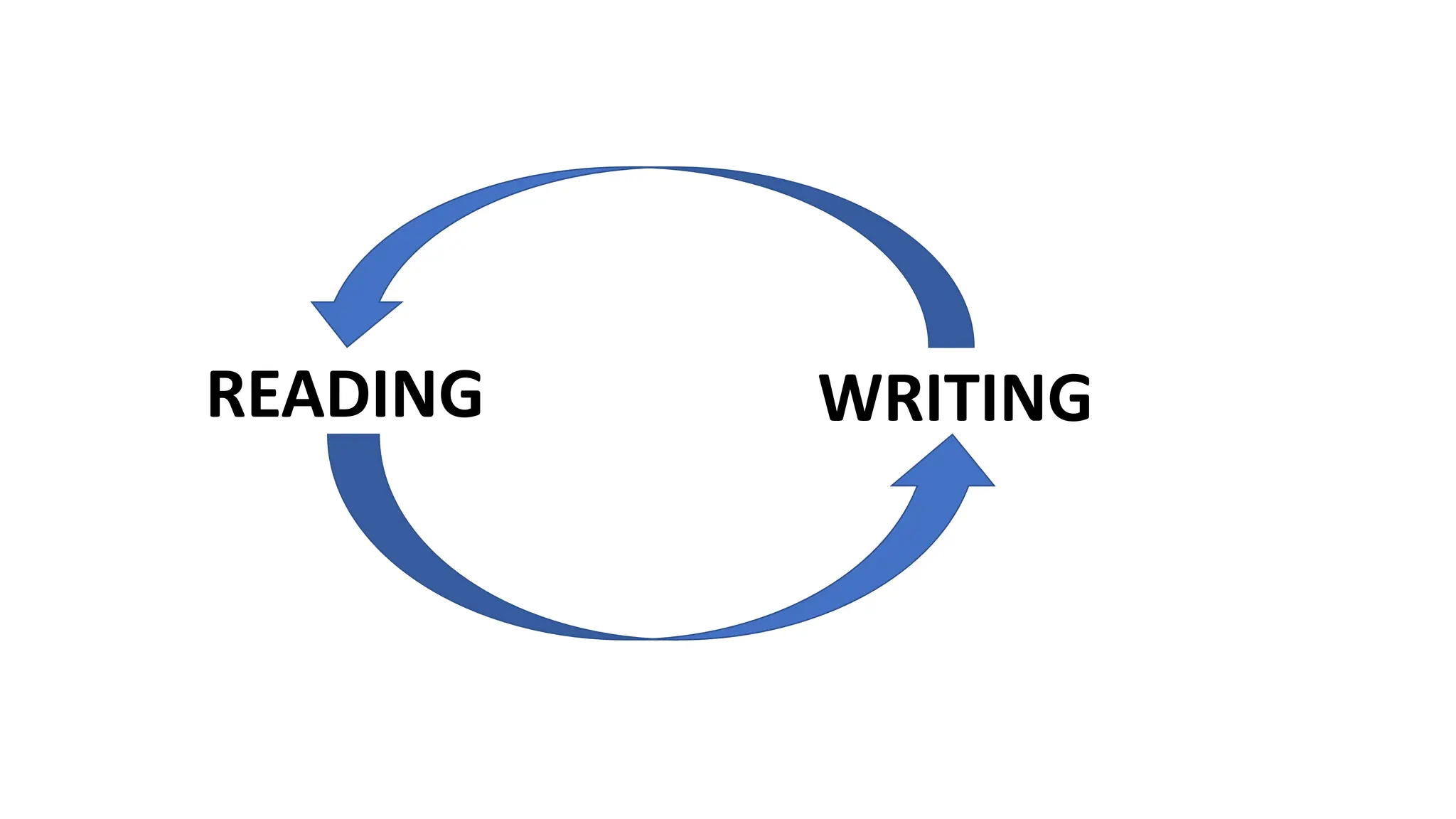
Which came first?
READING WRITING
READING
Defined according to two types
(Lapp and Flood, 1987)
1. A decoding process (breaking
down of written codes)
2. A comprehensive process.
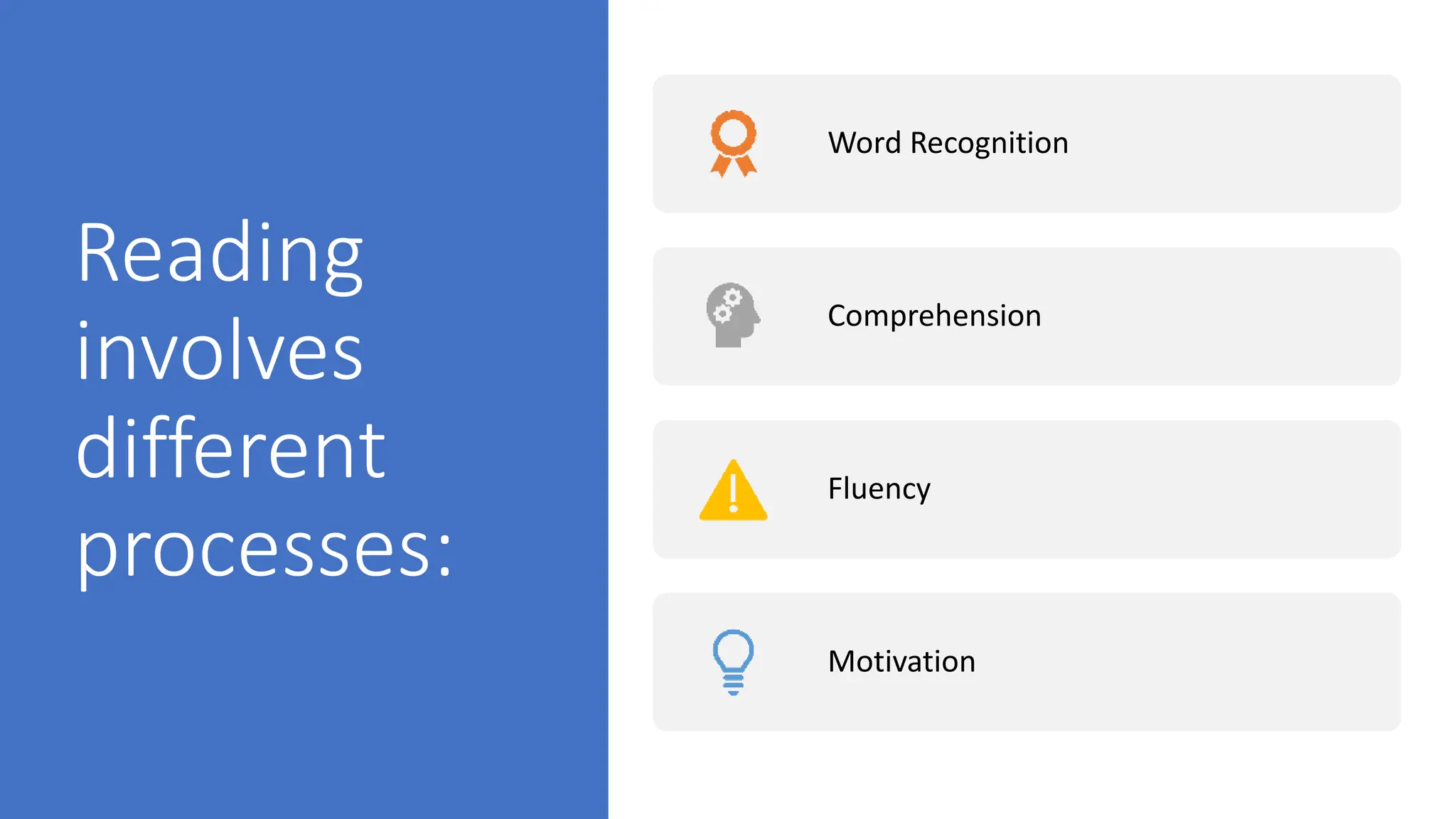
Reading
involves
different
processes:
Word Recognition
Comprehension
Fluency
Motivation
Why do we read?
• To develop a broad background
• To anticipate and predict
• To create motivation and interest
• To build a good vocabulary
• For pleasure and enjoyment
Benefits of reading
1. Exposes readers to accurate spelling and correct forms of
writing
2. Shows readers how to write more complex sentences.
3. Invites readers to be more experimental in their own
writing.
4. Allows readers to hear the thoughts of others.
Writing
Why do we
write?
• Express
• Describe
• Explore and learn
• Entertain
• Inform
• Explain
• Persuade
• Solve problems
Benefits of Writing
1. Allows writers to voice their
thoughts.
2. Provides writers with a vehicle to use
their imaginations.
3. Gives writers a chance to engage in a
conversation with other writers.
4. Aids writers in reading critically of
other works.
5. Motivates writers to engage with the
texts they are reading.
How is reading
connected to writing?
LESSON 1- The Reading and Writing Connection.pptx

LESSON 1- The Reading and Writing Connection.pptx

Editor's Notes

  • #5 Since writing is the act of transmitting knowledge in print, we must have information to share before we can write it. Therefore, reading plays a major role in writing. However, without a written texts, which are written by different authors we could not have something to read. So, which one came first, is it Writing or Reading? Whatever it is… one thing for sure, reading and writing are interconnected to each other.