INTRODUCTION:
Legal System & Contract ACT
Business Law
Aims
Introduction to Legal System & Contract Act
– Introduction
– Sources of Law
– Court/Judiciary
– Process of Legislation by Parliament
– Law Making Body
– Contract Act 1872
 Definitions
 Essentials of Valid Contract
 Classification of Contract
Introduction
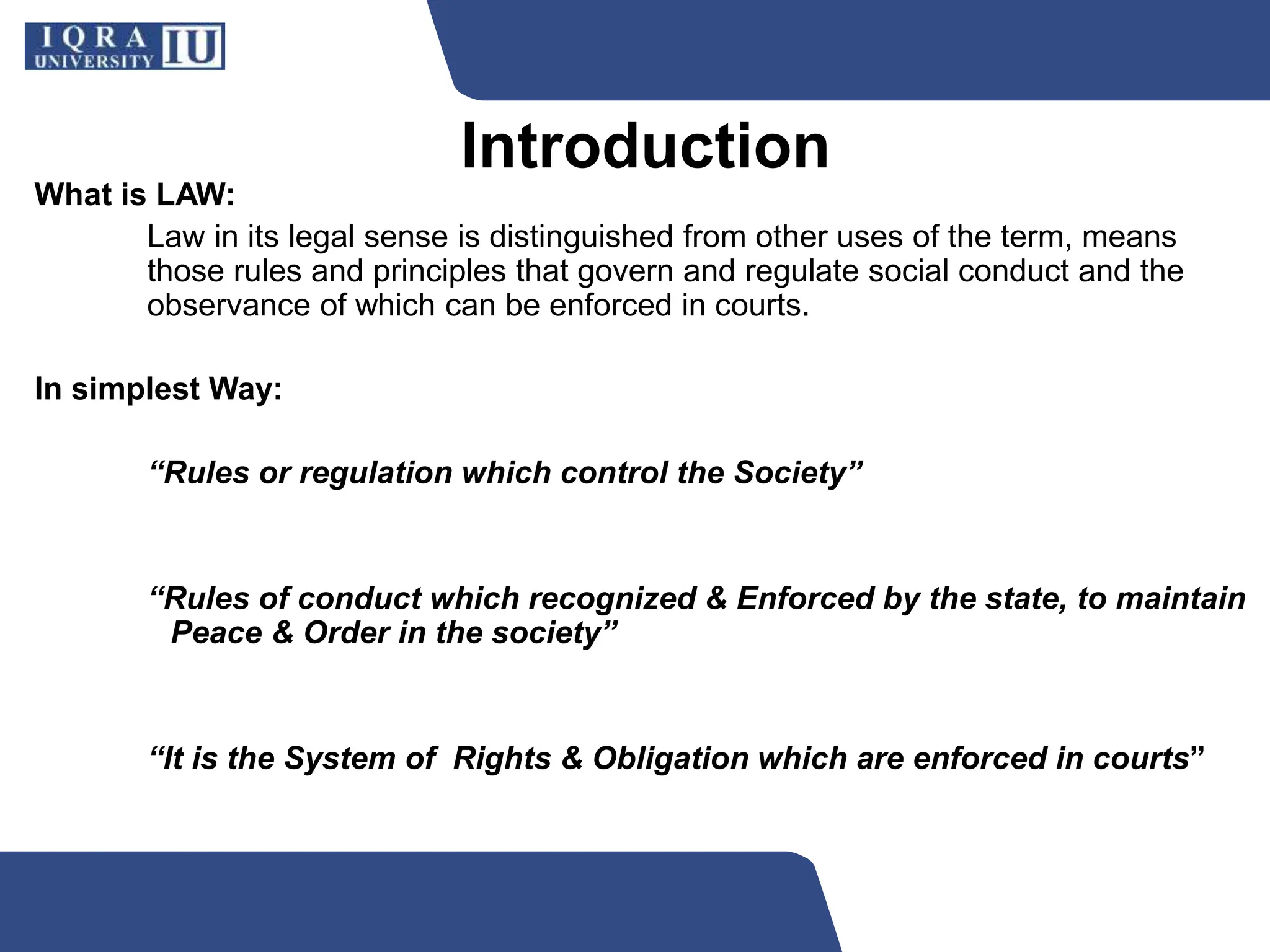
What is LAW:
Law in its legal sense is distinguished from other uses of the term, means
those rules and principles that govern and regulate social conduct and the
observance of which can be enforced in courts.
In simplest Way:
“Rules or regulation which control the Society”
“Rules of conduct which recognized & Enforced by the state, to maintain
Peace & Order in the society”
“It is the System of Rights & Obligation which are enforced in courts”
Introduction
Kinds of Law: Law is either public law or private law.
These sources may be:
1. Public Law :
Concerns the public as a whole and is divided into three classes:
1.Constitutional Law
2.Administrative Law
3.Criminal Law
2. Private Law
It pertains to individuals. It is separated into such special fields as contracts,
agencies, negotiable instruments etc. These areas generally pertain to
business and termed as Business Law or Commercial Law and Mercantile
Law.
Sources of Law
There is a large number of sources of law.
Formal sources:
They are the laws of states manifested by statues or decision of the courts.
Material Sources: They are such sources from which the law derives its matter.
These sources may be
1. Historical sources
2. Legal sources
Historical sources:
• They consist of such sets of rules framed traditionally in an authorized way but
later they have been adopted and accepted as a legal rules or principles by
usage. Such sources have framed COMMON LAW & EQUITY.
Legal Sources
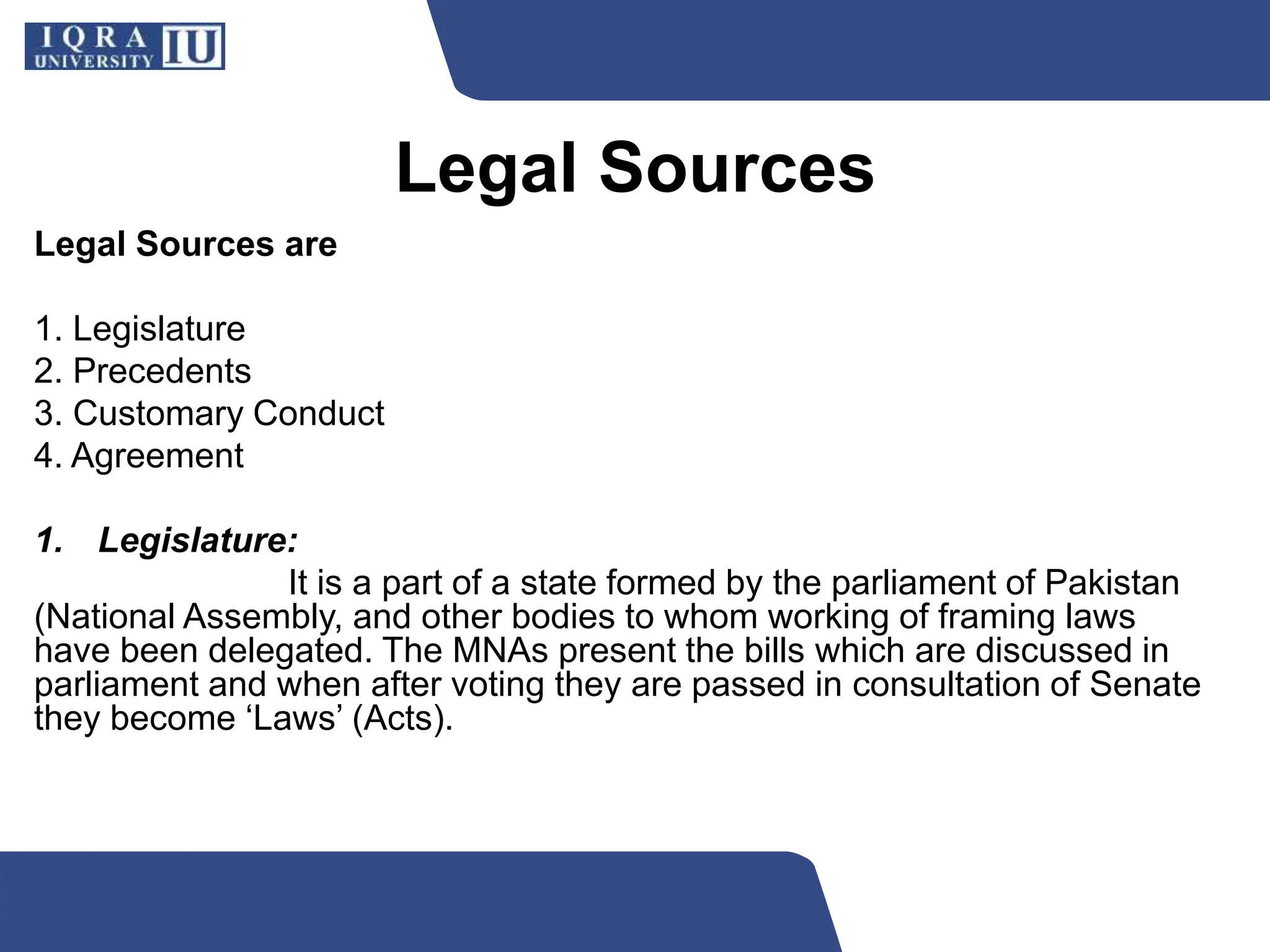
Legal Sources are
1. Legislature
2. Precedents
3. Customary Conduct
4. Agreement
1. Legislature:
It is a part of a state formed by the parliament of Pakistan
(National Assembly, and other bodies to whom working of framing laws
have been delegated. The MNAs present the bills which are discussed in
parliament and when after voting they are passed in consultation of Senate
they become ‘Laws’ (Acts).
Legal Sources
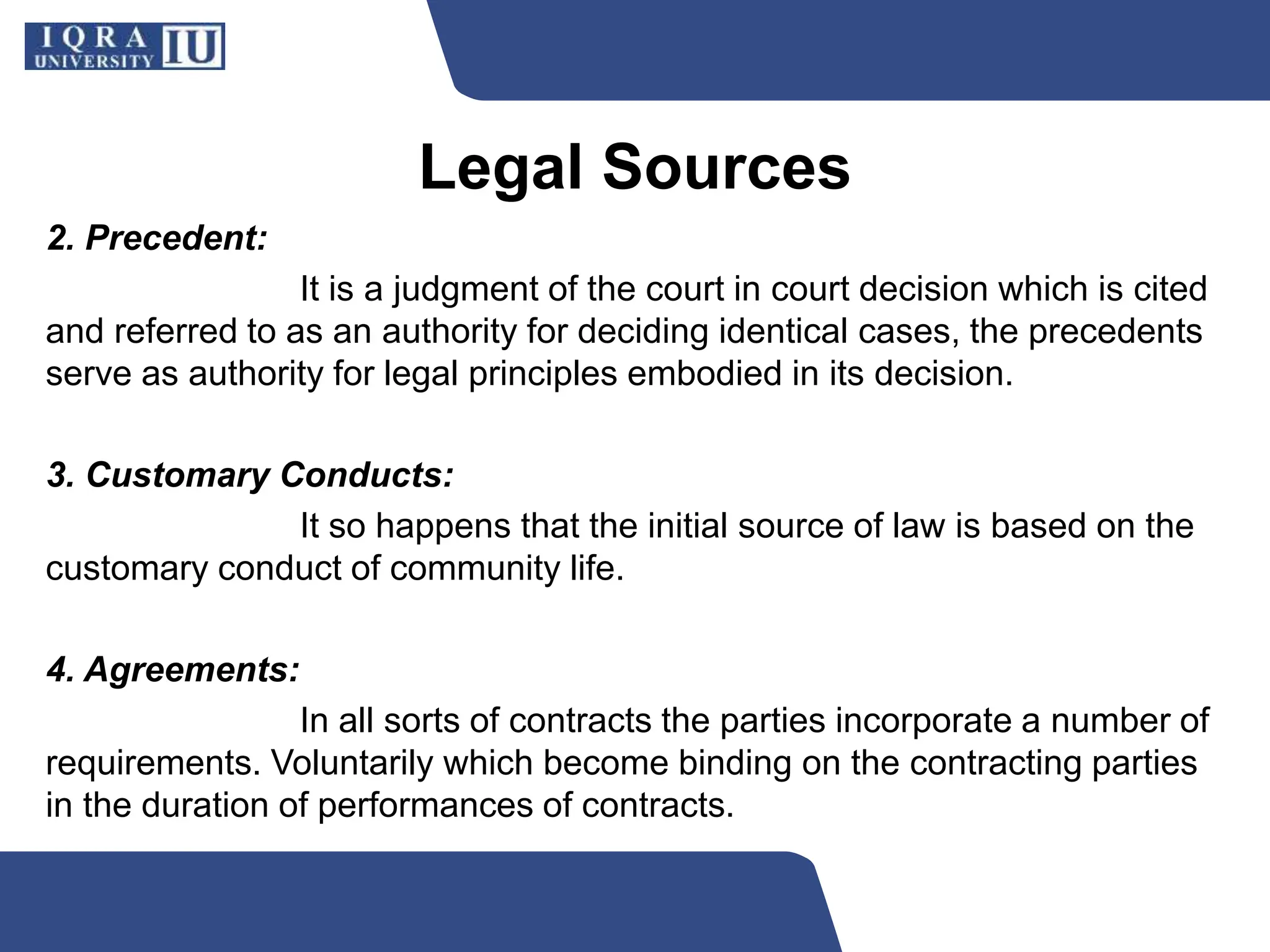
2. Precedent:
It is a judgment of the court in court decision which is cited
and referred to as an authority for deciding identical cases, the precedents
serve as authority for legal principles embodied in its decision.
3. Customary Conducts:
It so happens that the initial source of law is based on the
customary conduct of community life.
4. Agreements:
In all sorts of contracts the parties incorporate a number of
requirements. Voluntarily which become binding on the contracting parties
in the duration of performances of contracts.
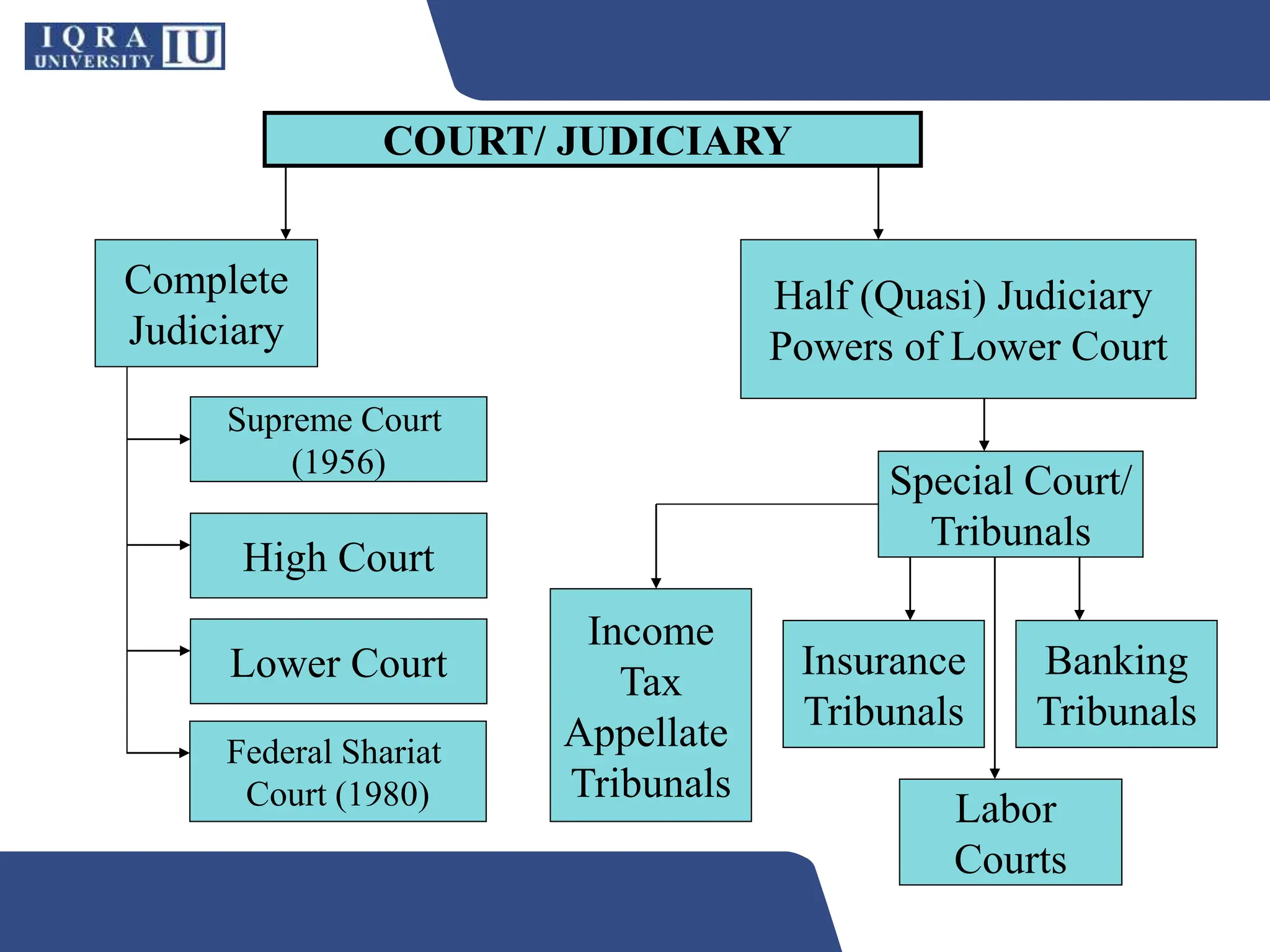
COURT/ JUDICIARY
Complete
Judiciary
Half (Quasi) Judiciary
Powers of Lower Court
Supreme Court
(1956)
Lower Court
High Court
Special Court/
Tribunals
Labor
Courts
Banking
Tribunals
Insurance
Tribunals
Income
Tax
Appellate
Tribunals
Federal Shariat
Court (1980)
High Court
SUPREME COURT
Lower Court is Comprising of Below
Criminal Civil
Judicial Magistrate
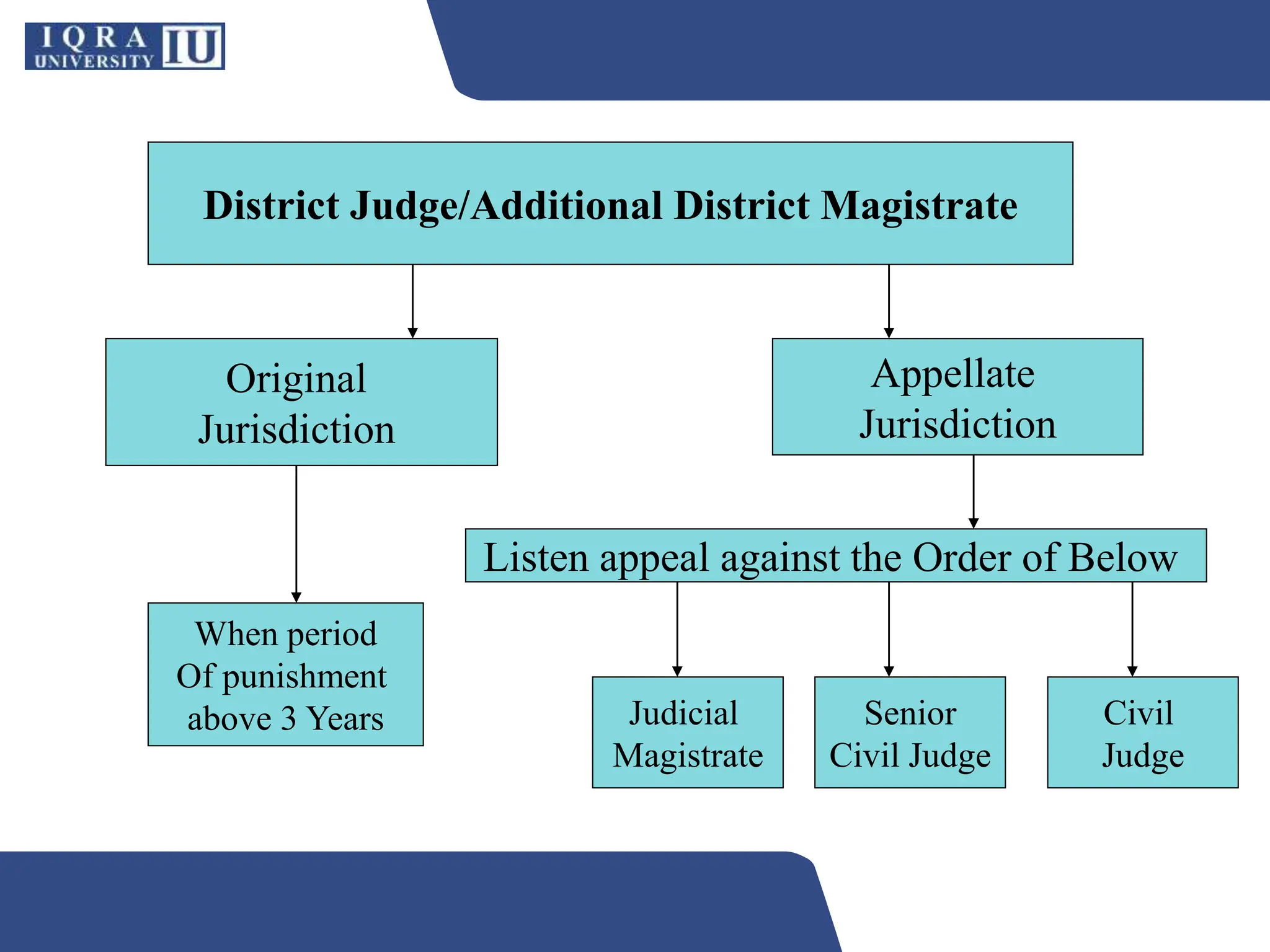
District Judge/Additional
District Magistrate
Senior Civil
Judge
Civil Judge
LOWER COURT
Criminal Civil
Judicial
Magistrate
District Judge/
Additional District
Magistrate
Senior
Civil
Judge
Civil
Judge
When period
Of punishment
up to 3 Years
When period
Of punishment
above 3 Years
Judicial
Magistrate
District Judge/
Additional District
Magistrate
Senior
Civil
Judge
Civil
Judge
Against Judgment of the Above the Appeal files before below
Original
Jurisdiction
District Judge/Additional District Magistrate
Appellate
Jurisdiction
Judicial
Magistrate
Senior
Civil Judge
Civil
Judge
Listen appeal against the Order of Below
When period
Of punishment
above 3 Years
Four Chief Justice- High Court
In Every Province
Punjab KPK
Islamabad
Capital
Sindh
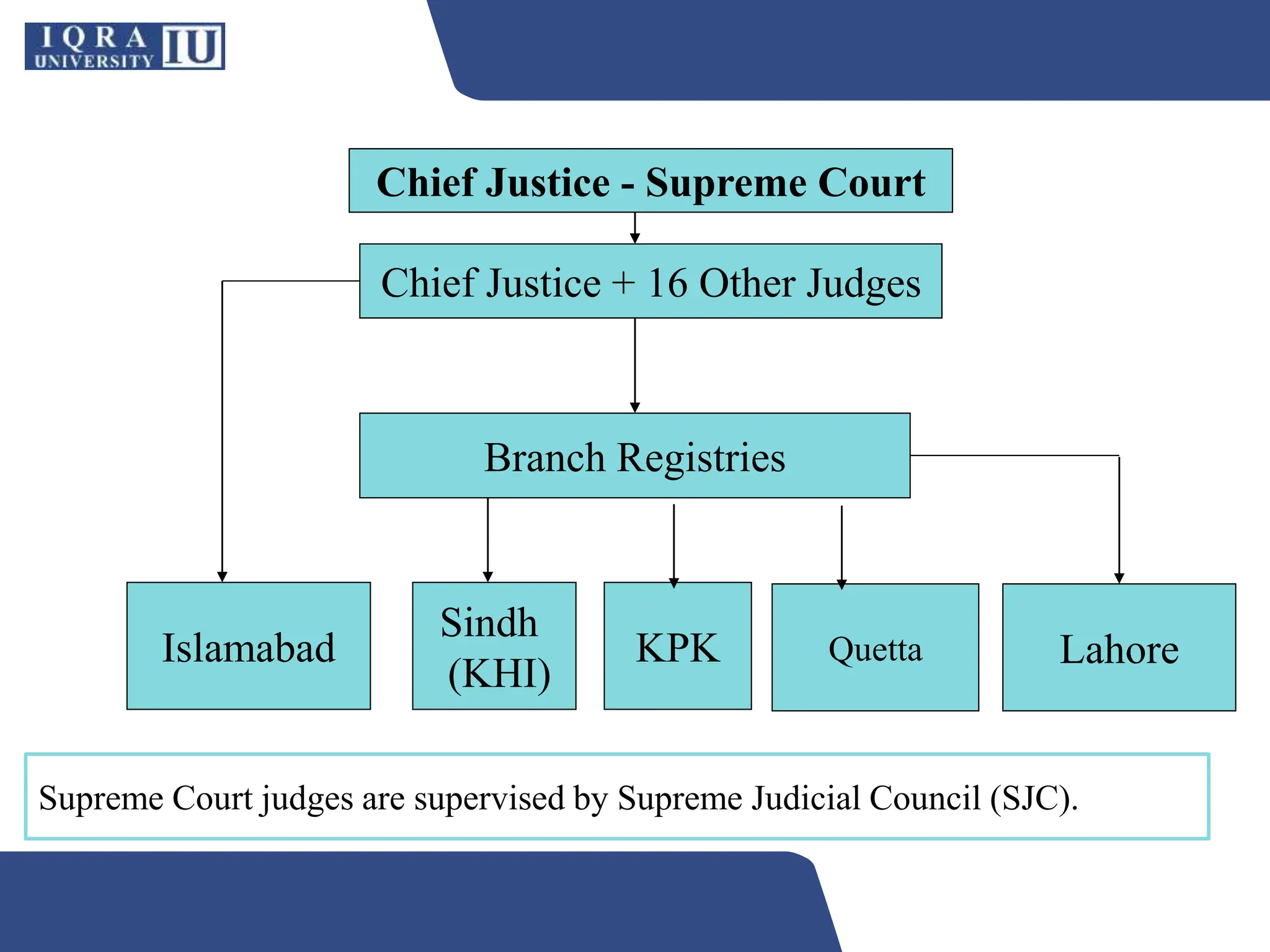
Chief Justice - Supreme Court
Balouchistan
Chief Justice + 16 Other Judges
Branch Registries
Islamabad KPK Lahore
Sindh
(KHI)
Chief Justice - Supreme Court
Quetta
Supreme Court judges are supervised by Supreme Judicial Council (SJC).
HIGH COURT
In Every Province
Punjab KPK
Islamabad
Capital
Sindh Balouchistan
TWO IMPORTANT BODIES
Law Making (Legislating) Law Implementing (Judiciary)
President
Parliament
Governor
Provincial Assembly
Supreme Court
Lower Courts
High Court
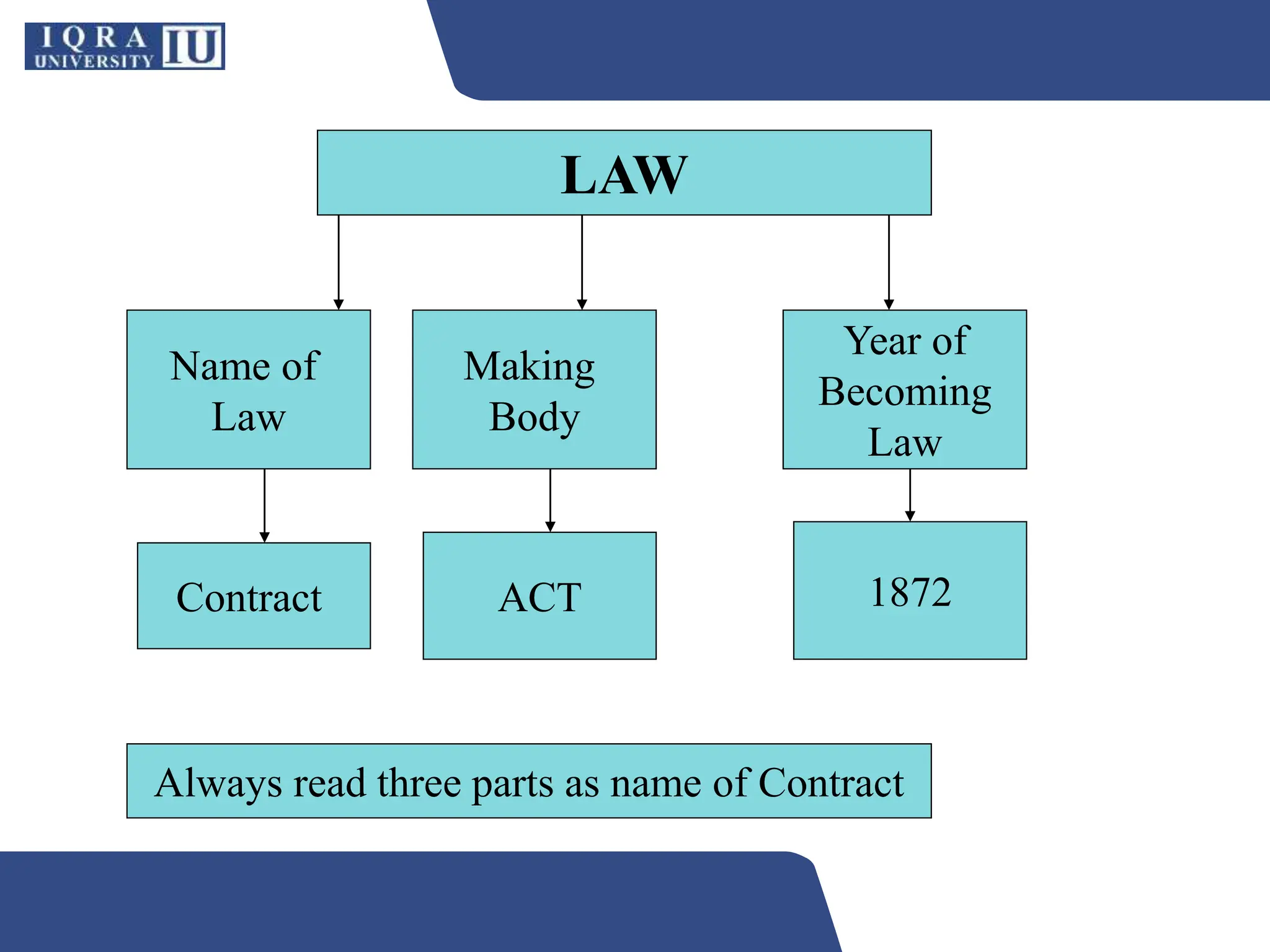
LAW
Name of
Law
Year of
Becoming
Law
Making
Body
Contract ACT 1872
Always read three parts as name of Contract
LAW
Name of
Law
Year of
formation
Making
Body
Income Tax Ordinance 2001
Always read three parts as name of Contract
PROCESS OF LEGISLATION
BY PARLIAMENT
The act begins as a bill after passing through the National
Assembly and Senate becomes law on the granting of acceptance of the
President Act is binding on every one of country. The purpose of Act of
parliament to:
• Create new law when none exist before.
• Consolidate existing law
• Amend existing law
• Cancel existing law
• Authorize taxation
• Codify and clarify existing law.
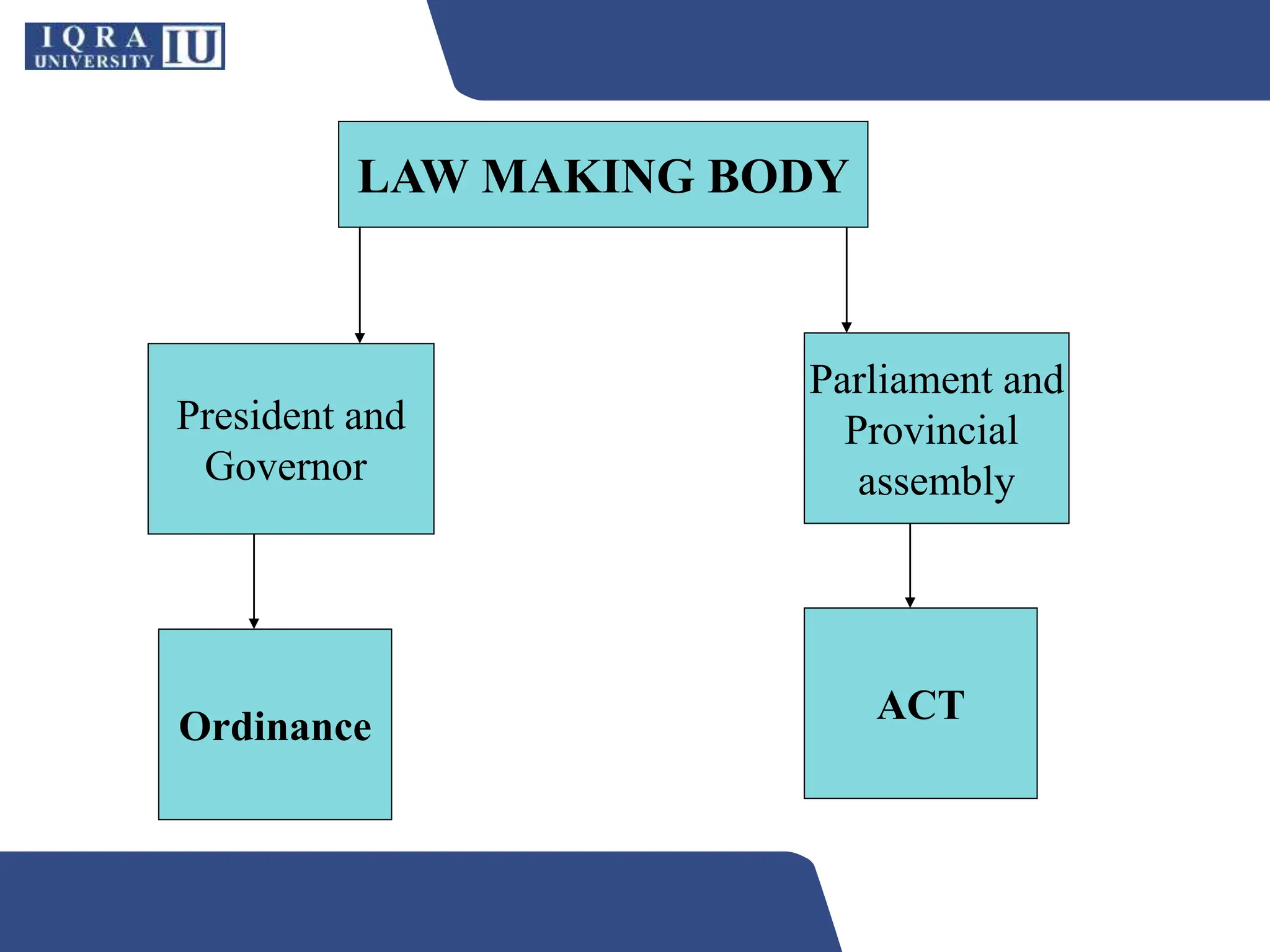
LAW MAKING BODY
President and
Governor
ACT
Ordinance
Parliament and
Provincial
assembly
ACT is made by
Parliament
Provincial
Assembly
Jurisdiction
Of Law
Whole
Country
Jurisdiction
Of Law
Whole
Province
Ordinance is made by
President Governor
Jurisdiction
Of Law
Whole
Country
Jurisdiction
Of Law
Whole
Province
Jurisdiction Area
President
Parliament
Whole
Province
Whole
Country
Governor
Provincial
assembly
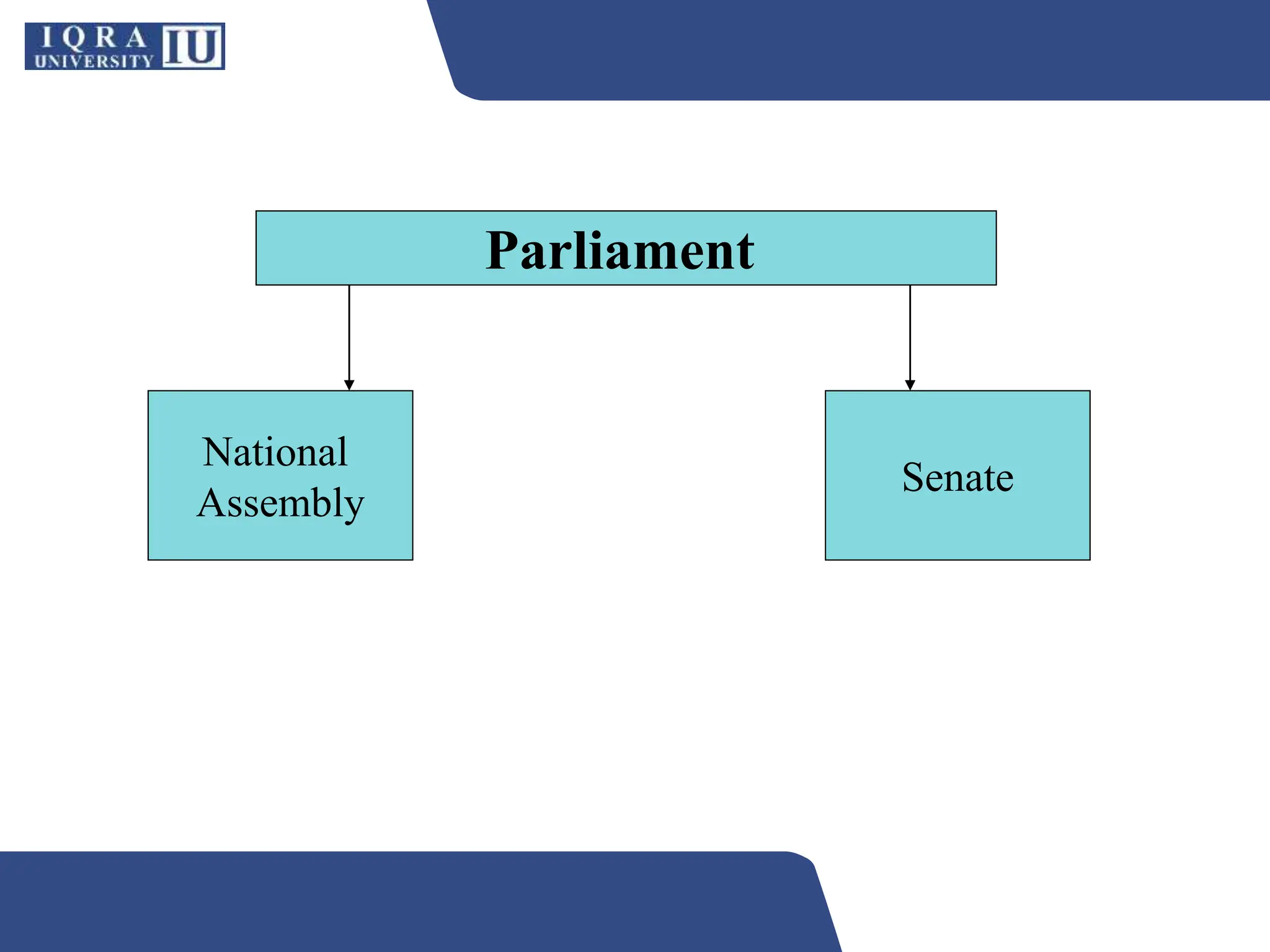
Parliament
National
Assembly
Senate
Bill
National Assembly
2/3rd Majority Pass
Senate
President Of Pakistan
Become
LAW
Thank You..
!

Legal System of Pakistan.pptx

  • 1.
    INTRODUCTION: Legal System &Contract ACT Business Law
  • 2.
    Aims Introduction to LegalSystem & Contract Act – Introduction – Sources of Law – Court/Judiciary – Process of Legislation by Parliament – Law Making Body – Contract Act 1872  Definitions  Essentials of Valid Contract  Classification of Contract
  • 3.
    Introduction What is LAW: Lawin its legal sense is distinguished from other uses of the term, means those rules and principles that govern and regulate social conduct and the observance of which can be enforced in courts. In simplest Way: “Rules or regulation which control the Society” “Rules of conduct which recognized & Enforced by the state, to maintain Peace & Order in the society” “It is the System of Rights & Obligation which are enforced in courts”
  • 4.
    Introduction Kinds of Law:Law is either public law or private law. These sources may be: 1. Public Law : Concerns the public as a whole and is divided into three classes: 1.Constitutional Law 2.Administrative Law 3.Criminal Law 2. Private Law It pertains to individuals. It is separated into such special fields as contracts, agencies, negotiable instruments etc. These areas generally pertain to business and termed as Business Law or Commercial Law and Mercantile Law.
  • 5.
    Sources of Law Thereis a large number of sources of law. Formal sources: They are the laws of states manifested by statues or decision of the courts. Material Sources: They are such sources from which the law derives its matter. These sources may be 1. Historical sources 2. Legal sources Historical sources: • They consist of such sets of rules framed traditionally in an authorized way but later they have been adopted and accepted as a legal rules or principles by usage. Such sources have framed COMMON LAW & EQUITY.
  • 6.
    Legal Sources Legal Sourcesare 1. Legislature 2. Precedents 3. Customary Conduct 4. Agreement 1. Legislature: It is a part of a state formed by the parliament of Pakistan (National Assembly, and other bodies to whom working of framing laws have been delegated. The MNAs present the bills which are discussed in parliament and when after voting they are passed in consultation of Senate they become ‘Laws’ (Acts).
  • 7.
    Legal Sources 2. Precedent: Itis a judgment of the court in court decision which is cited and referred to as an authority for deciding identical cases, the precedents serve as authority for legal principles embodied in its decision. 3. Customary Conducts: It so happens that the initial source of law is based on the customary conduct of community life. 4. Agreements: In all sorts of contracts the parties incorporate a number of requirements. Voluntarily which become binding on the contracting parties in the duration of performances of contracts.
  • 8.
    COURT/ JUDICIARY Complete Judiciary Half (Quasi)Judiciary Powers of Lower Court Supreme Court (1956) Lower Court High Court Special Court/ Tribunals Labor Courts Banking Tribunals Insurance Tribunals Income Tax Appellate Tribunals Federal Shariat Court (1980)
  • 9.
    High Court SUPREME COURT LowerCourt is Comprising of Below Criminal Civil Judicial Magistrate District Judge/Additional District Magistrate Senior Civil Judge Civil Judge
  • 10.
    LOWER COURT Criminal Civil Judicial Magistrate DistrictJudge/ Additional District Magistrate Senior Civil Judge Civil Judge When period Of punishment up to 3 Years When period Of punishment above 3 Years
  • 11.
  • 12.
    Original Jurisdiction District Judge/Additional DistrictMagistrate Appellate Jurisdiction Judicial Magistrate Senior Civil Judge Civil Judge Listen appeal against the Order of Below When period Of punishment above 3 Years
  • 13.
    Four Chief Justice-High Court In Every Province Punjab KPK Islamabad Capital Sindh Chief Justice - Supreme Court Balouchistan
  • 14.
    Chief Justice +16 Other Judges Branch Registries Islamabad KPK Lahore Sindh (KHI) Chief Justice - Supreme Court Quetta Supreme Court judges are supervised by Supreme Judicial Council (SJC).
  • 15.
    HIGH COURT In EveryProvince Punjab KPK Islamabad Capital Sindh Balouchistan
  • 16.
    TWO IMPORTANT BODIES LawMaking (Legislating) Law Implementing (Judiciary) President Parliament Governor Provincial Assembly Supreme Court Lower Courts High Court
  • 17.
    LAW Name of Law Year of Becoming Law Making Body ContractACT 1872 Always read three parts as name of Contract
  • 18.
    LAW Name of Law Year of formation Making Body IncomeTax Ordinance 2001 Always read three parts as name of Contract
  • 19.
    PROCESS OF LEGISLATION BYPARLIAMENT The act begins as a bill after passing through the National Assembly and Senate becomes law on the granting of acceptance of the President Act is binding on every one of country. The purpose of Act of parliament to: • Create new law when none exist before. • Consolidate existing law • Amend existing law • Cancel existing law • Authorize taxation • Codify and clarify existing law.
  • 20.
    LAW MAKING BODY Presidentand Governor ACT Ordinance Parliament and Provincial assembly
  • 21.
    ACT is madeby Parliament Provincial Assembly Jurisdiction Of Law Whole Country Jurisdiction Of Law Whole Province
  • 22.
    Ordinance is madeby President Governor Jurisdiction Of Law Whole Country Jurisdiction Of Law Whole Province
  • 23.
  • 24.
  • 25.
    Bill National Assembly 2/3rd MajorityPass Senate President Of Pakistan Become LAW
  • 26.