Lecture 1
DIFFERENCES AMONG CODES,
STANDARDS AND SPECIFICATIONS
Codes and Specifications of
Electro-Mechanical Systems
EME508
Course Coordinator: Dr. Beshoy Abdou
Aziz
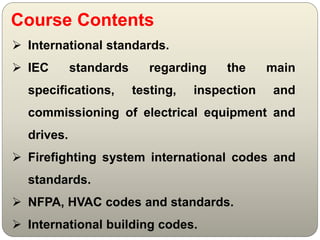
Course Contents
 International standards.
 IEC standards regarding the main
specifications, testing, inspection and
commissioning of electrical equipment and
drives.
 Firefighting system international codes and
standards.
 NFPA, HVAC codes and standards.
 International building codes.
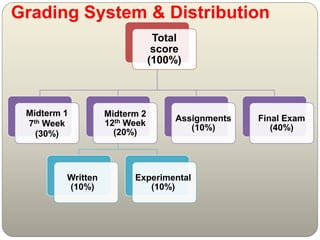
Grading System & Distribution
Total
score
(100%)
Midterm 1
7th Week
(30%)
Midterm 2
12th Week
(20%)
Written
(10%)
Experimental
(10%)
Assignments
(10%)
Final Exam
(40%)
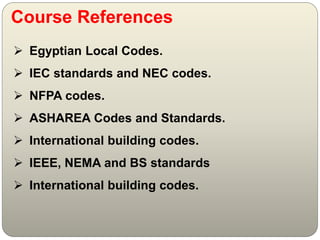
Course References
 Egyptian Local Codes.
 IEC standards and NEC codes.
 NFPA codes.
 ASHAREA Codes and Standards.
 International building codes.
 IEEE, NEMA and BS standards
 International building codes.
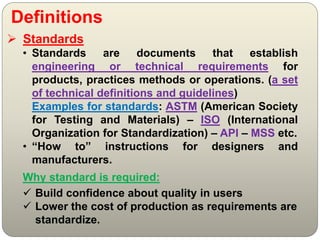
Definitions
 Standards
• Standards are documents that establish
engineering or technical requirements for
products, practices methods or operations. (a set
of technical definitions and guidelines)
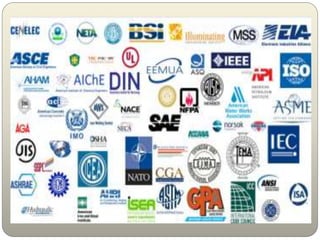
Examples for standards: ASTM (American Society
for Testing and Materials) – ISO (International
Organization for Standardization) – API – MSS etc.
• “How to” instructions for designers and
manufacturers.
Why standard is required:
 Build confidence about quality in users
 Lower the cost of production as requirements are
standardize.
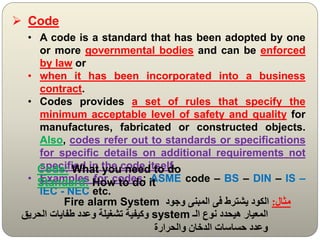
 Code
• A code is a standard that has been adopted by one
or more governmental bodies and can be enforced
by law or
• when it has been incorporated into a business
contract.
• Codes provides a set of rules that specify the
minimum acceptable level of safety and quality for
manufactures, fabricated or constructed objects.
Also, codes refer out to standards or specifications
for specific details on additional requirements not
specified in the code itself.
• Examples for codes: ASME code – BS – DIN – IS –
IEC - NEC etc.
Code: What you need to do
Standard: How to do it
‫مثال‬
:
‫وجود‬ ‫المبنى‬ ‫فى‬ ‫يشترط‬ ‫الكود‬
Fire alarm System
‫الـ‬ ‫نوع‬ ‫هيحدد‬ ‫المعيار‬
system
‫الحريق‬ ‫طفايات‬ ‫وعدد‬ ‫تشغيلة‬ ‫وكيفية‬
‫والحرارة‬ ‫الدخان‬ ‫حساسات‬ ‫وعدد‬
 Specifications
• provide specific/additional requirements
for materials, components or services
beyond the code or standard
requirements. Often generated by private
companies to address additional
requirements applicable to a specific
product or application.
• Specifications allow purchaser to include
special requirements as per design and
service condition.
• Specifications must meet requirements.
• Example: product specification.
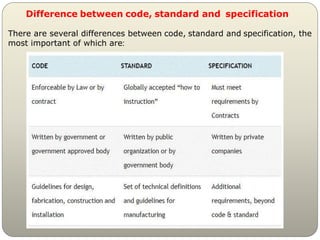
Difference between code, standard and specification
There are several differences between code, standard and specification, the
most important of which are:
Lecture_1_Codes_specifications_credit.pptx

Lecture_1_Codes_specifications_credit.pptx

  • 1.
    Lecture 1 DIFFERENCES AMONGCODES, STANDARDS AND SPECIFICATIONS Codes and Specifications of Electro-Mechanical Systems EME508 Course Coordinator: Dr. Beshoy Abdou Aziz
  • 3.
    Course Contents  Internationalstandards.  IEC standards regarding the main specifications, testing, inspection and commissioning of electrical equipment and drives.  Firefighting system international codes and standards.  NFPA, HVAC codes and standards.  International building codes.
  • 4.
    Grading System &Distribution Total score (100%) Midterm 1 7th Week (30%) Midterm 2 12th Week (20%) Written (10%) Experimental (10%) Assignments (10%) Final Exam (40%)
  • 5.
    Course References  EgyptianLocal Codes.  IEC standards and NEC codes.  NFPA codes.  ASHAREA Codes and Standards.  International building codes.  IEEE, NEMA and BS standards  International building codes.
  • 6.
    Definitions  Standards • Standardsare documents that establish engineering or technical requirements for products, practices methods or operations. (a set of technical definitions and guidelines) Examples for standards: ASTM (American Society for Testing and Materials) – ISO (International Organization for Standardization) – API – MSS etc. • “How to” instructions for designers and manufacturers. Why standard is required:  Build confidence about quality in users  Lower the cost of production as requirements are standardize.
  • 7.
     Code • Acode is a standard that has been adopted by one or more governmental bodies and can be enforced by law or • when it has been incorporated into a business contract. • Codes provides a set of rules that specify the minimum acceptable level of safety and quality for manufactures, fabricated or constructed objects. Also, codes refer out to standards or specifications for specific details on additional requirements not specified in the code itself. • Examples for codes: ASME code – BS – DIN – IS – IEC - NEC etc. Code: What you need to do Standard: How to do it ‫مثال‬ : ‫وجود‬ ‫المبنى‬ ‫فى‬ ‫يشترط‬ ‫الكود‬ Fire alarm System ‫الـ‬ ‫نوع‬ ‫هيحدد‬ ‫المعيار‬ system ‫الحريق‬ ‫طفايات‬ ‫وعدد‬ ‫تشغيلة‬ ‫وكيفية‬ ‫والحرارة‬ ‫الدخان‬ ‫حساسات‬ ‫وعدد‬
  • 8.
     Specifications • providespecific/additional requirements for materials, components or services beyond the code or standard requirements. Often generated by private companies to address additional requirements applicable to a specific product or application. • Specifications allow purchaser to include special requirements as per design and service condition. • Specifications must meet requirements. • Example: product specification.
  • 9.
    Difference between code,standard and specification There are several differences between code, standard and specification, the most important of which are: