Soil-plant-water relationship
Dr. Niraj Biswakarma
Assistant professor, SOAS
GDGU
1
Irrigation
2
Irrigation is the artificial application of water to the soil for the
purpose of crop growth or crop production in supplement to rainfall
and ground water contribution.
Objectives
1. To add water to soil for supplies the moisture essential for plant
growth.
2. To provide crop insurance against short period of drought.
3. To cool soil and atmosphere, thereby making more favorable
environment for
plant growth.
4. To washout salts from the root zone of plant.
5. To dissolve the plant nutrients present in soil.
6. To soften the tillage pan or facilitate tillage operation.
3
Soil Physical Properties Influencing Soil Water
Relations
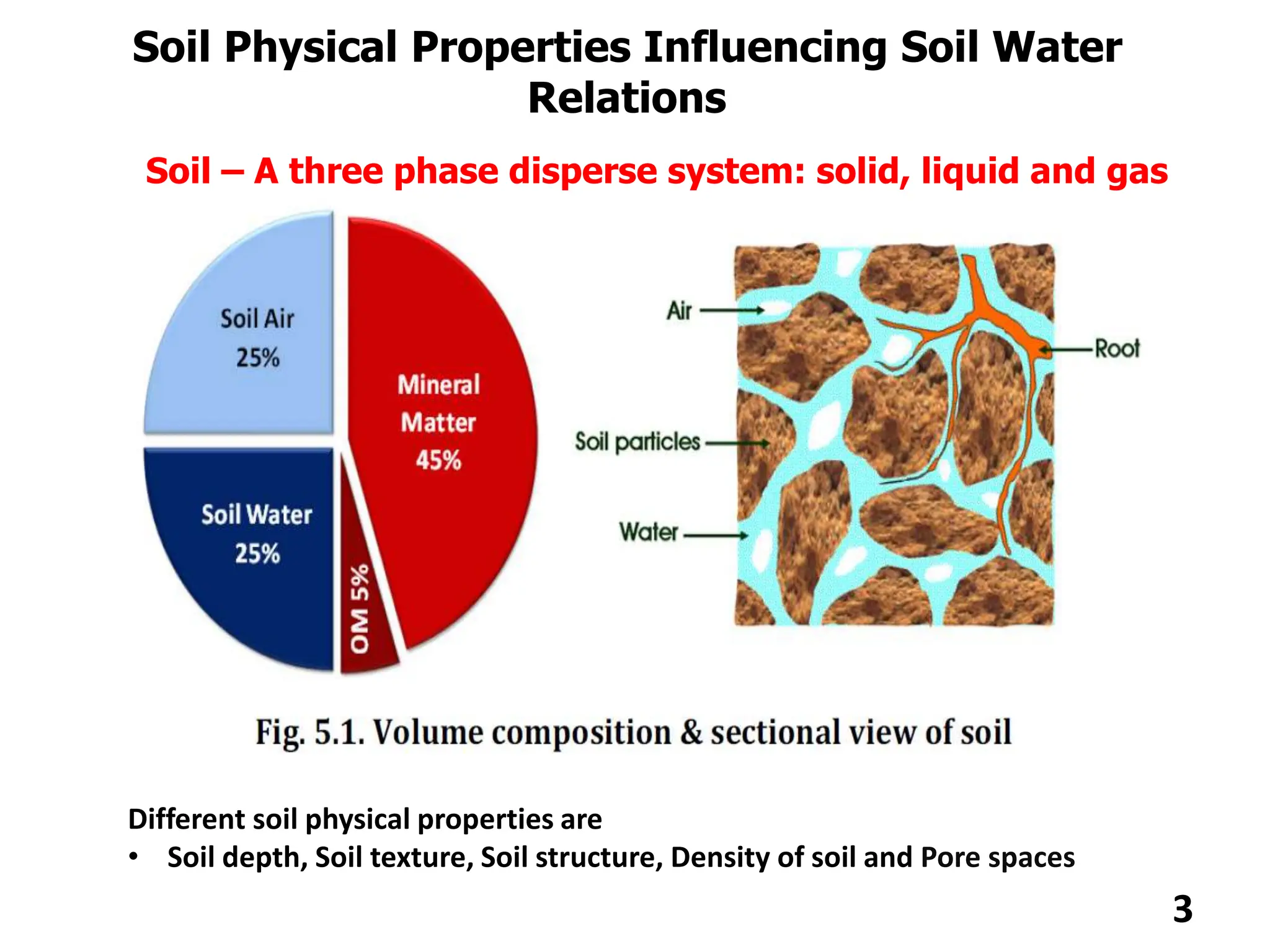
Soil – A three phase disperse system: solid, liquid and gas
Different soil physical properties are
• Soil depth, Soil texture, Soil structure, Density of soil and Pore spaces
4
a) Soil depth
It is the thickness of soil cover over hard rock or hard substratum
below which roots cannot penetrate. A shallow soil - limited
moisture holding capacity, therefore would need frequent
irrigations
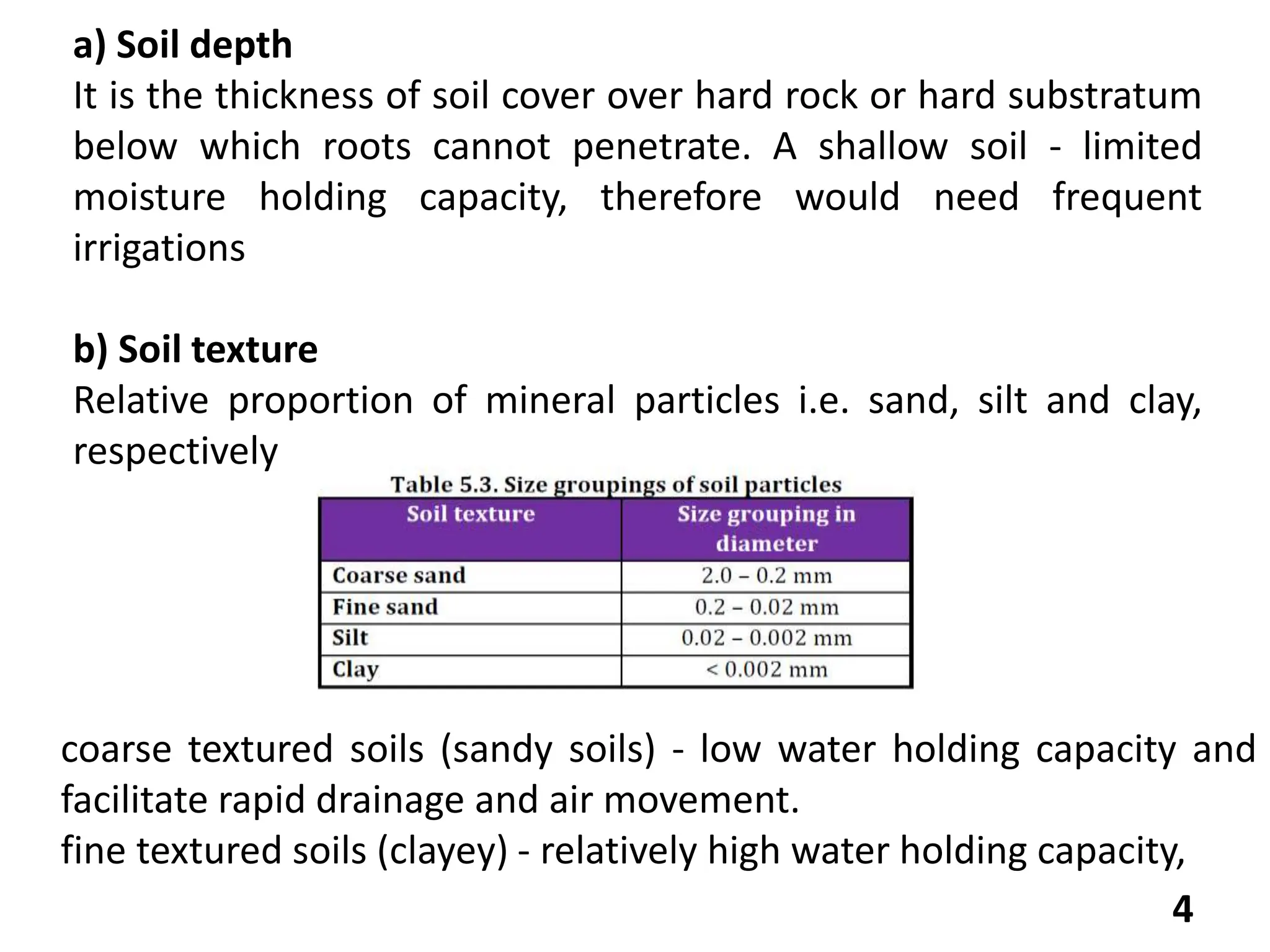
b) Soil texture
Relative proportion of mineral particles i.e. sand, silt and clay,
respectively
coarse textured soils (sandy soils) - low water holding capacity and
facilitate rapid drainage and air movement.
fine textured soils (clayey) - relatively high water holding capacity,
5
C) Soil structure
The structure of a soil refers to the arrangement of the soil particles
and the adhesion of smaller particles to form large ones or
aggregates.
6
D) Density of soil
1) Particle density (PD): ratio of a given mass of soil solids to the volume of
soil solid. It is usually expressed in terms of g/cm3. PD of most mineral soils
vary between - 2.6 to 2.75 g/cm3
2) Bulk density (BD): It refers to the ratio of a given mass of an oven dried soil
to volume of soil (i.e., solids + pore spaces). BD of clay soil is 1.2 and sandy
soil- 1.4 g/cm3
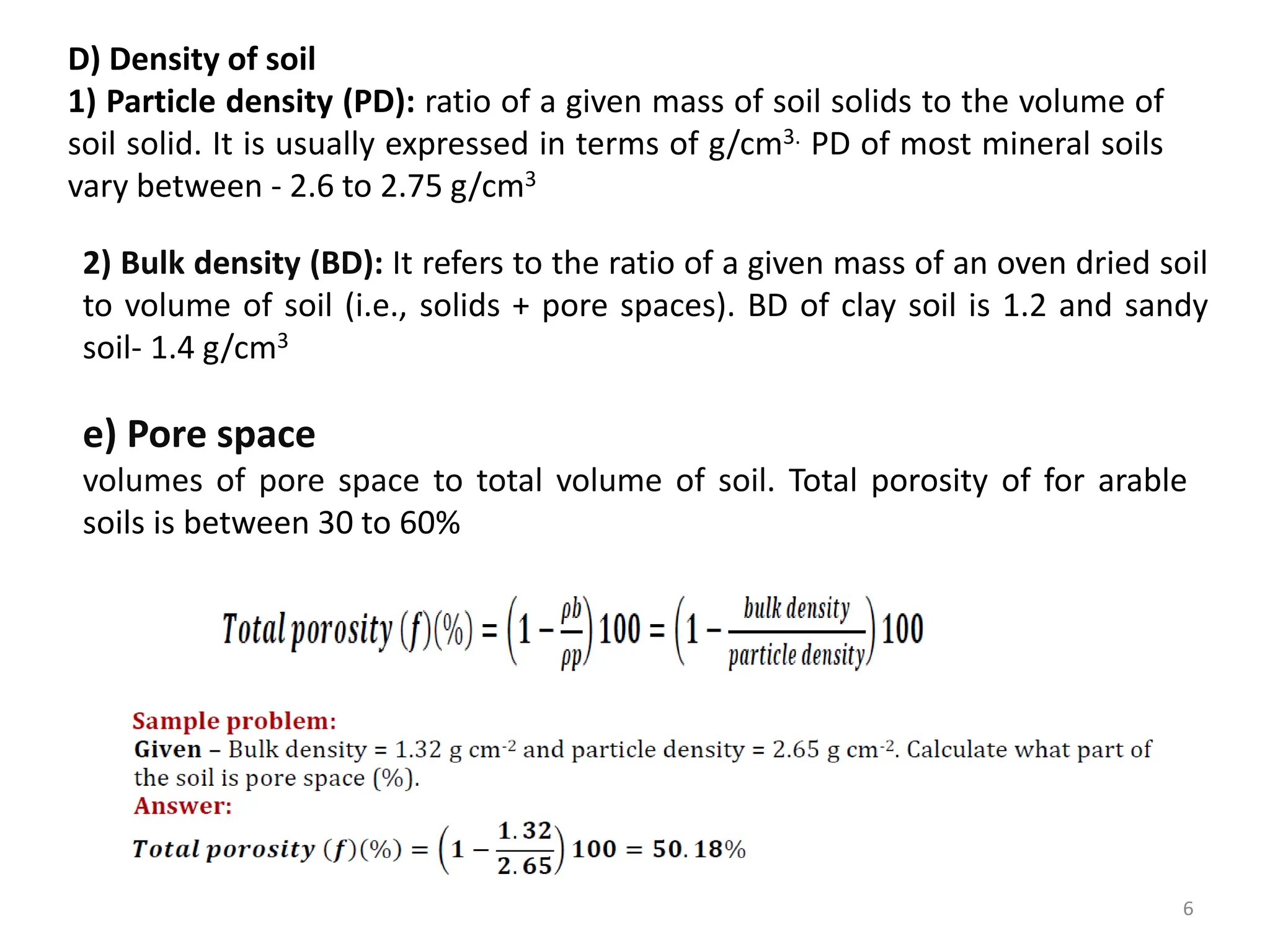
e) Pore space
volumes of pore space to total volume of soil. Total porosity of for arable
soils is between 30 to 60%
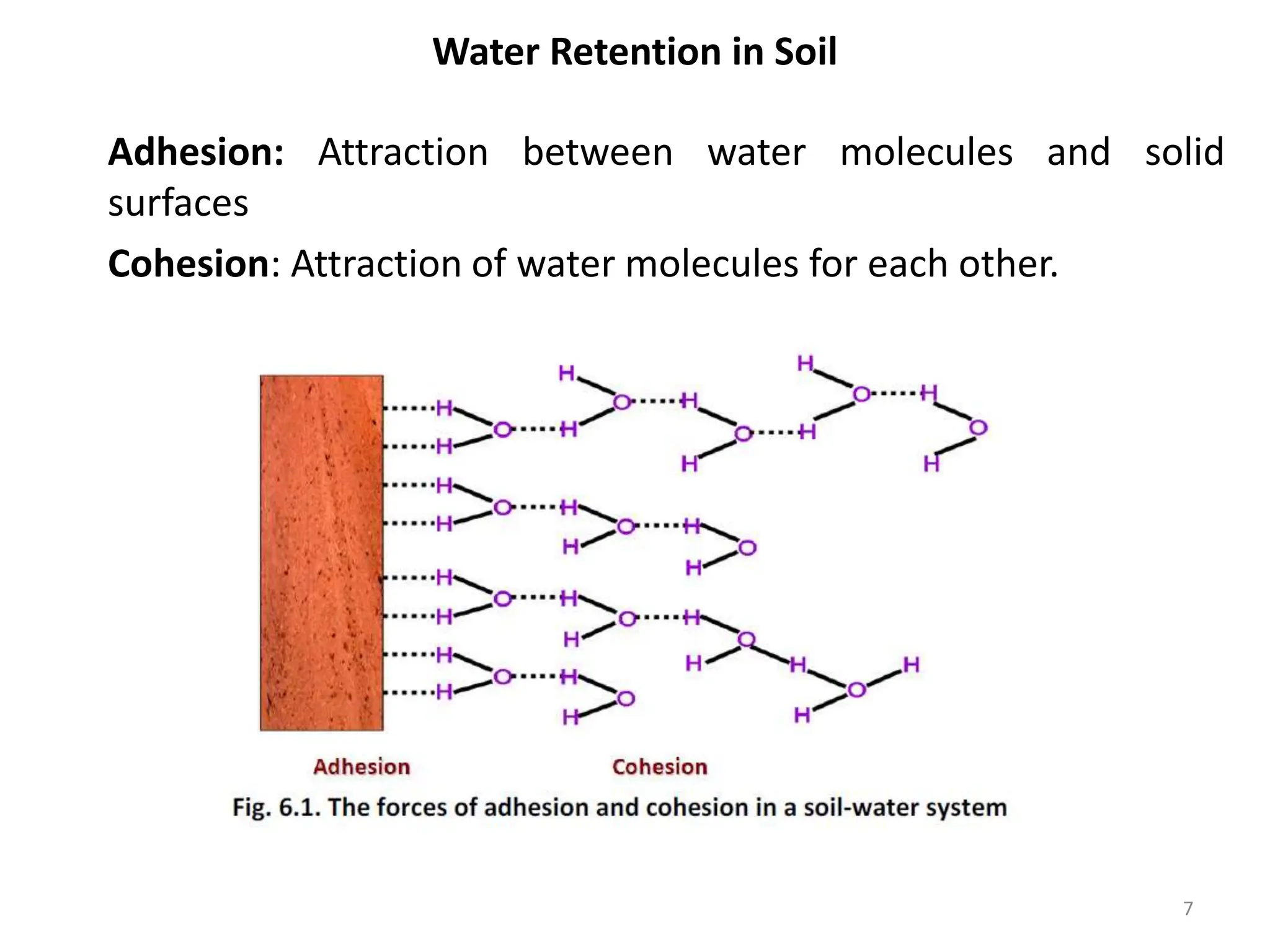
Water Retention in Soil
Adhesion: Attraction between water molecules and solid
surfaces
Cohesion: Attraction of water molecules for each other.
7
Soil moisture tension
it is a measure of the tenacity with which water is retained in the soil and
reflects the force per unit area that must be exerted by plants to remove
water from the soil
8
Soil moisture characteristic curves
The graphical representation of the relationship between soil moisture tension
and soil water content is known as soil moisture characteristic curve or water
retention curve
Classification of soil water
Physical Classification of Water
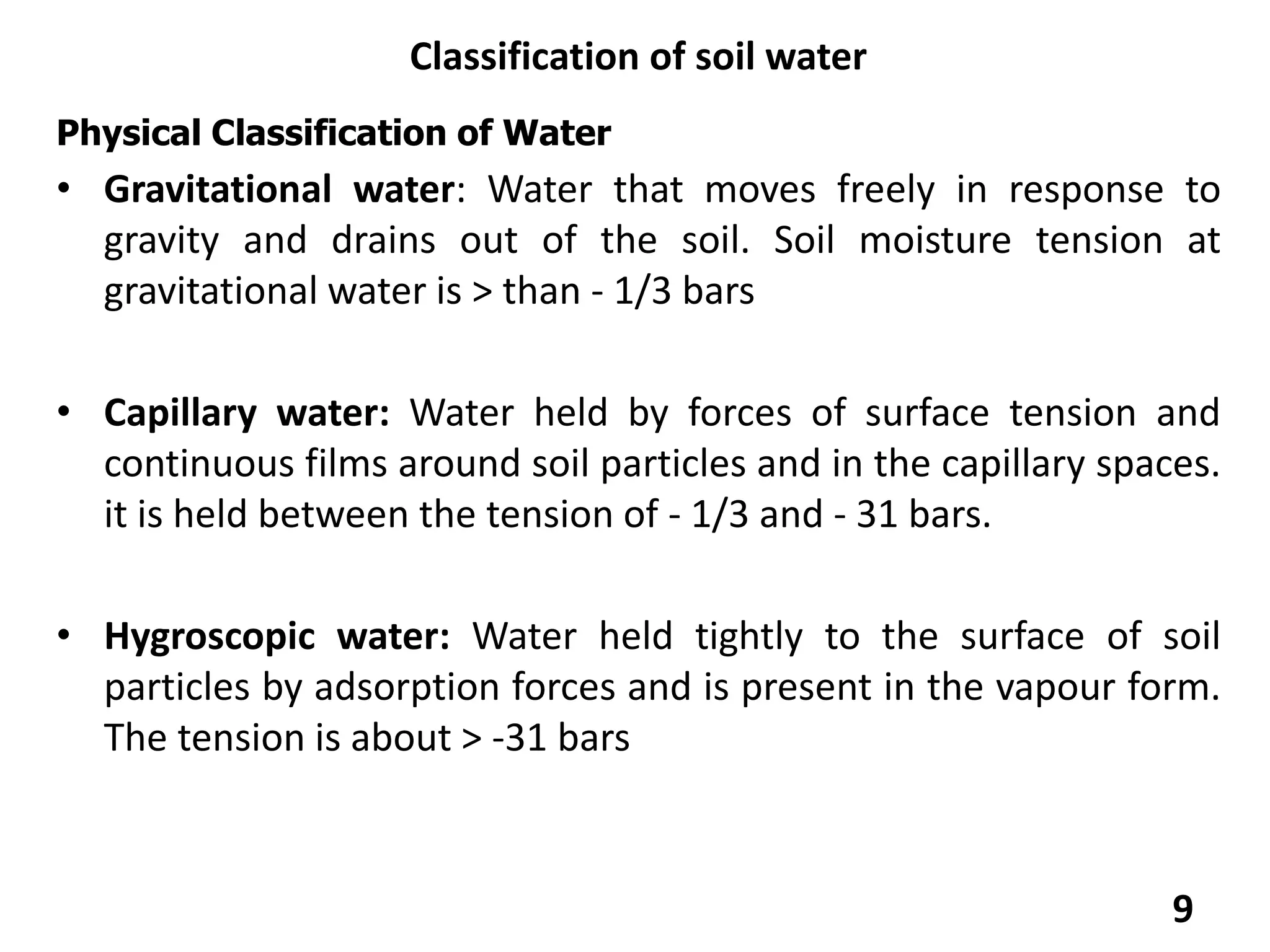
• Gravitational water: Water that moves freely in response to
gravity and drains out of the soil. Soil moisture tension at
gravitational water is > than - 1/3 bars
• Capillary water: Water held by forces of surface tension and
continuous films around soil particles and in the capillary spaces.
it is held between the tension of - 1/3 and - 31 bars.
• Hygroscopic water: Water held tightly to the surface of soil
particles by adsorption forces and is present in the vapour form.
The tension is about > -31 bars
9
10
11
Terminology
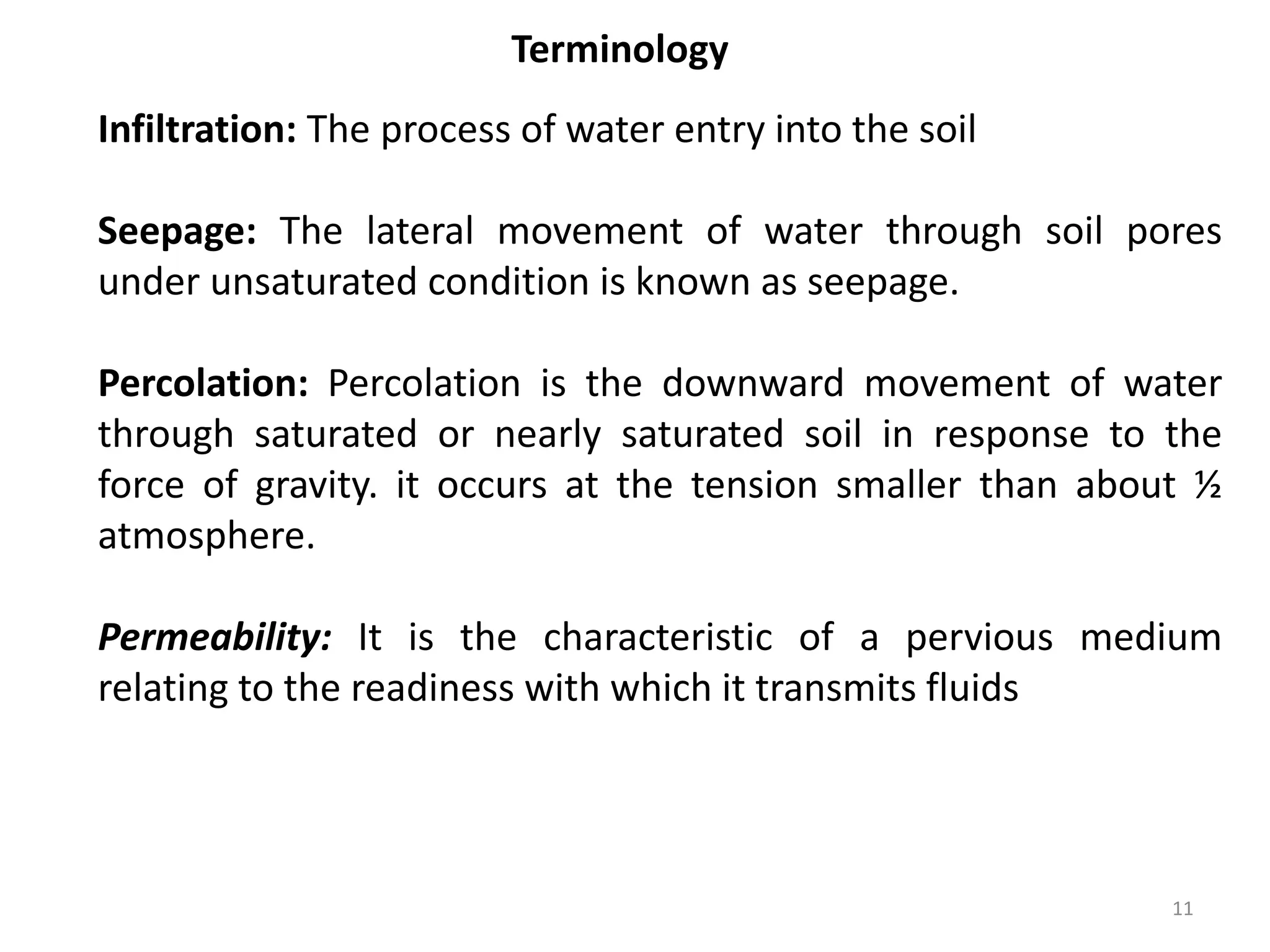
Infiltration: The process of water entry into the soil
Seepage: The lateral movement of water through soil pores
under unsaturated condition is known as seepage.
Percolation: Percolation is the downward movement of water
through saturated or nearly saturated soil in response to the
force of gravity. it occurs at the tension smaller than about ½
atmosphere.
Permeability: It is the characteristic of a pervious medium
relating to the readiness with which it transmits fluids
12
Types of water movement
Soil moisture constant
13
The water contents expressed under certain standard conditions are
commonly referred to as soil moisture constants.
Maximum water holding capacity: When all the pores of the soil are
filled with water, the soil is said to be under saturation capacity of
maximum water holding capacity.
Field capacity: is “the amount of water held in soil after excess
water has been drained away. The soil moisture tension - 0.10 to -
0.33 bars. it is the upper limit of available soil moisture
Permanent wilting point: the soil moisture content at which plants
can no longer obtain enough moisture to meet transpiration
requirements; and remain wilted unless water is added to the soil.
The soil moisture tension – 15 bars. It is the lower limit of available
soil moisture
14
Hygroscopic coefficient: is the percentage of water
remaining in an air-dry soil. At this point, water in the soil is
adsorbed in vapour form and soil moisture tension is about –
31 bars
Available soil moisture: The amount of soil moisture held
between the field capacity (- 0.33 bars) and permanent
wilting point (-15 bars) as available soil moisture
15
16
17
Any Doubts ?????
Thank You

Lecture 5 Soil-water relationship water requirements.pptx

  • 1.
    Soil-plant-water relationship Dr. NirajBiswakarma Assistant professor, SOAS GDGU 1
  • 2.
    Irrigation 2 Irrigation is theartificial application of water to the soil for the purpose of crop growth or crop production in supplement to rainfall and ground water contribution. Objectives 1. To add water to soil for supplies the moisture essential for plant growth. 2. To provide crop insurance against short period of drought. 3. To cool soil and atmosphere, thereby making more favorable environment for plant growth. 4. To washout salts from the root zone of plant. 5. To dissolve the plant nutrients present in soil. 6. To soften the tillage pan or facilitate tillage operation.
  • 3.
    3 Soil Physical PropertiesInfluencing Soil Water Relations Soil – A three phase disperse system: solid, liquid and gas Different soil physical properties are • Soil depth, Soil texture, Soil structure, Density of soil and Pore spaces
  • 4.
    4 a) Soil depth Itis the thickness of soil cover over hard rock or hard substratum below which roots cannot penetrate. A shallow soil - limited moisture holding capacity, therefore would need frequent irrigations b) Soil texture Relative proportion of mineral particles i.e. sand, silt and clay, respectively coarse textured soils (sandy soils) - low water holding capacity and facilitate rapid drainage and air movement. fine textured soils (clayey) - relatively high water holding capacity,
  • 5.
    5 C) Soil structure Thestructure of a soil refers to the arrangement of the soil particles and the adhesion of smaller particles to form large ones or aggregates.
  • 6.
    6 D) Density ofsoil 1) Particle density (PD): ratio of a given mass of soil solids to the volume of soil solid. It is usually expressed in terms of g/cm3. PD of most mineral soils vary between - 2.6 to 2.75 g/cm3 2) Bulk density (BD): It refers to the ratio of a given mass of an oven dried soil to volume of soil (i.e., solids + pore spaces). BD of clay soil is 1.2 and sandy soil- 1.4 g/cm3 e) Pore space volumes of pore space to total volume of soil. Total porosity of for arable soils is between 30 to 60%
  • 7.
    Water Retention inSoil Adhesion: Attraction between water molecules and solid surfaces Cohesion: Attraction of water molecules for each other. 7
  • 8.
    Soil moisture tension itis a measure of the tenacity with which water is retained in the soil and reflects the force per unit area that must be exerted by plants to remove water from the soil 8 Soil moisture characteristic curves The graphical representation of the relationship between soil moisture tension and soil water content is known as soil moisture characteristic curve or water retention curve
  • 9.
    Classification of soilwater Physical Classification of Water • Gravitational water: Water that moves freely in response to gravity and drains out of the soil. Soil moisture tension at gravitational water is > than - 1/3 bars • Capillary water: Water held by forces of surface tension and continuous films around soil particles and in the capillary spaces. it is held between the tension of - 1/3 and - 31 bars. • Hygroscopic water: Water held tightly to the surface of soil particles by adsorption forces and is present in the vapour form. The tension is about > -31 bars 9
  • 10.
  • 11.
    11 Terminology Infiltration: The processof water entry into the soil Seepage: The lateral movement of water through soil pores under unsaturated condition is known as seepage. Percolation: Percolation is the downward movement of water through saturated or nearly saturated soil in response to the force of gravity. it occurs at the tension smaller than about ½ atmosphere. Permeability: It is the characteristic of a pervious medium relating to the readiness with which it transmits fluids
  • 12.
  • 13.
    Soil moisture constant 13 Thewater contents expressed under certain standard conditions are commonly referred to as soil moisture constants. Maximum water holding capacity: When all the pores of the soil are filled with water, the soil is said to be under saturation capacity of maximum water holding capacity. Field capacity: is “the amount of water held in soil after excess water has been drained away. The soil moisture tension - 0.10 to - 0.33 bars. it is the upper limit of available soil moisture Permanent wilting point: the soil moisture content at which plants can no longer obtain enough moisture to meet transpiration requirements; and remain wilted unless water is added to the soil. The soil moisture tension – 15 bars. It is the lower limit of available soil moisture
  • 14.
    14 Hygroscopic coefficient: isthe percentage of water remaining in an air-dry soil. At this point, water in the soil is adsorbed in vapour form and soil moisture tension is about – 31 bars Available soil moisture: The amount of soil moisture held between the field capacity (- 0.33 bars) and permanent wilting point (-15 bars) as available soil moisture
  • 15.
  • 16.
  • 17.