Monetary Policy
Dr Akhlas Ahmed
Lecture # 3
@IBT City campus, Karachi
30.1.17
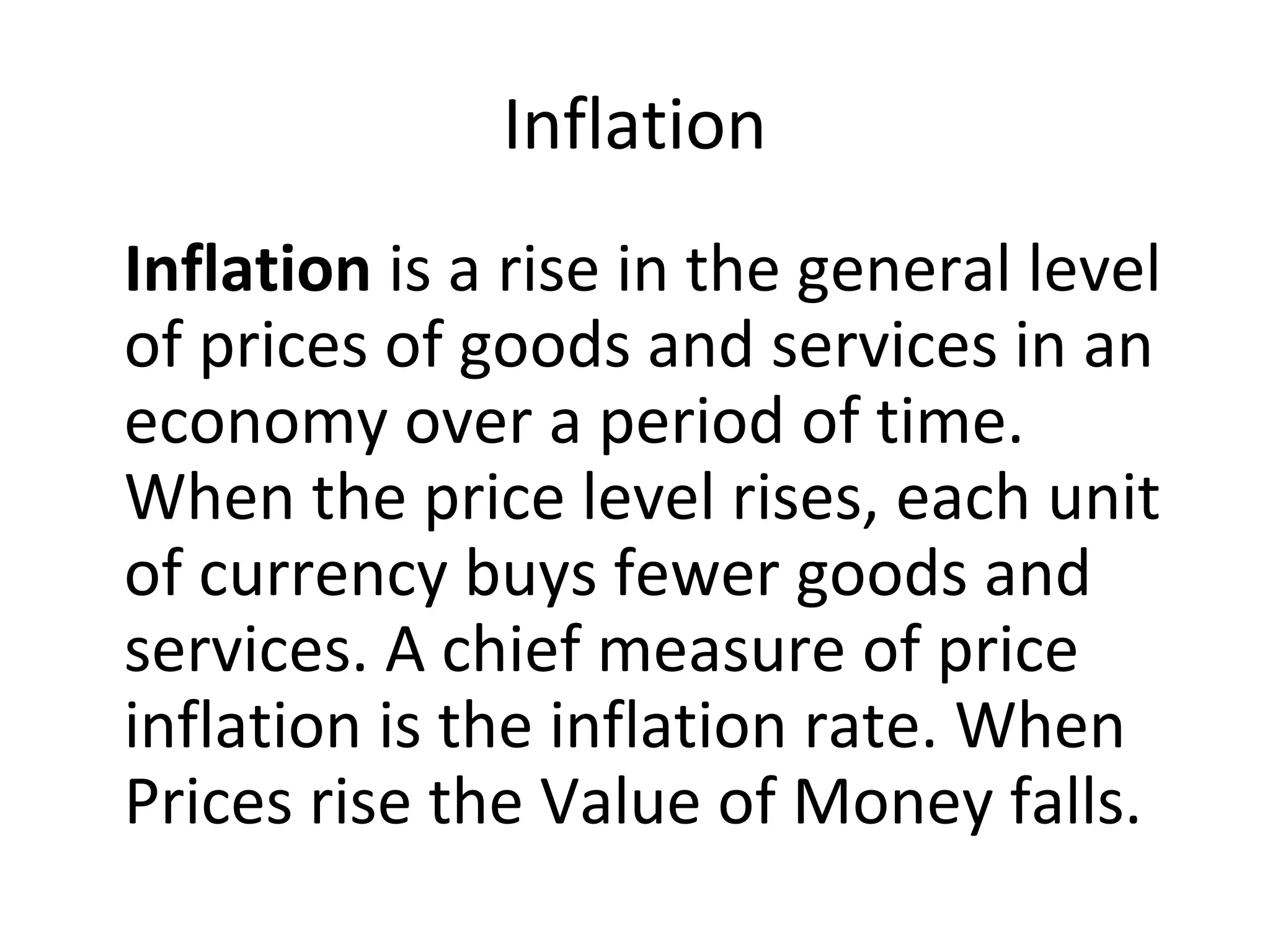
Inflation
Inflation is a rise in the general level
of prices of goods and services in an
economy over a period of time.
When the price level rises, each unit
of currency buys fewer goods and
services. A chief measure of price
inflation is the inflation rate. When
Prices rise the Value of Money falls.
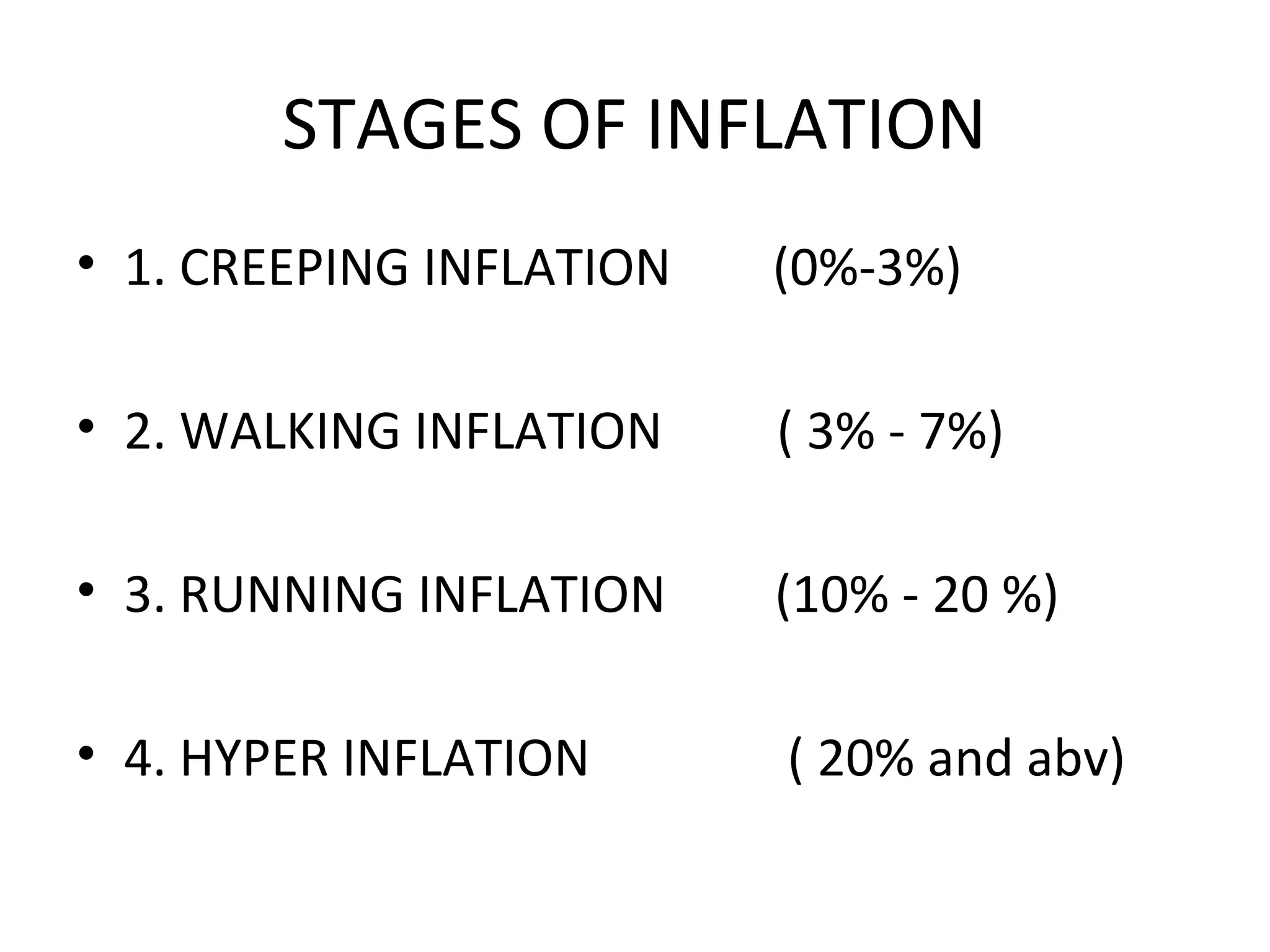
STAGES OF INFLATION
• 1. CREEPING INFLATION (0%-3%)
• 2. WALKING INFLATION ( 3% - 7%)
• 3. RUNNING INFLATION (10% - 20 %)
• 4. HYPER INFLATION ( 20% and abv)
TYPES OF INFLATION
1. Demand Pull Inflation
2. Cost Push Inflation
Causes of Inflation
• 1. Demand pull Inflation
Causes for Increase in Demand:-
a) Increase in Money Supply
b)Increase in Black Marketing
c) Increase in Hoarding
d)Repayment of Past Internal Debt
e) Increase in Exports
f) Deficit Financing
Cont……….
g) Increase in Income
h) Demonstration Effect
i) Increase in Black money
j) Increase in Credit facilities
Cont….
• 2) Cost Push Inflation
Causes for Increase in Cost :-
a)Increase in cost of raw materials
b)Shortage of Supplies
c) Natural calamities
d)Industrial Disputes
e)Increase in Exports
f) Increase in Wages
g)Increase in Transportation Cost
h)Huge Expenditure on Advertisement
Effects of Inflation
• Inflation can have positive and negative effects
on an economy.
• Negative effects of inflation include loss in
stability in the real value of money and other
monetary items over time; uncertainty about
future inflation may discourage investment and
saving, and
• High inflation may lead to shortages of goods if
consumers begin hoarding out of concern that
prices will increase in the future. Positive effects
include a mitigation of economic recessions, and
debt relief by reducing the real level of debt.
Cont…..
1. Effect on Producers
2. Effect on Debtors
3. Effect on Creditors
4. Effect on Fixed Income Group
5. Effect on Wage Earners
6. Effect on Equity Holders
7. Effect on farmers
8. Effect on Production
9.Effect on Hoarding
10.Effect on value of Money
11.Effect on Investment
12. Effect on savings
What is the Monetary Policy?
• The Monetary and Credit Policy is the policy
statement, traditionally announced twice a year,
through which the State Bank of Pakistan seeks to
ensure price stability for the economy.
These factors include - money supply, interest rates
and the inflation. In banking and economic terms
money supply is referred to as M3 - which indicates
the level (stock) of legal currency in the economy.
Besides, the State Bank of Pakistan also announces
norms for the banking and financial sector and the
institutions which are governed by it.
How is the Monetary Policy different
from the Fiscal Policy?
• The Monetary Policy regulates the supply of money and the cost
and availability of credit in the economy. It deals with both the
lending and borrowing rates of interest for commercial banks.
• The Monetary Policy aims to maintain price stability, full
employment and economic growth.
• The Monetary Policy is different from Fiscal Policy as the former
brings about a change in the economy by changing money supply
and interest rate, whereas fiscal policy is a broader tool with the
government.
• The Fiscal Policy can be used to overcome recession and control
inflation. It may be defined as a deliberate change in government
revenue and expenditure to influence the level of national output
and prices.
What are the objectives of the
Monetary Policy?
• The objectives are to maintain price stability and
ensure adequate flow of credit to the productive
sectors of the economy.
Stability for the national currency (after looking
at prevailing economic conditions), growth in
employment and income are also looked into.
The monetary policy affects the real sector
through long and variable periods while the
financial markets are also impacted through
short-term implications.
INSTRUMENTS OF MONETARY POLICY
• 1. Bank Rate of Interest
• 2. Cash Reserve Ratio
• 3. Statutory Liquidity Ratio
• 4. Open market Operations
• 5. Margin Requirements
• 6. Deficit Financing
• 7. Issue of New Currency
• 8. Credit Control
Bank Rate of Interest
It is the interest rate which is fixed by the SBP to control the
lending capacity of Commercial banks . During Inflation , SBP
increases the bank rate of interest due to which borrowing
power of commercial banks reduces which thereby reduces the
supply of money or credit in the economy .When Money
supply Reduces it reduces the purchasing power and thereby
curtailing Consumption and lowering Prices.
Cash Reserve Ratio
CRR, or cash reserve ratio, refers to a portion of deposits (as
cash) which banks have to keep/maintain with the SBP.
During Inflation SBP increases the CRR due to which
commercial banks have to keep a greater portion of their
deposits with the SBP . This serves two purposes. It ensures
that a portion of bank deposits is totally risk-free and
secondly it enables that SBP control liquidity in the system,
and thereby, inflation.
Statutory Liquidity Ratio
Banks are required to invest a portion of their
deposits in government securities as a part of
their statutory liquidity ratio (SLR)
requirements . If SLR increases the lending
capacity of commercial banks decreases
thereby regulating the supply of money in the
economy.
Open market Operations
It refers to the buying and selling of Govt.
securities in the open market . During inflation
SBP sells securities in the open market which
leads to transfer of money to SBP. Thus
money supply is controlled in the economy.
Margin Requirements
• During Inflation SBP fixes a high rate of margin
on the securities kept by the public for loans.
If the margin increases the commercial banks
will give less amount of credit on the
securities kept by the public thereby
controlling inflation.
Deficit Financing
• It means printing of new currency notes by
SBP. If more new notes are printed it will
increase the supply of money thereby
increasing demand and prices.
• Thus during Inflation, SBP will stop printing
new currency notes thereby controlling
inflation.
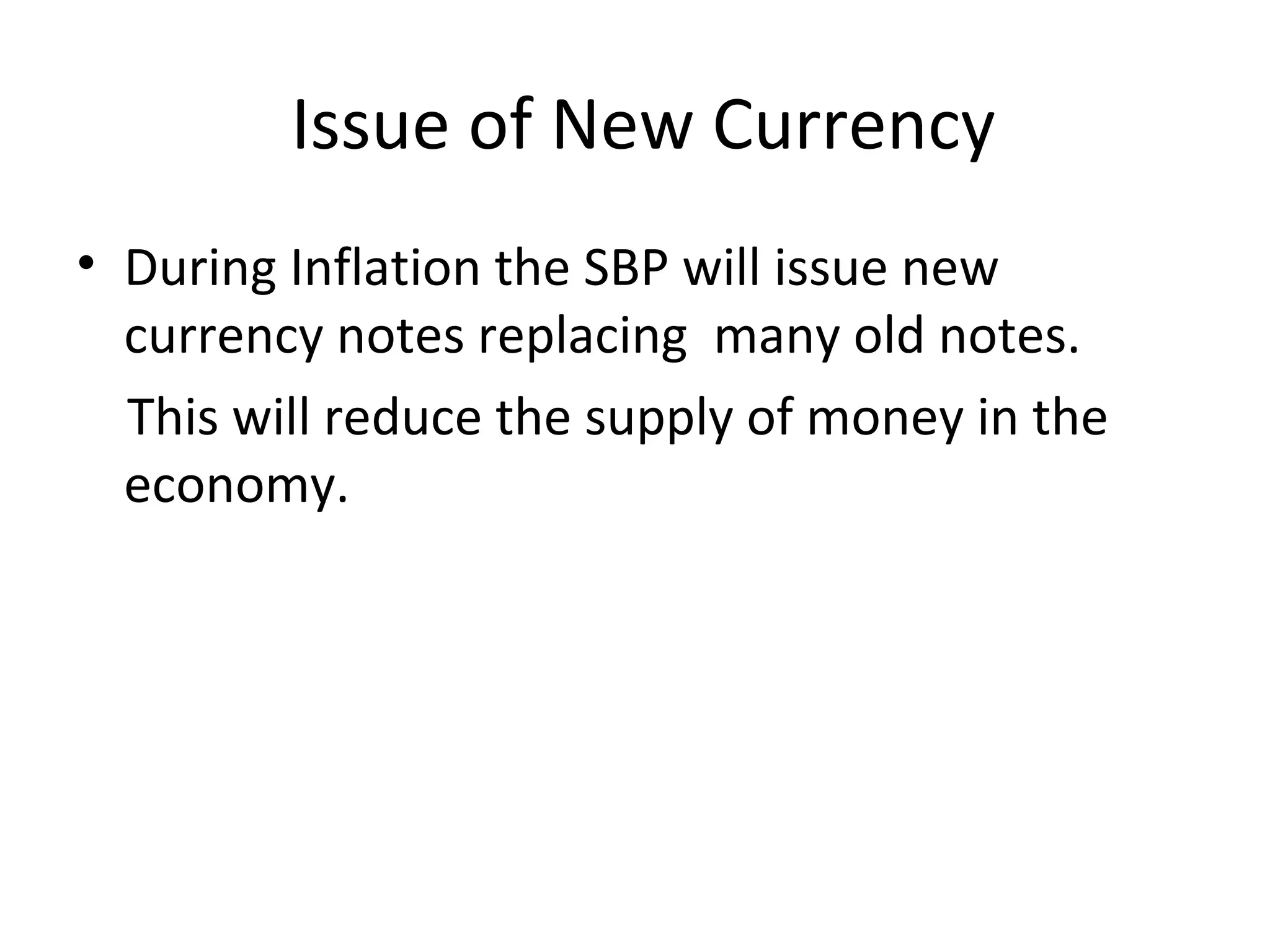
Issue of New Currency
• During Inflation the SBP will issue new
currency notes replacing many old notes.
This will reduce the supply of money in the
economy.
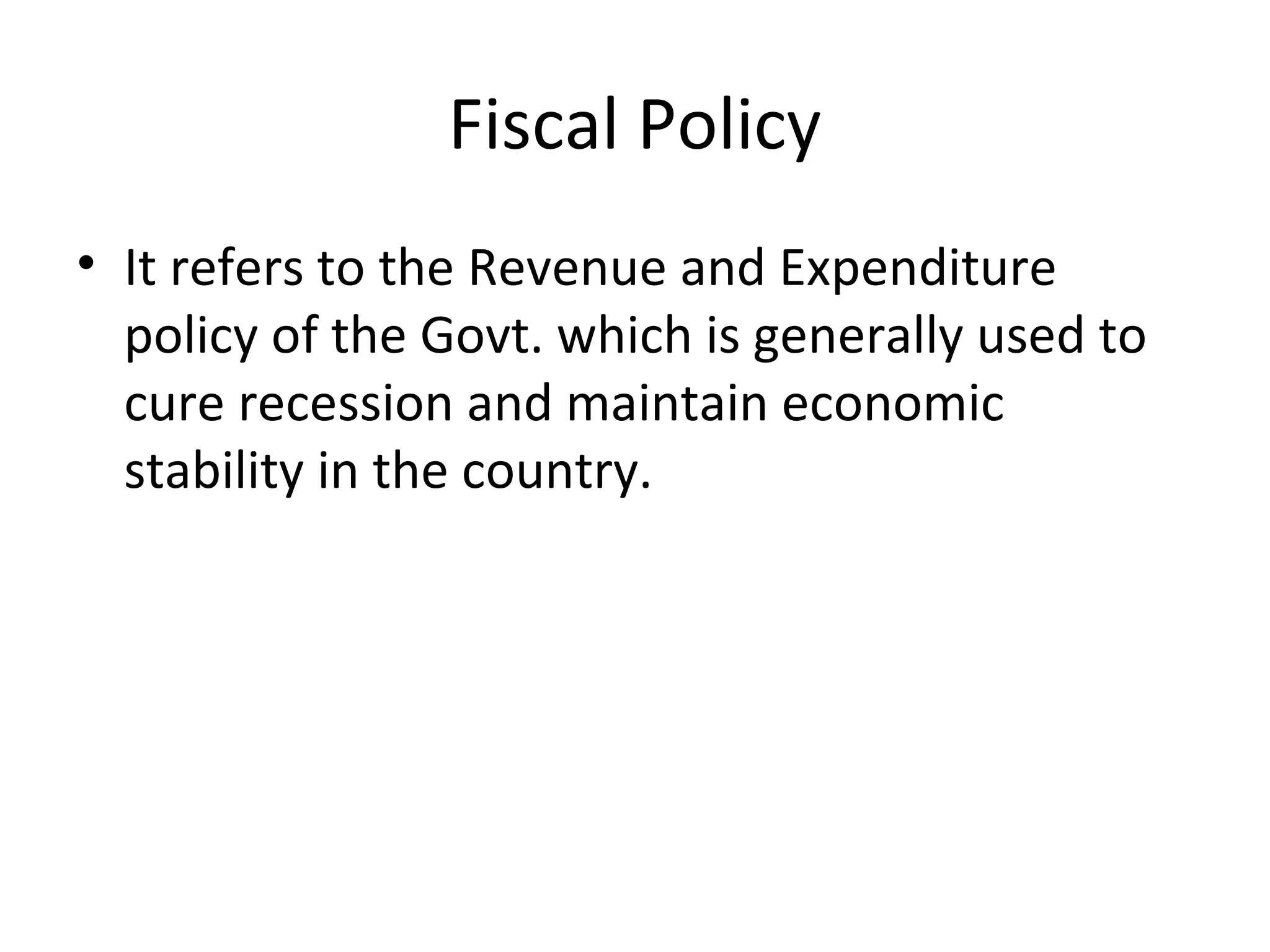
Fiscal Policy
• It refers to the Revenue and Expenditure
policy of the Govt. which is generally used to
cure recession and maintain economic
stability in the country.
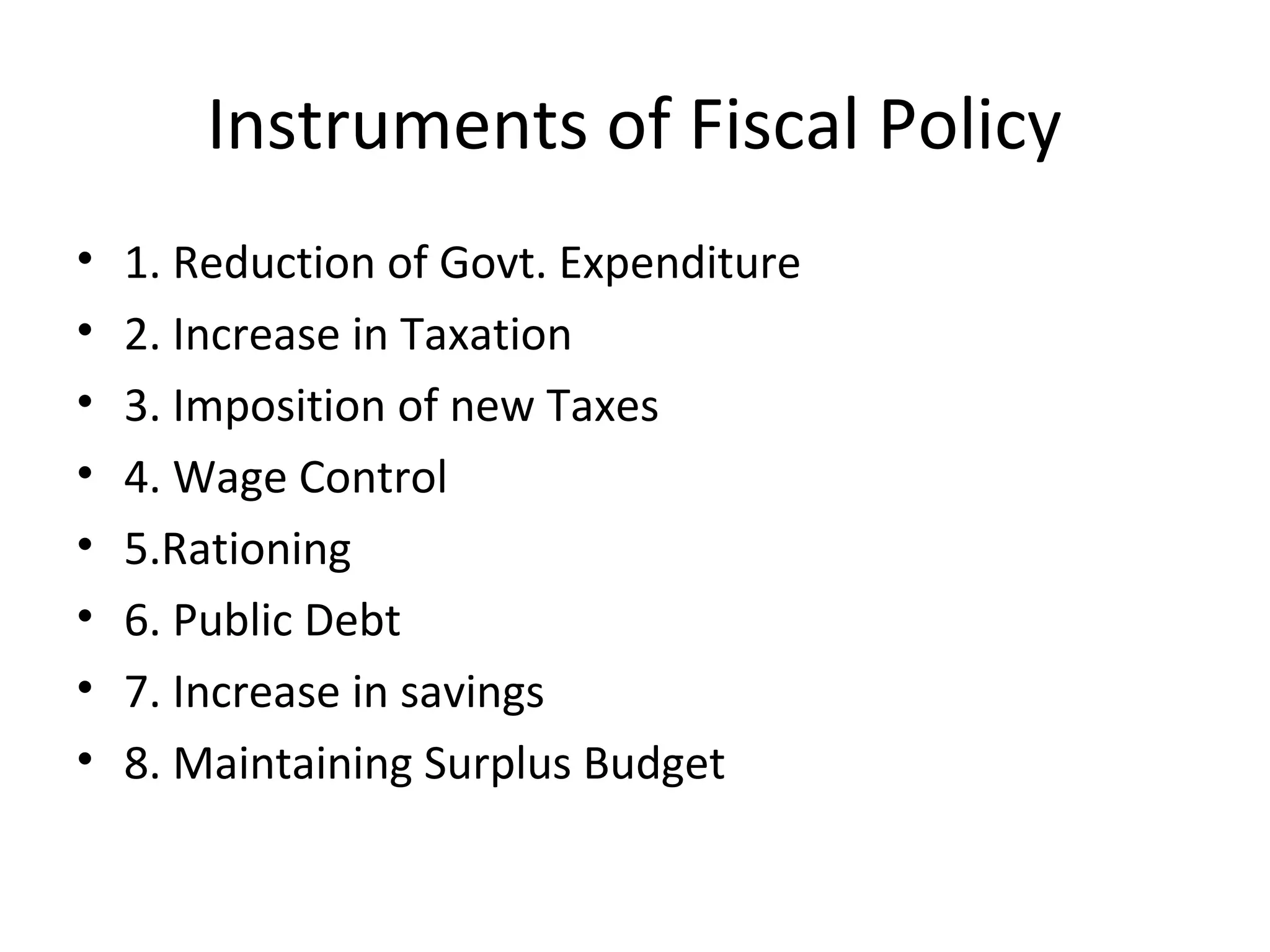
Instruments of Fiscal Policy
• 1. Reduction of Govt. Expenditure
• 2. Increase in Taxation
• 3. Imposition of new Taxes
• 4. Wage Control
• 5.Rationing
• 6. Public Debt
• 7. Increase in savings
• 8. Maintaining Surplus Budget
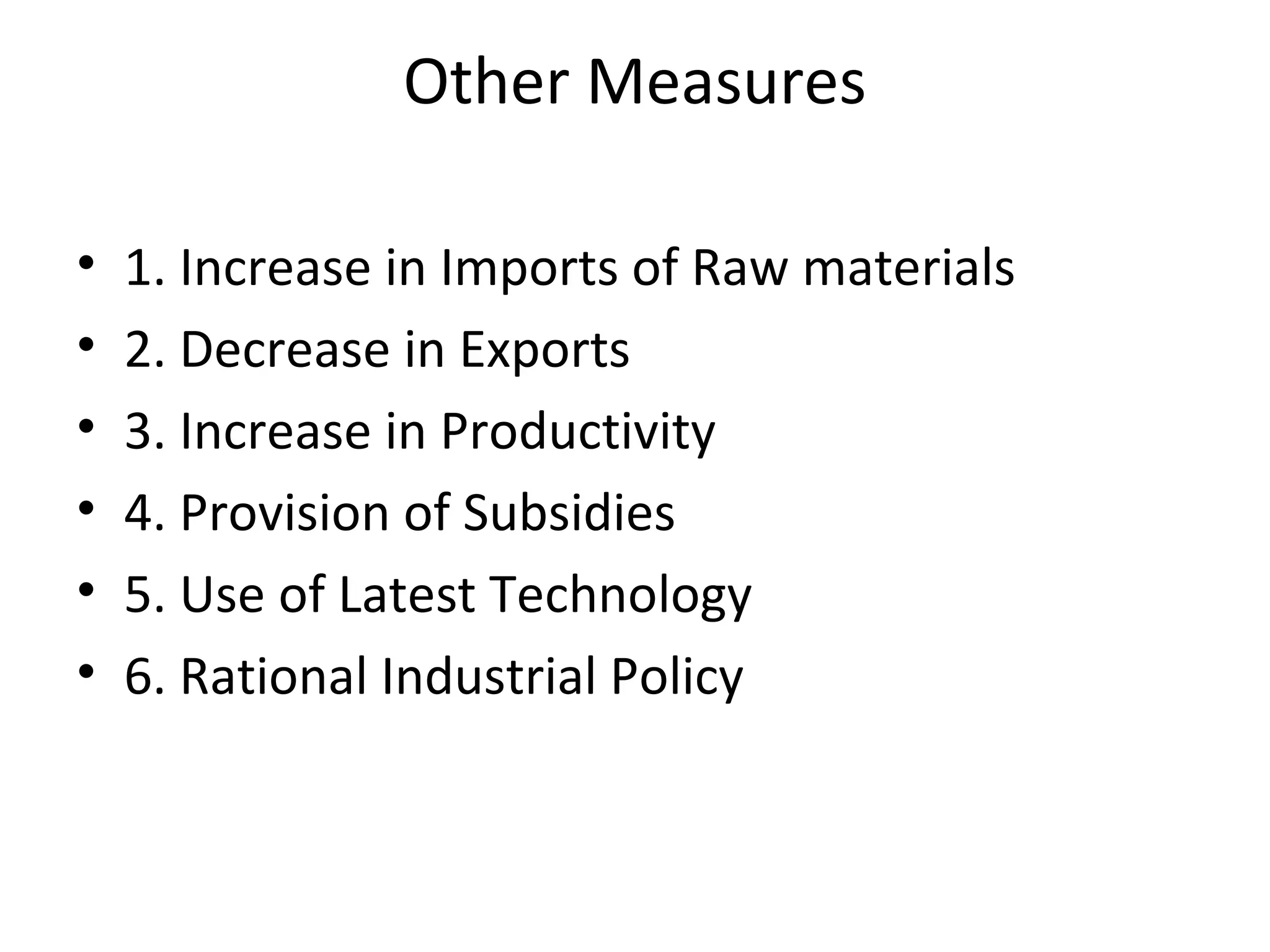
Other Measures
• 1. Increase in Imports of Raw materials
• 2. Decrease in Exports
• 3. Increase in Productivity
• 4. Provision of Subsidies
• 5. Use of Latest Technology
• 6. Rational Industrial Policy
Quiz # 3
Q1. Write down important features of Monetary
Policy of pakistan-2015.
Assign # 3
Q1. Write an article on Fiscal policy of Pakistan.

Lecture # 3 (30.01.2017) @ ibt monetary policy

  • 1.
    Monetary Policy Dr AkhlasAhmed Lecture # 3 @IBT City campus, Karachi 30.1.17
  • 2.
    Inflation Inflation is arise in the general level of prices of goods and services in an economy over a period of time. When the price level rises, each unit of currency buys fewer goods and services. A chief measure of price inflation is the inflation rate. When Prices rise the Value of Money falls.
  • 3.
    STAGES OF INFLATION •1. CREEPING INFLATION (0%-3%) • 2. WALKING INFLATION ( 3% - 7%) • 3. RUNNING INFLATION (10% - 20 %) • 4. HYPER INFLATION ( 20% and abv)
  • 4.
    TYPES OF INFLATION 1.Demand Pull Inflation 2. Cost Push Inflation
  • 5.
    Causes of Inflation •1. Demand pull Inflation Causes for Increase in Demand:- a) Increase in Money Supply b)Increase in Black Marketing c) Increase in Hoarding d)Repayment of Past Internal Debt e) Increase in Exports f) Deficit Financing
  • 6.
    Cont………. g) Increase inIncome h) Demonstration Effect i) Increase in Black money j) Increase in Credit facilities
  • 7.
    Cont…. • 2) CostPush Inflation Causes for Increase in Cost :- a)Increase in cost of raw materials b)Shortage of Supplies c) Natural calamities d)Industrial Disputes e)Increase in Exports f) Increase in Wages g)Increase in Transportation Cost h)Huge Expenditure on Advertisement
  • 8.
    Effects of Inflation •Inflation can have positive and negative effects on an economy. • Negative effects of inflation include loss in stability in the real value of money and other monetary items over time; uncertainty about future inflation may discourage investment and saving, and • High inflation may lead to shortages of goods if consumers begin hoarding out of concern that prices will increase in the future. Positive effects include a mitigation of economic recessions, and debt relief by reducing the real level of debt.
  • 9.
    Cont….. 1. Effect onProducers 2. Effect on Debtors 3. Effect on Creditors 4. Effect on Fixed Income Group 5. Effect on Wage Earners 6. Effect on Equity Holders 7. Effect on farmers 8. Effect on Production
  • 10.
    9.Effect on Hoarding 10.Effecton value of Money 11.Effect on Investment 12. Effect on savings
  • 11.
    What is theMonetary Policy? • The Monetary and Credit Policy is the policy statement, traditionally announced twice a year, through which the State Bank of Pakistan seeks to ensure price stability for the economy. These factors include - money supply, interest rates and the inflation. In banking and economic terms money supply is referred to as M3 - which indicates the level (stock) of legal currency in the economy. Besides, the State Bank of Pakistan also announces norms for the banking and financial sector and the institutions which are governed by it.
  • 12.
    How is theMonetary Policy different from the Fiscal Policy? • The Monetary Policy regulates the supply of money and the cost and availability of credit in the economy. It deals with both the lending and borrowing rates of interest for commercial banks. • The Monetary Policy aims to maintain price stability, full employment and economic growth. • The Monetary Policy is different from Fiscal Policy as the former brings about a change in the economy by changing money supply and interest rate, whereas fiscal policy is a broader tool with the government. • The Fiscal Policy can be used to overcome recession and control inflation. It may be defined as a deliberate change in government revenue and expenditure to influence the level of national output and prices.
  • 13.
    What are theobjectives of the Monetary Policy? • The objectives are to maintain price stability and ensure adequate flow of credit to the productive sectors of the economy. Stability for the national currency (after looking at prevailing economic conditions), growth in employment and income are also looked into. The monetary policy affects the real sector through long and variable periods while the financial markets are also impacted through short-term implications.
  • 14.
    INSTRUMENTS OF MONETARYPOLICY • 1. Bank Rate of Interest • 2. Cash Reserve Ratio • 3. Statutory Liquidity Ratio • 4. Open market Operations • 5. Margin Requirements • 6. Deficit Financing • 7. Issue of New Currency • 8. Credit Control
  • 15.
    Bank Rate ofInterest It is the interest rate which is fixed by the SBP to control the lending capacity of Commercial banks . During Inflation , SBP increases the bank rate of interest due to which borrowing power of commercial banks reduces which thereby reduces the supply of money or credit in the economy .When Money supply Reduces it reduces the purchasing power and thereby curtailing Consumption and lowering Prices.
  • 16.
    Cash Reserve Ratio CRR,or cash reserve ratio, refers to a portion of deposits (as cash) which banks have to keep/maintain with the SBP. During Inflation SBP increases the CRR due to which commercial banks have to keep a greater portion of their deposits with the SBP . This serves two purposes. It ensures that a portion of bank deposits is totally risk-free and secondly it enables that SBP control liquidity in the system, and thereby, inflation.
  • 17.
    Statutory Liquidity Ratio Banksare required to invest a portion of their deposits in government securities as a part of their statutory liquidity ratio (SLR) requirements . If SLR increases the lending capacity of commercial banks decreases thereby regulating the supply of money in the economy.
  • 18.
    Open market Operations Itrefers to the buying and selling of Govt. securities in the open market . During inflation SBP sells securities in the open market which leads to transfer of money to SBP. Thus money supply is controlled in the economy.
  • 19.
    Margin Requirements • DuringInflation SBP fixes a high rate of margin on the securities kept by the public for loans. If the margin increases the commercial banks will give less amount of credit on the securities kept by the public thereby controlling inflation.
  • 20.
    Deficit Financing • Itmeans printing of new currency notes by SBP. If more new notes are printed it will increase the supply of money thereby increasing demand and prices. • Thus during Inflation, SBP will stop printing new currency notes thereby controlling inflation.
  • 21.
    Issue of NewCurrency • During Inflation the SBP will issue new currency notes replacing many old notes. This will reduce the supply of money in the economy.
  • 22.
    Fiscal Policy • Itrefers to the Revenue and Expenditure policy of the Govt. which is generally used to cure recession and maintain economic stability in the country.
  • 23.
    Instruments of FiscalPolicy • 1. Reduction of Govt. Expenditure • 2. Increase in Taxation • 3. Imposition of new Taxes • 4. Wage Control • 5.Rationing • 6. Public Debt • 7. Increase in savings • 8. Maintaining Surplus Budget
  • 24.
    Other Measures • 1.Increase in Imports of Raw materials • 2. Decrease in Exports • 3. Increase in Productivity • 4. Provision of Subsidies • 5. Use of Latest Technology • 6. Rational Industrial Policy
  • 25.
    Quiz # 3 Q1.Write down important features of Monetary Policy of pakistan-2015. Assign # 3 Q1. Write an article on Fiscal policy of Pakistan.