Contributions of the Greeks
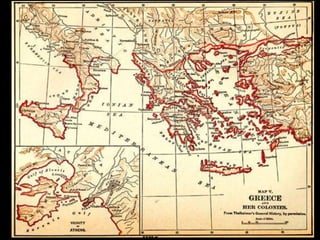
Democracy
Olympic Games
Hippocratic Oath
Philosophy (Aristotle, Socrates, Plato)
Architecture (Corinthian, Doric, Ionic Columns)
Theatre Styles (drama, comedy, tragedy)
Literary Classics (The Iliad, The Odyssey)
Sculpture
Pottery
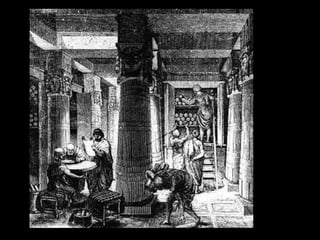
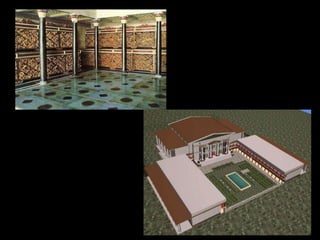
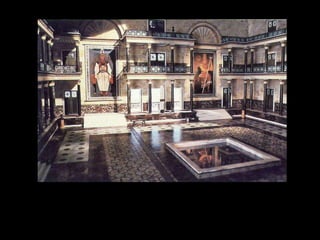
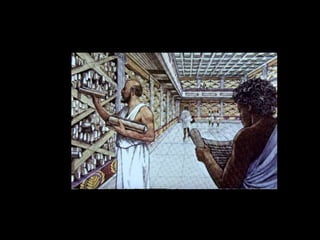
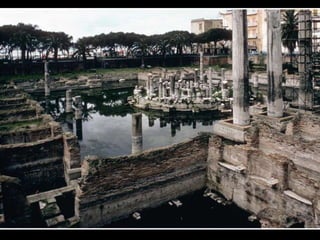
Libraries
Advantages of Codex
• Easier to look up information, no rolling and unrolling
• Easier to carry (smaller)
• More durable
• Could write on both sides of the parchment saving storage
  and material
• Space and material costs were less
Codex Appeal to Early Christians
• Christians felt their writing was sacred
• Codex had study advantages
• Christians wanted to separate themselves from the Pagans
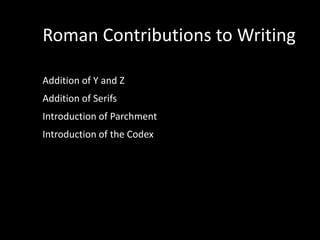
Roman Contributions to Writing

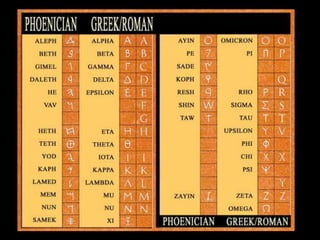
Addition of Y and Z
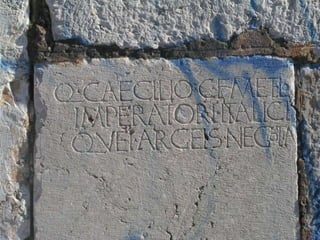
Addition of Serifs
Introduction of Parchment
Introduction of the Codex
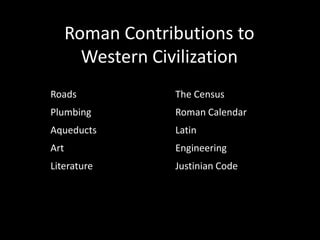
Roman Contributions to
        Western Civilization
Roads             The Census
Plumbing          Roman Calendar
Aqueducts         Latin
Art               Engineering
Literature        Justinian Code
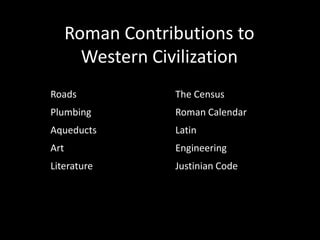
Roman Contributions to
        Western Civilization
Roads             The Census
Plumbing          Roman Calendar
Aqueducts         Latin
Art               Engineering
Literature        Justinian Code
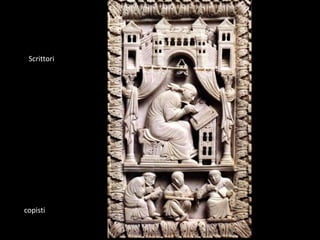
Scrittori


copisti
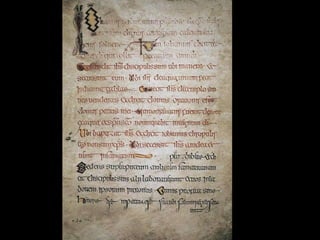
Irish Contributions to Writing

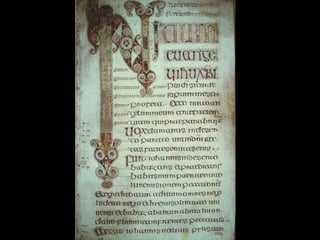
 • Half Uncials also called miuscules
 • Spaces between words
 • Developed new script called Insular script
 • Visibly improved graphics of manuscript and readability
 • Ascenders and descenders began appearing
Lecture 2
Lecture 2
Lecture 2
Lecture 2
Lecture 2
Lecture 2

Lecture 2

  • 13.
    Contributions of theGreeks Democracy Olympic Games Hippocratic Oath Philosophy (Aristotle, Socrates, Plato) Architecture (Corinthian, Doric, Ionic Columns) Theatre Styles (drama, comedy, tragedy) Literary Classics (The Iliad, The Odyssey) Sculpture Pottery Libraries
  • 23.
    Advantages of Codex •Easier to look up information, no rolling and unrolling • Easier to carry (smaller) • More durable • Could write on both sides of the parchment saving storage and material • Space and material costs were less
  • 24.
    Codex Appeal toEarly Christians • Christians felt their writing was sacred • Codex had study advantages • Christians wanted to separate themselves from the Pagans
  • 26.
    Roman Contributions toWriting Addition of Y and Z Addition of Serifs Introduction of Parchment Introduction of the Codex
  • 27.
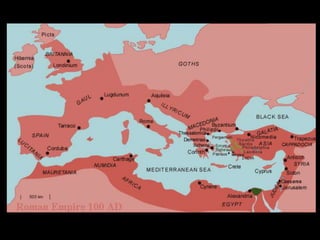
    Roman Contributions to Western Civilization Roads The Census Plumbing Roman Calendar Aqueducts Latin Art Engineering Literature Justinian Code
  • 29.
    Roman Contributions to Western Civilization Roads The Census Plumbing Roman Calendar Aqueducts Latin Art Engineering Literature Justinian Code
  • 37.
  • 50.
    Irish Contributions toWriting • Half Uncials also called miuscules • Spaces between words • Developed new script called Insular script • Visibly improved graphics of manuscript and readability • Ascenders and descenders began appearing

Editor's Notes

  • #19 Serif Ty;e
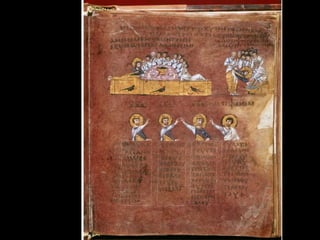
  • #23 Codex
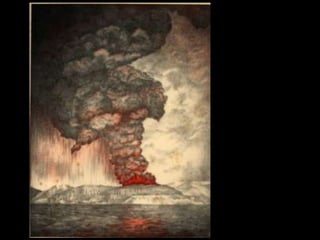
  • #31 Krakatau erupted in 535 AD
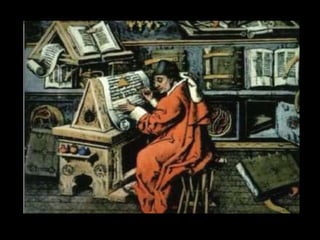
  • #36 scriptoriums
  • #38 Scrittori and the copisti
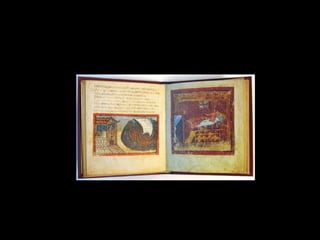
  • #39 Vatican Virgil, probably not created in a monastery but most likely before the sack of Rome which was about 410 AD
  • #40 Uncials, rounded letters became more popular as manuscripts were made.
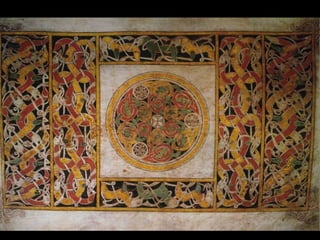
  • #42 Book of Durrow completed in 680 AD
  • #43 Book of Durrow
  • #44 Book of Durrow
  • #45 Book of Durrow
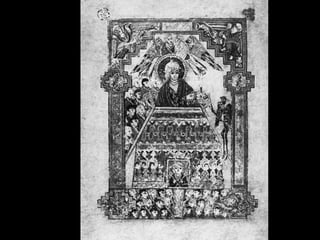
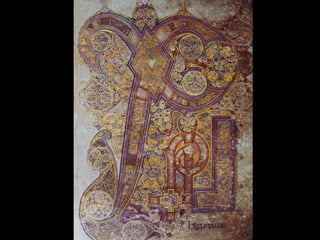
  • #46 Book of Kells
  • #47 Book of Kells
  • #48 Book of Kells
  • #49 Book of Kells
  • #50 Book of Kells
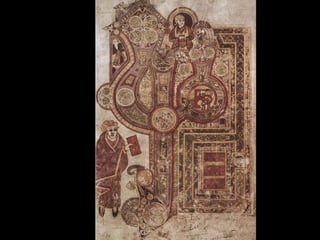
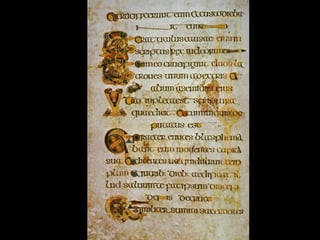
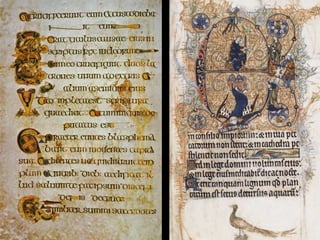
  • #53 Irish illuminated manuscript using Insular script
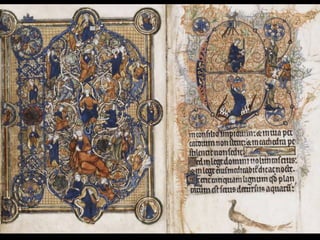
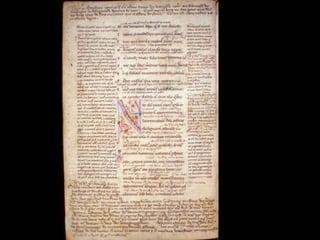
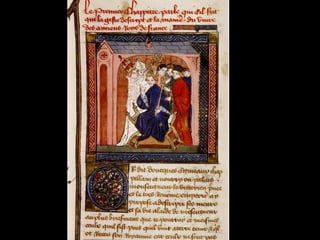
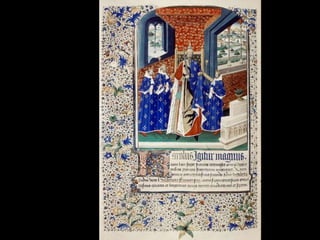
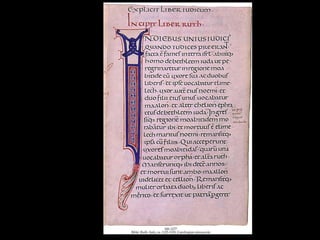
  • #54 European illuminated manuscript
  • #56 Page layout without the Caroline Minuscules
  • #57 Caroline Minuscule