James MonroeJames Monroe
“The Era of Good Feelings”“The Era of Good Feelings”
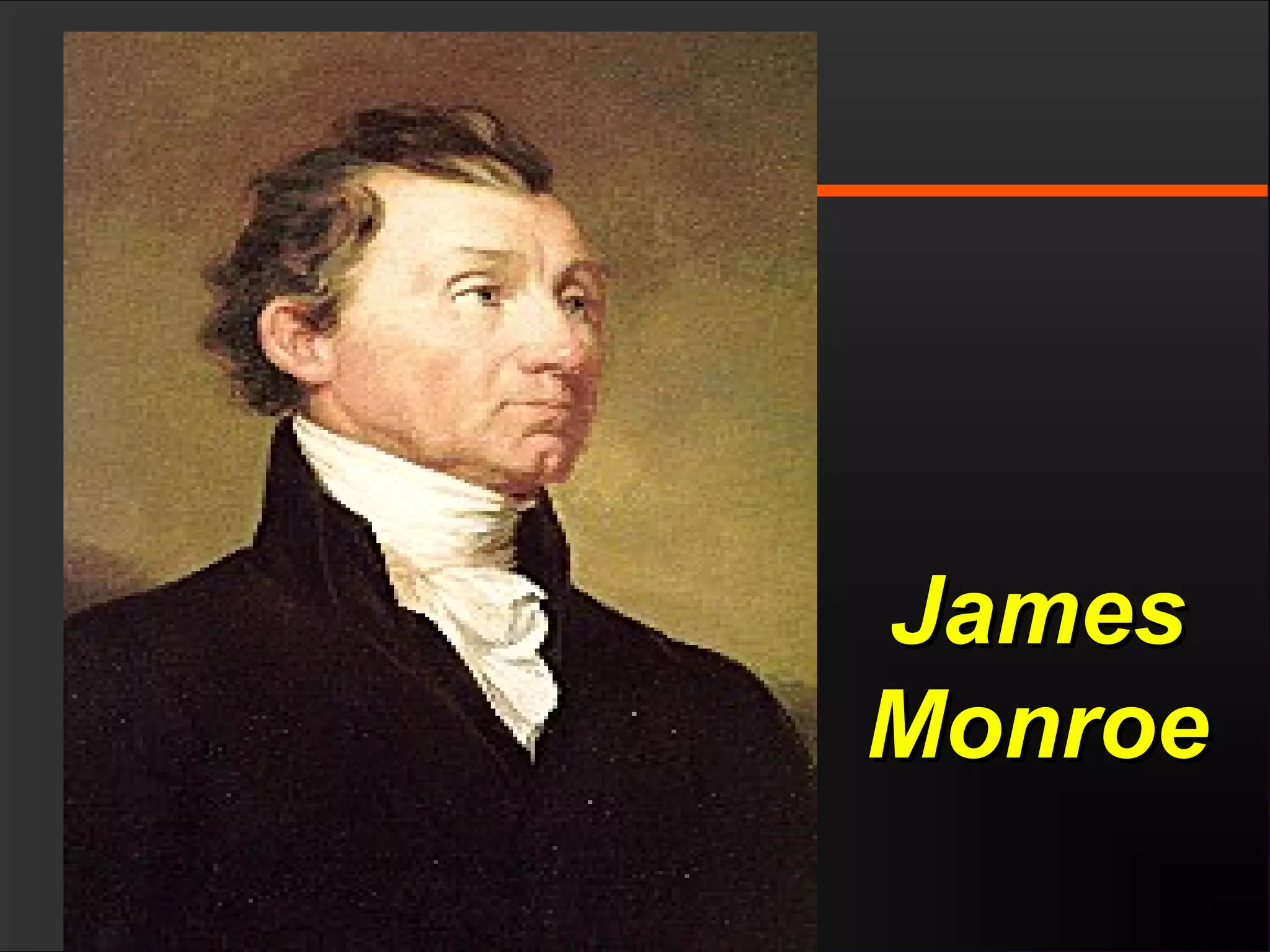
James MonroeJames Monroe
“The Era of Good Feelings”“The Era of Good Feelings”
JamesJames
MonroeMonroe
James Monroe - 1816James Monroe - 1816
Continued the Virginia Dynasty
Last Federalist candidate got 34
electoral votes
Monroe went on a goodwill tour
of the states
Period called “The Era of Good
Feelings”
Era of Good Will?Era of Good Will?
Sectional differences developed
over:
Tariffs
Bank of the United States
Internal Improvements
Public lands
Slavery
EconomyEconomy
LeaderLeader
________________________
Role ofRole of
GovernmentGovernment
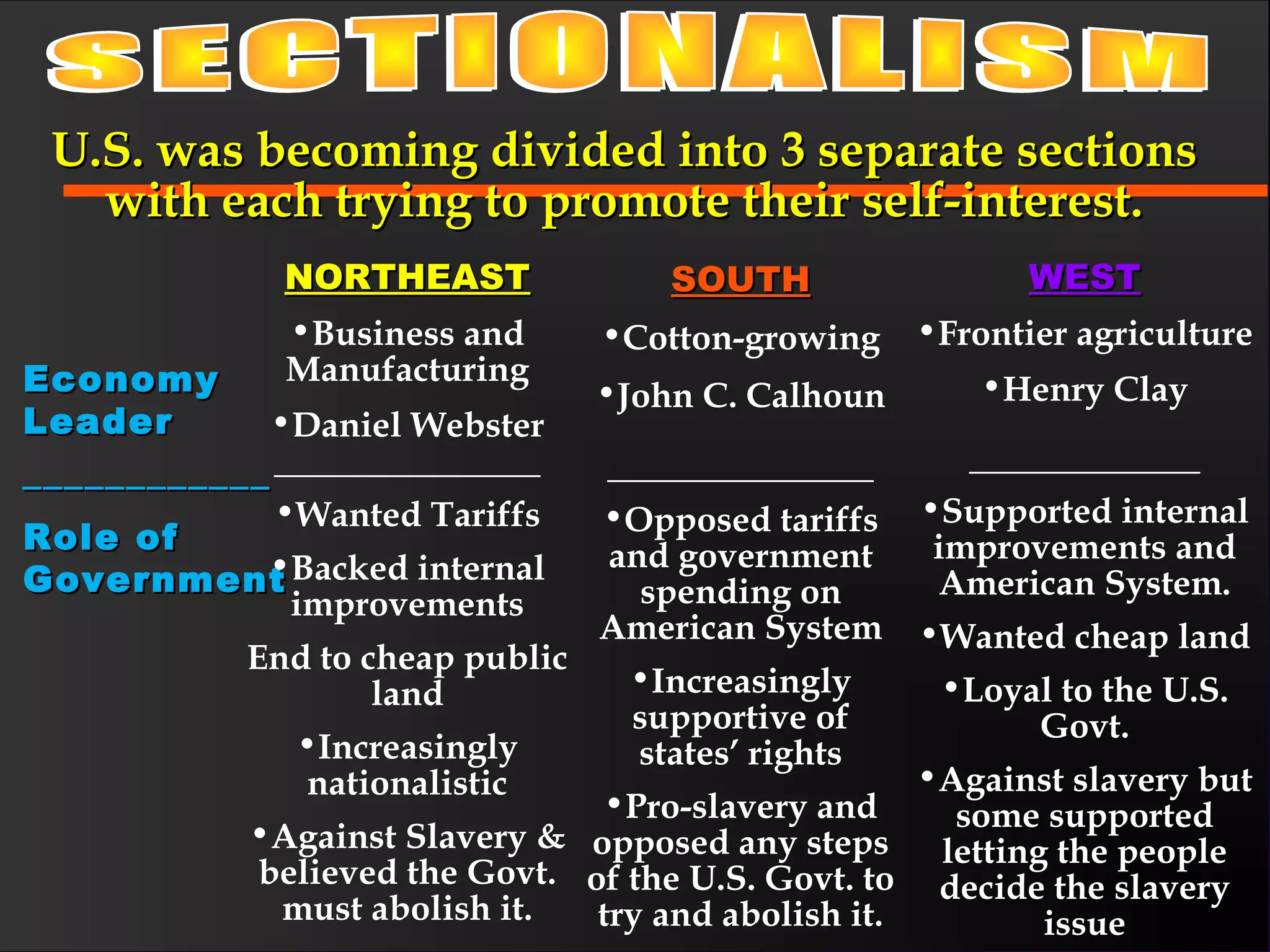
NORTHEASTNORTHEAST
•Business and
Manufacturing
•Daniel Webster
_______________
•Wanted Tariffs
•Backed internal
improvements
End to cheap public
land
•Increasingly
nationalistic
•Against Slavery &
believed the Govt.
must abolish it.
SOUTHSOUTH
•Cotton-growing
•John C. Calhoun
_______________
•Opposed tariffs
and government
spending on
American System
•Increasingly
supportive of
states’ rights
•Pro-slavery and
opposed any steps
of the U.S. Govt. to
try and abolish it.
WESTWEST
•Frontier agriculture
•Henry Clay
_____________
•Supported internal
improvements and
American System.
•Wanted cheap land
•Loyal to the U.S.
Govt.
•Against slavery but
some supported
letting the people
decide the slavery
issue
U.S. was becoming divided into 3 separate sectionsU.S. was becoming divided into 3 separate sections
with each trying to promote their self-interest.with each trying to promote their self-interest.
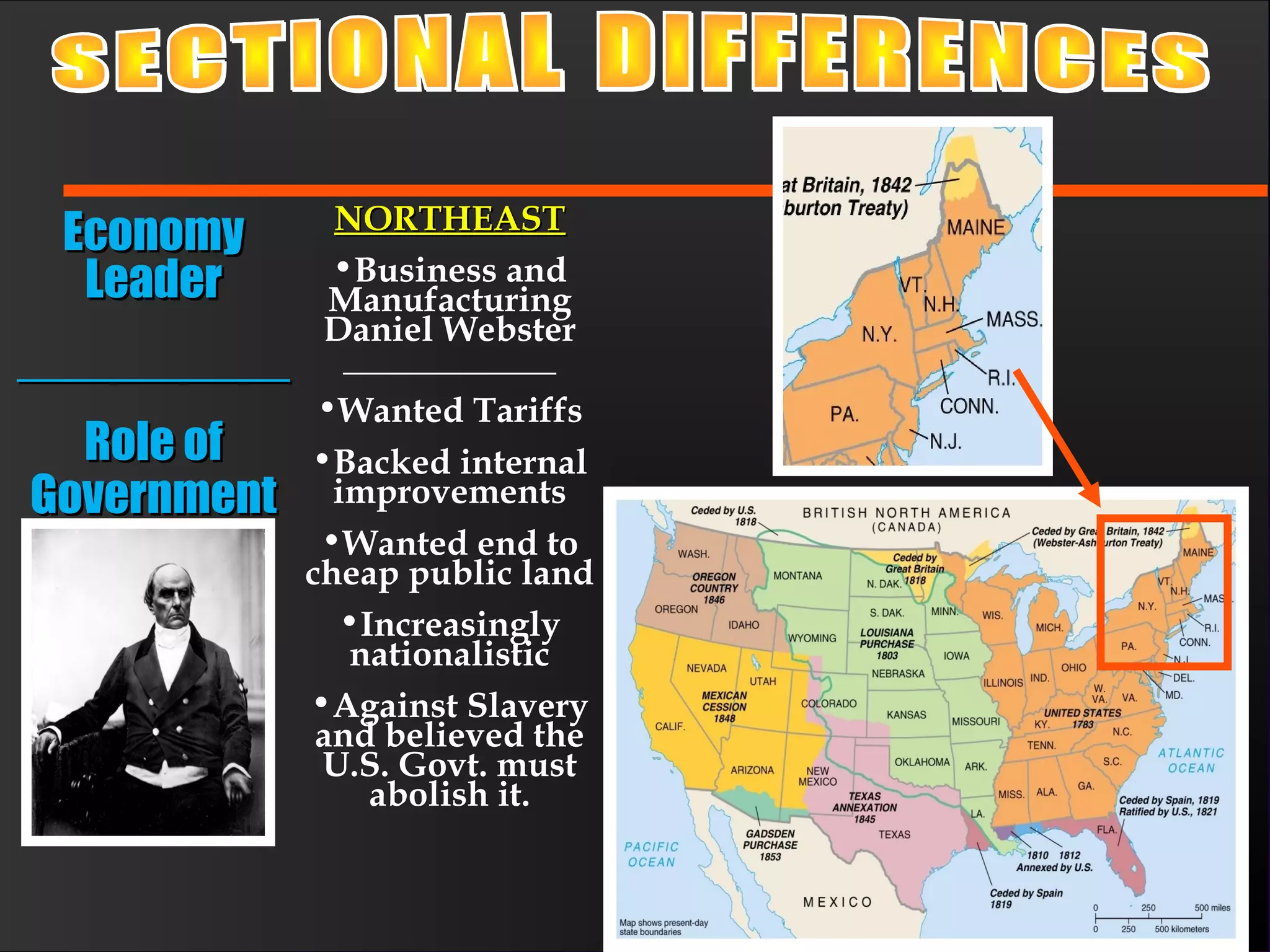
EconomyEconomy
LeaderLeader
____________________
Role ofRole of
GovernmentGovernment
NORTHEASTNORTHEAST
•Business and
Manufacturing
Daniel Webster
____________
•Wanted Tariffs
•Backed internal
improvements
•Wanted end to
cheap public land
•Increasingly
nationalistic
•Against Slavery
and believed the
U.S. Govt. must
abolish it.
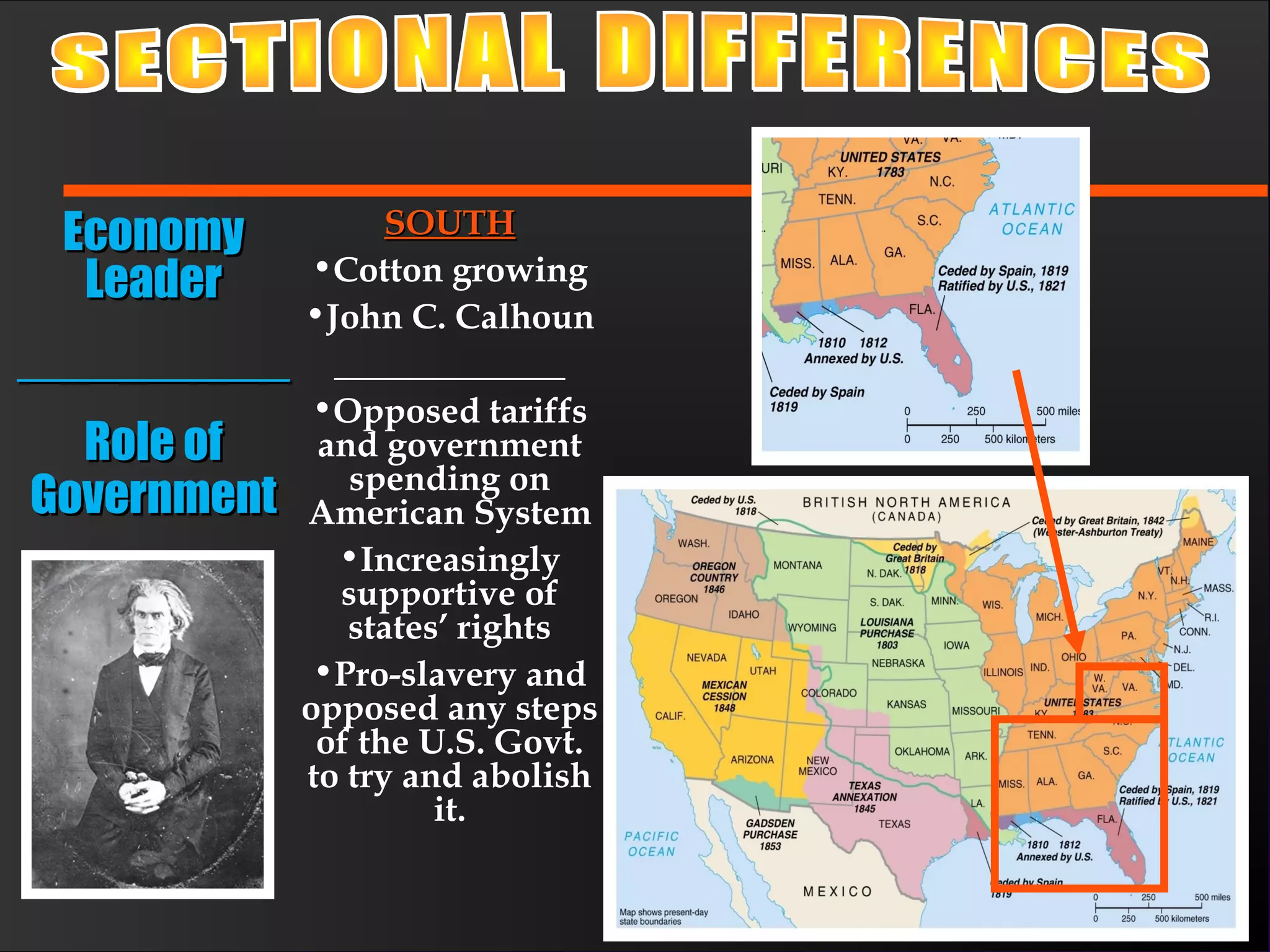
SOUTHSOUTH
•Cotton growing
•John C. Calhoun
_____________
•Opposed tariffs
and government
spending on
American System
•Increasingly
supportive of
states’ rights
•Pro-slavery and
opposed any steps
of the U.S. Govt.
to try and abolish
it.
EconomyEconomy
LeaderLeader
____________________
Role ofRole of
GovernmentGovernment
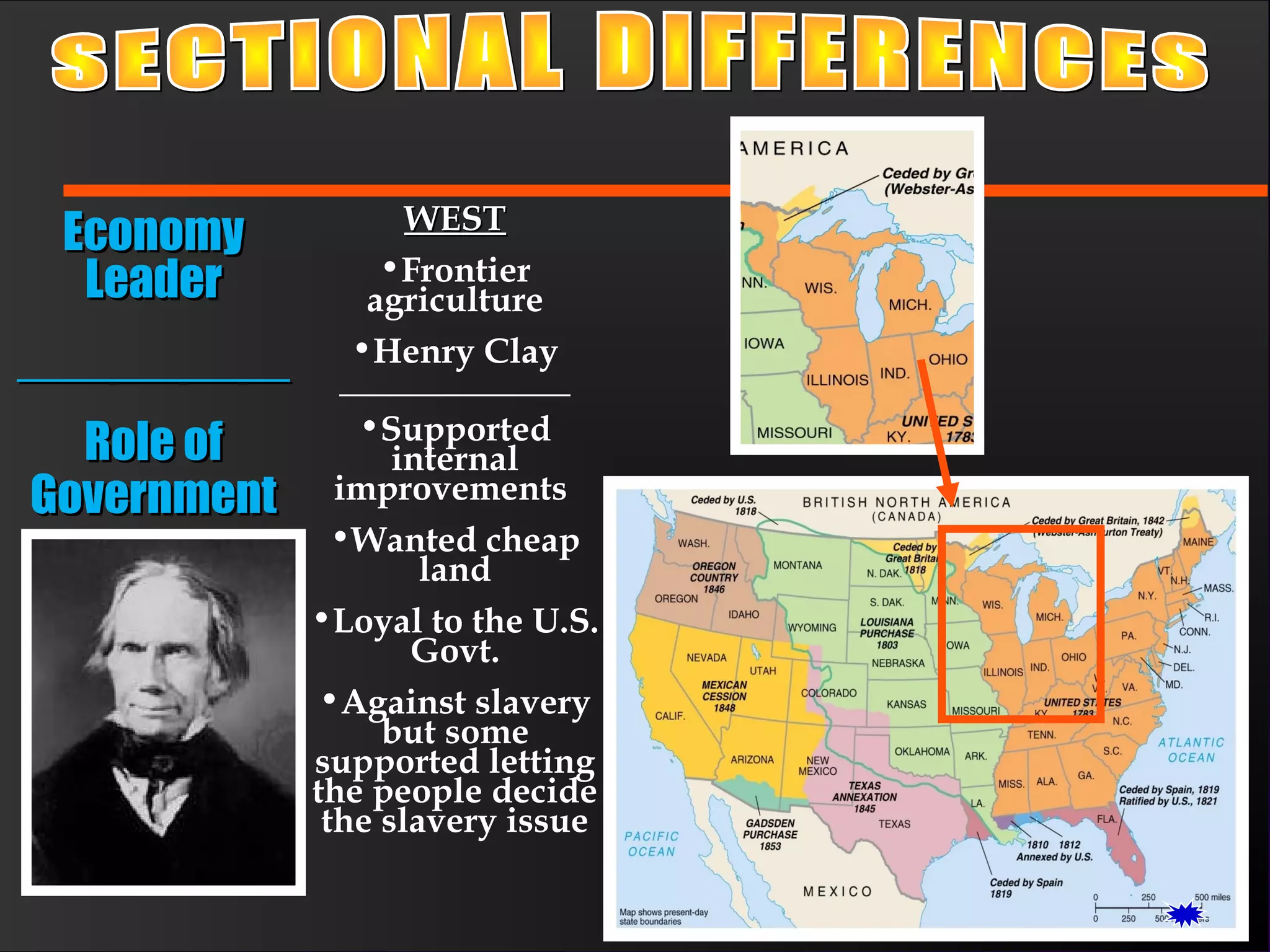
WESTWEST
•Frontier
agriculture
•Henry Clay
_____________
•Supported
internal
improvements
•Wanted cheap
land
•Loyal to the U.S.
Govt.
•Against slavery
but some
supported letting
the people decide
the slavery issue
EconomyEconomy
LeaderLeader
____________________
Role ofRole of
GovernmentGovernment
Tariff of 1816Tariff of 1816
First truly protective tariff
20-25% duty on imports
Supported by South - John C.
Calhoun
Opposed by North - Daniel
Webster
“Great Triumvirate”
Calhoun, Webster, & Clay
Clay’s American SystemClay’s American System
Tariffs would protect growing
industries
Revenues used to build internal
improvements
Roads & canals would connect
the Ohio Valley & Mississippi to
the East
Food & raw materials from the
South & West exchanged for
finished goods from North &
East
West heavily supported Clay
Clay’s Bonus Bill fails in 1817
leaving improvements to states
Panic of 1819Panic of 1819
Causes:
Overspeculation in land
Curtailment of credit
Congress ordered banks to make
payment in hard currency
(specie) instead of paper
Investors became overextended
Effects:
Deflation, bankruptcy, debtors
imprisoned, & unemployment
Collapse of many state banks
Banks foreclosed on farm
mortgages
Rise of sectionalism – West &
South vs. Northeast
First of many panics toFirst of many panics to
occur on an approximateoccur on an approximate
20 year cycle.20 year cycle.
Long Term Fallout:
Led to the Land Act of 1820
smaller & cheaper land parcels
made available
Small farmers & poorer
classes support “Jacksonian
Democracy”
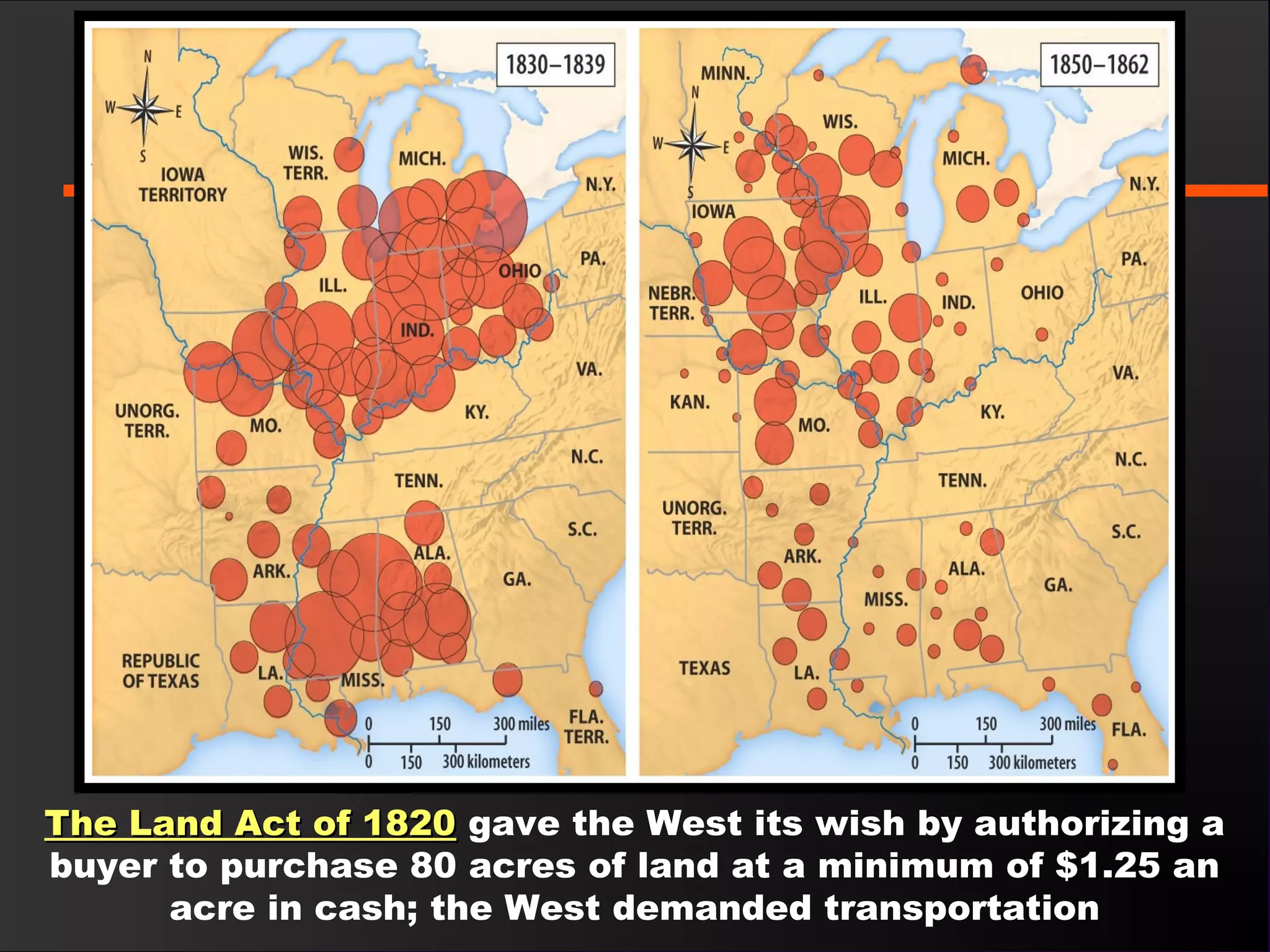
The Land Act of 1820The Land Act of 1820 gave the West its wish by authorizing a
buyer to purchase 80 acres of land at a minimum of $1.25 an
acre in cash; the West demanded transportation
Legislation passed ending
debtor prisons
Farmer’s mistrust of eastern
banking establishment
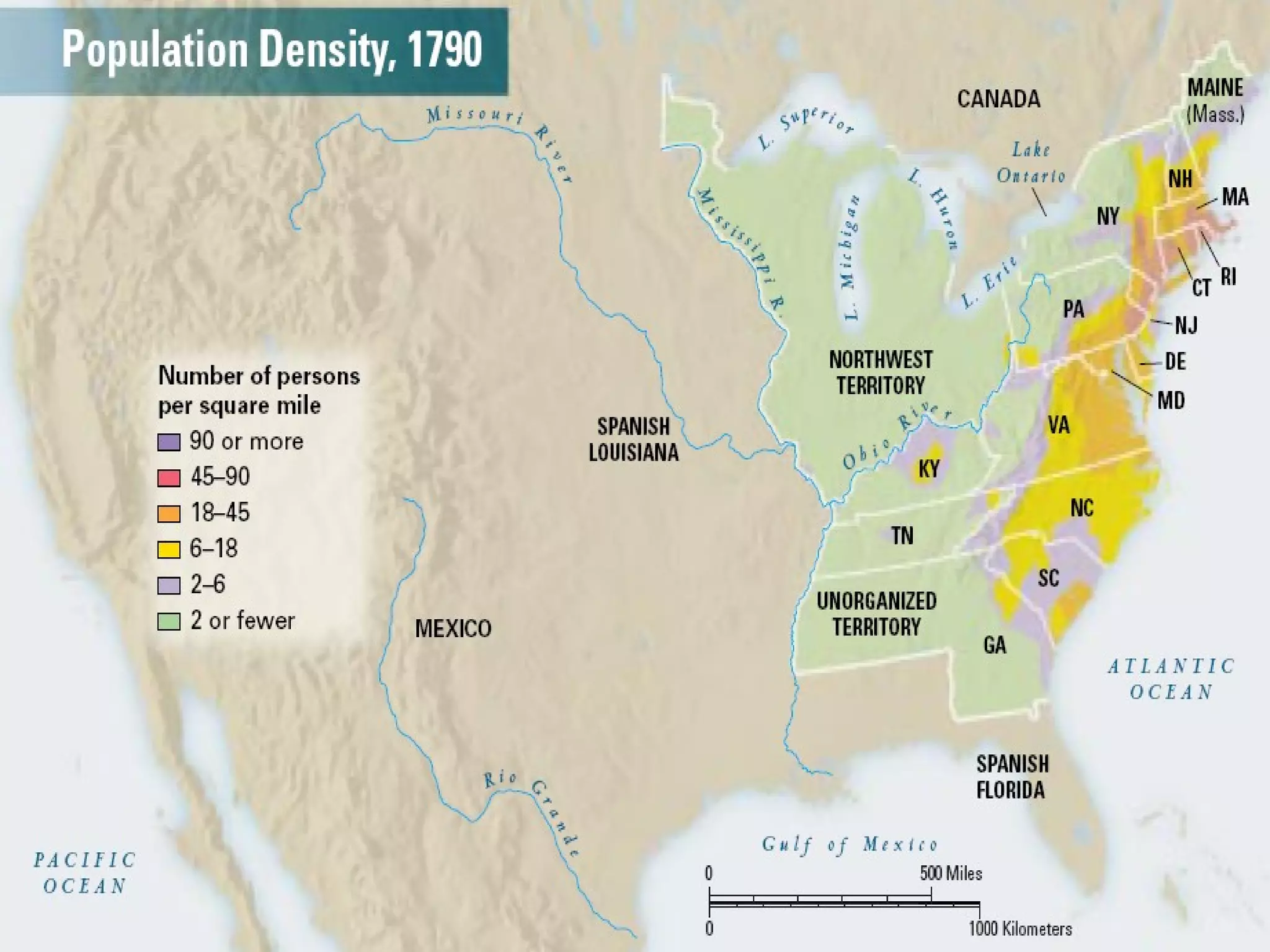
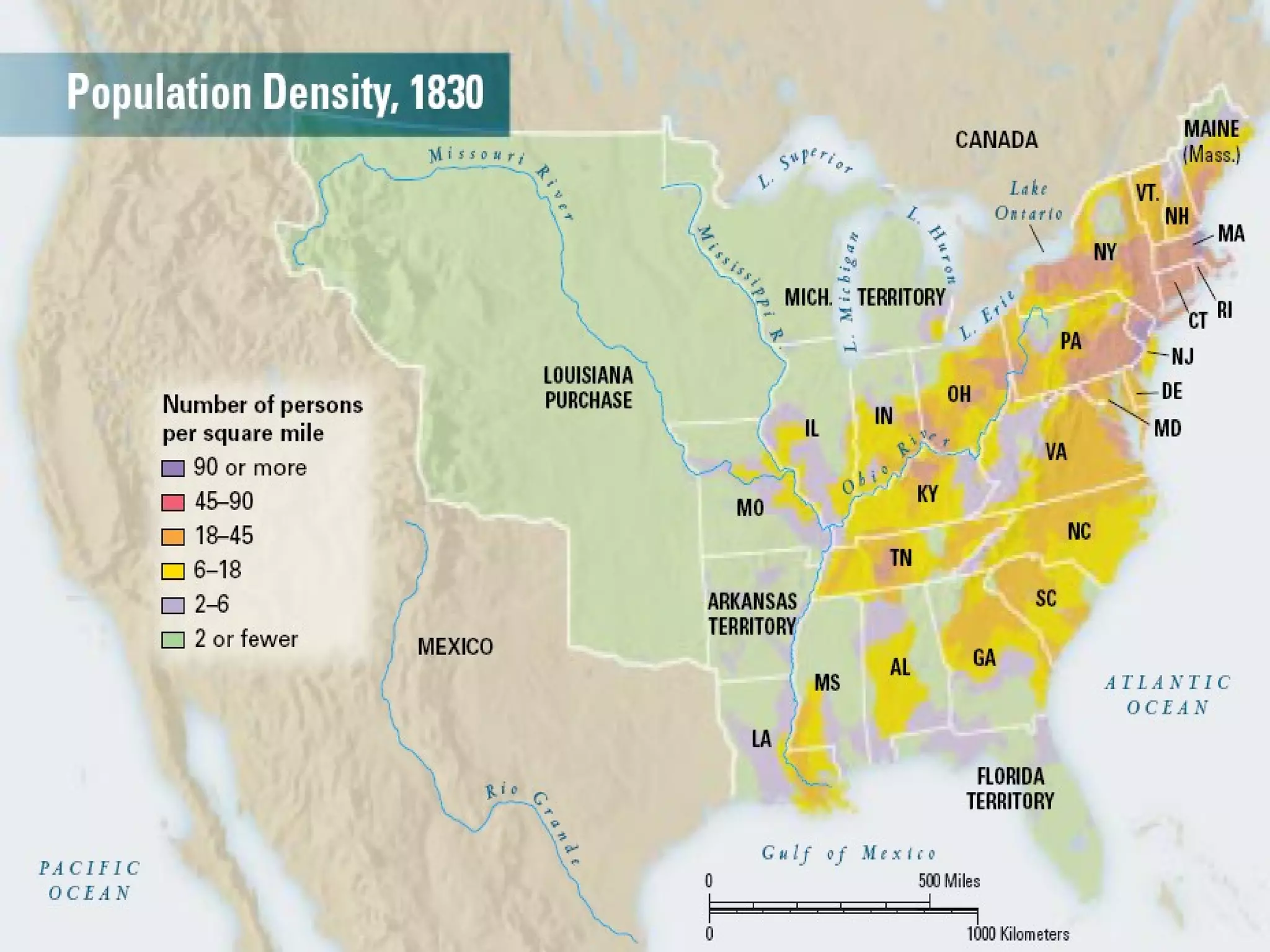
Growth of the WestGrowth of the West
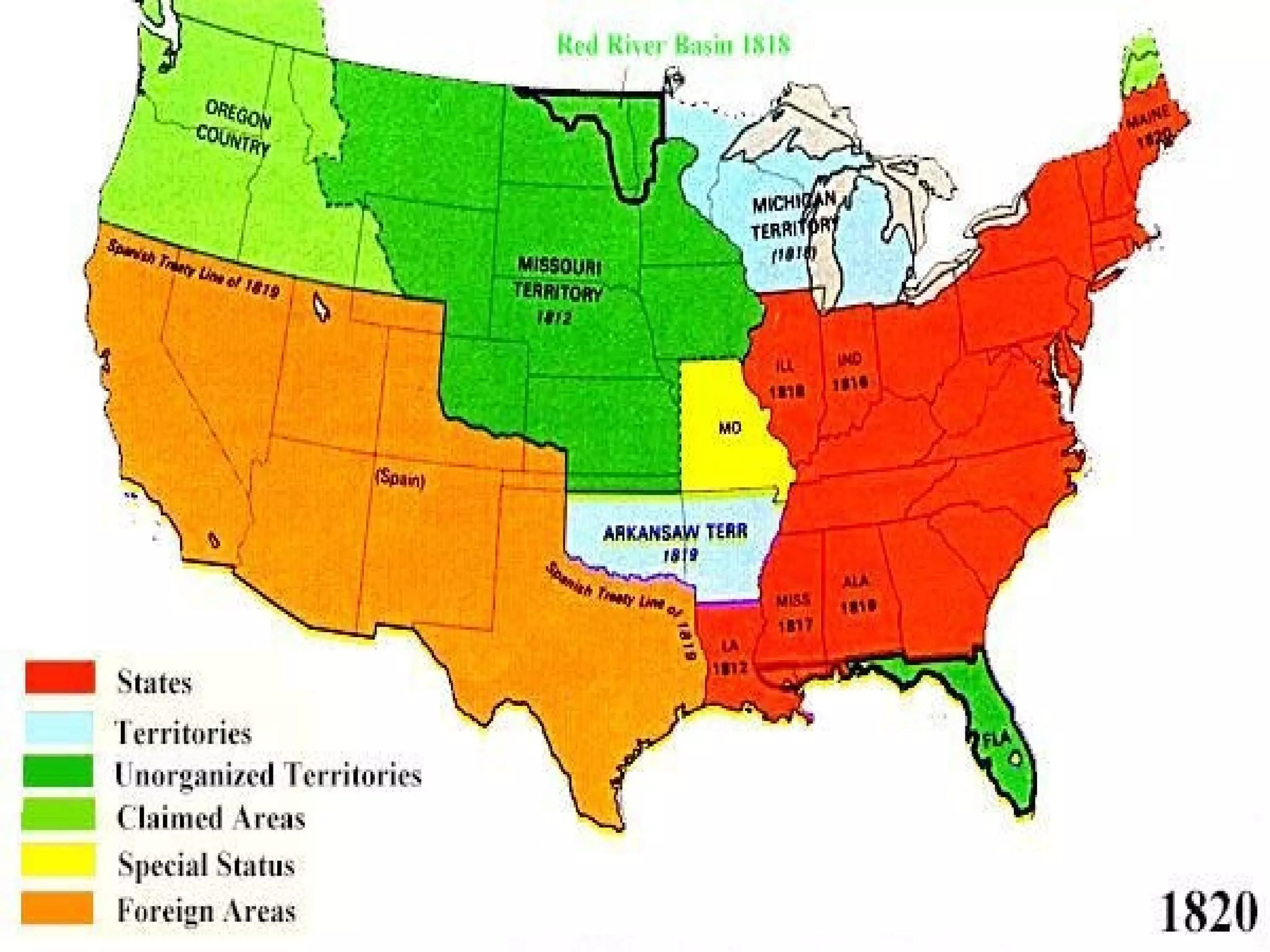
9 frontier states added by
1819
Alternating free & slave
11 free & 11 slave
Reasons for westward
expansion:
Ohio fever
Soil exhaustion
Land speculation
The Embargo
Indian removal
Immigration
Transportation Improvements
Cumberland & Natchez roads
1807 - Steamboat
1825 - Erie Canal
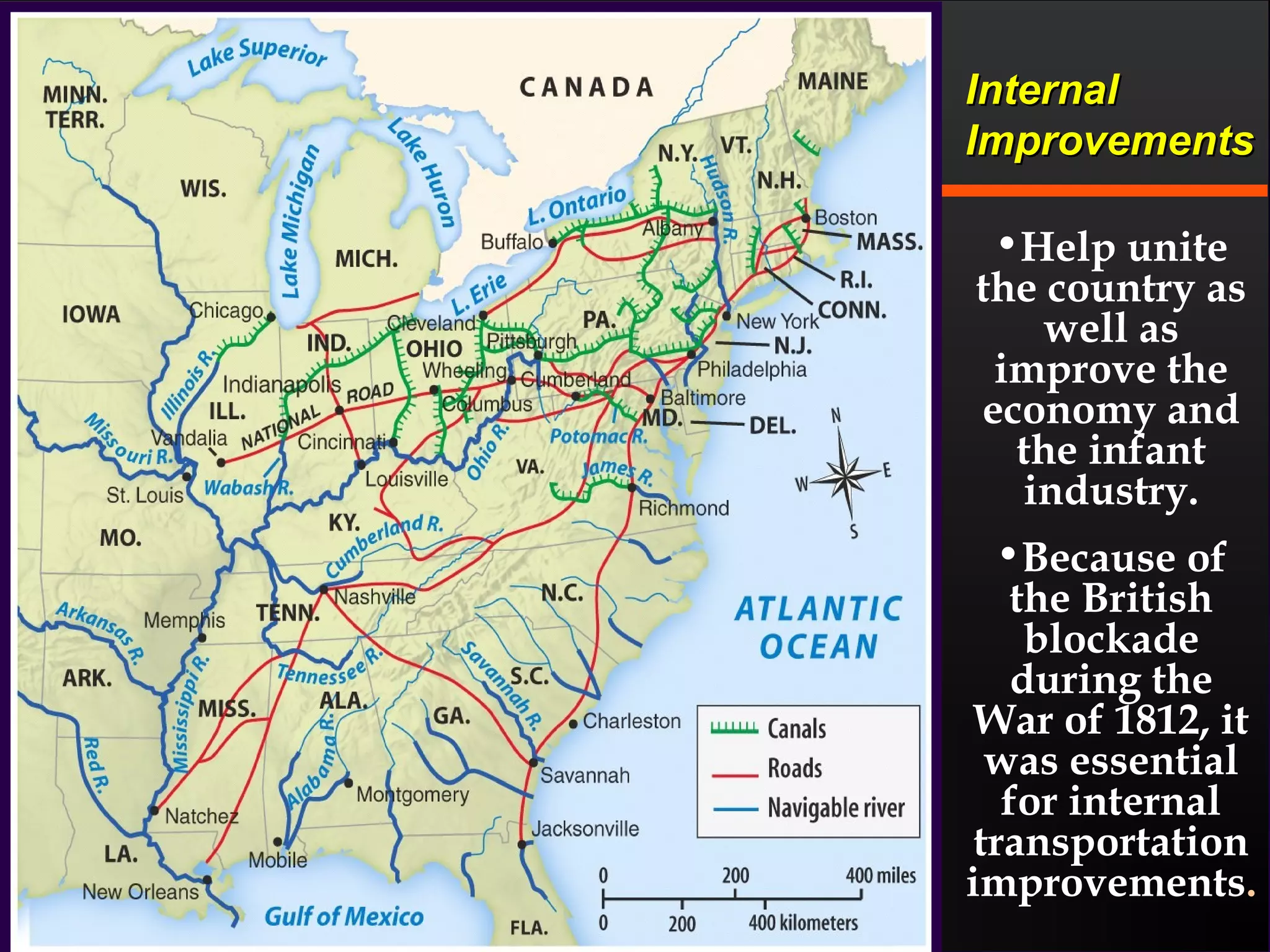
InternalInternal
ImprovementsImprovements
•Help unite
the country as
well as
improve the
economy and
the infant
industry.
•Because of
the British
blockade
during the
War of 1812, it
was essential
for internal
transportation
improvements.
Westerners called for
cheap land
cheap transportation
cheap money
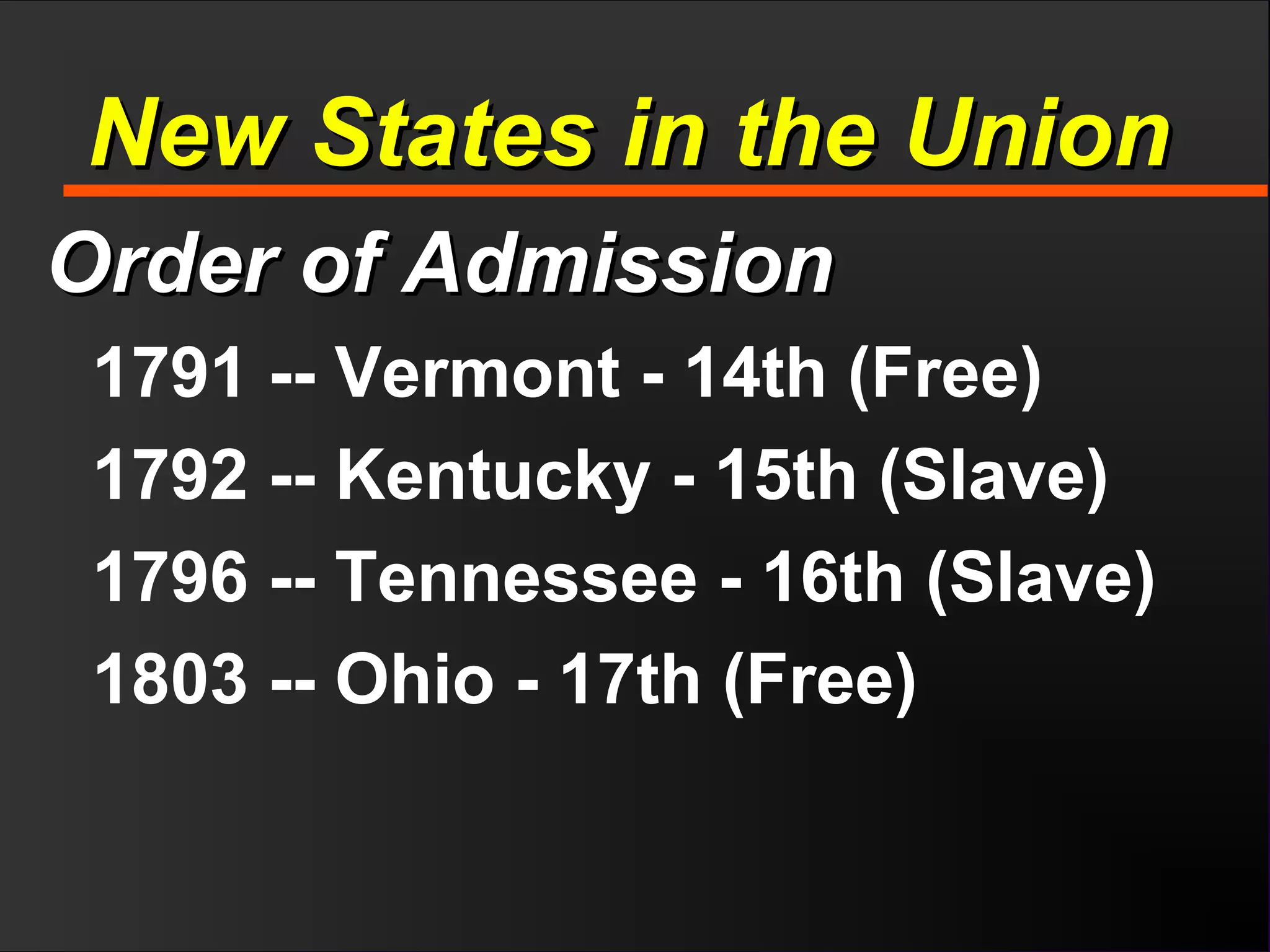
New States in the UnionNew States in the Union
Order of AdmissionOrder of Admission
1791 -- Vermont - 14th (Free)
1792 -- Kentucky - 15th (Slave)
1796 -- Tennessee - 16th (Slave)
1803 -- Ohio - 17th (Free)
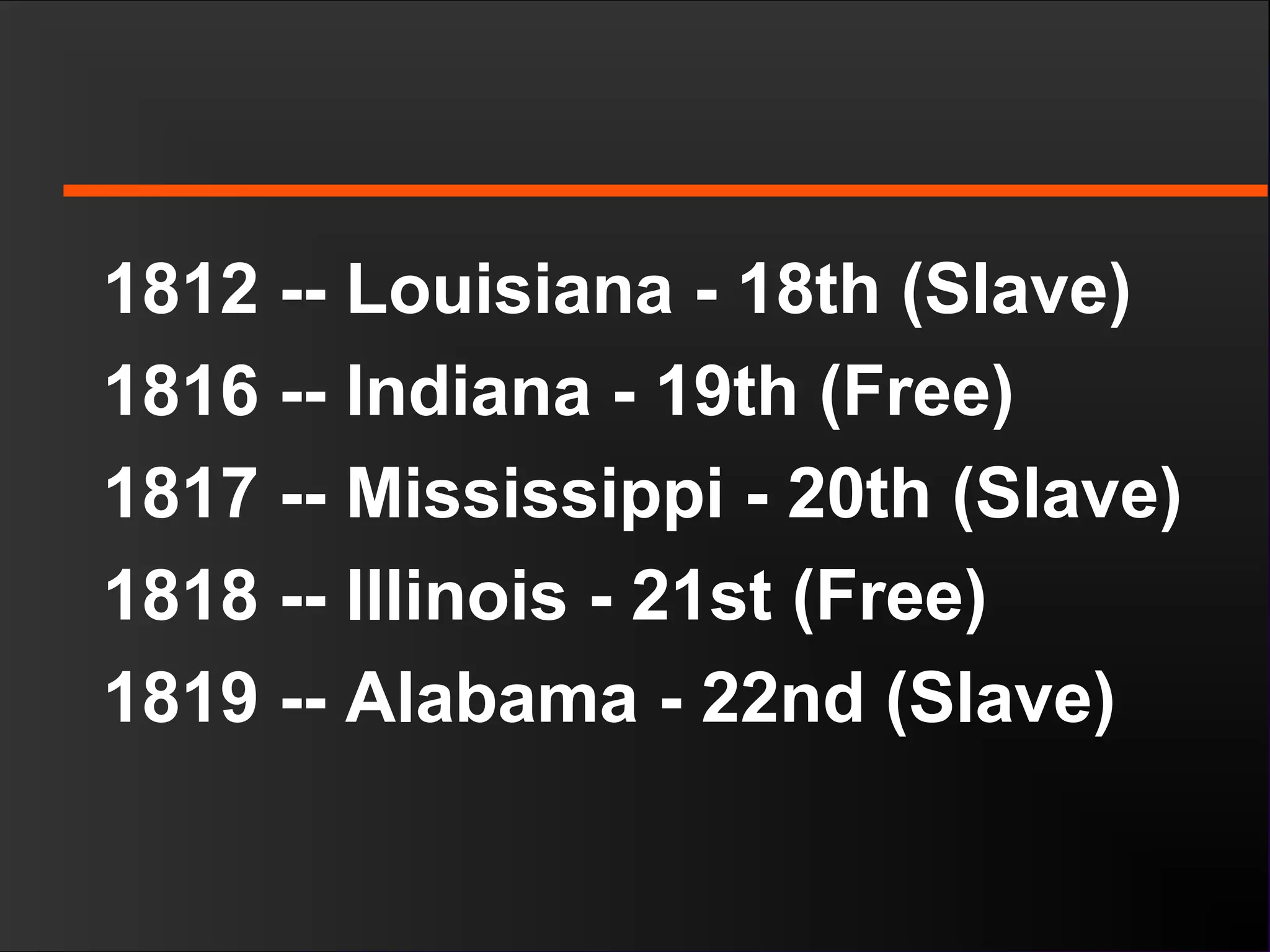
1812 -- Louisiana - 18th (Slave)
1816 -- Indiana - 19th (Free)
1817 -- Mississippi - 20th (Slave)
1818 -- Illinois - 21st (Free)
1819 -- Alabama - 22nd (Slave)
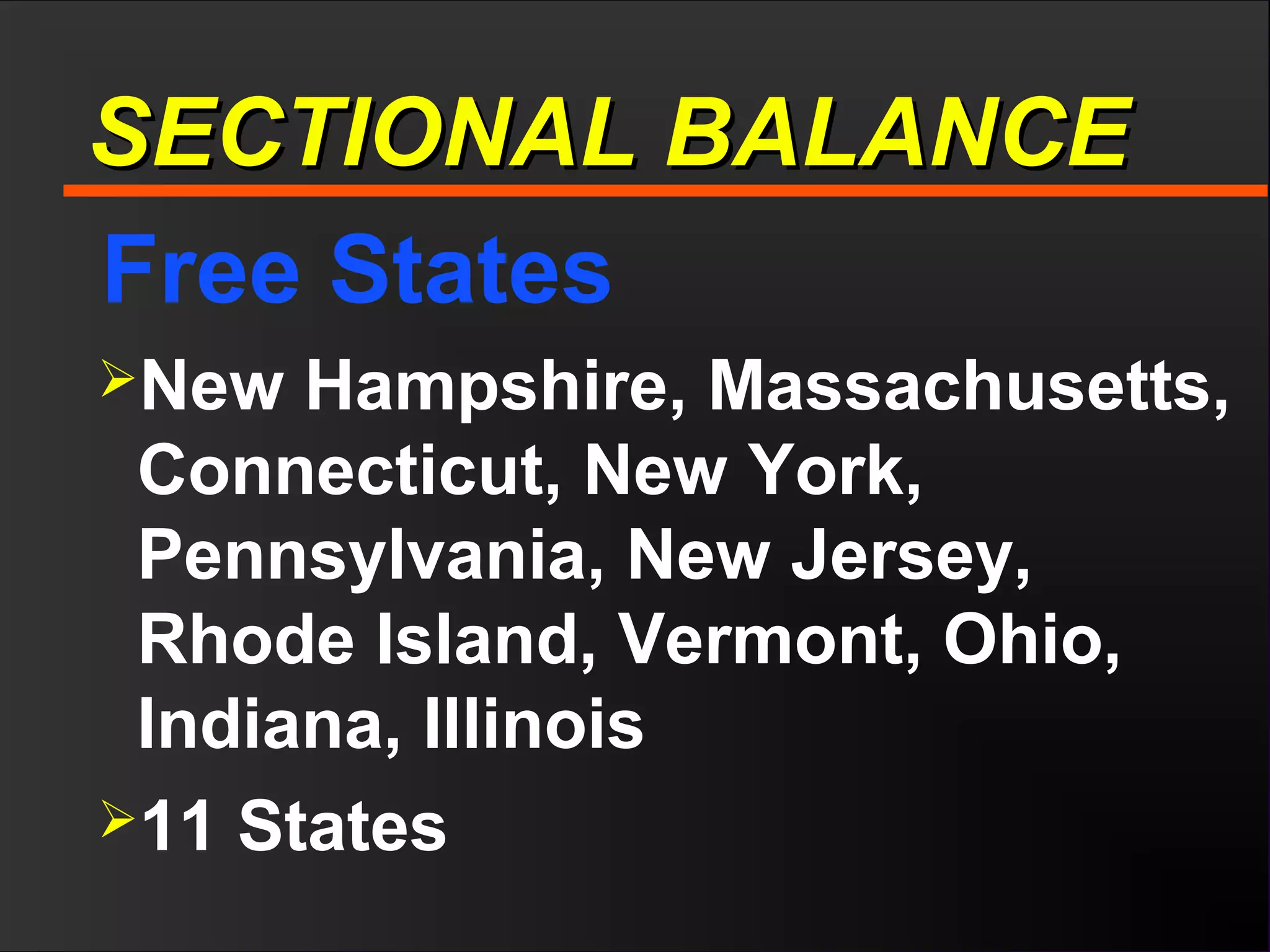
SECTIONAL BALANCESECTIONAL BALANCE
Free States
New Hampshire, Massachusetts,
Connecticut, New York,
Pennsylvania, New Jersey,
Rhode Island, Vermont, Ohio,
Indiana, Illinois
11 States
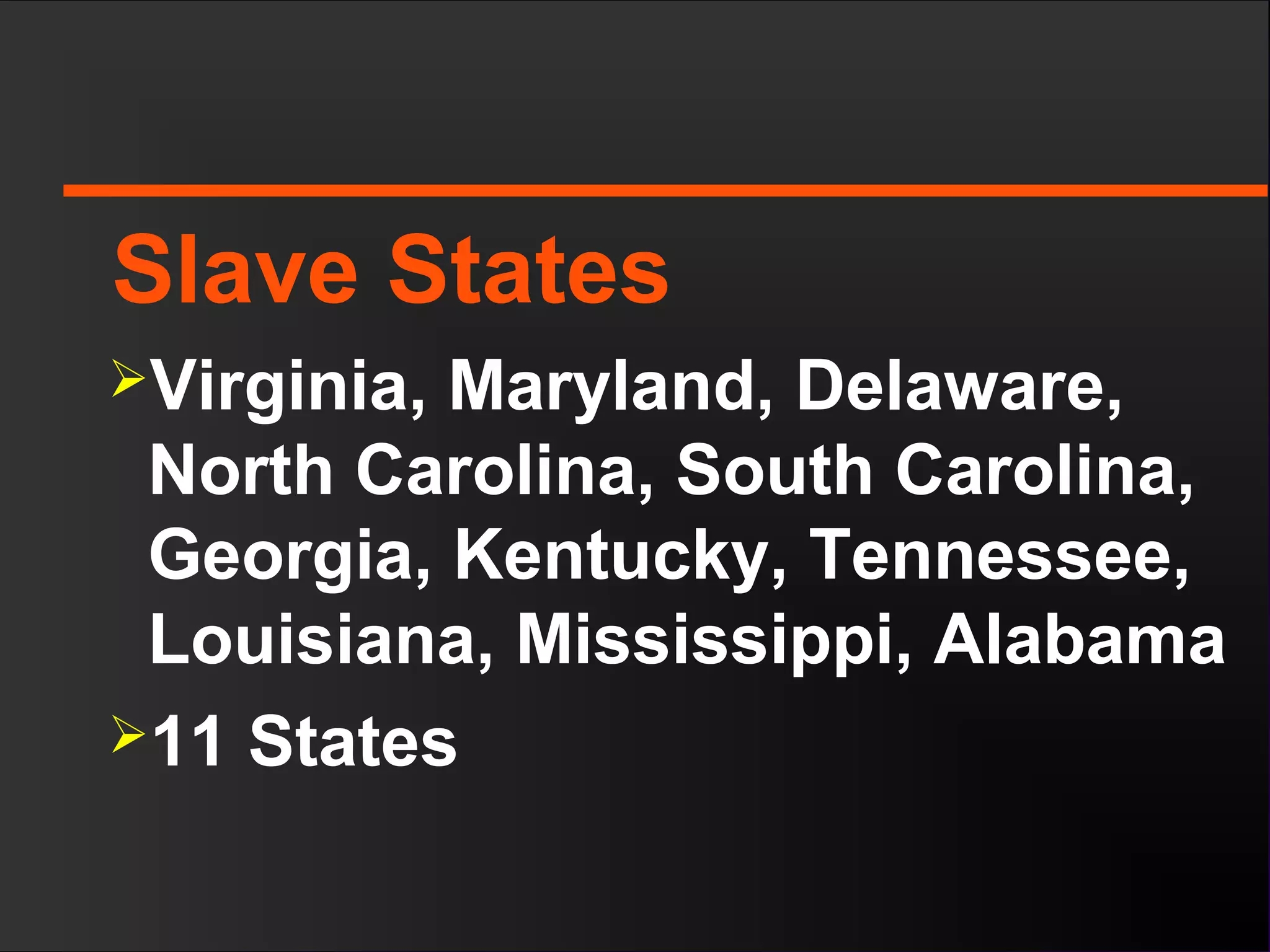
Slave States
Virginia, Maryland, Delaware,
North Carolina, South Carolina,
Georgia, Kentucky, Tennessee,
Louisiana, Mississippi, Alabama
11 States
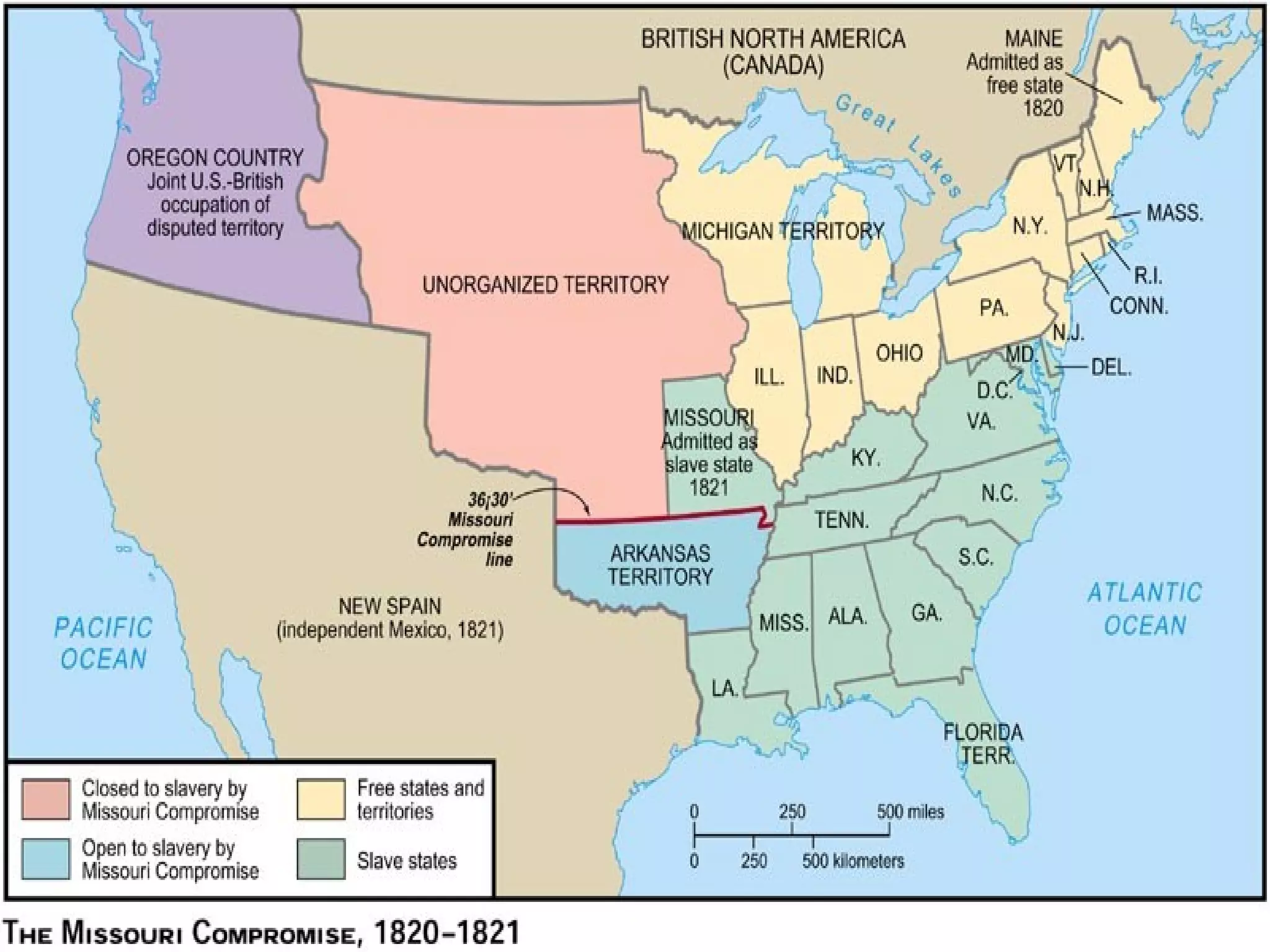
The Missouri CompromiseThe Missouri Compromise
1819 - Missouri seeks
statehood as 23rd
state
Would have entered the union as
a slave state
Tallmadge Amendments:
House passed series of
amendments to statehood bill:
Banned further introduction of
slaves into Missouri
Declared children of slaves born
after statehood to be freed at age
25
North more populous -
controlled the House
Opposed by South & West
Bill defeated in Senate
South still even in Senate
South feared any attempts to
control the expansion of
slavery
South wanted to protect its
“peculiar institution” &
economic balance
The Missouri Compromise:
1820 – drafted by Henry Clay
Missouri admitted as a slave
state
Maine is admitted as a free
state
Slavery prohibited in future
states north of the 36º 30’ line
Dirty Bargain or Savior of the
Union?
Slavery becomes dominant
issue in American politics
Election of 1820Election of 1820
James Monroe reelected by
nearly unanimous electoral
count in 1820
one elector voted against him
to maintain Washington’s
uniqueness
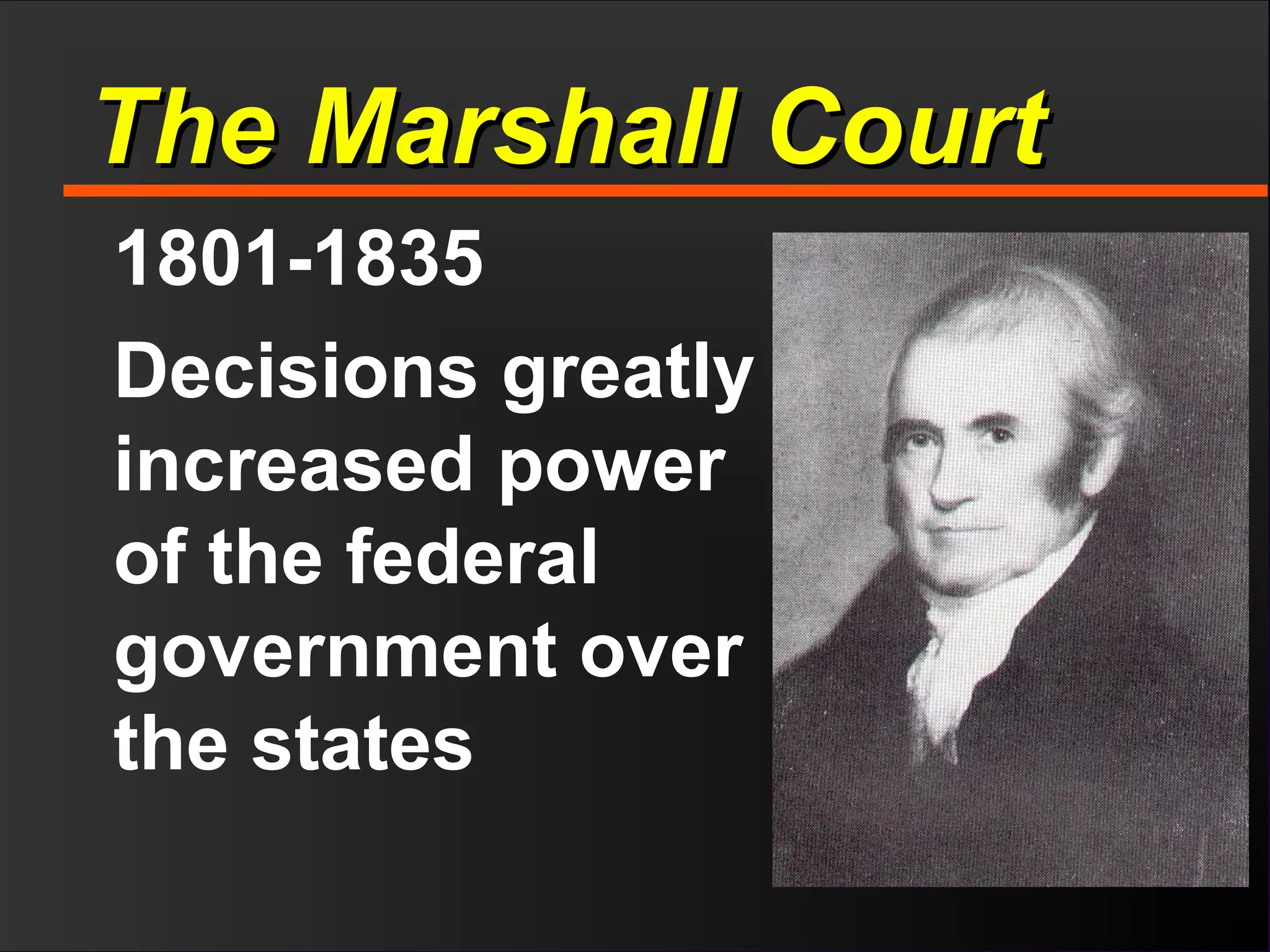
The Marshall CourtThe Marshall Court
1801-1835
Decisions greatly
increased power
of the federal
government over
the states
Fletcher v. Peck (1810)
“Yazoo Land Controversy”
Court’s right to invalidate state
laws
Martin v. Hunter’s Lessee (1816)
Supremacy clause upheld
Supreme Court over states
McCulloch v. Maryland (1819)
BUS constitutional
Denied MD right to tax BUS
Dartmouth College v.
Woodward (1819)
Safeguarded business from state
Gave corps. escape from gov’t
Cohens v. Virginia (1821)
Supremacy of SC over state court
Gibbons v. Ogden (1824)
Only Congress could regulate
interstate commerce
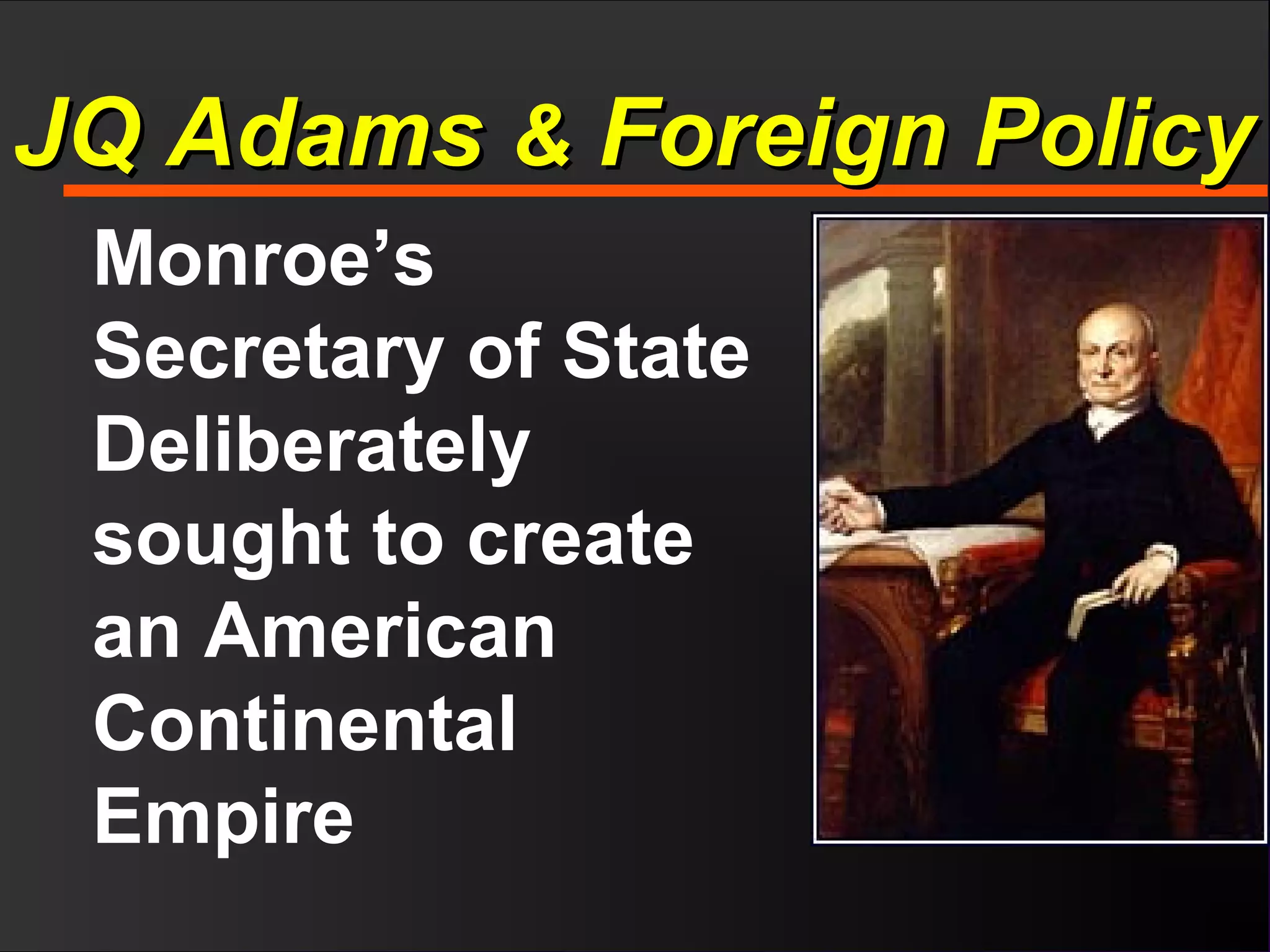
Monroe’s
Secretary of State
Deliberately
sought to create
an American
Continental
Empire
JQ AdamsJQ Adams && Foreign PolicyForeign Policy
The Rush-Bagot Agreement
(1817) had limited American
& British naval forces on the
Great Lakes
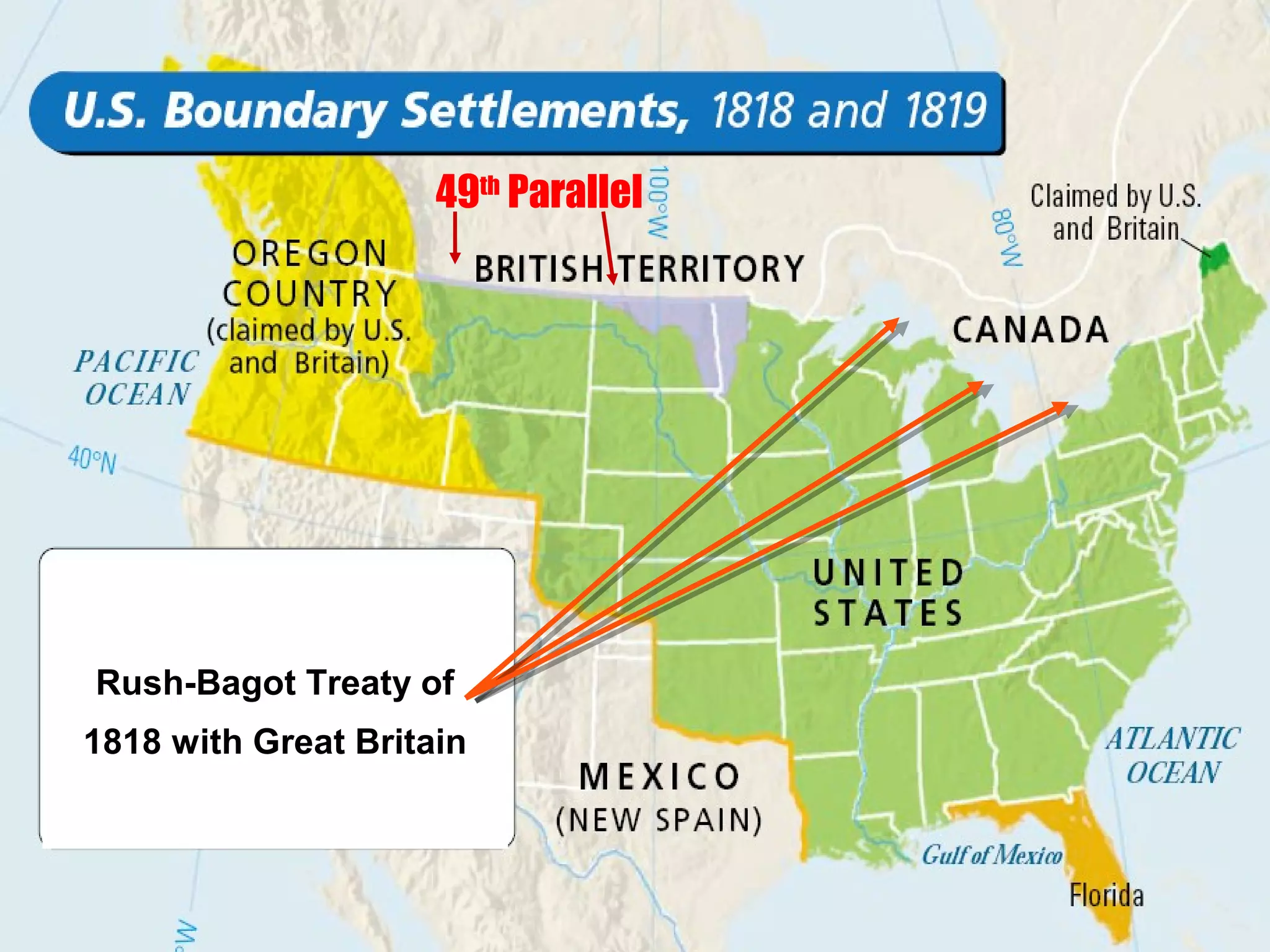
Rush-Bagot Treaty of
1818 with Great Britain
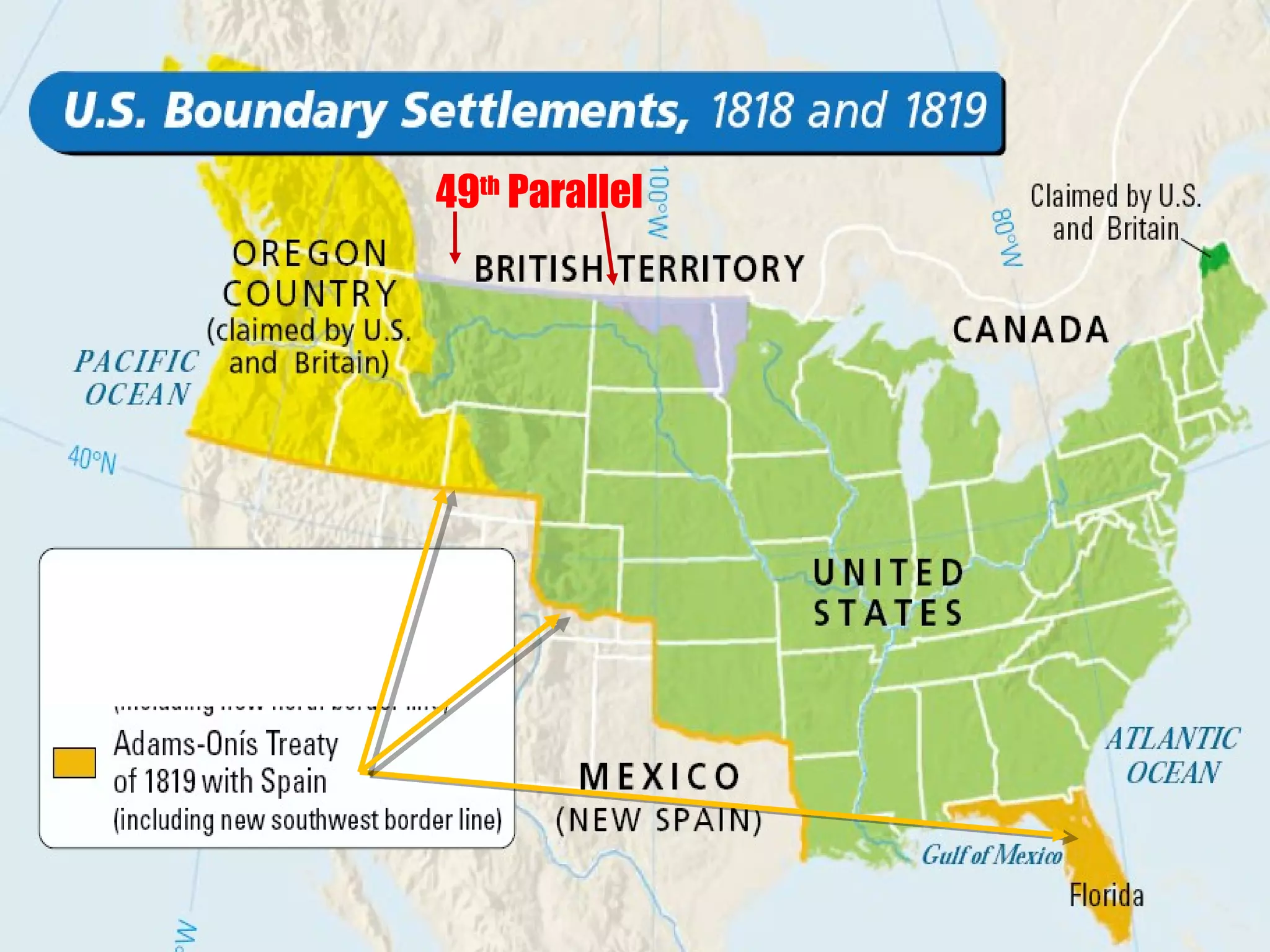
49th
Parallel
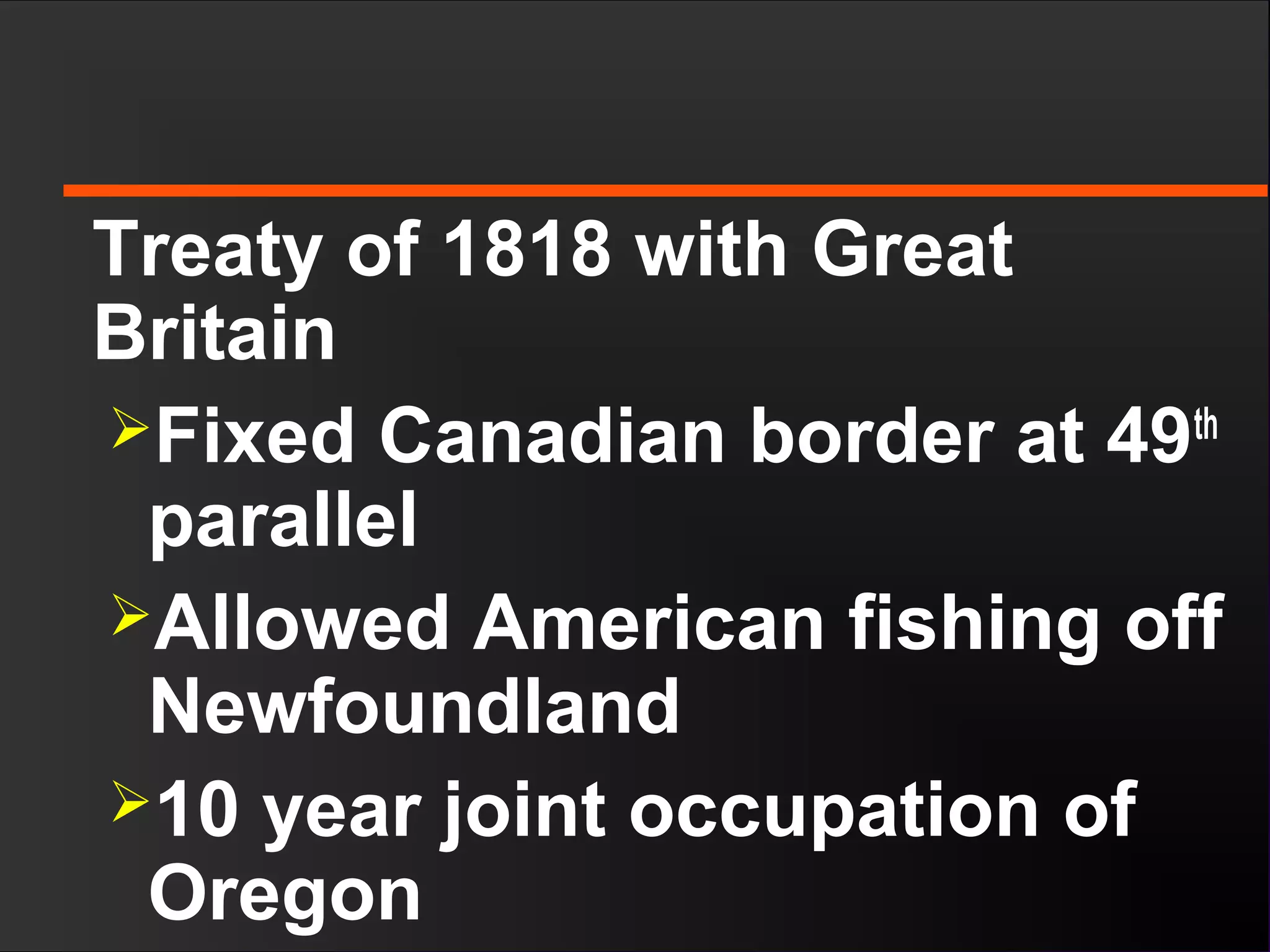
Treaty of 1818 with Great
Britain
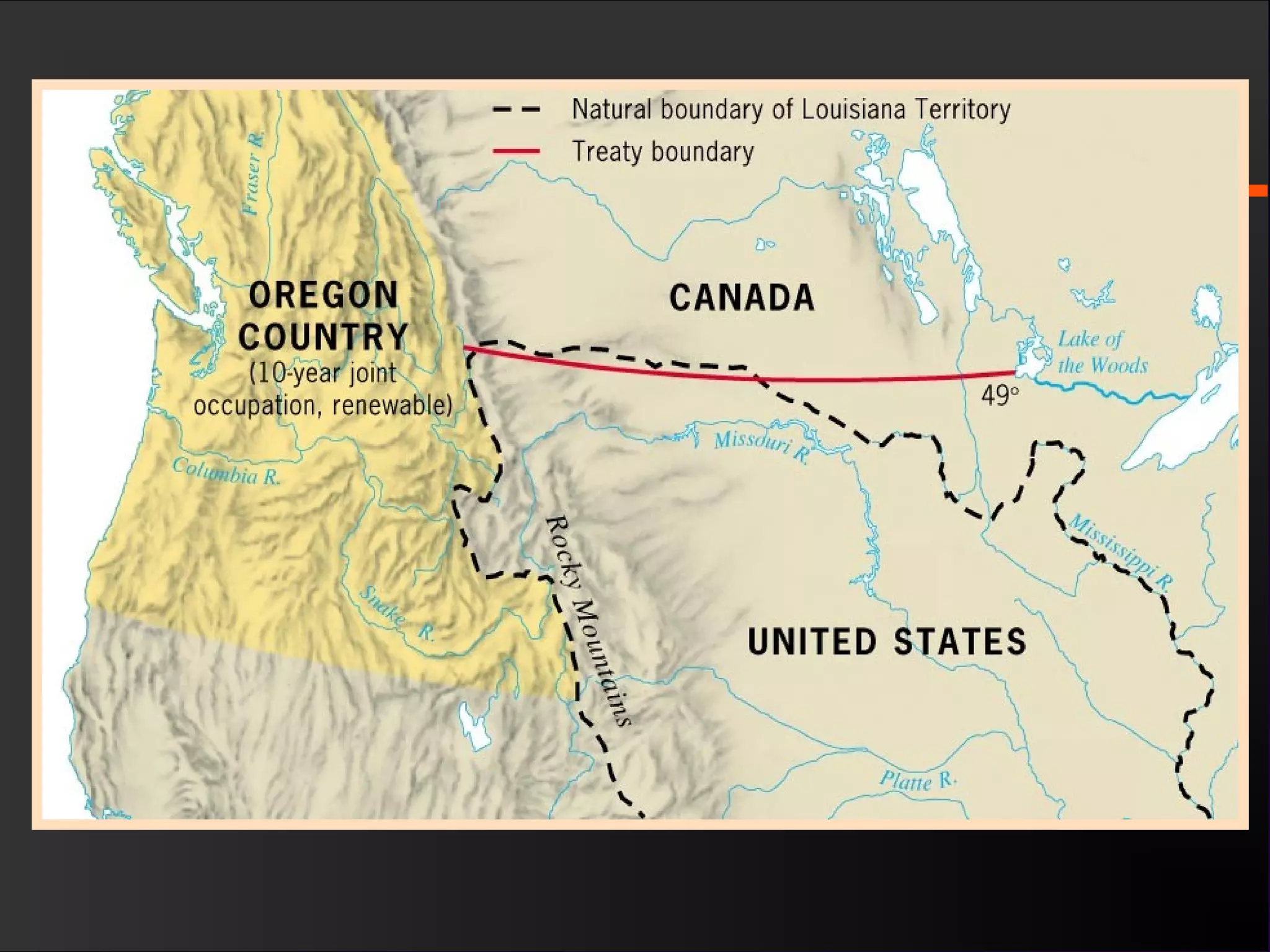
Fixed Canadian border at 49th
parallel
Allowed American fishing off
Newfoundland
10 year joint occupation of
Oregon
49th
Parallel
Florida “Purchase”
1812: Congress ratified
conquest of West Florida
Latin Am. Revolutions left
Florida without Spanish
troops
1818 – Monroe authorized
Andrew Jackson to pursue
Indians into Florida
hanged 2 Indian Chiefs,
executed 2 British traders,
deposed Spanish Governor
Adams informed Spain that
Jackson was reacting to
Spain’s failure to live up to
the Treaty of 1795
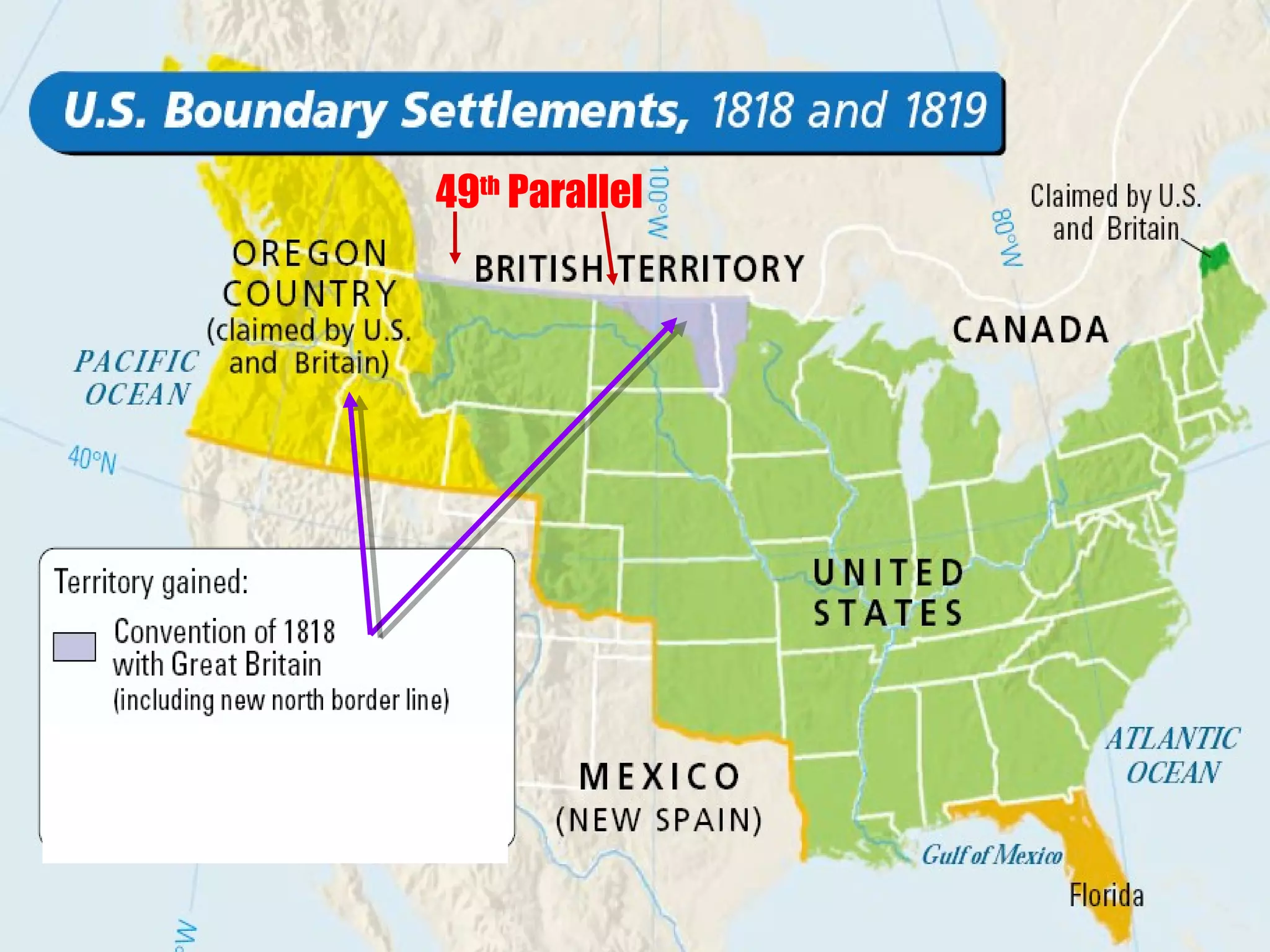
Adams-Onis Treaty (1819)
Spain ceded Florida & gave
up claims to Oregon
U.S. gave up all claims to
Texas
Gave US a border extending
to Pacific Ocean
49th
Parallel
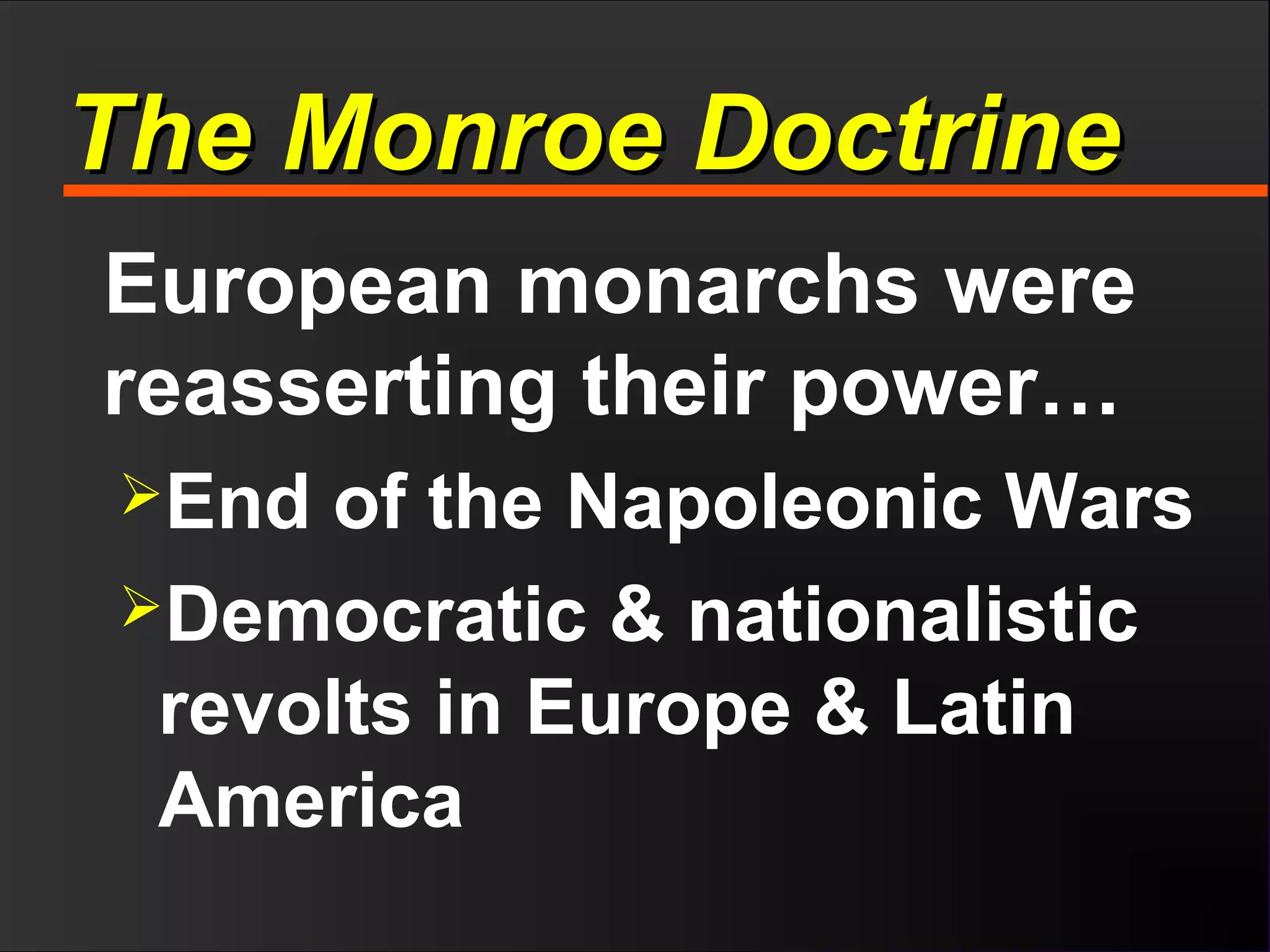
The Monroe DoctrineThe Monroe Doctrine
European monarchs were
reasserting their power…
End of the Napoleonic Wars
Democratic & nationalistic
revolts in Europe & Latin
America
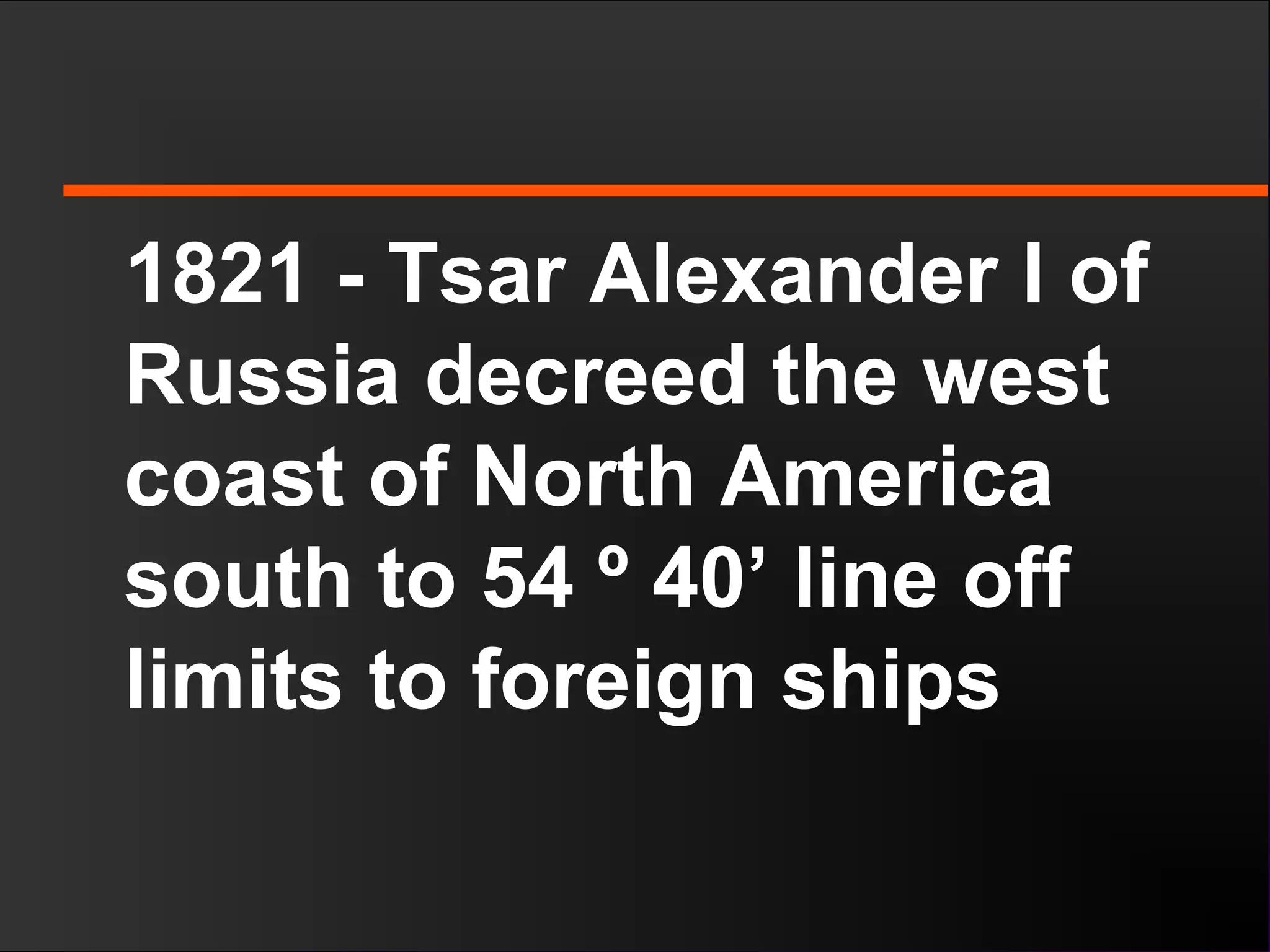
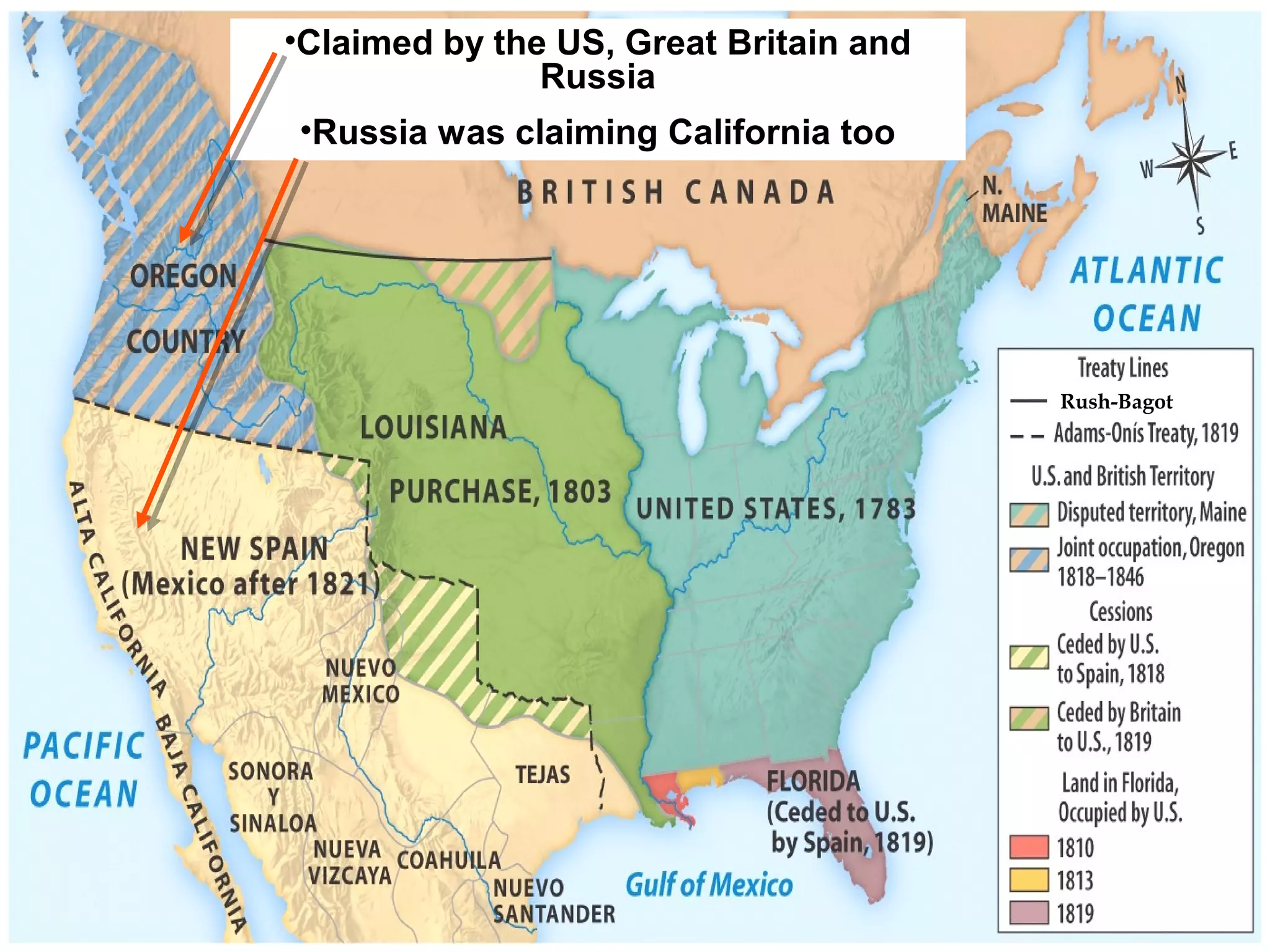
1821 - Tsar Alexander I of
Russia decreed the west
coast of North America
south to 54 º 40’ line off
limits to foreign ships
•Claimed by the US, Great Britain and
Russia
•Russia was claiming California too
Rush-Bagot
1822 - US extended formal
recognition to Latin
American republics
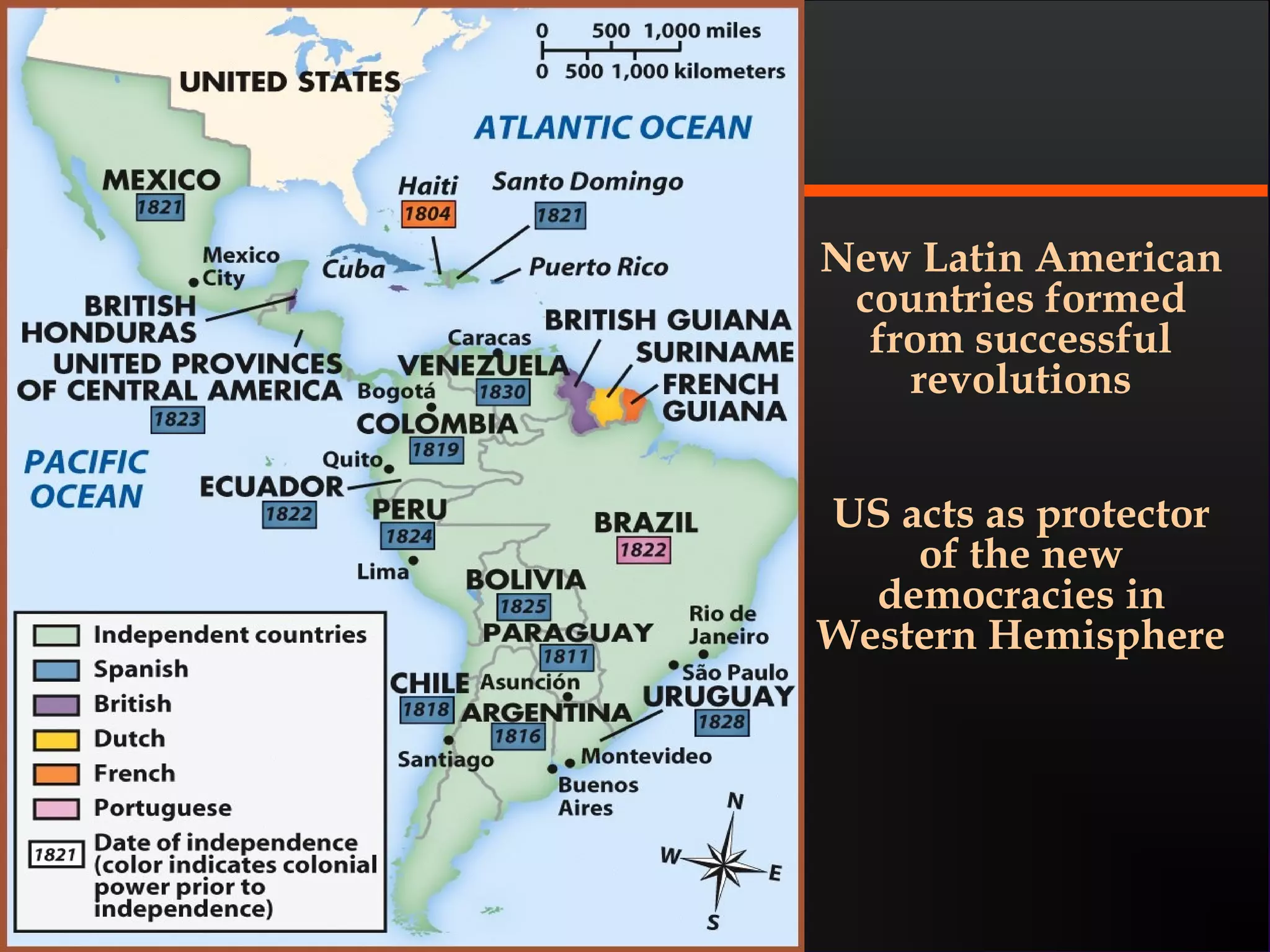
New Latin American
countries formed
from successful
revolutions
US acts as protector
of the new
democracies in
Western Hemisphere
British trade with Latin
America led George
Canning, British Foreign
Secretary, to propose a
treaty of joint protection
of the western
hemisphere with the US
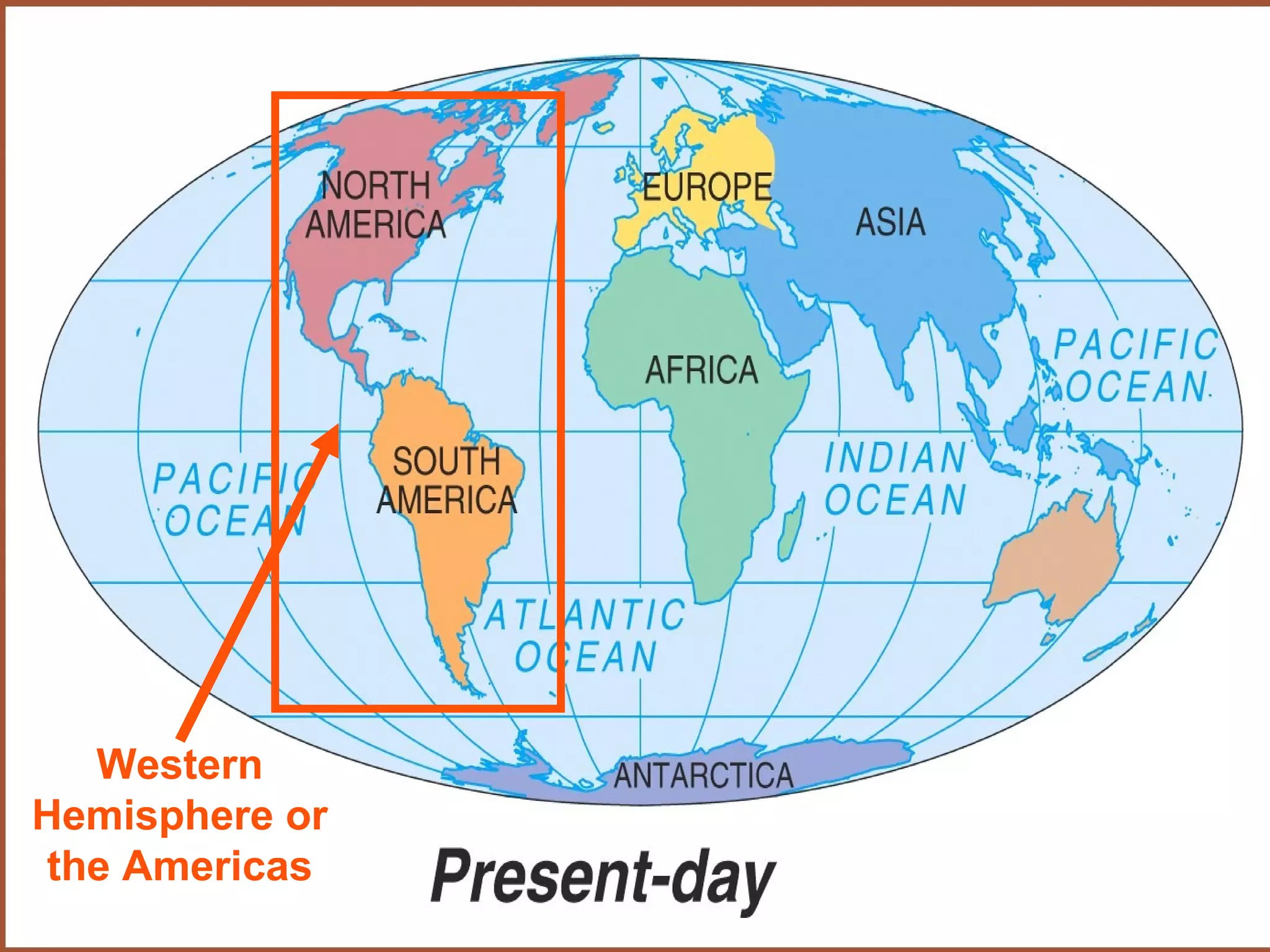
Western
Hemisphere or
the Americas
Adams warned against
being a “cockboat in the
wake of the British Man-of
War”
1823 – Monroe issued his
doctrine outlining the
principles of:
non-colonization
non-intervention
Monroe Doctrine was not a
law - simply one president’s
policy statement
Not enforceable, but
became a major foreign
policy tradition for the US
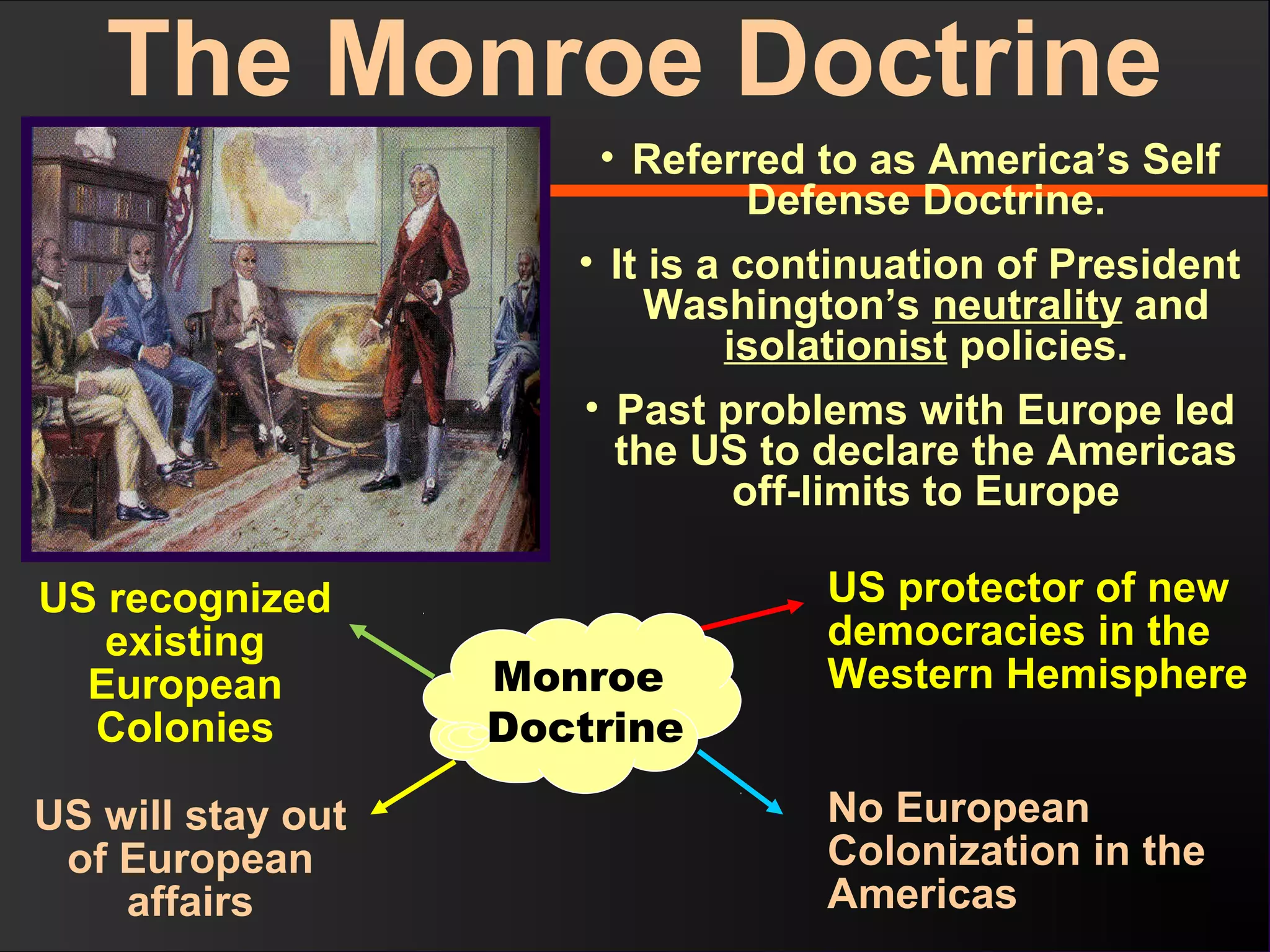
• Referred to as America’s Self
Defense Doctrine.
• It is a continuation of President
Washington’s neutrality and
isolationist policies.
• Past problems with Europe led
the US to declare the Americas
off-limits to Europe
US protector of new
democracies in the
Western Hemisphere
No European
Colonization in the
Americas
US will stay out
of European
affairs
Monroe
Doctrine
US recognized
existing
European
Colonies
The Monroe Doctrine

Lecture 12 b

  • 1.
    James MonroeJames Monroe “TheEra of Good Feelings”“The Era of Good Feelings” James MonroeJames Monroe “The Era of Good Feelings”“The Era of Good Feelings”
  • 2.
  • 3.
    James Monroe -1816James Monroe - 1816 Continued the Virginia Dynasty Last Federalist candidate got 34 electoral votes Monroe went on a goodwill tour of the states Period called “The Era of Good Feelings”
  • 4.
    Era of GoodWill?Era of Good Will? Sectional differences developed over: Tariffs Bank of the United States Internal Improvements Public lands Slavery
  • 5.
    EconomyEconomy LeaderLeader ________________________ Role ofRole of GovernmentGovernment NORTHEASTNORTHEAST •Businessand Manufacturing •Daniel Webster _______________ •Wanted Tariffs •Backed internal improvements End to cheap public land •Increasingly nationalistic •Against Slavery & believed the Govt. must abolish it. SOUTHSOUTH •Cotton-growing •John C. Calhoun _______________ •Opposed tariffs and government spending on American System •Increasingly supportive of states’ rights •Pro-slavery and opposed any steps of the U.S. Govt. to try and abolish it. WESTWEST •Frontier agriculture •Henry Clay _____________ •Supported internal improvements and American System. •Wanted cheap land •Loyal to the U.S. Govt. •Against slavery but some supported letting the people decide the slavery issue U.S. was becoming divided into 3 separate sectionsU.S. was becoming divided into 3 separate sections with each trying to promote their self-interest.with each trying to promote their self-interest.
  • 6.
    EconomyEconomy LeaderLeader ____________________ Role ofRole of GovernmentGovernment NORTHEASTNORTHEAST •Businessand Manufacturing Daniel Webster ____________ •Wanted Tariffs •Backed internal improvements •Wanted end to cheap public land •Increasingly nationalistic •Against Slavery and believed the U.S. Govt. must abolish it.
  • 7.
    SOUTHSOUTH •Cotton growing •John C.Calhoun _____________ •Opposed tariffs and government spending on American System •Increasingly supportive of states’ rights •Pro-slavery and opposed any steps of the U.S. Govt. to try and abolish it. EconomyEconomy LeaderLeader ____________________ Role ofRole of GovernmentGovernment
  • 8.
    WESTWEST •Frontier agriculture •Henry Clay _____________ •Supported internal improvements •Wanted cheap land •Loyalto the U.S. Govt. •Against slavery but some supported letting the people decide the slavery issue EconomyEconomy LeaderLeader ____________________ Role ofRole of GovernmentGovernment
  • 9.
    Tariff of 1816Tariffof 1816 First truly protective tariff 20-25% duty on imports Supported by South - John C. Calhoun Opposed by North - Daniel Webster “Great Triumvirate” Calhoun, Webster, & Clay
  • 10.
    Clay’s American SystemClay’sAmerican System Tariffs would protect growing industries Revenues used to build internal improvements Roads & canals would connect the Ohio Valley & Mississippi to the East
  • 11.
    Food & rawmaterials from the South & West exchanged for finished goods from North & East West heavily supported Clay Clay’s Bonus Bill fails in 1817 leaving improvements to states
  • 12.
    Panic of 1819Panicof 1819 Causes: Overspeculation in land Curtailment of credit Congress ordered banks to make payment in hard currency (specie) instead of paper Investors became overextended
  • 13.
    Effects: Deflation, bankruptcy, debtors imprisoned,& unemployment Collapse of many state banks Banks foreclosed on farm mortgages Rise of sectionalism – West & South vs. Northeast
  • 14.
    First of manypanics toFirst of many panics to occur on an approximateoccur on an approximate 20 year cycle.20 year cycle.
  • 15.
    Long Term Fallout: Ledto the Land Act of 1820 smaller & cheaper land parcels made available Small farmers & poorer classes support “Jacksonian Democracy”
  • 16.
    The Land Actof 1820The Land Act of 1820 gave the West its wish by authorizing a buyer to purchase 80 acres of land at a minimum of $1.25 an acre in cash; the West demanded transportation
  • 17.
    Legislation passed ending debtorprisons Farmer’s mistrust of eastern banking establishment
  • 18.
    Growth of theWestGrowth of the West 9 frontier states added by 1819 Alternating free & slave 11 free & 11 slave
  • 22.
    Reasons for westward expansion: Ohiofever Soil exhaustion Land speculation The Embargo
  • 23.
    Indian removal Immigration Transportation Improvements Cumberland& Natchez roads 1807 - Steamboat 1825 - Erie Canal
  • 24.
    InternalInternal ImprovementsImprovements •Help unite the countryas well as improve the economy and the infant industry. •Because of the British blockade during the War of 1812, it was essential for internal transportation improvements.
  • 25.
    Westerners called for cheapland cheap transportation cheap money
  • 26.
    New States inthe UnionNew States in the Union Order of AdmissionOrder of Admission 1791 -- Vermont - 14th (Free) 1792 -- Kentucky - 15th (Slave) 1796 -- Tennessee - 16th (Slave) 1803 -- Ohio - 17th (Free)
  • 27.
    1812 -- Louisiana- 18th (Slave) 1816 -- Indiana - 19th (Free) 1817 -- Mississippi - 20th (Slave) 1818 -- Illinois - 21st (Free) 1819 -- Alabama - 22nd (Slave)
  • 29.
    SECTIONAL BALANCESECTIONAL BALANCE FreeStates New Hampshire, Massachusetts, Connecticut, New York, Pennsylvania, New Jersey, Rhode Island, Vermont, Ohio, Indiana, Illinois 11 States
  • 30.
    Slave States Virginia, Maryland,Delaware, North Carolina, South Carolina, Georgia, Kentucky, Tennessee, Louisiana, Mississippi, Alabama 11 States
  • 31.
    The Missouri CompromiseTheMissouri Compromise 1819 - Missouri seeks statehood as 23rd state Would have entered the union as a slave state
  • 32.
    Tallmadge Amendments: House passedseries of amendments to statehood bill: Banned further introduction of slaves into Missouri Declared children of slaves born after statehood to be freed at age 25
  • 33.
    North more populous- controlled the House Opposed by South & West Bill defeated in Senate South still even in Senate
  • 34.
    South feared anyattempts to control the expansion of slavery South wanted to protect its “peculiar institution” & economic balance
  • 35.
    The Missouri Compromise: 1820– drafted by Henry Clay Missouri admitted as a slave state Maine is admitted as a free state
  • 36.
    Slavery prohibited infuture states north of the 36º 30’ line Dirty Bargain or Savior of the Union? Slavery becomes dominant issue in American politics
  • 38.
    Election of 1820Electionof 1820 James Monroe reelected by nearly unanimous electoral count in 1820 one elector voted against him to maintain Washington’s uniqueness
  • 39.
    The Marshall CourtTheMarshall Court 1801-1835 Decisions greatly increased power of the federal government over the states
  • 40.
    Fletcher v. Peck(1810) “Yazoo Land Controversy” Court’s right to invalidate state laws Martin v. Hunter’s Lessee (1816) Supremacy clause upheld Supreme Court over states
  • 41.
    McCulloch v. Maryland(1819) BUS constitutional Denied MD right to tax BUS Dartmouth College v. Woodward (1819) Safeguarded business from state Gave corps. escape from gov’t
  • 42.
    Cohens v. Virginia(1821) Supremacy of SC over state court Gibbons v. Ogden (1824) Only Congress could regulate interstate commerce
  • 43.
    Monroe’s Secretary of State Deliberately soughtto create an American Continental Empire JQ AdamsJQ Adams && Foreign PolicyForeign Policy
  • 44.
    The Rush-Bagot Agreement (1817)had limited American & British naval forces on the Great Lakes
  • 45.
    Rush-Bagot Treaty of 1818with Great Britain 49th Parallel
  • 46.
    Treaty of 1818with Great Britain Fixed Canadian border at 49th parallel Allowed American fishing off Newfoundland 10 year joint occupation of Oregon
  • 48.
  • 49.
    Florida “Purchase” 1812: Congressratified conquest of West Florida Latin Am. Revolutions left Florida without Spanish troops
  • 50.
    1818 – Monroeauthorized Andrew Jackson to pursue Indians into Florida hanged 2 Indian Chiefs, executed 2 British traders, deposed Spanish Governor
  • 51.
    Adams informed Spainthat Jackson was reacting to Spain’s failure to live up to the Treaty of 1795
  • 52.
    Adams-Onis Treaty (1819) Spainceded Florida & gave up claims to Oregon U.S. gave up all claims to Texas Gave US a border extending to Pacific Ocean
  • 53.
  • 54.
    The Monroe DoctrineTheMonroe Doctrine European monarchs were reasserting their power… End of the Napoleonic Wars Democratic & nationalistic revolts in Europe & Latin America
  • 55.
    1821 - TsarAlexander I of Russia decreed the west coast of North America south to 54 º 40’ line off limits to foreign ships
  • 56.
    •Claimed by theUS, Great Britain and Russia •Russia was claiming California too Rush-Bagot
  • 57.
    1822 - USextended formal recognition to Latin American republics
  • 58.
    New Latin American countriesformed from successful revolutions US acts as protector of the new democracies in Western Hemisphere
  • 59.
    British trade withLatin America led George Canning, British Foreign Secretary, to propose a treaty of joint protection of the western hemisphere with the US
  • 60.
  • 61.
    Adams warned against beinga “cockboat in the wake of the British Man-of War”
  • 62.
    1823 – Monroeissued his doctrine outlining the principles of: non-colonization non-intervention
  • 63.
    Monroe Doctrine wasnot a law - simply one president’s policy statement Not enforceable, but became a major foreign policy tradition for the US
  • 64.
    • Referred toas America’s Self Defense Doctrine. • It is a continuation of President Washington’s neutrality and isolationist policies. • Past problems with Europe led the US to declare the Americas off-limits to Europe US protector of new democracies in the Western Hemisphere No European Colonization in the Americas US will stay out of European affairs Monroe Doctrine US recognized existing European Colonies The Monroe Doctrine

Editor's Notes

  • #65 Responding to Russian territorial claims along the northern Pacific coast, and concerned that European nations would attempt to seize recently independent Latin American states, President James Monroe announced a new national policy. No new colonies would be allowed in the Americas, and European powers were not to interfere in the affairs of the Western Hemisphere. This mural depicts a discussion among the president and members of his cabinet; from left to right are President James Monroe, Secretary of State John Quincy Adams, Attorney General William Wirt, Secretary of War John Calhoun, and Secretary of the Navy Samuel L. Southard.