SHU416Economics: An 
Orientation to the Course – 
Content& Evaluation 
Dr.Sunitha S, 
Assistant Professor, 
School of Management Studies, 
National Institute of Technology Calicut
Common Economic Jargons!! 
Merger Fixed cost Break even FDI vs FII 
GDP devaluation Pvt Ltd Inflation 
Foreign exchange SENSEX FMCG Fiscal deficit 
Taxes Depreciation cartels Pricing MIDCAP 
Black money WTO disinvestment CPI 
Liquidity ratio Debt ratio Stagflation BOP 
crisis 
hedging Arbitrage Venture capital
WHY?? 
• Why some countries are richer while 
others are poorer? 
• Why there are fluctuations in Rupee 
against other currencies? 
• How do poor monsoons pull down 
the SENSEX and NIFTY? 
• What is European crisis? 
• Why does value of Rupee going 
down?
Topics to be discussed in the Course 
duration
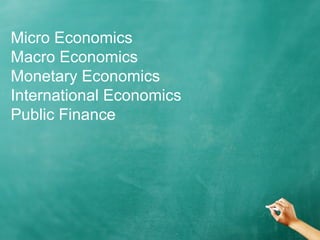
Micro Economics 
Macro Economics 
Monetary Economics 
International Economics 
Public Finance
Micro Economics 
• Demand Analysis: 
– Elasticity of Demand & applications 
– Demand Forecasting 
• Theories of Consumption and 
production 
• Costs Concepts & behaviour 
• Economies of scale & scope 
• Pricing Strategies 
– Market skimming, peak load pricing
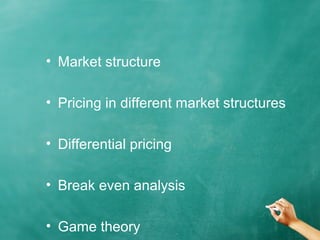
• Market structure 
• Pricing in different market structures 
• Differential pricing 
• Break even analysis 
• Game theory
Macro Economics 
 National Income: Concepts & measurement 
GDP,GNP,NNP 
 inflation and Deflation 
 Fiscal & Monetary policies 
 Indian Industries: A Sectoral Analysis 
 Business Cycles 
Recession,Depression,Recovery,Boom/Prosperity
Monetary system 
• Money Market 
• Capital market 
• Commercial Banks 
• Development banks 
• Role of RBI
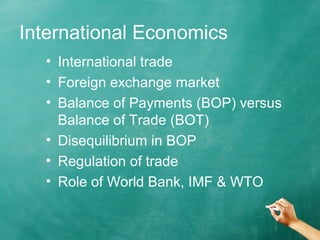
International Economics 
• International trade 
• Foreign exchange market 
• Balance of Payments (BOP) versus 
Balance of Trade (BOT) 
• Disequilibrium in BOP 
• Regulation of trade 
• Role of World Bank, IMF & WTO
Public Finance 
• Public expenditure 
• Taxation: types 
• Public Debt 
• Budget 
• Externalities
Course evaluation 
• Test 1 and Test 2 (15 marks & 20 marks 
respectively) 
• Quiz(10 marks) 
• End Semester exam (50 marks)
Internal Assessment 
• Mid term exam,Quiz 
• Quiz could be open or closed book type. 
• Type of questions range from objective 
type, numericals, case analysis, short 
answer type and essay type.
Books for Reference 
• Principles of Micro Economics, 
(Gregory. N. Mankiw) 
• Economics, 
Samuelson, P.A. and W.D. Nordhaus 
 Managerial Economics: Peterson, Lewis & 
Jain 
 Micro Economics: Pyndick & Rubinfield 
• Books on Financial Management/Monetary 
Economics by an Indian author 
Additional books for reference would be informed later

Lecture 1 course content

  • 1.
    SHU416Economics: An Orientationto the Course – Content& Evaluation Dr.Sunitha S, Assistant Professor, School of Management Studies, National Institute of Technology Calicut
  • 2.
    Common Economic Jargons!! Merger Fixed cost Break even FDI vs FII GDP devaluation Pvt Ltd Inflation Foreign exchange SENSEX FMCG Fiscal deficit Taxes Depreciation cartels Pricing MIDCAP Black money WTO disinvestment CPI Liquidity ratio Debt ratio Stagflation BOP crisis hedging Arbitrage Venture capital
  • 3.
    WHY?? • Whysome countries are richer while others are poorer? • Why there are fluctuations in Rupee against other currencies? • How do poor monsoons pull down the SENSEX and NIFTY? • What is European crisis? • Why does value of Rupee going down?
  • 4.
    Topics to bediscussed in the Course duration
  • 5.
    Micro Economics MacroEconomics Monetary Economics International Economics Public Finance
  • 6.
    Micro Economics •Demand Analysis: – Elasticity of Demand & applications – Demand Forecasting • Theories of Consumption and production • Costs Concepts & behaviour • Economies of scale & scope • Pricing Strategies – Market skimming, peak load pricing
  • 7.
    • Market structure • Pricing in different market structures • Differential pricing • Break even analysis • Game theory
  • 8.
    Macro Economics National Income: Concepts & measurement GDP,GNP,NNP  inflation and Deflation  Fiscal & Monetary policies  Indian Industries: A Sectoral Analysis  Business Cycles Recession,Depression,Recovery,Boom/Prosperity
  • 9.
    Monetary system •Money Market • Capital market • Commercial Banks • Development banks • Role of RBI
  • 10.
    International Economics •International trade • Foreign exchange market • Balance of Payments (BOP) versus Balance of Trade (BOT) • Disequilibrium in BOP • Regulation of trade • Role of World Bank, IMF & WTO
  • 11.
    Public Finance •Public expenditure • Taxation: types • Public Debt • Budget • Externalities
  • 12.
    Course evaluation •Test 1 and Test 2 (15 marks & 20 marks respectively) • Quiz(10 marks) • End Semester exam (50 marks)
  • 13.
    Internal Assessment •Mid term exam,Quiz • Quiz could be open or closed book type. • Type of questions range from objective type, numericals, case analysis, short answer type and essay type.
  • 14.
    Books for Reference • Principles of Micro Economics, (Gregory. N. Mankiw) • Economics, Samuelson, P.A. and W.D. Nordhaus  Managerial Economics: Peterson, Lewis & Jain  Micro Economics: Pyndick & Rubinfield • Books on Financial Management/Monetary Economics by an Indian author Additional books for reference would be informed later