Reinforced Concrete Design-II
Lecture 07: Footings
Semester – Fall 2020
Dr.Tahir Mehmood
Reference
Design of Concrete Structures 14th Ed. by Nilson, Darwin and Dolan.
FOOTING
 Footing are structural elements that transmit to the soil
column loads, wall loads or lateral loads. If these loads are to
be properly transmitted, footing must be designed to prevent
excessive settlement or rotation and to minimize differential
settlement.
Introduction
 To limit settlement within tolerably small amount, it is
necessary.
i. To transmit the load of the structure to a soil stratum of
sufficient strength and
ii. To spread the load over a sufficiently large area of that
stratum to minimize bearing pressure.
 If satisfactory soil directly underlies the structure, it is merely
necessary to spread load by footings. Such substructure are
known as “spread foundation.”
Introduction
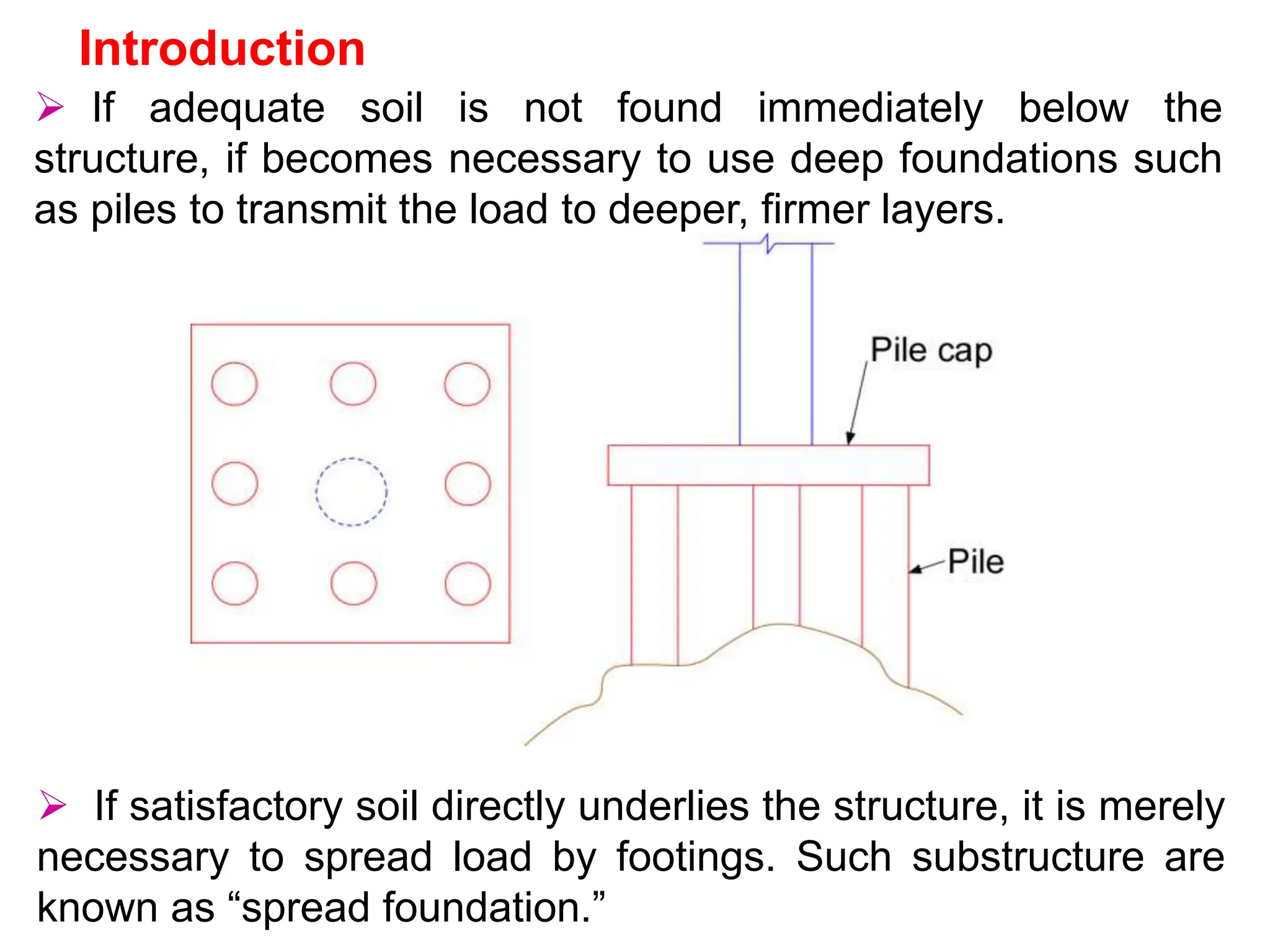
 If adequate soil is not found immediately below the
structure, if becomes necessary to use deep foundations such
as piles to transmit the load to deeper, firmer layers.
Type of Spread Footing
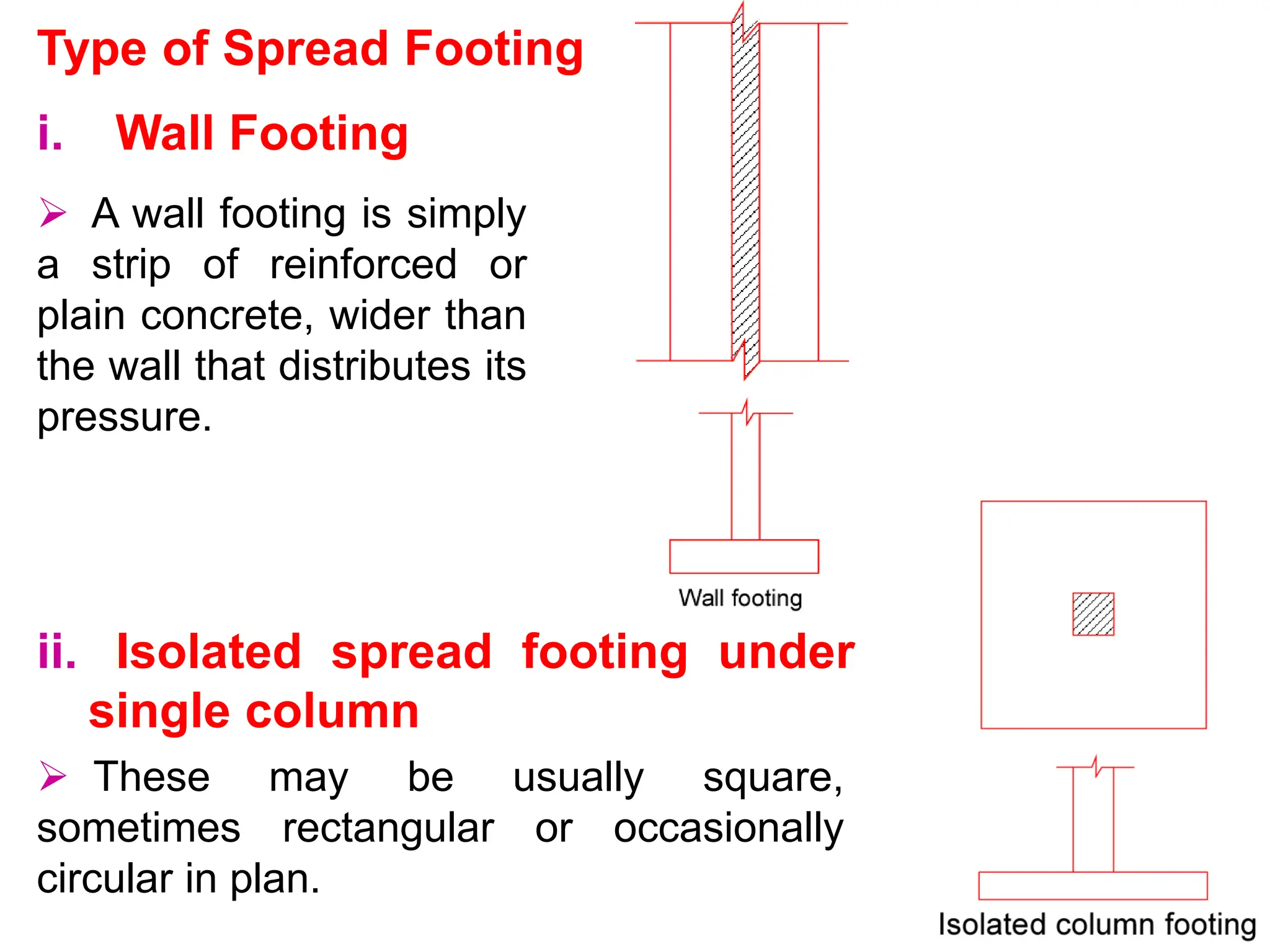
i. Wall Footing
 A wall footing is simply
a strip of reinforced or
plain concrete, wider than
the wall that distributes its
pressure.
ii. Isolated spread footing under
single column
 These may be usually square,
sometimes rectangular or occasionally
circular in plan.
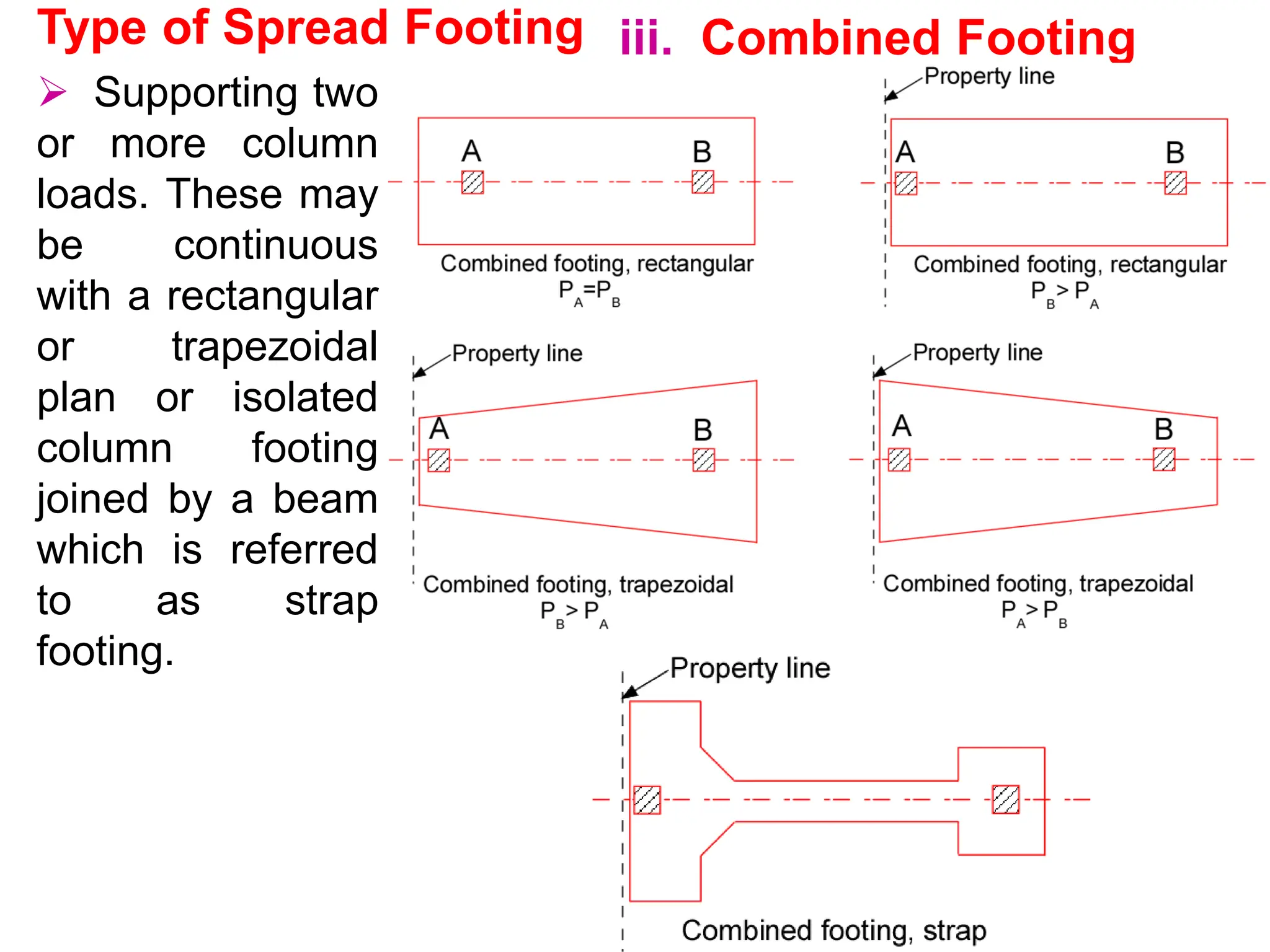
Type of Spread Footing iii. Combined Footing
 Supporting two
or more column
loads. These may
be continuous
with a rectangular
or trapezoidal
plan or isolated
column footing
joined by a beam
which is referred
to as strap
footing.
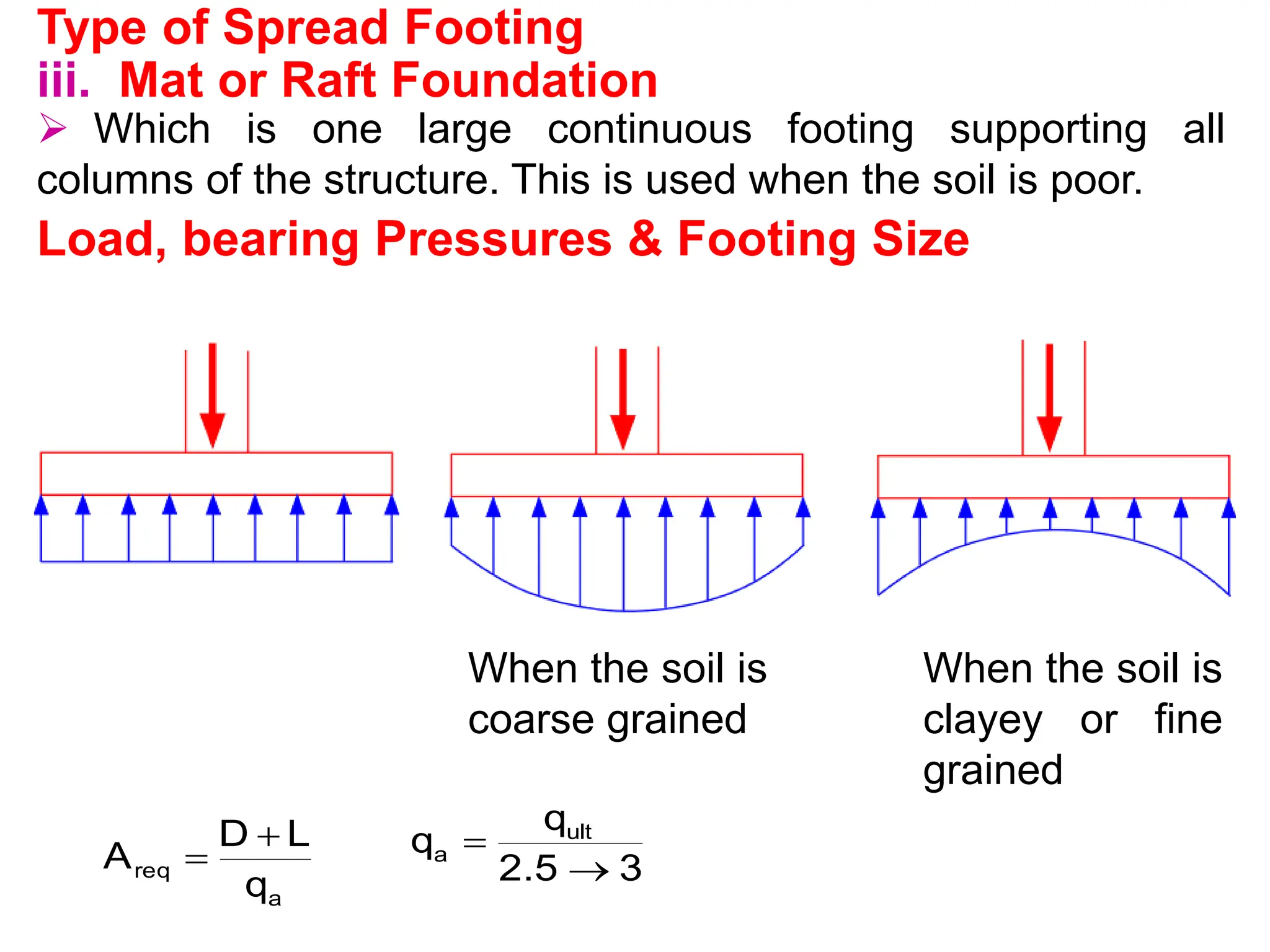
iii. Mat or Raft Foundation
 Which is one large continuous footing supporting all
columns of the structure. This is used when the soil is poor.
Type of Spread Footing
Load, bearing Pressures & Footing Size
When the soil is
coarse grained
When the soil is
clayey or fine
grained
a
req
q
L
D
A

 3
5
.
2
q
q ult
a


Load, bearing Pressures & Footing Size
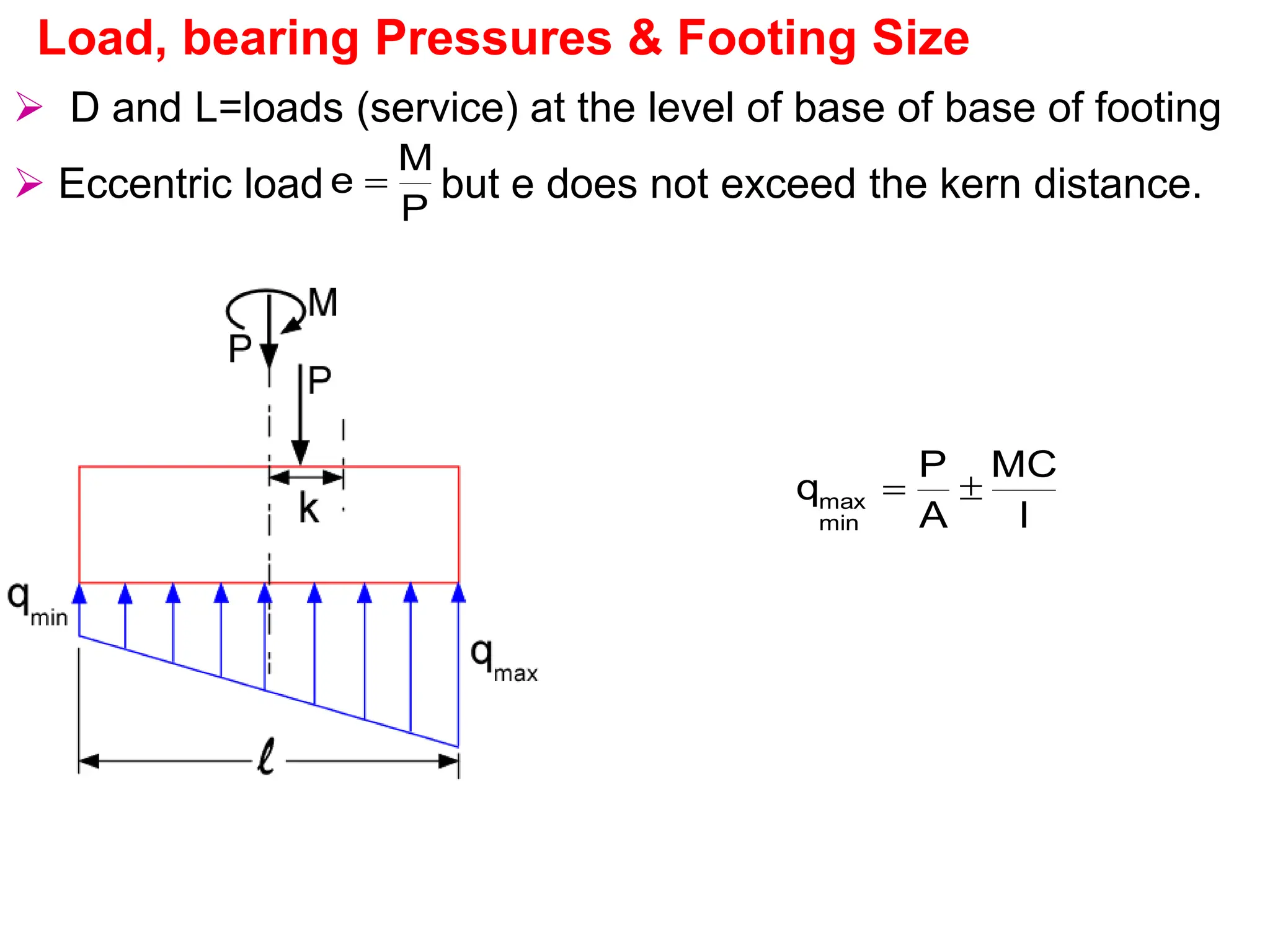
 D and L=loads (service) at the level of base of base of footing
 Eccentric load but e does not exceed the kern distance.
I
MC
A
P
q
min
max 

P
M
e 
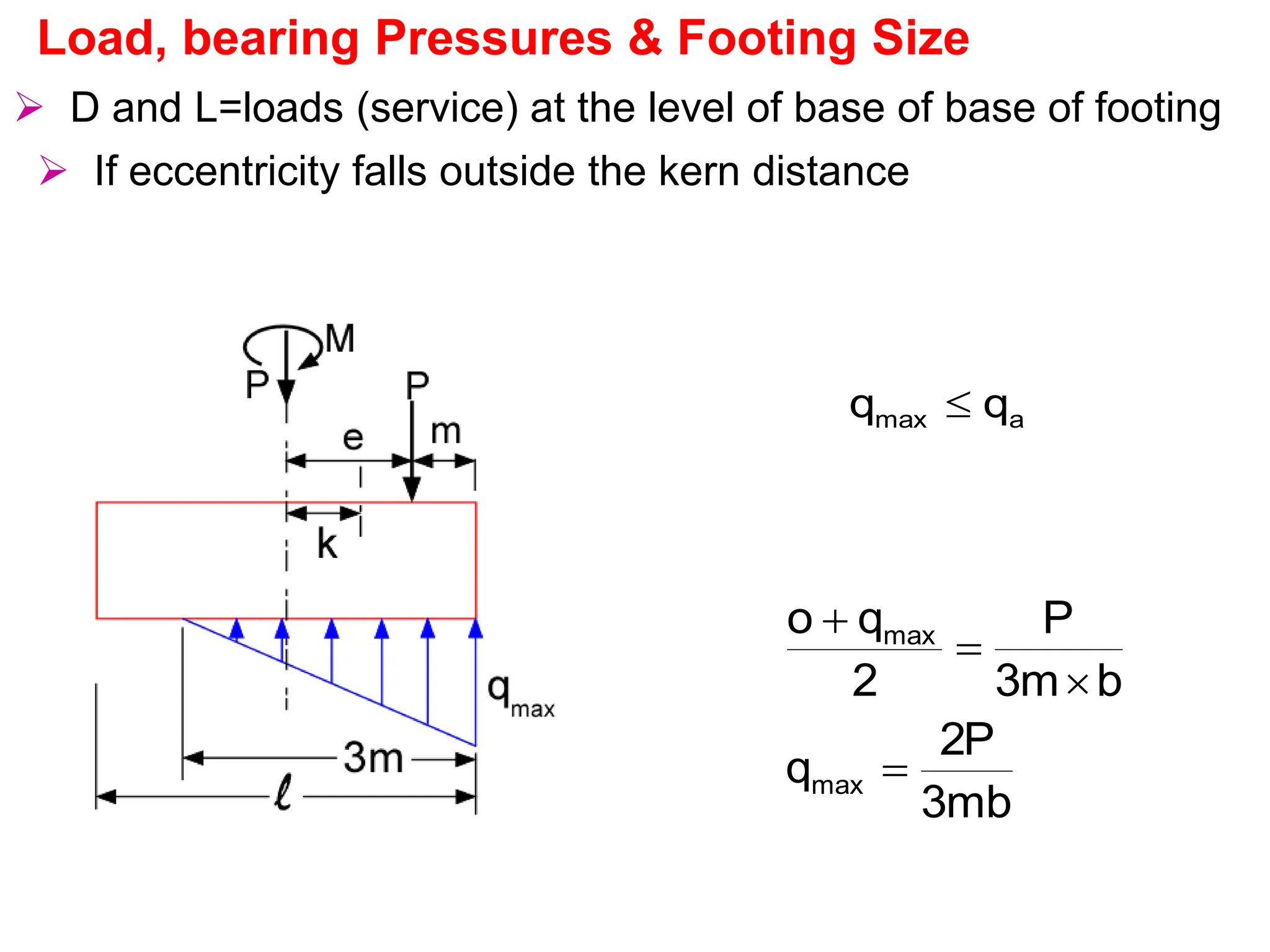
Load, bearing Pressures & Footing Size
 D and L=loads (service) at the level of base of base of footing
 If eccentricity falls outside the kern distance
mb
3
P
2
q
b
m
3
P
2
q
o
max
max




a
max q
q 
Thank you

Lec 7 - Design of Wall footing-Introduction.PPT

  • 1.
    Reinforced Concrete Design-II Lecture07: Footings Semester – Fall 2020 Dr.Tahir Mehmood Reference Design of Concrete Structures 14th Ed. by Nilson, Darwin and Dolan.
  • 2.
  • 4.
     Footing arestructural elements that transmit to the soil column loads, wall loads or lateral loads. If these loads are to be properly transmitted, footing must be designed to prevent excessive settlement or rotation and to minimize differential settlement. Introduction  To limit settlement within tolerably small amount, it is necessary. i. To transmit the load of the structure to a soil stratum of sufficient strength and ii. To spread the load over a sufficiently large area of that stratum to minimize bearing pressure.
  • 5.
     If satisfactorysoil directly underlies the structure, it is merely necessary to spread load by footings. Such substructure are known as “spread foundation.” Introduction  If adequate soil is not found immediately below the structure, if becomes necessary to use deep foundations such as piles to transmit the load to deeper, firmer layers.
  • 6.
    Type of SpreadFooting i. Wall Footing  A wall footing is simply a strip of reinforced or plain concrete, wider than the wall that distributes its pressure. ii. Isolated spread footing under single column  These may be usually square, sometimes rectangular or occasionally circular in plan.
  • 7.
    Type of SpreadFooting iii. Combined Footing  Supporting two or more column loads. These may be continuous with a rectangular or trapezoidal plan or isolated column footing joined by a beam which is referred to as strap footing.
  • 8.
    iii. Mat orRaft Foundation  Which is one large continuous footing supporting all columns of the structure. This is used when the soil is poor. Type of Spread Footing Load, bearing Pressures & Footing Size When the soil is coarse grained When the soil is clayey or fine grained a req q L D A   3 5 . 2 q q ult a  
  • 9.
    Load, bearing Pressures& Footing Size  D and L=loads (service) at the level of base of base of footing  Eccentric load but e does not exceed the kern distance. I MC A P q min max   P M e 
  • 10.
    Load, bearing Pressures& Footing Size  D and L=loads (service) at the level of base of base of footing  If eccentricity falls outside the kern distance mb 3 P 2 q b m 3 P 2 q o max max     a max q q 
  • 11.