DESCRIBING A METHOD FOR MANAGING
LARGE PIECES OF INFORMATION THAT
YOU NEED TO RETAIN
Learning and Retaining
Information
Friday, October 22, 2021
What do we want to discuss?
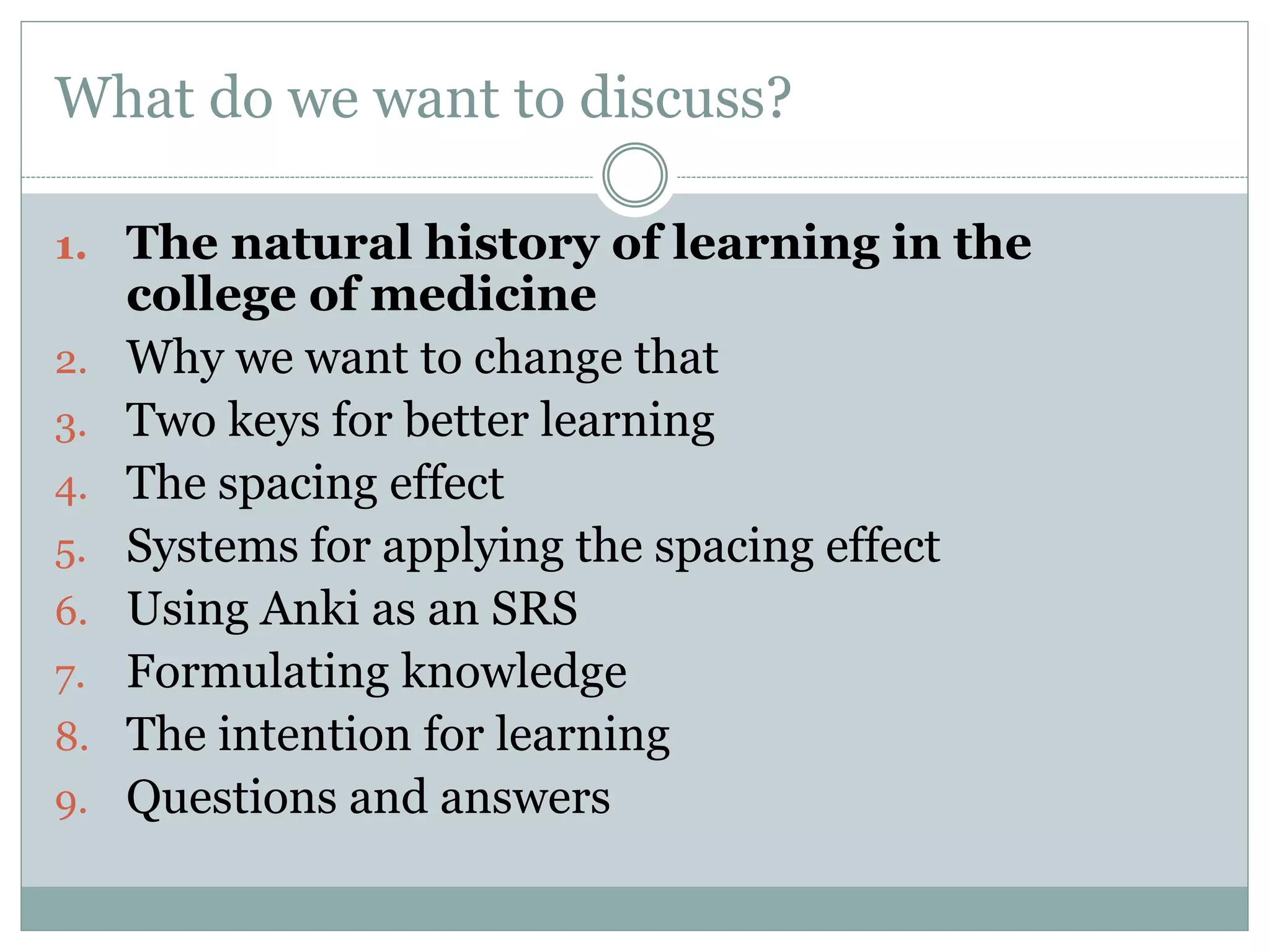
1. The natural history of learning in the
college of medicine
2. Why we want to change that
3. Two keys for better learning
4. The spacing effect
5. Systems for applying the spacing effect
6. Using Anki as an SRS
7. Formulating knowledge
8. The intention for learning
9. Questions and answers
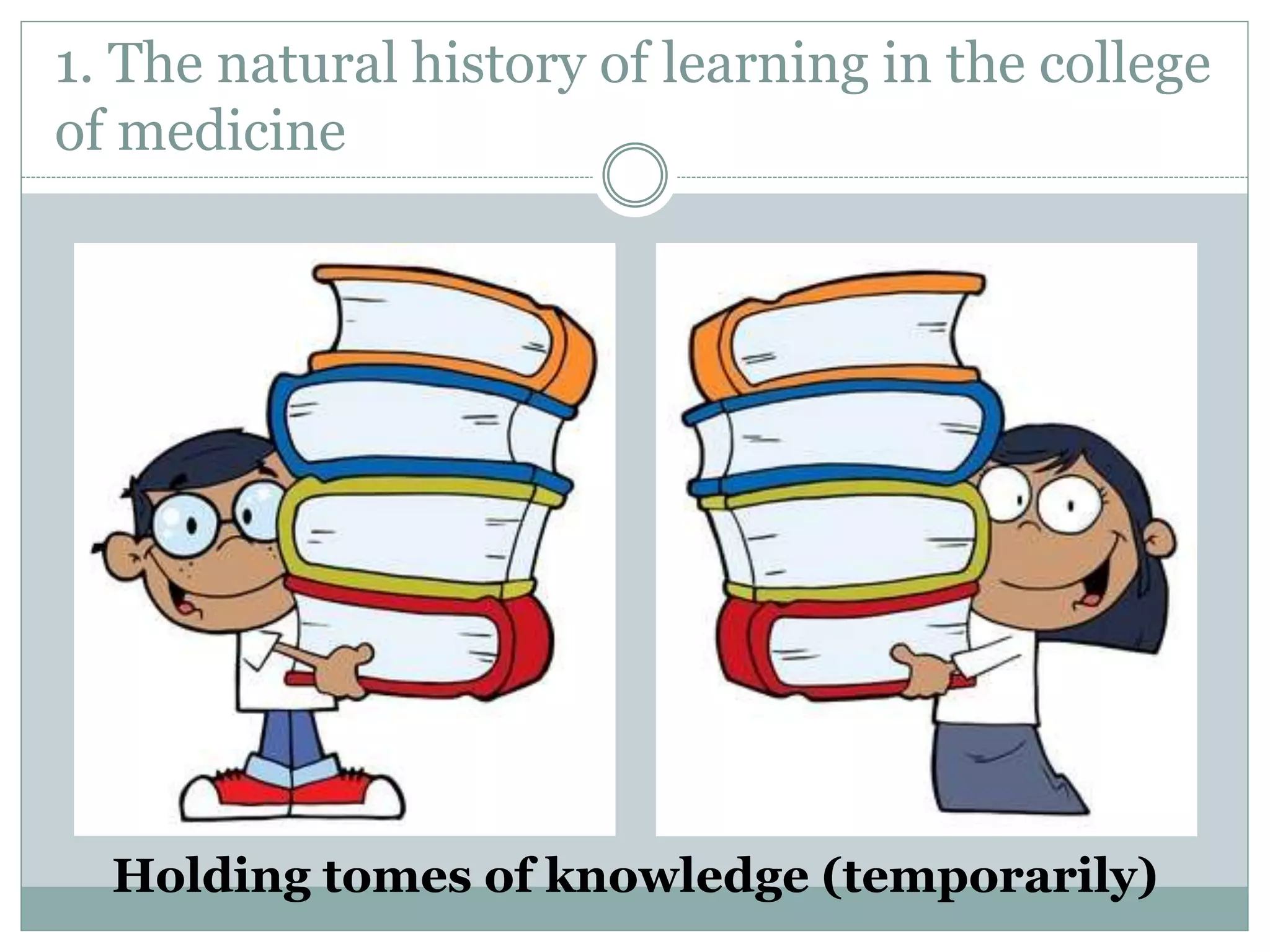
1. The natural history of learning in the college
of medicine
Holding tomes of knowledge (temporarily)
1. The natural history of learning in the college
of medicine
Medical knowledge from start to graduation
And the clock keeps ticking…
Where are we now?
1. The natural history of learning in the college of
medicine
2. Why we want to change that
3. Two keys for better learning
4. The spacing effect
5. Systems for applying the spacing effect
6. Using Anki as an SRS
7. Formulating knowledge
8. The intention for learning
9. Questions and answers
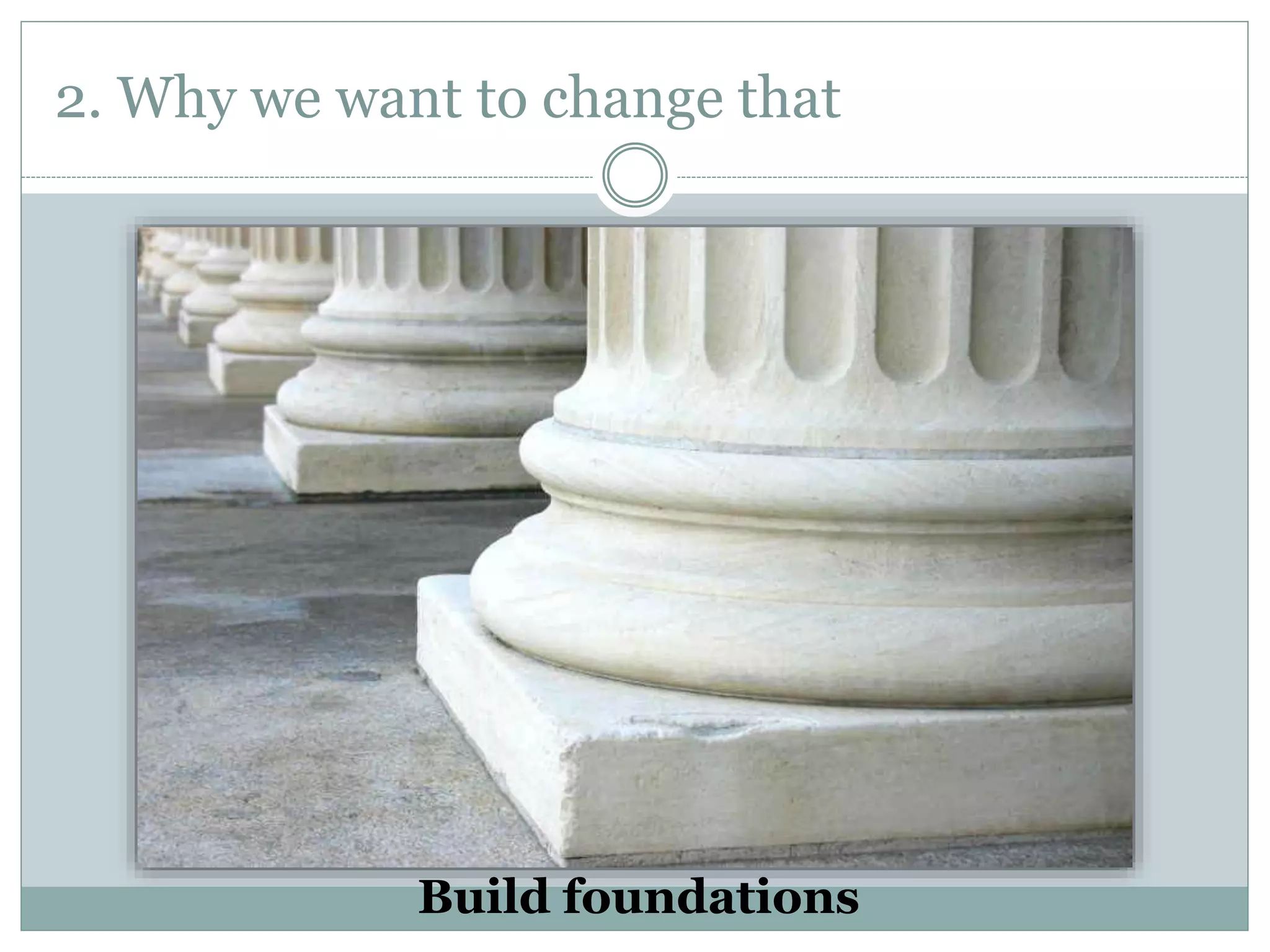
2. Why we want to change that
Build foundations
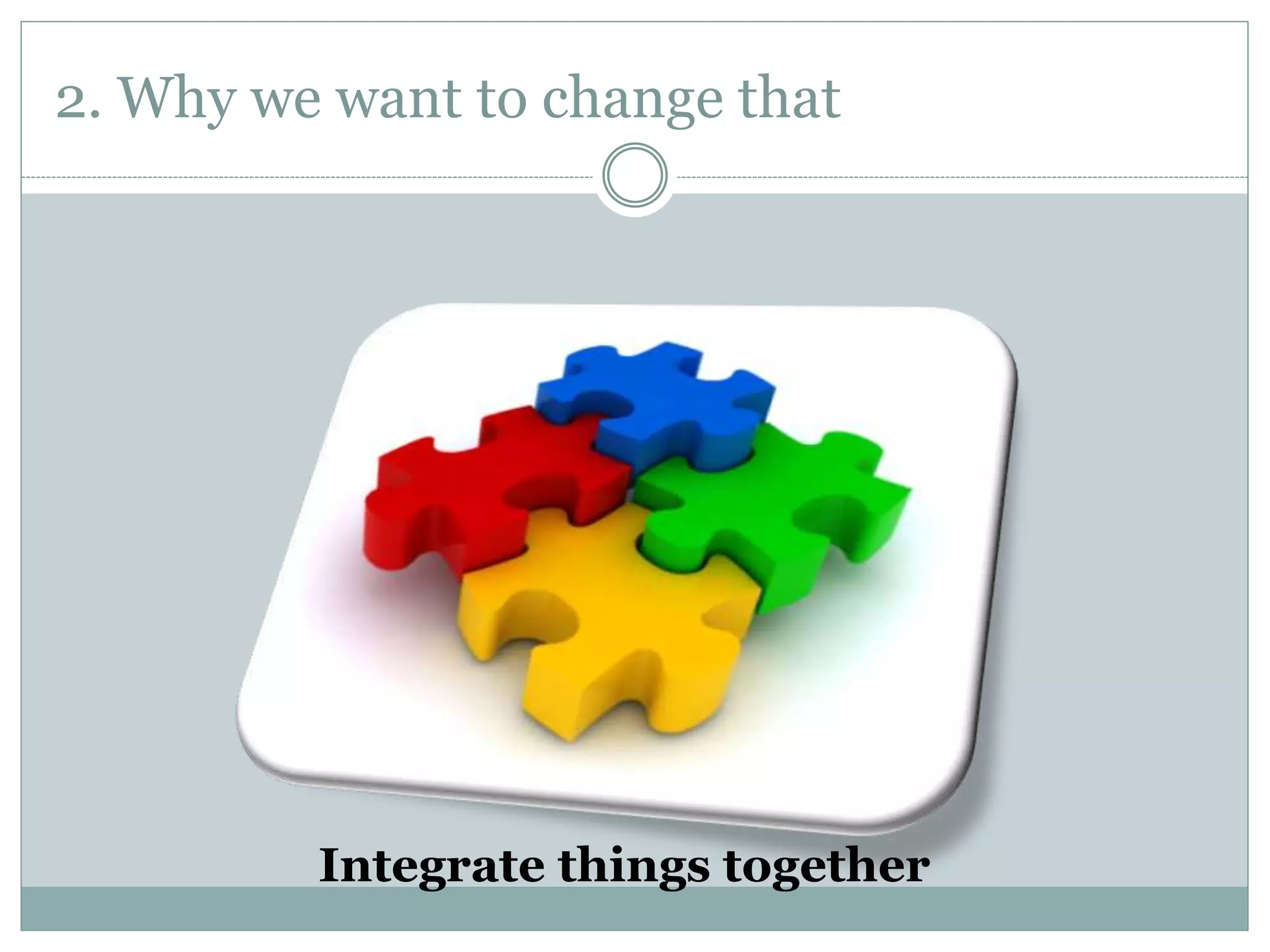
2. Why we want to change that
Integrate things together
2. Why we want to change that
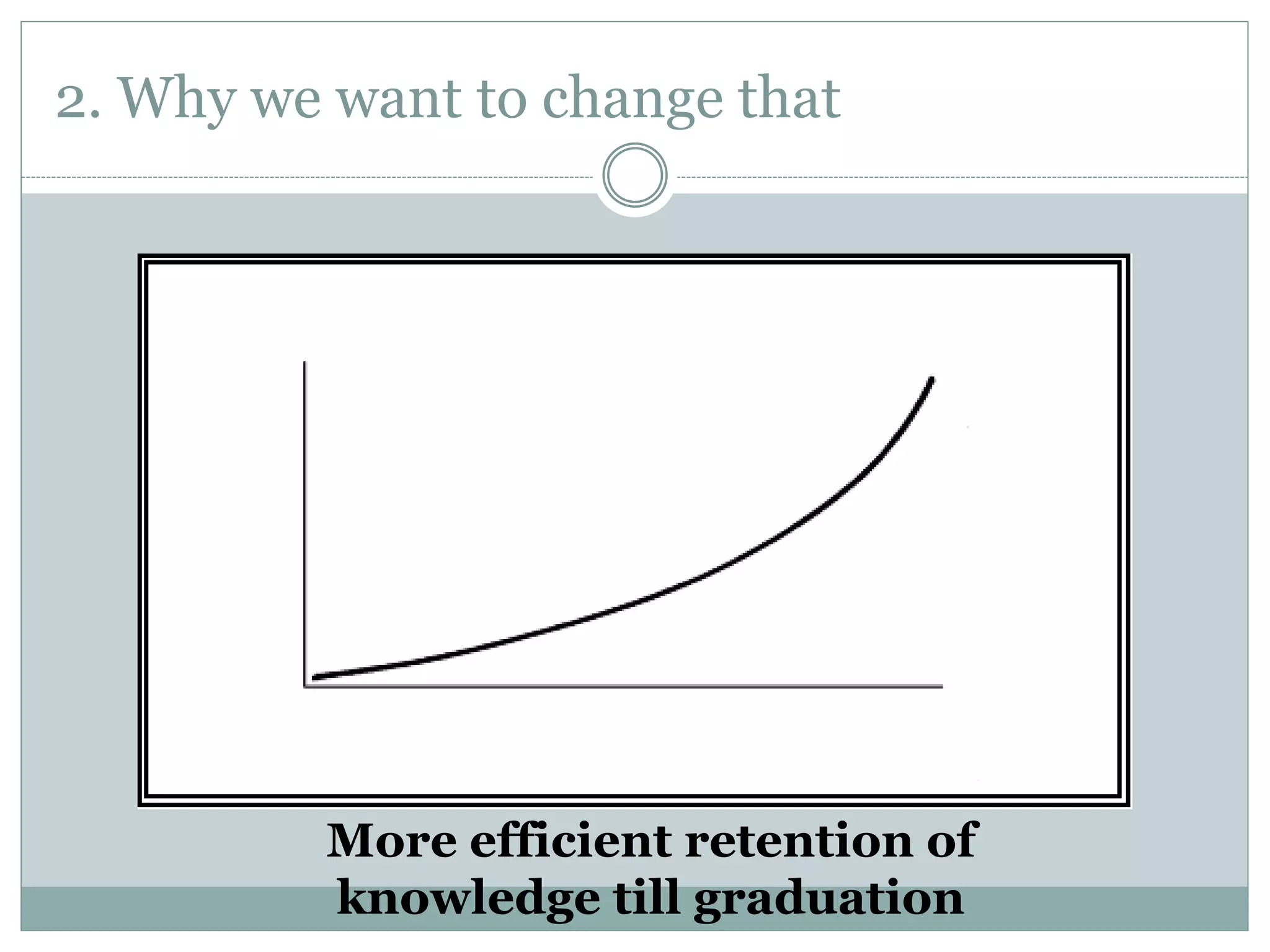
More efficient retention of
knowledge till graduation
Where are we now?
1. The natural history of learning in the college of
medicine
2. Why we want to change that
3. Two keys for better learning
4. The spacing effect
5. Systems for applying the spacing effect
6. Using Anki as an SRS
7. Formulating knowledge
8. The intention for learning
9. Questions and answers
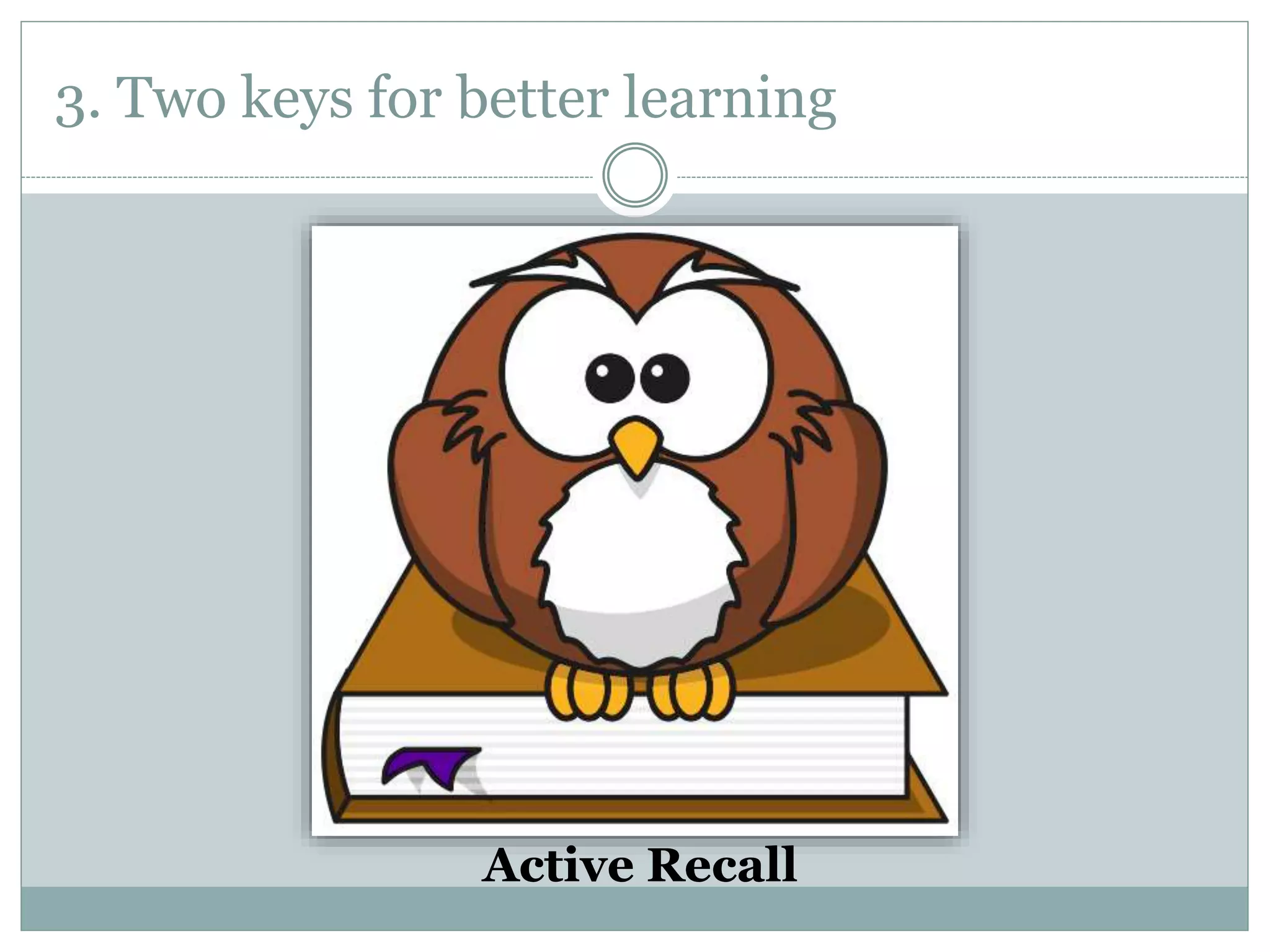
3. Two keys for better learning
Active Recall
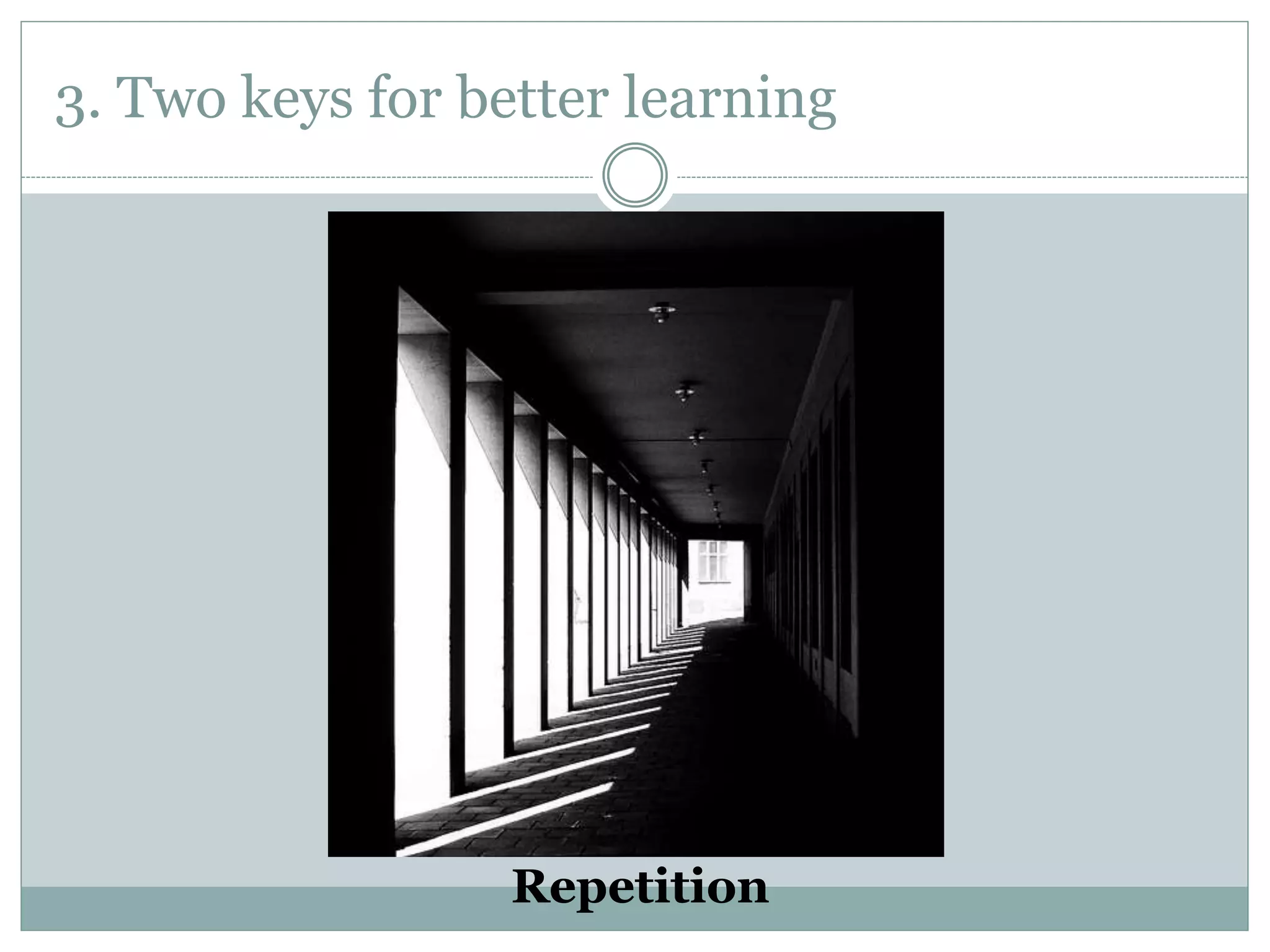
3. Two keys for better learning
Repetition
But there is
no time!
3. Two keys for better learning
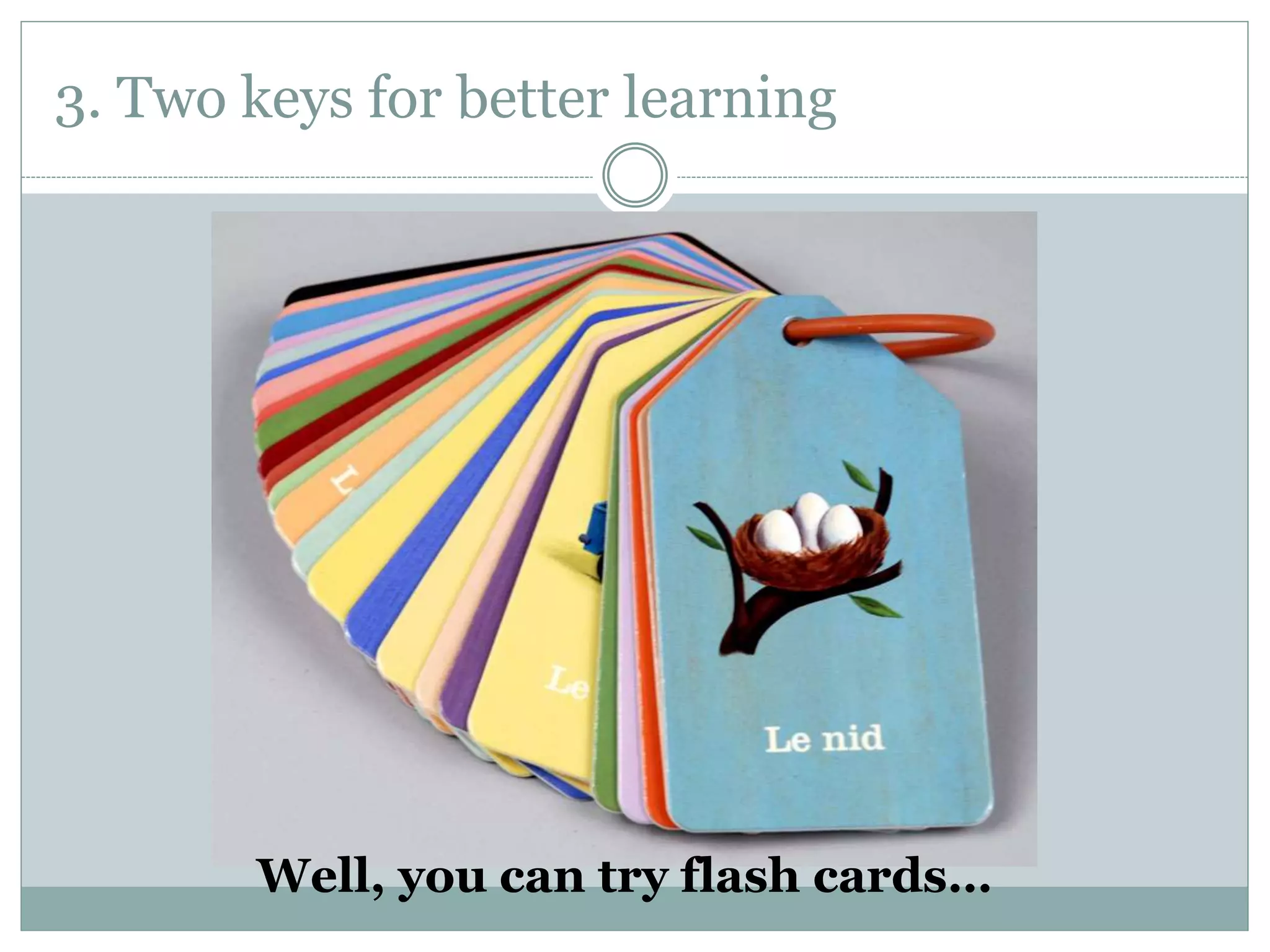
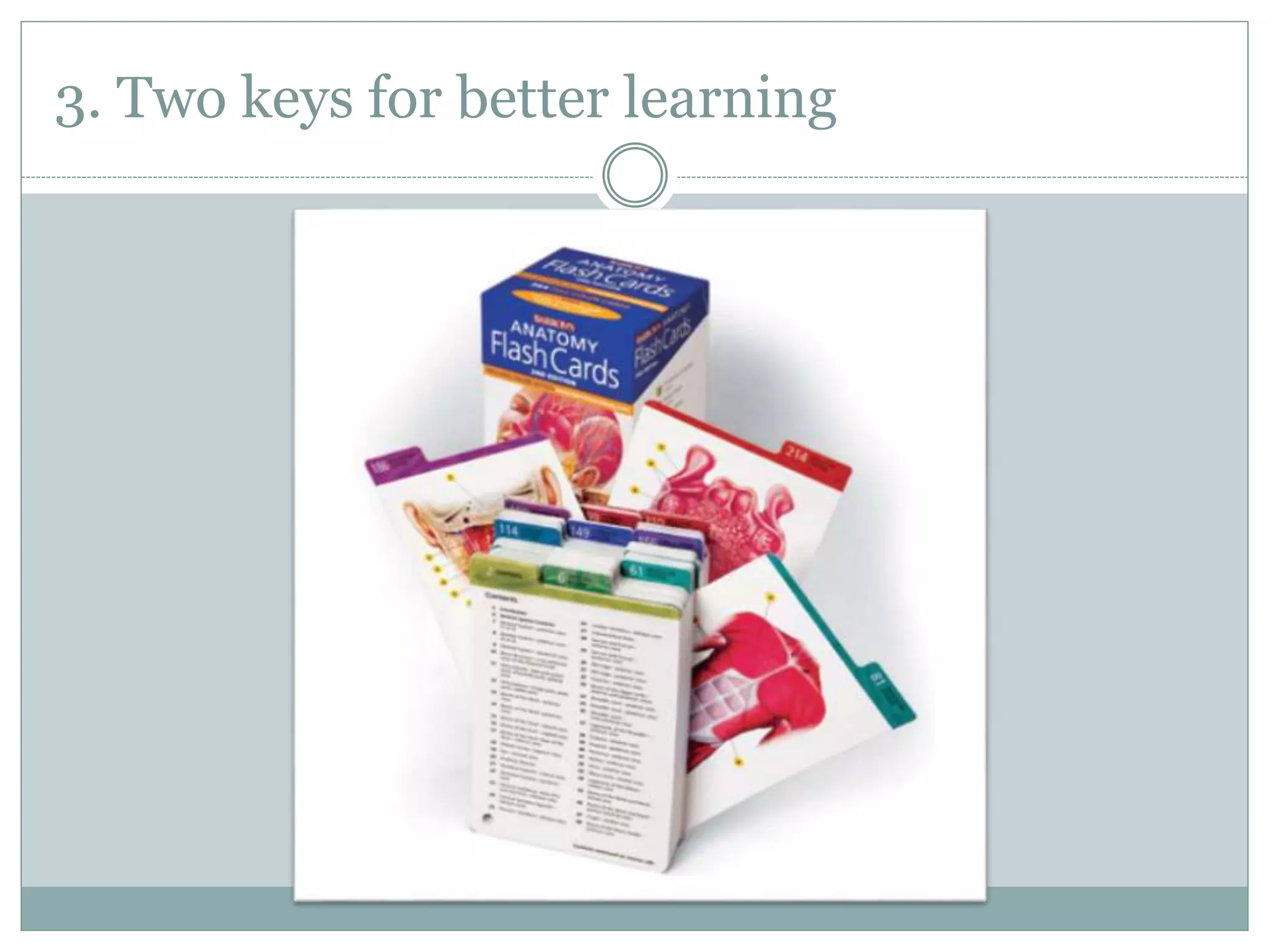
Well, you can try flash cards…
3. Two keys for better learning
But again there is
no time!
Where are we now?
1. The natural history of learning in the college of
medicine
2. Why we want to change that
3. Two keys for better learning
4. The spacing effect
5. Systems for applying the spacing effect
6. Using Anki as an SRS
7. Formulating knowledge
8. The intention for learning
9. Questions and answers
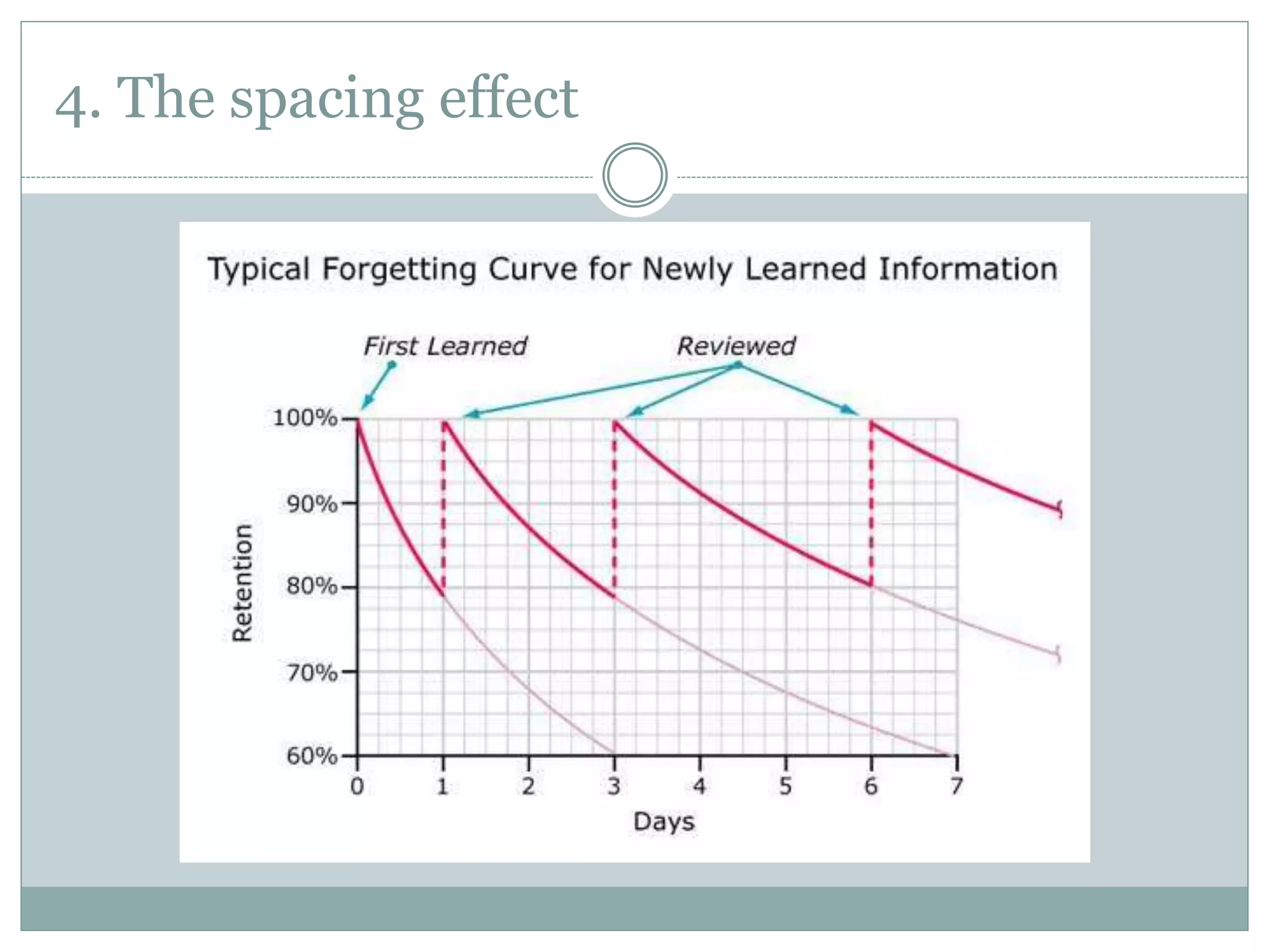
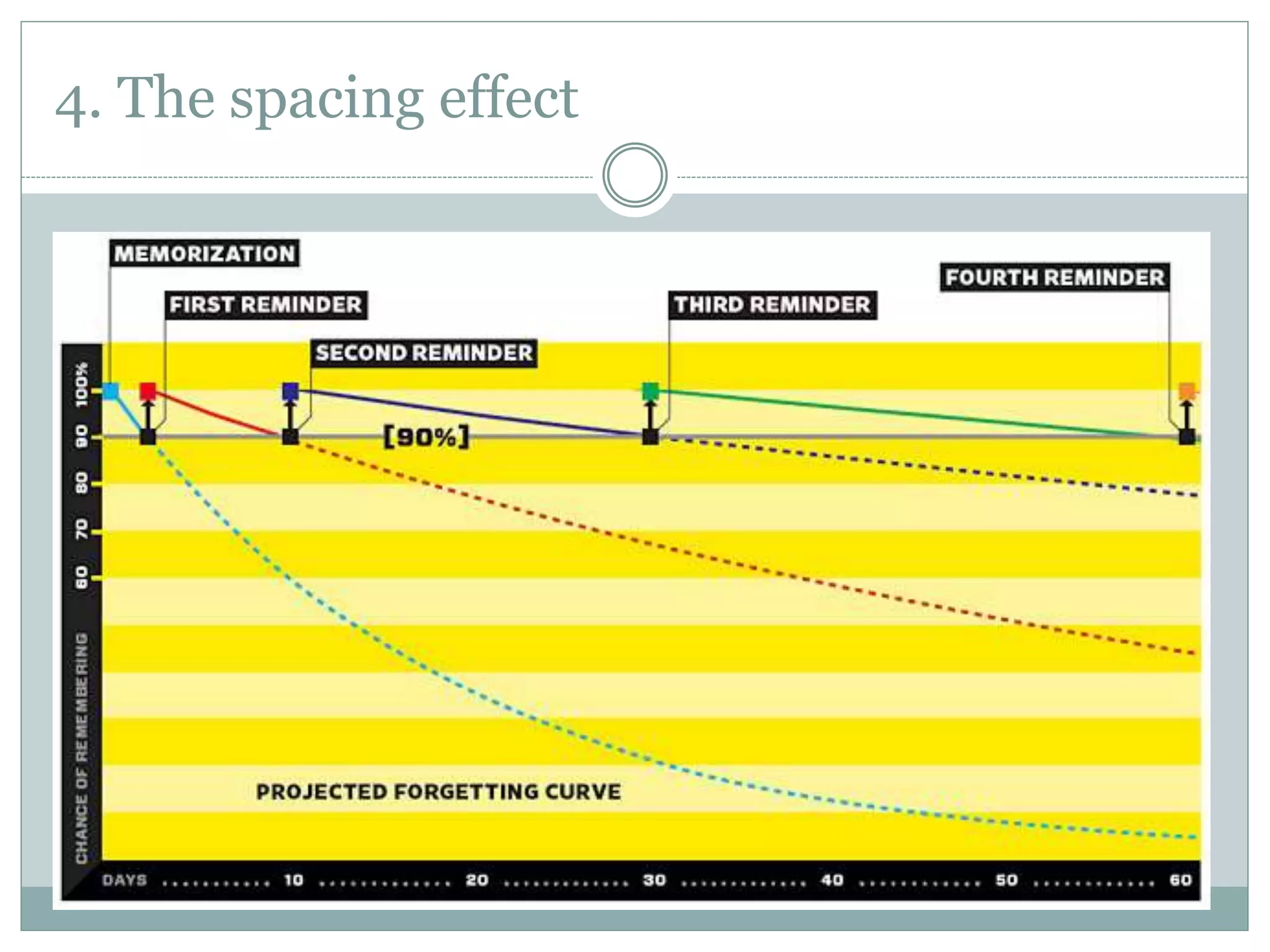
4. The spacing effect
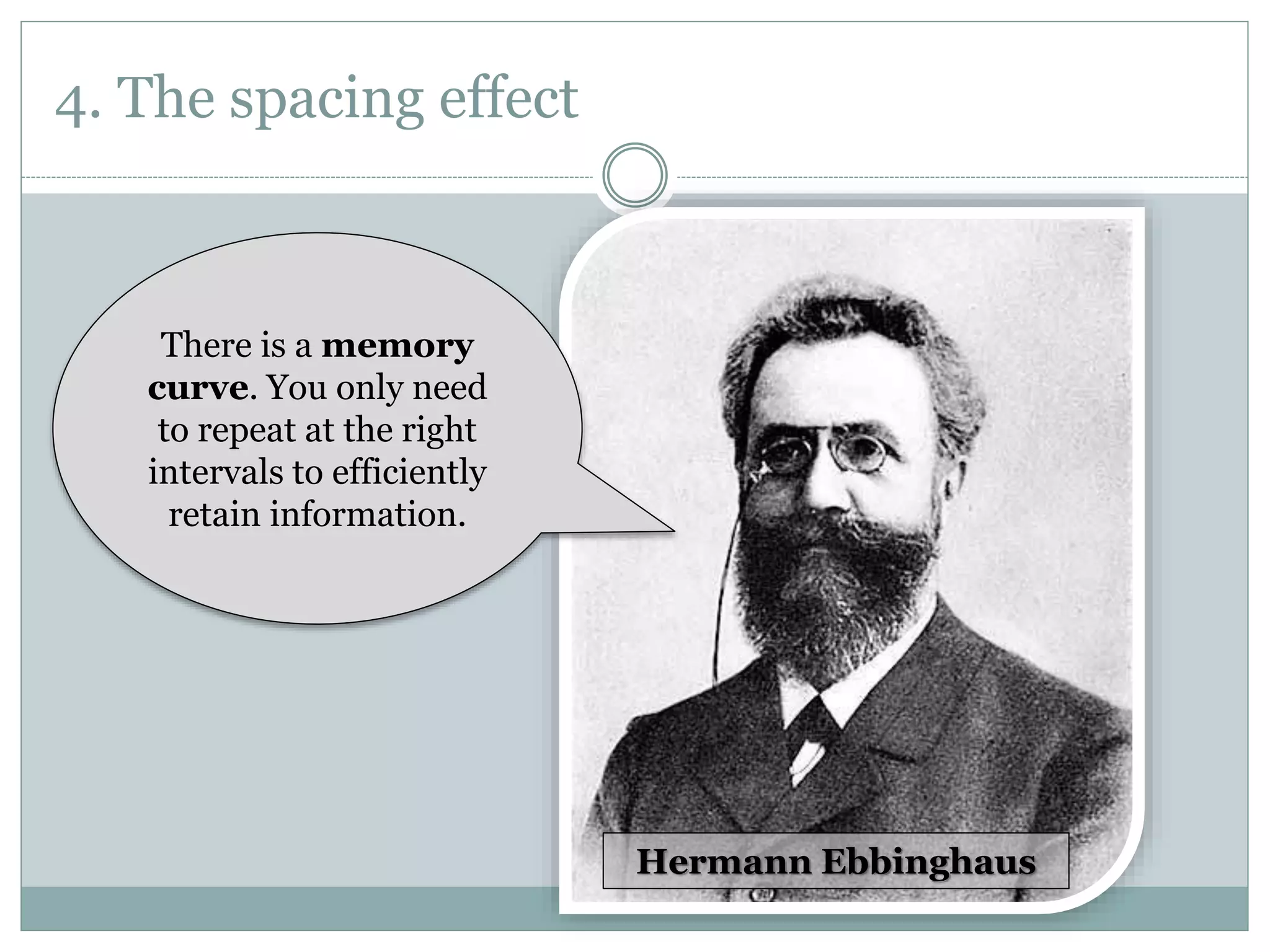
There is a memory
curve. You only need
to repeat at the right
intervals to efficiently
retain information.

Hermann Ebbinghaus
4. The spacing effect
But how am I going to
calculate the intervals?!
Where are we now?
1. The natural history of learning in the college of
medicine
2. Why we want to change that
3. Two keys for better learning
4. The spacing effect
5. Systems for applying the spacing effect
6. Using Anki as an SRS
7. Formulating knowledge
8. The intention for learning
9. Questions and answers
5. Systems for applying the spacing effect
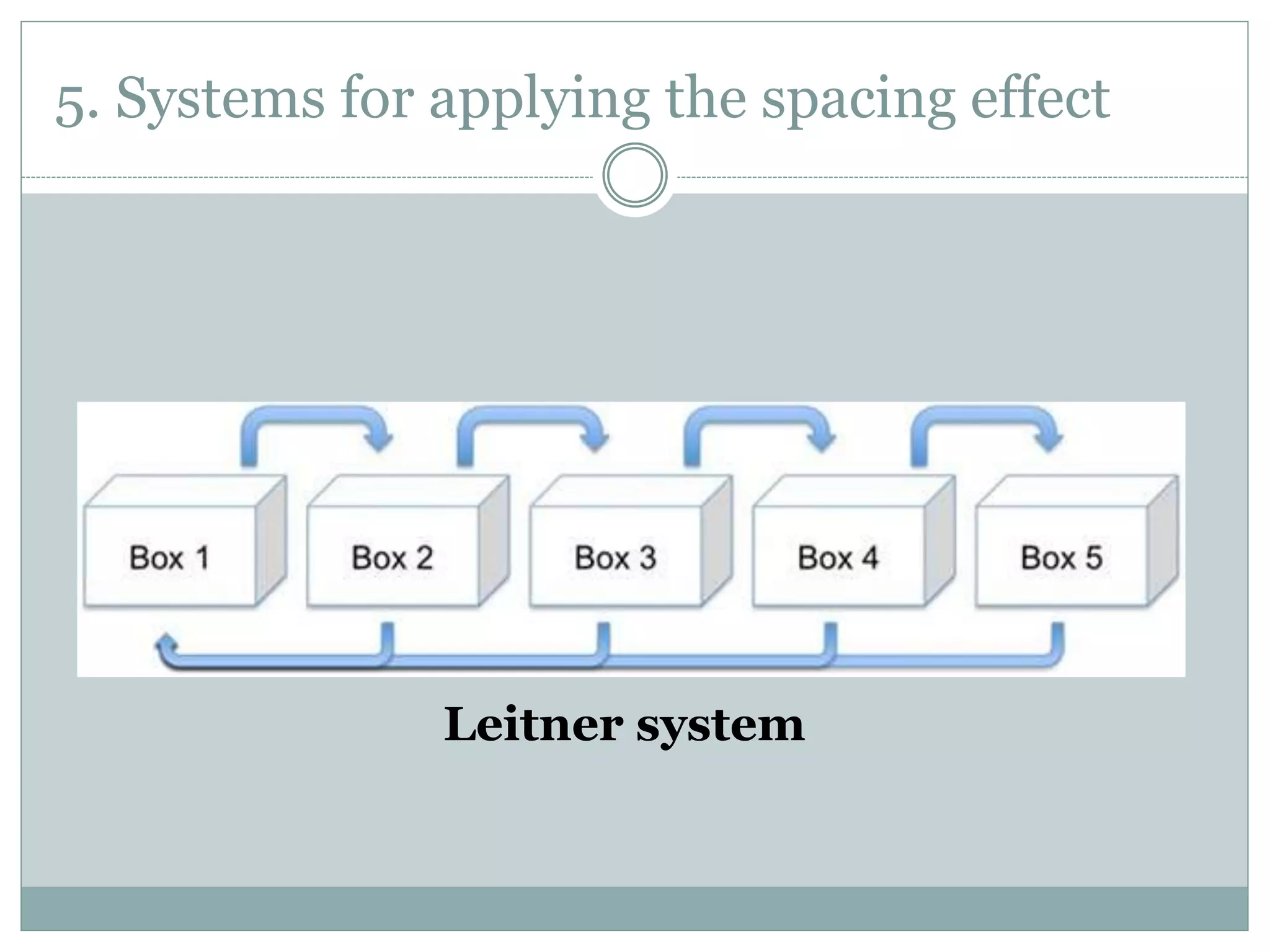
Leitner system
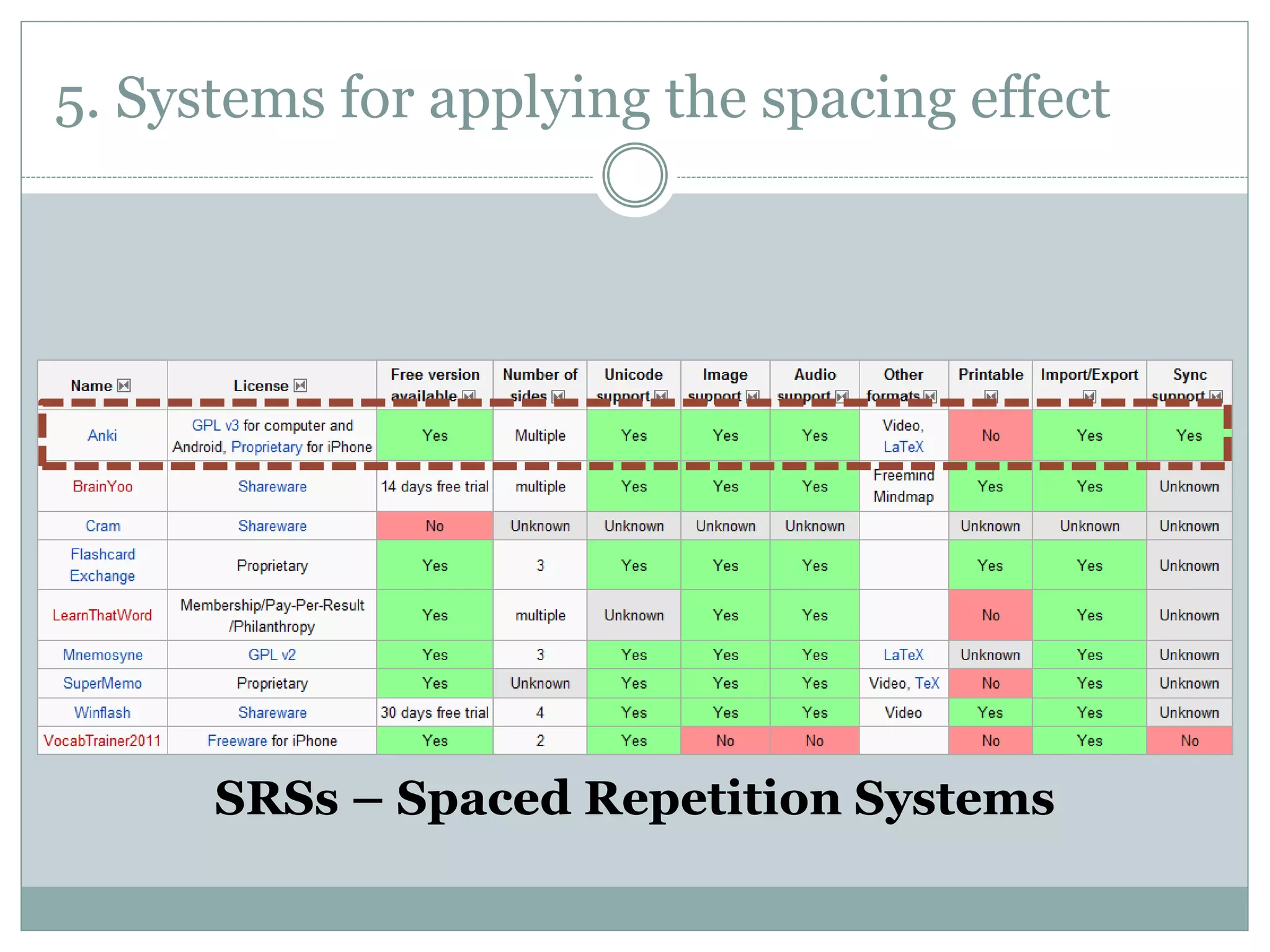
5. Systems for applying the spacing effect
SRSs – Spaced Repetition Systems
Where are we now?
1. The natural history of learning in the college of
medicine
2. Why we want to change that
3. Two keys for better learning
4. The spacing effect
5. Systems for applying the spacing effect
6. Using Anki as an SRS
7. Formulating knowledge
8. The intention for learning
9. Questions and answers
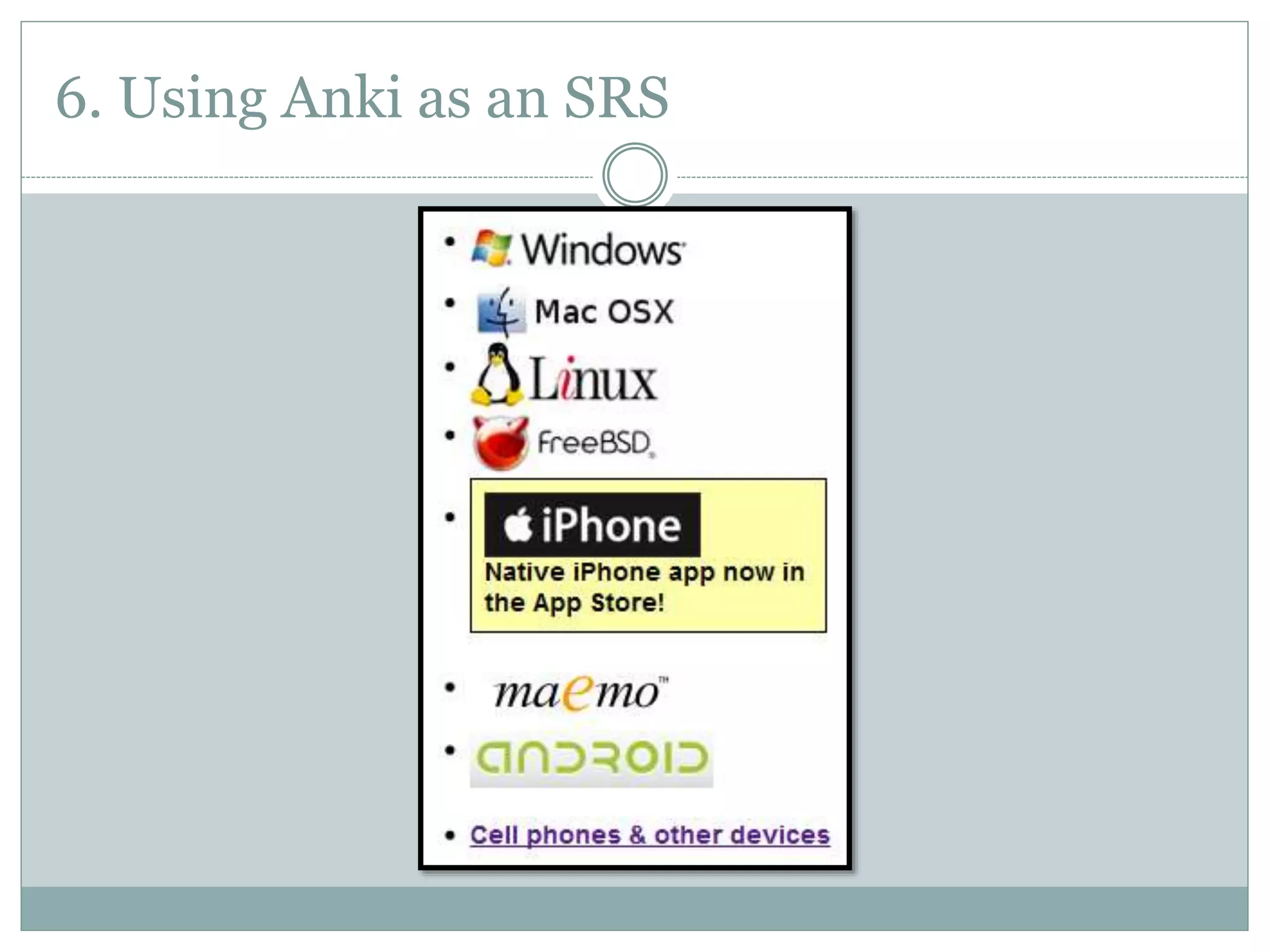
6. Using Anki as an SRS
Where are we now?
1. The natural history of learning in the college of
medicine
2. Why we want to change that
3. Two keys for better learning
4. The spacing effect
5. Systems for applying the spacing effect
6. Using Anki as an SRS
7. Formulating knowledge
8. The intention for learning
9. Questions and answers
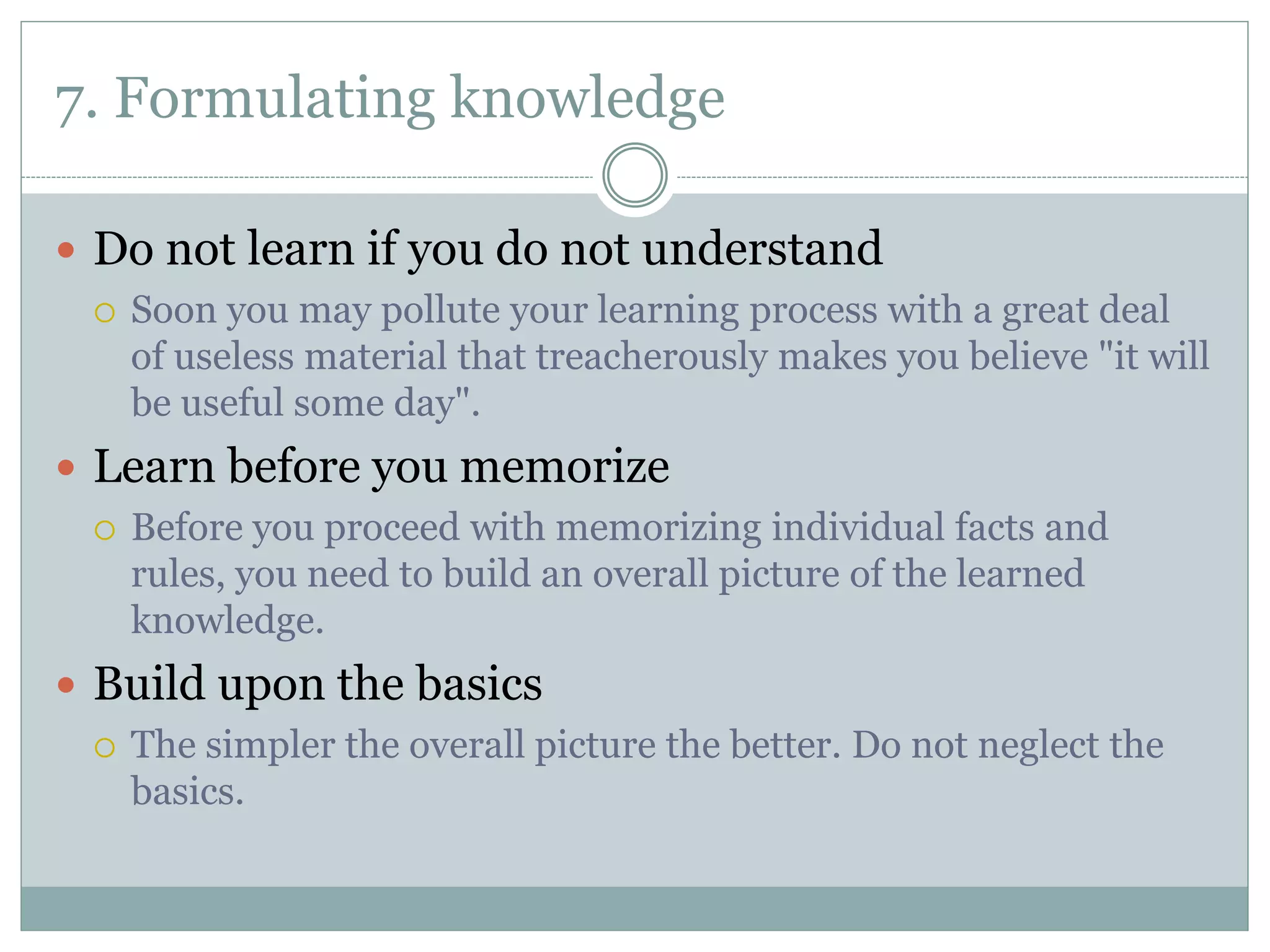
7. Formulating knowledge
 Do not learn if you do not understand
 Soon you may pollute your learning process with a great deal
of useless material that treacherously makes you believe "it will
be useful some day".
 Learn before you memorize
 Before you proceed with memorizing individual facts and
rules, you need to build an overall picture of the learned
knowledge.
 Build upon the basics
 The simpler the overall picture the better. Do not neglect the
basics.
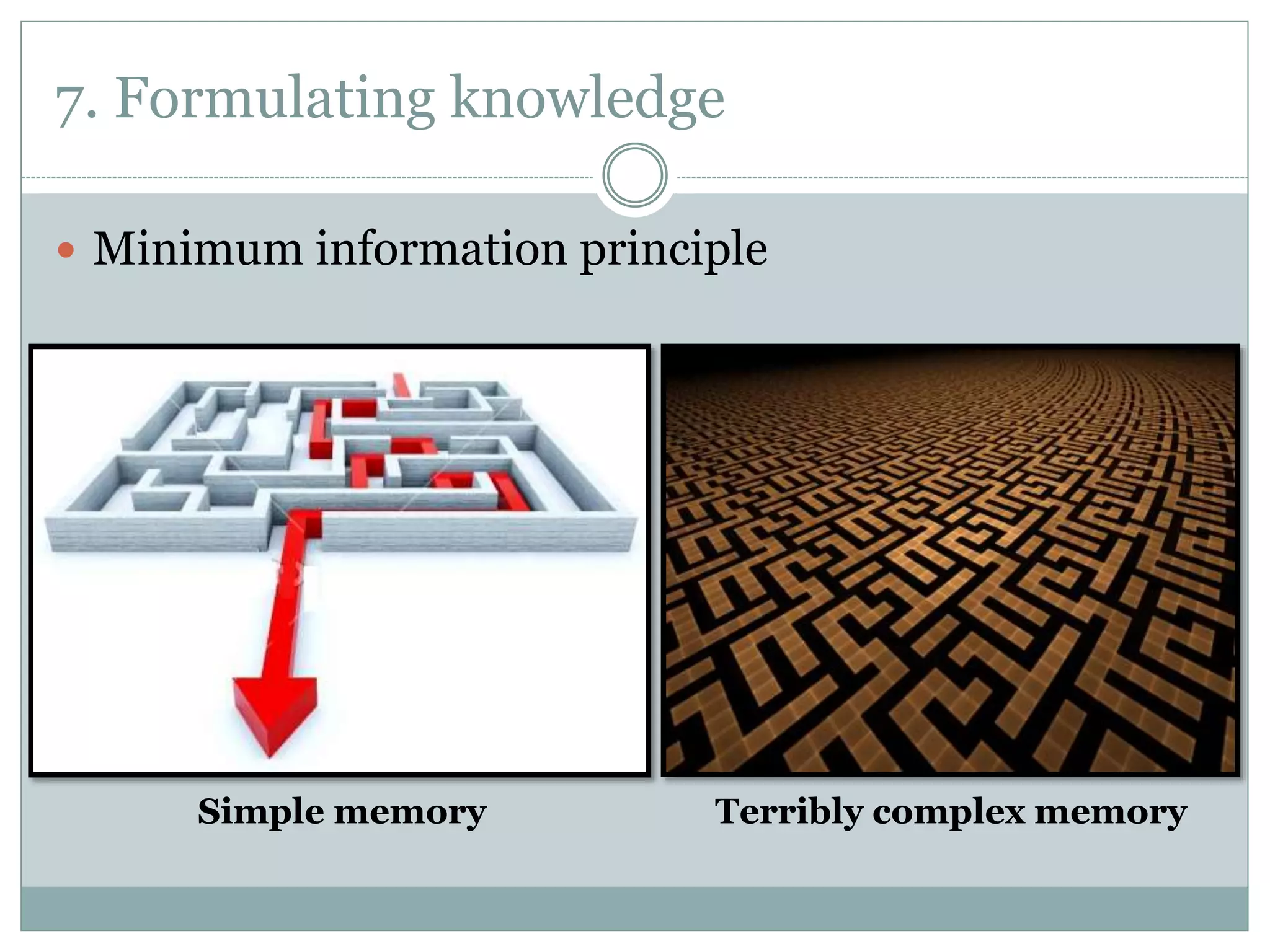
7. Formulating knowledge
 Minimum information principle
Simple memory Terribly complex memory
7. Formulating knowledge
 Minimum information principle
We want a minimum amount of
information to be retrieved from
memory in a single repetition! We
want the answer to be as short as
imaginably possible!
7. Formulating knowledge
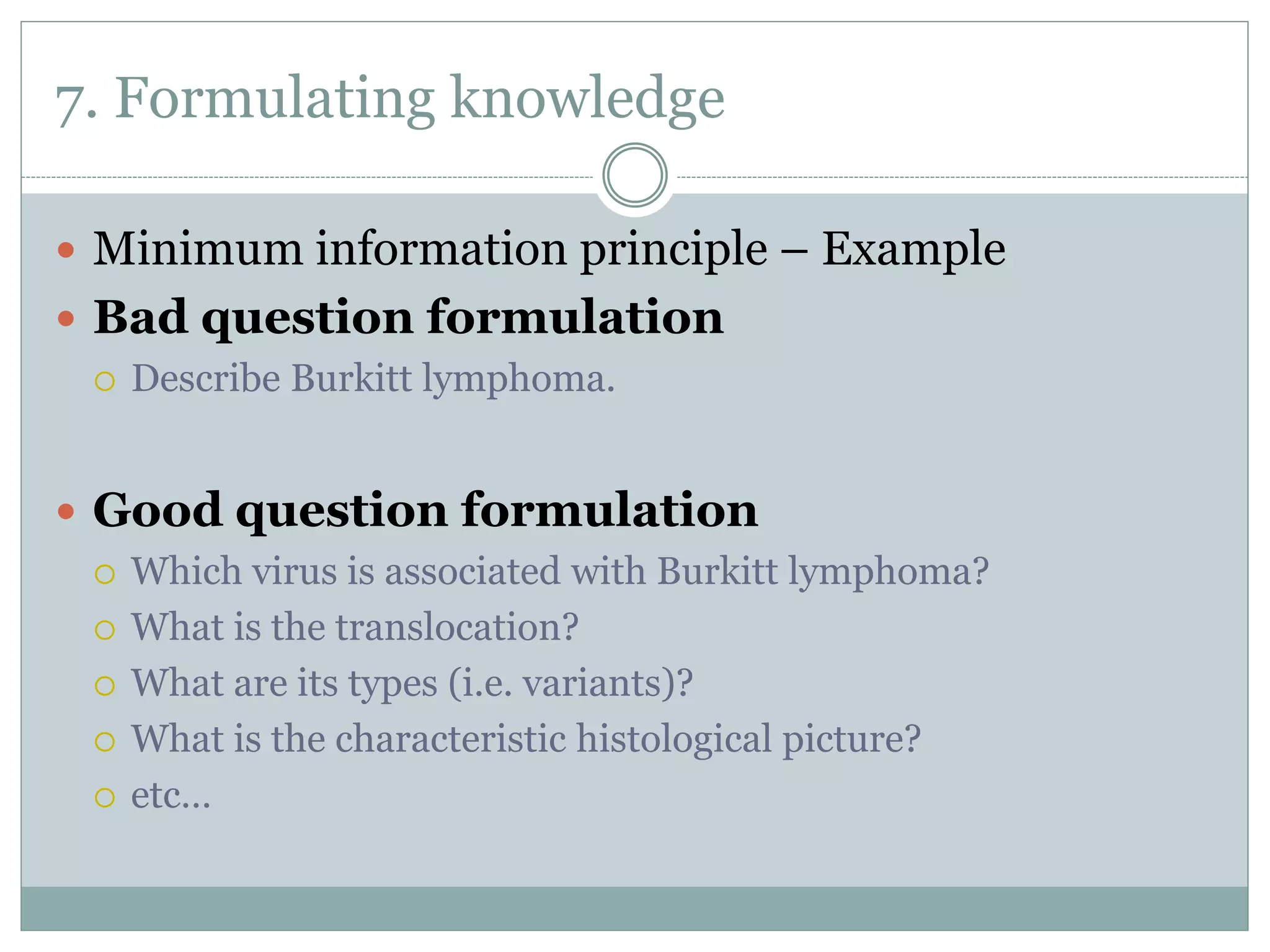
 Minimum information principle – Example
 Bad question formulation
 Describe Burkitt lymphoma.
 Good question formulation
 Which virus is associated with Burkitt lymphoma?
 What is the translocation?
 What are its types (i.e. variants)?
 What is the characteristic histological picture?
 etc…
Where are we now?
1. The natural history of learning in the college of
medicine
2. Why we want to change that
3. Two keys for better learning
4. The spacing effect
5. Systems for applying the spacing effect
6. Using Anki as an SRS
7. Formulating knowledge
8. The intention for learning
9. Questions and answers
Knowledge for the sake of
knowledge?
fulfilling the trust
“For He loves it that if you do
something, you perfect it.”
Where are we now?
1. The natural history of learning in the college of
medicine
2. Why we want to change that
3. Two keys for better learning
4. The spacing effect
5. Systems for applying the spacing effect
6. Using Anki as an SRS
7. Formulating knowledge
8. The intention for learning
9. Questions and answers
 What if I ignore a day of studying my cards?
 What if I ignore studying for a week or more?
 How can I save and backup my cards?
 Other questions?
Some resources
 20 rules of formulating knowledge in learning (very
important; also explore other articles on the website)
 http://www.supermemo.com/articles/20rules.htm
 Anki Documentation (information on how to use Anki)
 http://ankisrs.net/docs/
 Anki All the Way (a review of why Anki is a good SRS; the
website is itself a compilation of reviews of SRSs)
 http://foolsworkshop.com/reviews/anki-all-the-way
 Search Google for terms like “spaced repetition” and
follow the links
Thank you for listening.
And all praise is due to Allah .

Learning and Retaining Information - Spaced Repetition Systems

  • 1.
    DESCRIBING A METHODFOR MANAGING LARGE PIECES OF INFORMATION THAT YOU NEED TO RETAIN Learning and Retaining Information Friday, October 22, 2021
  • 2.
    What do wewant to discuss? 1. The natural history of learning in the college of medicine 2. Why we want to change that 3. Two keys for better learning 4. The spacing effect 5. Systems for applying the spacing effect 6. Using Anki as an SRS 7. Formulating knowledge 8. The intention for learning 9. Questions and answers
  • 3.
    1. The naturalhistory of learning in the college of medicine Holding tomes of knowledge (temporarily)
  • 4.
    1. The naturalhistory of learning in the college of medicine Medical knowledge from start to graduation
  • 5.
    And the clockkeeps ticking…
  • 6.
    Where are wenow? 1. The natural history of learning in the college of medicine 2. Why we want to change that 3. Two keys for better learning 4. The spacing effect 5. Systems for applying the spacing effect 6. Using Anki as an SRS 7. Formulating knowledge 8. The intention for learning 9. Questions and answers
  • 7.
    2. Why wewant to change that Build foundations
  • 8.
    2. Why wewant to change that Integrate things together
  • 9.
    2. Why wewant to change that More efficient retention of knowledge till graduation
  • 10.
    Where are wenow? 1. The natural history of learning in the college of medicine 2. Why we want to change that 3. Two keys for better learning 4. The spacing effect 5. Systems for applying the spacing effect 6. Using Anki as an SRS 7. Formulating knowledge 8. The intention for learning 9. Questions and answers
  • 11.
    3. Two keysfor better learning Active Recall
  • 12.
    3. Two keysfor better learning Repetition
  • 13.
  • 14.
    3. Two keysfor better learning Well, you can try flash cards…
  • 15.
    3. Two keysfor better learning
  • 16.
    But again thereis no time!
  • 17.
    Where are wenow? 1. The natural history of learning in the college of medicine 2. Why we want to change that 3. Two keys for better learning 4. The spacing effect 5. Systems for applying the spacing effect 6. Using Anki as an SRS 7. Formulating knowledge 8. The intention for learning 9. Questions and answers
  • 18.
    4. The spacingeffect There is a memory curve. You only need to repeat at the right intervals to efficiently retain information. Hermann Ebbinghaus

  • 19.
  • 20.
  • 21.
    But how amI going to calculate the intervals?!
  • 22.
    Where are wenow? 1. The natural history of learning in the college of medicine 2. Why we want to change that 3. Two keys for better learning 4. The spacing effect 5. Systems for applying the spacing effect 6. Using Anki as an SRS 7. Formulating knowledge 8. The intention for learning 9. Questions and answers
  • 23.
    5. Systems forapplying the spacing effect Leitner system
  • 24.
    5. Systems forapplying the spacing effect SRSs – Spaced Repetition Systems
  • 25.
    Where are wenow? 1. The natural history of learning in the college of medicine 2. Why we want to change that 3. Two keys for better learning 4. The spacing effect 5. Systems for applying the spacing effect 6. Using Anki as an SRS 7. Formulating knowledge 8. The intention for learning 9. Questions and answers
  • 27.
    6. Using Ankias an SRS
  • 28.
    Where are wenow? 1. The natural history of learning in the college of medicine 2. Why we want to change that 3. Two keys for better learning 4. The spacing effect 5. Systems for applying the spacing effect 6. Using Anki as an SRS 7. Formulating knowledge 8. The intention for learning 9. Questions and answers
  • 29.
    7. Formulating knowledge Do not learn if you do not understand  Soon you may pollute your learning process with a great deal of useless material that treacherously makes you believe "it will be useful some day".  Learn before you memorize  Before you proceed with memorizing individual facts and rules, you need to build an overall picture of the learned knowledge.  Build upon the basics  The simpler the overall picture the better. Do not neglect the basics.
  • 30.
    7. Formulating knowledge Minimum information principle Simple memory Terribly complex memory
  • 31.
    7. Formulating knowledge Minimum information principle We want a minimum amount of information to be retrieved from memory in a single repetition! We want the answer to be as short as imaginably possible!
  • 32.
    7. Formulating knowledge Minimum information principle – Example  Bad question formulation  Describe Burkitt lymphoma.  Good question formulation  Which virus is associated with Burkitt lymphoma?  What is the translocation?  What are its types (i.e. variants)?  What is the characteristic histological picture?  etc…
  • 33.
    Where are wenow? 1. The natural history of learning in the college of medicine 2. Why we want to change that 3. Two keys for better learning 4. The spacing effect 5. Systems for applying the spacing effect 6. Using Anki as an SRS 7. Formulating knowledge 8. The intention for learning 9. Questions and answers
  • 34.
    Knowledge for thesake of knowledge?
  • 35.
  • 36.
    “For He lovesit that if you do something, you perfect it.”
  • 37.
    Where are wenow? 1. The natural history of learning in the college of medicine 2. Why we want to change that 3. Two keys for better learning 4. The spacing effect 5. Systems for applying the spacing effect 6. Using Anki as an SRS 7. Formulating knowledge 8. The intention for learning 9. Questions and answers
  • 38.
    9. Questions andanswers  What if I ignore a day of studying my cards?  What if I ignore studying for a week or more?  How can I save and backup my cards?  Other questions?
  • 39.
    Some resources  20rules of formulating knowledge in learning (very important; also explore other articles on the website)  http://www.supermemo.com/articles/20rules.htm  Anki Documentation (information on how to use Anki)  http://ankisrs.net/docs/  Anki All the Way (a review of why Anki is a good SRS; the website is itself a compilation of reviews of SRSs)  http://foolsworkshop.com/reviews/anki-all-the-way  Search Google for terms like “spaced repetition” and follow the links
  • 40.
    Thank you forlistening. And all praise is due to Allah .