LEARNERS WITH
DIFFICULTY
MOVING/WALKING
By : Angel Faye Serenio
C. Learning Characteristics
Motor difficulties and disabilities are known to significantly affect a child’s
ability to perform daily activities, which include memory, perception and
processing, planning, carrying out coordinated movements. Speech may
also affected as motor control is needed in articulation and production.
Moreover. Developmental coordination disorder also affects psychosocial
functioning as children report to have lower levels of self-efficacy and
competence in physical and social domains, experience more symptoms
of being depressed and anxious, as well as display externalizing behaviors
(Harris et.al. 2015)
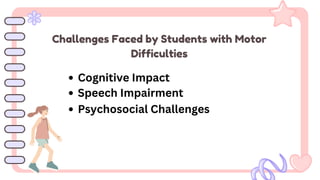
Challenges Faced by Students with Motor
Difficulties
Cognitive Impact
Speech Impairment
Psychosocial Challenges
Strengths and Potential
1.
Creating Inclusive Environment
2.
Empowering Students with Walking or
Movement Difficulties
Strengths and
Potential
Despite challenges, students with walking or
movement difficulties often possess unique strengths
and abilities. They may excel in areas like logical
thinking, comprehension, and writing. They can also
find creative ways to express themselves, like painting
with their mouth or feet.
Creating
Inclusive
Environment
It's crucial to create inclusive learning environments
that acknowledge their strengths and provide
appropriate support. This includes providing
individualized assistance, adapting learning materials,
and ensuring physical accessibility.
On the other hand, a “range of strengths” needs to be
acknowledged in every child with a disability (Armstrong 2012).
Students with motor/movement disorders may excel in other areas
of intelligences that are not controlled by motor functions. In fact,
some children and adults who are physically handicapped or have
cerebral palsy have learned to paint with their mouth or feet to
compensate for their rigid limbs and have done so successfully.
Some children may do well in logical thinking and comprehension
and even in writing using assistive technology.
Hence, for children in motor difficulties and disabilities,
support systems are needed to ensure that they are given equal
opportunities to access learning experiences in school along
alongside their typically developing peers
D. General Educational Adaptations
Specialized Support is Essential
Goals and Strategies for Improvement
Information Sharing and Collaboration
Specialized
Support is
Essential
Children with motor difficulties and disabilities require
specialized intervention from professionals like
physical and occupational therapists. These therapists
have the expertise to address the unique challenges
faced by these children.
Goals and
Strategies for
Improvement
These specialists work with the child to set goals for
motor development, planning, and mobility. They
develop individualized strategies and interventions to
help the child improve their physical abilities and
independence.
Information
Sharing and
Collaboration
Physical and occupational therapists play a crucial role
in informing teachers and other caregivers about the
child's physical conditions, limitations, and abilities.
This collaboration ensures that everyone involved
understands the child's needs and can provide
appropriate support.
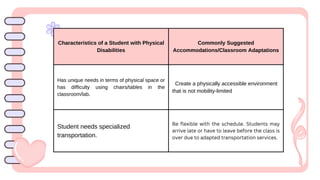
Characteristics of a Student with Physical
Disabilities
Commonly Suggested
Accommodations/Classroom Adaptations
Has unique needs in terms of physical space or
has difficulty using chairs/tables in the
classroom/lab.
Create a physically accessible environment
that is not mobility-limited
Student needs specialized
transportation.
Be flexible with the schedule. Students may
arrive late or have to leave before the class is
over due to adapted transportation services.
THANK
YOU

Learners with Difficulty Moving or Walking.pdf

  • 1.
  • 2.
    C. Learning Characteristics Motordifficulties and disabilities are known to significantly affect a child’s ability to perform daily activities, which include memory, perception and processing, planning, carrying out coordinated movements. Speech may also affected as motor control is needed in articulation and production. Moreover. Developmental coordination disorder also affects psychosocial functioning as children report to have lower levels of self-efficacy and competence in physical and social domains, experience more symptoms of being depressed and anxious, as well as display externalizing behaviors (Harris et.al. 2015)
  • 3.
    Challenges Faced byStudents with Motor Difficulties Cognitive Impact Speech Impairment Psychosocial Challenges
  • 4.
    Strengths and Potential 1. CreatingInclusive Environment 2. Empowering Students with Walking or Movement Difficulties
  • 5.
    Strengths and Potential Despite challenges,students with walking or movement difficulties often possess unique strengths and abilities. They may excel in areas like logical thinking, comprehension, and writing. They can also find creative ways to express themselves, like painting with their mouth or feet.
  • 6.
    Creating Inclusive Environment It's crucial tocreate inclusive learning environments that acknowledge their strengths and provide appropriate support. This includes providing individualized assistance, adapting learning materials, and ensuring physical accessibility.
  • 7.
    On the otherhand, a “range of strengths” needs to be acknowledged in every child with a disability (Armstrong 2012). Students with motor/movement disorders may excel in other areas of intelligences that are not controlled by motor functions. In fact, some children and adults who are physically handicapped or have cerebral palsy have learned to paint with their mouth or feet to compensate for their rigid limbs and have done so successfully. Some children may do well in logical thinking and comprehension and even in writing using assistive technology. Hence, for children in motor difficulties and disabilities, support systems are needed to ensure that they are given equal opportunities to access learning experiences in school along alongside their typically developing peers
  • 8.
    D. General EducationalAdaptations Specialized Support is Essential Goals and Strategies for Improvement Information Sharing and Collaboration
  • 9.
    Specialized Support is Essential Children withmotor difficulties and disabilities require specialized intervention from professionals like physical and occupational therapists. These therapists have the expertise to address the unique challenges faced by these children.
  • 10.
    Goals and Strategies for Improvement Thesespecialists work with the child to set goals for motor development, planning, and mobility. They develop individualized strategies and interventions to help the child improve their physical abilities and independence.
  • 11.
    Information Sharing and Collaboration Physical andoccupational therapists play a crucial role in informing teachers and other caregivers about the child's physical conditions, limitations, and abilities. This collaboration ensures that everyone involved understands the child's needs and can provide appropriate support.
  • 12.
    Characteristics of aStudent with Physical Disabilities Commonly Suggested Accommodations/Classroom Adaptations Has unique needs in terms of physical space or has difficulty using chairs/tables in the classroom/lab. Create a physically accessible environment that is not mobility-limited Student needs specialized transportation. Be flexible with the schedule. Students may arrive late or have to leave before the class is over due to adapted transportation services.
  • 13.