A Guide to Gardening Basics:

How to Make the
Most of Your Space
and Time


By Scott K. Munroe
RLA, PLA, LEED AP
What are the basics?

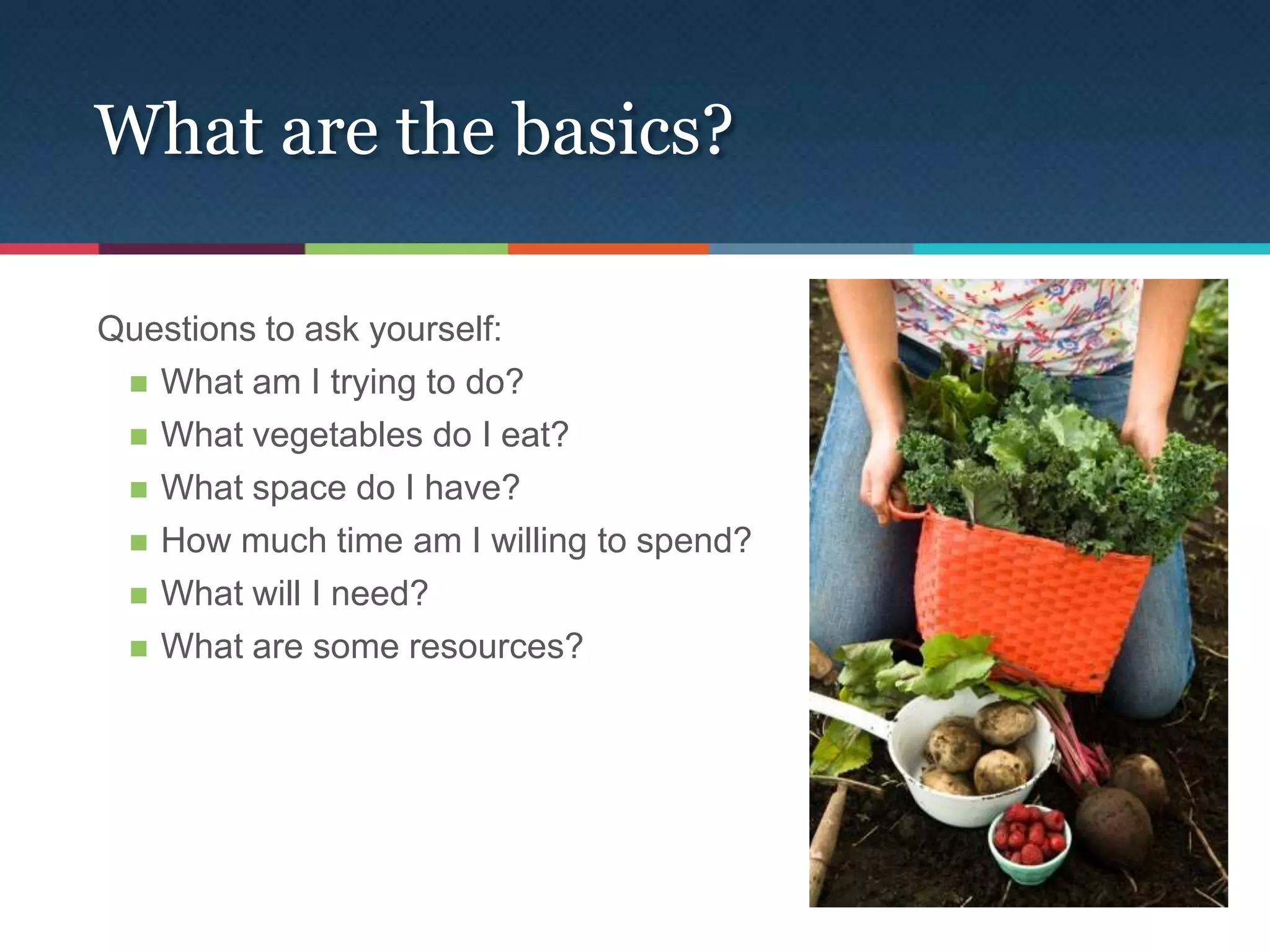
Questions to ask yourself:
  What am I trying to do?

  What vegetables do I eat?

  What space do I have?

  How much time am I willing to spend?

  What will I need?

  What are some resources?
What am I trying to do?

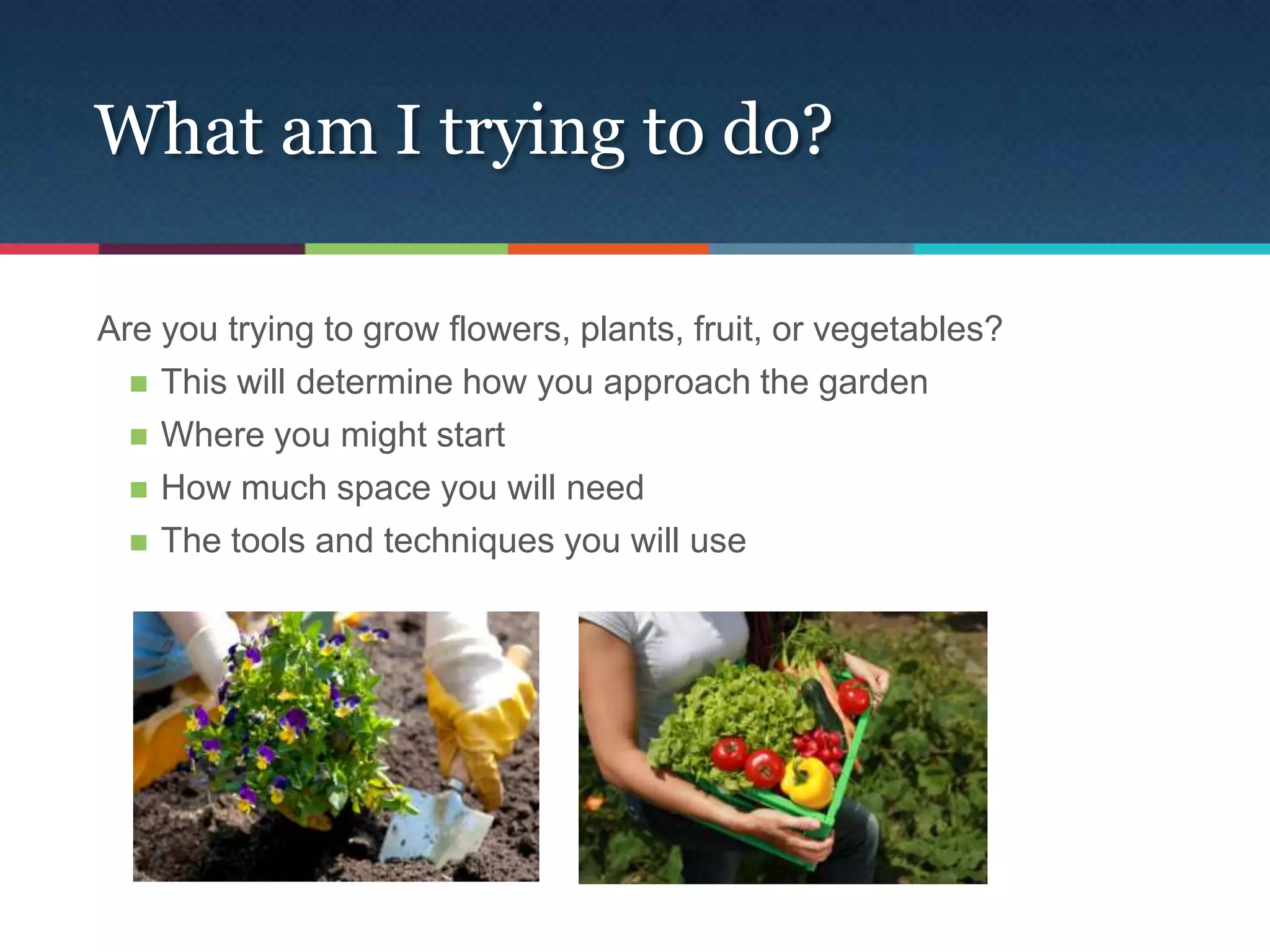
Are you trying to grow flowers, plants, fruit, or vegetables?
   This will determine how you approach the garden

   Where you might start

   How much space you will need

   The tools and techniques you will use
What vegetables do you eat?

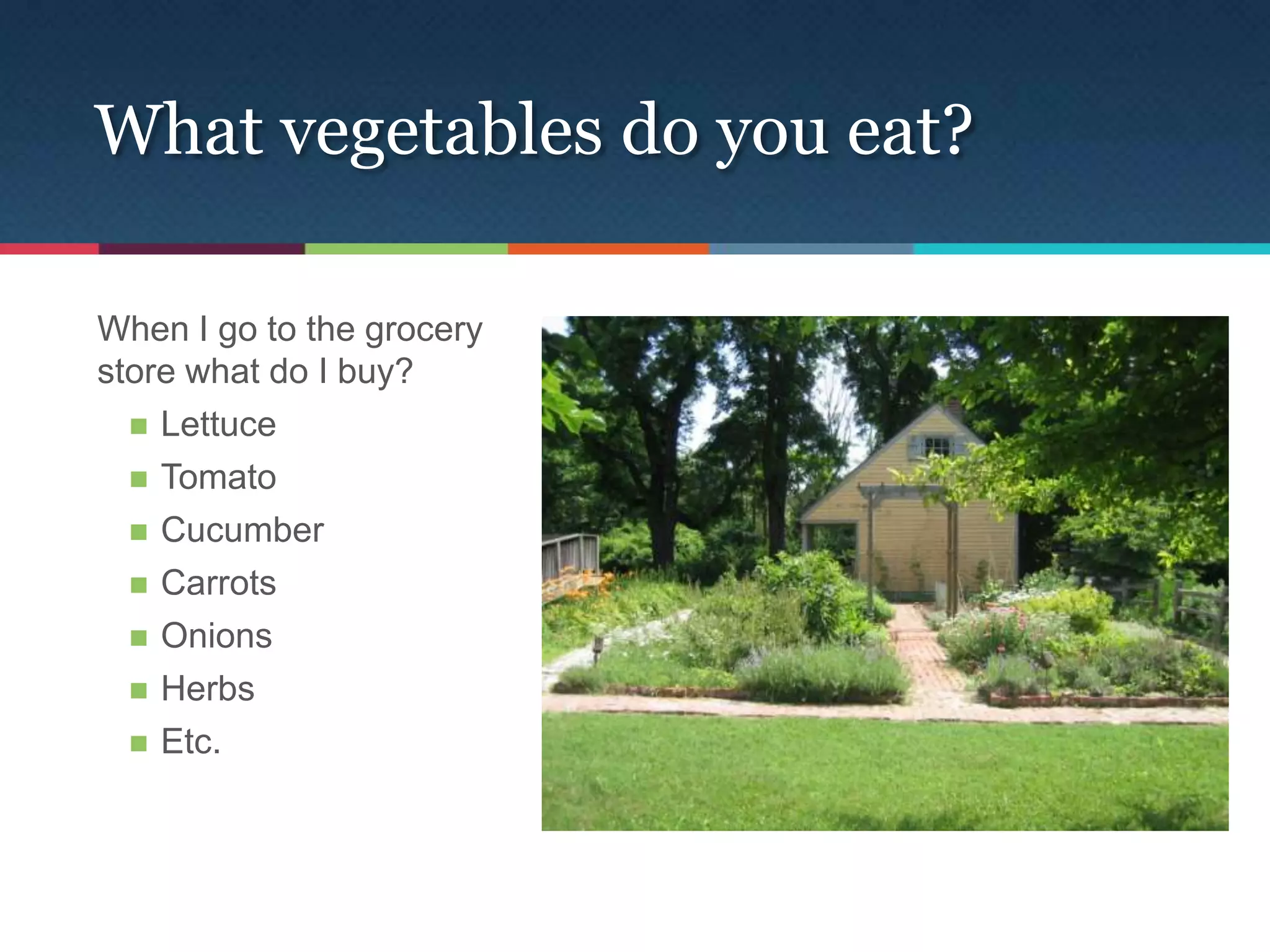
When I go to the grocery
store what do I buy?
   Lettuce

   Tomato

   Cucumber

   Carrots

   Onions

   Herbs

   Etc.
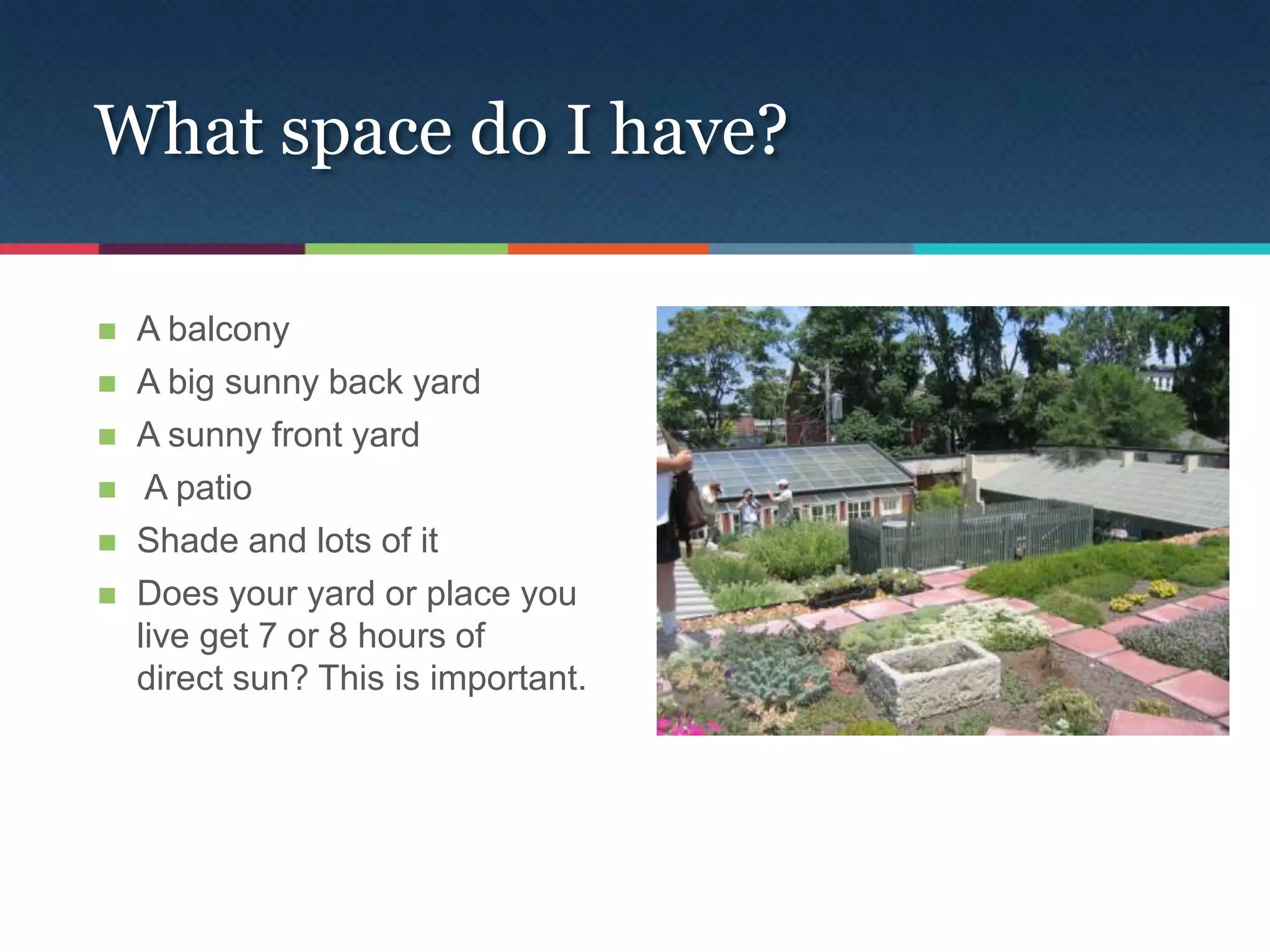
What space do I have?

   A balcony
   A big sunny back yard
   A sunny front yard
    A patio
   Shade and lots of it
   Does your yard or place you
    live get 7 or 8 hours of
    direct sun? This is important.
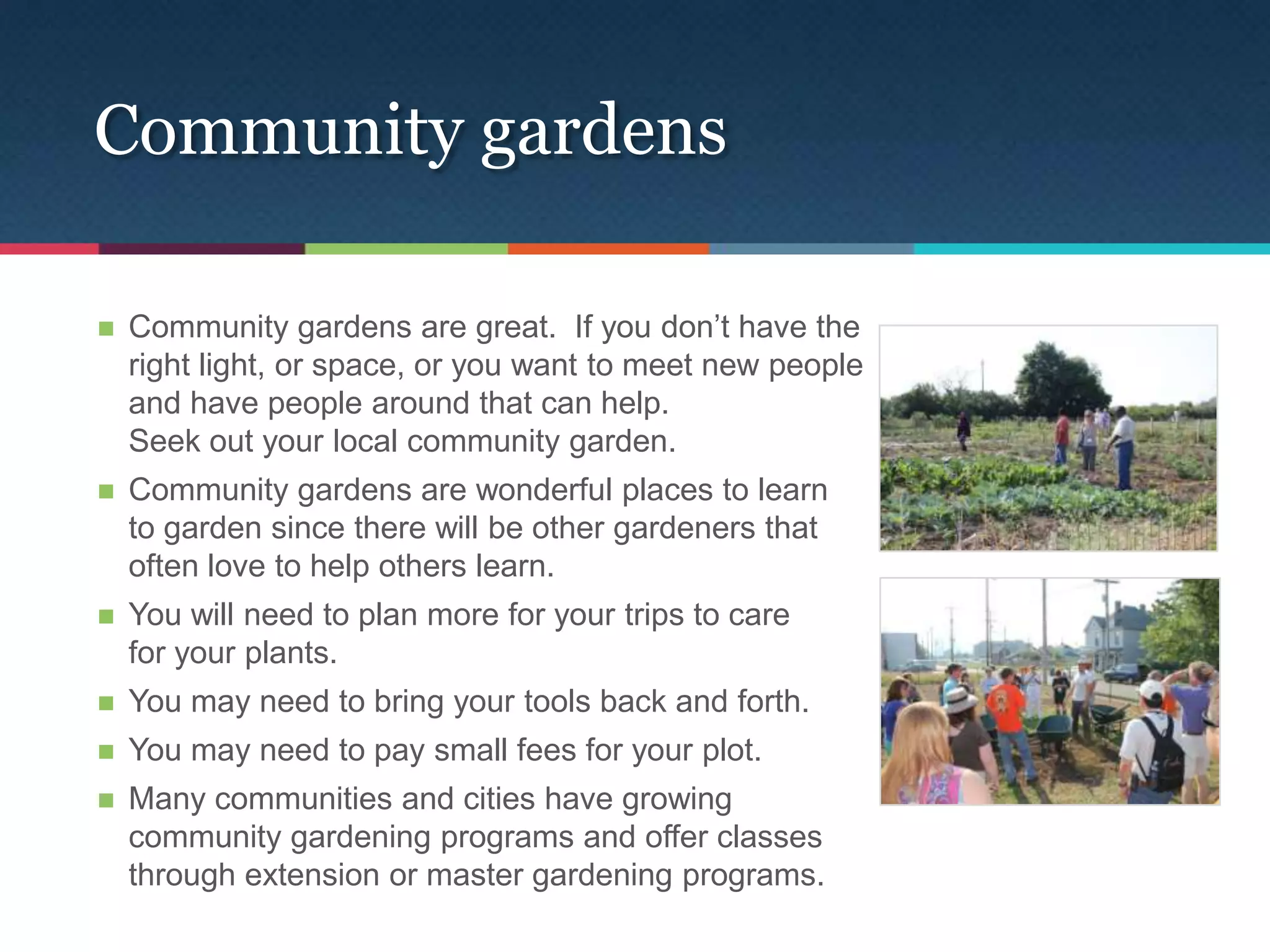
Community gardens

   Community gardens are great. If you don’t have the
    right light, or space, or you want to meet new people
    and have people around that can help.
    Seek out your local community garden.
   Community gardens are wonderful places to learn
    to garden since there will be other gardeners that
    often love to help others learn.
   You will need to plan more for your trips to care
    for your plants.
   You may need to bring your tools back and forth.
   You may need to pay small fees for your plot.
   Many communities and cities have growing
    community gardening programs and offer classes
    through extension or master gardening programs.
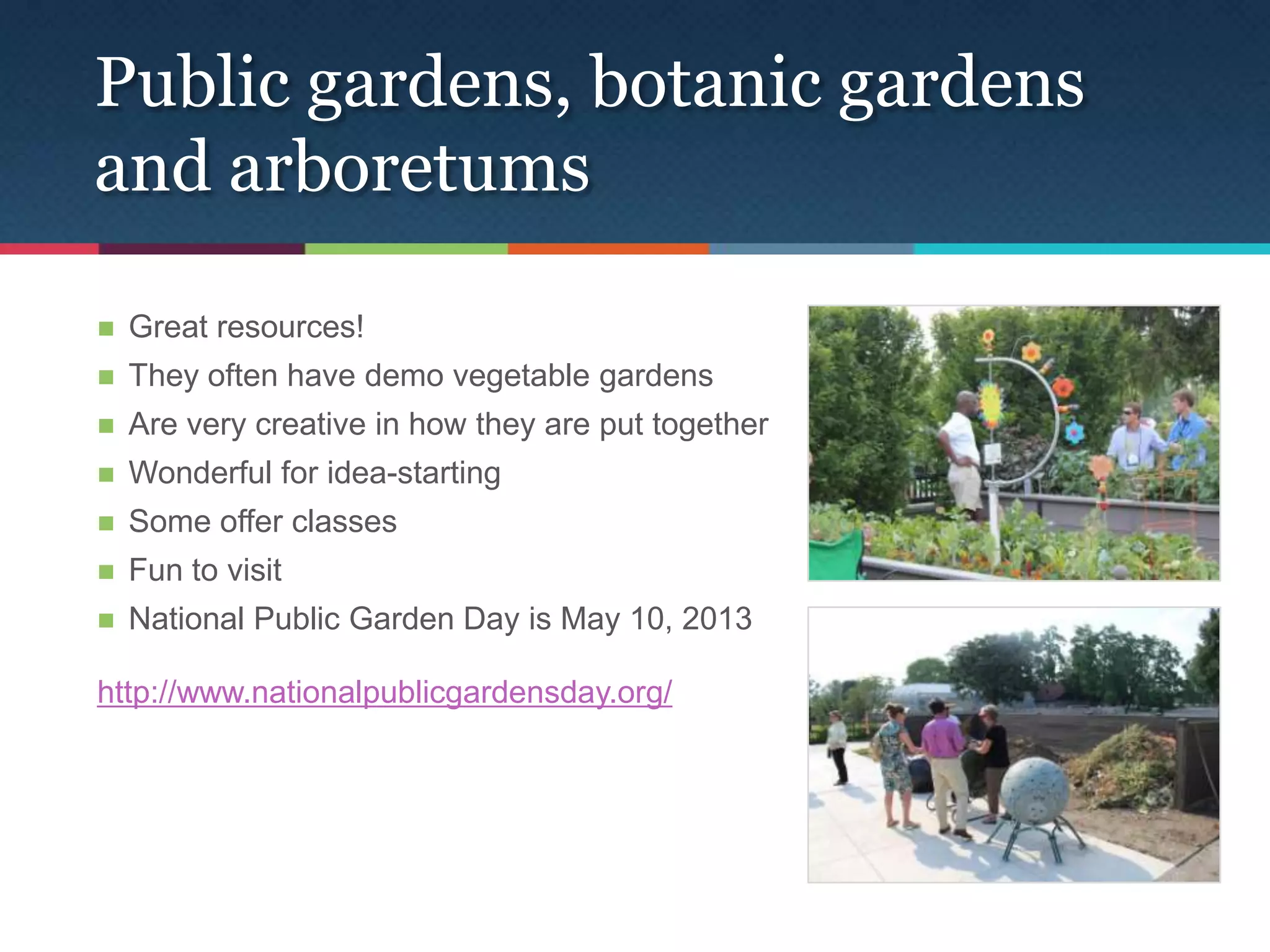
Public gardens, botanic gardens
and arboretums

   Great resources!
   They often have demo vegetable gardens
   Are very creative in how they are put together
   Wonderful for idea-starting
   Some offer classes
   Fun to visit
   National Public Garden Day is May 10, 2013

http://www.nationalpublicgardensday.org/
As long as you have lots of sun

   The key to garden location is the sun exposure. You need to have
    about 7-8 hours of direct sun during the growing season to be successful.
    You may have to mix the shrubs, flowers and the vegetables together.

   Mixing edible plants throughout the yard means that you and the kids can
    snack as you play in the yard on something healthy and home grown, all
    while being fun.

   There are also benefits to using plants like hot peppers near plants that
    deer or other animals like to eat, since the hot peppers will help keep the
    animals away.

   At the University of Maryland our dinning halls are incorporating rooftop
    vegetable gardens to provide produce for the kitchens.

   Remember, though: Sun is King.
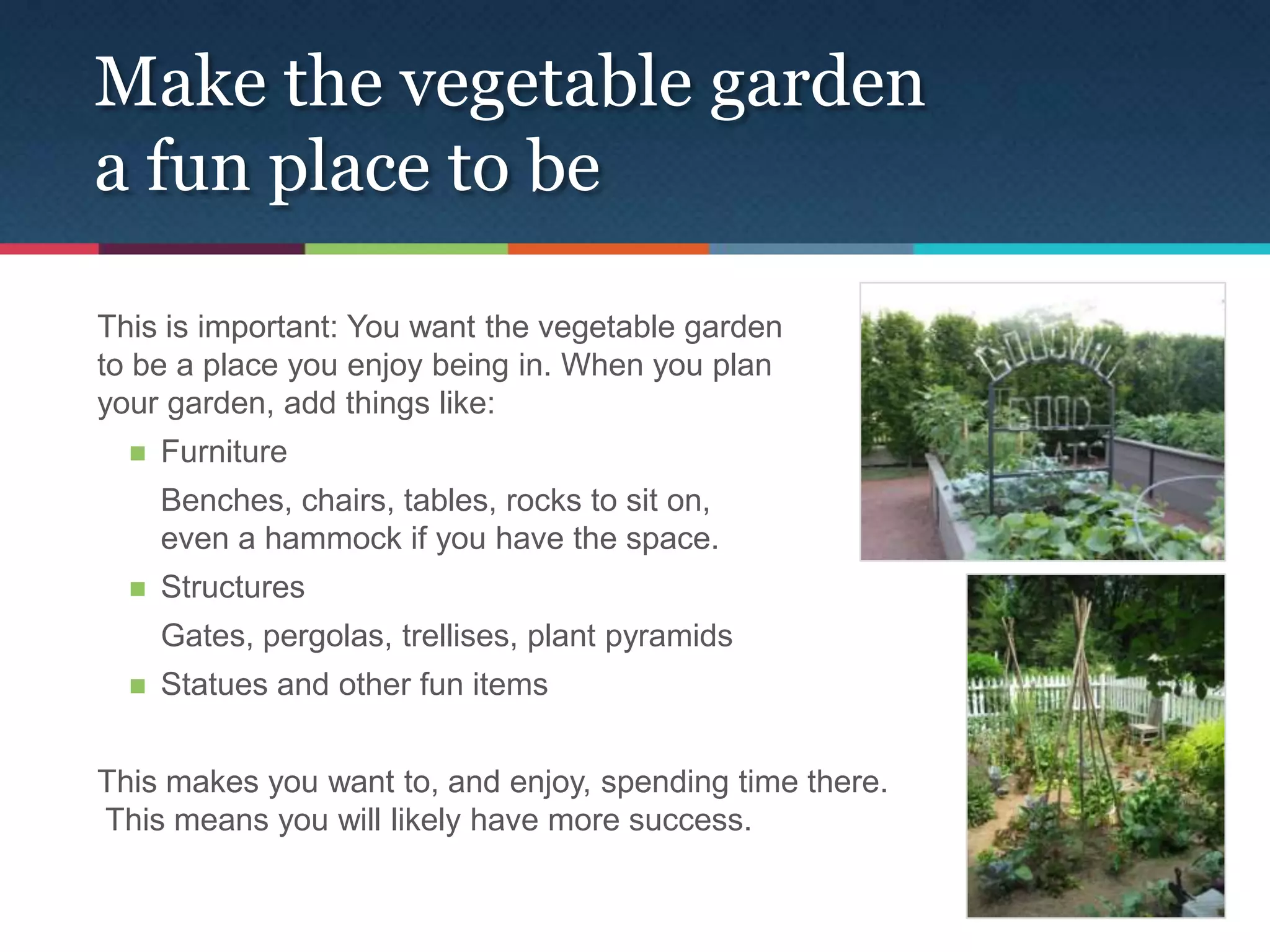
Make the vegetable garden
a fun place to be

This is important: You want the vegetable garden
to be a place you enjoy being in. When you plan
your garden, add things like:
     Furniture
      Benches, chairs, tables, rocks to sit on,
      even a hammock if you have the space.
     Structures
      Gates, pergolas, trellises, plant pyramids
     Statues and other fun items


This makes you want to, and enjoy, spending time there.
This means you will likely have more success.
How much time am I
willing to spend?

Basic fact is that gardening takes time, from a few minutes
to hours, depending on how much you are trying to do.

There are daily activities that you will need to do.
   Check for pests

   Water

   Weed

   Pollinate? (This can increase yield)

   Harvest
Research first

   Learn about your plants and climate.
    A quick search on-line can help to provide information about right planting times,
    soil and watering needs, distance between plants (Spacing), pests to watch for and
    other things.
   Make a calendar.
    You will want a weekly as well as monthly schedule, this can be done on any basic
    calendar. Also use this to takes notes on about the plants as the season
    progresses. These notes will make the next year better and easier.
   Schedule tasks.
    Keeps the work manageable and fun.
   10-5-5 rule.
    A typical rule of thumb is start with 10 types of plants, 5 cold season and 5 warm.
    This helps provide a longer growing season with longer yield. The reality is start
    small with something you are comfortable with. Even if that is just a single tomato,
    pepper and cucumber and lettuce plant in a large pot.
   Building confidence improves your green thumb.
Pests

Do you need chemicals to control pests and weeds?
The answer is no you don’t.

Weeds: If your soil is loose enough regular checks in the garden with
some light pulling will keep weeds in control. Also, once plants mature
they will help shade out weeds.

Insects: Routine checks and working with the right companion plants
can make this an easy task. In your research you will be able to find herbs
and other plants that naturally repel most garden pests. Good plants for
repelling insects:
     Marigold
     Basil
     Garlic
     Henbit
     Mint
Seeds or starter plants?

Easy - When first starting to vegetable garden it is a lot easier to buy the started plants at
a local Garden Center and this can be good for maintaining control of the size of the
garden and how much you are taking on.

More difficult - Seed starting. This can be done either inside or in cold frames, it can also
become either addictive or frustrating. I’ll explain:
     As a kid it is really cool to plant a seed, keep it watered and watch something grow.
      This holds true for big kids or rather adults as well.
     Seed packs come with an awful lot of seeds in them so self control is important.
     Plant only the number of plants you are ready to take care of.
      This means that you will likely give away or throw into the compost extra plants.
     If they don’t grow it can be frustrating.
     If they do it can be addictive, you can become attached to them,
      this happens to plant people all the time.
What will I need?

   Soil and compost
   Building supplies
   Pots
   Tools
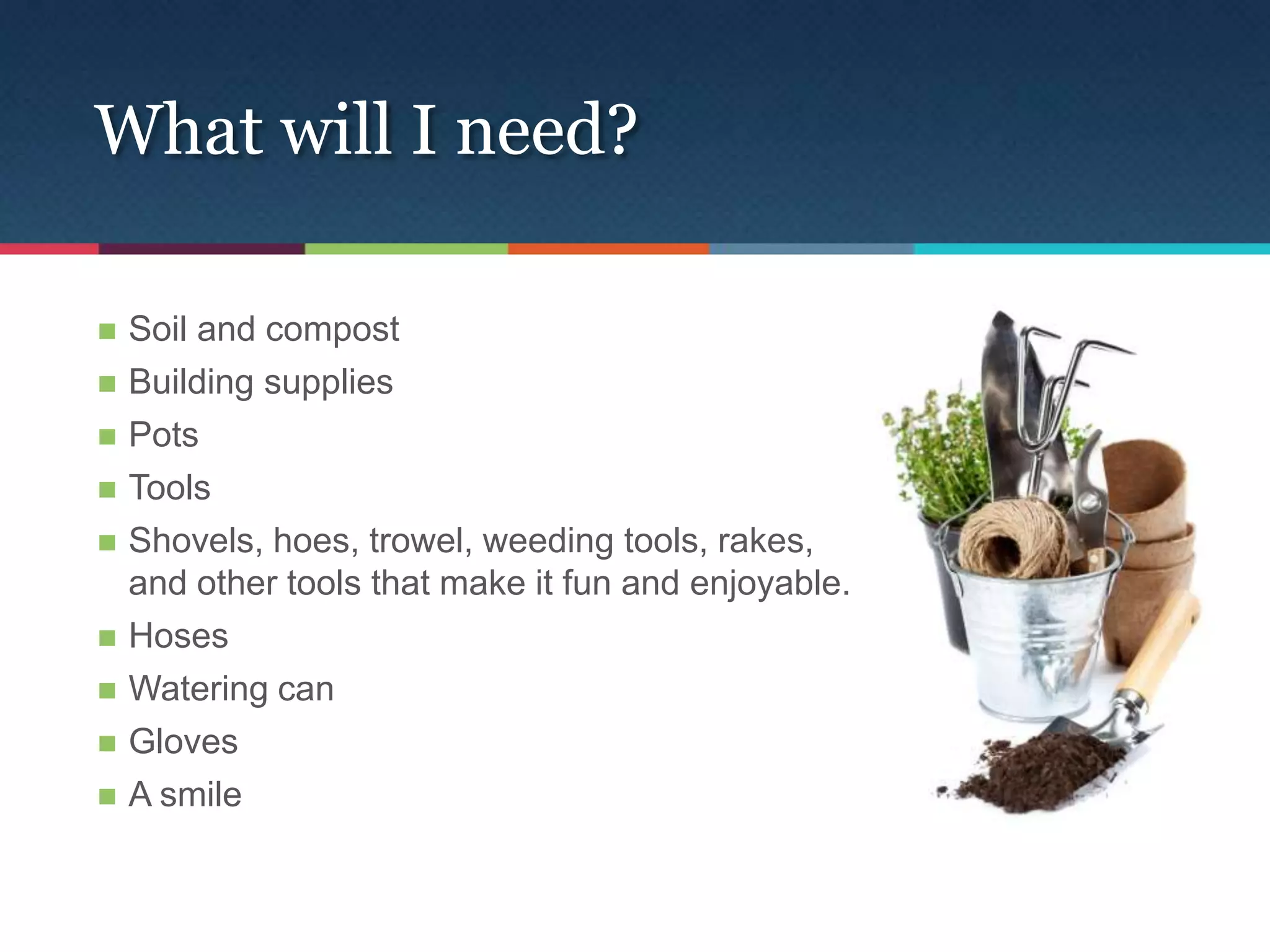
   Shovels, hoes, trowel, weeding tools, rakes,
    and other tools that make it fun and enjoyable.
   Hoses
   Watering can
   Gloves
   A smile
Soil and compost

   If you are lucky, you have the nice loose, sandy
    loam mix with excellent organic matter for your
    soil. If you are like the rest of us, you need to
    bring in soil.
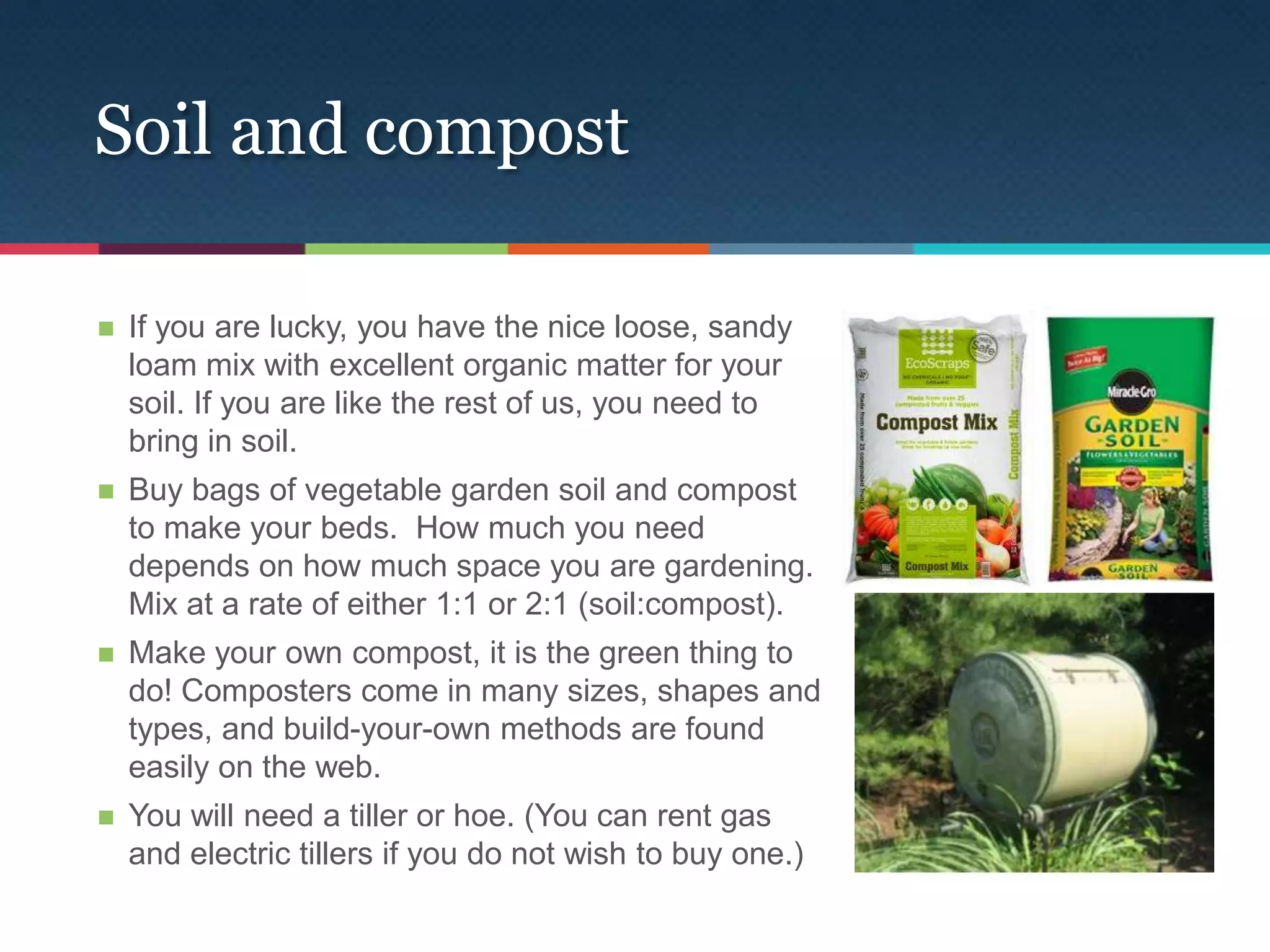
   Buy bags of vegetable garden soil and compost
    to make your beds. How much you need
    depends on how much space you are gardening.
    Mix at a rate of either 1:1 or 2:1 (soil:compost).
   Make your own compost, it is the green thing to
    do! Composters come in many sizes, shapes and
    types, and build-your-own methods are found
    easily on the web.
   You will need a tiller or hoe. (You can rent gas
    and electric tillers if you do not wish to buy one.)
Building supplies

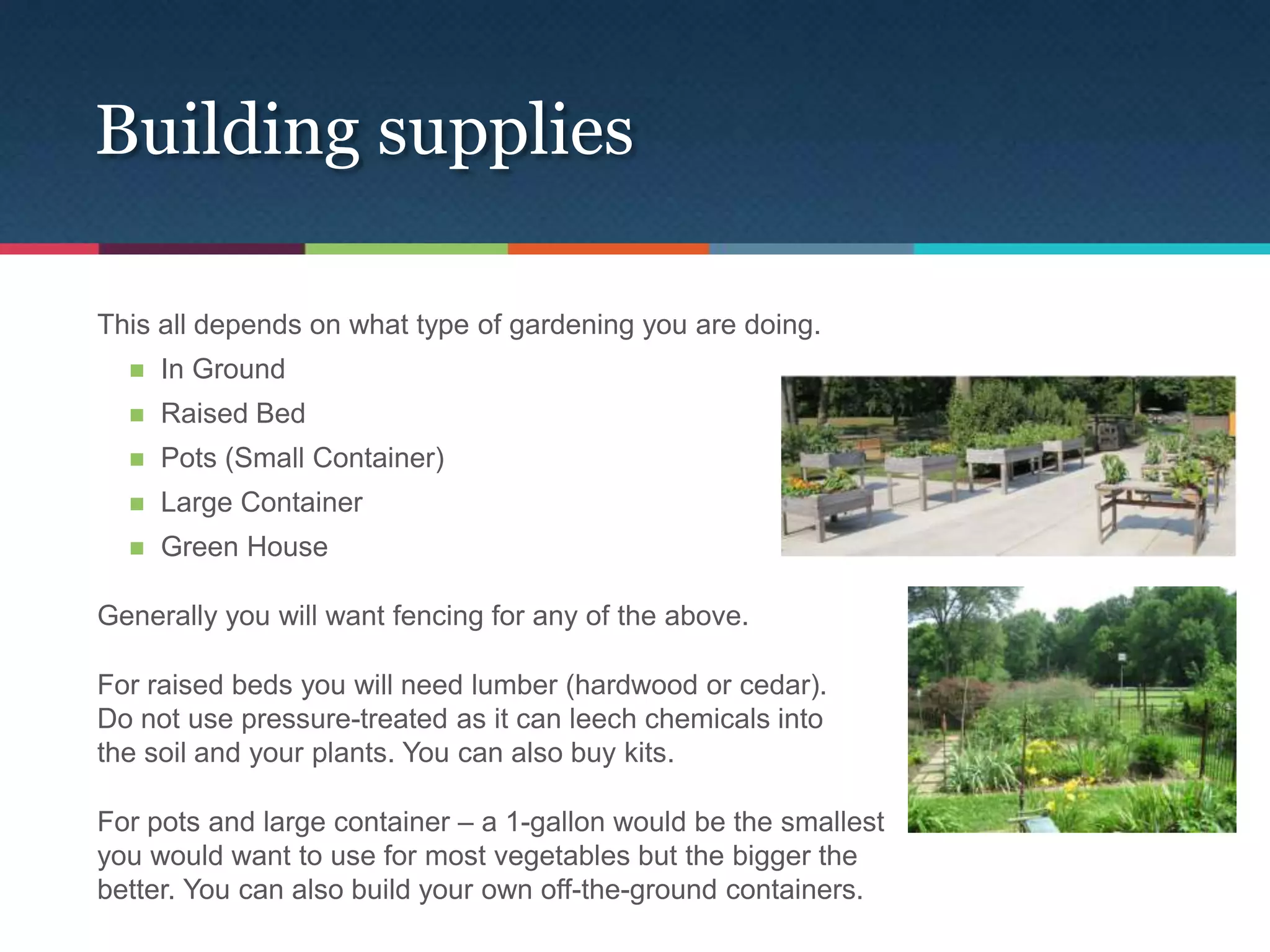
This all depends on what type of gardening you are doing.
     In Ground
     Raised Bed
     Pots (Small Container)
     Large Container
     Green House

Generally you will want fencing for any of the above.

For raised beds you will need lumber (hardwood or cedar).
Do not use pressure-treated as it can leech chemicals into
the soil and your plants. You can also buy kits.

For pots and large container – a 1-gallon would be the smallest
you would want to use for most vegetables but the bigger the
better. You can also build your own off-the-ground containers.
When to plant?

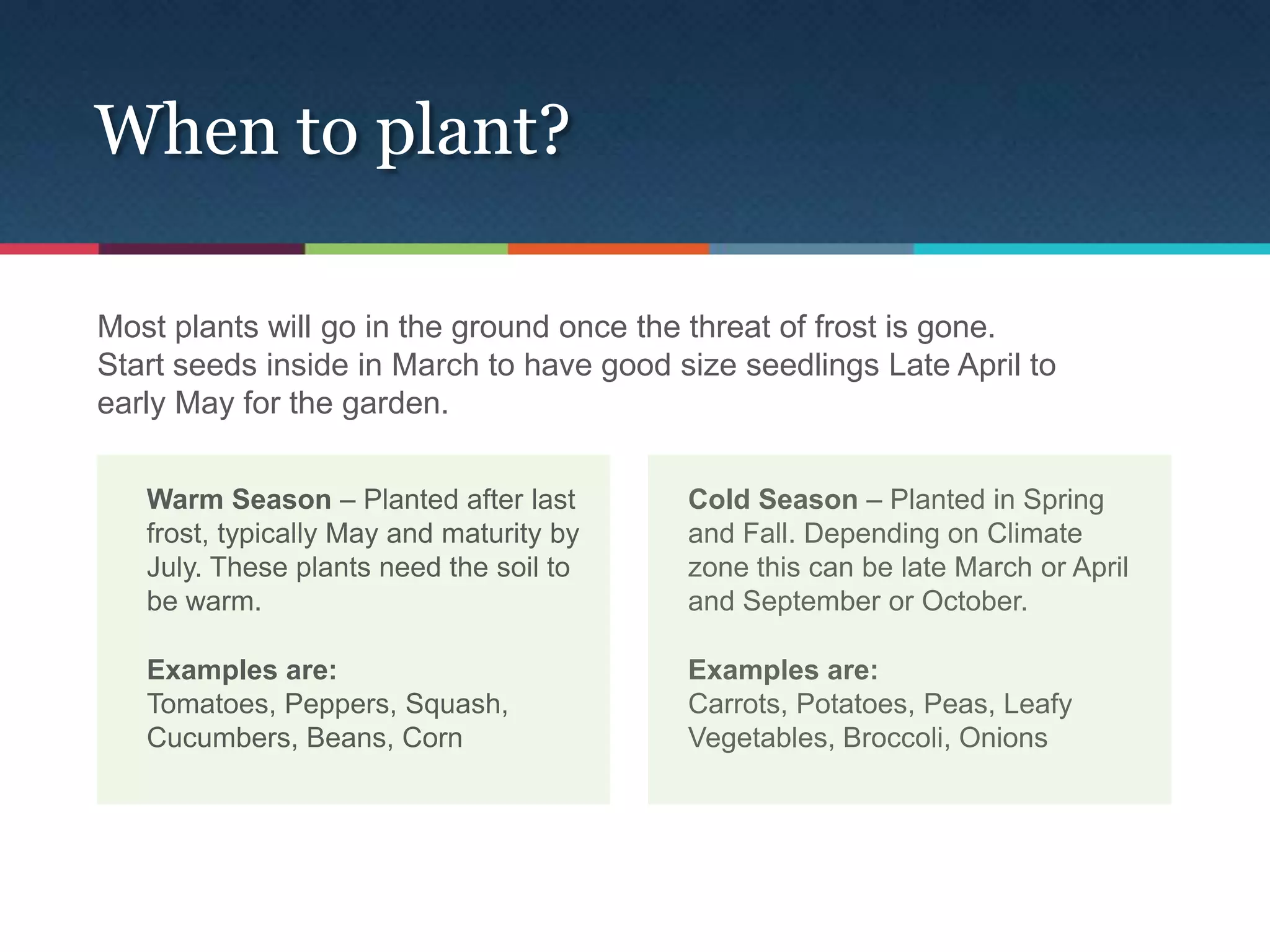
Most plants will go in the ground once the threat of frost is gone.
Start seeds inside in March to have good size seedlings Late April to
early May for the garden.


   Warm Season – Planted after last       Cold Season – Planted in Spring
   frost, typically May and maturity by   and Fall. Depending on Climate
   July. These plants need the soil to    zone this can be late March or April
   be warm.                               and September or October.

   Examples are:                          Examples are:
   Tomatoes, Peppers, Squash,             Carrots, Potatoes, Peas, Leafy
   Cucumbers, Beans, Corn                 Vegetables, Broccoli, Onions
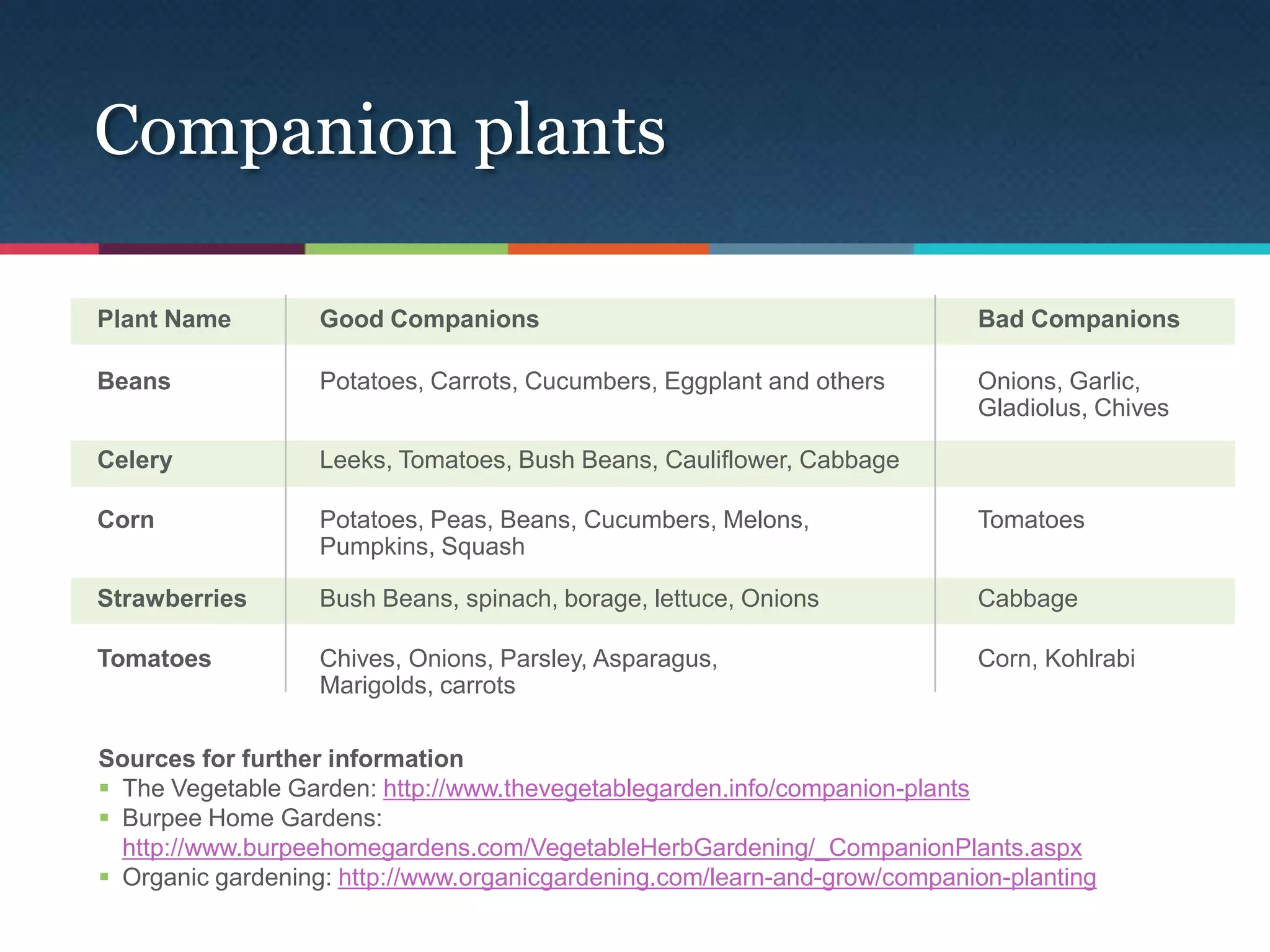
Companion plants

Plant Name         Good Companions                                         Bad Companions

Beans              Potatoes, Carrots, Cucumbers, Eggplant and others       Onions, Garlic,
                                                                           Gladiolus, Chives

Celery             Leeks, Tomatoes, Bush Beans, Cauliflower, Cabbage

Corn               Potatoes, Peas, Beans, Cucumbers, Melons,               Tomatoes
                   Pumpkins, Squash

Strawberries       Bush Beans, spinach, borage, lettuce, Onions            Cabbage

Tomatoes           Chives, Onions, Parsley, Asparagus,                     Corn, Kohlrabi
                   Marigolds, carrots

Sources for further information
 The Vegetable Garden: http://www.thevegetablegarden.info/companion-plants
 Burpee Home Gardens:
  http://www.burpeehomegardens.com/VegetableHerbGardening/_CompanionPlants.aspx
 Organic gardening: http://www.organicgardening.com/learn-and-grow/companion-planting
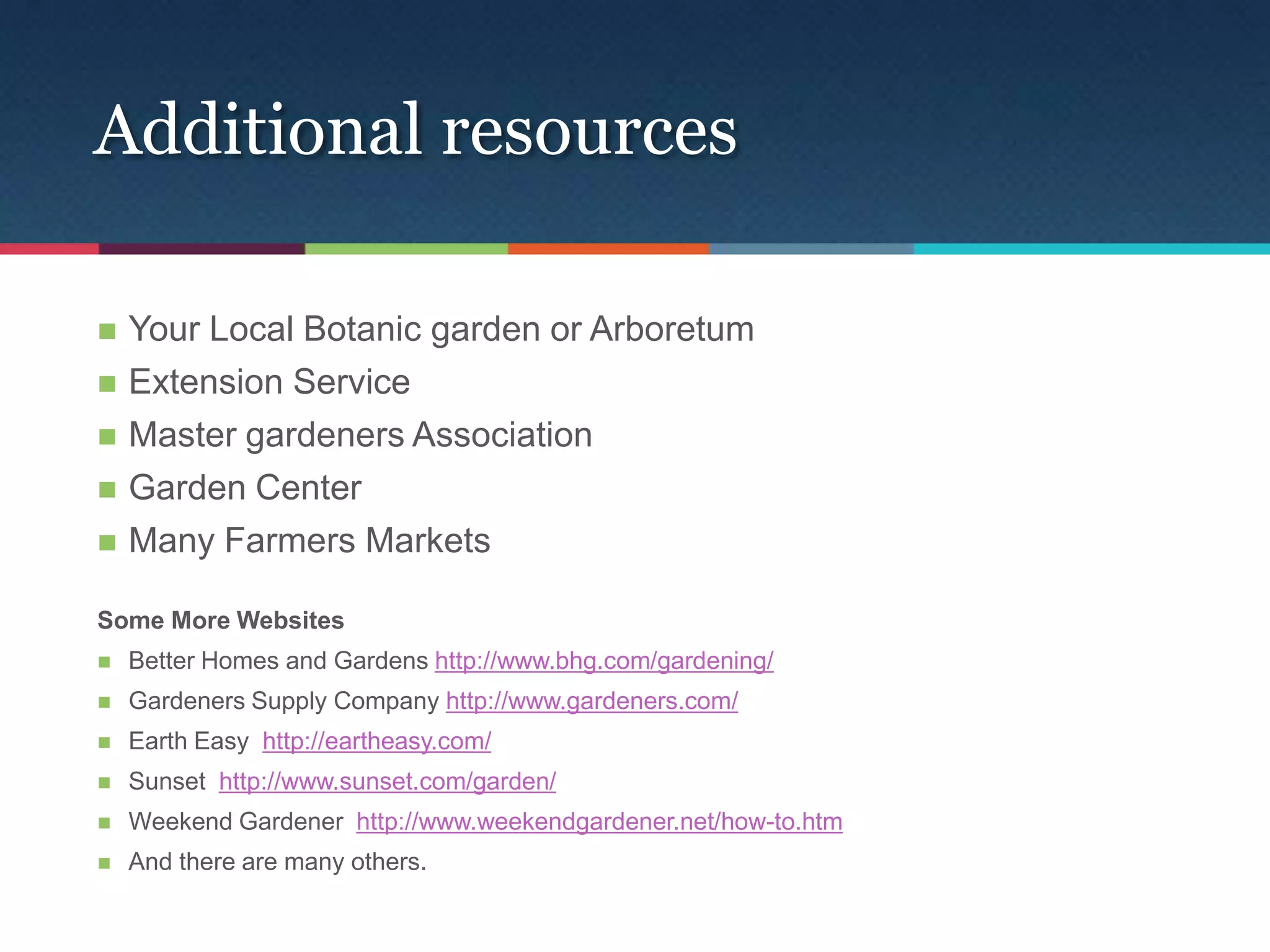
Additional resources

   Your Local Botanic garden or Arboretum
   Extension Service
   Master gardeners Association
   Garden Center
   Many Farmers Markets

Some More Websites
   Better Homes and Gardens http://www.bhg.com/gardening/
   Gardeners Supply Company http://www.gardeners.com/
   Earth Easy http://eartheasy.com/
   Sunset http://www.sunset.com/garden/
   Weekend Gardener http://www.weekendgardener.net/how-to.htm
   And there are many others.
Q&A

Thank you for attending!

If you have further garden or landscape questions after this session,
you can always speak with a professional at any time:
http://www.pearl.com/home-improvement


By Scott K. Munroe
RLA, PLA, LEED AP

Learn the Gardening Basics

  • 1.
    A Guide toGardening Basics: How to Make the Most of Your Space and Time By Scott K. Munroe RLA, PLA, LEED AP
  • 2.
    What are thebasics? Questions to ask yourself:  What am I trying to do?  What vegetables do I eat?  What space do I have?  How much time am I willing to spend?  What will I need?  What are some resources?
  • 3.
    What am Itrying to do? Are you trying to grow flowers, plants, fruit, or vegetables?  This will determine how you approach the garden  Where you might start  How much space you will need  The tools and techniques you will use
  • 4.
    What vegetables doyou eat? When I go to the grocery store what do I buy?  Lettuce  Tomato  Cucumber  Carrots  Onions  Herbs  Etc.
  • 5.
    What space doI have?  A balcony  A big sunny back yard  A sunny front yard  A patio  Shade and lots of it  Does your yard or place you live get 7 or 8 hours of direct sun? This is important.
  • 6.
    Community gardens  Community gardens are great. If you don’t have the right light, or space, or you want to meet new people and have people around that can help. Seek out your local community garden.  Community gardens are wonderful places to learn to garden since there will be other gardeners that often love to help others learn.  You will need to plan more for your trips to care for your plants.  You may need to bring your tools back and forth.  You may need to pay small fees for your plot.  Many communities and cities have growing community gardening programs and offer classes through extension or master gardening programs.
  • 7.
    Public gardens, botanicgardens and arboretums  Great resources!  They often have demo vegetable gardens  Are very creative in how they are put together  Wonderful for idea-starting  Some offer classes  Fun to visit  National Public Garden Day is May 10, 2013 http://www.nationalpublicgardensday.org/
  • 8.
    As long asyou have lots of sun  The key to garden location is the sun exposure. You need to have about 7-8 hours of direct sun during the growing season to be successful. You may have to mix the shrubs, flowers and the vegetables together.  Mixing edible plants throughout the yard means that you and the kids can snack as you play in the yard on something healthy and home grown, all while being fun.  There are also benefits to using plants like hot peppers near plants that deer or other animals like to eat, since the hot peppers will help keep the animals away.  At the University of Maryland our dinning halls are incorporating rooftop vegetable gardens to provide produce for the kitchens.  Remember, though: Sun is King.
  • 9.
    Make the vegetablegarden a fun place to be This is important: You want the vegetable garden to be a place you enjoy being in. When you plan your garden, add things like:  Furniture Benches, chairs, tables, rocks to sit on, even a hammock if you have the space.  Structures Gates, pergolas, trellises, plant pyramids  Statues and other fun items This makes you want to, and enjoy, spending time there. This means you will likely have more success.
  • 10.
    How much timeam I willing to spend? Basic fact is that gardening takes time, from a few minutes to hours, depending on how much you are trying to do. There are daily activities that you will need to do.  Check for pests  Water  Weed  Pollinate? (This can increase yield)  Harvest
  • 11.
    Research first  Learn about your plants and climate. A quick search on-line can help to provide information about right planting times, soil and watering needs, distance between plants (Spacing), pests to watch for and other things.  Make a calendar. You will want a weekly as well as monthly schedule, this can be done on any basic calendar. Also use this to takes notes on about the plants as the season progresses. These notes will make the next year better and easier.  Schedule tasks. Keeps the work manageable and fun.  10-5-5 rule. A typical rule of thumb is start with 10 types of plants, 5 cold season and 5 warm. This helps provide a longer growing season with longer yield. The reality is start small with something you are comfortable with. Even if that is just a single tomato, pepper and cucumber and lettuce plant in a large pot.  Building confidence improves your green thumb.
  • 12.
    Pests Do you needchemicals to control pests and weeds? The answer is no you don’t. Weeds: If your soil is loose enough regular checks in the garden with some light pulling will keep weeds in control. Also, once plants mature they will help shade out weeds. Insects: Routine checks and working with the right companion plants can make this an easy task. In your research you will be able to find herbs and other plants that naturally repel most garden pests. Good plants for repelling insects:  Marigold  Basil  Garlic  Henbit  Mint
  • 13.
    Seeds or starterplants? Easy - When first starting to vegetable garden it is a lot easier to buy the started plants at a local Garden Center and this can be good for maintaining control of the size of the garden and how much you are taking on. More difficult - Seed starting. This can be done either inside or in cold frames, it can also become either addictive or frustrating. I’ll explain:  As a kid it is really cool to plant a seed, keep it watered and watch something grow. This holds true for big kids or rather adults as well.  Seed packs come with an awful lot of seeds in them so self control is important.  Plant only the number of plants you are ready to take care of. This means that you will likely give away or throw into the compost extra plants.  If they don’t grow it can be frustrating.  If they do it can be addictive, you can become attached to them, this happens to plant people all the time.
  • 14.
    What will Ineed?  Soil and compost  Building supplies  Pots  Tools  Shovels, hoes, trowel, weeding tools, rakes, and other tools that make it fun and enjoyable.  Hoses  Watering can  Gloves  A smile
  • 15.
    Soil and compost  If you are lucky, you have the nice loose, sandy loam mix with excellent organic matter for your soil. If you are like the rest of us, you need to bring in soil.  Buy bags of vegetable garden soil and compost to make your beds. How much you need depends on how much space you are gardening. Mix at a rate of either 1:1 or 2:1 (soil:compost).  Make your own compost, it is the green thing to do! Composters come in many sizes, shapes and types, and build-your-own methods are found easily on the web.  You will need a tiller or hoe. (You can rent gas and electric tillers if you do not wish to buy one.)
  • 16.
    Building supplies This alldepends on what type of gardening you are doing.  In Ground  Raised Bed  Pots (Small Container)  Large Container  Green House Generally you will want fencing for any of the above. For raised beds you will need lumber (hardwood or cedar). Do not use pressure-treated as it can leech chemicals into the soil and your plants. You can also buy kits. For pots and large container – a 1-gallon would be the smallest you would want to use for most vegetables but the bigger the better. You can also build your own off-the-ground containers.
  • 17.
    When to plant? Mostplants will go in the ground once the threat of frost is gone. Start seeds inside in March to have good size seedlings Late April to early May for the garden. Warm Season – Planted after last Cold Season – Planted in Spring frost, typically May and maturity by and Fall. Depending on Climate July. These plants need the soil to zone this can be late March or April be warm. and September or October. Examples are: Examples are: Tomatoes, Peppers, Squash, Carrots, Potatoes, Peas, Leafy Cucumbers, Beans, Corn Vegetables, Broccoli, Onions
  • 18.
    Companion plants Plant Name Good Companions Bad Companions Beans Potatoes, Carrots, Cucumbers, Eggplant and others Onions, Garlic, Gladiolus, Chives Celery Leeks, Tomatoes, Bush Beans, Cauliflower, Cabbage Corn Potatoes, Peas, Beans, Cucumbers, Melons, Tomatoes Pumpkins, Squash Strawberries Bush Beans, spinach, borage, lettuce, Onions Cabbage Tomatoes Chives, Onions, Parsley, Asparagus, Corn, Kohlrabi Marigolds, carrots Sources for further information  The Vegetable Garden: http://www.thevegetablegarden.info/companion-plants  Burpee Home Gardens: http://www.burpeehomegardens.com/VegetableHerbGardening/_CompanionPlants.aspx  Organic gardening: http://www.organicgardening.com/learn-and-grow/companion-planting
  • 19.
    Additional resources  Your Local Botanic garden or Arboretum  Extension Service  Master gardeners Association  Garden Center  Many Farmers Markets Some More Websites  Better Homes and Gardens http://www.bhg.com/gardening/  Gardeners Supply Company http://www.gardeners.com/  Earth Easy http://eartheasy.com/  Sunset http://www.sunset.com/garden/  Weekend Gardener http://www.weekendgardener.net/how-to.htm  And there are many others.
  • 20.
    Q&A Thank you forattending! If you have further garden or landscape questions after this session, you can always speak with a professional at any time: http://www.pearl.com/home-improvement By Scott K. Munroe RLA, PLA, LEED AP