



Understanding the Room
How many are using Scrum/other methods ?
How many are Scrum masters/Agile Coach?
How many Product owner/BA ?
How many Managers/Management role?
How many developers and others?
Any one from J&J ?
MARIS PRABHAKARAN M
Past Agile Transformation & coaching
“What is Agile?”
How do you respond in less than a minute ?
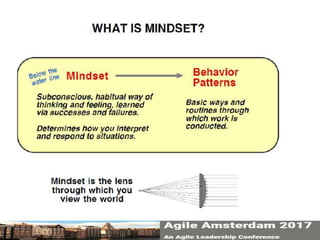
Agile is Mindset
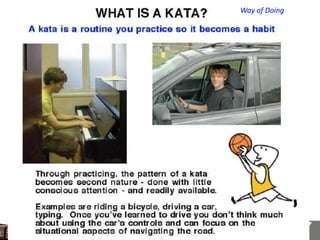
Way of Doing
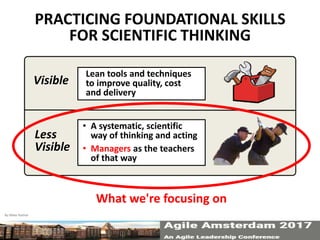
Visible
Less
Visible
Lean tools and techniques
to improve quality, cost
and delivery
• A systematic, scientific
way of thinking and acting
• Managers as the teachers
of that way
PRACTICING FOUNDATIONAL SKILLS
FOR SCIENTIFIC THINKING
By Mike Rother 9
What we're focusing on
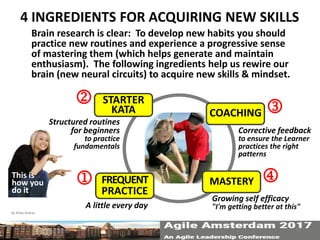
This is
how you
do it
j
k
COACHING
FREQUENT
PRACTICE
MASTERY
STARTER
KATA l
m
Corrective feedback
to ensure the Learner
practices the right
patterns
Growing self efficacy
"I'm getting better at this"
Structured routines
for beginners
to practice
fundamentals
A little every day
4 INGREDIENTS FOR ACQUIRING NEW SKILLS
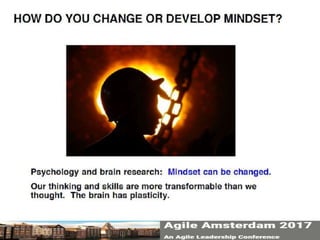
Brain research is clear: To develop new habits you should
practice new routines and experience a progressive sense
of mastering them (which helps generate and maintain
enthusiasm). The following ingredients help us rewire our
brain (new neural circuits) to acquire new skills & mindset.
By Mike Rother 10
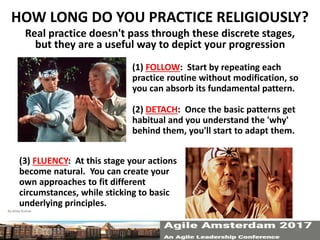
(1) FOLLOW: Start by repeating each
practice routine without modification, so
you can absorb its fundamental pattern.
(2) DETACH: Once the basic patterns get
habitual and you understand the 'why'
behind them, you'll start to adapt them.
HOW LONG DO YOU PRACTICE RELIGIOUSLY?
11
(3) FLUENCY: At this stage your actions
become natural. You can create your
own approaches to fit different
circumstances, while sticking to basic
underlying principles.
Real practice doesn't pass through these discrete stages,
but they are a useful way to depict your progression
By Mike Rother
12
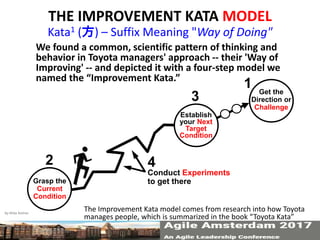
THE IMPROVEMENT KATA MODEL
Kata1 (方) – Suffix Meaning "Way of Doing"
We found a common, scientific pattern of thinking and
behavior in Toyota managers' approach -- their 'Way of
Improving' -- and depicted it with a four-step model we
named the “Improvement Kata.”
Conduct Experiments
to get thereGrasp the
Current
Condition
Establish
your Next
Target
Condition
Get the
Direction or
Challenge
1
2
3
4
The Improvement Kata model comes from research into how Toyota
manages people, which is summarized in the book “Toyota Kata”
By Mike Rother
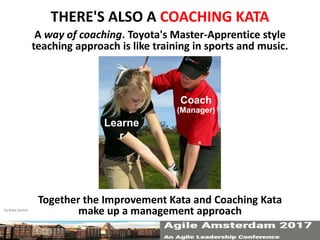
THERE'S ALSO A COACHING KATA
A way of coaching. Toyota's Master-Apprentice style
teaching approach is like training in sports and music.
Together the Improvement Kata and Coaching Kata
make up a management approach
Learne
r
Coach
(Manager)
By Mike Rother 13
14
BUT THERE IS A PROBLEM
No matter how good it is, just explaining a model
doesn't generate new ways of thinking and acting.
Hoping to create different behavior by explaining
or trying to convince generally doesn't work.
By Mike Rother
Toyota's
Way
15
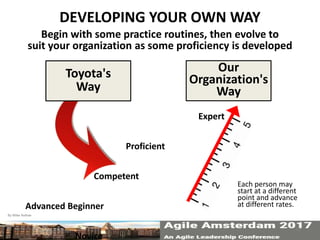
DEVELOPING YOUR OWN WAY
Begin with some practice routines, then evolve to
suit your organization as some proficiency is developed
Our
Organization's
Way
Expert
Proficient
Competent
Advanced Beginner
Novice
Each person may
start at a different
point and advance
at different rates.
By Mike Rother
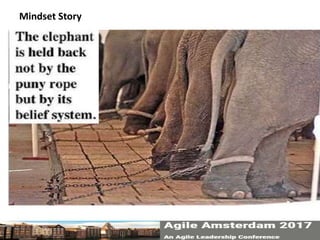
Mindset Story
One guy was passing the elephants, he
suddenly stopped, confused by the fact that
these huge creatures were being held by only
a rope tied to their legs. It was obvious that
the elephants could, at anytime, break away
from the ropes they were tied to but for
some reason, they did not. He saw a trainer
nearby and asked why these beautiful,
magnificent animals just stood there and
made no attempt to get away.
"Well", trainer said, "when they are very
young and much smaller we use the same size
rope to tie them and at the age, its enough to
hold them, as they grow up, they are
conditioned to believe they cannot break
away. they believe the rope can still hold
them, so they never try to break free." He
was amazed. These animals could at any time
break free from their bonds but because
they believed they couldn't,
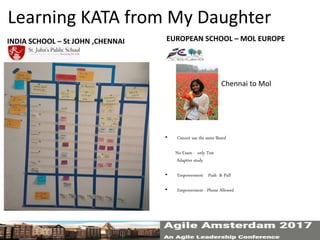
Learning KATA from My Daughter
INDIA SCHOOL – St JOHN ,CHENNAI EUROPEAN SCHOOL – MOL EUROPE
Chennai to Mol
• Cannot use the same Board
No Exam - only Test
Adaptive study
• Empowerment Push & Pull
• Empowerment - Phone Allowed
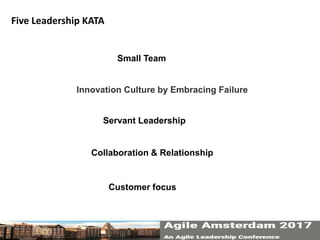
Five Leadership KATA
Small Team
Customer focus
Collaboration & Relationship
Servant Leadership
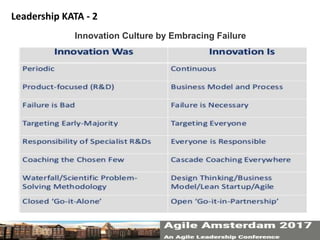
Innovation Culture by Embracing Failure
Small Team
Leadership KATA - 1
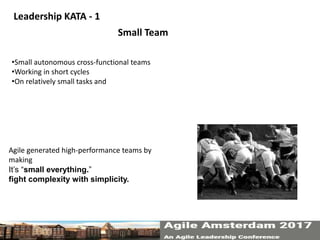
•Small autonomous cross-functional teams
•Working in short cycles
•On relatively small tasks and
Agile generated high-performance teams by
making
It’s “small everything.”
fight complexity with simplicity.
Leadership KATA - 2
Innovation Culture by Embracing Failure
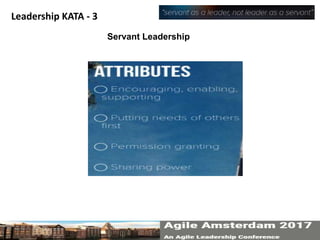
Leadership KATA - 3
Servant Leadership
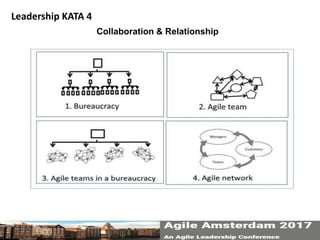
Leadership KATA 4
Collaboration & Relationship
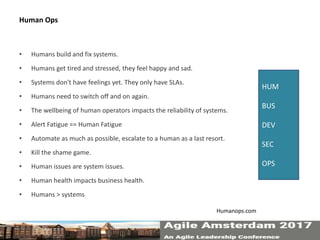
• Humans build and fix systems.
• Humans get tired and stressed, they feel happy and sad.
• Systems don't have feelings yet. They only have SLAs.
• Humans need to switch off and on again.
• The wellbeing of human operators impacts the reliability of systems.
• Alert Fatigue == Human Fatigue
• Automate as much as possible, escalate to a human as a last resort.
• Kill the shame game.
• Human issues are system issues.
• Human health impacts business health.
• Humans > systems
Human Ops
Humanops.com
HUM
BUS
DEV
SEC
OPS
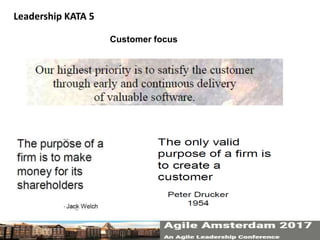
Leadership KATA 5
Customer focus
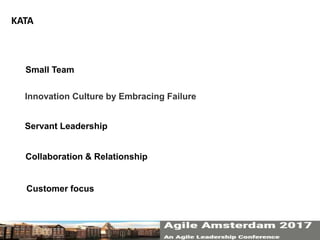
KATA
Small Team
Customer focus
Collaboration & Relationship
Servant Leadership
Innovation Culture by Embracing Failure
Questions?
Q & A
Questions?
Thank you
Maris Prabhakaran .M
https://in.linkedin.com/in/marisprabhu
marisagility@gmail.com

Leadership kata

  • 2.
    Understanding the Room Howmany are using Scrum/other methods ? How many are Scrum masters/Agile Coach? How many Product owner/BA ? How many Managers/Management role? How many developers and others? Any one from J&J ?
  • 3.
    MARIS PRABHAKARAN M PastAgile Transformation & coaching
  • 4.
    “What is Agile?” Howdo you respond in less than a minute ?
  • 5.
  • 7.
  • 9.
    Visible Less Visible Lean tools andtechniques to improve quality, cost and delivery • A systematic, scientific way of thinking and acting • Managers as the teachers of that way PRACTICING FOUNDATIONAL SKILLS FOR SCIENTIFIC THINKING By Mike Rother 9 What we're focusing on
  • 10.
    This is how you doit j k COACHING FREQUENT PRACTICE MASTERY STARTER KATA l m Corrective feedback to ensure the Learner practices the right patterns Growing self efficacy "I'm getting better at this" Structured routines for beginners to practice fundamentals A little every day 4 INGREDIENTS FOR ACQUIRING NEW SKILLS Brain research is clear: To develop new habits you should practice new routines and experience a progressive sense of mastering them (which helps generate and maintain enthusiasm). The following ingredients help us rewire our brain (new neural circuits) to acquire new skills & mindset. By Mike Rother 10
  • 11.
    (1) FOLLOW: Startby repeating each practice routine without modification, so you can absorb its fundamental pattern. (2) DETACH: Once the basic patterns get habitual and you understand the 'why' behind them, you'll start to adapt them. HOW LONG DO YOU PRACTICE RELIGIOUSLY? 11 (3) FLUENCY: At this stage your actions become natural. You can create your own approaches to fit different circumstances, while sticking to basic underlying principles. Real practice doesn't pass through these discrete stages, but they are a useful way to depict your progression By Mike Rother
  • 12.
    12 THE IMPROVEMENT KATAMODEL Kata1 (方) – Suffix Meaning "Way of Doing" We found a common, scientific pattern of thinking and behavior in Toyota managers' approach -- their 'Way of Improving' -- and depicted it with a four-step model we named the “Improvement Kata.” Conduct Experiments to get thereGrasp the Current Condition Establish your Next Target Condition Get the Direction or Challenge 1 2 3 4 The Improvement Kata model comes from research into how Toyota manages people, which is summarized in the book “Toyota Kata” By Mike Rother
  • 13.
    THERE'S ALSO ACOACHING KATA A way of coaching. Toyota's Master-Apprentice style teaching approach is like training in sports and music. Together the Improvement Kata and Coaching Kata make up a management approach Learne r Coach (Manager) By Mike Rother 13
  • 14.
    14 BUT THERE ISA PROBLEM No matter how good it is, just explaining a model doesn't generate new ways of thinking and acting. Hoping to create different behavior by explaining or trying to convince generally doesn't work. By Mike Rother
  • 15.
    Toyota's Way 15 DEVELOPING YOUR OWNWAY Begin with some practice routines, then evolve to suit your organization as some proficiency is developed Our Organization's Way Expert Proficient Competent Advanced Beginner Novice Each person may start at a different point and advance at different rates. By Mike Rother
  • 19.
    Mindset Story One guywas passing the elephants, he suddenly stopped, confused by the fact that these huge creatures were being held by only a rope tied to their legs. It was obvious that the elephants could, at anytime, break away from the ropes they were tied to but for some reason, they did not. He saw a trainer nearby and asked why these beautiful, magnificent animals just stood there and made no attempt to get away. "Well", trainer said, "when they are very young and much smaller we use the same size rope to tie them and at the age, its enough to hold them, as they grow up, they are conditioned to believe they cannot break away. they believe the rope can still hold them, so they never try to break free." He was amazed. These animals could at any time break free from their bonds but because they believed they couldn't,
  • 21.
    Learning KATA fromMy Daughter INDIA SCHOOL – St JOHN ,CHENNAI EUROPEAN SCHOOL – MOL EUROPE Chennai to Mol • Cannot use the same Board No Exam - only Test Adaptive study • Empowerment Push & Pull • Empowerment - Phone Allowed
  • 22.
    Five Leadership KATA SmallTeam Customer focus Collaboration & Relationship Servant Leadership Innovation Culture by Embracing Failure
  • 23.
    Small Team Leadership KATA- 1 •Small autonomous cross-functional teams •Working in short cycles •On relatively small tasks and Agile generated high-performance teams by making It’s “small everything.” fight complexity with simplicity.
  • 24.
    Leadership KATA -2 Innovation Culture by Embracing Failure
  • 25.
    Leadership KATA -3 Servant Leadership
  • 26.
  • 27.
    • Humans buildand fix systems. • Humans get tired and stressed, they feel happy and sad. • Systems don't have feelings yet. They only have SLAs. • Humans need to switch off and on again. • The wellbeing of human operators impacts the reliability of systems. • Alert Fatigue == Human Fatigue • Automate as much as possible, escalate to a human as a last resort. • Kill the shame game. • Human issues are system issues. • Human health impacts business health. • Humans > systems Human Ops Humanops.com HUM BUS DEV SEC OPS
  • 28.
  • 29.
    KATA Small Team Customer focus Collaboration& Relationship Servant Leadership Innovation Culture by Embracing Failure
  • 30.
  • 31.
    Questions? Thank you Maris Prabhakaran.M https://in.linkedin.com/in/marisprabhu marisagility@gmail.com

Editor's Notes

  • #27 A mix of agile teams and bureaucracy creates friction
  • #31 ROTI Check out
  • #32 ROTI Check out