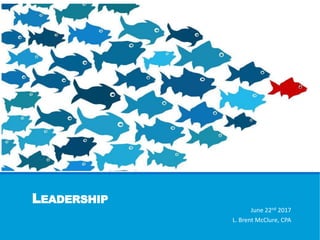
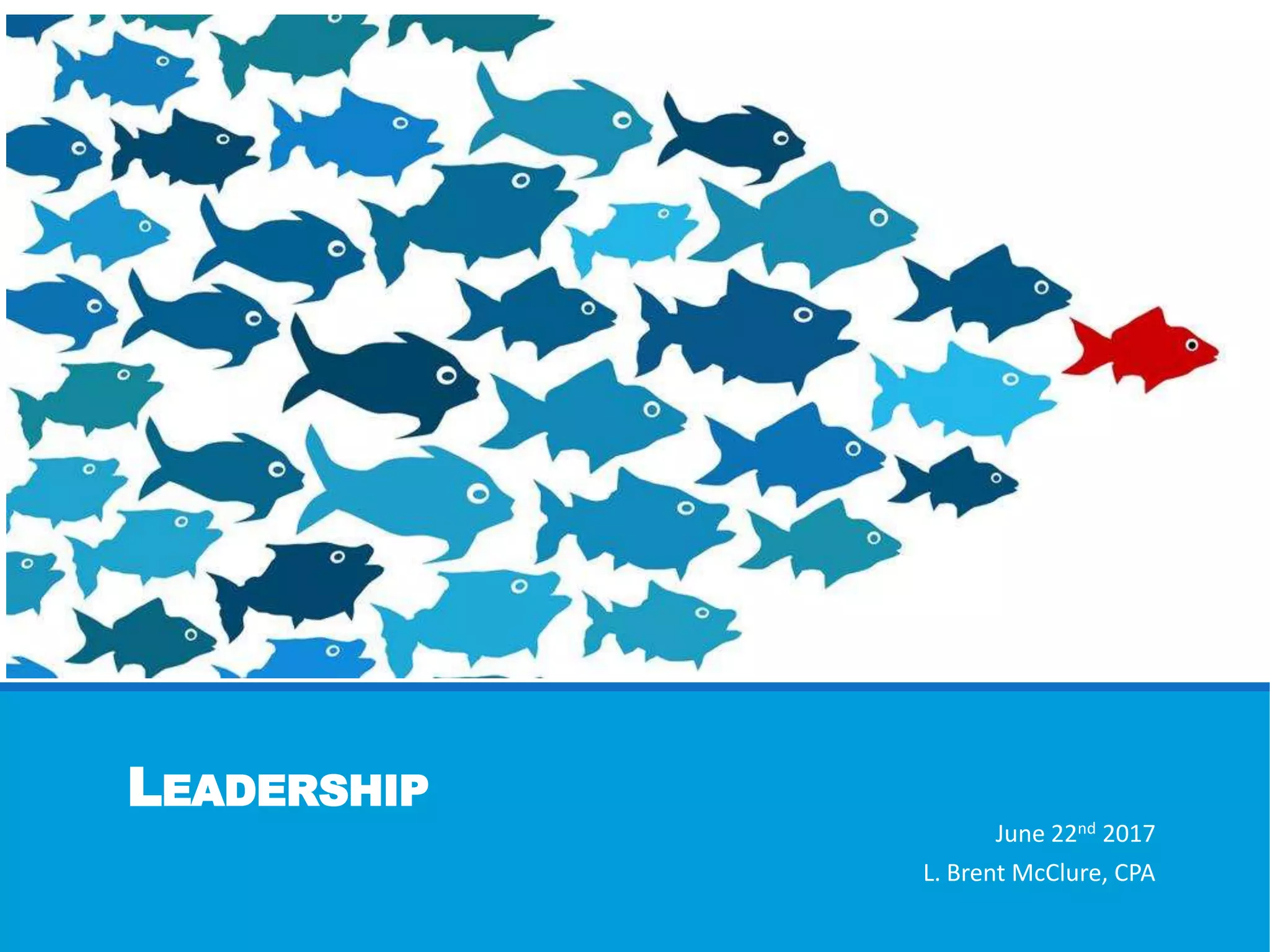
LEADERSHIP
June 22nd 2017
L. Brent McClure, CPA
What is Leadership
ˈlēdərˌSHip/
◦ noun
noun: leadership
◦ the action of leading a group of people or an organization
Leadership is, of course, subjective. But its foundation stems from one
thing: the ability of an individual to establish a following among other
individuals or teams
Manager vs. Leader
MANAGER
Management is a set of well-
known processes, like:
• Planning and budgeting
• Structuring and staffing jobs
• Measuring performance
• Problem-solving
LEADER
Leadership is about:
• Vision
• People buying in
• Empowerment
• Producing useful change
Without
Leadership
3 things occur naturally in a
business or organization:
Friction
Confusion
Underperformance
Everything else requires
leadership
ONLY 3 THINGS
WILL HAPPEN
PETER DRUCKER
Leadership Styles byDaniel Goleman(Emotional Intelligence)
1. Visionary. This style is most appropriate when an organization needs a new direction
2. Coaching. This one-on-one style focuses on developing individuals, showing them
how to improve their performance, and helping to connect their goals to goals of the
organization
3. Affiliative. This style emphasizes the importance of team work, and creates harmony
in a group by connecting people to each other
4. Democratic. This style draws on people’s knowledge and skills, and creates a group
commitment to the resulting goals, It works best when the direction the organization
should take is unclear, and the leader needs to tap the collective wisdom of the group
5. Pacesetting. In this style, the leader sets high standards for performance. He or she is
“obsessive about doing things better and faster, and asks the same of everyone
6. Commanding. This is classic model of “military” style leadership – probably the most
often used, but the least often effective
Trends in Leadership
Development
Moral Leadership
◦ Builds trust from a foundation of personal integrity
Ethical Leadership
◦ Has integrity and appears to others as “good” and “right” by moral standards
Integrity
◦ In leadership is honesty, credibility and consistency in putting values into action
Servant Leadership
◦ Means serving others, helping them use their talents to help organizations best
serve society
Empowerment
◦ Gives employees job freedom and power to influence affairs in the organization
Effective Leader Traits
 Drive - successful leaders have high energy, display initiative, & are tenacious.
 Self-confidence - successful leaders trust themselves & have confidence in
their abilities.
 Creativity - successful leaders are creative & original in their thinking.
 Cognitive ability - they have the intelligence to integrate and interpret
information.
 Business knowledge - successful leaders know their industry & its technical
foundations.
 Motivation - successful leaders enjoy influencing others to achieve shared
goals.
 Flexibility - they adapt to fit the needs of followers and demands of situations.
 Honesty and integrity - they are trustworthy; honest, predictable, &
dependable.
10 Things About Leadership
1. The responsibility of good leadership always outweighs the accolades
2. Those you lead think of themselves less as followers and more as team players or
contributors
3. Leaders don’t confuse “simple” with “easy.” Something simple to understand can
be difficult to do
4. If you are sincere, you can’t over-appreciate those you lead
5. Team members want opportunity to grow themselves while producing results
6. Great leaders create a culture where people make money and meaning from their
work
7. Leaders tell the truth because of the love and respect they have for those they
lead
8. Leadership produces results through others
9. Never confuse leadership and ambition, Leadership always benefits more than just
the leader
10.Leaders don’t get better accidentally, They have an intentional program of growth
and development
Source: Mark Sanborn
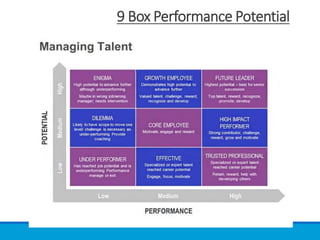
9 Box Performance Potential
Kotter on Leadership
LEADERSHIP IS ABOUT SETTING A DIRECTION. IT'S ABOUT
CREATING A VISION, EMPOWERING AND INSPIRING PEOPLE
TO WANT TO ACHIEVE THE VISION, AND ENABLING THEM
TO DO SO WITH ENERGY AND SPEED THROUGH AN
EFFECTIVE STRATEGY. IN ITS MOST BASIC SENSE,
LEADERSHIP IS ABOUT MOBILIZING A GROUP OF PEOPLE TO
JUMP INTO A BETTER FUTURE.
JOHN KOTTER
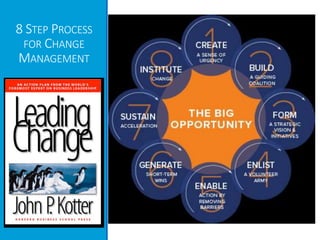
8 STEP PROCESS
FOR CHANGE
MANAGEMENT
Peter Drucker
Drucker is one of the most influential management
consultants of the 20th century
Good leaders have integrity; they mean what they say,
earning and keeping the trust of followers.
Good leaders define and establish a sense of mission;
they set goals, priorities and standards
Good leaders accept leadership as responsibility, not a
rank; they surround themselves with talented people.
QUESTIONS?
WE BUILD VALUE FOR YOUR BUSINESS
Brentmcclure.com
brent@brentmcclure.com

Leadership today

  • 1.
    LEADERSHIP June 22nd 2017 L.Brent McClure, CPA
  • 2.
    What is Leadership ˈlēdərˌSHip/ ◦noun noun: leadership ◦ the action of leading a group of people or an organization Leadership is, of course, subjective. But its foundation stems from one thing: the ability of an individual to establish a following among other individuals or teams
  • 3.
    Manager vs. Leader MANAGER Managementis a set of well- known processes, like: • Planning and budgeting • Structuring and staffing jobs • Measuring performance • Problem-solving LEADER Leadership is about: • Vision • People buying in • Empowerment • Producing useful change
  • 4.
    Without Leadership 3 things occurnaturally in a business or organization: Friction Confusion Underperformance Everything else requires leadership ONLY 3 THINGS WILL HAPPEN PETER DRUCKER
  • 5.
    Leadership Styles byDanielGoleman(Emotional Intelligence) 1. Visionary. This style is most appropriate when an organization needs a new direction 2. Coaching. This one-on-one style focuses on developing individuals, showing them how to improve their performance, and helping to connect their goals to goals of the organization 3. Affiliative. This style emphasizes the importance of team work, and creates harmony in a group by connecting people to each other 4. Democratic. This style draws on people’s knowledge and skills, and creates a group commitment to the resulting goals, It works best when the direction the organization should take is unclear, and the leader needs to tap the collective wisdom of the group 5. Pacesetting. In this style, the leader sets high standards for performance. He or she is “obsessive about doing things better and faster, and asks the same of everyone 6. Commanding. This is classic model of “military” style leadership – probably the most often used, but the least often effective
  • 6.
    Trends in Leadership Development MoralLeadership ◦ Builds trust from a foundation of personal integrity Ethical Leadership ◦ Has integrity and appears to others as “good” and “right” by moral standards Integrity ◦ In leadership is honesty, credibility and consistency in putting values into action Servant Leadership ◦ Means serving others, helping them use their talents to help organizations best serve society Empowerment ◦ Gives employees job freedom and power to influence affairs in the organization
  • 7.
    Effective Leader Traits Drive - successful leaders have high energy, display initiative, & are tenacious.  Self-confidence - successful leaders trust themselves & have confidence in their abilities.  Creativity - successful leaders are creative & original in their thinking.  Cognitive ability - they have the intelligence to integrate and interpret information.  Business knowledge - successful leaders know their industry & its technical foundations.  Motivation - successful leaders enjoy influencing others to achieve shared goals.  Flexibility - they adapt to fit the needs of followers and demands of situations.  Honesty and integrity - they are trustworthy; honest, predictable, & dependable.
  • 8.
    10 Things AboutLeadership 1. The responsibility of good leadership always outweighs the accolades 2. Those you lead think of themselves less as followers and more as team players or contributors 3. Leaders don’t confuse “simple” with “easy.” Something simple to understand can be difficult to do 4. If you are sincere, you can’t over-appreciate those you lead 5. Team members want opportunity to grow themselves while producing results 6. Great leaders create a culture where people make money and meaning from their work 7. Leaders tell the truth because of the love and respect they have for those they lead 8. Leadership produces results through others 9. Never confuse leadership and ambition, Leadership always benefits more than just the leader 10.Leaders don’t get better accidentally, They have an intentional program of growth and development Source: Mark Sanborn
  • 9.
  • 10.
    Kotter on Leadership LEADERSHIPIS ABOUT SETTING A DIRECTION. IT'S ABOUT CREATING A VISION, EMPOWERING AND INSPIRING PEOPLE TO WANT TO ACHIEVE THE VISION, AND ENABLING THEM TO DO SO WITH ENERGY AND SPEED THROUGH AN EFFECTIVE STRATEGY. IN ITS MOST BASIC SENSE, LEADERSHIP IS ABOUT MOBILIZING A GROUP OF PEOPLE TO JUMP INTO A BETTER FUTURE. JOHN KOTTER
  • 11.
    8 STEP PROCESS FORCHANGE MANAGEMENT
  • 12.
    Peter Drucker Drucker isone of the most influential management consultants of the 20th century Good leaders have integrity; they mean what they say, earning and keeping the trust of followers. Good leaders define and establish a sense of mission; they set goals, priorities and standards Good leaders accept leadership as responsibility, not a rank; they surround themselves with talented people.
  • 13.
    QUESTIONS? WE BUILD VALUEFOR YOUR BUSINESS Brentmcclure.com brent@brentmcclure.com

Editor's Notes

  • #3 First, let's ensure we understand that Leadership is less about your needs, and more about the needs of the people and the organization you are leading
  • #4 All of these help an organization to predictably do what it knows how to do well. Management helps you to produce products and services as you have promised, of consistent quality, on budget, day after day, week after week. Leadership is entirely different. It is associated with taking an organization into the future, finding opportunities that are coming at it faster and faster and successfully exploiting those opportunities
  • #5 Peter Drucker
  • #6 Daniel Goleman, who popularized the notion of “Emotional Intelligence,” categorizes leaders into the following: It is clear that not all of the styles apply to each and every situation.  Leadership styles  should be adapted to the particular demands of each situation, the particular requirements of those involved and the particular challenges the organization faces at the time. A good leader can move between styles for the situation
  • #10 How to know if you have a leader on staff? Good for any employee eval
  • #12 Over four decades, Dr. Kotter observed countless leaders and organizations as they were trying to transform or execute their strategies. He identified and extracted the success factors and combined them into a methodology, the award-winning 8-Step Process for Leading Change
  • #13 PD also had Good-Ole fashioned common sense. When you stop discussing the tasks at hand — and talk about vision, purpose, and aspirations instead, that’s when you will know you have become a leader