ANTIVIRAL DRUGS
Dr. Trilok Mandal (BVSc & AH)
Department of Animal Breeding and
Genetics (MSc)
Agriculture and Forestry University (AFU)
Rampur, Chitwan, Nepal
Email: trilokmandal97@gmail.com
ANTIVIRAL HISTORY
The first modest
search for antiviral
drugs occurred in
the early 1950s
- Chemists looked at
derivatives of the
sulfonamide
antibiotics
- Synthesis of
thiosemicarbazones
was active against
poxviruses
- Smallpox was still a
major threat after
WWII
• 1960s and 1970s: “blind
screening” programs to
find chemicals with
antiviral activity.
UNDERSTANDING VIRUSES
• Viruses are obligate intracellular parasite contain a core genome,
in a protein coat ( capsid) may have a lipoprotein envelop,
depends upon host cell machinery for their replication and lack
cell wall/ membrane.
• Viruses are difficult to kill because they live inside the cells.
• Any drug that kills a virus may also kill cells.
STEPS OF VIRAL REPLICATION
1) Adsorption and penetration in cells 6) Assembly of viral proteins
2) Uncoating of viral nucleic acid 7)Release of virion from
3) Synthesis of regulatory proteins host cells.
4) Synthesis of RNA/DNA
5) Synthesis of structural proteins
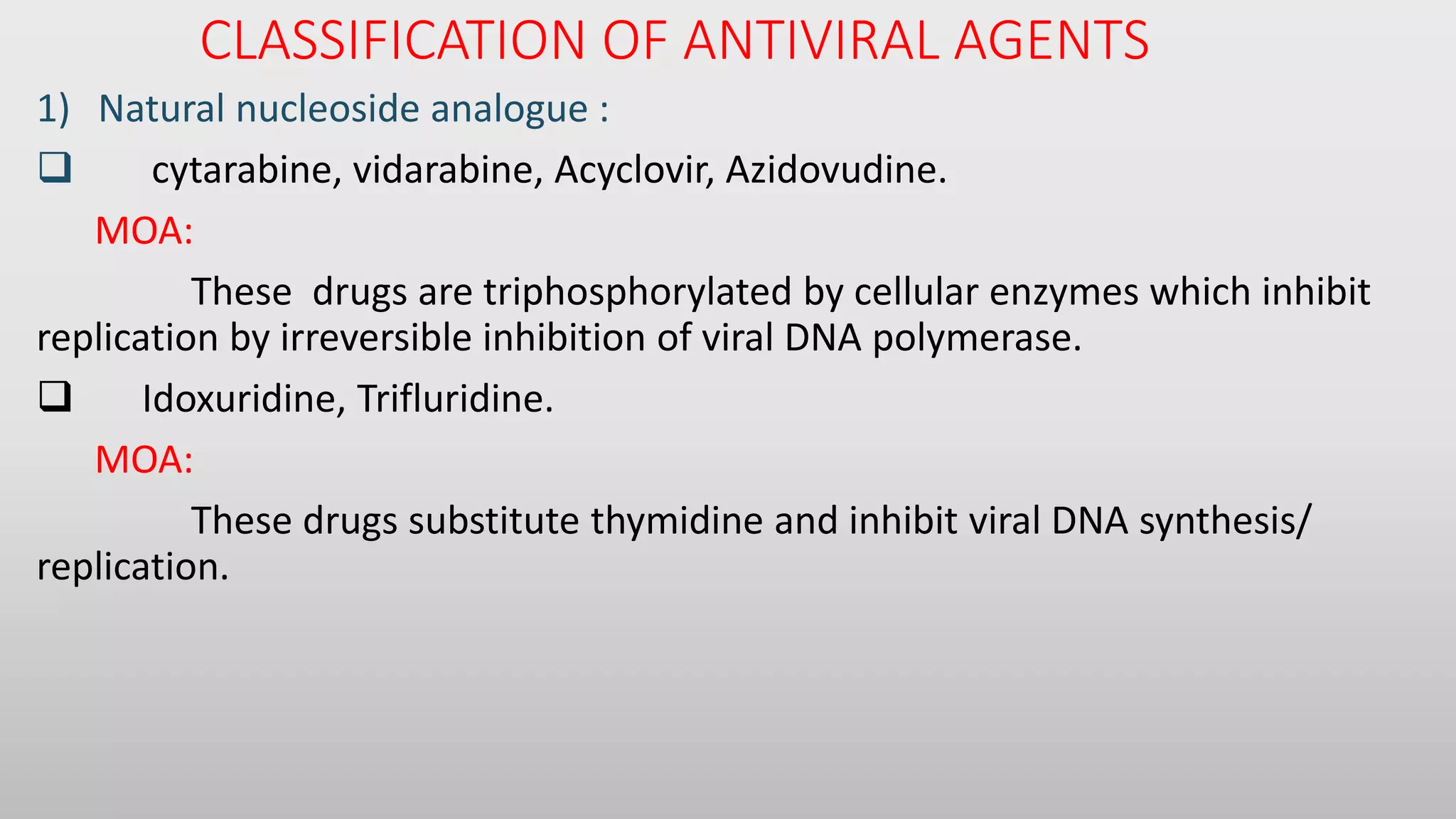
CLASSIFICATION OF ANTIVIRAL AGENTS
1) Natural nucleoside analogue :
 cytarabine, vidarabine, Acyclovir, Azidovudine.
MOA:
These drugs are triphosphorylated by cellular enzymes which inhibit
replication by irreversible inhibition of viral DNA polymerase.
 Idoxuridine, Trifluridine.
MOA:
These drugs substitute thymidine and inhibit viral DNA synthesis/
replication.
2) Synthetic nucleoside analogs:
 Ribavirin
MOA: inhibits viral enzymes, polypeptide synthesis and m- RNA capping.
Amantidine, Rimantadine:
MOA: inhibits/ delays viral ( RNA and DNA ) uncoating and m-RNA
transcription.
 Tamiflu: inhibits nucleic acid synthesis.
MOA: inhibits nucleic acid synthesis.
3) Interferons:
 interferon alfa, beta , gama.
MOA: Reduce the rate of cell proliferation, alter the distribution of cytoskeletal
elements and structure of cell surface.
4) Cytokines:
 Proteins released from viral infected cells :
interleukins.
MOA: Modulate immune system.
5) Antibodies:
MOA: Antiviral gamma globulin produce
humoral immunity.
1) Antiherpes
a) Acyclovir
Pharmacokinetics
 Absorption- oral- 20%.
Penetrates cornea.
CSF attains 50% of plasma concentration.
Excreted unchanged in urine.
Clinical use
 Feline herpes virus I in cats, 50mg po.
Conjunctivitis and dermatitis by
equine herpes virus in horse 5%
ointment six times daily for 10 days
topically.
b) Ganciclovir:
• Used against all herpes virus: H. Simplex, H. Zoster, Epstein Barr virus.
• Half-life (t1⁄2): 24 hours.
Adverse drug reaction:
Bone marrow depression , Teratogenic, embryotoxic, irreversible reproductive
toxicity.
2)Antinfluenza virus
a) Amantadine:
• Used against influenza A and C virus, Sendai virus but not influenza B virus.
Pharmacokinetics
• Given generally orally, Amantadine is absorbed completely, attains high level in
secretions( saliva).
• Bio- availability: 50-90%.
• Plasma protein binding: 67%.
• Elimination: (t1⁄2) is 16 hours, even higher in renal diseases.
Adverse drug reaction:
• Nervousness, confusion, seizure, and coma.
Clinical use:
• In prophylaxis and simultaneously with influenza virus vaccine.
Route: oral, intranasal, subcutaneous, and aerosol.
B) Rimantadine:
More potent in spectrum of activity, longer acting.
Use: parkinsonism, influenza A2.
Adverse drug reaction: postural hypotension, ankle edema, etc.
C) Tamiflu:
• Clinical use in bird flue.
• Adverse effect: liver inflammation, rash, allergic reaction.
3) Immunoglobulin
• It is pooled immunoglobulin, contain virus envelop directed antibodies. These
antibodies neutralize various viruses and interfere with their attachment to the
host cells. This can prevent German measles, rabies, and infectious hepatitis.
4) Interferon
• Interferon are active against most animal viruses such as; Orthomyxovirus,
Paramyxovirus, Rhabdovirus, Togavirus, Picorna virus.
Pharmacokinetics:
• Degraded by proteolytic enzyme, poor absorption from upper gastro intestinal
mucosa.
• Used parenterally( absorption: 80%).
• Distribution- wide except brain and cerebrospinal fluid.
5) Rivavirin
• Elimination (t1⁄2) : 2 hours.
• Oral bioavailability is 50%.
Clinical use:
• Used- oral/IV in Influenza A, B, measles, herpes virus, acute hepatitis.
• Adverse drug reaction: Anemia, hemolysis, CNS and GIT symptoms.
THANK YOU

ANTIVIRAL DRUGS.pptx

  • 1.
    ANTIVIRAL DRUGS Dr. TrilokMandal (BVSc & AH) Department of Animal Breeding and Genetics (MSc) Agriculture and Forestry University (AFU) Rampur, Chitwan, Nepal Email: trilokmandal97@gmail.com
  • 2.
    ANTIVIRAL HISTORY The firstmodest search for antiviral drugs occurred in the early 1950s - Chemists looked at derivatives of the sulfonamide antibiotics - Synthesis of thiosemicarbazones was active against poxviruses - Smallpox was still a major threat after WWII • 1960s and 1970s: “blind screening” programs to find chemicals with antiviral activity.
  • 3.
    UNDERSTANDING VIRUSES • Virusesare obligate intracellular parasite contain a core genome, in a protein coat ( capsid) may have a lipoprotein envelop, depends upon host cell machinery for their replication and lack cell wall/ membrane. • Viruses are difficult to kill because they live inside the cells. • Any drug that kills a virus may also kill cells. STEPS OF VIRAL REPLICATION 1) Adsorption and penetration in cells 6) Assembly of viral proteins 2) Uncoating of viral nucleic acid 7)Release of virion from 3) Synthesis of regulatory proteins host cells. 4) Synthesis of RNA/DNA 5) Synthesis of structural proteins
  • 4.
    CLASSIFICATION OF ANTIVIRALAGENTS 1) Natural nucleoside analogue :  cytarabine, vidarabine, Acyclovir, Azidovudine. MOA: These drugs are triphosphorylated by cellular enzymes which inhibit replication by irreversible inhibition of viral DNA polymerase.  Idoxuridine, Trifluridine. MOA: These drugs substitute thymidine and inhibit viral DNA synthesis/ replication.
  • 5.
    2) Synthetic nucleosideanalogs:  Ribavirin MOA: inhibits viral enzymes, polypeptide synthesis and m- RNA capping. Amantidine, Rimantadine: MOA: inhibits/ delays viral ( RNA and DNA ) uncoating and m-RNA transcription.  Tamiflu: inhibits nucleic acid synthesis. MOA: inhibits nucleic acid synthesis. 3) Interferons:  interferon alfa, beta , gama. MOA: Reduce the rate of cell proliferation, alter the distribution of cytoskeletal elements and structure of cell surface.
  • 6.
    4) Cytokines:  Proteinsreleased from viral infected cells : interleukins. MOA: Modulate immune system. 5) Antibodies: MOA: Antiviral gamma globulin produce humoral immunity. 1) Antiherpes a) Acyclovir Pharmacokinetics  Absorption- oral- 20%. Penetrates cornea. CSF attains 50% of plasma concentration. Excreted unchanged in urine. Clinical use  Feline herpes virus I in cats, 50mg po. Conjunctivitis and dermatitis by equine herpes virus in horse 5% ointment six times daily for 10 days topically.
  • 7.
    b) Ganciclovir: • Usedagainst all herpes virus: H. Simplex, H. Zoster, Epstein Barr virus. • Half-life (t1⁄2): 24 hours. Adverse drug reaction: Bone marrow depression , Teratogenic, embryotoxic, irreversible reproductive toxicity.
  • 8.
    2)Antinfluenza virus a) Amantadine: •Used against influenza A and C virus, Sendai virus but not influenza B virus. Pharmacokinetics • Given generally orally, Amantadine is absorbed completely, attains high level in secretions( saliva). • Bio- availability: 50-90%. • Plasma protein binding: 67%. • Elimination: (t1⁄2) is 16 hours, even higher in renal diseases. Adverse drug reaction: • Nervousness, confusion, seizure, and coma. Clinical use: • In prophylaxis and simultaneously with influenza virus vaccine. Route: oral, intranasal, subcutaneous, and aerosol.
  • 9.
    B) Rimantadine: More potentin spectrum of activity, longer acting. Use: parkinsonism, influenza A2. Adverse drug reaction: postural hypotension, ankle edema, etc. C) Tamiflu: • Clinical use in bird flue. • Adverse effect: liver inflammation, rash, allergic reaction.
  • 10.
    3) Immunoglobulin • Itis pooled immunoglobulin, contain virus envelop directed antibodies. These antibodies neutralize various viruses and interfere with their attachment to the host cells. This can prevent German measles, rabies, and infectious hepatitis. 4) Interferon • Interferon are active against most animal viruses such as; Orthomyxovirus, Paramyxovirus, Rhabdovirus, Togavirus, Picorna virus. Pharmacokinetics: • Degraded by proteolytic enzyme, poor absorption from upper gastro intestinal mucosa. • Used parenterally( absorption: 80%). • Distribution- wide except brain and cerebrospinal fluid.
  • 11.
    5) Rivavirin • Elimination(t1⁄2) : 2 hours. • Oral bioavailability is 50%. Clinical use: • Used- oral/IV in Influenza A, B, measles, herpes virus, acute hepatitis. • Adverse drug reaction: Anemia, hemolysis, CNS and GIT symptoms.
  • 12.